Home Blog Page 685

Smoking addiction: the battle plan

0

Last week we discussed on the non-psychotic effects of smoking, which included the increase in the risk of occurrence of cancer, lung diseases, cardiac and vascular diseases. We also noted that cigarette smoke mainly contains carbon monoxide, tar and nicotine. This time we are going to look at how smoking affects our mental faculties, and how we can be free from its chains.
Of the triad of cigarette smoke constituents, nicotine has both psychological and non-psychotic effects and it is highly addictive. Soon after exposure to it, the body`s first reaction is the “kick” which is caused by the drug`s stimulation of the adrenal glands resulting in the release of adrenaline. In turn, adrenaline increases blood glucose, blood pressure, heart rate and respiration.  Nicotine also supresses the release of insulin – a hormone that facilitates the uptake of sugar from the bloodstream, by the pancreas leading to diabetes-like effects, that is increased blood glucose. This increases the risk of smokers, who are in constant exposure to the drug, to develop diabetes.
The psychotic effects of nicotine occur when the drug stimulates the release of some brain chemicals, dopamine, in the pleasure and motivation areas of the brain. Dopamine affects emotions, movements and sensation of pleasure and pain. An increase in dopamine levels, triggered by the nicotine from cigarette smoke, brings a sense of pleasure and the feeling of contentment. Nicotine can also act as a sedative, which brings a calming and soothing effect. It is also linked to increased alertness, improved memory and concentration; and it reduces anxiety. These are the euphoric effects that excite smokers, what they term as “being high”.  
With the constant exposure to smoke, the body becomes “used” to the presence of nicotine; and would require a higher dose in order to enjoy the same euphoric effects. This is called nicotine tolerance. The desire to “get high” will prompt smokers to increase the number of cigarettes they smoke per day to the extent that they feel like they cannot live without a “pull”. Nicotine is highly addictive and a sudden stop to a regular consumer will result in withdrawal symptoms which may include cravings, a sense of emptiness, anxiety, depression, moodiness, irritability and difficulties in focusing or paying attention.
So, how do you quit? … Quitting smoking is not a single event that happens on one day; rather it is a journey that requires behavioural changes. It comes with a number of positive advantages which include improvement of health, quality and duration of your life and of those around you. Quitting smoking requires you to alter your behaviour so that you cope up with the withdrawal symptoms that come with cutting off nicotine, and also to manage your moods.
1.    Set up a quit date. The decision to quit is the first step of the journey. Setting up a date makes the mission more important and adds the weight of seriousness to the decision. Pick a date that is not too far in the future, but which gives you enough time to prepare. Decide whether you are going to:
•    Quit abruptly, that is you continue smoking right up until your quit date and then stop.
•    Quit gradually, that is you reduce your cigarette intake slowly until your quit date and then stop.
On the quit day, do not smoke at all; stay busy; drink more water and juice; avoid alcohol, avoid individuals who are smoking and avoid situations that urge you to smoke.
2.    Tell your friends, family and co-workers about your decision to quit, and about your quit date. Sharing this with people who care about you is a source of encouragement that will keep you disciplined and focused on your goal. Family and friends will help your on this quest.  If possible, join a stop smoking support group where you will find comrades like you fighting the same enemy. Listen to the stories of people who have successfully quit smoking and draw inspiration from them.
3.    Stopping smoking comes with various withdrawal symptoms that have been mentioned earlier. When the craving comes, use oral substitutes like gum, toothpicks or candy, instead of taking a cigarette. 
4.    Get rid of all the items that are related to your smoking. Throw away your ashtrays, destroy the cigarettes and get rid of the lighters. All these things may trigger the desire to take a pull. Break routines that included smoking as part of your day. At smoke breaks, rather than lighting a cancer stick, drink a glass of juice. This will help your brain to associate the time with juice rather than smoking
To win the rigorous battle of the urge to smoke, make use of the four D`s:
•    Delay until the craving passes. This may seem hard to overcome, but try your best.
•    Deep breathe. Breathing in slowly through your nose and exhaling through your mouth helps you to calm down, giving you an upper hand in fighting the urge.
•    Drink water. Do it slowly, taking small sips at a moment. This will help you beat the craving
•    Do something else. This will distract you and helps your mind to focus at the task at hand, rather than smoking. Make sure that whatever thing you decide as your distraction does not trigger you into smoking.
So, make that bold step and improve your health, and of those close to you. Until next time, remember to make healthy choices.
Zimbabwe Medical Students Association (ZiMSA) is an association of medical students that mainly deals with reducing the incidence of diseases and their control by information dissemination. It encompasses students from the three medical schools in the country that is Midlands State University (MSU), University of Zimbabwe (UZ) and National University of Science and Technology (NUST). 
Taona Tivafire is a Third Year medical student at MSU. You can check out ZiMSA Health Page for more health related topics.health
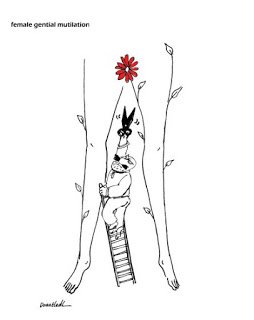
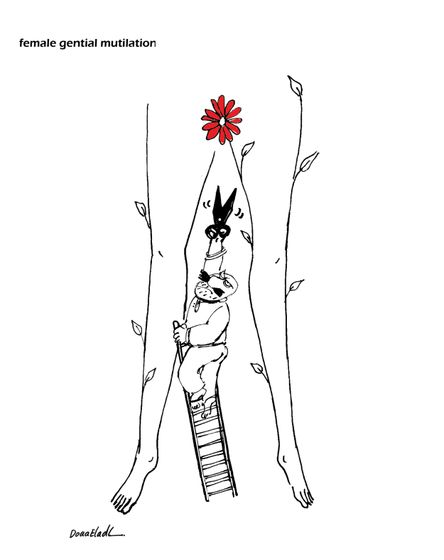
Awareness on female gender mutiliation

0


FGM/C (female gender mutilation/cutting) includes procedures that intentionally alter or cause injury to the female genital organs for non-medical reasons. It compromises all procedures that intentionally alter or cause injury to the female genital organs for non-medical reasons.
The procedure has no health benefits to women or girls, on the contrary it has many consequences. It is a direct violation of human rights- both sexual and reproductive rights. It can be traced back to the pharaonic era in ancient Egypt and also in certain ethnic groups in sub-Saharan Africa.
There are 4 types of FGM/C.
•    Type 1- excision of the clitoris or the prepuce with or without excision of part or all of the clitoris (in Sudan and Arabian countries it represents religious backgrounds and beliefs)
•    Type 2- excision of the clitoris with partial or total excision of the labia minora
•    Type 3- excision of part or all of the external genitalia and stitching/narrowing of the vaginal opening (infibulation; the colloquial name is pharaonic type)
•    Type 4- includes pricking, piercing or incision of the clitoris and/or labia; cauterisation by burning of the clitoris and surrounding tissues; scraping of the vaginal orifice (anguyrya cuts) or cutting of the vagina (gishiri cuts); introduction of corrosive substances or herbs into the vagina to cause bleeding, into the vagina or for the purposes of tightening or narrowing it; and any other procedure that falls under the definition of FGM given above.
The practice is mostly carried out by traditional circumcisers who often play other central roles in communities, such as attending child births. In many settings health care providers perform FGM due to erroneous belief that the procedure is safer when medicalised. Midwives and the elderly in the family may also perform the FGM.
The age FGM is performed depends on the ethnic and geographical distribution. The age is flexible within the communities, either because it is not tied to any particular ceremony, or because people’s belief in its ceremonial significance has died away. The procedure may be carried out on infant girls, during childhood or adolescence, at the time of marriage (preparing for the marriage), at a woman’s first pregnancy, or even whilst in labour (this is a form of fixing the woman and making the vaginal opening as small as it used to be).
Such an extensive procedure involves many complications and risks that are not only medical but psychological too. Severe pain is inflicted due to the operation being performed with crude instruments and without anaesthetic and many women writhe in pain and this can bring injury to the adjacent parts such as the vagina, tissue of urethra, perineum, rectum and some obtain broken limbs from being held down. These complications can also be due to the operator being ignorant in anatomy and physiology of the female external genitalia, has poor eyesight or a careless technique (no prior education in surgery) or just because the operation was done in poor light. Infection is also very common because of an unhygienic non-sterile operating environment which can cause it to fail to heal. Rupture of urethra can result in incontinence. Acute urine retention is another complication and so are keloids scars (shown in picture below), obstructed labour, infertility, shock due to haemorrhage (because of sudden loss of blood) and neurogenic shock due to severe pain and trauma. The women may also experience apareunia (impossibility of sexual intercourse), superficial dyspareunia (pain during intercourse), sexual dysfunction, anorgasmia (lack or orgasms), post-traumatic stress disorder (PTSD), obstructed mensuration, insecurity and trust violation by closest family, relatives and peers.
FGM is such a horrendous act that you are probably asking yourself, why? Why would anyone do that to themselves or to another human being? There are many reasons for this vile act. Some cultures do so as a means of controlling women’s sexuality and to ensure virginity until marriage and fidelity in marriage (women who have had FGM don’t enjoy sex so they won’t have multiple sexual partners). But is this not counter intuitive? Sex is described as one of the basic needs together with water, shelter and food and in essence they are associating it with something not pleasurable. So in short they have turned water into gasoline and are now depriving women of their needs. Some men say that the FGM increases sexual pleasure for them and hence they request for their brides to undergo FGM before they are married. FGM also makes girls more acceptable in certain communities and increases their eligibility for marriage and can also be used as a traditional rite of passage into adulthood (this rite is often surrounded by various myths). FGM is associated with notions of being “feminine,” “modest,” “clean” and/or “beautiful” and these are things many females strive to be as the tradition brings honour to the family. Some types of FGM are done when one is sick to cure them e.g. if one has mass on the vaginal opening such as a cancer or any chronic disease which they have never come across or don’t know how to treat FGM is performed to remove the mass and the women is “cured” from the unknown disease. There is also FGM for the afterlife- it is done on the dead body of the female so that they are considered new again and ready for their next life. It is also believed that an unmodified clitoris leads to masturbation and lesbianism which is unacceptable behaviour.
The real reason is power and control over women and this instils fear. This is why it is mostly concentrated in patriarchal societies where fear is confused for respect. In such patriarchal societies women have little or no say and do not voice their opinions which is a demoralisation of integrity and a robbing of personality. Although it is illegal it is a social norm, a tradition, a culture that’s deeply rooted in the communities and the pressure keeps this mal-practice on going. Women are not at liberty to speak about their sex life and hence whether it is enjoyable or even durable is not a concern. Lack of sexual pleasure is a norm- even the wise elderly women who the women consult have never had such experiences hence the women do not know what they are losing or that they are they are losing anything at all. Women in such communities are also afraid of being alone and divorced if they do not consent to the procedure. There is a stigma of being unclean if the procedure is not done and this serves as a platform for bullying for girls at school hence they would rather have the procedure than endure the bullying. Some women go as far as asking for the procedure again after traumatic child births that may “undo” the procedure.
Hence empowering women and educating them is paramount. The elimination of FGM cannot be done overnight but is instead a painstakingly long process that requires long term commitment and the laying of a strong foundation that will support successful behaviour change. A hands-on approach of working in the community and also embracing the emotional aspects of it is needed- FGM is dressed to be the key to beauty and honour (things which women strive for) and hence by this virtue make the harmful procedure “appealing” to women. Fighting against FGM will require strong and capable anti-FGM programmes at national, regional and local levels. FGM prevention should be integrated into all relevant government programmes and health care workers should be trained to manage the complications of it whilst advocating for the practice to be stopped.  Continuous campaigns are in order because they are convinced the procedure is right and has many benefits. Playing on the physical and traumatic harm towards women and girls is a starting block in eliminating such practices. Education shouldn’t only be targeted at the women but at the men too- maybe if they don’t find it attractive women may not feel pressured into it. The practice is very embedded in the culture and social norms and sadly women do not know their rights.
Remember that FGM is stealing the sexual rights of a woman (women’s genitals are cut off unnecessarily like rags), while male circumcision is for medical reasons. This is why we all need to advocate and raise awareness, to empower women and change the society’s mentality!
Chipo a medical student at the University of Zimbabwe. She is a member of the Zimbabwe Medical Students’ Association (ZiMSA).health

Zvishavane Evangelical Lutherans conduct smooth transition

0

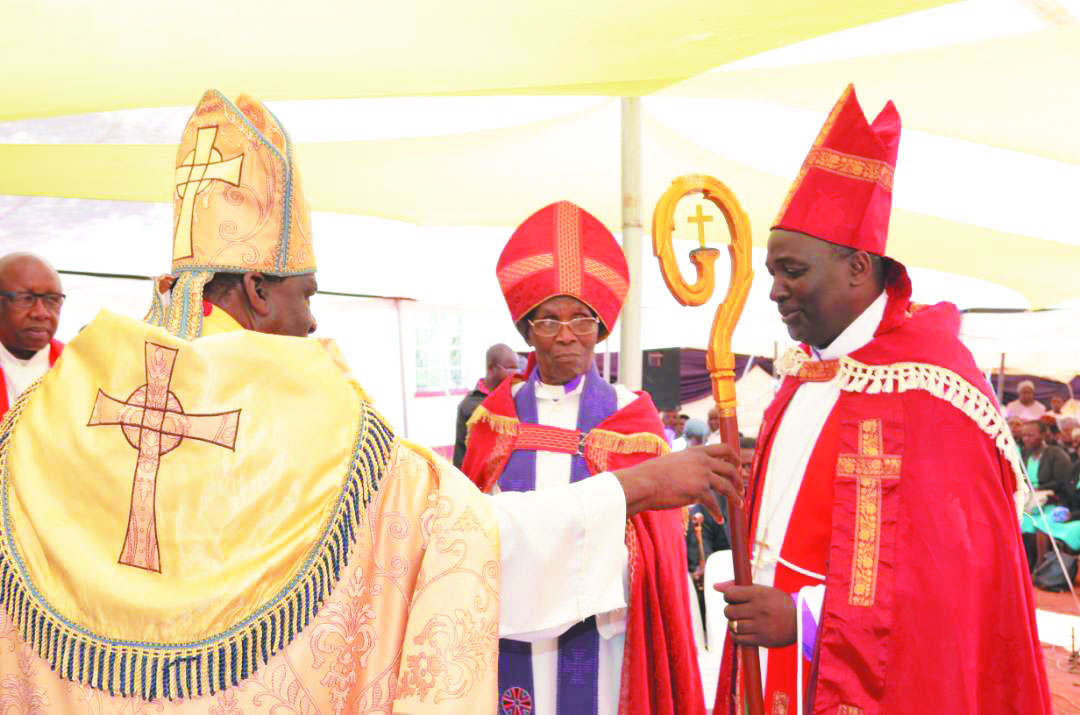
Bishop Shava handing stuff to Bishop Kenneth Sibanda during concecration while LUCSA Director David Tswaedi (left)and Bishop Emeritus J.C Shiri (right) looks on

Tanaka Mapfumo

ZVISHAVANE – The local branch of the Evangelical Lutheran Church in Zimbabwe (ELCZ) celebrated 500 years of the church’s reformation with colourful ceremony held at 1894 Izaya Park Zvishavane a few days before Christmas.
The two-tier event combined the farewell party for Bishop Emeritus Naison Shava and the consecration of Kenneth Sibanda as new Bishop of the Central Diocese.
The event was graced by seven bishops consisting of the Evangelical Lutheran Church of America, Upsala Diocese of Sweden and Lutheran Church of Southern Africa.
The outgoing Bishop Shava left a great legacy as witnessed by testimonies of those who attended the ceremony.
He was praised for leaving tangible success in leading the local church as a pastor, youth director, dean, bishop and president of Zimbabwe Council of Churches (ZCC).
Reverend Dr. Kenneth Mutata, the secretary general of ZCC, said one mark of leadership was to understand the responsibility that a leader owes to the local church and to the universal church.
“We want to recognise Bishop Shava as an ecumenist leader of the local church and the universal church,” said Rev Mutasa.
On his part, Bishop Shava praised God for directing him and guiding his leadership when he was still in charge.
“I glorify the Lord. I am happy to retire after 41 years of service. I still know that God has not finished calling me so I will wait for his future call. My plan was to retire, rest and be available to my family which has missed me over the years.
“I have achieved my dream; delivered the message God entrusted me with and accomplished my mission. I am satisfied. I don’t owe the diocese anything and it doesn’t owe me anything either. I will be available to give the incoming bishop advice and support,” said Bishop Shava.
In his remarks, Bishop Sibanda said he was humbled by the occasion, adding that he was not qualified for the position on his own but by the endless grace of God.
“I thank God for choosing me and giving me this responsibility. The joy of the Lord is my strength,” said Bishop Sibanda.
A visitor from Lutheran Media Forum in Zambia hailed local worshippers for their unity and togetherness.
“I would like to salute our brethren here in Zimbabwe for the harmony and togetherness. When leadership exchanges hands flawlessly, there is reason to be joyous,” the representative said.local

Chipinge man steals 33 goats in Mwenezi

0

Cephas Shava

MWENEZI – A 23-year-old Chipinge man was last week arraigned before the Mwenezi Magistrates’ Court facing charges of stealing 33 goats from six villagers.
Givemore Jambaya of Chikwanda village under Chief Mutema in Chipinge was not asked to plead but magistrate Honest Musiiwa remanded him in custody pending trial.
The court heard that on January 25, Jambaya teamed up with six accomplices who include Wilfred Mabika, Wisdom Gurudza and four others who are all still at large and stole the goats from the grazing lands.
They loaded the stolen goats into their Mercedes Benz Sprinter and drove towards Harare but the vehicle developed mechanical problems along the way.
As they tried to fix it, members of the community became suspicious and alerted the police that came and arrested Jambaya while the other six fled.
The value of the stolen goats was put at US$1 500.
Willard Chasi prosecuted.local

Ngundu sex worker robbed at gunpoint

0

Cephas Shava

MWENEZI – Fakina Chigwiko, a commercial sex worker based at Ngundu business centre, was hired by a motorist who later robbed her at gunpoint, the Mwenezi Magistrates’ Court heard last week.
Appearing before Mwenezi magistrate Honest Musiiwa was Isaac Chakana (36) of Danga village under Chief Nyajena in Masvingo.
Chakana was not asked to plead for contravening section 126 of the Criminal Law Codification and Reform Act Chapter 9:23 “robbery” but was remanded in custody pending trial.
The court heard that on January 5 this year, while at Ngundu business centre, Chakana approached and hired Fakina Chigwiko who is a sex worker. With consensus, the two went to where Chakana had parked his motor vehicle.
Chakana, who was accompanied by an accomplice who was still at large by the time of going to the press, produced a pistol and pointed it to Chigwiko and demanded cash.
The two allegedly forced Chigwiko into their car and drove away for about six kilometres. They fired two shots and took away Chigwiko’s US$17 and a cell phone.
After robbing the complainant, they drove away leaving the complaint behind.
A police report was made and Chakana was arrested after a week when he was passing through Ngundu again. Willard Chasi prosecuted.local

Rapists targeting school children in Masvingo

0

Memory Rasa

Police have launched a manhunt for criminals who are spreading anguish in Bhuka, Bhati and Steven areas through rape and attempted rape of school children.
Masvingo police spokesperson, Inspector Charity Mazula said they have received several rape and attempted rape reports committed successively over recent days.
“We have launched a manhunt and we are also appealing for information from the public. From what we have gathered from the complainants, it seems there is more than one rapist on the prowl so we will not rest until they are arrested.
“We are calling upon anyone with information to contact Officer in Charge Masvingo Rural, Chief Inspector Alexius Munkuli on 0712575535,” Mazula said.
The reported cases involve primary school children who were sexually assaulted or who escaped attempted rape while on their way to or from school.
Many parents in the areas are now accompanying their children to and from school in response to the menace.local

Cattle herder in trouble for sex with minor

0

Cephas Shava

MWENEZI – A 21-year-old cattle herder who engaged in consensual sex with a minor will live to regret the act after he was recently convicted of the offence by the Mwenezi Magistrates’ Court.
Brighton Madhobhi of Shoko village under Chief Chitanga, pleaded guilty to unlawful sex and was convicted by magistrate Honest Musiiwa.
He was sentenced him to 18 months imprisonment but six of those months were conditionally suspended. The remaining 12 months were set aside on condition that Madhobhi performed 420 hours of community service at Guramatunhu Primary School.
Represented by prosecutor Willard Chasi, the State convinced the court that sometime last year, Madhobhi proposed love to a 15-year-old girl who resides at Tayi village under Chief Chitanga. On November 23, 2017 the two went to the bush where they engaged in consensual sexual intercourse once.
Suspicious of his child’s conduct with Madhobhi, the complainant’s father investigated and the offense was revealed. A police report was made leading to his arrest.local

Mwenezi man rapes sleeping sister

0

Cephas Shava

MWENEZI – A 21-year-old man from Muchene village five under Chief Chitanga found her sister fast asleep in her bedroom and decided to rape her, the Mwenezi court heard last week.
Appearing before magistrate Honest Musiiwa, the man, who cannot be named to protect the victim, was not formally charged of rape as defined in Section 65 (1) (a) of the Criminal Law Codification and Reform Act Chapter 9:23 but was remanded in custody. 
The prosecutor, Angelinah Makonya stated that on November 15, 2017, the accused found her 15-year-old sister fast asleep in her bedroom hut.
He then dragged the minor to the floor and when she tried to cry for help, the accused threatened her and raped her once while holding her neck.
After the ordeal, the victim reported the matter to her grandmother who then filed a police report leading to the accused’s arrest.local

Mutare woman jailed in Mwenezi for possessing mbanje

0

Cephas Shava

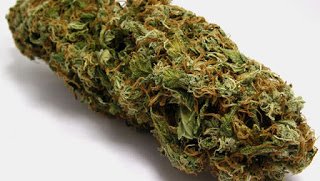
MWENEZI – A-34-year-old Mutare woman was last week convicted by Mwenezi magistrate Honest Musiiwa after she was found in possession of 1.77 kgs of marijuana.
Manyara Matata, who resides at house number 13 Habscus, Palmstone East in Mutare, was convicted on her own plea of guilty for contravening section 157 of the Criminal Law Codification and Reform Act Chapter 9:23 “found in possession of dagga”.
Magistrate Musiiwa strongly cautioned Matata against drug dealing before he sentenced her to 24 months behind bars.  From the 24 months, 10 months were conditionally suspended for five years leaving Matata with an effective 14 months imprisonment.
State facts as presented by Prosecutor Willard Chasi are that on January 14 this year, police detectives received a tipoff that Matata, who was at Ngundu bus stop, was in possession of dagga.
Armed with the information, police detectives approached Matata, searched her and found the dagga.
This led to Matata’s arrest. The dagga was produced as exhibit in court.local

Man stabbed to death after Zvishavane football match

0

Exsto Makunzva

ZVISHAVANE – Sunboy Ncube of Makusha Township in Shurugwi died after he was allegedly stabbed by a fellow fan of Nichrut FC after the Roy Mazingi Tournament match played at Mandava on Saturday, March 3.
The case was reported at Zvishavane Police Station but TellZim News could not get a comment from Midlands provincial police spokesperson, Assistant Inspector Ethel Mukwende as she said she had not yet received the report.
Sources however said the victim was stabbed by a man (name supplied) at around 19:00 hrs following a dispute. The victim had allegedly tried to bar the man from boarding a kombi which had been hired by the football team for fans to travel from Shurugwi to Zvishavane and back.
A heated argument ensued and the now deceased is said to have broken an empty beer with which he supposedly wanted to stab the man.
Sensing danger, the man is said to have fled the scene and Ncube followed in hot pursuit but latter staggered back with blood oozing from from his chest.
He reportedly claimed that he had been stabbed by a knife by the man, got on board the kombi and fell down unconscious.
He was rushed to Zvishavane District Hospital where he died upon admission.local