Home Blog Page 687

Unmasking cervical cancer

0

Nkosikhona Moyo, ZiMSA

Everyone, either male or female, is affected by cervical cancer although it is entirely a female disease. For males you have a mother, sister or a wife or even a daughter, hence the need for you to have an insight into this deadly disease.
First and foremost, we need to know what is meant by cancer. It is undisputable that as proud African citizens we have strong cultural beliefs about cancer, some believe cancer is a condition of witchcraft while others believe that it is a demonic illness. It is of paramount importance for us to look at the public’s perspective of cancer because all beliefs about a disease affect health-seeking behaviour.
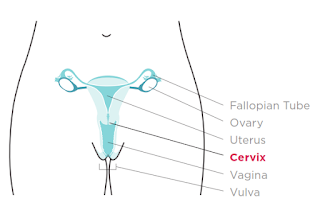
In this article we will look at cancer from a medical perspective. Our bodies are made up of basic units called cells, just like bricks forming a wall so each brick will be representative of a cell. Cancer is defined as uncontrolled, disorganised cell growth and the name of the cancer depends on which part of the body is affected. In other terms, cancer is when body cells become rebellious and no longer function according to the expectations. Cancer cells distort the normal functioning of the body. The cervix is part of the female reproductive system that is located at the junction of the birth canal (vagina) and the womb. The cervix is known as umlomo wesibeletho in Ndebele or muromo wembereko in Shona. Cervical cancer is therefore disorganised uncontrolled growth of cells in the cervix.

Cervical cancer affects females of the reproductive age and in Zimbabwe there are about 4.9 million females who are 15 years and above. These are at risk of having cervical cancer. It is estimated that every year 2 270 Zimbabwean women are diagnosed with cervical cancer and 1451 die from the disease. Peak age for cervical cancer in Zimbabwe is in early thirties. Cervical cancer is the number one leading cause of cancer-related deaths in women. It is caused by Human Papilloma Virus (HPV) infection. Factors that increase the likelihood of one getting HPV infection include having multiple sexual partners, first vaginal intercourse at early age and sexual intercourse with uncircumcised man. Other factors on top of HPV infection that predispose to cervical cancer are family history of cervical cancer, immunosuppression from any cause, smoking and long-term use of oral contraceptives. Arising use of herbal medicines which are applied in the vagina by some women as a way of sexual enhancement for various reasons might also predispose one to cervical cancer.
Cervical cancer comes about when risk factors make changes on the cells of the cervix such that they grow in a disorganised uncontrolled fashion.Individuals with cervical cancer may be symptomatic or asymptomatic depending on the stage (how far has the cancer spread to other parts of the body) of the cancer. If it is symptomatic, just like any other cancer, an individual may suffer unexplained loss of weight, fever and loss of appetite. More so, cervical cancer also causes pain during sexual intercourse, bleeding after intercourse, vaginal bleeding in between monthly periods and after menopause. Other signs and symptoms of cervical cancer are heavy bleeding during periods, and in late stages lower back pain and abdominal pain and signs and symptoms of anaemia (reduced blood) such as generalised body weakness, fatigue, headache, breathlessness and pale eyes and or hands.
The afore mentioned clinical signs and symptoms are used to diagnose cervical cancer. However, nowadays it is recommended that individuals at high risk groups get screened for cervical cancer. Numerous health care centres offer cervical cancer screening services.
The most popular screening method used is called Visual Inspection with Acetic acid (VIAC). During VIAC an instrument with a camera is inserted into the birth canal and pictures of the cervix are taken. VIAC can tell whether the cervix is normal, beginning to form cancer or already has cancer. VIAC results and clinical signs and symptoms are then used to stage the cancer.
Staging of cervical cancer help determine how severe it is, what treatment method to be used and prognosis. There are four stages for cervical cancer; stage 1 is when the cancer is confined to the cervix. At stage 2 cancer has spread beyond the cervix and invades the upper part of the vagina. At stage 3, cancer would have spread even to the lower parts of the vagina.
Stage 4 is characterised by the cancer spreading to other organs. If unattended early, cervical cancer can spread to bones, abdomen, liver and the lungs. People are therefore encouraged to visit their nearest health facilities as soon as they suspect cervical cancer because if diagnosed at an early stage it can be cured completely.
The choice of treatment depends on the stage, age and level of fitness. Treatment can be curative or palliative; the former being used when the cancer is at an early stage while the latter is for later stages for example, if the cancer has spread to other organs. Palliative treatment is targeted at reducing symptoms instead of destroying the cancer. Treatment can be surgical whereby the cancer is removed, or whole or part of the womb is removed. Another form is treatment is radiotherapy in which the cancer is destroyed by radiation. Chemotherapy uses drugs to destroy the cancer cells.
As it is known, prevention is better than cure, risk groups are therefore encouraged to adopt preventative measures against cervical cancer. Prevention can be at a primary, secondary or tertiary level. Primary prevention aims at reducing exposure to cervical cancer risk factors. These include having one faithful sexual partner, delaying sexual debut, correct and consistent use of condoms, and if possible abstinence.
A new programme of HPV vaccination is being enrolled as a way of primary preventing cervical cancer. Secondary prevention aims at diagnosing the disease before appearance of clinical signs and symptoms. Cervical cancer screening services are a form of secondary prevention. These include Pap smear and VIAC, with the latter being mostly used in Zimbabwe. Pap smear involves taking a biopsy of cells from the cervix and the cells viewed under a microscope to determine whether there are cancer cells or not. Tertiary prevention of cervical cancer includes patient rehabilitation as well as palliative treatment.
Cervical cancer is a deadly condition if diagnosed late therefore, it is wise for one to go for routine screening and adopt primary prevention methods. It is my responsibility, your responsibility and our responsibility to fight against cervical cancer which has and is claiming lives of our loving woman.
Nkosikhona Moyo is a fourth-year medical student at the National University of Science and Technology (NUST). He is a member of the Zimbabwe Medical Students Association (ZiMSA) and director of Standing Committee on Public Health (SCOPH) at NUST.
Orphaned Zvishavane genius appeals for assistance

0

Thulani Dereck Maphosa

Exsto Makunzva

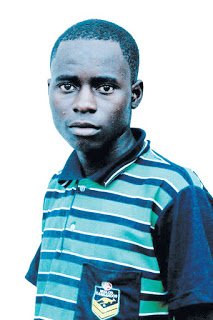
ZVISHAVANE – Thulani Dereck Maphosa of Kandodo high density suburb is appealing to well-wishers and the corporate world for assistance to enable him to go to university.
The 19-year-old did his ‘A’ levels at Mnene High School and scored 20 points in mathematics, accounts, economics and business studies.
Thulani did his ‘O’ levels at Utongani Secondary School in Msipani area under Chief Wedza, where he obtained 7 As and one C.
He did his ‘A’ levels courtesy of the war veterans’ fund as his father passed away when he was still in grade one.
Thulani lives with his mother in a rented house where they survive on his late father’s meagre war veterans pension.
He wants to enroll with the University of Zimbabwe (UZ) for an accounting degree.education

‘Dumped’ baby still unclaimed

0


Nyasha Marumbi

MASVINGO – A baby boy who was found on his own in a bushy area close to a footpath behind Chevron Hotel on December 8, 2017 remains in the care of the State as nobody has come forward to claim him, police have said.
The boy, whose age is approximated to be around one and two years, is being cared for at Masvingo Provincial Hospital.
The police could not release the child’s photograph for legal and ethical reasons but they pleaded with anyone with information that can lead to the parents or guardians of the child to contact the officer in charge Masvingo Central, Chief Inspector Chichera on landline number (039)262986 or the investigation officer, Constable Zivhave on cell member 0775036926.local

Wild dogs terrorise Chipinge villagers

0


TellZim Reporter

Chipinge – Villagers in the lower parts of Chipinge are living in constant fear as marauding wild dogs, reportedly escaping from the Save Valley conservancy, are roaming around attacking and killing their livestock.
Last week 20 goats and six donkeys in wards 20 and 21 under chief Musikavanhu were reportedly killed by the wild dogs.
Fears are growing that the wild dogs may end up attacking people and calls have grown louder for the responsible authorities to address the problem.
Ward 20 councillor Charles Mugidho told TellZim News that the wild dogs have become a menace and villagers keep losing their valued livestock.
“Our people are now living in constant fear because of these wild dogs. It is painful to lose livestock to animals that can be contained if the responsible authorities act quickly.
“People here are no rich and they treasure their livestock because they give them their livelihoods so we call on the Parks and Wildlife Management department to take this issue seriously,” said Mugidho.
“So far we have received reports of over 20 goats and 6 donkeys killed last week. Our deepest fear is that the dogs may end up attacking people.
“We engaged the Department of Parks and Wildlife Management and they promised to come and help us once they mobilise resources. We have organised some meetings with villagers to raise awareness so that they will be aware of the menace of wild dogs,” said Mugidho.local

Masvingo pupils win Sadc, ozone layer quiz competition

0

Zedius Chitiga  gives Felistus Mauta her prize

Brighton Chiseva

MASVINGO – Two pupils from the province won the first and second prize in the Southern Africa Development Committee (Sadc) quiz competition while the third one won the ozone layer quiz competition held recently.
Felistus Mauta from Chimbwembwe Secondary School in Zaka took the first price in the Sadc competition at national level and walked away with US$500 while Tanaka Handina from Nyaningwe High School in Chivi district took the second position and walked away with US$300.
Tanyaradzwa Muchochomi from Runyararo Primary School also scooped the first prize in the ozone layer depletion quiz competition sponsored by the Ministry of Water, Environment and Climate but her price was not disclosed.
Speaking at the price giving day, the Provincial Education Director (PED) Zedius Chitiga thanked the pupils for working hard and putting the province on the map. He also thanked the teachers and the District School Inspectors (DSI) for their hard work.
“I want to thank the inspectors, they work hard to ensure a good learning environment for the pupils. I want to thank the winners, they have made us proud and have put the province on the map,” said Chitiga.
Felistus’ mentor, Mellen Zindove, a debate teacher at Chimbwembwe Secondary School, said she had not expected the pupil to shine as much as she did.
“Of the three participants at our school, she seemed the least performer so I had not expected her to make it past district level. I am thrilled that she has proven us all wrong and exceeded our expectations,” said Zindove.education

Gwanongodza commissions four boreholes in Chivi

0

Ephraim Gwanongodza


Upenyu Chaota

Chivi Central Member of Parliament (MP) Ephraim Gwanongodza last week commissioned one of the four boreholes sunk by the government in Ward 16 to provide clean water to the Matumbwari and Matizenyika villages.
Initially, the government had planned to drill 10 boreholes in each constituency but the number was later reduced to four.
Legislators were asked to submit four sites on which the boreholes could be sunk and, among other three places, Gwanongodza chose Ward 16 which is known for experiencing serious water shortages.
Speaking at the event, the legislator said the sinking of the boreholes fell in line with President Emmerson Mnangagwa’s targets for his first 100 days in office
“Chivi Central experiences serious water challenges and the government pledged to help us sink boreholes so that our people could have access to clean water and the President has delivered. We had hoped to get 10 boreholes but President Mnangagwa said the resources at the moment allowed for only for four boreholes to be sunk in each constituency,” said Gwanongodza.
The people in Ward 16 would often fetch water from the river especially in the dry season, increasing their vulnerability to waterborne diseases.
Ward 16 councillor Munashe Pwanyai welcomed the gesture and heaped praises on Gwanongodza whom he said had maintained his link with the people who voted him into office.
“We hear about MPs who get elected into office but quickly desert the people who voted for them to go and live luxurious lives in Harare. They only come back when elections are due but we are blessed to have a leader like Gwanongodza.
“He is there always and never fails his people. He has worked for us to have clean water and we want to thank him and our government,” said Pwanyai.
Chief Masunda and all village heads in Ward 16 graced the commissioning ceremony.politics

Motorist jailed for kidnapping traffic cops

0


Cephas Shava

MWENEZI – Tafadzwa Shambare (33), of House Number 2080 Overspill, Epworth in Harare was last week convicted by Mwenezi magistrate Honest Musiiwa for kidnapping two Mwenezi police officers.
Shambare, pleaded not guilty to two counts of kidnapping but was nonetheless convicted at the close of State’s case after overwhelming evidence against him. For the two counts, he was sentenced to 10 months behind bars of which four months were conditionally suspended.
Giving his side of the story earlier on in court, Shambare – through his defence lawyer – argued that the two kidnapped officers, Nothani Nyoni and Moxolisi Ngwenya boarded his bus and did not bother to tell him his offence until they reached the Chivi tollgate.
However, on their part the two officers – who were manning a roadblock on the day in question – told the court that they escorted the impounded bus to Mwenezi Police Station on the orders of their superior but Shambare sped off with them still on board.
The State’s case, as presented by prosecutor Willard Chasi, was that on November 4, 2017, the police officers were manning a roadblock at the 174 km peg along the Beitbridge – Masvingo Road when they were tipped about a Mfazi carrying chicken cuts and other smuggled goods from South Africa. 
When the bus was stopped, Shambare failed to produce declaration forms for the goods and was therefore ordered to drive to the police station with Nyoni and Ngwenya escorting him.
Before reaching the police station, Shambare tried in vain to persuade the officers to let him go. He then sped off towards Masvingo and never stopped until he was intercepted by Support Unit officers who were at Chivi tollgate, leading to his arrest.local

Handful attend public hearing on Public Health Bill in Gweru

0

Siyabonga Sayi

GWERU – The public hearing on the Public Health Bill done by the Parliamentary Portfolio Committee on Health and Child Care in Gweru was attended by less than 30 people.
Participants complained that details of the event were poorly communicated to the public.
Only two individuals were active, raising pertinent issues about the proposed piece of legislation with the rest of the attendees seemingly not aware about what the bill was all about.
Committee chairperson, Prince Dubeko Sibanda, however, said the bill was available for anybody to download from parliament’s website.
“You will realise that it is not possible for this committee to provide a hard copy of this bill in time ahead of their visits to all the areas.
“On the issue of attendance, we advertised all these meetings in the national papers and we also informed Members of Parliament to communicate the information to the people in their constituencies,” Sibanda said.  
Lizzie Zvenyika, from the National Council of Disabled Persons of Zimbabwe (NCDPZ) criticised authorities for not availing the bill in Braille and other formats that are friendly to people with disabilities.
“As people with disabilities, we are oftentimes left out of critical discussions and decision-making engagements. We hope this is the last time that we are left out because next time, we expect to see Sign language interpreters and other things consistent with our needs,” said Zvenyika.local

Marapira’s controversial dam

0

Josaya Hungwe


…Hungwe waits for deputy minister

Upenyu Chaota

The Minister of State for Masvingo Provincial Affairs Josaya Hungwe has told TellZim News he was waiting for Deputy Minister of Agriculture, Mechanisation and Irrigation Development, Davis Marapira so that he could engage him on the contentious dam he built across Mucheke River.
Marapira was said to be outside the country on government business and this comes as calls for him to demolish his wall grow louder.
Hungwe said he was aware of the public concerns regarding the matter and will sit down with Marapira once he is back from his foreign trip.
“I have heard the concerns and I am going to raise the issue with Marapira once he is back from his foreign trip. I could have engaged him when I first heard about what he did but he has been out of the country for some time. I am waiting for him to come back so that I can hear his side of the story,” said Hungwe.
Marapira himself says there is nothing amiss with the wall although indications are that he did not follow laid down procedures when he erected it and is not paying for the water he is impounding.
Concerns are also that the materials he used to build the dam wall, farm bricks and mortar, are of poor quality and are likely to get washed away any time, leading to disastrous floods in the vicinity and other places downstream.
Mucheke River, choking with hyacinth and different forms of pollutants, requires an uninterrupted flow of water to keep it a bit clean.
The water in the river also flows down to Lake Mutirikwi, City of Masvingo’s only source of water.local

Female teachers set pace at Tugwane High School

0

Tugwane High School head, Sebastian Chinyoka

Brighton Chiseva

RENCO MINE – Three female teachers at Tugwane High School are shining bright and have set a new record at the school with a clear dominance over the 2017 ‘O’ level examination results.
The three shining stars are Geography teacher Edina Madobhie, Paidamoyo Zinyoro of Religious Studies as well as Sinthisiwe Gudyanga who teaches Agriculture.
In her subject area, Madobhie produced 15 As, 26 Bs and 19 Cs while Zinyoro has 14 As, 11 Bs and 11 Cs. On her part, Gudyanga also prides herself in producing 10 As, 23 Bs and 12 Cs.
Tugwane High School head, Sebastian Chinyoka said he was pleased by the pacesetters, saying the female teachers had done the school proud by proving that women too can be on top.
“These three ladies have made us proud. I want to thank and urge them to continue with their hard work. Their immense efforts and contribution to the growth of our school brand will never go unnoticed,” said Chinyoka.
He said all the teachers were working hard and were equally committed to the improvement of the pass rate as well as the quality of the passes.
“We are happy with the level of dedication that our teachers and all members of staff are demonstrating to make Tugwane High School an epitome of academic excellence. We appreciate their hard work,” Chinyoka said.
Outstanding pupils who made their mark in the 2017 Tugwane High School ‘A’ level classes include Oscar Mabambe with 7 As and one B, Petronella Mashayanyika with 4 As and 6 Bs and Munyaradzi Matose with 4 As and 2 Bs.education