Home Blog Page 197

Gweru City Council introduces disability desk

Tinaani Nyabereka

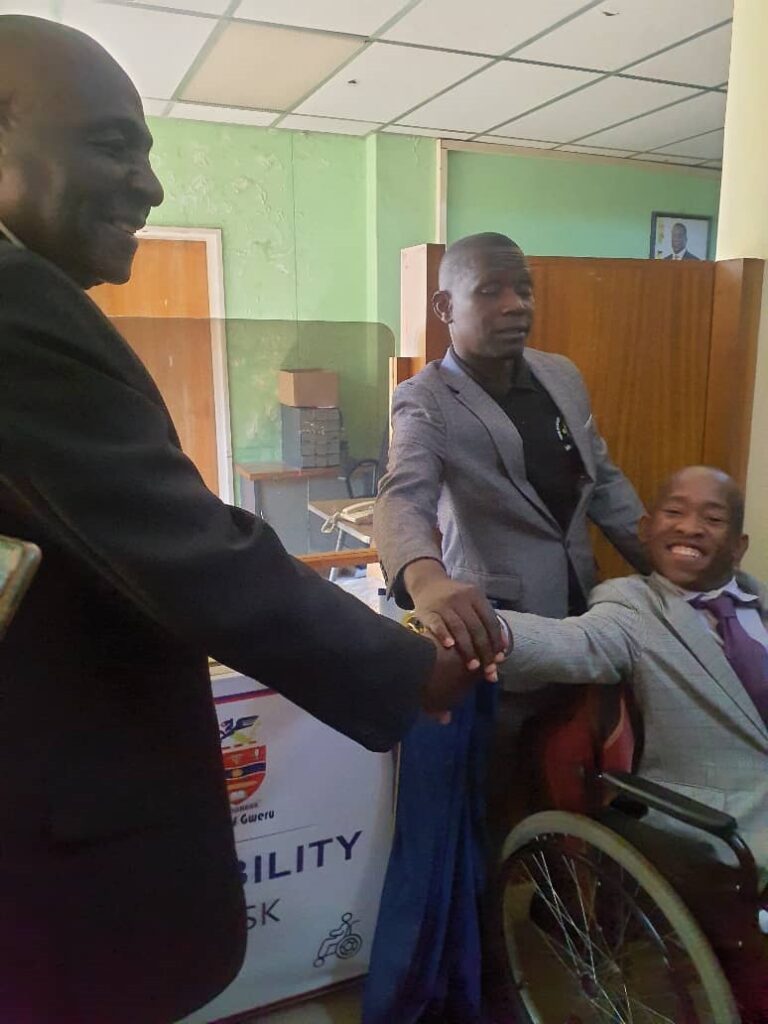
Gweru – in a move that is aimed at fostering service provision and inclusivity, Gweru City Council (GCC) in partnership with Gweru Residents and Ratepayers Association (GRRA) has introduced a disability desk at the town house.
The desk, which was opened on Monday, July 31 is expected to improve service delivery by assisting persons with disability across the city.
Speaking at the event, GCC, Mayor Hamutendi Kombayi, said the opening of the desk was a milestone in in the City’s quest to deliver quality services.
“This is another milestone achievement, to ensure that disabled people have access to the Town house and are able to pay their bills conveniently as we strive towards being a sustainable prosperous city of choice by 2030, we want to make sure that we do not leave anyone behind.
“My council is committed to working towards creating and maintaining accessible facilities and services. We want to enable our customers to pay their bills and seek assistance in the most convenient manner.” Said Kombayi
He thanked the GRRA for contributing towards the opening of the facility saying persons with disability were also residents and encouraged businesses to emulate the development at their premises.
“l would like to thank the Gweru Residents Rate payers Association(GRRA) for working with us in making sure that we establish such a facility. People with disabilities are residents and stakeholders of our City; as such we should be inclusive in all we do,”
“Business people in the Midlands should follow this example and set up disability friendly environments at their premises
“This initiative will go a long way ensuring that people with disabilities are comfortable when seeking services and this shows our commitment towards our stakeholders in ensuring that everyone’s needs are met.
Gweru Residents and Ratepayers development Association (GRRA) director, Conilia Selipiwe implored council to employ one PWDs to mann the desk for effective service to the constituency.
Gweru City Council becomes the first council to issue a disability desk facility as a move to improve effective communication and inclusivity in the city.

UNDP takes clean cooking energy to Masvingo District

Courage Dutiro

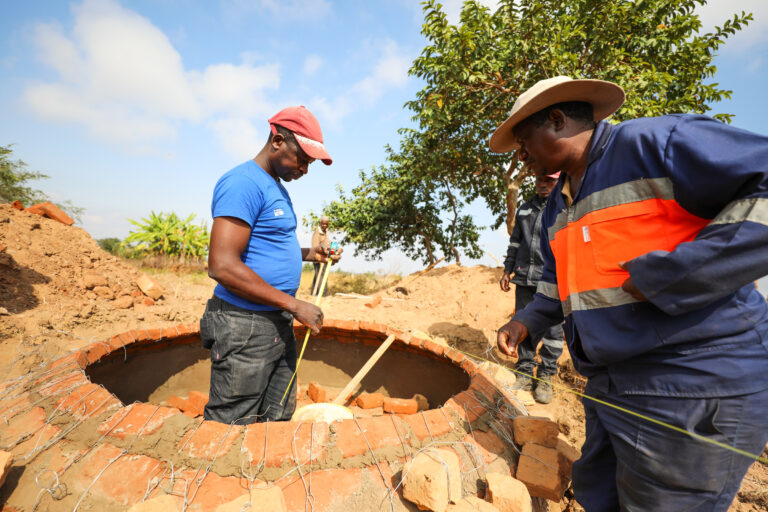
About 30 households in Masvingo district’s Gororo village are set to benefit from the United Nations Development Programme’s (UNDP) Climate Adaptation Water and Energy Programme (CAWEP) biogas initiative.
In a press release by the UNDP Zimbabwe communications team leader Anesu Freddy, 30 households in Gororo village in Masvingo District are among the first 150 beneficiaries of the UNDP’s implementation of the sustainable cooking energy initiative in Zimbabwe.
“A total of 150 biogas digesters will be installed, benefiting 90 households in Hakwata, 30 in Gororo, Masvingo district, and 30 in Wanezi, Insiza District. This monumental initiative will go a long way in ensuring that those farthest from essential services are not left in the dark,”
“Construction of the initial set of digesters in Hakwata (Chipinge district) is already underway, with completion expected by September 2023,” said Freddy in a press release.
In the press release, Freddy also said, the initiative of taking sustainable cooking energy to rural communities will not only lessen the task of gathering firewood among the communities but it also has various environmental benefits.
“When finalized, the project is expected to bring transformation to the lives of the largely elderly population. Clean cooking energy will replace the arduous task of gathering firewood and providing a safer and more sustainable alternative. In addition to the numerous environmental benefits, the project will also empower 40 local builders,” said Freddy.
United Nations Sustainable Development Goal number 7 (SDGs) promotes access to affordable, reliable, sustainable and modern energy for all, that contribute to climate change mitigation.
In Zimbabwe, fire wood is the source of cooking energy in rural areas and fetching firewood is regarded mainly as a female household duty.

Meet your candidate: Zanu PF Masvingo North ward 10 candidate Sengerai Manyanga

Beverly Bizeki

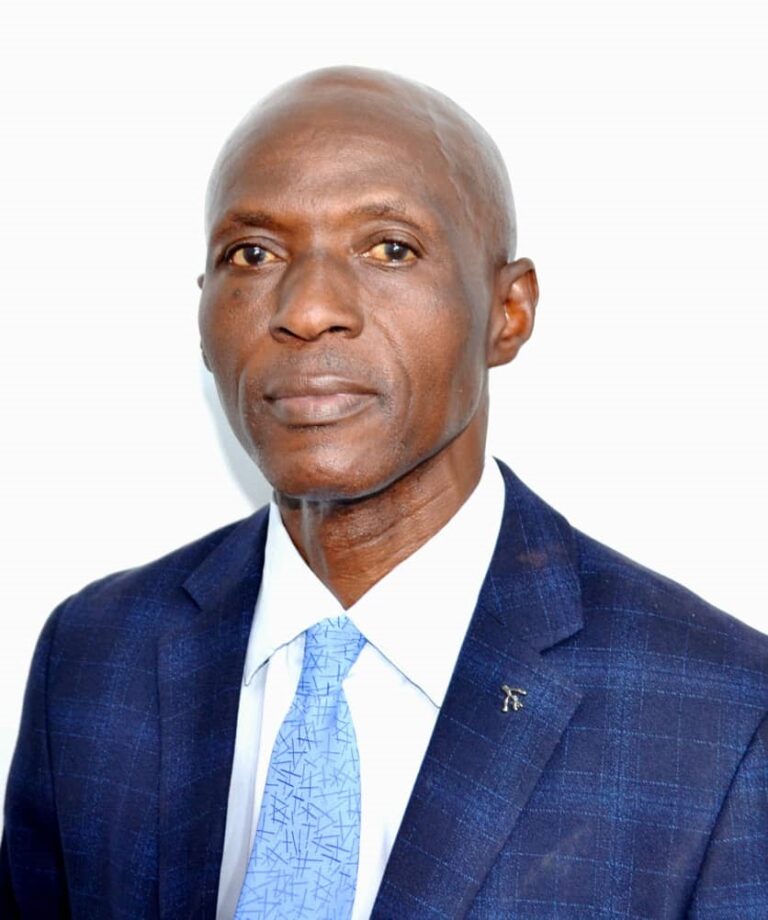
Zanu PF Masvingo North ward 10 candidate Sengerayi Manyanga is confident of a clean sweep in the August 23 election saying he is the people’s favorite candidate claiming that he facilitated for a number of developments including drilling boreholes and establishing a mobile clinic.
Manyanga (36) is running for a second term in office and is hopeful that he will win the elections where he will be contesting against Citizens’ Coalition for Change (CCC) candidate Alan Moyo.
Manyanga has said in his second term he wants to facilitate for the construction of a primary and secondary school in his ward saying the population had increased and there was no council schools in the area.
“When I get in office, I have realized that there is no primary school in our area so I want to lobby for council schools, a primary and secondary school, to serve ward 9 and 10,”
“We want to bring development to the low density areas too like what is being done in the high density areas,” said Manyanga.
Manyanga also said he intends to facilitate for improvement of road network in Eastvale and clean water for the residents.
“We want a good road network system in our ward since it is a low density area. I need to make sure that residents get uninterrupted water supply and to compliment council efforts I will make sure that we have more boreholes in the area,” said Manyanga.
Manyanga also said he will lobby for the construction of a safe market for the women in his ward which he said was one of the key missing things.
“There is no fruit and vegetable safe market for women to conduct business so we want to see to it that a market is constructed in the area.
“We also want to establish shopping malls in Eastvale land is available at Amina Shoping center. There are only beer halls and we have to buy bread in town so I will have that problem fixed,” said Manyanga.
“There have been water challenges in the ward since it is peri urban I am aware because I grew up in that area and we would travel for about 7 kilometers to fetch water in town which was burdensome.
“We have drilled two boreholes at 4’1 infantry brigade using ward development funds whereby one is electrified and the other one has a bush pump since we were starting to have electricity challenges.
“We have also drilled two boreholes at 4 Brigade and one at Zimuto camp we drilled another borehole with funding from the presidential borehole scheme and ZINWA did the work.
“There is another one drilled at the ministry of transport complex with input from ZINWA and I chipped in with 200 litres of fuel,” said Manyanga.
Using the same ward development fund, Manyanga said he has also facilitated for the construction of a fish pond at 4 brigade.
“We have also constructed a 20 x 20 fish pond at 4 brigade using ward development fund and as we speak we are harvesting fish that we got from Zimbabwe parks and wildlife department,”
“Soon we will be constructing another fish pond at 4:1 using the remainder of the ward development fund,” said Manyanga.
Manyanga has also said he was responsible for the establishment of a mobile clinic in Eastvale.
“There is no clinic in Eastvale since 1980 so we have come up with a mobile clinic where we took a container that came from Germany and turned it into a mobile clinic. People relied on the provincial hospital which is a bit far. Now people have access to health facilities from Monday to Saturday,” said Manyanga.
He said people had confidence in him as he has been available during his tenure and assisted people from all walks of life which he did without looking at one’s political affiliation.
“I believe people will vote for me because of the projects that I have done despite political affiliations,”
“I have also been popular for coming up with a ward development committee because I cannot do it all alone without the help of technocrats in planning and executing ward development projects,” said Manyanga.

Meet your candidate: Masvingo urban MDC-T candidate Bonface Mazarire

Perpetua Murungweni

57 year-old Bonface Mazarire who is vying for Masvingo Urban Constituency on Douglas Mwonzora led MDC says he is the right candidate for the constituency saying the electorate need someone with commitment and fair knowledge of the constituency.
He says he believe in the new thinking and trajectory on the political landscape and he is fully convinced that he is the most suitable person for the job.
“The constituency now needs someone who has the time and commitment to serve it. I have the energy and I am confident that no one can take that away from me. Leadership is a responsibility and I strongly feel I am responsible. I have fair knowledge of the constituency, I have been here before and after the birth of MDC,” said Mazarire.
Mazarire pledged to close the gap between Masvingo Urban Constituency, Parliament and Government as the previous elected MPs never came back to people after being elected.
“I pledge to close the gap between Masvingo Urban Constituency, the parliament and government. I will consult the electorate on the best course of development thereby enhancing feedback,” said Mazarire.
Mazarire also said that he was going to work with different stakeholders to ensure that people get the help and assistance they deserve.
“I am going to work with School Heads, Pastors and other stakeholders in the community to select and assist less privileged children & families with tuition fees and other needs.
“I am also going to work together with all elected Councilors despite their political parties and ensure that Constituency Development Fund (CDF) is fairly distributed and directed to developmental programmes.
“I am going to open a constituency office in the CBD for easy accessibility by all members and I am going to ensure that I will bring Government Bills for discussion before and after consultations have been made to strengthen my legislative role.
Mazarire is a secondary school teacher and a public administrator by profession. He served as an Assistant Housing Officer & later as Housing Officer at Masvingo City’s Chesvingo, Rujeko and Mucheke offices.
He holds a Certificate in Education and a BSC Honours degree in Local Governance. He said he joined MDC in 1999 and he is currently the deputy national spokesperson of his party.
On harmonized elections slated on August 23, Mazarire will battle it out with Masvingo city council deputy Mayor Wellington Mahwende of Zanu PF, Masvingo Mayor Collen Maboke who is an independent and Citizens Coalition for Change (CCC)’s Martin Mureri

Why negotiation for salaries and wage increments in the Public Service take longer

0

By Shadreck Zangairai

Zimbabwean legislation recognises the right to engage in collective bargaining. This is done at both enterprise level, through works councils, and at industrial level, through the auspices of employment councils. However this right does not apply to the public service employees who are covered by the Public Service Act Chapter 16:04 and the Health Service Act Chapter 15:16. Ideally there is no collective bargaining in the entire public sector but there is only consultation between employee associations and the Public Service Commission. These consultations are recognised through the establishment of a forum called National Joint Negotiating Council (NJNC), and Health Service Bipartite Negotiating Panel (HSBNP). After consultations, the employer is not bound by the decisions reached and can implement what it believes to be fair disregarding the other parties’ view or submissions. Consultations are also provided under section 24(1) of the Public Service Act.
Recently there has been speculations and expectations of wage and salary increment by the Public Service employees. Negotiations scheduled for the 7th of July 2023 were halted due to discrepancies in the increments demanded and offered, hence the negotiating principals wanted time to consult. This was confirmed by the Public Service, Labour and Social Welfare Minister who told the Herald of the same date that the National Joint Negotiating Council meeting was paused for further consultations. From the foregoing, it is undeniable that collective bargaining in the public service is quite different from collective bargaining in the private sector, both structurally and conceptually. In fact, it may be argued that there is consultation and not collective bargaining in the public service.
Negotiation in the public service is unique in that the state has dual responsibility of acting as both the employer and the legislative authority. As an employer, the state has to rely on efficient revenue collection so as to offer sound wage increases and at the same time it has to utilise the revenue collected prudently and remains accountable for public expenditure, hence the involvement of the Minister of Finance who has the responsibility to justify expenditure in parliament. In such circumstances, bargaining parties in the public service cannot be said to enjoy an autonomous relationship when it comes to collective bargaining, as it seek to achieve a balance between promoting collective bargaining and living within its own means.
The fragmented nature of the labour legislation in Zimbabwe disadvantages workers in the public sector and takes away their right to actively participate in negotiations. Besides the absence of the right to negotiation, the platform for bargaining is also not there. Members of the negotiating team (from the government) don’t have the mandate to decide on behalf of the government, but will have to collect the employee proposals for consultation with their principals. This reinforces the fact that negotiations in the public service are merely consultations. These consultations may take longer thereby keeping workers in waiting.
Unlike in the private sector where the Labour Act is enforced, the Public Service Act provides the legislative framework in the sector. According to SI 141/97, the National Joint Negotiating Council is more of a consultative forum rather than a negotiating forum, as decisions or conclusions made by the Joint Negotiating Council are subject to considerations by the Minister for approval or rejection. This therefore delay negotiations and employees are vulnerable because their employer is also the legislative authority. Therefore one can conclude that there are no negotiations but mere consultations as the representatives of the employer present at the negotiating table do not have the mandate to agree or disagree with the position tabled by the employee representatives. The Minister therefore has the power to make unilateral ‘take or leave’ decisions on the salaries, allowances and conditions of service in the Public Service.
Again, to some extent, government interventions can also cause delays in reaching agreements in the public sector. The Finance Ministry has on many occasions delayed the negotiation process through announcing a wage freeze for all civil servants. This is one of the challenges causing delays in reaching settlements. Other challenges causing delays include, lack of good faith between parties especially government, lack of conducive political, economic and social environment and the repressive and unsupportive legislation. This is because the public service regulations recognise consultations, with the employer having final say in the consultations. On the other hand, collective bargaining without the full right to strike tend to tilt the bargaining power to employers. The International Labour Organisation (ILO) convention on freedom of association embodies the right to strike in collective bargaining.
As a suggestion, the legal framework for negotiation in the public sector needs to change. Thus there is need to push for the harmonisation of the labour laws in the country. This will mean that the public sector will also be accorded the full right to collective bargaining thereby empowering unions. In addition, collective bargaining without the full right to strike tend to give more bargaining power to the employer. Zimbabwe legislation needs to be reformed in this area and afford a balance to negotiating parties. There is also need for the establishment of an effective Employment Council to create a platform for meaningful social dialogue. Furthermore, there is also need to repeal relevant provisions of the Public Service Act, Public Service Regulations, Health Service Act and the Health Service Regulations which grant excessive powers affecting social dialogue such as setting of conditions of service and dispute resolution.

Disclaimer; Shadreck Zangairai is the Principal Human Resources Officer at Masvingo Provincial Hospital. He writes in his personal Capacity
(shadreckzanga@gmail.com)

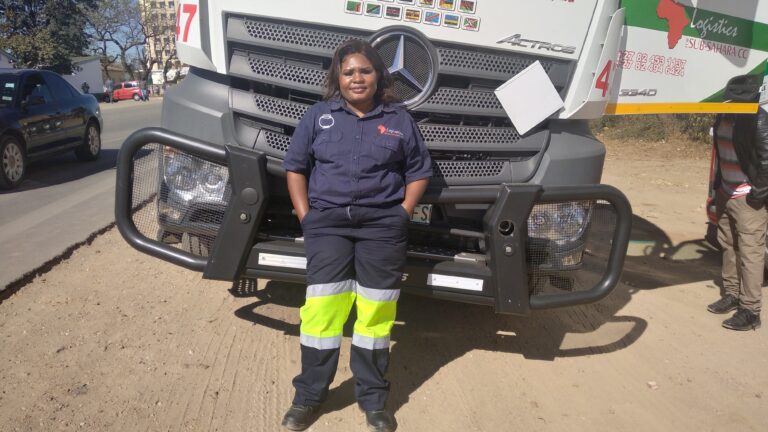
Women breaking barriers- Meet Anne Nderezina a truck driver

Perpetua Murungweni

A 36 year-old Anne Nderezina is one of the few women who are redefining stereotypical gender roles by becoming a truck driver, a trade that is dominated by men.
Nderezina who works for Logistics for Sub-Sahara, a South Africa based company drives a 30 tonne cross boarder truck from South Africa to a number of that include Zambia, Tanzania, Malawi and Kenya.
She said being a truck driver is a not for the feint hearted and not an easy task for women saying she decided to but she had to take up the challenge because she had to provide for her family.
“Truck driving is not an easy job especially for women, it is a male dominated space but I had to take up the challenge because I have a family to feed. I have to put food on the table work I had been doing wasn’t paying enough for me to provide for the family,” said Nderezina.
Nderezina said she started driving trucks in 2016 having been a hairdresser for some time. She left it and opted to be a truck driver which she said pays more and is now earning a better living than before.
“I joined the industry by choice, I chose a profession that earns more than what I was earning from the hair dressing. I am earning good from this job and I am able to send my two kids to school as well as taking good care of my parents,” said Nderezina.
She however said, though she was earning more from the job, it is associated with a number challenges that mainly emanates from it being male dominated.
“Financially the industry is good, however, it is male dominated and is associated with a number of challenges like sexual harassment and bullying. Most men bully women to get served first when we are in queues at offloading bays. Another challenge is that men try to take advantage of us women, at the offloading bays because in most cases I will be the only women there. Instead of respecting and treating me as a workmate, most men ask for sex instead.
She also said most offloading bays are not user friendly for women since they were designed to suit only men.
“Most of the offloading bays have male facilities and rarely do you find one with female ones. In most cases I find it difficult to bath because the showering rooms are just a one open space making it difficult for me to take mine at the same time with my male counterparts. To bath i have to make sure that there is a no one in the bathroom and take a quick one.
The situation forces me to skip a bath sometimes because the bathrooms maybe occupied for the entire time I will be at a certain place or sometimes I will be forced to fork out money from my pocket to get a shower at a lodge.
She lamented the time she spend on the road, which she said takes away most of her time to fulfil other motherly duties.
We take two weeks to a month on the road and that is not ideal for a married women especially in our patriarchal society. This situation has contributed collapse of my marriage because my husband and my in-laws didn’t understand that the time I spend away from home I will be working.
“At first, even my family where I come from did not support me because they too believed the job was meant for men. However with time my family accepted and are now supporting me all the way through,” said Nderezina.

Mounting Public Debt: Is Zimbabwe in a Fix?

0

By Zvikomborero Sibanda

Many developing countries experience increased and frequent macroeconomic volatilities due to a plethora of endogenous and exogenous factors inter alia political instability leading to civil wars; populist economic policies; import dependency; vulnerability to natural disasters driven by climatic changes; strong structural rigidities like price distortions, weak institutions, and high corruption; and unsustainable public borrowing. It is the latter that has emerged as one of the biggest challenges that are stifling economic growth in Zimbabwe. Recently, Treasury released public debt statistics and this column analyses the sustainability of reported debt stock.

Zimbabwe Total Debt Profile
The latest 2022 Annual Public Debt Bulletin (APDB) released by the Public Debt Management Office (PDMO) shows that Zimbabwe’s public debt continues to balloon unsustainably. Statistics indicate that total Public and Publicly Guaranteed (PPG) debt surged 2.4% between September 2022 (US$17.6 billion) and December 2022 (US$18.03 billion). In annual terms, it increased by 4.8% from US$17.2 billion reported as of the end of December 2021. Of the 2022 total PPG debt, external debt constitutes 71.2% (US$12.8 billion) while domestic debt constitutes the balance of 28.8% (US$5.2 billion).

External PPG Debt
Zimbabwe owes about US$12.8 billion externally. Of this total, 45.9% (US$5.89 billion) is bilateral debt comprising Paris Club debt (US$3.76 billion) & non-Paris Club debt (US$2.13 billion); 33.1% (US$4.24 billion) of external PPG debt is external debt contracted by the RBZ while about 21% (US$2.7 billion) is debt owed to multilateral creditors as follows: World Bank (US$1.55 billion), African Development Bank (US$0.69 billion), European Investment Bank (US$0.4 billion), and Others (US$0.064 billion). A large chunk of external debt is interest arrears (IRA), principal arrears (PRA), and penalties (PEN) as shown in the figure below.
Nature & Scale of External PPG Debt (US$ billions)

For instance, of the combined bilateral and multilateral external PPG debt totaling US$8.59 billion, about 77.6% (US$6.67 billion) are arrears of principal and interest including penalties disaggregated as follows: IRA (24.9%), PRA (42.8%), and penalties (32.3%). In 2022, disbursements received from external loan arrangements amounted to US$194.3 million, up 441.2% from US$35.9 million disbursed in 2021. Also, the nation managed to make only about US$63.97 million toward debt servicing in entire 2022 with 20% of this total being token payments. A token payment is a small payment made to acknowledge a debt or an agreement.

Domestic PPG Debt

Domestically, Zimbabwe owes US$5.2 billion. Of this amount, 67.3% (US$3.5 billion) is unsettled compensation to FFOs as per the 2020 Global Compensation Deed, 28.9% (US$1.5 billion) is blocked funds, 3.6% (US$0.19 billion) is treasury bills & bonds, and 0.2% (US$0.012 billion) are arrears to service providers. The massive increase (44%) in total domestic PPG debt between September 2022 (US$3.6 billion) and December 2022 (US$5.2 billion) is attributable to the reclassification of blocked funds as domestic debt following the assumption of these from the RBZ by the Treasury.
Treasury also concluded a USD-denominated domestic loan with a private company (Platinum Investment Managers (PIM) Nominees) to the tune of US$360.5 million for road construction and rehabilitation. The Treasury issued TBs totaling ZWL83.36 billion for budget financing in 2022 with 55% issued through private placements while 45% were issued through auction system. More so, Treasury managed to pay all maturing TBs & Bonds totaling ZWL36.47 billion comprised of principal (ZWL31.34 billion) and interest (ZWL5.10 billion). However, as of the end of 2022, about ZWL129 billion TBs & Bonds were outstanding, with a total interest bill of ZWL52 billion.

Debt Sustainability

Generally, countries borrow to smoothen their spending paths, that is, raise money to finance economic growth and development. However, nations must maintain sustainable debt levels to avoid jeopardizing the stability of the economy. Public debt is considered to be sustainable if the government can meet all its current and future obligations without exceptional financial assistance or going into default. The debt-carrying capacity depends on various factors including, inter alia, quality of public institutions, debt management capacity & policies, and macroeconomic fundamentals.

Zimbabwe PPG Debt Indicators

Zimbabwe’s total PPG debt constitutes about 99.6% of 2022 GDP thereby contravening the provisions of both the Public Debt Management (PDM) Act requiring a debt-to-GDP threshold of 70% and SADC’s macroeconomic convergence target of 60%. This debt-to-GDP threshold also far exceeds the National Development Strategy 1 (NDS1) target of 61.5%.
A debt-to-GDP ratio shows a country’s capacity to repay its debts. As such, Zimbabwe’s high ratio indicates that public debt is growing faster than national income thus the nation has a very low capacity to meet all of its financial obligations when they fall due.
As such, the country is indeed trapped in debt distress as arrears and penalties continue to mount. Statistics show these constituting about 52.1% of external PPG debt or 78% of combined bilateral and multilateral creditors estimated at US$8.59 billion.
The ballooning debt is a great cause for concern especially under the current context of rising global interest rates as major central banks are engaging in financial tightening to clamp elevated global price inflation. It is worrisome to note that 71.2% of total PPG debt is external debt which is denominated in global hard currencies: US dollar (64%), Euro (22%), Chinese yuan (6%), Japanese yen (4), and British Pound sterling (3%).
With a too-volatile local currency that has lost more than 80% of its value against the USD in the first half of 2023, the external debt profile shows that Zimbabwe is highly susceptible to exchange rate risks, that is, it requires more ZWLs to service external debts. Hence, more resources will have to be provided for in the National Budget, the resources which would otherwise be used to provide crucial public services like education and healthcare as well as rehabilitating crumbling economic & social infrastructure, particularly in rural underserved and marginalized communities.
Also, the maturity profile of outstanding domestic PPG debt is vexatious. The latest statistics show that about 90% of Treasury Bills & Bonds mature in less than two (2) years, indicating that Treasury is facing a high refinancing risk.
Debt refinancing risk refers to the possibility that a borrower will not be able to replace existing debt with new debt at a critical point. Factors that are beyond Treasury’s control such as rising interest rates and a shrinking credit market will likely constrain its ability to refinance maturing TBs.
Furthermore, international reserves as measured by months of import cover are declining, from 2.7 months in 2021 to a paltry 1.1 months in 2022 (see Table above). Import Cover (IC) measures the number of months of imports that can be covered with foreign exchange reserves available with the central bank.
Ideally, an IC of about six (6) to ten (10) months is essential for the stability of a currency. It is an important indicator of a nation’s external trade stability and its ability to meet import obligations. So, Zimbabwe’s low IC illuminates her potential high vulnerability in managing import requirements or external shocks.
The incessant growth of external debt is bothersome as the country has now a low reserves-to-external debt ratio. This ratio shows how many dollars Zimbabwe has in reserves for every dollar of debt owed to external creditors. A huge external debt is problematic because it directly damages capital inflow and often leads to a vicious debt cycle – the cycle of continuous borrowing, accumulating payment burden, and eventual default.
Defaults can cause a borrowing country to lose market access and suffer higher borrowing costs, in addition to harming growth and investment. This is exactly the case faced by Zimbabwe and has raised caution among her prospective lenders like IMF and AfDB who are now unwilling to extend concessionary lines of credit.
Consequently, the nation is now resorting to resource-backed loans (RBLs). These are loans provided to the government where repayment is either made directly in natural resources such as minerals or repayment is guaranteed by a resource-related income stream. For instance, in 2022 Treasury revealed that Zimbabwe borrowed US$200 million from China in 2006 which loan was secured by 26 million ounces of platinum reserves in Selous.
These RBLs are exerting dire developmental impacts as they are fuelling unsustainable resource extraction leading to environmental degradation, air & water pollution, forced displacements, and farmer-miner & human-wildlife conflicts. They are also largely accrued in secrecy thereby sidelining Parliament and increasing the chances of corruption.
The debt cycle is also greatly affecting the government’s flexibility to react to adverse or unforeseen contingencies. This is happening at a time the world is experiencing seismic shifts in climatic conditions as natural disasters like El-Nino-induced droughts, floods, and cyclones are becoming more frequent.
These are having a huge toll on the Global South (developing) countries. As such, the ballooning debt is constraining Zimbabwe’s capability to invest in climate change mitigation and adaptation initiatives to cushion vulnerable groups & communities and improve economic resilience.

Zvikomborero Sibanda is an economic analyst and an astute researcher. He writes in his personal capacity. He can be contacted via email:

bravosibanda@gmail.com
Twitter: @bravon96

41 graduate with Carmel Bible Institute Southern Africa

0

Tinaani Nyabereka

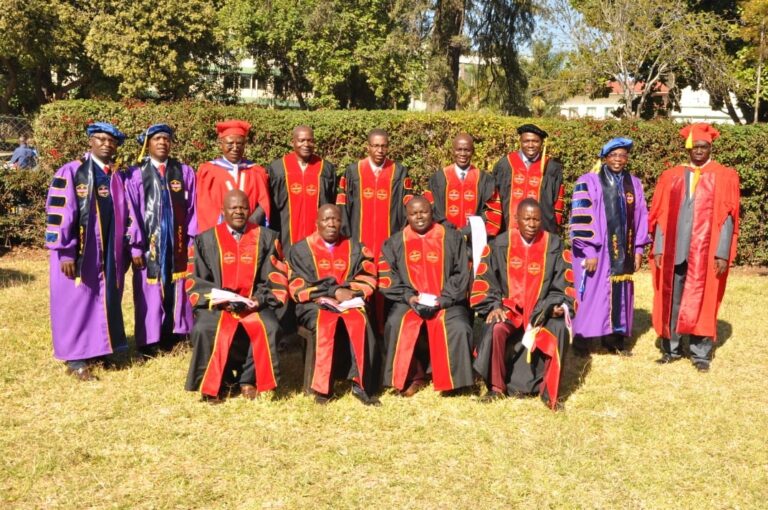
GWERU – At least 41 people graduated from The Carmel Bible Theological Institute at a colorful graduation ceremony which saw graduands shining in various courses with degrees and master’s degrees.
Of the 41, 13 were capped with doctorate degrees while 4 graduated with professorship at a historical ceremony held in Gweru.
Solomon Chimange who is the Director of Carmel Bible Institue Southern Africa (CBISA) who also graduated with distinguished Professorship in Practical Theology called for young people who graduated to look forward building their nation through research and practical implementation of the knowledge they acquire at school.
“Education remains a key priority to this nation, as a recent graduate I want to urge young people not to drift away from the educational pathways because an empowered young man is a wise youth.

“I feel very proud of the achievement, I feel great because I worked hard for this, and it’s not easy to be awarded a Professorship in Theology. So going forward it’s all about providing knowledge which capacitate other learners on theology and bible studies as I strive to groom a moral upright society.” he said.

“If you can’t go wrong, know that you can purse your dream. The world is fast changing and it’s on by the book that people are adopting to the newly advancing technological systems. So my opinion is that, education remains an imperative element as it helps the society to shun illicit ways of life,”
“Drugs have killed our tomorrow’s leaders. Its good that we instill the culture of morality and uprightness in the young people by teaching and capacitating them on dangers of taking drugs.” he said.
On programs offered at Carmel, Chimange however said, the institution was bridging the gaps in pastoral work.
“I can safely say more than 70% of the pastors are not that much learned for the Ministry, most have trained in diplomas and some were affiliated to institutions which were not accredited,”
“This is where Carmel is coming in, our courses are currently being offered for free, what is only required is a small admission fee. Then once one is admitted he or she can start her courses.
“So our courses are offered both on distance learning and on campus, we say pastors must be equipped, the community must be equipped,” he said
Institution of higher learning was offering a wide range of courses including, Mission and Evangelism courses, Systematic / Applied theology, Divinity, Christian leadership and Administration
The institute’s Principal, Dr Lovemore Musiiwa and Vice Principal, Dr Apostle Penias Kariteni also graduated on the same occasion with distinguished Professorship.

Conflict prevention and coups in Africa

By Cyprian Muchemwa / Nicholas Aribino (Writing in our individual
capacities)

The African Union (AU) on its Agenda 2063 had as one of its aspirations, an intention to silence guns by 2023, however, it shifted this promise to 2030. Sadly, guns are still blazing in some parts of Africa (South Sudan, Sudan, Mali, Somalia, Mozambique, Niger, Nigeria, DRC). If the reality on the ground is anything to go by, silencing the guns by 2030 or even by 2063 seems to be a pie in the sky and just a mere aspiration for the AU. This is because of coups and other forms overt and indirect violence which are actually intensifying especially in the Western region of Africa. The Western region of Africa comprises the following countries; Guinea-Bissau, Cote d’Ivoire, Gambia, Nigeria, Guinea, Benin, Burkina Faso, Togo, Mali, Niger, Senegal, Sierra Leone, Liberia, Ghana, Cabo Verde and Cameroon. It is the intent of this opinion piece to interrogate conflict prevention and coups in Africa, given that a coup has just happened in Niger.
In the wake of the coup in Niger the Economic Community of West Africa (ECOWAS) has given the military coup leaders a week to give back power to the captured president of Niger or face a possible military intervention from ECOWAS. To that effect, Mali and Guinea Bissau have openly intimated that an attack on Niger will be an attack on them. Mali and Burkina Faso are standing with the military coup leaders in Niger like white on rice. The military coup leaders seem to have a critical mass of the population of Niger siding with them. One wonders if ECOWAS is coming as an outsider without a message, the citizens of Niger have their lived struggles to share and these lived experiences border on corruption, mineral leakages, foreign interference, misgovernance, illicit commerce and human rights violations. To that effect, the citizens of Niger have stepped up to the plate by demonstrating in support of the coup in the capital Niamey. The Citizens of Niger regard ECOWAS as an outsider without a message, they are the only ones who feel what they feel because of the misgovernance they have been experiencing at the hands of the deposed leadership. To the people of Niger, ECOWAS represents status-quo-ers, a system that identifies with the status quo and the state without necessarily identifying with a critical mass of a people whose dreams and aspirations have been quashed by those who have had the power and arrogance of incumbency.
The writers of this opinion piece would want to submit that the African continental and sub-continental blocs are poor at conflict prevention and somehow good at conflict management. Despite the AU having the African Peace Security Architecture (APSA) anchored on the following pillars, the Panel of the Wise (PoW), Continental Early Warning System (CEWS), African Standby Force (ASF) and the Peace Fund (PF). The APSA pillars are by and large meant to prevent conflict in Africa but the whole infrastructure comes without any meaningful budgets to operationalise peacebuilding and peacemaking. The AU has been described by some scholars as being made up of resolutionaries and not revolutionaries because of its tendency of making a gamut of resolutions that do not even see the light of the day, the agenda 2063 could be another one. Good plans need a budget, a budget is a management tool. To that effect, the AU, together with its subcontinental blocs have become poor at conflict prevention. Conflict prevention by definition implies preserving and protecting human lives, it is about human security and anticipatory thinking. Arguably, African leaders through AU and its constituent parts (regional and subregional blocs) should invest heavily in early warning signs and early response mechanisms in order to nip potential conflicts (coups, civil wars) in the bud. What ECOWAS is doing now in Niger is not conflict prevention but conflict management. Conflict management is trying to de-escalate a conflictual situation and it usually leads to negative peace, in other words it is reactionary as compared to being proactive. Prevention is four times better that rehabilitation. It is always advisable to spend in order to save.
Coups, civil wars and armed conflicts can be prevented if African leaders respond timeously to early warning signs regarding matters affecting human security like illicit financial flows (illicit commerce), disarticulated economy, poverty, unemployment, inequalities, corruption, human rights violations, discrimination, hate speech, pernicious polarisation, politics of patronage, extractive economies, ungoverned spaces, skewed distribution of resources and political violence. Nothing happens without having sent out signals to the world, what has happened in Niger cannot be defined in terms of an event but in terms of a process. As this process was panning out, one may need to ask where UN, AU and ECOWAS have been? There were signs already in Niger of people who were not happy about the insecurity and stagnation of the economy, the heavy presence of foreign military troops and bases and the interference of France in Niger in a bid to protect its investments in the mining sector, the legitimacy and ethnicity of the deposed leader. The above context and dynamics have been there for UN, AU and ECOWAS to try to resolve in good time.
Coups will remain a permanent feature in Africa even beyond 2023 unless their underlying root causes or structural causes and drivers like poverty, inequalities, unemployment, corruption, culture of violence, political economy, ethnic, religion and region-based politics and neocolonialism are addressed through conflict prevention efforts. The arbitrary borders of Africa have also been a great cause for concern and have created fertile grounds for civil wars and armed conflicts. What Niger is experiencing can be experienced by any other country in Africa because the context and dynamics that breed and feed into coups obtain in many African countries. Most African countries have negative peace, which is the mere absence of war and other forms of overt violence. African countries must strive for positive peace, which seeks to eliminate the underlying structural causes of conflict due to different forms of injustices, social neglect and human insecurity. The danger of negative peace is that it is peace just waiting for triggers to ignite into war and other forms like overt violence that include coups. Aiming towards merely silencing guns is aspiring for negative peace which is not even good enough. Thus, if Africa is serious about silencing guns by 2030 or beyond, it must be more proactive in its approach and should start by dealing with negative peace which is mostly associated with insensitivity to human security and other challenges associated with it.


Dr Cyprian Muchemwa


Dr. Cyprian Muchemwa- Lecturer : Department of peace and governance at the Bindura University of
Science Education.
Contact : +263 773429935

Dr. Nicholas Aribino : ZIMCARE Trust Country
Director.
Contact : +263715617095

Grudge leaves Lower Gweru man nursing axe wounds

0

Tinaani Nyabereka

Gweru- Police in the Midlands have launched a manhunt for a suspect who axed his colleague over and left him nursing wounds in Lower Gweru.
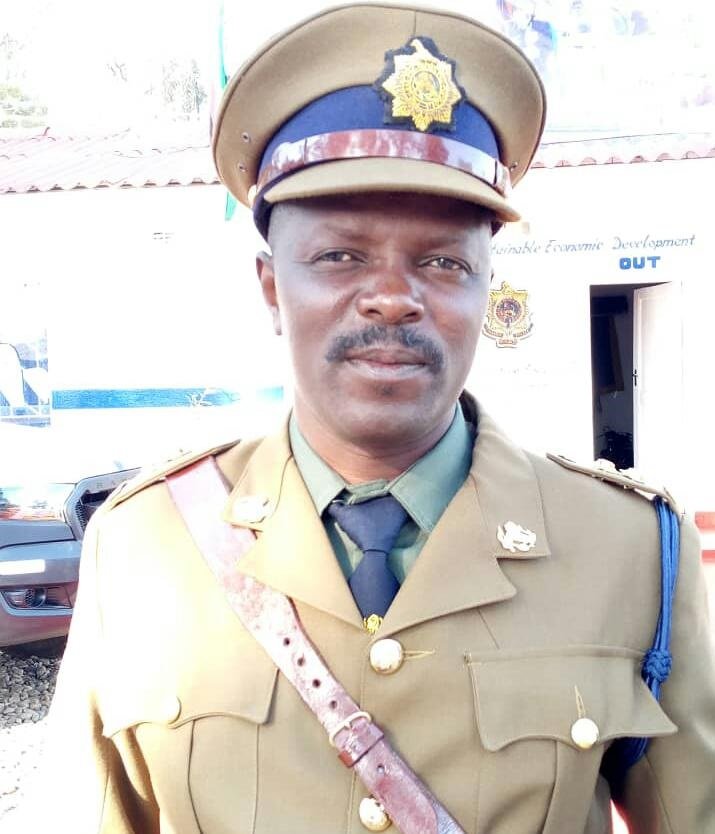
Midlands Provincial Police spokesperson Emmanuel Mahoko confirmed the incident where Last Moyo (20) was axed by his colleague Gugu Nyoni in a scuffle and appealed to members of the public with information that may aid in apprehending the suspect to come forward.
“Nyoni is still at large and we are appealing to members of the public who might have information leading to his arrest to approach their nearest police station “Said Mahoko.
Sources allege that on 30 July 2023 around 0030 hours, the complainant Moyo of Nkani Village under chief Bunina in Lower Gweru and the suspect whose age is yet to be established were at Makepesi business Centre when a misunderstanding ensued over a grudge they already had.
Nyoni then struck Moyo once on the head and once on both legs, using an axe, resulting in Moyo sustaining serious injuries.
The suspect fled the scene and the complainant was taken and was admitted at Gweru Hospital where he was said to be in a serious condition.