
Ladies and gentlemen, Mapombi has been pondering hard lately, trying to figure out kuti senyika tirikuirasira papi chaipo. I have been observing silently zvangu and seeing that we are all in a state of continuous anxiety because hurumende yedu always has some way of degrading us to a lower level, and it is a bottomless pit. Many of us have even lost any sense of being, kana muchiti ndinonyepa walk through an alley in any urban area uone ukabudamo uchigona kufema. We have downgraded to being vandalists everywhere, kuzvibatsira pese pese, kucheka masecurity fence, kuuraya public infrastructure, kurasira marara pese pese, and deny it all you want, we have become a broken nation. Pfuurai nekuno kuChitima and smell what I smell everyday. I’m sure if Mucheke river had a voice, none of us will be sleeping as it will be groaning and wailing from being choked netsvina nemi, iyemi vanhu! The city sometimes looks and smells like a big dumping site chairo. We used to have public recreational facilities, maswimming pool, even council bars but yangova mbiri yekare makapedza through kwachu kwachu kuvandaliser zvenyu. Trust me, you will find human waste somewhere close to these places because papiko paungashaya tsvina yevanhu muroad munyika munomu? Everywhere you go, kana uine sense like me you will choke, not only from the smell of garbage and smoke yemarara arikutsva, but also from the nostalgia that will hit you like a tonne of bricks, wozonzwa hako vamwe voti kare kwaiva nani. Sometimes hasha dzinombondibata when I think of the entitlement some of you have; who do you think is going to come and fix even the simplest of things zvamunongogo na kugadzirisa mega? Makamirira Zanu kuti ikuitirei? Zanu chaiyo chaiyo yatinoziva tese? Bato riri kutonga told you clearly that nyika inovakwa nevene vayo and vene vayo ndimika nhai. Who else do you think is going to come and rescue you? Chokwadi mukawana nguva you should really think deep.
Ikozvino cholera is ravaging the country, and we are back again in international headlines for the wrong reasons. Hapana chakanaka chinobva Nazareta zvokwadi. That narrative of Zimbabwe and cholera is going to be a hard one to correct, plus we always have the same hotspots, meaning that this is more of an administrative issue than anything else. We all know kukatongonzi manyoka Chegutu, Chiredzi neHarare hazvisari. And the truth is cholera kumbaidya tsvina yomunhu mbishi sekutaura kwevanamazvikokota veutano. Our water situation is pathetic, ukuwo kanzuru yedu yeMasvingo its now years tichingonzi water augmentation programme bva tichasvika pakufa pasina chabuda. Truly kuita mvura inoita zvekushanya tivete and it goes again tivete.
While many of us are still reeling from the pain of August events and bracing ourselves to take on the next five years ago, that Tshabangu fella was busy plotting hake kudzosera two thirds majority kuvene. The structureless structure has been shaken, like it or not and ‘wapusa wapusa’ strategy iya inogona kuzvimbira vatenzi. Anyway, I wish Chamisa had an ounce of Nevers Mumba’s courage, aifanirwa kurova chidhoma kusvika mai vacho vabuda pachena, like we saw Zanu doing after Mumba called out ZEC. I can bet you, this Tshabangu guy is working in cahoots with vamwe varikudya musame plate with Nero wacho, who have been bitten by the same bug that bit Dhagi gore riya. I heard mafun’afun’a here at Chitima kuti Mwananchi might be the one behind these shenanigans, and I hope it is not true. Such traitorous tendencies taiti akapera nguva yaTsvangirai ka isu. Chete politics is a dirty game, you can never trust anyone, that is why Chamisa doesn’t eat pese pese or kungonwa mvura pese pese. There are too many Iscariots out there. These things hazvina achaziva, because lately we have been seeing Welshman achingoita madimikira on social media, which has been interpreted by many to be some disgruntlement against Nero. Varume muri makwara evanhu imimi. Yes, you are cowards if it is true that you are plotting against Nero. Why not directly express your disgruntlements than placing a tortoise, Tshabangu, on the fence? Munosvodesa mhani imi. It shows that you are a bunch of sore losers who take voters for granted. Toswerera kuita maby-elections muzinyika rine economy yakavora irori instead of focusing on rebuilding, tongogara tiri mumutsetse wekuvhota here nhandi? Tinyareiwo please. Oh, and yes, kuParamende uko, do you see how much rotten to the core you are nhai vamutauriri vedare? I’m told you chose to ignore Chamisa’s letter, which came way earlier than Tshabangu’s, the one recalling CCC MPs and chose to declare 15 seats as vacant, mune chokwadi here shuwa asi? On top of that you went ahead and suspended MPs who were aggrieved by that from Parliament. To you, we should forever remain in election mode all year round. You want to continuously expose the electorate to violence associated with these elections, all in the name of wanting two thirds majority. The amount of apathy this establishment has created through such repressive actions ichashupa kucorrecta, hezvino ndiri pano. Kurevesa kudai denga muchaita rekugoogler, bhinyai zvenyu nyika muchidaro. Nebuchadnezer wakazofura bundo rimwe gore. Shuwa kuvhurisa Mapombi bhaibheri, haa varume mune utsinye imi. Why do you always want to armtwist the will of the people and thwart voices of dissent? History is going to judge you and I pray it judges you so harshly that your offspring regret being part of your bloodline, kutokurambai chaiko.
Anyway, enough of the venting out, because zveZimbabwe ndikazviteedzera ndingatopenga chaiko. Chaora chinhu ichi. Even machongwe every morning ave kurira achiti “Mukai titsamwire hurumendeee!” kkkkk. Don’t ask me how I know this, ndomukirana nevarimi vachisvika paChitima kaini kuzohodhesa mabanana kuti ndiwanewo arinani asina kunyanyoora. Zvakangonakira kedu Masomere who now cruises in a GD6 imi vamwe muchingovukura, kkkk. Yes, for him zvakatobhadhara and soon, his family will not be relating to peasant problems. Mogona kunzwa akutoshanda naanaNiki Tomorrow newedu Jamwanda wemuromo pazhe uyu, but I’m not sure zvikawirirana because vese ndevekuwandisa, dzungu, papaz too much. Neukuwo Sabhuku VZ and crew varikunwa tea nenyama after Chivhayo blessed them. When we were growing up, we were told kuzhangandira nemushaba zvakashata, look now, vamwe vakudya nazvo isu takangoti vavava. When ED campaigns again in 2028, Mapombi achangozviswededzawo so that she eats panodya vamwe. Ndosvikepi nemabanana akaora ndichirara mushanga dzemaMucheke? I also want kutsamwisa Chivhayo so that he blesses me neone brick remayuwesi zvaro and I will be sorted for life. Chegore iroro vanondiona, ndinotenga chingoro chose chemabanana ari fresh ndoripwa kugara senge Baba Tensen. If you see Baba Tensen tell him kuti vashingirire zvinoita. Bootlicking is now a career in Zimbabwe, and I wish our universities could add it to their curriculum; it is a vitally necessary skill to possess in Zimbabwe, and ritori hustle hombe iroro.
Ko mhere yondonzwa kwaGutu kwaMaungwa uko hanzi kudiiko? Mapombi won’t say much about the situation but only to remind everyone that what binds us is humanity and may we never forget that to an extend where we celebrate one’s death. Ndinoti zvekare pasi nemhirizhonga dzezvematongerwo enyika kana dzimwe dzipi zvadzo. I also condemn sexual harassment mumabasa umo with utmost disgust. Chati homu chareva.
Where is the Mphoko guy ladies and gentlemen? I hope wherever he is zvirikufaya ikoko. Regai ndindokanga maputi angu for lunch kusati konyanyopisa. Remember to drink water and mind your business. Zanu chiororo hamuigone iyi. Mboko imboko!
Two thirds majority by hook or crook

Masvingo Urban MP launches constituency development committee
Tanyaradzwa Tizora
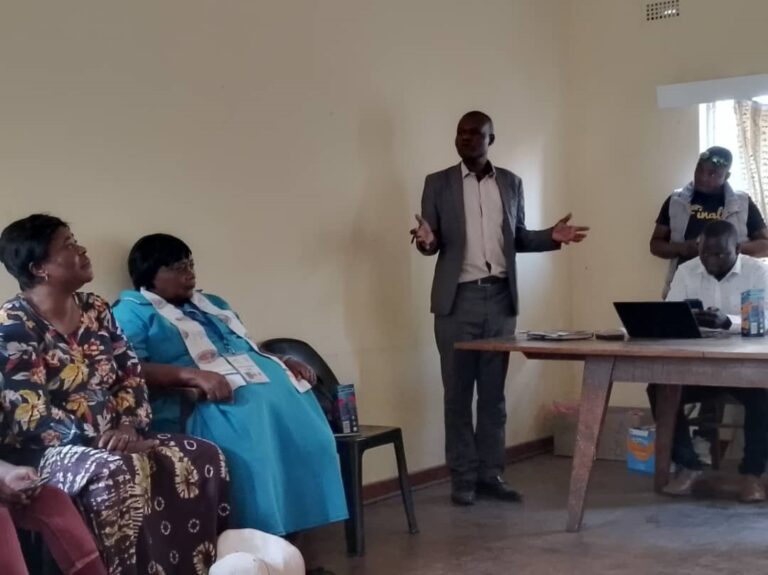
Masvingo Urban Constituency Member of Parliament Advocate Martin Mureri recently launched his constituency development committee which will oversee the use of Constituency Development Fund (CDF) among other duties.
Speaking at the launch at Masvingo Sports Club, Mureri said the committee was non-partisan with people drawn from different walks of life and said he was confident that it will steer development in the city.
“The committee is inclusive of people from all aspects of life despite their political orientation. I’m very confident that we will work together well in the next five years and the clusters shall coordinate its members and interfaces with the office of the MP time and again.
“The committee will help in mapping a development agenda for Masvingo Urban Constituency by enhancing transparency, accountability and local power for the community members to work together for development,” said Mureri.
He said the committee will conduct its first meeting on a date to be advised and all stakeholders will attend.
The development committee comprises of the MP, political party representatives, Masvingo City Council Mayor and Deputy Mayor, a representative from the business community, a representative from small and medium businesses and informal traders.
It also has representatives from different civic society organizations, resident associations, church leaders, women cluster, musicians, health professionals, students, youth, School Development Committees, teachers, people with disability and sports representatives.
Road to PSL probable for FC Wangu Mazodze
Decide Nhendo
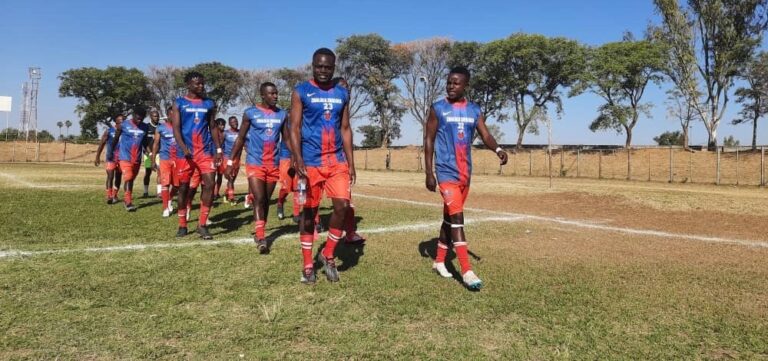
The race to PSL soccer is now becoming predictable as FC Wangu Mazodze thrashed Surrey FC to maintain its hold on top of the league with four points ahead of second placed Tenax FC which drew 1-1 with Midway FC.
The Kingdom Boys dismissed Surrey FC by four goals to two when they hosted Surrey at Mucheke Stadium to possess 51 points with Tenax on 47 points, same with Rusitu Tigers but the former enjoy a superior goal difference.
At match day 25, The Kingdom boys are maintaining their winning streak as they are focused on PSL soccer promotion come next season.
Fans and the general populace in Masvingo are rallying behind Mazodze as they are yearning for PSL soccer in Masvingo Province.
The Eastern Region Division 1 (ERD1) league is only five games away from end and The Kingdom Boys are going to face Manica Juniors away, JB Busha at Mucheke, Tenax FC away and home rivals Masvingo United and will face Renco Mine FC in their last game.
Tenax will face Midway FC in their next game
Tenax FC and FC Wangu Mazodze are going to clash in a deciding match as the two teams are racing for ERD1 championship to be promoted to PSL.
The match against Surey is the third win in a row and in their next five games, three are away games and two are home.
Masvingo United lost by one goal to nil when they played Rusitu Tigers FC as they are lagging far behind log leaders.
Government announces 2023 wheat marketing prices

Beverly Bizeki
The government of Zimbabwe has announced the wheat marketing price for 2023 which has been pegged at US$520.25 per tonne.
This was announced by Lands, Agriculture, Fisheries, Water and Rural Development Minister Dr Anxious Masuka during a press conference in Harare where he said the proposed marketing price for wheat is consistent with achieving food and nutrition security and macroeconomic stability.
“At 15 percent rate of return, at a yield level of 4.62MT/ha the recommended price and proposed 2023 marketing season price for wheat is US$520/MT. The import parity price for wheat ranges from US$344 to US$462/MT,” said Masuka.
Masuka also said the Grain Marketing Board will purchase all wheat financed under the presidential input programme and by self-financed farmers although self-financed farmers can sell to the best advantage on the market or to GMB.
Contractors including the Food Crop Contractors Association (FCCA), Commercial Bank of Zimbabwe (CBZ) and Agriculture Finance Corporation (AFC) are obligated to buy back contracted wheat at market prices.
Masvingo province this year has planted 2138 ha winter wheat.
As famers are bracing up for the summer season, the province is targeting 101 863ha Pvumvudza beneficiaries with 13 360ha being prepared already.
Management of children with autism (asperger syndrome)

By Dr. Nicholas Aribino
One thing that stands out like diamonds in a coal-field when it comes to human beings is their diversity in terms of culture, abilities, disabilities, ethnic backgrounds, language, age, sexuality, gender, sex, race, socio-economic status and tastes, among other things. Given that human beings are heterogeneous by way of their constitution, some scholars are persuaded to intimate that the only thing that is normal under the sun is difference. It is the intention of this opinion piece to walk the readership of this paper through one of the most least understood disability, which is autism.
Autism which is sometimes referred to as either Asperger Syndrome (AS) or Pervasive Developmental Disorder (PDD) is a generic term that is used to cover all autistic and autistic-like behaviours or disorders. Autism, therefore by way of characterization may imply the absence or severe impairment of two-way verbal and non-verbal social interaction and an inability to use imagination. Activities of children with autism are generally dominated by stereotyped and repetitive actions and routines. Children with autism are not in anyway a homogeneous group, they are individuals that have unique personalities and should be dealt with an alertness to their nuances.
In terms of the aetiology (causation) of autism two broad theoretical frameworks have been considered historically-biological and psychodynamic. The biological perspective assumes that genetic factors are responsible for causing autism, while the psychodynamic assumption views family interactions as casual factors in autism. The latter perspective may need to be fleshed out a bit as it involves factors that may be within the influence of parents. The apologists of psychodynamic aver that children develop autism as a result of rejection from their parents; they withdraw from this rejection by building defences against psychological pain. As children withdraw from rejection, they retreat to an inner world that does not interact with the outside world that involves people. It is important to appreciate that theories by their nature serve to explain, describe and predict phenomenon. This understanding of theory should help people to have thought processes that are informed by science and also by their own frames of knowledge as stemming from indigenous knowledge systems. A hybrid approach to understanding autism should be embraced because knowledge is not only a function of science but a byproduct of intersectionality. All the same, where the psychodynamic approach to understanding autism is concerned, the implication may be that parents should strive to develop an affiliative bonding with their children.
In terms of language and vocal traits or characteristics of a child with autism, the child may lack nonverbal communication skills such as nodding, gesturing and facial expression. If a parents observe the above, they should not just rush to conclude that it is autism, as these challenges could be flagging up speech and language problems or hearing impairment. Parents and teachers are neither developmental pediatricians, child psychologists nor occupational therapists to diagnose autism, rather they should merely sound out their observations to the specialists above for investigation, diagnosis, prognosis and placement in the case of educational purposes. However, in the event that a child has been diagnosed with autism and showing the above language behavioural traits, parents and teachers can accompany verbal statements with physical actions and nonverbal actions (“Come here”-take the child’s hand and pointing to the area you wish to go to, or guiding him or her in that direction).
The child with autism may also exhibit unusual responses to sound, have little or no language, uses more nonverbal than verbal language. For example, pulling a person to a place in order to get the desired object. The child with autism also becomes more visible by lacking emotional tone even when crying, may also not respond to verbal communication and may echo words that others have said immediately (technically called immediate echolalia) or from something heard previously (delayed echolalia). If the above behaviours are characterized as autism by specialists, it is important for teachers and guardians to encourage social language like verbal and nonverbal greetings.
Children with autism enjoy playing with inanimate things like objects such as keys and toys of trains. Inanimate things are not human beings. Male adults with autism have been observed to love pictures of beautiful women and when this writer went to Japan on a brain-exchange visit he observed pictures of beautiful women pasted on the walls of the rooms of male adults with autism in their community dwellings. People with autism can also be involved in self-injurious behaviours like biting and scratching themselves and hitting themselves against walls. Their threshold for pain is said to be very low. They can typically be described as being self-abusive, disengaged from the social world as they are asocial in the way they relate with others. They may spew out saliva on others, collect other people’s things without that awareness of seeking permission for whatever they want. Social networks of children with autism may say that they are stealing but to them its just taking without any ethical implication of stealing. They may cry where they are supposed to laugh, they may not even worry about being left on their own, they may eat nonedible substances, they may also not be aware of dangers like cars, swimming pools or heights, may not even exhibit sympathy or insight into how others feel and may show aggression or destructive tendencies.
It is, however important to understand that the cognitive structures of people with autism may be sluggish or of average or above average intelligence. These children may have or not have good visual skills. Research has also established that they have good rote memory (they may sing for you the song Chitekete word for word), and may have special skills in in arithmetic and music. Largely, behaviourists have encouraged parents, guardians and teachers to reward periods of focused learning with things the children enjoy doing such as music or a favourite books or toys.
Dr. Nicholas Aribino : ZIMCARE Trust Country
Director and is writing in his own capacity.
Contact : +263715617095
Farmers encouraged to embrace Urea treatment of Stover

Faith Duri
Farmers in Masvingo province have been encouraged to embrace Urea Treatment of Stover to improve livestock production for smallholder farmers to protect and develop the national herd.
Permanent Secretary in the Ministry of Lands, Agriculture, Fisheries, Water and Rural Development (MoLAFWRD) Dr John Basera said this during a Urea Treatment of Stover and Pfumvudza field tour held in Ward 13 Masvingo District on September 26, 2023.
“Masvingo province has close to 20 percent of the national herd which needs to be protected in view of our livestock recovery and growth plan.
“Farmers are encouraged never to lose any livestock due to poverty and deaths, the urea treatment of Stover will help animals maintain their condition in distress periods thereby improving productivity in the sector.
“All farmers are encouraged to embrace urea treatment of Stover for growth of the sector, therefore extension officers have a task to follow up beneficiaries of the programme and ensure good agronomic practices are religiously followed for increased production and productivity,” said Dr Basera.
Dr Basera also added that all extension officers ensure that the treatment is administered correctly so that no cattle dies from it.
“Our extension officers are going to make sure that no livestock dies with this urea treatment since they are going to be there when you will be making the treatment to instruct you in every step,” added Basera.
Acting Deputy Director in the department of Livestock Production and Development Rutendo Nyahoda explained to farmers on how to prepare the urea treatment.
“To prepare a urea treatment, one needs mealie-stocks or straws which they cut into small pieces not longer than 10cm using a knife or a machine then dig a hole which has a length of 4m and a width of two meters and one meter deep.
“Basic ingredients needed for urea treatment are 50kg of urea for protein, 200litres drum of water and mealie stocks that can make about 1 tonne food and optional ingredients needed are sugar for energy and salt but if one doesn’t have these ingredients they can use the basic ingredients.
“We all know that if cattle eat food with urea they die since it is poisonous to animals, so if you prepare this process correctly nothing will happen to your cattle.
“We have instructed our extension officers to make sure that they train you to make the urea treatment, so make sure that whenever you want to make the treatment an extension officer must be there to instruct you on how to make the treatment, after the treatment is done you incubate under plastic sheeting for 5weeks
“After 5weeks you put them under a tree for one week for aeration then give your cattle 2kg each per day” said Nyahoda.
Masvingo provincial veterinary officer Kramer Manyetu also added that farmers must not give 2kg straight, they must at least give them 1kg each to see if the treatment have been made correctly.
“We must not give the cattle 2kg straight, farmers must at least give them 1kg for cattle and quarter a kg for goats and sheep to see if you have made the treatment correctly if the treatment is not made correctly there are signs that cattle will make within the first three hours of receiving treatment.
“The first sign that shows cattle have been affected is the nervous sign, so each farmer must have at least 5litres of vinegar when they are about to give their livestock the treatment.
“If your cattle is affected you give them 2litre of vinegar but giving them 500ml after every 30mins,” said Manyetu.
Urea treatment of maize Stover is a feed technology developed to improve the nutritive value of high fibrous crop residues for efficient utilization of available feed resources.
Mashava based mine workers steal gun from workplace

TellZim Reporter
On October 6, 2023, two gold miners who resides at Chuma homestead in Marowa village under chief Chikwanda, Masvingo appeared in Masvingo magistrate court before magistrate Ivy Jaona with the charge of stealing company property and firearm.
The duo were remanded in custody for continuation of trial on October 10, 2023.
The state led by Tinotenda Makoti told the court that in July 2023, the accused persons Naison Chizema (22) and Muratile Matutu (26) employed at Golden hill mine in Mashava hatched a plan to steal the company’s firearm which was in a storeroom.
Matutu went into the storeroom and took the smith and wesson revolver, four x emex emulsion explosives, seven x fuse codes and a lighter code whilst Chizema remained outside as sentry.
They went on to hide the loot in a pit near the fence of the premise.
After knocking off duty, Chizema took to his residence where he hid them at the nearby bush under a rock.
The following day the complainant Ragin Kassim (46) noticed that the firearm and some company’s property was missing, at around 0200hours and reported the matter to the police.
Detectives from CID Masvingo received a tip off that Chizema was in possession of a firearm at his place of residence.
Acting upon the received information, detectives approached Chizema and informed him about the nature of their inquiry.
He then led detectives to the nearby bush where he had hidden the revolver and other property that was missing and everything recovered.
Chizema implicated Matutu who was arrested that same day in Mashava.
Good Samaritan loses US$530 to passenger

Admire Chatindo
A Masvingo man will rue the day he decided to give a free ride to a 24-year-old man on his way to church after the passenger went on to steal from him.
The accused has since appeared before Masvingo magistrate Ivy Jaona facing charges of theft, after stealing US$530 in a car he had been left by the driver who had gone to attend a church service
The case was postponed to a later date for further examinations
Prosecutor Esabel Pambuka told the court that on September 20 2023, at Ndarama High School Masvingo Bonfree Rukovo Rukovo resides at 993 Chinyavada Street, Rujeko C, stole US$530 in Alphos Mazarire’s car.
Mazarire was driving his motor vehicle, a Mazda Rustler to Ndarama High school for a church service, and on his way, he met Rukovo and offered him a lift.
Mazarire made his way to one on the classes where a church service was in progress, leaving behind Rukovo seated in his car.
Mazarire later returned to his car only to discover his empty car, without Rukovo and the US$530 he had left in his car.
Mazarire filed a police report and investigations led to the arrest of Rukovo.
NAMA awards set for Bulawayo
Tinaani Nyabereka
Bulawayo – The 22nd edition of the National Arts Merit Awards (NAMA) is set to be held in Bulawayo in February next year which is the first time ever for the prestigious awards to be held outside Harare, organisers of the event have revealed.
The awards, that are recognised as the premier arts awards in the country that recognize top performing artists, have for a long time been held in the capital but this time around, the City of Kings will host the ceremony.
National Arts Council of Zimbabwe director, Nicholas Moyo revealed that they settled for Bulawayo after failing to find a suitable venue to host the event in other provinces outside Harare.
“This time we decided to take the event outside Harare and we have resorted to Bulawayo. The decision was reached after failing to find a suitable venue that could host such an event in other provinces that’s why we settled for Bulawayo,” said Moyo.
As part of the preparations for the awards, there will be a golf day on November 10, in Bulawayo, with the aim of having artists, corporates and other stakeholders to mix and mingle sharing notes in a relaxed environment.
A Gweru artist and actress, Enifa Mbewe expressed gratitude to the changes saying this year’s edition was a unique phenomenon.
“Having the Southern Region hosting the NAMA shows that there is a culture of inclusivity and diversity in promoting arts and culture. We are happy that, this time we are going to see the new artists and new participants being given the platform to be awarded and rewarded for their skills,” said Mbewe.
Chief Nhema’s wife gets top position at Zaka RDC
Perpetua Murungweni
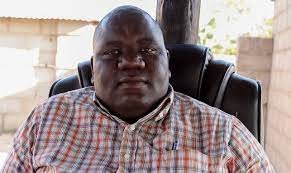
Zanu PF bigwigs in Zaka District are being accused of competing to put their wives in influential positions with the latest development being that of staunch ruling party member Chief Nhema’s wife Portia Gwese being seconded to be finance committee chairperson.
The development comes just after Zaka District Coordinating Committee (DCC) Chairperson and Zaka South MP Clemence Chiduwa reportedly influenced his wife Fungai Maregere’s election as Council Chairperson.
Not to be outdone, Nhema is believed to have influenced his wife Gwese’s election as Finance Committee Chairperson and will be deputized by Enias Chinyoka of ward 4.
Ironically, Chief Nhema born Rangarirai Bwawanda who once promised President Mnangagwa 5 million votes from Zaka alone and Chiduwa are known to be adversaries and Nhema once threatened to bar Chiduwa from campaigning in his area.
Ward 18 Hakufiwi Hakufiwi who lost to Maregere for council chairperson post was elected conservation committee chairperson and will be deputized by Tererai Tererai of ward 8.S
The planning committee will be chaired by Sarah Mamvura of ward 2 and will be deputized by former council chair Sebastian Masundire of ward 13.
Benjamini Chikuni of ward 29 is the social services committee chairperson and will be deputized by Aleta Makomeke from ward 8.
Ward 9 councillor Livingstone Paradza will chair the Human Resources committee and will be deputized by Ellar Mazorodze of ward 10.
Stella Shambira of ward 24 who made it through quota system will chair the audit committee and ward 15 councilor Simeon Chakanzani is the vice chairperson.
Chakazani torched a media storm on Election Day after he was assisted to vote despite him being a Zanu PF candidate and deputy headmaster.