Home Blog Page 205

All we want is to see PSL in Masvingo – FC Wangu Mazodze

0

TellZim Reporter

Masvingo based Zifa Eastern Region Division One soccer league team, FC Wangu Mazodze said they are still sticking to their dream of bringing back PSL to Masvingo City.
Speaking after the Masvingo derby in which they beat Masvingo United with a goal to nil, FC Wangu Mazodze’s spokesperson Sukuoluhle Ndlovu said they were working towards bringing back PSL in Masvingo.
“We are the log leaders and will forever be, we are maintaining the momentum and are working towards one goal which is to bring back PSL to Masvingo,” said Ndlovu.
Masvingo United spokesperson Omen Mafa said the game was tough, the team displayed very well even though they conceded a goal in the last five minutes of the match.
“It’s unfortunate that we conceded at the last minute of the game. Even though we had issues with how the goal was scored, the boys played very well today,” said Mafa.
Mafa also said he wanted to see PSL being played in Masvingo come next season.
Desire Ndongeni a soccer fan who had travelled from Bikita Minerals to witness the Masvingo derby said overally all the teams showcased very well.
“This was a derby all the teams played very well. In a derby anything can happen, if a team conceded fans will always blame someone but it was 50/50,” said Ndongeni.

Devolution funds need enabling act : Mayor Maboke

Beverly Bizeki

Masvingo City Mayor who is also Masvingo Urban aspiring Independent Candidate Collen Maboke has said devolution funds needed an enabling act to guide councils on how to use the funds.
Speaking to TellZim News on the sidelines of his campaign towards the August 23 elections, Maboke said his main focus will be on policy change and formulation which he said was affecting how councils operate.
He said the absence of an enabling act on devolution funds was disastrous as councils were getting a lot of challenges in using the money.
“There is no enabling act for devolution funds which regulates the use of these funds and also how the provincial council operates”
“We are having challenges as we do not have any formula using these funds and I intend to work towards the formulation of such a policy for the smooth running of projects involving devolution funds” said Maboke.
He went on to say he intends to advocate for review of the urban council’s act which he said should speak to issues of service delivery and there is no law that regulates how the act should work.
“During my time as mayor, I have discovered that there are a number issues and areas that need policy change. I noticed that the urban council’s act needs to be improved and once I am elected, I will advocate for that,” said Maboke
He also said there was need for a national policy to deal with how the elderly are billed especially on monthly council bills considering the fact that they do not earn as the younger population.
“Once elected, I want to push for a policy that speaks to our elderly members of the community, and there is need for some sort of exemption on council charges. The government should put an incentive so that they can pay thier bills. We have a sad situation in Mucheke where council disconnected water supply to some elderly members’ homes for failure to pay,” said Maboke.
He also talked about improving pension funds so that those who go on pension enjoys life rather than suffering like many are doing because they are getting next to nothing.
Maboke was disqualified in the middle of the Citizens Coalition for Change (CCC) candidate selection and he went on to contest as independent.

Masvingo City schools get facelift

Decide Nhendo

Masvingo city council (MCC) has embarked on several infrastructural development projects to facelift some of its schools within the city with some of the projects already completed while others are still on course.
This was revealed in council minutes of the Public works and Planning Committee minutes dated June 13.
Progress was recorded at Rujeko secondary school where block 5 and 6 superstructure brickwork was completed with work in progress for the construction of a computer laboratory.
“Block 5 and 6 superstructure brickwork was completed at Rujeko, the computer laboratory construction at Rujeko secondary is at foundation level, where excavation and compaction had been completed’’, read part of the minutes
Work was also said to be in progress at Shakashe, Francis Aphiri and Burombo Primary Schools.
“Painting of four classroom blocks at Shakashe primary school has been completed, and roof painting is in progress’’
“Repainting of Francis Aphiri primary school outside classroom blocks has been completed, as well as painting of new class room block and electrical tubing,” reads the minutes
Another fundamental project being undertaken by MCC at Vurombo primary school includes trench excavation, concrete footing for the boundary which has been completed, while the brick work was in progress.
The minutes also noted that drainage pipes laying and backfilling had been completed, as concrete lining of the cell leachate collector drain and leachate pond construction had been completed while landscaping was in progress, overall percentage completion being 98 percent.
Safe market construction has been regarded to have been 50 percent complete, and it was proposed and agreed that the Acting Director of Engineering Services should organize a tour of the Safe Market for familiarization.
On Tanaiwa Project, it was reported that brickwork, drainage excavation and water connections for the six toilets had been completed, while foundation for the extra ten toilets was in progress.
Runyararo West, Gomba toilet and Runyararo South West, Mbudzi toilet walls had been painted completely.
Rujeko Market toilet is halfway complete and the brick work for the toilet had been completed and waiting for roofing materials. The overall percentage completion was 50percentage.
The minutes noted that a vegetable Market near Shushine garage in ward 1 required the concrete slab while the one near Vision Academy needed to be reconstructed so that original vendors could be allocated their original vending market.

Mentally challenged man kills mother

0

Perpetua Murungweni

A mentally challenged Mwenezi man from Neshuro village, under Chief Neshuro in Mwenezi is on the run after he killed his mom over a simple misunderstanding involving a cellphone and R60.
The incident happened on June 28, 2023 after the deceased Taurai Musungwini asked him about her missing Hisense cellphone and R60.
Masvingo Provincial Deputy Police Spokesperson Assistant Inspector Lorine Ndlovu Chanakira confirmed the incident and urged people to value the sanctity of life and appealed to members of the public with information that may help in apprehending the suspect to visit the nearest police station.
“We received a case from Mwenezi where the suspect who is still on the run struck his mother with a stone after she asked him about her phone and some money that was missing,”
“We urge members of the public to value the sanctity of life and involve a third party when solving disputes. We also urge persons with mentally challenged relatives to make sure that they always take their medication,”
We appealing to anyone with information that may lead to the arrest of the suspect to approach any nearest police station,” said Chanakira
Sources said in the morning of June 28, 2023 Andrew Mazariri, (29) who is mentally challenged came home from Sarahuru shopping center where he had spent the night drinking. The now deceased asked him about her Hisense phone and some money that was missing.
Andrew did not answer his mother but instead took a stone and struck her mother on the back of the head and she fell and died on the spot.
The incident happened in the eyes of 19 year old Susan Mazariri who is the deceased’s daughter who shouted for help from Bernard Musingwini (41), of the same village.
Andrew fled and disappeared into a nearby mountain, Bernard reported the matter to Sarauro police base and the police attended the scene and took the deceased’s body Neshuro district hospital.

Can organisations control the pace at which they change?

0

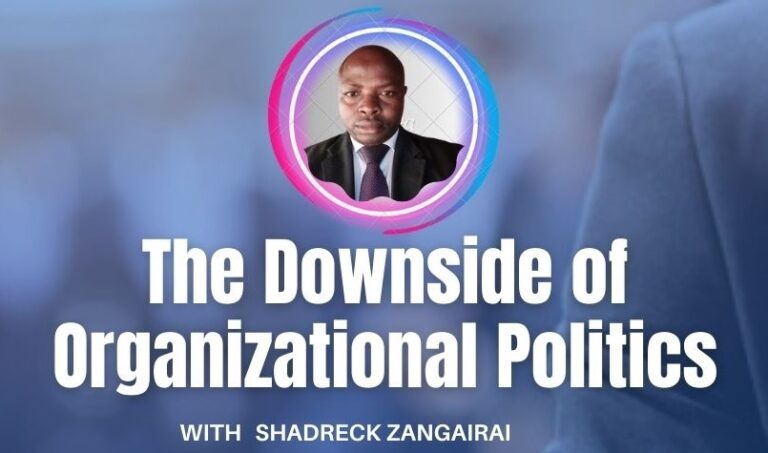
By Shadreck Zangairai

Managing change is one of the critical and fundamental roles of leadership. Leadership is a process that is not specifically a function of the person in charge but it is a function of individual wills and needs. Any organisation requires a leader to guide through the dynamic environment. Managers set plans to achieve goals, champion them throughout the organization and then work to stay on track. This is because no company today is in a particularly stable environment. Even traditionally stable industries have witnessed and will continue to experience turbulent change. Thus the dynamic and changing environments that organizations face today require adaptations, sometimes calling for deep and rapid responses. Change or die is the rallying cry among today’s managers worldwide. Companies change due to technology, economic shocks as the case of Zimbabwean industries, competition, changes in social trends and world politics. With this view in mind, it is beyond reasonable doubt that organizations need to change. In most cases, organisations judge the pace at which they change based on internal measures and factors.
Organisations need to know how prepared they are, what calibre of people they have and how things have been done before in order for them to know what to do next. But this pace might be best for the organisation and not for change. As noted by Burnes, leaders must measure transformation pace through the rate of competition both internal and externally. In this fast-moving and unpredictable world, there is no doubt that organisations are faced with the challenge of managing change. There is a lot of debate on which change approach is best in order to cope with the pace of change. However, i will argue that there is no one best way of managing the pace of change. I will conclude that organisations must avoid seeking ‘one best way’ approach to change but instead focus on identifying the approach which best suits the change to be undertaken.
Change is inevitable and it somehow has to happen. If one fails to respond to the dictates of change, the result is that one will be changed or rather fall by the way side as events unfold. Change is common in organisations and it has to be managed in a strategic way. Jack Welch stated that if the rate of change outside the organisation is faster than what it is inside then the end is approaching and closer. It is fundamental to note that it is not the organisations that change but rather it is the people who change hence people are the drivers of change. It is against this background that managers play a significant role in change management. As mentioned earlier that it’s the people who change, this gives every individual the responsibility of embracing change.
There is never a time one will say we implemented change yesterday and it shall remain like that now and forever. It is a continuous and infinite process. The art of doing business remains changing hence managers need to be always on the lookout or on their toes in order for their business to remain viable. Given that the world is big, a lot is also happening on a daily basis and as such managers don’t have any minute to spare. There was a time when banks were doing good business and they maintained the status quo but now they are faced with massive competition from ecocash, telecash or netcash money transfer system. If they remain like that without having to be innovative and change, they will soon go out of business characterised by liquidity crisis. Ecocash allows for bill payments like council, hospital bills, Dstv only to mention but a few.

Equifinality and Organisational Change

Organisations have the ability to recognise patterns and make assumptions about the environment. They know what works well and what does not work, thereby enabling them to create a set of rules and processes that allow the achievement of specific goals. However, such goals may be affected by the changing environment. Equifinality means that an organisation can achieve similar results using different processes. No one method can be said to be the best. The concept of equifinality explains the reason why there is no one best way to lead or manage change. This is so because there are certain environmental factors that cannot be controlled by the organisation. The external environment for example, includes a variety of needs and influences that can affect the organisation but which the organisation can not directly control, e.g., political, economic, ecological, societal or technological influences.
Because of the prevailing changes today, most organisations favour radical change than convergent change. Some changes may be sporadic or ongoing as a result of organisation reacting to external forces for change. It is therefore necessary to define change in terms of the degree to which organisational change take place as well as how organisations control the pace at which they change. By implementing the planned approach to change as well as the emergent approach, an organisation will be trying to control the pace at which it adapts to change. In addition, an organisation can also control the pace of change through proactive strategies to the extent that it becomes a major force for change. This is a planned approach to change which originates from predictable, pre-planned steps. Some researchers believe that change processes should be pursued at a slow pace while others argue that radical change needs to be made, and others believe that sustainable change require pace than speed.
In support of the later view, Photofilm is an example of a firm that implemented transformational change. The company, through its Chief Executive Officer did major restructuring and rebranding of the company, focussed on their two lines of business, DVD home delivery and video streaming. The company had lost half of its employees because of poor management. After the transformation, it changed from being a home deliverer of discs to a producer of video content. It produced various series such as “Dangerman”, ‘The War Zone’, ‘Your own destiny’, some of which have been aired on ZBC TV. The company used to distribute films and DVDs that were made by others but the company changed its strategy very quickly. Photofilm executed a major rapid change which most companies fail to do. Because of the changing competitive marketplace, speed and response time is crucial for organizations to survive. Organisations that adapt to the development of new technologies faster or can adapt to changes in the market faster will survive the competition. In today’s world of constant, complete change, organisations that react rapidly and responsibly are successful. Organizations should anticipate and invent the future for them to be successful.
Proactive change is evidenced in organizations that react to a perceived opportunity as a result of assessment or recognition of internal or external factors. For example, Econet perceived a need for a new form of receiving and transferring money and introduced Ecocash, and later the Steward Bank and took steps to position its company for this emerging opportunity. Proactive change is an opportunistic change in which the organisation creates strategic advantage as a result of anticipated internally or externally factors. With this type of change, it means an organisation can control the pace of change. Like what Econet did, the change benefited the market, hence growth to the company. Reactive change is a response to internal or external factors that have already occurred rather than those that are anticipated in the future.
Through the equifinality concept, any given system may reach the same position through various ways. This means that organisations cannot rely on one method of change approach but can employ the approach that suits the situation. Organizations have no choice but to change. The world is moving and shifting fast. Trying to cope require applying best thinking and structures, systems and approaches. Globalisation and diversity trends are therefore forcing organizations to be more flexible and adaptable to the changes. The concept of equifinality explains that there is no one right way to managing change and there is no right way to change. In summary, the current changing business environment requires various approaches to cope with the pace of change. The concept of equifinality explains that there is no one best way to achieve the change. Due to different internal and external environments, each organization has to consider and analyse their own environment in order to adapt the most appropriate approach and tool to implement change successfully. There are many models that can be used for successful organisational change. Winning organisations respond to the pace and complexity of change. They adapt, learn and act quickly.

Disclaimer; Shadreck Zangairai is the Principal Human Resources Officer at Masvingo Provincial Hospital. He writes in his personal Capacity
(shadreckzanga@gmail.com)

Meet your candidate: MDC T’s Brian Dube for Gweru Urban

Tinaani Nyabereka

Gweru – MDC-T sitting MP for Gweru urban who is eyeing for a comeback in the August 23 elections Brian Dube says his previous work in the 5 year term is testimony to why he should be re-elected.
He added that, despite the unevenness in the Political field, people should look beyond political parties and elect someone who is capable of addressing their problems as a constituency and his work proves that he deserved another chance in office.
” The work done in the constituency speak to itself, as a sitting MP, I have done my best to serve my constituency, now the decision for my come back is now in the hands the people I have served,” said Dube
He went on to say his party was a social democratic party which embraces the poor in society and believes in standing for people especially marginalised members of the community and giving them a voice.
“At MDC-T we believe in serving the people especially the marginalised, vendors, and college students our elderly and above all, every Zimbabwean.” Said Dube.
A legal practitioner by profession, Dube said he also fights against corruption and advocates for equal opportunities in society saying a society where justice is delivered fairly guarantees development and peace to every citizen despite political belonging.
Dube further said there were politicians from other political parties who were working to deter development at the expense of the ordinary suffering citizens and said the electorate should punish such through the ballot.
“Leadership is designed to serve people not self-gain, however, we have other politicians who were deterring development at the expense of the suffering people. These kind of people should be punished in the ballot box,” said Dube
On policy issues he promised to stand against corruption, which he said was a cancer, by advocating for sounding laws and regulations.
“As MP I stand to denounce corruption, MDC T believes in total eradication of corruption in government and the private sector which has become cancerous.
We need to do away with cartels, clear business transformation, repeal Procurement Act, Minerals Mining Act and make sure justice system is restored. Our system as a country must speak to the needs of the people,”
“Look at the issue of Woodlands and Mkoba 21 you see that companies from Harare got tenders to service stands, to date some are even entering into public private partnerships with our local authority for their own benefit and that must be stopped,”
“Why can’t a person be questioned if he is found with loads of cash, gold with an open legal system we are going to put an end to that as MDC -T.” Said Dube.
Highlighting his way forward ahead of the election scheduled for August 23, 2023, Dube said,it was prudent for the people of Gweru to open their eyes and advocate for the development they want.
Speaking of developments he initiated in his tenure using the Constituency Development Fund (CDF) Dube said he was forever grateful to the Gweru community for working hand in hand with him in construction of Clinics in Pfende , and Ivene and the establishment of a Laboratory block at Ascot High among other projects.

Meet your candidate: Bikita South CCC candidate Barney Nyika

Beverly Bizeki

As battle lines have been drawn for August 23 election, Citizens Coalition for Change (CCC) Bikita South aspiring Member of Parliament Barney Nyika says he has his shoes laced up and ready to take on his rival Energy Mutodi of ZANU PF.
Born in 1981, Nyika says he has a history in opposition politics making him a diehard CCC member having been a member of the Movement for Democratic Change (MDC) led by the late Morgan Tsvangirai at a very tender age.
Nyika hails from Nyahunda village, he did his primary at Nyahunda Primary School before enrolling at Tagona Secondary School, then Mashoko High School so he says he is getting into the race as a community member who is willing to address the challenges they are facing as a community.
“I was born and bred in Bikita South and the area has never really been represented by someone from the community. I am coming to address my grievances, the pains at my heart as we had to live with pain. Year in year out we watched the road from Makuvaza to Mashoko hoping it will be tarred but it has remained a dream and we have been disappointed for 43 years,”
“A child growing up in Bikita South would actually need a trip to see what a tarred road looks like so I am promising to raise awareness and make it known in and outside parliament that there is an area in Zimbabwe which does not have an inch of tarred road. Despite the poverty, the area has rivers draining down in Bikita right into Save and into the Indian ocean without having done anything for the people of Bikita, it is unthinkable. We have Siya dam and only fisherman benefit from that dam which makes Bikita’s story incomplete. We need to raise awareness of the idle resources. We don’t have a booster, we rely on substations from Zaka and Bikita West.
“Our people have got a lot to contribute towards development but they have not been given a voice. So I need to give them a voice and have feedback meetings, taking their contributions and with them even involving them in governance,” Said Nyika.
He says he witnessed Zanu PF reign of terror in Bikita in early 2001 up until 2008 playing a crucial role in relaying massages and warning to fellow opposition members during that time and that makes him a perfect candidate for the constituency.
“I was there when ZANU PF, after realizing that its grip on power was slithering away, launched a blitz of violence that saw opposition sympathizers facing violence, intimidation, abductions, persecution and prosecution in 2001 onwards. We were messengers to and from the opposition base at Bonnie Pakai`s homestead as we relayed messages from the Ngorima, Moza and Nyarumwe corridor during perhaps the most violent episode in the history of independent Zimbabwe in Bikita.
At age the 24, Nyika says he volunteered to be a polling agent in 2005, a duty that was not for the faint hearted owing to the political situation of the day.
“In 2005 elections, I volunteered to stand as a polling agent at Dungu Primary School in then Bikita West and that was only done by courageous people like me,”
“As the economy took a nasty dive in 2007, I left for exile where I took up jobs in the private sector and subsequently the third sector. At the same time, I continued to revive my academic dream that had been shattered by a collapsing and hyperinflationary economy during the first decade into the new millennium,” said Nyika.
Nyika, who is currently working as a finance consultant for a number of donor agencies and a former employee of UNDP and World Vision, is a holder of an honours degree in Accounting, two Masters degrees in Accounting Sciences and has just submitted a PhD thesis in Accounting Sciences researching on Accountability. He is also a member of the Chattered Accountancy and Governance Institute of Zimbabwe (CGI).
The 42 year old will square off with ZANU PF aspiring member former Information Deputy Minister Energy Mutodi who recently relocated to Masvingo from Goromonzi West.
“I am based in Bikita but I have been working in Beira and have relocated for now to Bikita given the task at hand,” he said.
Nyika also says he is targeting to work towards getting closure for victims of previous violence in his constituency.
“On another note, I having been close to the goings on in the democratic struggle from the early 2000s, we have people who lost livestock, got injured while some died by ZANU PF and haven’t even got closure, some to date are denied food aide, government or non-governmental aide and being a representative of Bikita South I will attempt to solve the issue of closure for such victims,” said Nyika.

Council to construct new school at Runyararo West dumpsite

Beverly Bizeki

Masvingo City Council Mayor Collen Maboke has revealed plans by the local authority to reclaim Runyararo West dumpsite area by constructing a school.
Speaking to TellZim News after a Full Council Meeting held on Monday July 3, Maboke said council had a recovery plan for the land at the Runyararo West dumpsite which is now being relieved by the Cambria landfill.
“There are no longer any activities of dumping refuse at the old site as we speak, as council we are planning to build a school on that site.
“This is not the first time that council builds a school on former dumpsite, previously there was a dumpsite on what is now Runyararo Primary School so we intend to utilize the land by constructing a new school and recreational facilities for Runyararo West and Victoria Ranch residents,” said Maboke.
Maboke said the new landfill started functioning two weeks back relieving the former dumpsite which he said was a health hazard to residents who lived nearby.
The new landfill had been on record for false starts as council missed three deadlines from the first set date which was September 2021.
Reclaiming the old dumping site area will relieve residents from the two suburbs who had for long been prone to foul smells, swarms of flies and smoke that came from burning of rubbish.
Though council had stopped dumping at the site, there is still a lot rubbish at the site and metal and plastic scavengers are still frequenting the area burning rubbish to the detriment of residents.

Masvingo Teachers College to construct two schools

Beverly Bizeki

Masvingo Teachers College is set to construct two schools, a Primary and Secondary school for the Ministry of Higher and Tertiary Education, Innovation, Science and Technology Development’s model schools.
This was revealed in Masvingo City Council’s Health and housing minutes dated June 5, 2023 where council granted application for space by the college.
“Council has resolved that the application by MTC for space to construct two schools, a primary and secondary school and establish model practicing schools for its programmes (Primary and Secondary science teacher education) be granted,” reads part of the minutes.
The ministry is set to operationalize the education 5.0 philosophy which was introduced to ensure tertiary institutions .
“It was reported that the Ministry of Higher and Tertiary Education in its quest to operationalize the Education 5.0 philosophy has directed MTC to establish model practicing schools for its programmes and the ministry will fund the entire process,” read the minutes.
Masvingo Teachers’ College principal Benson Mutambudzi told TellZim News that the college will be facilitating construction of the two schools with funding from Ministry of Higher and Tertiary Education.
“The two schools will be a world class type of school for practicing to link theory and practice and will be run by our former students and the college itself,” said Mutambudzi.
He said location of the two schools is yet to be decided by the local authority.
“Whe we engaged the local authority, they gave us two possible site for the schools and they are yet to finalize and give us the site,” said Mtambudzi
The college is set to extend its pre-school which is located in Hay Robertson Street by constructing more classrooms and other essential facilities due to the overwhelming demand for places from Masvingo City residents.
Council resolved that the college builds and transfer the structures to council upon completion since they are renting the premises from council.
“Council has resolved that request by Masvingo Teachers College to extend the Council building on Stand Number 1047, Hay Robertson Street, Masvingo which they are leasing as a Pre-School be granted and that Council enters a Build, Operate and Transfer (BOT) agreement with Masvingo Teachers College on the proposed developments on Stand Number 1074 which they are leasing as a Pre School,” read the minutes.
On that note Mutambudzi said the college intends to make the pre-school big enough to accommodate more learners and to offer grade one and two facilities.
He said the pre-school will be the model pre-school for the whole of Masvingo Province.
Under the education 5.0 philosophy, the higher and tertiary education sector is expected to teach, research, community service, innovate and industrialise so as to ensure the country moves towards an innovation led and knowledge driven economy.
The education 5.0 model was adopted five years ago with the aim of empowering students with practical skills rather than theory only.
Previously, the education system in Zimbabwe was characterized as Higher and Tertiary Education 3.0 focusing on teaching, research and community service but the new model seeks to innovate and industrialise as the country is moving towards attainment of Vision 2030 to transform the country’s economy into an upper-middle income economy by 2030.

Government tops Masvingo City council debtors list

Perpetua Murungweni

Masvingo city council is owed over ZW$5 billion in debts with government toping the debtors list for the month of May constituting to 29percent of the overall debt.
The minutes of finance and general purpose committee held on 22 and 30 May 2023 indicates that Council has recorded a debtors balance that amounts to ZWL$ 5,047,211,293, for the month of May which is 14% increase from the previous month balance.
“The distribution of debtors by category was noted with Government constituting 29%, commercial 16%, industry 7%, institutions 6%, low density residential 17%, medium density residential 4% and high density residential 21% respectively,” read the minutes
“Debtors balances as at 31 May 2023 amounted to ZWL$ 5,047,211,293, an increase of 14% from the April 2023 balance,” reads part of the statement in the minutes.
The report indicates that council collected less total billing than they collect in the previous month.
“A total of ZW$ 1,532,376,617.93 was collected against a total billing of ZWL$ 2,136,901,453.98 translating to a collection efficiency of 71.71% as compared to 66.32% realized on April 2023,” read the minutes.
Last year October Masvingo City Council recorded a high increase in debts and resolved to increase measures to enforce bill payment because there was a huge closing balance for debtors in August 2022.
Council has resolved to raise public health by-laws in the event of non-payment or failure to stick to payment plans.
Also in 2021 Council management tasked Town Clerk Engineer Edward Mukaratirwa and Mayor Collen Maboke to approach the Minister of State for Provincial Affairs and Devolution Ezra Chadzamira to help them recoup outstanding debts from government institutions and departments.
The council cited that failure to pay bills was one major cause behind poor service delivery as the local authority struggles to fund their projects.
Residents and institutions continue to owe them huge sums of money that would be easily eroded by inflation and becomes valueless due to the instability of local currency has been subjected to.