Home Blog Page 234

Another ‘Tugwi-Mukosi’ relocation looming

…Tende-Runde construction sends shockwaves in Chivi South Villagers

Courage Dutiro / Emmanuel Chitsika

With memories of the Tugwi-Mukosi dam relocations fresh in their minds, villagers in ward 23 of Chivi South constituency are living in fear following the filtering through of news of construction of Tende-Runde dam.
Located less than 20 km South-West of Tugwi-Mukosi dam, the villagers who lived through the ‘horrors’ of the cruel displacements that saw villagers mostly from Zunga, Zifunzi and other areas adjacent to the now biggest inland dam (Tugwi-Mukosi) to Chingwizi Camp, are in fear the same mishap might befall them anytime should the construction come to fruition.
This year 2023 saw the resurfacing and grading of road that has been mal-functional for nearly two decades leading to the area where the dam wall is reportedly sited. The road linking the dam wall site to the main Beitbridge highway has sent shock waves down the spines of most villagers who may sooner or later find their way out of their tribal lands to a yet to be known destination.
Tende-Runde dam, whose feasibility study started in 2017 according to statistics from government is expected to be two and half times bigger than Tugwi-Mukosi (1.8 billion cubic meters stretching over 40 km).
The total cost for its construction is estimated at US$ 400 million. Its dam wall is estimated at 90 meters high.
Masvingo Minister of State for Provincial Affairs and Devolution Ezra Chadzamira confirmed the imminent construction of the dam saying it is part of government’s National Development Strategy (NDS1) though he quickly pointed out that before the actual construction starts, prior consultations of affected communities and stakeholders will be made.
“The construction of Tende-Runde dam is in government plans considering that it is part of the NDS 1 blue print slated to end by the year 2025. The dam construction is part of government flagship projects within the period of NDS 1 and that means from now up to 2025 something must be taking place concerning Tende-Runde dam.
“All the procedures that need to be followed will be followed in due course like engagement of the communities, consultation of other key stakeholders. The feasibility study of the dam was done long back and all the processes required will be followed leading to the construction of the dam,” said Chadzamira.
He however said the maintaining and grading of roads is part of government work pointing to devolution principles.
“Coming to the grading of roads, it is government’s role to see to it that roads are well maintained as part of devolution projects that also includes maintaining and constructing new clinics. The dam construction is on the cards and will go ahead as planned,” added Chadzamira.
Chivi District Development Coordinator (DDC) Innocent Matingwina moved in to allay the fears and stated that there are no prospects of relocation yet due to the construction of the dam if it starts.
“Yes, the grading of the road is work that was done by government. I would like to believe that if there is panic among villagers, it is panic that is not supported with facts. Ideally when government has plans to relocate people, there are prior notifications that are done to the concerned people through community leaders like traditional leaderships and consultations are done with regards to compensation issues.
“So far there is nothing of that sort (issues of relocation) meaning to say the fears need to be allayed because there are no issues of relocation that need to be done at this juncture. The dam is already sited really well and is in no way affecting any settlement. Government will only communicate with villagers where there are prospects of movement but if there are none, we just assume everything is normal,” said Matingwina.
One elderly widow from Hoto village said the prospects of being relocated is giving her headaches considering that she is no longer fit enough to start building again.
“Haa zvakatooma chaiko, tinongonzwa kuti iro dhamhu roda kutovakwa apa takatoona mugwagwa uchigadzirwa wakapedzisira kufamba Chigwitima naShu-Shine kare kare. Zvino isu nezera redu iri unoti tatichanogona kutanga kuvaka misha here kana kuti zvotoda zera richiduku (The issue of being displaced by the dam is no easy to come to real terms with especially after realizing how serious government is with the project shown by the grading of the old road which was abandoned during the era when Shu-Shine and Gwitima buses were still operating. The issue of constructing shelter from afresh would require the young and able bodied not our ages,” said the old granny.
Another villager expressed fears of government ending up dumping and neglecting the relocated people like what happened to those displaced by Tugwi-Mukosi while at the same time questioning the logic of having two big dams in the same area.
“Yaaa this issue of being displaced is not an easy thing to accept or even come to terms with. If you look at the manner in which the last batch of villagers who were in the Tugwi-Mukosi dam area were moved out of the area with no compensation and dumped at Chingwizi, one would realize how bad the situation can be,” said the villager.
To one villager who preferred to identify self as Mhofu the prospects of relocating are nothing to worry about as he bragged that he would soon become a rich person after being compensated when the time comes.
“Just like what happened to those who were first relocated when Tugwi-Mukosi dam was constructed, we are going to get money from the compensation and all those who are ignoring me would just get green with envy as I get my money.
“I don’t even care even if I am taken to Chingwizi, I won’t mind as long as I get my compensation. Whether we like it or not, the bottom line is we are going to be moved out of this area when the construction gets underway,” said Mhofu.
Educational psychologist Dr Munyaradzi Chidarikire weighed in suggesting that government should move in quickly to the communities likely to be affected and offer counseling services so that the villagers would be psychologically prepared for the relocation.
“Whenever there are movements or displacement of people taking into account that they would have emotional attachments to such places because some had graves of departed relatives, houses and sentimental values to such places, the moment that person is displaced, he/she is psychologically affected. There is need for government to consult those people, explain to them the reasons why they are displaced and only then would they be emotionally prepared to relocate.
“Some people believe in attachment to the departed and feel they look after them and if that person if forcibly removed from such areas without their consent, they become psychologically disoriented. The fact that when they are displaced, they will start their lives afresh like building houses and even acclimatizing to the new set up which won’t be easy. Displacement cannot only affect the elderly; young children at school also suffer the effects which may lead to academic failure during the process of settling down. Settling down into the new environment is not easy as some will lose their sources of livelihoods in areas they are leaving and won’t be able to find it in the new setup,” said Dr Chidarikire.
He said those people will have ‘a fear of the unknown’ and thus government should look at ways of incentivizing the relocations like offering more land that the currently occupied.
“That fear of the unknown may lead to the affected person being dysfunctional which may build anger in them and the end result will be the people renting their frustration towards whoever will preside over their relocations or even government like what is happening in all those areas where people have been displaced.
“Government should dispatch professional counselors to the communities in question on time before anything pointing to the actual construction of the dam gets in motion. Obviously it won’t be logical that a dam is constructed with people still in the area within the dam,” he added.
After the completion of Tugwi-Mukosi, scores of villagers approximately 20 000 of them (estimated 3 300 families) staying within and near the dam were affected by the resultant flooding that hit the area around 2014-15 prompting the Civil Protection Unit to intervene with the help of the army in rescue operations to save lives.
An estimated 2 500 households upstream were displaced by the dam.
Some among the last batch of the relocation were resisting the hurried relocation as they demanded that government pay them their compensation before leaving the area as they feared they would not get their dues once the relocation was done.

This story is Supported by Content Creators Network 

Buhera’s Kungoyedzawo Children’s Charity assists children with disabilities

Courage Dutiro

A Private Voluntary Organization (PVO) led by women in Buhera District ward 4 is imparting life skills to Persons with Disabilities (PWDs) and is also providing educational support to children with disabilities in the district.
Kungoyedzawo Children’s Charity secretary Leonard Mabasa said the organization started long back to pay school fees, provide food hampers, pampers and home visits to targeted orphans and vulnerable children in ward 4.
“Kungoyedzawo Children’s Charity carried out a survey and obtained 108 persons with disabilities in ward 4 only hence moved to upscale their community activities to impact the lives of many.
“Out of the survey carried out in Nerutanga area, 14 persons with disabilities (9 boys and 5 girls) were identified as more vulnerable than others. Out of the 14, seven are doing primary education and five are in secondary education while two others are being assisted while they are at home. Among the two, one child is in critical need with multiple disabilities including cerebral pulse, “said Mabasa.
He also said the organization is imparting life skills to children with disabilities in the district.
“The organization is doing rabbit and poultry production run by children with disabilities as a life skill initiative.
“The organization received assistance from Tools With A Mission (TWAM) in the form of welding, carpentry and sewing machines for the Children’s Charity,” he added.
The construction of blocks at Kungoyedzawo Children’s Charity is at an advanced stage and that will assist children with a boarding facility at the centre for easy logistics.
The organization upholds disability inclusivity in its committees and the community structures.

Mwenezi School goes 20 years without a single classroom block

…As four available female teachers share two toilets with pupils

Cephas Shava

Mwenezi-The right to access appropriate and proper education for children is a constitutional guarantee which is precisely defined in Section 19 (1) of the national constitution which outlines that in matters relating to children, the State ought to take measures to ensure that their best interests are taken good care of.
However, for about 230 pupils currently enrolled at Chikokoko Primary School in Mwenezi East’s remote ward 13, the right to decent education does not exist as pupils are conducting lessons under unimaginable conditions.
The satellite school which was established in the wake of the Land Reform Programme has since its inception in 2003 been operating without a single classroom block.
During lessons, several pupils sit on the ground under makeshift structures built of wooden poles and dagga with grass thatched roofs.
Local village head, Selina Mandindani who is also the School Development Committee (SDC) member bemoaned the long forgotten innocent pupils’ plight saying several parents are no longer seeing the value of sending their school children to Chikokoko Primary School.
“We are really in dire need of assistance at the school as pupils are learning under one of the worst conditions. Teachers do not stay longer before they transfer due to unbearable conditions here.
“The school’s drop-out rate is very alarming. Currently the grade seven class is composed of a total of eight learners. Grades are combined to cater for the seriously under-staffed school which has a total of only four female teachers. The community here is seeing no value in sending pupils to school.
“We are just grooming cattle herds, domestic workers and child brides. We do not have any single classroom block and teachers and pupils are sharing two toilets, one for male and the other one for females, which are the only ones available for the entire school. There are no any teacher’s houses to talk about except some shabby sub-standard one-roomed structures for each of the four teachers,” said Mandindani.
In an interview, ward 13 Councillor Takura Mudavose who shared the same sentiments with Mundindani concerning the school’s state also shifted the blame to the local community for the messy the school finds itself in.
“At one point in time I visited the school in the middle of the term and I was surprised to find out that only four pupils had paid their school fees. What worries most is that the surrounding community is completely doing nothing to improve their own school. They do not see the value of education as most of the school drop-outs end up being illegal immigrants working in South Africa,” said Mudavose.
On his part, Chief Chitanga born Feleni Chauke who described conditions at Chikokoko as tragic told TellZim News that developments at the school are being hampered by delays in pegging the school to make its site officially permanent.
“Conditions at Chikokoko are not pleasing at all for both teachers and learners. What is compounding the problems is that the Ministry of Lands is yet to peg the school to make its site permanent. We have written some letters to that effect and we are currently pushing to ensure that the issue is given the prominence it deserves.
“Though there are some disputes with regards to the site, I can safely tell you that the said area is under my jurisdiction not Mpapa as claimed by some sections of that society,” said Chief Chitanga.
Mwenezi Rural District Council (RDC) Chief Executive Officer (CEO) Albert Chivanga who acknowledged the absence of classroom blocks at Chikokoko Primary School told Tellzim News in a telephone interview that the other issue derailing development is that some locals are failing to reach consensus on the school’s site.
The entire Mwenezi district has a total of 172 schools, 102 of which are satellites schools such as Mlilo, Dembe, Nyuni, Vezvi, Muvhoko and Bubi which were established in the wake of the Land Reform Programme.

Arrest inflation if you can

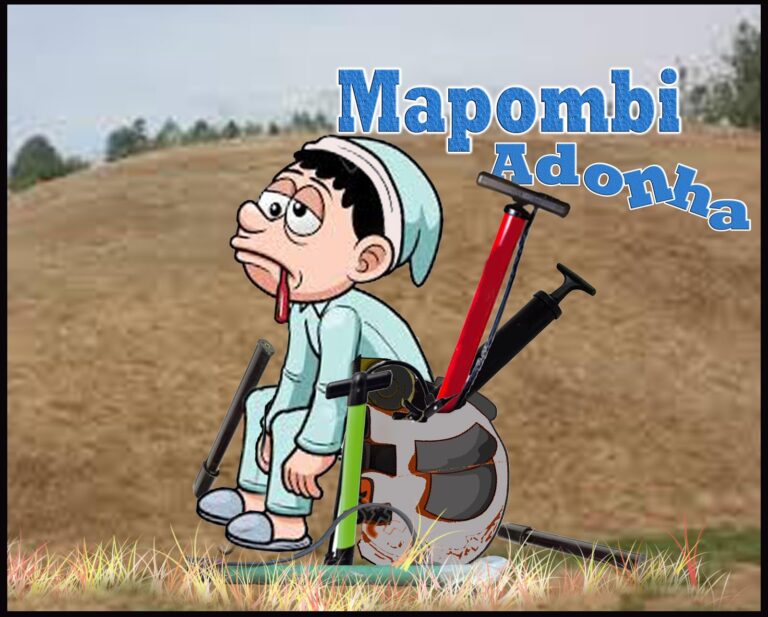
Ladies and gentlemen, the election season is upon us, and I can bet you that this year it’s yet another watershed election, whatever that means but to my understanding it means haa tichaonerera nhaka. What I know for sure is that mumastreets mune hasha umu because what in the name of running a country like a tuckshop is that? Now I am compelled to believe that Scarfmore was truly in his element when he said tidye murivo namapotato. If you think I am lying go check beef prices maOK umo, munobudamo muchimanya mapeasants, kkkkk. Of course with the Second Desperation presiding over a runaway inflation fronted by Panonetsa and Muthuvi alongside their master Scarfmore, haaa the once Bread Basket of Africa rangova bhasikiti raTizirai. Zuru rakapinda nyoka. Chiseko chenyika. Nyika rombe kkk. Please do not tell me that you expect the same starved electorate to vote you back into power come August. Yes, elections are going to be held in August even though ED asati aita announce, I heard he is waiting for some exercise associated with gerrymandering to be completed by FAZ neamwe mastakeholders ekurigger maelections. Hanzi they are busy moving Zanu voters to CCC strongholds to dilute the vote, manje nekuondonga kwamaita nyika muchenjere kudilutwa mava imi kusara mava mvrink, seka hako Mapombi. You can never rig the economy varume. No, it will not work, you will work. But honestly, Panodhuva naMutuvi, why are you continuing to print volumes of the useless Bond notes only to drive inflation to unprecedented levels only for them to get forex from the streets? Speaking of exchange rate yebond note zvakunyadzisira mumastreets. Anyway, by hook or crook we should make a complete cycle back to 2008, where Gidza Gono would make sure that every two weeks he tells us; “Ladies and gentlemen, failure is not an option…” before removing zeros on the currency. But varume ka. Either makapata or mune utsinye hunotyisa because the amount of pain you have made this country endure haa, zvichakuwanai chete. And even with such levels of failure, you will never hear them speaking of resigning. Kuita nhodo nayo economy, chero zvazvaita. You are a disgrace varume imi. Now you are busy promising WiFi kuCowdray Park uko vana Mthuli. What a clueless antipoor hardcore neocapitalist. Let’s see if you can arrest inflation. Haisungwe neZRP ka iyi like human rights defenders nanaSikhala vamunongosunga madiro.
Philanthropic work seems like ndokwekupengera kweMadzimai Ekutanga kkkkk. I heard Mai Matuwinzi has made Masvingo her second home, doing iyo philanthropy, gare gare tauya kuzobika rupiza paPoly. Haaa dene mugwagwa weBeitbridge waiva wemusango chero nyoka dzaisawana hope naiyo motorcade yaAuxillia ichiuya Masvingo kuzobika nhopi after every two days. But at least for Rujeko residents vanoziva kuti kana Amai vari munzvimbo magetsi wo haa anenge akati yakayaka. For everyone else Zesa inongouya manheru kuzorara yotofuma yakabaya like it’s going for an important shift. I really wonder what exactly Auxy is cooking ikoko kurikuunganidzwa vechidzimai. I was just thinking this other day kuti zvino madzimai ogara achingodzidziswa kubika neN’anga iyi mukati haisi mifuhwira here yavarikupiwa nekuoneswa maitirwe ayo kkkk. Isu zvedu vanaMapombi we are safe nekuti mhandire hadzina recipe plus handina wekuita makwikwi naye ndongorova gango rangu ndozvimwira mvura, hameno varikuzvidzidzo avo. This time around, as if the wastage of bringing the motorcade was not enough, I heard Chikopokopo chichienda kurutivi rweGreat Zimbabwe hamenowo kana dzisiri izo dzakabve Russia where another looting spree was done. Dzongori dzaivo Baba namai nematwins, kana manga muchida kurwara mugoitwa airlift kuendeswa kuchipatara kusina mushonga mairasa kkkkk. Soon we will hear vaakuenda kutoilet nendege. For the rest of us, it’s no water, no Zesa but somehow middle income economy by 2030, mati madii. Here in Masvingo, the day we see Zesa during the day pachaita batai batai nemufaro. Nothing is working. We are still having such archaic disease outbreaks like cholera mukore uno.
I see Jonso is at it again. He seems to be on a pedestal to badmouth opposition and everything Zanu condemns, he is condemning. We see you musorobhangu. Don’t think we have forgotten about what you did to Zimbabwean media. Most of the problems the media is currently facing were created by you singlehandedly. Mapombi is reliably informed that you are bitter about Nero’s refusal to work with you in 2018, that’s why you are even lashing out to everyone encouraging people to register to vote. Manje vuno Zimbabwe muchakuonera kuhope sabhinya kkk. Idyai sadza remabanana munyerere ikweyo. But power yakaoma zvayo vakomana. Aiziva kuti Jonso achazonanzva ED kuti adzoke kumusha ndiani? Baba vaiva nemanyawi zvavo ivavo. What Jonono did when he still had power can never be undone kusvika Zanu yacho kusisina. Asara ndiJoji because mmm, arrogance dzemurume uya chero ini Mapombi ndiri nani. A word of advice to all those who are tired of mabanana akaora like me; don’t be discouraged about registering to vote. Varikutya protest vote plus bhora musango vanhu ava. The economy is stinging like a bee and striking like a cobra; murikudyiwa nhema mudzimba umu kkkk. I heard hazvina kumira mushe mumusangano. A lot of disgruntlements about Zanu primaries are yet to be rectified, FAZ yakamhanya nechitanda apawo delimitation will show most of them flames. Ukuwo Sybeth Msengezi is busy mobilising support for Nero, haa ndopaunoona kuti alternative hatinawo hedu senyika. Izvozvi I know that Nero will fumble all that support chichingouruka uruka nekukanda maverse zvacho. But nanhasi, Msengezi’s case has not been heard. These guys vanoita kujuggler juggler vokicka zvavo justice system kunge bhora.
Mapombi was recently disappointed seeing rapists bragging about being released from prison. I was very shaken, thinking kuti mabhinya iwaya haasiriwo here achazotishungurudza come election time? I could not help but think about Border Gezi, Chipangano and all the other terror groups associated with these criminals. Imagine hanzi ‘Mnangagwa Huchi’ ndaakudzokera kumba. What saddened me kuona Nicky Mangwana achitoposta zvake bhinya richibigger boss wake paTwitter. Our girls are not safe with you people in power. Mark my words, with how this regime is so blood thirsty, I can assure you that it’s not the end you will hear of these criminals. Isu hedu all we want is peace. Violence is retrogressive and it won’t lead us anywhere. We have so much to lose senge isu madzimai. Vanoda zveviolence irwai neinflation uko, yakatotsamwa zvaizvozvi and economy is receiving a heavy bashing, kana muchizvigona. Inflation will continue running riot like a bull in China shop because mbiri yenyu senyika ndeyekushaya discipline nemari dzekukwereta, and Zim is notorious for not paying back zvikwereti. Tell me how then do you get lines of credit pakadaro? Even isu the civilians will not dare trust this system with our money because we all know the history. Kutoisa mupillow because you will wake up mari yako isisina mazero neiwo mapolicies nemaStatutory Instruments anongonzi whenever someone wakes up on the wrong side of the bed totokandirwa. Rumour here at Chitima irikuti NGOs are a bit reserved in being too vocal about these issues because pane chiPVO Bill ka chatakakugadzirirai. Inonzi tamba tamba chidembo muswe ndakabata. I bet you that thing may never see the light of day. It’s just a scare tactic being used to silence dissenting voices. Kungonzi iti pwee ndichikande, ndiye tyoo! If by any chance it manages to be passed, that will be maybe after elections, but Mapombi really doubts that. What Mapombi does not doubt is that if ED manages to get two thirds majority in parliament in this year’s elections, he will amend the constitution to give himself another, if not more terms. That I promise you, he will do. Handiti he said 2030 anenge achipo? If he does not get two thirds muparly, Genarari vanenge vadzoka mugame because ED anenge akutya impeachment, so there won’t be any dillydallying. Musazoti Mapombi haana kutiudza.
Can anyone tell me from an informed view point the current on-goings mumusangano waDouglas kuti zvikumbofamba sei chaizvo? But tichida kutaura hedu chokwadi Dougy’s case in a normal country would have held water. It’s just that ndezvanaDhagi so really hazvina achaterera. The guy has lost his leverage kuZanu kwacho because he failed at being an asset, he could not destroy Chamisa. Zanu cannot destroy Chamisa. On the other hand Chamisa cannot destroy Zanu. Zvinhu zvacho so. Kwatiri kubva ndokwatirikuenda. Regai ndinokanga maputi angu for lunch zvangu. I heard Mphoko’s son was recently convicted of rape. Chizviregai. Mboko imboko!

Sudan calls for AU, PAP to help stop war

Brighton Chiseva

War ravaged Sudan has called for the Africa Union and the Pan African Parliament (PAP) to intervene and stop the war which has claimed a number of civilian lives including women and children.
Ambassador of the Republic of Sudan to South Africa Osama Mahjoub Hassan Dirar called upon the AU and PAP to help quell down the conflict which has threatened the stability of the region.
The ambassador was addressing PAP’s Sixth Parliament at the parliament’s headquarters in Midrand, South Africa.
“We are appealing to AU and this Parliament to help us to restore civilian parliament of Sudan that was removed. Sudan is part of you and has been contributing to AU since its enactment.
“I have submitted our position paper which we have detailed our situation. I want you to read it and understand our situation then adopt it,” he said.
He went on to say the situation seems to be internal but needed external help saying they were appealing to the international community to intervene before it’s too late.
“The tragic situation in our country has revealed true lessons to us, to have the government we aspire to, we need support from you and the international community to stop the gun and rebuild our country, if we fail to stop it now the impact will spill into the entire region hence your immediate support is needed,” he added.
Dirar went on to thank PAP for the platform to express their concerns saying Sudanese PAP members were not present because of the crisis back home so they counted on PAP as their voice.
“We accept support from anyone and we want to thank PAP for this opportunity to express our situation and the recognition of Sudan in this parliament though our parliamentarians could not make it here because of the situation back home. The people of Sudan count on you. You are their representatives, so we call upon you to voice your position and that will be heard by the Sudanese people,” said Dirar.
Parliamentarians went on to call for action by AU saying they should be at the fore front of the ongoing negotiations between the two generals who are fighting for control saying they cannot allow America and Arabia to lead the talks while they watch.
One parliamentarian from Uganda said AU should have mechanisms to deal with early warning signs of conflict in Africa than to react after a situation has already exploded.
“AU should have mechanisms and institutions to detect and deal with warning signs than wait for a situation to happen then react. PAP should prevail over AU and have institutions to deal with situations than coming here to lament and do nothing,” he said.
Another parliamentarian from Somalia said AU and PAP should chip in urgently and restore civilian rule in Sudan before it was too late.
A parliamentarian from Cameroon also condemned African Head of States for being quiet on a situation like this saying they are the ones who should proffer solutions not to wait for foreigners.
Female parliamentarians voiced their concerns saying women should be on the negotiating table not only men, saying they are the ones who start war so they cannot end it.
“AU should be at the forefront of the negotiations not America and Saudi Arabia, when it does women should be called to the negotiating table because they are the only ones who understand the pain and suffering fellow women and children endure in war times. Men start wars and women will have to end it,” said Jaynet Kabila.
Pemmy Majodina from South Africa echoed the same sentiments and accused AU of not responding in time.
“AU does not respond in time, it should act soon. We cannot blame the US or Saudi Arabia for intervening because AU is not there. Women should go and lead negotiations, men have failed because they are the ones who start the wars,” said Majodina.
Parliamentarians from South Sudan also called for immediate interventions by AU saying the war will soon spill in South Sudan since the two countries were once one country.
A rivalry between Sudan’s top two generals Abdel Fattah al-Burhan, who is leading the country’s armed forces and his rival, the Rapid Support Forces (RSF) commander, Mohamed Hamdan ‘Hemedti’ Dagalo erupted leading the country into war.
Fighting broke out on April 15 after weeks of tension between the army and the powerful paramilitary group RSF.
Both groups were allies, together, they seized power in a 2021 coup but tensions increased over the proposed integration of the RSF into the military over who was going to be in control and who would be the military’s commander-in-chief during an integration period.
The fighting in Sudanis said to have has uprooted more than 1.1 million people from their homes, with around 250,000 fleeing to neighboring countries, including Chad and South Sudan, that are already battling with their own humanitarian and security crises

Renco Mine Juniors win Chivi South League tournament

0

Sports Writer

After piping their Chivi South Sunday League fellows to the title, Renco Mine Juniors showed that their lifting the trophy was no fluke as they went on to emerge victors at the off-season tournament held recently at Shongamiti Secondary School.
Chauya Chigero as the team is known dispatched a fighting home team Shongamiti 2-1 in the final where the league’s top six teams (from the just ended season) took part in.
In the semi-finals of the tournament, eventual winners Renco got the better of Chisase 2-1 while Shongamiti beat Lundi Tigers 2-0.
In the third place play-off, Lundi Tigers brushed off the challenge of Chisase emerging 1 nil victors to claim position 3.

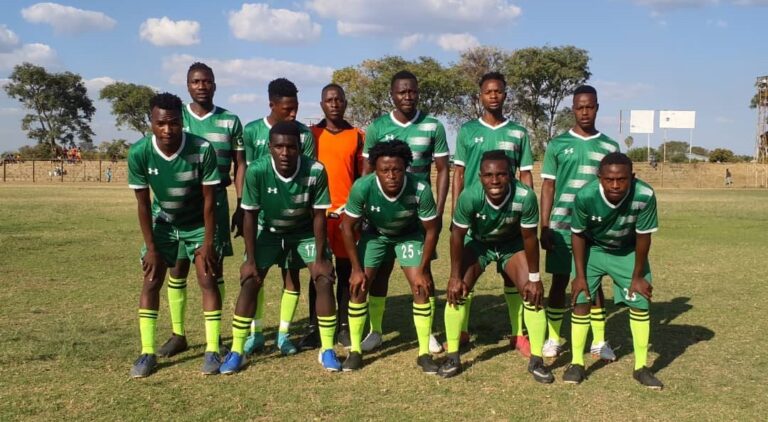
Shongamiti FC players

Renco Mine FC Juniors vice chairperson Baureni Chindamu (whose chairperson is Givemore Mahanya) said it has been their aim as a club to improve the lives of people by supporting sporting talent in communities.
“As Renco Mine Juniors, our concept is not about football only but bettering the lives of the youth especially in academics and making sure that their sporting talents are complimented with academic abilities,” said Baureni.
The league which concluded its season 2 two weeks ago is set to kick start the new season on May 28, if all goes well according to the league’s chairperson Tamuka Dewa.
“Now that we have come to the end and concluded Chivi Sunday Super League season 2, we are set to start the new season probably on May 28 and clubs are prepared to resume the sporting activity.
“The previous season in general terms was a good season and so was the tournament that capped its ending. We urge the teams in the league to keep up the spirit in the goodness of the sport and you thus made our league a better one through your commitment though some clubs ended it in a boring manner,” said Dewa.
The tournament had six teams Lundi Tigers, Gwatipedza, Chisase, Academy, Young Hlez and Renco Juniors.

AU called to resist external forces

…As continental body celebrates 60th anniversary

Brighton Chiseva

As Africa celebrated the Africa Union (AU)’s 60th Anniversary, Director of Kenya Law School Professor Patrick Lumumba has called on the Pan African Parliament (PAP) to up its game and fight external forces that control Africa many years after its independence.

Professor Lumumba made the call in a speech virtually on Africa Day Celebrations to the African Parliament in Midrand.

He said Africa was not yet independent from its colonial masters as it was still relying on foreign aid for key developments like the construction of Africa Union Headquarters which was done by outsiders and the African Development Bank (AfDB) which has foreign countries like America and Japan as shareholders.

“60 to 70 percent of the AU is catered for by foreign powers, this means there are invisible channels in which the colonial powers control Africa. If you go to Africa Development Bank (AfDB), you will discover that after Nigeria, the second investor is the United States of America and many others are foreign countries, so it’s just African Bank in name,” said Prof Lumumba.

He said the fact that he who pays the piper dictates the tune means that Africa is   independent only in name hence PAP needed to be empowered so that it may have teeth.

He said PAP needed to be popularised saying a random street search in Africa will show that a number of people do not know PAP and what it does.

“If you go to any street in Africa or South Africa where it is headquartered, you will see that that eight of ten people do not know PAP and what it stands for. So what does this mean, the current parliament should be the beginning of embryotic movement towards a modern representation of Africans, within the African continent.

“Pan Africanism will only be held up if you (PAP) become funded locally. So on this 60th anniversary of Africa, the spirit of Africanism should develop in your heads and minds. If you come from Angola, tell your President that you want more power for power to make sure that PAP will not be described by historians as a toothless bulldog,” added Prof Lumumba.

PAP President Chief Fortune Charumbira said as Africa they were happy to celebrate AU’s 60th anniversary which he said for people in many countries was the retirement age.

He went on to say if they were to evaluate the achievements of the Union, they were not too good but this was just the beginning.

PAP’s 2nd Vice President Dr Ashebiri Gayo said he would like PAP to celebrate next year’s Africa Day having resolved some of the organisation’s stumbling blocks.

“How are we going to celebrate Africa Day in 2024? I would like us to have legislative powers as a continental organisation. I would like us to have free movement in Africa that issue has to be resolved. We also need to have achieved the free trade area matter,” he said.

Glow Petroleum targets Zambian market

0

Tinaani Nyabereka

Gweru- Glow Petroleum Company is set to expand its business influence across the Zambezi next year as the energy company is expected to officially open three service stations in Livingstone (1) and Lusaka (2), Zambia.
Confirming the development this week, during the official opening of the Glow Petroleum Gweru branch which was constructed in partnership with the Roman Catholic Church Gweru Diocese, Glow Managing Director Aaron Chinhara said the company was already setting its footprints across the Southern African Development Community (SADC) region.
“Glow petroleum is a 100 percent indigenous energy company and is a family business. So our dream is to expand the company into the Southern African Development Committee region for the benefit of the community and region.
“Come next year, plans are in place to reach out to Zambia and work in the energy sector. We intend to have one filling station in Livingstone and two in Lusaka. We are already working on the modalities to acquire the land needed for these projects.
“The whole business essence is not anchored on money but on the population, we strive to provide services to the people,” said Chinhara.
He added that as a company they were going to stick to the country’s energy regulatory statutes.
“We understand that Zambia has its own fuel pricing which might be different from Zimbabwe but we say each environment has its own business policies and it is key to always adhere to them.
“We are ready and prepared to work with the government and follow all their regulations. Remember its all about giving back to the community,” he added.

Fiscal Transparency: A Panacea to Zimbabwe’s Socio-economic Problems?

By Zvikomborero Sibanda

Zimbabwe is expected to hold harmonized elections in August 2023. Major political parties have already concluded or are at the final stages of primary elections to select their candidates. There are over 210 constituency seats and over 1 000 Wards up for grabs for parliamentary and local authorities’ representatives respectively. The government also indicated that preparation for this occasion is now at an advanced stage.
The major aspect of elections is access to public resources through an electoral victory hence the reason they are often the object of fraught competition and conflict. This is more pronounced in developing nations where fiscal transparency is not a big deal despite it being a prerequisite for good governance. In anticipation of increased opaque fiscal activities during the election season, this week’s column is therefore highlighting the importance of fiscal transparency and accountability (T&A) in government.
Fiscal transparency apprises citizens of how tax revenues are used by the government by providing them a window into Treasury budgets and in turn, those citizens will be able to hold their government accountable. Thus, underpinning market confidence and sustainability. In the same vein, fiscal accountability entails compliance with stipulated laws and regulations, consistency with suitable principles of accounting, accuracy, and fairness of financial statements, and enforcement of the legitimacy of fiscal expenditures. In other words, accountability is the acceptance of responsibility for honest and ethical conduct towards others.
According to Zimbabwe’s constitution, financial management must be responsible, fiscal reporting must be clear, and public borrowing and all transactions involving the national debt must be carried out transparently and in the best interests of Zimbabwe. All public funds must be used transparently, prudently, economically, and effectively. There should also be accountability and participation to ensure that the government and all other public institutions are accountable in the exercise of their PFM functions. In addition, there should be formal and increased opportunities for the public including disadvantaged groups and marginalized communities to engage in all national and local budget processes.
The constitution further highlights that all public oversight institutions including the Office of the Auditor-General (OAG), Zimbabwe Anti-Corruption Commission (ZACC), Parliament, and other bodies with oversight functions concerning PFM should be adequately resourced and be independent to provide effective oversight of the executive branch’s financial management processes. This must be buttressed by the responsibility principle which entails that all public bodies and officials assigned to PFM-related processes are expected to regard their responsibility to exercise their functions in the interest of the public.
Furthermore, effective PFM must be sustainable. This means that the government, public bodies, and officials should thrive to contribute to and protect the financial stability of the nation. The burdens and benefits of the use of resources must be shared equitably between present and future generations.
Last but not least, there must be fiscal equity where all PFM systems are directed towards national development, and in particular the burden of taxation is shared fairly; revenue raised nationally is shared equitably between the central government and provincial and local tiers of government; and expenditure is directed towards the development of the nation, and special provision is made for marginalized groups and places.
Generally, fiscal transparency and accountability (T&A) are the major building pillars for governing democratic nations. Fiscal transparency serves to open the government to those it serves, that is, allowing the public to participate and to keep informed of the government’s budgets, spending, and projects. It is also a powerful weapon against corruption because when government processes become transparent, there will be limited scope for public officials to engage in corrupt activities.
More so, a fiscally accountable government is responsive to the needs of the public it serves. As such, it listens to the voices of all citizens and uses citizen feedback to shape and improve its policies and programs. Therefore, fiscal T&A are key in stimulating public engagement, building public trust & confidence in their government, improving government responsiveness & discipline, helping shine the light on leakages, and improving efficiency in public expenditures.
In an ideal world, there is a full implementation of PFM-related legislation which is key in bringing maximum efficiency in all financial management. If this holds, one would expect the presence of all budget (fiscal) transparency indicators. For example, the government would be ensuring that budget documents and data are open, transparent, and accessible through the availability of clear, factual budget reports which should inform the key stages of policy formulation, consideration, and debate, as well as implementation and review.
Also, all the budgets and government spending will be approved only by the Parliament. In the same vein, the Parliament will be awarded adequate time to scrutinize budget proposals and approve them after extensive public parliamentary debates. At the same time, the citizens will be provided with equal opportunities to directly participate in public debates and the design of fiscal policies. This mainly includes budget consultations and the publication of simplified citizens’ budgets.
Furthermore, there will be unlimited access to all public information, adequate resources, and maximum statutory independence of oversight and control institutions such as the Supreme Audit Institutions (SAIs) – the Office of Auditor-General (OAG) in the case of Zimbabwe. There will also be maximum integrity in public sector procurement. This largely entails the opening up of the entire public procurement cycle including openness in the procurement system (procedures, regulations & institutional frameworks), competitive tenders, bidding documents, contract documents as well as evaluation reports.
Nevertheless, the reality shows that there is a lot to be desired in Zimbabwe’s quest for fiscal transparency. For instance, the parliament follows a whipping system where MPs are whipped/coerced to vote according to their party’s given positions rather than according to their ideology or the will of their constituents. This help to explain why over the years Treasury is realizing budget overruns even without parliamentary blessing knowing that the same Parliament will approve the request for condonation without any repercussions whatsoever.
For instance, despite budget surplus rhetoric, Treasury incurred cumulative budget overruns of ZWL100.7 billion during the period of the Transitional Stabilization Programme (TSP) (2019-2020). It also reportedly spent more than what was planned (US$10 billion) during the 2015-18 period. In the upcoming electoral season, Treasury is likely to incur budget overruns again as spending pressure continues to mount. The dismal performance of the ZWL against the US dollar year-to-date attests to excessive spending and increased liquidity.
Also, underfunding of parliamentary businesses like the Parliamentary Budget Office (PBO) over the years has fuelled the brain drain. The massive exodus of experienced PBO employees is now constraining a more informed engagement between the legislative branch and its executive counterpart. A weak legislature is a free window for Treasury to propose and implement fiscal policies and budgets that are unsustainable. The longevity of Parliamentary underfunding has degenerated into severe capacity issues thereby inhibiting it to perform its crucial oversight function.
The oversight function allows Parliament to assert the system of checks and balances on the Executive branch and acts as the defender of citizens’ interests. Oversight ensures that government policies and actions are both efficient and commensurate with the needs of the public, helps identify misconduct or deficits, and allows for remedial actions against the Executive. In light of the foregoing, oversight is a central means of ensuring good governance and holding the executive to account to prevent or sanction the abuse of authority.
More so, there is a clear disregard for public audit requirements as shown by the continuous late submissions of accounts by public institutions for auditing by the Auditor-General. For instance, the latest 2021 OAG report shows that 71/92 local authorities had not submitted their accounts for auditing as of May 2022. The OAG recommendations are also being ignored as out of 141 findings reported in the 2021 report, only nine (9) were fully addressed.
The nation is also characterized by procurement scandals associated with tenderprenuership deals. These closed deals such as the US$60 million Drax COVID-19 scandal and the over US$300 million Pomona Waste to Energy deal for Harare fail to ensure a fairer and equitable treatment of all potential government suppliers and eliminate competition thus contributing to poor value for money for citizens. In addition, the nation is failing to account for revenues and expenditures in natural resources mostly due to escalating cases of mineral smuggling. For example, government statistics show that forex-strapped Zimbabwe is losing approximately US$100 million of revenue per month (US$1.2 billion per year) to gold smuggling alone. All this is undermining fiscal transparency and accountability and breeding corruption and abuse of public resources.
The foregoing shows that Zimbabwe has weak fiscal transparency and accountability systems, a situation that keeps deteriorating. This, coupled with other election transparency issues such as election procedures, the voters’ roll, and election results counting & tabulation processes poses great risks to the economy and Zimbabwe’s Vision 2030.

Zvikomborero Sibanda is an economic analyst and an astute researcher. He writes in his personal capacity. He can be contacted via email:

bravosibanda@gmail.com
Twitter: @bravon96

PSL reverses ZIFA decision over Bata Stadium

0

…As Sheasham threatens Caps United match boycott

Tinaani Nyabereka

Gweru-based Premier Soccer League (PSL) debutants Sheasham FC have filed their concerns and displeasure to PSL and Zimbabwe Football Association (ZIFA) Football Instance Board (FIB) regarding the ban imposed on Bata Stadium saying if their grievances were not answered, they could not to participate in their forthcoming league match.
The Construction Boys are expected to clash with the Harare giants Caps United this coming weekend (at alternative home ground Mandava Stadium in Zvishavane if the matter is not resolved) with the team is currently on 13th position on the log with nine points from nine matches.
In a letter addressed to ZIFA’s Acting Chief Executive Officer (CEO) Xolisani Gwesela and Premier Soccer League CEO, Kenny Ndebele, this week Sheasham President Clever Mandaza said he was seeking answers pertaining to the ban of the his side’s home ground.
“I am disturbed because the purported reversal of the FIB comes at a time when my team is fulfilling the conditions laid out by the FIB.
“Therefore, I ask the basis for the cancellation of the approval which was done by the FIB and why the reversal does not come through the FIB. May you be kind enough to resolve this before our next game against Caps United as my team will not be able to fulfill the match away from Bata stadium,” read the letter.
Last week the Construction Boys were given the green light to use Bata stadium as their home ground as they hosted Highlanders FC in a match which ended in a draw.
After the encounter, PSL however immediately advised that the stadium had been banned from hosting top flight matches despite the stadium having been approved by ZIFA.