Home Blog Page 255

Zanu PF Gweru geared for upcoming primary elections

0

Tinaani Nyabereka

Zanu PF Gweru District Coordinating Committee (DCC) Information and Publicity Secretary Victor Maride has said the party is ready for this Saturday (March 18, 2023)’s primary elections.

Maride who also is vying for Gweru Urban constituency seat said the party was only waiting for the primaries so that they can start campaigning for the general election later this year.

“We are ready for the primaries. The process is so far going on smoothly,” Maride said.

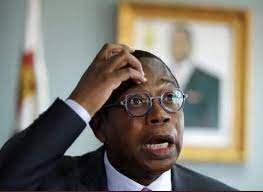
Zanu PF National Political commissar Mike Bimha also reiterated that the party was and candidates were supposed to be guided by the given election guidelines.

Some of the aspiring candidates who have submitted their names for Gweru Urban are Maride, Zezai Makomo, Alex Mukwembi, Costain Mukanganiki, Aurther Gore, Elaga Tinarwo and Esau Natare.

Mkoba North Constituency has a tight contest between Edgar Ncube, Kudakwashe Shambare and Ernest Gondo.

Mkoba South will see Militao and Wellington Magura standing up to the contest.

In Chiwundura, Lindiwe Bidi, Rangani Chauke, Vivian Maponga, Kwideni Sleiman and Kumbulani Ngwenya will battle it out for the constituency, while Brown Ndlovu, Lyton Moyo and Omega Sibanda will battle it for Vungu constituency.

The submission of the CV’s by party candidates has been seen as a time signal that the country to is on the verge of conducting the 2023 harmonized elections as President Emmerson Mnangagwa is expected to proclaim the election date soon.

Zimbabwe harmonised elections are set to take place before August 26 this year.

Matutu tastes murky Mwenezi waters

…Mwenezi East presents opportune for political newcomers and periodic losers


Cephas Shava

Mwenezi-The ruling Zanu Pf party’s primary polls slated for Saturday, March 18, is likely set to be one of the most competitive of all races in the three Mwenezi constituencies, Mwenezi East, West and the newly gazetted Mwenezi North as most aspirants for both contests be it legislative and council seats are no pushovers.

Incumbent Mwenezi East legislator Master Makope who has opted to race for Mwenezi North will square off with  former MDC Masvingo Central (now urban) Tongai Matutu and Peter Shotere.

Having been Mwenezi East legislator since the death of former Member of Parliament, Joosbi Omar, Makope has done fairly well in terms of keeping in touch with the electorate.

Given that during his short term in office he at least had something tangible for the people of Mwenezi, there are some possibilities that the electorate can give him another opportunity for a clean full term to fully demonstrate his capabilities.

Makope’s rival Matutu is unpredictable. Given his vast political experience in the opposition ranks coupled with his oratory giftedness, he can pull a shocker for Makope.

Given that Makope and Matutu’s rural homes are just a stone’s throw away from each other, they are also likely to divide votes.

Matutu defected from the opposition movement and joined Zanu PF but judging by the manner in which party leader Emmerson Mnangagwa keeps mentioning his name during political gatherings, he may be a force to reckon.

Matutu commanded a huge following during his tenure in Masvingo urban and this time around, people are ready to see if he can as well command such popularity among the rural electorate considering that in most cases, the urban vote in favour of opposition has been named ‘protest vote’ against Zanu PF.

In the event that the voter sharing concept prevails between Makope and Matutu, Shotere is likely to have the last laugh as he hails far away from other aspirants.

Shotere is a senior Zimbabwe National Water Authority (ZINWA) employee based in Chiredzi who hails from Mwenezi North’s ward 6.

Although Shotere has little known political experience, he as well is a potential threat to the other contenders because for the past months he had been restlessly moving around the constituency helping people to register to vote and sponsoring sport tournaments.

Mwenezi East constituency is another battle ground without any predetermined winner where a total of five political novices and long-time periodic primary election losers are also tightly locking horns.

Jabulani Mberesi, a lawyer by profession, who came second in the race to replace the late Omar strongly believes that this is his only chance to win the ticket to represent the constituency where he had been a perennial loser in the previous party primary elections.

Yunis Sams Omar, younger brother to the late legislator Joosbi has also submitted his Curriculum Vitae for Mwenezi East.

Resourceful as he is, Sams is banking on using his late brother’s tactics and popularity to win the hearts of the electorate.

Youthful Sheillah Chikomo has also thrown her name into the ring for the Mwenezi East battle.

Well-known in the local party circles and having been visible making some donations and supporting sporting activities in her area, Chikomo has for long been making a name for herself.

A well-known influential Zanu PF member who previously worked at senior party posts, Kenneth Sibanda has also joined the race for Mwenezi East.

One Tavengana Muzenda from Mwenezi East’s ward 13 in Chingwizi area is also among the contenders.

A total of six candidates are vying for Mwenezi West constituency. The incumbent legislator Priscilla Zindari-Moyo who is wife to Central Intelligence Organization (CIO) Director-General Isaac Moyo is being challenged by Tafadzwa Masvayamwando who came second in the 2018 primary election.

Considering her well-resourced campaign team, challenging Zindari-Moyo needs more than a mere talk for the other aspirants.

Masvayamwando, who in the previous polls attributed his loss to massive rigging is hoping for a change of tactics to win the ticket to represent Mwenezi West.

Former Zanu Pf Mwenezi District Chairperson Renious Muchoko has also joined the battle for Mwenezi West together with School head Obey Mbiza.

Clarance Mhosva and one Baloyi are also among those who had submitted CVs for Mwenezi West.

The Zanu PF party Mwenezi races are not only tight for those racing for legislator’s posts but it’s a dog eat dog scenario in the council races.

More than half of the incumbent councillors are likely to be shown the exit door as a new crop of potentially capable local authority representatives have emerged within the Zanu PF.

Winners from the Zanu PF primary elections will battle it out with representatives from the opposition parties in the harmonised elections whose dates are yet to be announced by President Emmerson Mnangagwa.

Armed robbers on the loose in Mwenezi

0

Perpetua Murungweni

Six armed robbers last week attacked and robbed a business centre and school in Mwenezi before getting away with cash and property.
Masvingo Provincial Police Spokesperson Inspector Kudakwakwe Dhewa confirmed the incident and said investigations were underway as police are looking for any information that will lead to the arrest of the culprits.
“No arrest was made as the culprits escaped and investigations are underway and we are appealing to the public to help us with information that can lead to the arrest of the culprits,” said Dhewa.
The armed robbers arrived at Dick Business Centre under Chief Chitanga in Mwenezi in the night and went into Pazai bar where they threatened the saleslady with knives and a gun before collecting money and phones.
“The six robbers entered Pazai bar where they took R740 and US$ 20 and two smartphones from the bar lady. Five of the robbers were holding knives while one of them was holding a pistol and they also ordered patrons to lie down and took another R250 from one of the patrons,” said Dhewa.
The armed robbers then went into Ramonga shop where they threatened a female juvenile by firing three shots.
“The robbers went on to rob Ramonga shop where they threatened a juvenile by firing three shots and took a sum of R1 500 and US$ 50 and then flee away,” added Dhewa.
Inspector Dhewa indicated that after terrorizing Dick Business Center, the robbers then went Munhundishe primary school where they robbed two female teachers and beat up the deputy Headmaster demanding cash from the school safe.
“After terrorizing the business centre the robbers went Munhundishe Primary School where they robbed two female teachers, took a smartphone from the other one and R70 and US$ 60 from the other one. They went on to the deputy Headmaster and beat him up demanding cash from the school safe,” said Dhewa.

Re-dollarization Part 2: Is this the right path forward for Zimbabwe?

By Zvikomborero Sibanda

Last week, I highlighted that the economy is rapidly re-dollarizing as supported by the latest official statistics. I further argued that dollarization is two-handed and that Zimbabwe needs to go through dollarization if it is to attain durable stability – a prerequisite for a mono-currency regime. This week’s part 2 seeks to explain the intuition behind this view by separating time horizons into the medium term (3-5 years) and the long term.

1. Medium-term Horizon

Zimbabwe should embrace dollarization of its economy in the short-to-medium term for the following reasons:

A Leaf from Economic History

Generally, flexible and progressive policymaking should accommodate lessons from history. A review of previous dollarization reform cases shows that dollarization is nearly permanent. Economic history also shows that forced de-dollarization always backfires. In addition, history lessons show that successful de-dollarization can only be secured through the implementation of prudent market-driven policies and robust reforms. It is relatively easier to increase market uptake of government policy and reforms in a stable macroeconomic environment. So, the guaranteed price stability from dollarization makes it a de facto policy for the medium-term horizon. This gives room for dampening government policy lags -recognition, implementation, and impact lags.

We are all dead in the long-run

Policymaking should not only be laser-focused on the economy neglecting the “human face”. Official statistics show that the Zimbabwe dollar (ZWL) erased over 80% of its value against the US dollar in 2022. The pass-through effect of inflation is affecting business predictability and eroding the real value of disposable incomes and pensions. This is deepening poverty and widening societal inequalities. For instance, the World Bank estimates that over 40% of the total population was trapped in abject poverty in 2022.
Poverty undermines human development as it fuels all forms of discrimination, drug abuse, early marriages, crime rates, and instability. Recently, the government has elevated its war on drug use, especially among unemployed youths who have found solace in substance abuse. This shows that there is a need to find a quick economic fix before the nation witnesses the derailment of the future aspiration of the youth. As I highlighted last week, dollarization brings instant exchange rate and price stability which can help attract private investment.

Quick Results

Some economic commentators are arguing for other alternatives to dollarization like the adoption of a currency board system. This system comprises a fixed exchange rate, backing requirement, legal commitment, and unrestricted convertibility. It takes time to set up a currency board as it requires adequate political will. Just as the case with ongoing high-level structured public debt dialogues between the government and its creditors, a currency board also requires both commitment and uninterrupted implementation. More so, the currency board operating guidelines must be spelled in legislation, an independent and competent panel must be established, and foreign exchange reserves mobilized. All this may consume time thus aggravating economic injury.
But dollarization is quick as it does not always require a consensus among economic agents. Dollarization can be by a de facto market process without an official decree. This gives businesses and workers an immediate cushion against exchange rate losses and clamps incessant price growth. So, while authorities are exploring long-term policy strategies, there must be an alternative for the short-to-medium term.

Investment Promotion

While there are many initial conditions to be met to bolster FDI inflows such as stable politics, consistent policymaking, and respect for property rights, the use of a stronger widely accepted currency like the USD may partly attract foreign investors. It can also promote locals to increase their investments knowing that the use of foreign currency can greatly insulate them from some major endogenous shocks. More so, the adoption of the USD in the medium term could increase forex liquidity in the official markets thus helping kick-start industrial re-tooling and importation of critical industrial raw materials.

2. Long-term Horizon

As alluded to earlier, economic history shows that dollarization is nearly permanent. To escape this vicious trap, de-dollarization must be viewed as a process, not an event. I, therefore, submit that Zimbabwe will need more time and policy actions to run a mono-currency regime, that is, use the ZWL as sole legal tender. This is because USD is costly in the long term as briefly articulated hereunder.

Loss of Autonomy

The perpetual use of USD is tantamount to the loss of the monetary policymaking arm of the government. Last week, I highlighted that this policy arm helps the government in the management of currency exchange rates and inflation as well as ensuring financial market stability. As such, losing this policy arm will constrain the government’s ability to promote local production and create decent jobs for citizens. Also, by using US monetary policy, the Zimbabwe government will lose seigniorage revenues it can accrue from the minting of coins and printing of banknotes. This revenue help governments worldwide fund national security, public services, and other development programs.
Furthermore, dollarization is unsustainable in the long term because it largely constrains authorities’ ability to respond to bank crises. Today’s world of rapid technological changes, climatic changes, and rising geopolitical tensions makes financial markets more vulnerable to shocks than ever before. So, to be able to effectively deal with such crises like liquidity crunch, authorities must be able to print money as needed. In short, dollarization cripples the lender-of-last-resort function of the RBZ.

Size of the Economy

Zimbabwe is a small developing nation in sub-Saharan Africa while the United States is the world’s largest economy. Largely because of US economic dominance in global economic affairs, its stable currency faces a high global demand. Therefore, it will be unsustainable for Zimbabwe to use the USD indefinitely as this renders it uncompetitive. A stronger USD makes Zimbabwean-made goods expensive for regional counterparts using their weak currencies while making foreign-made products cheap in the eyes of Zimbabweans. In the end, this may balloon the trade deficit leading to the closure of domestic factories and associated job losses.

Thwart National Pride

Having a functional currency and competent industries with the ability to fulfil most domestic demand can be a source of national pride. This helps in boosting social cohesion thus increasing public participation and policy ownership. However, using the USD for the long term may expose domestic firms to excessive foreign competition, dumping of foreign goods, and hostile takeovers. The crowding-out of domestic firms and over-dependence on foreign companies present a great national security risk.

Cash Economy

Since RBZ will not be able to print USDs, adopting dollarization without formal approval from the issuing country can lead to severe economic consequences. This type of dollarization will be largely based on a cash economy -exchanging of real dollars in the market. However, a cash economy renders monetary policies ineffective, leads to change shortages, and promotes tax evasion, money laundering, and other illicit transactions. All these forms of externalization may result in acute forex shortages in the official markets and the creation of local USDs in the banking sector. These local USDs become the basis for multiple exchange rates in the economy which could in turn incentivize excessive speculation and arbitrage.

Conclusion

Re-dollarization of the economy was inevitable. The authorities initially followed a forced de-dollarization path despite a clear lack of durable macroeconomic stability. This pushed the USD to the epicenter again thereby completing a vicious cycle. To permanently break this cycle, authorities should pursue long-term market-driven policies that ensure the sustainability of a mono-currency regime. As such, next week the column will focus on the feasibility of recently announced government reforms to resolve the debt conundrum.

Zvikomborero Sibanda is an economic analyst and an astute researcher. He writes in his personal capacity. He can be contacted via email:

bravosibanda@gmail.com
Twitter: @bravon96

Bigger and better as Simbisa partners Troutbeck 2023

0

Branton Matondo

Popular fast food company Simbisa Brands has partnered Triathlon Zimbabwe as it seeks to become part of this year’s Bonaqua African Triathlon Cup Troutbeck 2023 Sponsor Group majored by Coca Cola.
Simbisa Brands which constitutes of Chicken Inn, Bakers Inn, Grab n GO, Creamy Inn and Pizza Inn has joined Coca Cola, Schweppes, Cimas i-Go, CFAO Motor Group, EcoCash and Rooney’s who already make up the sponsor group for the annual Troutbeck Triathlon showcase.
Bonaqua African Triathlon Cup (ATU) organiser Rick Fulton through an official statement said the partnership comes at a time when the competition is commemorating its 15th anniversary.
“We are very excited to have yet another blue-chip brand come on board for this event, now in its 15th consecutive year.
“We welcome Simbisa Brands on board and hope that this will be the start of long relationship with the sport and event. As with our entire Sponsor Group we value their loyalty and commitment to this event and we sincerely hope that they benefit exponentially from the branding, marketing and media exposure,” read the statement.
Simbisa Brands is not new to sporting partnership as it is also into football.
Meanwhile the Local Organising Committee (LOC) has speeded up efforts as the tournament takes centre stage on April 1 in Nyanga.
The 2023 Bonaqua Africa Triathlon Cup Troutbeck media team released communique released on March 9.
“In addition, the LOC are fine-tuning the various arrivals and departures of athletes from Robert Gabriel Mugabe International Airport to Troutbeck Resort and return. This exercise entails detailed planning for the Triathlon Zimbabwe ‘Meet-n-Greet’ team to coordinate the incoming international and regional athletes that will compete in the Elite Men and Women’s categories and also the Junior Elite categories for Junior, men and women,” added the statement.
This year’s edition will be one to watch as Zimbabwe’s contingent pitting Anje Van As, Makanaka and Matipa Mawere, George Ascott, Nicole Madya, Duwan Botha and the Mthethwa twins, Mandlenkosi and Musawenkosi look to forward to be added in the team.
Two time Troutbeck Elite Men’s gold medallist Ayan Beisenbayev from Kazakhstan will also be looking to top the medallist list.
Also making their way back to the much anticipated tourney are Badr Siwane from Morocco, Martin Demuth from Austria, Michal Oliwa from Poland, Meirlan Iskakov from Kazakhstan and Laurent L’Entete from Mauritius.
From the Elite women group, Shanae Williams who was the runner up in 2022, Bridget Theunissen and Jamie-Sue Vermaas all from South Africa return to compete for a position at the podium.

ZB bank rebranding model key in growing business

Tinaani Nyabereka

Gweru- The move by financial institution ZB bank to rebrand its local branches into service centres has been described as a key step in growing the business to resonate with customer services.
The development was revealed by brand consultant Thamsanqa Moyo during the official launch of the Gweru Service Centre last week.
Moyo said that the branding concept was focused on shifting the position of the market through providing an all-inclusive service central point.
“The reason for the transformation was that they wanted to grow their business but in order to grow their business, they needed to change having learnt that the way they do the business has to resonate with their customers. How can you resonate with your customers without understanding what the customer need?
“To learn what the customers need, they learnt that maybe we are not configured properly without the audience. They were bold enough to then begin a transformation programme to say how do we reconfigure ourselves as an organization as a financial service, how do we transform ourselves so that we can match the needs of our customers.
He also said part of that was now brand repositioning to make their customers look at them a certain way.
“So when they did the examination to say how the market looks at us, they found out that they were synonymous with the old and slow, we were stable and strong and stiff like all other banks which are authoritative and friendly,” said Moyo.
“The organization decided to go through with the transformation. One of the things they did was to be digital, modern, want to be friendly and we want to be relevant. And now digital becomes a strong issue. They are the only ones with a mobile application that you can do banking, insurance and investment,” said Moyo.
He further said true branding was not changing the logo, but transforming the services.
“A brand is not a logo, it’s not a banner, it’s not a T-shirt, it is the gut feeling that someone has when they think of a product, service or company.
“So ZB decided to transform their brand to reflect how they want their customers to feel. What they have done is very bold world over; you will never see a financial service that will centralise the experiences of a customer.” he added.
ZB Bank Executive Head Projects and Programme manager organisational transformation, Patrick Tendai Huni said the transformation of Gweru branch into services centre was exciting as it was set on timelines.
“The transformation process was exciting, demanding and unique as it was done with set timelines. For Gweru service centre it was done on short space of time which is close to a month. In that phase, we say it is a life changing organisational transformation as it impacts on both customers , internal stuff as the same time bring convenience service to the market,” added Moyo.
The transformation brought in a new digital banking innovation which called ZB mobile application.
The application is an online convenient and secure platform to manage to money on the move around the clock. The feature packed app cater for things such as Logging into accounts from anywhere, around the world, checking account balances and transaction history, bill payments, Transfers, Viewing and assessing loans and term deposits among other services.

Farmers use sand, urine to control army worm

…as they resort to indigenous knowledge system

Courage Dutiro

Communal farmers in Masvingo district have resorted to using women’s urine and river sand in controlling the devastating Fall Armyworm that perennially affects their crops during the rainy season.
Due to a shortage of free agricultural inputs like pesticides, Moses Mutoko a farmer in Wendedzo area of Masvingo North said they have resorted to using river sand in fighting against the destructive fall armyworm.
“This year we received few inputs, those who afford to buy chemicals are using chemicals to control worms but those who cannot afford are using river sand to save their crops from the Fall Armyworm.
“The Armyworm damage corn plants mainly during the vegetative and tussling stage,” said Mutoko.
He also said the late planted crops are under attack and farmers are struggling to control the ‘second generation’ of the worm.
“Those who planted late (in January) are struggling to control the armyworm. Their crops are so far under attack.
“I think the worm hatched during the first planting phase and now the second generation of worms is attacking the late planted crops,” he said.
The farmer also lamented water logging as another problem that is going to affect the quality and yield of crops.
He also added that some of the crops that were planted using the Pfumvudza way were affected by the dry spell that prevailed in January.
During the 2022 Masvingo agricultural show, Onias Murove a farmer in Summerton area (ward 6 Mayo) in Masvingo district said women’s urine was one of the solutions that they were using to control army worms.
“We have resorted to non-chemical ways of controlling the worms; we are using women’s urine and sand to reduce the army worm’s intensity. Pouring urine and sand at the maize plant help to reduce the attack,” said Murove.
During the provincial show, Murove won a wheelbarrow and 5 kilograms of maize seed under the Pfumvudza category.

Shot in the arm for Manicaland Arts and Culture sector

Branton Matondo

Creative artists and the rest of the arts sector from Manicaland province are set to benefit from a nationwide European Union (EU) funded programme enforced by Culture Fund which will see individuals, institutions, culture organizations, focal groups and unions receive funding for their projects.
The official European fund tagged at €2 million is expected to finance projects from approved proposals received across all ten provinces.
Minister of Youth, Sports, Arts and Recreation Kirsty Coventry on February 24 launched the nationwide programme dubbed Creative Actions 2.
Addressing arts and culture personnel from Manicaland at Courtauld Theatre in Mutare on March 9, 2023, Culture Fund Executive Director Farai Mupfunya said the programme will go for 36 months as it seeks to target projects tackling challenges affecting Zimbabwe’s arts and culture industry.
“The response has been very good. The programme targets not just artists but creators from academics, teachers and instructors of music. We also expect that those who come and attend the sessions also go and equip others with the necessary knowledge. The response has been productive looking at the fact that people ask technical questions on how to apply and seek clarity on issues that are supported and not supported.
“In line with stipulations of the fund, interested individuals will have their proposals assessed by a panel of delegates from the local and regional cultural front,” said Mupfunya.
He added that Creative Actions 2 targets an array of sectors though there are other sectors on the fall out.
“People have raised talk on whether Creative Actions 2 supports the construction and refurbishment of culture hubs or not but unfortunately the fund does not support that because there are a lot of complications in that sector not forgetting that they are complicated to manage. Hence the programme is mainly for activities that are that span to a maximum of 12 months” he added.
Culture Fund Programme Facilitator Simbarashe Mudhokwana highlighted that Creative Actions 2 runs under three mantras which are capacity building, innovation and policy development (National Development Strategy 1).
Responding to government lobbying support on the culture sector, Mupfunya said it is a priority to have government come in and add resources to the project meant to facilitate the change of arts and culture in Zimbabwe.
“We are not government but we really expect government support in putting more money and resources. We have argued our case to the Ministry of Finance and Economic Development and the Culture Fund delegation will head to Murehwa Cultural Centre in Mashonaland East, Marondera, Bindura and Chinhoyi. Besides the funding of projects, Culture Fund also supports training courses, festivals, book launches, exchange programmes, culture based technological innovations, e-commerce and a plethora of sectors,” said Mupfunya.
National Arts Council (NAC) Provincial Manager Caroline Makoni said the programme by Culture Fund is equally beneficial to women as it is to men.
“The programme is important to women as it is equally important to men but specifically to women because we know that their participation of in the arts sector is limited. We encourage women to participate and get funding because it gives them an incentive which is important for them as a marginalized entity.
“Most of the challenges being faced by our fellow colleagues revolve around the issue of funding. There is a big gap in terms of funding projects in Manicaland. In terms of infrastructure, we are looking at offices, rehearsal space and spaces where they can operate from,” said Makoni.
Redwing Traditional Dancers group Director Tupele Mudhala who benefited from the first grant which spanned from 2020 to 2021 said the fund is a great opportunity which should be utilized by artists.
“As has been said in the meeting today the major challenge facing creative artists is infrastructure or innovation hubs. You find out that many people have standing projects that lack a physical platform. I have been a beneficiary of the fund in the past. I have managed to change the sector of operation in Penhalonga because l bought resources from the funds,” said Mudhala.
Zimbabwean culture and arts industry has over the years been hampered by lack of resources which has seen promising talent being wasted.

Mwenezi man found dead

0

Beverly Bizeki

Zimbabwe Republic Police (ZRP) in Mwenezi have launched an investigation into the death of a 46 year-old man who was found dead in the middle of the road in a suspected hit and run incident.
The man Wisani Baloyi from Chief Chitanga area in Mwenezi was found dead along the Masvingo-Beitbridge highway on March 6, 2023.
Masvingo Provincial Police Spokesperson Inspector Kudakwashe Dhewa confirmed the incident and appealed to members of the public with information to help in the investigations.
“We are appealing for information from members of the public that can assist in investigations of the case. Those with information can liaise with the police at any nearest station or come through on our WhatsApp platform on 0775 996 945,” said Dhewa.
It is reported that Baloyi had met his death fate decided for him during the early hours of the day on March 6 while going home from Lundi Business Centre where he was watching a soccer match on Television.
Baloyi who was not drinking was watching football match at Tapesana Bar with Trust Makotore at around 2200 hours on March 5, 2023.
Baloyi is reported to have left the Business Centre at around 01:00 in the morning going home on his bicycle.
Police at a roadblock near Chitanga Primary School were informed of a suspected hit and run by an unknown motorist at around 0400 hours on the same day.
The police attended the scene and found Baloyi’s body in a pool of blood in the middle of the road with his bicycle a few meters away from the body.
The body had two deep cuts on the back of the neck each close to both ears.
The body was carried to Neshuro Hospital for post mortem.

Increase in rape between minors worrying-residents

Beverly Bizeki

Members of the public in Masvingo expressed concern over the rise in cases of rape between minors and children under the age of 18 and such cases have become prevalent in communities and common feature at the courts.
The revelation came out during the Parliamentary Portfolio committee hearing on Prisons and Correctional Service Bill and Criminal Law Codification and Reform and Amendment Bill held at Mucheke Hall recently.
Residents who attended the public hearing on the Criminal Law Codification and Reform Act rallied behind the need for government to amend the law on rape and aggravated indecent assault.
One resident at the meeting pleaded for the law to consider the rape incidents between minors following the rise in cases between minors.
“We have seen a rise in the cases of minors raping other minors yet they have to walk away scot free even though they have to receive that mandatory psycho social support but then it is not enough regarding the rise in the cases. Something must be done for the juveniles that commit rape,” said the resident.
Another resident at the meeting suggested that there should be a mandatory sentence for rape of a minor and rape of an adult.
“We are aware that there can be cues between adults but this cannot be the same with a minor, so there must be a stiffer sentence on those who perpetrate such an offense on minors,” the resident said.
Chairperson of the Parliamentary Portfolio committee on Justice, Legal and Parliamentary Affairs, Mutare Central legislator Innocent Gonese said the amendment entails the introduction of a mandatory sentence for rape where a minimum of 15 years is going to be prescribed in cases of aggravating circumstances and a minimum of five years applied to other cases.
“There is also an issue which has not been covered by the bill which is very topical and important because the constitutional court gave a ruling in May of 2022 in terms of which it ruled that the current age of consent which is pegged at 16 is unconstitutional.
“There have been voices that the definition of young person which is in the Criminal Law and Codification Act particularly section 70 which relates to the crime of sexual intercourse with a young person is going to be amended.
“Particularly there are also sentiments that the definition of extra marital be removed because it is giving license to older people to have sexual relations with minors,” said Gonese.
Recently in Masvingo, a 13 year old teenage boy who raped two other juveniles escaped a jail term after being pardoned by the court and was cautioned not to commit a similar offense over the next five years.
In a related case, a 28 year-old man from Masvingo was charged for having sexual intercourse with his alleged 15 year-old girlfriend.
There has also been a rise in cases of adults having sex with minors which the public considers should also attract a mandatory sentence.