
Home Blog Page 32

Zanu PF youths disrupt Sikhala book launch

By Beverly Bizeki

What was meant to be a peaceful book launch for opposition politician Job Sikhala turned chaotic on Friday (July 11, 2025) when Zanu PF youths disrupted proceedings in the public shouting at guests and throwing away books that were meant to be sold at the launch.
Among those that were identified is Esau Mutanho who drives the Masvingo West Constituency vehicle for the Member of Parliament, Ezra Chadzamira who was seen in the video forcefully taking the books and throwing them into the crowd.
However, there have been concerns that Mutanho’s unruly behaviour may tarnish the good image of Chadzamira who is also Masvingo Minister of State for Provincial Affairs and Devolution.
The chaos erupted as guest of honour at the event, opposition politician Mathew Takaona delivered his speech reflecting on Job Sikhala’s struggle and the regime which triggered the youths into disrupting the gathering as a meeting to mock the ruling party.
Masvingo Provincial Police Spokesperson Inspector Kudakwashe Dhewa said police records showed that no such report had been made.
“Our record shows that no one came to the police station to report such a case,” said Insp Dhewa.
“I am not aware of this case and I will have to find out and get back to you,” said Inspector Dhewa.
Asked for a comment, Sikhala said the author of the book, Munyaradzi Angero Savanhu had attempted to make a report at Masvingo Central but the police allegedly refused to take note of the matter citing that they had to consult the District Police Officer first. He said they were going to take legal action this coming Monday (July 14, 2025).
“The author of the book and one of the event organiser’s went to report the matter to the police today (July 12, 2025) but surprisingly they were told that the police could not take the report without consulting the Dispol first. We realised that we were wasting our time, we have never seen this kind of policing. We are however going to take legal action against the people that disrupted the event,” said Sikhala.
Sikhala said prior to the event he had not received any threats but had however noticed that he was under surveillance from the time he left Harare to the book launch on July 10.
“I was being trailed and was under surveillance from Harare throughout the journey. In Masvingo I noticed that two vehicles were following me from the time I arrived even when I went to Caravan Park during the day but we did not care much about it because we thought they just wanted to see what was going on,” said Sikhala.
Savanhu confirmed and said they had lost 200 copies of the books and 150 copies of his other books that were meant to be sold at the event.
“We went to report that our event was disrupted and our books taken forcefully at around 0600hours but they refused to take our report and said we would have to wait until 0800hours with. We were told that the matter must be reported to the DISPOL first. We could not wait any longer to make the report because we suspected that something was fishy and feared that we could even get arrested, under such circumstances you suspect a lot of things.
“We wanted the matter to be addressed and for compensation because we lost many books. There were 200 copies of the book Footprints in the chains: The Life of Job Sikhala and 150 from the other books that I have written. We had not sold anything when the disruption happened,” said Savanhu.
Some sources who spoke to this publication however said the violence was organised by a senior ruling party official who was present at the book launch in a Fortuner and drove off after the disruption.


WHY NATIONAL PROJECTS FAIL IN ZIMBABWE

N.B Views and opinions expressed in the article below are solely the owner’s and do not represent any organisation

By Dr Nicholas Aribino

At the material time of writing this opinion piece a gamut of contractors in Zimbabwe who have been involved in numerous capital projects like construction are complaining bitterly about the government of Zimbabwe having failed to pay them for the work that they have done. The contractors are having challenges with respect to meeting the employment costs for their workers and cannot at the same time have money for their statutory obligations because of the government’s inability to pay them. It is the intention of this opinion piece to go down the rabbit’s hole regarding national projects in Zimbabwe.
A project is an ephemeral intervention that is timeous. Timeous in that it has a start date and end date. A project in another speak, is explained also in terms of boundaries, and these boundaries speak to geography (location), budget and scope. Scope, time and budget are critical traits of a project that should feed into one another underpinned by the objectives of the project. Any misalignment between scope, time and budget will compromise quality. Scope, time and budget put together constitute the compass of a Project Manager. Over and above having the iron triangle (scope, time and budget), a Project Manager should also approach a project as both an art and a science. It is an art because it involves working with diverse teams with different skills-set and epistemic values and a science in that it involves processes and procedures that need to be adhered to in order to meet the success goals of the project.
A construction project for instance is overwhelmed with risks from design to completion, hence its initiation, planning, implementation, monitoring and evaluation cannot be successfully done without taking into account different project management knowledge areas like project integrated management plan (boundary spanning), project quality management plan, project procurement management plan, project scope management plan, project stakeholder management plan, project time management plan, project communication management plan, project human resources management plan, project finance management plan and project risk management plan, among other project knowledge areas. These project management knowledge areas are conspicuous by their absence in the way projects are undertaken in Zimbabwe. For example, we are made to understand that the Mbudzi interchange missed its completion timeframe which was the first quarter of 2024 because of court cases involving people who were going to be affected by the disruptive nature of the project (Zimbabwe Independent, June 6-12, 2025). These people wanted the correct value of their properties for compensation purposes. A tooth-pick analysis of this argument shows that from the initiation and planning stage of the project there wasn’t stakeholder engagement. Pursuant to the above argumentation, if the primary stakeholders, those who were going to be affected by the project had been engaged as informed by the stakeholder theory in project management, there was surely going be no delays because of protestations from affected stakeholders.
Project management requires transparency, communication and accountability between and among all stakeholders. In project management, accountability should not be optional. In Zimbabwe accountability is unfortunately optional. For example, while procurement procedures are a sine-qua-non when undertaking national projects as dictated by the Procurement Authority of Zimbabwe (PRAZ), the construction, mining and health sectors are exempted from the scrutiny of PRAZ. The project procurement management area in this case is selectively applied in Zimbabwe, and in the process the citizens of Zimbabwe are bamboozled and left wondering as to who the risk owners for project outcomes are. Any project that is undertaken either at micro or macro level should come with a risk register that considers risk identification, analysis, risk responses, monitoring and control, risk owners, categories of risks, risk values, likelihood (probability) and severity of risks. A risk analysis and management plan ought to be integral to any project implementation, and this risk analysis and management plan should anticipate both internal and external risks and deal with primary and secondary risks. In the case of Zimbabwe, internal risks may be associated with tender-preneurship, lack of beneficiary (stakeholder) contact monitoring, bureaucratic webs that eat into timelines of the project, having square pegs for round holes (employing people without the right skills-set for the project), regulatory shifts and external risks may be defined according to external factors like political, economic, social, technological, ecological, legal and globalisation (PESTELG) underpinning the project. Zimbabwe is not an island onto itself; it is bound to be affected by geoeconomics and geopolitics. For example, trumponomics has affected the humanitarian and health projects in Zimbabwe through the withdrawal of USAID from the international scene and the Russo-Ukraine war has had a tectonic shift in the focus of development finance as more and more physical, material, financial and human resources are being channelled towards this war-effort.
The essence of project financial management plan in Zimbabwe given PESTELG cannot be ignored, hence the need for any national project to work with historical and inflation adjusted figures as a way of cushioning projects from both national and global shocks. When projects fail to meet their end-dates, they cease to be projects, they graduate into routines which may become cash cows for some shadowy figures behind those projects. The Zimbabwean government should build into its strategic plans project planning and management as a pillar for staff development. Every government employee at a national level who engages in any project should be conversant with the life cycle of a project and project stakeholder management. Projects may be timeous or ephemeral, but they leave permanent footprints in the locations in which they are undertaken. Square pegs for square holes and round pegs for round holes for project success.

(Dr Nicholas Aribino- Is a student of Project Planning and Management at the Zimbabwe National Defence University (ZNDU). These are his own views)

The Emergence of Artificial Intelligence

By Shadreck Zangairai

The emergence of Artificial Intelligence (AI) in the business world is sparking a radical overhaul of established corporate practices and the reformation of organisational management structures. This integration marks the beginning of a new era in which AI becomes essential to steering management tactics and generating innovative avenues for efficiency. The profound influence of AI on management routines marks a pivotal transition in the principles of business leadership and administration.
This shift calls for a fresh examination of the time-tested management theories and models that have historically guided organisations. These intellectual constructs have remained steadfast through constant waves of change, providing a reliable foundation for organisational leaders to base their decisions upon throughout the contemporary era of commerce. While these frameworks have undergone incremental changes to align with the evolving needs of various periods and business environments, their fundamental principles have demonstrated notable resilience.
However, the integration of AI into the business environment necessitates a rethinking of these long-established management theories. While their underlying importance remains robust over time, the overlay of AI’s advanced capabilities requires a creative reapplication of these theories, reshaping them to fit the new realities introduced by AI.
Elton Mayo’s pioneering work at the Hawthorne Works in the 1920s revealed the significant impact of attention to employee needs on improving performance. His approach highlighted the importance of employee participation in decision-making, fostering autonomy, and acknowledging the importance of workplace social dynamics. The integration of AI in the workplace offers the potential to enhance Mayo’s principles by relieving managers of routine tasks, thereby giving them more opportunities to concentrate on the well-being of their teams. This change could lead to a deeper personal connection with team members, a greater recognition of their successes, and stronger support systems developed through a more empathetic approach.
In this context, I’ve recognised that while management theories might still be relevant, their reinterpretation is indispensable. We must consider how these theories can serve as a framework for new models, considering AI not merely as a tool but as a fundamental aspect of our business philosophy and strategy. We are in a thrilling era where age-old management theories intersect with the tide of the digital revolution. The imperative to integrate these realms is immediate, presenting both challenges and a wealth of possibilities. In honouring the time-tested insights of management pioneers while embracing the boundless opportunities offered by technology and AI, we find ourselves at the dawn of a transformative period in management. Here, the wisdom of the past merges with the innovation of the future to forge businesses that are robust, flexible, and deeply attuned to human needs.
In majority of today’s workplaces after the workers and job processes are put in place, the managers of the company stay involved and provide supervision to each worker to ensure the job is done in the best way to suit the organization goal. This is very important. Just because a department is designed to be efficient does not prevent workers from falling back into bad work habits. The first principle of Taylor’s Scientific Management state that work should be divided between managers and workers. The mangers apply management principles to planning and supervising the work, and the workers carry out tasks. This theory has been utilized in most modern organization and has led to an increase in production and also takes some of the pressure off the management.
Relevance of Classical School Of Management to Present Day Management Practices
My view is in support of Mullins who opined that current management approaches tend to reinforce rather than weaken the traditional approaches. For instance, the scientific method focuses on production efficiency processes, employee motivation through performance related pay and the observance of strict principles. This view is strengthened by the current strategic management which stresses the importance of considering internal processes as a way of remaining competitive in this global challenging business environment.
Again, Total Quality Management (TQM) is in line with the scientific model when it singles out production processes as well as the importance of ensuring efficiency and effectiveness of production processes. This internal approach of scientific management model has been extrapolated to include various other business processes and functions. For example, organisations conduct marketing campaigns while at the same time ensuring that the process is as economical as possible. The effect of such campaigns makes sure that organisations realise value for money as the end result.
Moreso, the resource based view and the system theory strengthens the scientific theory by emphasising the importance of processes and their coordination in the organisation. This is a result of the improvements on traditional model where organisations are viewed as a collection of systems that must be synchronised so that signs may operate efficiently. This traditional school mainly put focus on production processes while present day management view all organisational functions as an important part of the system. The aspect of proper recruitment also resonates with present day management practices where organisations are interested in recruiting qualified and highly talented people that will perfectly execute their duties with rare and unimitable skills. For instance, the development of scientific personality tests in addition to oral interviews further enriches the requirement of the scientific management outlook.
My academic journey and professional experiences have underscored a crucial lesson: transforming management theories is not merely an academic exercise but a practical necessity. It is an ongoing process of adaptation that requires continuous learning, critical thinking, and an openness to change. As I continue to spearhead transformation efforts, I am reminded that the essence of effective management lies not in the rigidity of old paradigms but in the fluid integration of timeless principles with the innovative spirit of the present. This is the path to forging management practices that are efficient, productive, and responsive to the needs of a rapidly evolving world.
The future of organisational management is a symbiotic blend of human and artificial intelligence, a hybrid workforce where AI supports and extends human capabilities. Management theories will not only continue to evolve with AI. Still, they will become more dynamic, fostering environments where the strategic understanding of human leadership synergises with the analytical prowess of AI to lead to unprecedented levels of organisational success. This new era of management will be characterised by the unparalleled potential for quality enhancement, efficiency, and adaptability, ensuring that organisations remain resilient and competitive in an ever-evolving business landscape.
In summary, the classical management was not only important in the past, but also continues to be important in present day management practices. Successful management requires an appreciation of the fundamental concepts of effective management techniques and principles. To gain such an insight and to manage efficiently and effectively, managers need to develop an acknowledgement of past management principles, models and theories. The 19th century saw the need for growth in formal management forcing organisations to have a system to guide managers in an attempt to improve productivity and efficiency of workers. The classical theories have their basis on a pyramid, hierarchical structure and autocratic management, clear chain of command and short span of control. Despite their criticism as an outdated model, classical theory still is the leading school of thought and most prevalent kind of management practiced in today’s business structures.

Shadreck Zangairai is a Human Resources Practitioner, for feedback email:
shadreckzanga@gmail.com, +263772939877/713068365.
Disclaimer: The information contained herein does not serve as alternative to legal advice. The author do not accept any liability for any damages or losses suffered as a result of actions taken based on information contained herein.

Managing Bias and Microaggressions in Schools: Creating a Safe and Inclusive Environment

By Langton Chikaka

Bias and micro aggressions (that is subtle, often unintentional expression of bias or prejudice) are widespread and common issues in schools, affecting students’ emotional well-being, academic performance, and their sense of belonging.
These are not immediately noticeable yet damaging behaviors can be intentional or unintentional, but their impact is undeniable. To create a safe and inclusive environment, schools must acknowledge the existence of bias and microaggressions and take proactive steps to address them.

  The Impact of Bias and Microaggressions

Bias and microaggressions can have significant negative repercussions that can have a lasting impact , including decreased academic motivation, lower self-esteem, and increased stress and anxiety. Students who experience bias and microaggressions may feel isolated, marginalized, and unsupported, leading to a negative school climate.

    Strategies for Addressing Bias and Micro-aggressions

1.  Establish clear policies and procedures by developing and communicating policies that address bias and microaggressions, ensuring that students, teachers, and staff understand the consequences of such behavior.

2.  Provide training and support for teachers and staff to recognize and address bias and microaggressions, promoting a culture of empathy and understanding. This is where Guidance and Counselling comes to prominence. 
3.  Foster opening dialogue through encouraging open and honest discussions about bias and microaggressions, creating a safe space for students to share their experiences and concerns. You can save lives as young learners pour out their thoughts , feelings and opinions. Help comes before it is too late.
4.  Use of restorative practices: School authorities must and should implement restorative practices, such as circle discussions to address harm and build relationships, promoting healing and accountability.

Creating a Culture of Inclusion and respect

Creating a culture of inclusivity and respect in schools is key to fostering a positive and supportive learning milieu. Schools with inclusivity and respect at the core of their thrust have the following characteristics:
1. Schools which incorporate diverse worldviews and experiences into their curriculum, ensuring that students see themselves reflected in the materials and content, are more inclusive and the concept of Unhu is evident.
2. Institutions which encourage empathy and understanding by teaching students to consider multiple perspectives and, in consequence, foster empathy and understanding of others’ experiences and backgrounds by learners.
3. In the same vein, schools can foster a sense of belonging through creating a welcoming and inclusive environment, ensuring that all students feel valued, respected, and supported.

    Conclusion

In view of issues raised in this article, addressing bias and microaggressions in school requires a proactive and multifaceted approach. By establishing clear policies, providing training and support, fostering open dialogue, and promoting diversity and representation, schools can create a safe and inclusive environment for all students. By working together, we can
ensure that every student feels valued, respected, and empowered to succeed.

Birdlife Zimbabwe trains government agencies on vulture conservation

Staff Reporter

Birdlife Zimbabwe recently trained representatives from various government agencies on the conservation of birds, especially endangered vultures in a bid to raise awareness on the importance of the scavengers on the ecosystem.
A number of vulture specie has been facing endangerment from illegal activities like belief-based use, habitat destruction and poaching, with some now facing extinction.
Representatives from Zimbabwe Parks and Wildlife Management Authority (ZPWMA), Zimbabwe Republic Police (ZRP), Environmental Management Agency (EMA), Zimbabwe Revenue Authority (ZIMRA), National Prosecuting Authority (NPA) and rural district councils were trained at Flamboyant Hotel, Masvingo on their roles in protecting vultures.
Birdlife Zimbabwe Preventing Extinctions Programmes Officer Leeroy Moyo said the protection of vultures was no longer just the work of wildlife conservationists, but now required all hands on deck to prevent the scavengers from going into extinction, which will pose ecological and biodiversity problems.
“Vultures play a critical role in ecological balance and biodiversity, which helps maintain ecosystem stability. They help clean up carcasses, reducing the spread of diseases and preventing the accumulation of rotting organic matter. This process is essential for maintaining the health and balance of ecosystems,” Moyo said.
Moyo said training government agencies on vulture conservation was essential for developing and implementing comprehensive conservation strategies that address the various threats vultures face.
“Training enables government agencies to work more effectively with other stakeholders, including non-governmental organisations, researchers and local communities.
“As new information and technologies become available, trained governmental personnel can adapt their conservation approaches accordingly. They can then stay updated on latest research findings, techniques and best practices, aligning their efforts to most current and effective methods,” he added.
Speaking during the training, animal rights lawyer Advocate Nancy Makuvise spoke on the various ways to enforce conservation laws that protect vultures from illegal activities.
“Animals have rights, and likewise, vultures ought to be protected. There are many legal ways to enforce laws that protect vultures from being killed, which will in turn deter offenders.
“Laws that protect these endangered birds need to be implemented effectively, and governmental agencies like the National Prosecuting Authority (NPA) need to know that offenders can be held accountable through deterrent legal penalties,” Makuvise said.
Research has shown that there has been increase in the use of vulture parts for belief-based activities, which has prompted rapid decline in vulture population.
In one of Birdlife Zimbabwe workshops with traditional and faith healers in Masvingo last year, it emerged that in some parts of the country, vulture parts were being used for medicinal purposes as they are believed to have mystical powers.

Man kills nephew (3) in brawl with police

0

By Tadiwanashe Mberikunashe

A 3-year-old child strapped to her mother’s back was tragically killed during a confrontation between her uncle and a police officer in Mushandike, Chief Charumbira area on June 27, 2025.
The incident occurred when a police constabulary had arrested the child’s father, who had been buying beer for the accused, for theft, sparking a violent reaction from the uncle, Justin Tavagwisa (47), who was intoxicated at the time.
Masvingo Provincial Police Spokesperson Kudakwashe Dhewa confirmed the death of three-year-old Brian Mavhu and appealed to members of the public with information that can lead to the arrest of Justin and also warned people against using violence when solving disputes.
“I confirm a report of murder where an uncle fatally struck his nephew in Charumbira area during a scuffle with a local police constabulary. I appeal to members of the public to provide information that can lead to the arrest of Justin who is still on the run.
We also want to urge people to avoid the use of violence when solving issues,” said Inspector Dhewa.
On the day in question at around 2000 hours, the deceased’s mother Mary Tavagwisa who stays together with the accused arrived home from her piece job and found out that her door had been broken and US$60 was missing.
Her child informed her that her ex-husband Luckson Mavhu (38) was responsible for both the break in and theft.
Mary reported to a local police constabulary who found Luckson and Justin drinking beer at Chibhon’ashuro Business Centre. The officer arrested Luckson and they agreed to go home and solve the matter.
Justin followed and insisted that the officer should let Justin go since he was the one who had been buying him beer. Upon reaching home, Justin took a log intending to hit the officer who evaded and he struck the child when Marry tried to intervene.
Justin rushed the baby to Masvingo Provincial Hospital where he was pronounced dead upon arrival the matter was reported to the police and Justin ran away.

Village head, villagers clash over abandoned soap factory

0

By Virginia Njovo

A long-abandoned soap factory in Majaya Village, ward 32 under Chief Marozva in Bikita West has become a source of conflict between the local village head and community members.
Factory chairperson, Miriro Munhanga said the factory, established in 2000 to empower women through skills training, only operated for a few years before becoming defunct.
However, former members of the soap-making project claim to have been denied access to the facility, which has reportedly been allocated to someone else.
“We used to produce soap during the first few years after the project started. Though the project collapsed due to some challenges, we wanted to revive it. But now the land and the building are no longer accessible to us, as the village head gave it to someone else,” said Munhanga.
Contacted for comment by TellZim News, village head, Kumbirai Majaya Chisi, said he was not blocking any development in the village.
“I’m not stopping anyone from using the soap factory, but it was inactive for years. So I gave the land to someone else who is now using it productively,” said Chisi.
Chisi said the factory was initially funded by Gladmore Charamba as a community empowerment initiative for his mother who is now late and said he enquired from the funders if they wanted to continue so he would give them another piece of land.
“The so called factory was funded by Charamba who said he was doing the project for his mother and the community was benefiting from it.
“I approached him to check if he wanted to continue funding the project so that I can give them another piece of land to do their project. He said he only wanted roofing sheets from the building and nothing more,” said Chisi.
However, at the center of the matter was a row over the village leadership where Chisi is fighting for control with one Jevas Ruvanda who once presided over the area.
Ruvanda who is a nephew to Chisi is said to have been asked to rue the village while Chisi was still young, but later refused to relinquish power when Chisi came of age. The matter was taken to court multiple times, including an appeal to the High Court, which ruled in favor of Chisi.
Chisi’s legal representative from Ruvengo and Maboke Legal Practitioners, Collen Maboke told TellZim News that the case was still open as Ruvanda was not giving in to the court ruling.
“Ruvanda could not easily surrender authority over the village which was given to him when Chisi was young. He later denied targeting of Majaya village being divided so that he can get his part and call it Mutema village.
“Ruvanda lost the case and was even sentenced to six months in jail for defying a court order. Though the sentence was initially suspended, he later served the term for continued violations. The file of this case is not closed since Ruvanda does not comply with the ruling of court of law,” said Maboke.

Bikita residents demand action on policy gaps

By Virginia Njovo

Bikita residents have expressed frustration over the lack of critical policies from the Bikita Rural District Council (RDC), highlighting gaps in housing, disability inclusion, and vehicle retention schemes, which they said undermine accountability and hinder inclusive development.
Speaking at a recent dialogue meeting organized by the Zimbabwe Council of Churches (ZCC) at Chevron Hotel, Bikita Residents and Ratepayers Association (BIRRA) Coordinator Bright Maduyu criticized council for failing to implement a formal housing policy.
“We are deeply concerned by the council’s failure to formulate a formal housing policy which has led to unregulated and opaque allocation of stands, a lack of affordable housing mechanisms for low-income earners, poor prioritization in land servicing, and vulnerability to land corruption as well as illegal settlements,” said Madhuyu.
Madhuyu raised alarm over the absence of a disability inclusion policy in the council, which he said contributed to the continued marginalization of people with disabilities.
“Bikita RDC has failed to adopt a Disability Policy, contributing to the ongoing exclusion and discrimination of persons with disabilities (PWDs), as there is a lack of accessible infrastructure and services, absence of representation in decision-making, and no targeted development programmes for PWDs. This neglects Section 22 and Section 83 of the Constitution of Zimbabwe and the country’s obligations under the UN Convention on the Rights of Persons with Disabilities (CRPD),” said Maduyu added.
Maduyu also pointed to concerns about a potentially fraudulent vehicle retention scheme at Bikita RDC, which he claimed was draining residents’ pockets.
“We have received credible reports of a non-transparent and potentially fraudulent scheme involving the sale and retention of council vehicles by senior management. Concerns include a lack of adherence to proper tendering or disposal procedures, the sale of vehicles to officials at undervalued prices, and non-compliance with public finance management and procurement laws,” Maduyu revealed.
To address these issues, Maduyu called for the adoption of a transparent housing policy, one that aligns with the Urban Councils Act and ensures equitable access, particularly for youth and low-income earners.
“We call for the drafting of a transparent local housing policy, provisions for equitable access, especially for youth and low-income earners, and strong planning and environmental safeguards,” said Maduyu.
In response to the growing concerns, residents also demanded that the local authority conduct a forensic audit of vehicle disposals over the past five years.
“We are demanding for an independent forensic audit of all vehicle disposals for the past five years, the immediate suspension of all vehicle disposals, and the adoption of a transparent council-approved asset disposal policy aligned with national standards,” said Maduyu.
Contacted for comment by TellZim News on the issues raised by residents, Bikita RDC acting Chief Executive Officer (CEO) Arnold Mtuke said the residents had also raised their concerns directly to council so they would respond to them first before commenting to the media.
“We acknowledge receipt of BIRRA’s concerns and will address them directly. We will communicate developments to BIRRA and provide further clarification needed,” said Mtuke.
Service delivery concerns were also raised by residents of Masvingo Rural District Council, who complained about sewer bursts and poor refuse collection.
Calisto Rukwanda, a resident, highlighted some of the issues affecting the district saying Service delivery in Masvingo RDC was problematic, especially in Nemamwa Growth Point where sewer bursts were common.
He said roads were not being maintained in rural areas, especially the road connecting the Growth Point to Charumbira, which was damaged by heavy rains last season.
Despite these challenges, Masvingo RDC is one of the few rural councils set to receive devolution funds in 2026.
Addressing these concerns, Kudzai Tarirai, Deputy Director for Economic Analysis in the Office of the Minister of State for Devolution and Provincial Affairs, urged residents to engage directly with their local authorities to resolve these issues.
“As we are here for the decentralization of powers, I encourage you to address these matters with your local authorities. I also encourage you to attend budget consultation meetings. Many of these issues are budgeted for, and if you don’t attend and voice your concerns, you won’t see the changes you seek,” Tarirai said.

4-H Zimbabwe launches youth development committee in Masvingo

By Virginia Njovo

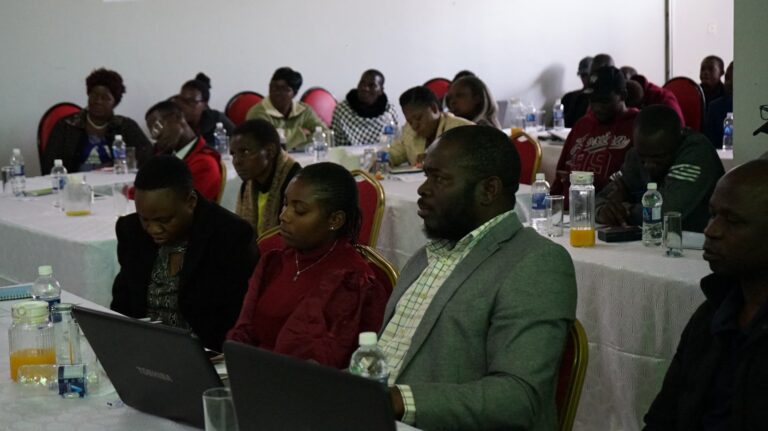
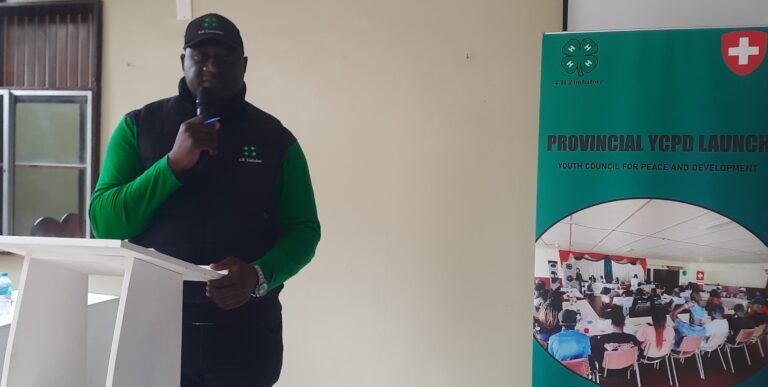
4-H Zimbabwe launched a youth development committee in Masvingo on July 2 at Chevron Hotel where various political parties converged to engage and discuss their experiences pre and post elections.
Speaking during the launch, 4-H Zimbabwe Director John Muchenje said their organisation was mandated to create safe environments among youths to ensure development in their communities as well as amongst themselves.
He said the committee was going to spearhead development through promoting peace across political parties.
“This development committee will be the tool of promoting peace across political parties, I believe there cannot be any development when there is no peace. We will be engaging Minister of State for Provincial Affairs and Devolution Ezra Chadzamira so he can hear the concerns of the youths as one without political affiliations,” said Muchenje.
Muchenje said the executive will have two representatives from each of the 11 political parties in the country.
One of the facilitators, Youngerson Matete said youths should adopt various strategies of youth inclusion in peace building processes.
“There are various strategies that should be adopted in minimizing violence across political parties which includes creating inclusive platforms for dialogue and discussion allowing young people to engage with diverse stakeholders and promote social cohesion.
“There should be monitoring and evaluation so as to ensure that youth inclusion is monitored and evaluated using feedback to improve and adapt peace building strategies,” said Matete.
Representatives from political parties shared their experiences on how they were deprived their rights as opposition leaders in communities pre and post -election.
Chirumanzu South MDC National Youth Organizer Liliosa Mujere said she was persecuted during elections time and was once blocked from participating in School Development Committee (SDC) elections.
“If you are not from the ruling party it is difficult to be part of community development programmes, I was once blocked from participating in an SDC election at our local school. During the run up to the August 2023 elections I was beaten,” said Mujere.
She applauded 4-H Zimbabwe for providing the opportunity for various political parties to meet which she said changed her perspectives about the ruling party.
“I want to thank the 4-H team for this engagement platform as the trauma which I got from the ruling party is now fading I am now realizing that not everyone is cruel, you can meet a kind person who supports growth from the ruling party,” said Mujere.
Another NPC member said he was evicted from his land by a powerful ZANU PF member after ditching Zanu PF for NPC.
“I was evicted from the land which I had an offer letter to only because I had chosen to join NPC from ZANU-PF. If the systems remain like that there will be no meaningful development as the minority parties are not included,” said Mujere.
ZANU PF Masvingo District Youth League Political Commissar Tawanda Junior Makwazhe said youths should observe peace if they are to be included in developmental programmes.
“We have some projects that we are doing in Masvingo as youths and not as ZANU-PF, it is high time young people swallow their pride and leave political backgrounds aside and do one thing with one common ground not working with assumptions.
“Our party does not have a policy of grabbing others people’s things neither does it support violence” said Makwazhe.
The political parties included ZANU-PF, Citizen Coalition for Change (CCC), Democratic Official Party (DOP), Movement for Democratic Change (MDC), NPC among others.

From despair to hope, Masvingo man beats drug abuse

By Tatiana Mhararira

In a nation grappling with the devastating grip of drug addiction, one young man’s remarkable journey offers a beacon of hope. Without the aid of rehabilitation centres or government support, his story is one of personal triumph over addiction as he fought his way out of the darkness of substance abuse and into a life of purpose.
His harrowing journey from the depths of drug addiction to a life full of hope and potential is a testament to the human spirit’s capacity for transformation.
Born and bred in Masvingo Brave Mutava (27) passed his Ordinary and Advanced levels with flying colours at Ndarama High in Masvingo but failed to proceed to tertiary triggering his involvement drug abuse.
“In 2015 I finished my A level but failed to continue with my education because of financial challenges. Coming from a poor background, I have several siblings who needed to go to school as well.
“With nothing to do, I had to stay at home alone most of the time because my parents lived out of town. I got involved with people who exposed me to dangerous drugs such as mbanje, broncleer and maragada from around 2015 to 2016,” said Mutava.
Mutava’s drug addiction worsened to the extent that at some point he got employed but his whole salary lost to drugs.
“I got employed in 2019 and became less burden to my family but because I had become an addict, I used my salary to buy drugs. I left the job, sold my phone and returned home.
“In March 2020 I went to South Africa where I was introduced to new drugs like mutoriro. I got employed, started living alone and had a simple life to buy drugs because guka went for as little as R30. From 2019 to 2021 I took guka full time. We were now being named champions of the drugs,” he said.
He said mutoriro had negative effects on his life while he was in South Africa where he got injured leading to his return home later.
“One day I got injured and I did not feel it because I was high after taking guka. I told my brother about the injury but I never endured pain after taking the drug so I continued taking it so that I won’t feel any pain.
“I was admitted at a local hospital for two weeks but I would go out to look for guka using the money my brother would give me after hospital visits,” he said.
Mutawa said after getting discharged, during the Covid-19 lockdown, he lived a hard life since he was not employed and his relatives decided to send him back home to Zimbabwe.
“During the Covid 19 lockdown I survived with Indian food aid which was given to people in Pretoria. My relatives having seen the type of life I was living contributed money for me to return to Zimbabwe but personally I did not want to return. My brother paid for the bus fare and gave the other money to the bus driver so that he would give me upon arrival at Exor.
“I was only given R50 to buy food along the way. The money I was given could not sustain me so I had no option other than returning home. Back home I failed to blend with other family members,” he said.
He said his journey to recovery began when he was sent to the rural areas having failed to live with others in town because of his character.
“After having problems with family members in Renco Mine compound, I was sent to our rural area in Zaka where I had no access to money. I could only get mbanje and beer only. So from March 2022 up to the end of the year I failed to get the drugs I was used to and that changed me. I got help from my grandmother who gave me milk and other traditional therapies and that family rehabilitation was helpful for me.
“I told myself that I wanted to change so that I live a purposeful life. When I finally came back to town, I stayed in Victoria Ranch,”
He said he went to church in a bid to redeem himself and started selling popcorn, a business he learnt in South Africa but after getting the little money, he tried getting back to drugs but fought off the urge after considering several factors including losing the little he got from selling popcorn.
“I started selling popcorn a business that I had seen some doing in South Africa. After I got money I looked for those who sold drugs and wanted to return to the old fashion. After taking drugs I would lose capital and had no one to help me bounce back to business or even cater for my utilities. That’s when I told myself that I want to stop, remembering my grand mother’s words and effort, I went to church and they prayed for me,” he said.
Mutava encouraged others who are into drugs to stop and urged them to work hard saying drugs were destroying lives.
“Drugs destroy life and future of individuals taking them. I am now into business full time because if people realize that you are doing something fruitful they support you.
So I urge those who are into drugs to find something to do to occupy themselves otherwise they lose lives,” said Matawa.
Mutava is a proud owner of Brave Snacks, Spices and Events a growing initiative which he hopes to grow into a company when funds permit.
With funds permitting he also hopes to further his studies now in line with business.

Brave Snacks