Home Blog Page 327

Census results key to devolution agenda-Mavima

Tinaani Nyabereka

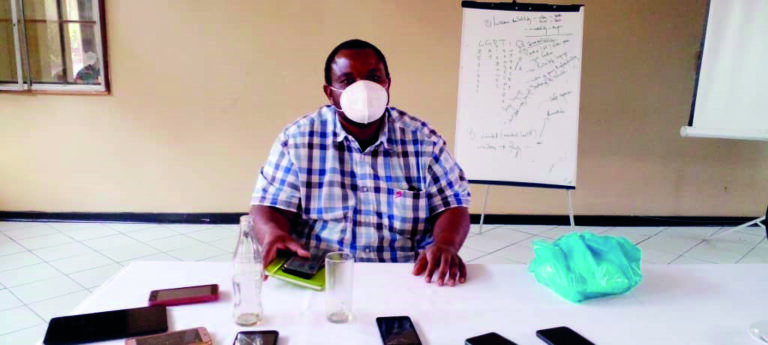
Gweru – With Zimbabwe National Statistics Agency (Zimstats) expressing its readiness last week to conduct the 2022 population census scheduled to start on April 21, 2022,Minister for Provincial Affairs and Devolution for Midlands province Larry Mavima has said the census results are critical to the devolution agenda.
Addressing Level 2 supervisors at a training workshop conducted at Midlands State University (MSU) campus last week, Mavima said census results were key to the agenda as funds disbursed to local authorities are based on a formula that takes population into account.
“As a province and nation as a whole, census results are key in our devolution agenda to inform the equitable sharing of resources and revenues as guided by the population profiles, poverty profiles and infrastructure quality. Devolution funds are disbursed to local authorities as provided for by the
population. Accordingly our 14 local authorities in the Midlands province can assess their fiscal capacities after knowing the total population in their areas of jurisdiction.
“Let me hasten to say that our National Development Strategy (NSD) 1 2021-2025, His Excellency the President Emmerson Mnangagwa has targeted a cumulative of 220 000 housing units which you and I are set, guided and planned using census results. In order to achieve our NDS1 thrust of transforming lives through accelerated, inclusive and result- based economic growth and development, is a need for evidence based planning by making use of census and other surveys data from Zimstats. Accordingly our Midlands Provincial Economic Development Plan (MPEDP) relies much on economic data provided by the same organisation.
‘In support of the Zimbabwe is Open for Business Mantra’, Zimstats has provided enough data for our Provincial Economic Development Profile. The profile highlights the potential for the province and gives necessary support to potential investors,” he said.
He further said provincial and district economists were going to work closely with Zimstats.
“Furthermore with the devolved structures, each province has the mandate to calculate its own Gross Domestic Product (GDP) per capita which is the total Provincial GDP divided by the total provincial population as analysed by each province.
“The GDP together with figures helps in assessing the living standards of our people across the province for the year 2020 Midlands had a GDP of ZWL 130.2 billion and the GDP per Capita of 65 400. I would like to applaud Zimstats for the timeous release of this data,” added Mavima.
Meanwhile people who gathered as level 2 supervisors came from eight districts in the province from various clusters of the security and government departments among other sectors.

469 people register to vote in March

Fredrick Moyo

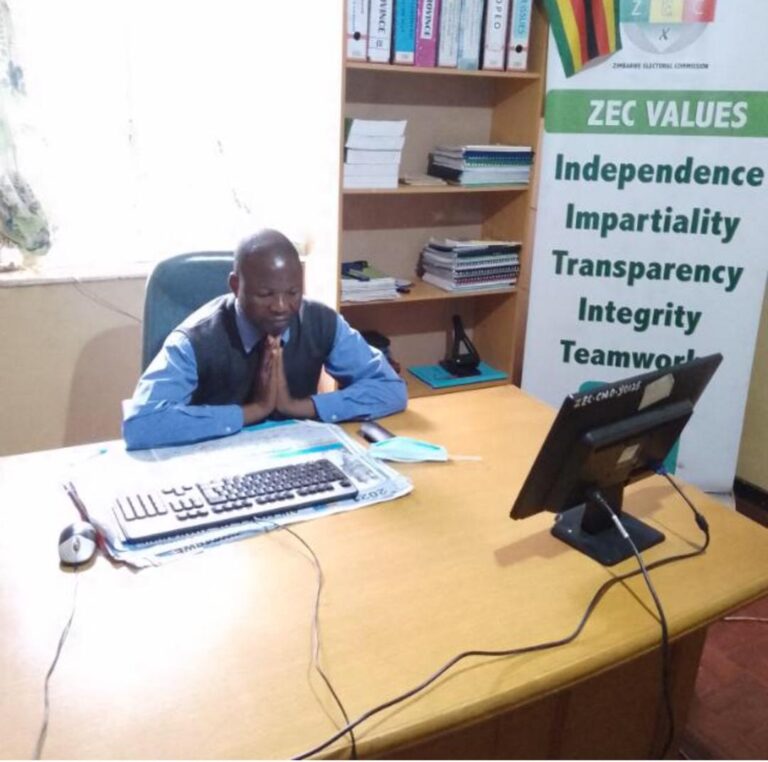
Masvingo province recorded a total of 469 people who registered to vote during the month of March 2022, with 383 transfers, the Zimbabwe Electoral Commission (ZEC) provincial office has confirmed.
Masvingo ZEC Deputy Provincial Election Officer (PEO) Maxwell Ncube said registration figures are increasing as compared to January 2022 statistics and encouraged people to take advantage of the second mobile registration blitz that will reach out to their doorsteps.
“We are happy with the March turnout and maybe the increase in numbers of voter registration might be attributed to intensive voter education which was done this past month as we were moving towards the March 26 by-elections. The numbers have actually increased with about 86 percent as compared to the month of January.
“We are encouraging all eligible voters to come and register especially as we are moving towards the second phase of the mobile voter registration exercise that they should take the opportunity, come forward and register as we prepare for delimitation this year. They should keep on coming to register as we will be in their communities and all our seven offices will be open during the normal working hours,” said Ncube.
From the 469 people who registered to vote in March, there are 198 females and 271 males, while from the 383 transfers there are 163 females and 220 males.
ZEC while be holding their second mobile registration blitz with the help of Civic Society Organisation (CSOs) running from April 10 to 30.
The mobile registration exercise is meant to reach out to people in marginalised areas and those who have to walk long distances to access the offices to be able to register.

Bus operators defy council, continue using undesignated pick up points

…as council, police fail to move them to Mucheke rank

Melinda Kusemachibi

Long distance bus operators continue to defy council directive to use Mucheke bus terminus as they keep using undesignated ranks with the Croco Motors pick up point becoming more popular as council fails to move them from the Central Business District (CBD).
Bus operators are shunning the terminus in Mucheke suburb opting for use of the CBD which seems to be convenient for most travelers in total defiance of City of Masvingo council resolution made in May last year.
During the full council meeting held on May 31, 2021 Mayor for Masvingo City Collen Maboke cited in his decree lack of ablution facilities in areas around the CBD which has become pick up and dropping off points.
These places include Croco Motors, Benjamin Burombo and Pick n Pay.
Contacted for comment, Maboke referred all questions to Town Clerk Engineer Edward Mukaratirwa as he said he is in a meeting and could not comment on the issue.
Engineer Mukaratirwa said that council resolution remains and council position has not changed.
“It is illegal for buses to continue ranking at undesignated areas. Our position as council has not changed, we are going to enforce our by-laws,” said Engineer Mukaratirwa.
Masvingo provincial police spokesperson, Inspector Kudakwashe Dhewa said that motorists are the ones who ignore the no stop zone signs.
“As Zimbabwe Republic Police (ZRP) we have noted with concern that motorists ignore the no stopping zones as they tend to park their vehicles at undesignated places. We therefore want to encourage motorists to avoid going against these road regulations and adhere to them religiously. As police, we shall continue to clamp down on such unruly motorists together with other stakeholders such as the local authorities’ municipal police,” said Dhewa.
Apart from the Glow rank, buses which commute to Morgenster and Nemamwa growth point pick up passengers near Pick n Pay retail supermarket, and those buses that pick up passengers to Chivi, Chiredzi and Mwenezi districts do so near government offices at Benjamin Burombo and are thus operating at areas where there are no ablution facilities.
The use of illegal pick up and drop points has seen ZRP and municipal police being involved in series of running battles with motorists as the former seek to enforce the by-laws and rid the town of undesignated ranks but the operators remain defiant and Mucheke rank has become a dark elephant.

Voter Apathy mars Masvingo Province by-elections

Fredrick Moyo

The recently-held House of Assembly and local authority by-elections in two constituencies and nine wards respectively were marred by evident voter apathy indicated by the poor turnout in most areas.
The number of the people who turned out to vote in the much-awaited by-elections was way below the total numbers of registered voters in respective constituencies and wards.
However three wards namely Bikita RDC ward 29, Chivi RDC ward 8 and Chiredzi ward 9 witnessed an improved turnout of voters as they managed to pass the 50 percent mark on poll percentage.
Statistics released by Zimbabwe Electoral Commission (ZEC) provincial office on March 28 2022, revealed that voters were hesitant to fully participate in the exercise.
TellZim News took a look at the House of Assembly figures and presented them as follows:

Chivi South Constituency (37.1 percent)

ZANU PF maintained their dominance in rural areas as Munyaradzi Zizhou won the Chivi South House of Assembly seat. However the voter turnout in the constituency was not pleasing as it recorded a percentage less than half of the voter population. Only 8 843 people went to cast their votes out of a voter population of 23 873 resulting in 37.1 percent voter turnout.

Mwenezi East Constituency (43.1 percent)

ZANU PF candidate Master Makope won the Mwenezi East House of Assembly seat. The constituency has a voter population of 32 944 people, but only 14 191 people casted their votes during the by-elections hence accruing a voter turnout of 43.1 percentage.

Local Authority figures are as follows:

Bikita Rural District Council (RDC) Ward 21 (65.8 percent)

Court Zevezayi of ZANU PF won the local authority post in Bikita RDC Ward 21. The ward saw more than half of its voter population turning out to cast their vote. A total number of 1 017 people casted their votes out of a voter population of 1 546 hence accruing 65.3 percent voter turnout.

Chivi RDC Ward 8 (53.9 percent)

Chivi RDC is the second ward that accumulated more than half poll percentage with a total number of 962 casted votes out of a voter population of 1 785 signifying 53.9 percent voter turnout.

Chiredzi RDC Ward 9 (58.0 percent)

Chiredzi RDC Ward 9 is also another ward that also managed a better turnout as more than half of the ward’s population turned out to cast their votes during the by-election. 1 017 people casted their votes out of a population of 1 752 hence the ward had a voter turnout of 58.0 percent.

Chiredzi RDC Ward 16 (43.5 percent)

Nevias Chisasa of ZANU PF won the local seat in Chiredzi RDC. The ward claimed a total number of 3 640 votes casted out of a voter population of 8 361 and accruing a voter turnout of 43.5 percent.

Masvingo Municipal Ward 3 (26.8 percent)

Masvingo Municipal ward 3 got the lowest voter turnout in all urban wards as only 1 790 people casted their votes out of a voter population of 6 684 hence accumulating 26.8 percent voter turnout.

Masvingo Municipal Ward 4 (28.4 percent)

The most controversial ward where Citizens Coalition for Change (CCC) fielded double candidates also accumulated low voter turnout as only 1 447 people casted their votes out of a voter population of 5 101 people hence the 28.4 percent voter turnout.

Masvingo Municipal Ward 5 (26.3 percent)

The ward that was won by CCC’s Daniel Mberikunashe boasts of a voter population of 3 651 but only 961 casted their votes hence the figures represent a total percentage of 26.3 voter turnout.

Masvingo Municipal Ward 7 (24.8 percent)

Recalled councillor Richard Musekiwa of CCC won the local authority ward 7 but the ward as well saw a low turnout in voter population with only 1 922 casting their votes out of a voter population of 7 732 hence accumulating 24.8 percent in voter turnout.
The ruling party ZANU PF maintained dominance in rural areas while the main opposition CCC won all urban wards. At steak were two House of Assembly seats in which ZANU PF won all while there were also nine local authority seats in the province and ZANU PF won five rural and CCC won 4 urban local authority wards.

Women candidates in Masvingo province suffer heavy defeats

Melinda Kusemachibi

Women candidates in Masvingo province who contested in the recently held local authority and national assembly by-elections suffered heavy defeats after losing to their male counter parts.
Citizens Coalition for Change (CCC) Ward 4 candidate Thokozile Muchuchuti got 284 votes while winner and party rival Aleck Tabe got 660 votes.
Zimbabwe Patriotic Front candidate Faith Chuma got 139 votes losing to Zanu-PF Zizhou Munyaradzi who got 6832 votes in Chivi South, while in ward 7 Masvingo Urban MDC-Alliance candidate Gertrude Chuma got 43 votes.
Everjoy Chidindi got 21 votes as she lost to CCC’s candidate Richard Musekiwa who got 3452 votes.
Muchuchuti said she was not happy with the results.
“I am not happy with the results because I expected better. As for 2023 elections, I do not know if I will contest because I believe in what people want, like last time I did not want to contest but I believed that people wanted me to contest that is why I contested,” said Muchuchuti.
Contacted for comment MDC-Alliance candidate for ward 7 Gertrude Chuma said that she does not have comment on her losing the elections.
“As for now, I do not have a comment. You can contact me some other time not any day soon,” said Chuma.
This was not however the same for Labour Economists and African Democrats (LEAD) candidate Everjoy Chidindi as she said that she is very much happy with the results.
LEAD president Linda Masarira in a statement issued on March 28, 2022 said as a way forward, they are going to revise their strategies and map the way forward.
“We have the zeal, power, the stamina, the eye, the ear, now we are changing our approach and focusing more on grassroots issues, women and youth empowerment and emancipation of the down trodden. We believe that we have what it takes to be the third voice in Zimbabwe political economy and the third force which will transform our political arena from politics of personalities to politics of ideology and from politics of patronage to politics of issues and development,” said Masarira.
Center for Gender and Community Development in Zimbabwe (CGCDZ) Programmes Manager Chidaushe Mudadi said that women face daily abuses in the political field.
“As CGCDZ we can say that women in politics face daily abuses as their male counter parts want to dominate the political industry. For instance, in ward 4 Thokozile Muchuchuti faced verbal abuses as she was abused by their male counter parts. We want to encourage women out there to continue venturing into politics. They should not fear but they have to stay strong,” said Mudadi.
During the by-elections campaigns, CCC’s Thokozile Muchuchuti who was eyeing Masvingo urban ward 4 was allegedly victimized and forced to withdraw her candidature, which she refused as she went on to contest.
Another case of women abuse occurred in ward 7, Masvingo Urban where LEAD candidate Everjoy Chidindi claimed to have been verbally abused by Zanu PF candidate Prosper Dohwai and his supporters.

Masvingo province records high Covid-19 vaccination turnout

…Low turnout for booster shot

Valentine Makufa

Young people in Masvingo province have embraced the Covid-19 vaccination programme by turning out overwhelmingly, Provincial Medical Director (PMD) Dr Amadeus Shamhu has said.
Dr Shamhu said children from the age of 12 to 17 in Masvingo province have been coming out in their numbers for vaccination since the incorporation of the age group as the country seeks to achieve herd immunity.
“We are having a huge turnout of children getting the vaccination. They are coming in their numbers,” said Dr Shamhu.
However, Dr Shamhu bemoaned a poor response to Covid-19 booster shot among those who have already received first and second jabs.
“Few people are coming to get the booster shot. We do not actually know the reasons why people are not getting the booster shot. The turnout is very low,” he said.
Efforts to get comment from Masvingo provincial Covid-19 taskforce team spokesperson Rogers Irimayi bore no fruit as he referred this reporter to the PMD.
“I cannot answer on that matter since you are saying you got the information from the PMD. I am not even aware of the fact that there is a low turnout of people going for the booster shot. You would rather refer back to the PMD, he might be in a better position to shed light on that since he is the one who had already given you that information,” Irimayi said.
The booster shot is the third shot administered to people who would have completed the first two jabs and people who have reached six months after receiving the second jab are legible. The third shot was introduced late last year when the Omicron variant became common though not fatal as its predecessors.
The jab is 90% preventive to Covid-19.
Omicron variant was first discovered at Masvingo Teachers’ College late in 2021 after genomic tests were carried out with more than 157 cases recorded at the tertiary institution of learning.

Media watchdog raises red flag against gender entrenched stereotypes

…Gender bias still affects women in politics

Rutendo Chirume

Media watchdog Voluntary Media Council of Zimbabwe (VMCZ) has challenged media practitioners to take leading role in doing away with gender entrenched stereotypes in politics saying women constituted only 33.2 percent in terms of representation during the recently held March 26 by-elections, with their male counterparts accounting for 66,8 percent in the national assembly while out of 108 candidates in the local authority, only 15 percent were women.
Addressing journalists during a review of the by-elections at Chevron Hotel on April 01, VMCZ Executive Director Loughty Dube, tasked the media to do thorough job by tilting gender coverage through media representation on women and said there is also need to encourage political parties to field more female candidates.
“Out of 118 candidates only, 15 percent were women and in Masvingo province only four women were fielded which shows the amount of work journalists have to do to ensure women are seen more in politics. There is need to tilt gender coverage by the media thus inquiring why political parties are failing to field more women candidates. As the media, you should interrogate issues of gender balance within political parties if we are to achieve gender equity and do away with entrenched stereotypes,” said Dube.
An analysis by a media practitioner Doctor Last Alfandika said out of 15 political parties which contested in by-elections, only four featured in the media and of those less female politicians had less published stories as compared to men which shows that women and men are treated differently by the media.
“Out of 15 political parties that contested in the by-elections, three featured mainly in the media while the fourth, Labour Economists and African Democrats (LEAD) featured here and there as compared to ZANU PF, CCC and MDC-Alliance. 80 percent of the voices represented amongst the contenders were male which also showed that media followed male candidates than female. Even in the media structure, 75 percent or more are male journalists which may have a great impact on gender coverage given the statistics issues of women will be secondary to them. Men are still dominant in the media, elections and these differences have great impact on political succession because at the end of the day we have less female politicians with less published stories,” said Dr Alfandika.
A brief comparison with the 2018 elections shows that the level of women’s participation as candidates for the direct National Assembly seats has remained stagnant whilst a 2017 study by the Zimbabwe Electoral Commission (ZEC) revealed that 74 percent of women said they were not interested in participating in elections for fear of violence, campaign financing and gender bias thus effectively shutting the door to public offices for women.
Centre for Gender and Community Development in Zimbabwe (CGCDZ) Programmes Manager Chidaushe Mudadi said there must be a fund from the political parties and government which should be specifically meant to support women in politics as well as reserving seats in constituencies and local authority specifically for women in order to deal with issues of gender parity to achieve gender equity.
“In order to achieve gender equity in politics, there must be a policy implementation which will see women who want to participate in politics get funding from their political parties and government for their campaigns because lack of funds is one of the main reasons which stops women from taking part. Secondly, we must set aside wards and constituencies meant for women, that way we know already that women are represented. Also considering that as a country we have more women than man, they should be able to support each other in what they do, women for women that kind of a thing,” said Mudadi.
Women Coalition of Zimbabwe (WCoZ) Masvingo chapter chairperson Joyce Mhungu also suggested that there must be a policy implementation which gives women a particular number of seats in politics.
“We should come up with a policy which allows women to hold seats in politics because face to face, women are always undermined and due to the patriarchal society, women are still regarded as weak and not fit to participate in politics. There if we come up with a policy, then it means we are guaranteed of equal entry into politics. But there must be policy enforcement to ensure that we are represented because policy without enforcement is just like a toothless dog which is what we have been doing over the years,” said Mhungu.
In Zimbabwe, women in politics continue to be marginalised by structural deformities embedded in cultural, social, religious and political stereotypes.

Climate change crisis hitting hard on female farmers-UNDP

Courage Dutiro

Female farmers face more hardships due to climate change crisis and about 64percent of small scale farmers in Zimbabwe are women, United Nations Development Programme (UNDP) resident representative in Zimbabwe Mia Seppo said.
Speaking during a StockHolm+50 Zimbabwe National Consultations with women, youth and people with disabilities held on April 4, 2022 in Mutare, Seppo said that women farmers face more hardships due to climate change crisis.
“The World Bank in 2021 acknowledged that agriculture is the most important activity in women empowernment and it is dominated by women but female farmers tend to be more vulnerable to disasters than male farmers,” said Seppo.
She added that women in agriculture provide half of the nutritional needs.
“In Zimbabwe close to 64percent of smallholders farmers are women and they are providing half of all the nutritional needs as was mentioned by our facilitators. UNDP have a portfolio of projects that are contributing to building resilience that include the Zimbabwe Resilience Building Fund where government of Sweden is also a partner and include the Green Climate Fund,” she said.
Seppo also said the projects are aiming to empower women in the climate smart agriculture.
“These projects are aiming to make sure women participate in local plan processes and at the same time promoting efforts towards climate smart agriculture and what we see is a lot of women picking up on renewable energy in rural communities,” said Seppo.
However, Seppo said that climate change has increased competition between human beings and nature.
“Climate change has increased competition for resources not only between humans and nature but also between communities and households,” she added.
According to the World Bank statement, women are backbone of the rural economy, especially in developing countries.
“Women are the backbone of the rural economy, especially in developing countries. They make up almost half of the world’s farmers, and over the last few decades, they have broadened their involvement in agriculture. The number of female-headed households has also increased as more men have migrated to cities. As primary caregivers to families and communities, women provide food and nutrition; they are human link between the farm and the table,” read part of the report.
The report also highlighted that women are the key agents of change in the agricultural, nutrition and rural development.
“As the global community works toward achieving the Sustainable Development Goals (SDGs) among them, SDG2, which aims to end hunger and malnutrition by 2030, women can be the key agents of change in agriculture, nutrition and rural development. With better access to information, training and technology, women can alter food production and consumption so that land and resources are used sustainably,” added the report.

NSSA donates ED book to Masvingo schools

TellZim Reporter

The National Social Security Authority has donated a total of 620 copies of President Emmerson Mnangagwa’s biography titled ‘A LIFE OF SACRIFICE’ book to various schools in Masvingo province.
The book authored by writer and renowned economist Eddie Cross was on April 5, 2022 handed over at Great Zimbabwe Hotel in the presence of a number of school heads.
Speaking at the handover ceremony, NSSA General Manager Arthur Manase said they wanted to help inculcate a reading culture in the youth and the book chronicles the life of a hero saying it shows that with sacrifice even the sky is not the limit.
“This is a great privilege for our youngsters who are benefiting from having access to the history of a living hero. It provides a good read to our future leaders as it unpacks the intricate details of the struggle for independence and allows children to understand the importance of sacrifice and understand that through sacrifice even the sky is not the limit,” said Manase.
He went on to say it was NSSA’s hope that the books will not benefit the recipients alone but communities they serve also.
“It is our hope that these books will not only help the recipient schools, but the community they serve also,” he added.
Victoria High School Head Engelbert Chimbwari who was standing in for the Provincial Education Director Shylatte Mhike thanked NSSA and urged fellow heads to make sure that the book is available to their staff and pupils as well as other stakeholders.
“We should not lock away the book but make it available to our stakeholders. We should also read the book ourselves and then put it where it is accessible to everyone,” said Chimbwari.
The book was published by Jarach Media (Pvt) Ltd and printed by Raptor Print (Pvt) Ltd in 2021.

Place council vehicles on tracking system – Cllr Manyanga

0

Thabiso Nxumalo

Masvingo City Council ward 10 councilor has challenged council to employ a vehicle tracking system on its fleet so as to curb misuse of the local authority’s vehicles.
Speaking during a full council meeting held on March 28, Councillor Sengerai Manyanga said that he has seen council cars parked at places where they should not be such as recreational and social joints and as a preventive measure implored management at Town House to install tracking systems on their vehicles and also assign a specific official to take care and monitor errands of vehicles.
“I have on countless occasions seen council cars parked at places they should not be. Jst last week I saw one of the vehicles at a Citizens Coalition for Change (CCC) rally in Rujeko. I do not know if that particular council official was there for official business or personal.
“As such, I suggest that council appoints someone who will be in charge of the whereabouts of the fleet or install tracking systems so as to ensure that we do not lose money on fuel costs and fixing company cars that will have developed faults on personal errands, which is not fair,” said Manyanga.
The City Council’s engineering department acknowledged in full council minutes this publication is in possession of that most of their vehicles were developing faults and the top cause being idling.
“It was reported that most causes were related to idling, which was acceptable in council especially with refuse trucks,” read the statement.