
Home Blog Page 358

ZUPCO contractors withdraw services in Masvingo urban

Kimberly Kusauka

Transport operators under the Zimbabwe United Passenger Company (ZUPCO) franchise have reportedly withdrawn their services in Masvingo over alleged failure by the transport parastatal to honour its side of the agreement to pay them their monthly dues.

The development left commuters in Masvingo urban stranded as they had very limited transport alternatives to get to their respective work places.

A survey by this publication in the Central Business District (CBD) showed that there were no commuter omnibuses at most pick-up points throughout the day.

At the pick-up point adjacent to Glow service station, there were only two buses that were transporting commuters to Mucheke and Runyararo surbubs.

Contacted for comment Zupco Masvingo area manager Rashy Mazarire declined to comment on the development.

“I do not comment,” said Mazarire before hanging up the phone

Government banned privately owned commuter omnibuses in 2020 after the government declared a nationwide lock down in an effort to curb the spread of Covid-19.

Commuter omnibus operators were forced to register under ZUPCO for them to operate or risk being pushed out of business.

The banning of private operators resulted in the incapacitation of ZUPCO to offer transport services or even meet the demand of travellers, which resulted in long queues at pick up points and bus termini across the country.

Running battles between police and illegal pirate taxi operators has characterised the whole of the Covid19-era, leaving commuters scrambling for the few Zupco kombis available.

However, despite the onslaught on the Illegal operators by the police, they seem to be defying the odds as they continued to invade the CBD to offer services to travellers

SRH, mental health- organisations priority for 2022

Kimberly Kusauka

Organisations which deal with Sexual Reproductive Health (SRH) and mental health are prioritizing issues of access to SRH and mental health services in 2022 following a sharp increase in 2021.
In 2021 there were lots of cases of teenage pregnancies as a result of lack of information on SRH and suicides caused by mental illness were recorded.
This troubled organisations responsible for SRH and mental health as they seek to reduce such cases in 2022.
Researchers discovered that Zimbabwe’s government recorded close to 5 000 pregnant teenage girls in January and February 2021 where about 1 800 got into early marriages.
Zimbabwe National Family Planning Council (ZNFPC) Masvingo Provincial Marketing Officer Herbert Chikosi said that they will be working to reduce teenage pregnancies through sex education as well as drug and substance abuse education.
“2022 is a year of strengthening key interventions that ensure the reduction of teenage pregnancies through comprehensive sexuality education and parent to child communication models.
“Secondly, we are prioritizing issues around drug and substance abuse which is rampant amongst youths in the province. On contraception and family planning side, we are strengthening quality service provision.
“We will continue to do advocacy around menstrual health management issues, including policy and making sanitary wear and information available to young girls and women,” said Chikosi.
He said they will continue to strengthen their relationship with the media to make sure that SRH reaches to a wider population.
“We are going to continue working and strengthening our relationship with the media to ensure comprehensive information about SRH reaches out to youths and the general population. Our social media engagement is also going to be amplified,” said Chikosi.
Girls and Women Empowerment Network (GWEN) Trust Director, Kumbirai Kahiya said they will be raising awareness through family and community dialogues with adolescents and youths.
“We are raising awareness and education through family centred, community dialogues targeted at adolescents, constitution education books, distributing dignity packs with washable sanitary wear, pants and soap as well as social media campaigns.
“We are doing community outreach awareness campaigns aimed at bringing to an end child marriages where we will have adolescents and youths participating in recreational activities/ games aimed at educating them on the risks of child marriages,” said Kahiya.
Second Chance Foundation, Founder and Director Careen Chikwanha said they will be carrying out awareness campaigns mainly focusing on youths especially on issues of drug and substance abuse which is one of the major drivers behind suicides.
“We have different projects lined up. We are going to be focusing more on youths and artists on the issue of drug abuse majoring in awareness campaigns,” said Chikwanha.
Researchers also found that 1.4 percent of all deaths worldwide are related to psychiatric diseases with depression, substance abuse and disorders being common factors behind suicide.

Major dams in Masvingo province are full-ZINWA

Faith Duri

Water levels in the majority of Masvingo major dams continued on an upward trend following the rains experienced in the province since the last few days.
According to the dam level statistics on January 24 2022, all the major dams have gained enough water that will be able to sustain people up to the next rainy season.
Zimbabwe National Water Authority (ZINWA) Corporate Communications and Marketing Officer William Mugadziwa stated that since the rainy season it is promising to be a good season.
“Since we are in the rainy season, we can only estimate that all our dams will be full up to the end of this rain season since we have gained enough water that will be able to sustain us up to the next rainy season,” said Mugadziwa.
“Our dams are affected by siltation because we are in a rainy season. We can only give full analysis after the season because it is obvious that during the season, most dams are affected by siltation,” added Mugadziwa.
Despite water levels in dams continuing to rise, Mugadziwa said they are urging citizens to use water sparingly.
“While water levels in the dams continue improving, the need to conserve water still remains and people are advised to continue using water sparingly and efficiently while all those using raw water from ZINWA managed dams for purposes other than primary purposes, are advised to ensure that such use is in terms of water abstraction agreements as required by Water Aid,” he said.
Tugwi-Mukosi Dam has reached an average dam level of 102.27percent meaning it has reached its full water capacity level.
Mutirikwi dam is at 94,54percent, Manjirenji 83.82percent, Muzhwi 102.25 percent, Manyuchi 89.63percent, Bangala 55.94 percent, Mushandike 86.80 percent, Bindangombe 95.16percent and they are all used for irrigation purposes.
A number of small sized dams which include Makonese, Banga, Turamura, Muteri, Makwi, Turamura, Gozho, Mabvute are already full.
Most major dams have reached their full water capacity level in a range of 90- 100percent.

Devolution projects: Is there accountability, involvement and incorporation of ordinary people?

Kimberly Kusauka/Emmanuel Chitsika

Devolution funds that are disbursed from central government to fund projects in local authorities require some kind of accountability as to how the money is spend while the timeline for duration of the implementation is monitored.
Certain issues like timeline or duration of a particular project, together with the involvement of ordinary people set to benefit from the project in identifying areas key to them among other issues have not been clear.
In Zimbabwe currently there is no clear demarcation of functions among various levels of government and appropriate administrative support.
While there is need for the involvement of communities in deciding or determining key project areas that affect their lives, which creates a platform for their input to be a major consideration for local authorities, that has not been the case.
Masvingo Secretary for Provincial Affairs and Devolution (Formally known as PDC) Dr Jefter Sakupwanya said local authorities develop a working plan with projects they intend to do for a year and present them to government who in turn provide funds through devolution.
“We come up with a plan and we present it to government. It is the budget that they give us through devolution funds which determine the kind of projects we would be able to do,” said Dr Sakupwanya.
He said there are mechanisms in place to account for funds and monitor how projects are running but some projects are not funded by devolution funds.
“There are mechanisms in place to account for the funds. It is the duty of councilors and District Development Coordinator (DDC) to do follow ups so as to maintain efficiency and transparency.
“Not all projects are funded through devolution funds. We have road maintenance funded by President Emmerson Mnangagwa through Emergency Road Rehabilitation Programme (ERRP) 2 and others which are funded through internal funds,” said Dr Sakupwanya.
The other issue raised on the devolution funded projects is the determination of which particular area to prioritise as some sections of society feel the decision usually lies with council management than ordinary people who benefit from such initiatives.
Clarity of roles and responsibilities, citizen participation, strong systems as well as functional inter-governmental fiscal transfer framework among the different tiers of government are the strong pillars towards successful and effective implementation of the programmes.
Chiredzi RDC Chief Executive Officer (CEO) Ailles Baloyi said they have a consultative programme in wards as well as full council meetings once every three months.
“For all projects and programmes, we had major consultative meetings in 2019 and 2020 where ward profiles were produced. In addition we hold annual budget consultations in each of our 32 wards to confirm prioritization of the projects in our profiles.
“We are planning to have mid-year stakeholder meetings across districts in order to increase interaction with stakeholders. We hold full council meetings once every quarter,” said Baloyi.
Bikita RDC CEO Peter Chibhi said the duty of communicating with the people lies with councillors who are there to consult citizens on projects they would be prioritizing as well as carrying out full council meetings for feedback.
“Councillors consult citizens and bring information to council. Full councils are held on quarterly basis and feedback is given to the community by councillors after every full council meeting.
“We also carry out sector based consultations and feedbacks,” said Chibhi.
Masvingo RDC Chief Executive Officer (CEO) Martin Mubviro confirmed that they do consultations only four times a year.
However, on the issue of residents being consulted to air their views on which project area to prioritise, Masvingo urban residents had different views to that effect.
Masvingo United Residents and Ratepayers Alliance (MURRA) spokesperson Godfrey Mtimba said residents are not given a platform to contribute to key projects funded through devolution.
“We are not happy with the way devolution funds are being handled. Residents and other key stakeholders are not given the chance to input in various key projects being funded through devolution. We are not sure why council and District Development Coordinators (DDC) do not consult residents on which projects to partake since they are the ones who know what they need.
“When devolution money comes, we are only told of the amount and the projects they will be channelling such funds ttowards without our input,” said Mtimba.
He said they need consultations since that empower residents to have their needs prioritised.
“We believe that the concept of devolution is giving people power to decide what they want in terms of development or priorities. So the devolution we have is only on paper,” said Mtimba. Masvingo Service Delivery Residents and Ratepayers Association (MASDRA) Secretary General Moses Mavhusa said that respective stakeholders are not included in giving their views towards developmental projects.
“As MASDRA we have noted with great concern the exclusion of key stakeholders such as business people and community at large on key developmental issues like the construction of a school in Rujeko C.
“Masvingo city council, councillors and our member of parliament Honourable Jacob Nyokanhete all turned a blind eye to the community by failure to inform residents that devolution funds had been directed towards that essential project rather both parties claim individual ownership to the project.
“We only got knowledge through the fights of both parties in local newspapers everyone claiming to be to be real owners. As an association we suggest that councillors undertake periodic press statements updating people on key developmental issues,” said Mavhusa.
He said they believe that residents should be part of city development.
“We believe residents are an important, integral element to our city’s development agenda,” said Mavhusa.
Coming up with possible working solutions would help in addressing such challenges like ensuring that the working relationship between implementers of any of the devolution projects also ensure that it involves the ordinary man.

Delayed approval of 2022 budget affecting service delivery

Melinda Kusemachibi

The delay in the approval of Masvingo City Council proposed 2022 budget is potentially affecting service delivery since council is struggling financially to finish 2021 projects, residents have noted.
Various intended expenditures were tabled alongside proposals of how to meet such expected costs in respective areas of interest.
Masvingo City Council Mayor Cllr Collen Maboke said the budget that is yet to be approved is affecting service delivery in the city.
“The budget is yet to be approved and it is affecting us in terms of service delivery since council does not have adequate money to finish 2021 projects,” said Cllr Maboke.
Masvingo Service Delivery Residents and Ratepayers Association (MASDRRA) Secretary General Moses Mavhusa said residents are not being given fair treatment in terms of service delivery.
“Masvingo City Council confirmed last week that they send a delegation to the Ministry of Local Governance in Harare including some councilors to deliberate on the budget.
“MASDRRA is appealing to the responsible authorities to expedite the budget processes so as to enhance quality service delivery. The residents are being shortchanged as regards to expected service delivery standards by council which is passing the blame to the said responsible ministry’s bureaucratic processes,” said Mavhusa.
Two major issues popped up in the budget that is the recurrence of Mucheke Trunk Sewer and the ZW$ 160 million allocated for capital expenditure( furniture and equipment) being the major highlights of the proposed budget that has irked residents.
While ZW$ 15 million has been set for the purchase of 1000 water meters, council decided to shelve ZW$ 160 million for unspecified furniture.
Masvingo Residents and Ratepayers Association (MURRA) spokesperson Godfrey Mtimba said the budget approved or not, that does not affect service delivery since council is using the rates which were paid last year.
“It is not yet affecting service delivery because we are using the rates that we paid last year and to us as residents, that money is ok and city council can afford to provide services efficiently because there has not been any inflation in the country that the money cannot sustain service delivery,” said Mtimba.
He went on to say, it is too early for residents to complain about delayed approval of the budget.
“Traditionally, the budget has always been approved in January so we cannot blame the Ministry for being late. I think it is too early for us residents to start complaining now. For now we cannot say it has affected service delivery we are already half through and we are expecting the ministry to approve all budgets in January or February and residents will start to pay new rates and service delivery will flow in a normal way,” said Mtimba.
Rujeko high-density suburb is reportedly having 26 percent of its water meters being mal-functional but council has decided to set aside the project.
Ward 5 residents in Majange suburb of Masvingo raised concern over the inclusion of the Mucheke trunk sewer project that they feel should have been completed long back after it started nine years ago but later abandoned just two years into the construction in 2014.

Police bans possession of dangerous weapons in Gokwe

0

Tinaani Nyabereka

Gokwe- Police in Gokwe have issued a prohibition order against carrying of dangerous weapons in public areas following a spate of cases of violence with people using machetes, knobkerries, swords, knives, spears or daggers, catapults and other offensive or traditional weapons.
The notice has been issued for areas under Gokwe District and runs from 20 January 2022 to 20 April 2022.
Midlands provincial police Spokesperson, Inspector Emmanuel Mahoko in a statement appealed to members of the community to comply with the order.
“We are appealing to members of the community to comply with the order and to report all those people they see in possession of any weapon at their nearest police station.
“According to Section 4 of the Maintenance of Peace and Order Act Chapter 11:23“any person failing to comply with such a prohibition shall be guilty of an offence and liable to a fine not exceeding level 5 or imprisonment for a period not exceeding six months or to both such a fine and imprisonment”.
“Officers Commanding Police Districts are regulating officers for areas under them in terms of the law. The notices are issued in terms of section 4(1) of the Maintenance of Peace and Order Act Chapter 11:23,” he added.
Meanwhile the reason for this prohibition order has been defined as efforts to curb crimes of assaults, robbery, murder, rape and where carrying of weapons may be used in commission of such heinous crime.

Government still behind with ‘overambitious’ herd immunity target

Kimberly Kusauka

The target by government to achieve 60 percent herd immunity by December 2021 after close to seven months of Covid-19 vaccination, remains a pipe dream as the nation still lags behind with more than five million out of the 10 million target yet to be vaccinated.
Government is still working on reaching herd immunity, but this time around they did not give a deadline which has been seen by professionals as a way of accepting that they had set unrealistic targets.
Failure to vaccinate 60 percent of the total Zimbabwean population has been blamed on reluctance by both citizens who were no longer visiting vaccination centres as well as government that was no longer strictly enforcing Covid-19 regulations as well as encouraging people to get vaccinated.
During the festive season, a lot of people were seen in public places without wearing facemasks while not maintaining social distancing even though the new Omicron variant was spreading wildly.
Masvingo Provincial Medical Director (PMD) Doctor (Dr) Amadeus Shamhu said the Ministry of Health and Child Care is still on track to make sure that they reach herd immunity.
“We still continue encouraging people to visit their nearest vaccination centres to receive their jabs. We are doing outreaches where our staff visit the outskirts to reach out to a lot of unvaccinated population.
“We are now using a multi-factory approach, with enough staff as well as vaccines in the country. However, the main challenge we are having now is, since we are in rainy season, a lot of people depend on farming so they are spending most of their time in the fields,” said Dr Shamhu.
Masvingo Provincial Covid-19 Taskforce spokesperson Rogers Irimayi said they still carry out awareness campaigns, as well as circulating messages in the media to make sure that people get vaccinated against Covid-19.
“As a taskforce, we continue encouraging people to get vaccinated. The target of vaccinating 10 million people still stands as the country moves to achieve herd immunity. Programmes to encourage vaccination include awareness through media and messaging via Information Education Communication (IEC),” said Irimayi.
He said they are getting assistance from government as well as influential people in communities to spread awareness.
“Government partners and resident organisations are playing a pivotal role in spreading information on the pandemic. Important people in leadership positions such as traditional, church leaders as well politicians are assisting in Covid-19 awareness campaigns,” he said.
Covid-19 National Coordinator Dr Agness Mahomva in a recent publication said government has been updating people on the vaccination progress all along.
“We are constantly informing the public every week as we do with ministerial Cabinet media briefings. We do not wait to announce as if we are boarding a plane to Europe or wherever. We continue to give briefings to government, which is a proper way of informing the public.
“We have informed the public on challenges faced and strategies we are going to use to consolidate them. The update is continuously being done on a weekly basis,” said Dr Mahomva.
Government has so far said nothing to justify the failure to reach herd immunity by December 2021 and was supposed to be the vaccinating 10million out of the 15 million population estimate.
As at January 19 2022, a total number of 4 222 834 people have been vaccinated against Covid-19 in Zimbabwe, as the herd immunity stands at 42 percent.

Is Chapungu losing its feathers under Bambo Chunga?

0

…former premiership team on to a low start

Branton Matondo

Life is no longer rosy for former premier league side and current Division One Gweru Air force outfit Chapungu FC which seems to be gambling its hustles between a rock and hard place.
They say to be the best, work with the best and Chapungu certainly did likewise when they roped in Moses ‘Bambo’ Chunga in an effort to turn around the fortunes of the club.
The stature and experience of the former Dynamos legend, 1988 to 1992 player for Belgium side Eendrancht Aalst, former Warriors, Harare City, Shooting Stars, Gunners, Buffaloes, Caps United and Shabanie Mine head coach and a man who in Charles “CNN” Mabika commentary jargon used to walk on top of the ball, Bambo is simply not walking the tall at the Air force side.
The current state of Chapungu bears a simple past as they exited Zimbabwe’s elite league in 2019 accompanied by TelOne, Mushowani Stars and Hwange.
“Pungaz” (as the club is known by its fan base) supporters were disappointed, let alone worried by the relegation spec.
It came as an unimaginable blow, but many of them were pretty confident of a quick bounce back.
That was then but to assume that the same mentality is still kicking will be a bitter crime.
What has happened so far?
Well, of his first two encounters in the 2021/2022 edition of Central Region Soccer League, Bambo and his gunners have managed a draw and a lose.
They drew nil all at Mutimutema Gokwe in a game that Noah Lunga, Paramount Fc head coach said that they missed chances.
Not only was the poor show by the Air Force men evident of their likely woes, but failure by Paramount to convert the numerous chances without matching from their visitors painted a grim picture of its future, with Chapungu’s lack of grit finding themselves in the lower bottom of the table.
Recently they got a two-nil thumping from Gatsi Mukombwe.
Yes, they are still early days but in a league that has 14 teams, 26 fixtures to fulfil and so much competition every game is a final.
Leading the pack is Sheasham that already has 7 points from 3 games, fellow competitors TelOne have 1 point with 2 games in hand, Vumbachikwe has 6 points from 3 games while Tongogara already has 3 points from 1 game with 2 games in hand.
The 56 year old legend and nomadic gaffer already has pressure mounting on him and it is high time he exhibits some seriousness because the situation is more like now or never.

Stream bank cultivation cause for concern

Melinda Kusemachibi

Urban based Zimbabweans who derive livelihoods from horticulture which has a lucrative local market were dealt a blow by local authorities who recently went on an operation cutting down crops cultivated in undesignated places.
Municipal police went around residential areas destroying fields of nearly ripe maize, which has been attributed to efforts to curb stream bank cultivation, which has been one of the major causes of siltation in urban water bodies.
There has been rising concern over stream bank cultivation, with some urbanites being accused of damaging sewer infrastructure to water their maize plots along rivers that run through urban areas.
Environmental Management Agency (EMA) is on record warning that streams are fragile and therefore should not be used for farming unless a conservation plan is in place.
Innocent Gono, Conservation Specialist with the department of Agriculture Engineering, Mechanization and Soil Conservation said stream bank cultivation causes siltation of water resources leading to loss of such resources.
“Stream bank cultivation is a matter of concern in our country. It causes lower water quality leading to high cost on water purification. Stream bank cultivation is caused by growing of crops and application of fertilizers within the river banks leading to water pollution through enrichment from dissolved nutrients.
“This leads to dams being progressively reduced in volume and eventually filled up and also eutrophication poisons aquatic life, fish dying in dams while choking aquatic plants. Highly silted dams pose a threat as livestock can become stuck in the mud,” said Gono.
He went on to say those living on or practicing agriculture along the streams should be moved out of those areas.
“Solution on stream bank cultivation is resettlement to lift pressure off the rivers and the community should be educated on the dangers of stream bank cultivation,” said Gono.
Social Economic Action and Transformation for Humanity Chairperson Tendai Mafuka said stream bank cultivation should be banned in and around the country.
“For our environment to be protected, stream bank cultivation should be banned and farmers have to be educated on sustainable farming practices. The legislature must enact laws or policies that protect the environment.
“Environmental Management Act Chapter 20:27 as read with Statutory Instrument 7 on Environmental Impact Assessment and Ecosystems Protection Regulation, clearly states that it is an offence to degrade rivers and practice bank cultivation. Any person who contravenes the statutory requirement, shall be liable to a fine not exceeding level 10,” said Mafuka.
She also said that those practicing stream bank cultivation should seek proper fields.
“They need to stop. If they want to do farming, they should seek for proper fields from responsible authorities. There are a lot of dangers in stream bank cultivation despite the fact that they think it gives fast growing fields,” said Mafuka.
Masvingo Ward 8 councilor Against Chiteme said people should avoid cutting down trees and practicing stream bank cultivation or they will be arrested.
This was said during a handover of trees donation done by Fauna and Flora Zimbabwe (FaFlo Zim) to Masvingo City Council.
“In Mucheke River, people are cutting down trees and practicing agriculture along the river banks. Such people should be arrested as it is causing siltation of rivers and dams,” said Chiteme.
He went on to say that those who want to practice agriculture should go to rural areas not in urban setup.
Council Housing Director Levison Nzvura said that council has embarked on cutting down all crops planted along Mucheke River.
“Those that are practicing stream bank cultivation along Mucheke River had their crops destroyed. You cannot hear about it because they do not complain about it, otherwise if they had done a good thing, you would have heard about it. Residents know that you (referring to Chiteme) do not support people who are into stream bank cultivation which will result in siltation,” said Nzvura.
In spite of its implications, Masvingo residents continue to defy the odds by cultivating crops near stream banks.
Urban agriculture if practiced sustainably is of paramount importance as it supports the livelihoods of many, significantly reducing the cost of living for low income earners in the country.
A farmer (name withheld) who has a maize field along Mucheke river whose crops were destroyed said that what the council did was wrong as they survive on farming.
“Council knows that the rise of urban agricultural activities is due to economic hardships in the country. We survive by cultivating along the river. They should have communicated with us earlier on before chopping down our crops,” she said.
Another farmer Kennedy Mhlanga said that people practice urban agriculture so as to survive in this harsh economic environment.
“Beside the laws that prohibit stream bank cultivation, it is a way of substituting buying commodities in shops since they have alternative sources of commodities like maize-meal,” said Mhlanga.
The Zimbabwe National Water Authority (ZINWA) recently warned that Zimbabwe’s biggest inland lakes, Tugwi-Mukosi and Mutirikwi were under threat as most dams in the country have been highly affected by siltation.

Tugwi Mukosi overspill, Chiredzi under check

Kimberly Kusauka

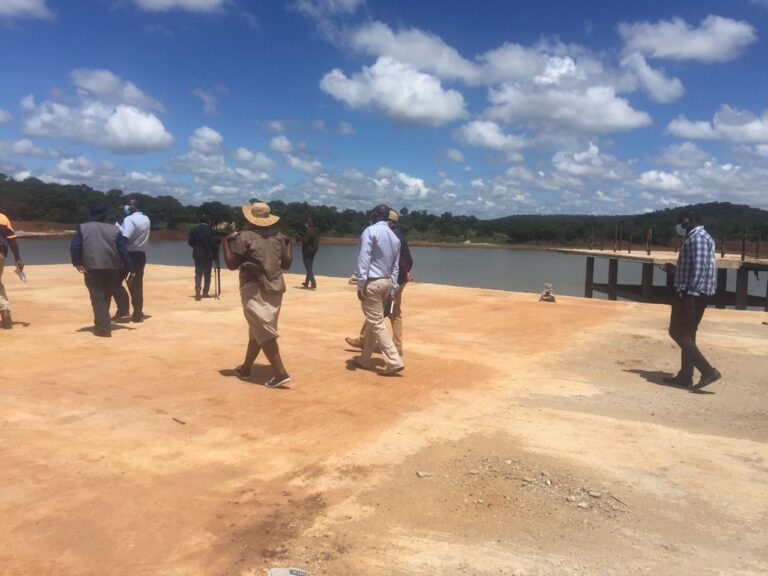
Chiredzi communities that are downstream Tugwi and Runde rivers are still under check following warnings about possible flooding emanating from Tokwe-Mukosi Dam spillage that occurred during the weekend of January 15-16 2022 according to Chiredzi District Development Coordinator (DDC) Lovemore Chisema.
Chisema said his office has since relayed information to the communities likely to be affected so that they stop such activities like agriculture along the river banks so that they minimise risks of being marooned by the discharged water.
There have been speculative reports in some sections of social media that efforts by government were already underway to evacuate affected people.
“We are encouraging communities to stop activities which include farming along Runde and Tugwi Rivers.
“We have not reached a stage where we would evacuate people. It is not like the dam has burst, but it is just over spilling. It is not raining this side so the over spill might cause floods. If the dam was about to burst, we would evacuate the people. Currently there are no people who live near the rivers but they carry out activities like gardening near the banks of these rivers,” said Chisema.
Masvingo Secretary for Provincial Affairs and Devolution (Formally known as PDC) Dr Jefter Sakupwanya echoed Chisema’s sentiments and said relaying of information to the target community is the only way to go for now to avert the likely problems to people living downstream Tokwe-Mukosi Dam.
“We are sending warning so that people stop activities they were doing along river banks since the dam spilled,” said Dr Sakupwanya.
The country’s biggest inland dam, Tugwi-Mukosi once spilled for the first time in January 2021 following incessant heavy rains resulting in floods.
About eight years ago, government had to chip in to evacuate flood victims around the dam area who had to be relocated to Chingwizi area.