Despite mounting fears over the recent suspension of USAID to Zimbabwe, the National Aids Council recently assured citizens that the country had enough Antiretroviral Treatment (ART) drugs to last until April 2026. NAC Masvingo Acting Provincial Manager Munyengetero Masunga gave the assurance during belated provincial World AIDS Day commemorations held in Bikita recently. “We currently have adequate stocks of ART drugs to sustain patients until April 2026. This is a result of strong collaboration between the Ministry of Health and Child Care, NAC, and NatPharm,” said Masunga. He noted that to avoid drug expiries and storage issues, ART medications were being delivered in staggered batches and said preparations for post- April 2026 drug supply were already underway. “The quantification process has started for the period beyond April 2026,” he said. The reassurance comes amid growing public anxiety after the U.S. government halted 83 percent of its USAID funded programs in Zimbabwe, a move that threatened critical health services including HIV treatment. Earlier this year, Masvingo residents appealed to the city council to close the funding gap left by USAID’s exit, particularly to protect essential services like ARV provision. For years, USAID supported Zimbabwe’s healthcare sector by funding medical staff salaries, providing equipment, and constructing rural health facilities. Its sudden withdrawal has left vulnerable communities at risk, with the government struggling to meet healthcare demands on its own. While authorities have insisted that alternative plans were in place and urged citizens not to panic, the broader impact of donor funding cut continues to loom across sub-Saharan Africa. As donor support dwindles, calls are growing louder for African governments to take greater ownership of their healthcare systems, through increased budget allocations, partnerships, and community-based health initiatives aimed at long-term resilience.
As we approach the two-year mark since the August 2023 harmonized elections, TellZim News saw it is essential to assess the performance of the Members of Parliament (MPs) from Masvingo who were voted into office during that tumultuous period. Numerous promises were made leading up to the elections, covering everything from parliamentary debates and legislation to various development initiatives within their constituencies. Now, it is time to categorize these MPs based on their performance into Best Performers, Good, Average, and Worst Performers.
Best Performers
The best performers are making commendable strides in fulfilling the promises they made to their constituents while campaigning. While they are not flawless, they are working diligently under challenging circumstances. Had the economy not been in such dire straits, this group of MPs might have succeeded in delivering on all their commitments.
Ropafadzo Makumire (Chiredzi Central)
The ambitious young MP stands out as a five-star performer. Makumire serves as a source of pride for the youth and exemplifies the idea that young people can make a difference. His contributions to Parliament have been significant, with robust debates focusing on both local and national issues. He has introduced motions concerning the health sector, local government, and youth initiatives, earning a reputation in Masvingo province that is unparalleled. Notably, Makumire has been a vocal advocate for the construction of Chilonga Bridge in Chiredzi, which contributed to Minister of Transport Felix Mhona’s announcement of a $92 million budget for the bridge’s construction next year. He has also challenged the government on various platforms, including Parliament, to prioritize investment in the health sector, exposing the distressing conditions at Chiredzi General Hospital. His persistent efforts led to the hospital finally receiving an X-ray machine after years of operating without one. Furthermore, Makumire condemned the use of cardboard boxes for road accident victims during the recent Masvingo-Beitbridge tragedy and proposed legislation prohibiting top government officials from seeking medical treatment abroad. This would encourage them to improve the healthcare system in Zimbabwe, solidifying his position as one of the best MPs in the province and the nation.
Ezra Chadzamira (Masvingo West)
The Minister of State for Provincial Affairs and Devolution, Ezra Chadzamira, ranks among the best performers in Masvingo province. As the MP for Masvingo West, he adeptly balances constituency responsibilities with provincial oversight. He has initiated several projects, including the revival of the Diso Mine in Mashava, which has created hundreds of jobs for local residents. The establishment of a chrome wash plant has revitalized the previously dormant Mashava mining township, spawning a surge of activity, including the processing of old asbestos mining dumps. The wash plant also aims to create a brick molding project using these same dumps. Chadzamira has facilitated the reopening of King Mine Clinic and the establishment of Musingarabwi Clinic in Ward 11 of Masvingo West. There have been noteworthy improvements in the agricultural sector as well, such as the introduction of community gardens equipped with solar-powered boreholes, addressing water scarcity and providing livelihoods to locals. In Mushandike, villagers relocated from Tugwi Mukosi now benefit from a presidential borehole drilling scheme in Madzivire Village in Ward 11. He has also launched Village Business Units (VBUs) in all wards and allocated the Constituency Development Fund (CDF) towards health and education initiatives. Earlier this year, Chadzamira was recognized as the Best Minister of State for Provincial Affairs and Devolution at the President’s Annual Performance Awards, further acknowledging his outstanding contributions at the national level. He is regarded as one of the most effective ministers of state the province has ever had.
Roy Bhila (Chiredzi North)
Bhila first made headlines during the 2018 harmonized elections by getting the highest number of votes in the country, inspiring jokes on social media that sugarcane from the Lowveld plantations had voted for him. His popularity in Chiredzi North enabled him to reclaim the constituency in 2023, reflecting the trust and confidence the electorate has in him. Since taking office, he has partnered with the Chiredzi Rural District Council (CRDC) to implement several notable development projects. These include the revival of small irrigation dams, along with proactive measures to enhance health, water supply, and sanitation in his constituency, effectively addressing the water crisis affecting both residents and livestock. Bhila is consistently present in his constituency, engaging with the community directly. After being appointed deputy minister of commerce by President Emmerson Mnangagwa shortly after the 2023 elections, he faced a sudden dismissal, rumored to be related to factional politics and his perceived loyalty to Vice President Constantino Chiwenga. Despite facing significant challenges, he remains committed to delivering on his promises to the people of Chiredzi North, spearheading developmental projects to enhance living standards, improving schools, and advocating for a new sugar mill to benefit farmers impacted by Tongaat Hulett’s monopoly.
Martin Mureri (Masvingo Urban)
The legislator for Masvingo Urban is considered one of the best performers, especially given the increasingly restrictive operating and democratic environment for opposition members. As one of only two opposition MPs in the province, Mureri remains actively engaged in his constituency whenever he is not in Harare for parliamentary sessions. He has made numerous commitments, including a pledge he signed with a women’s organization to advocate for women empowerment policies and projects. Women in the community have confirmed their ongoing engagements with Mureri on various issues affecting them. Despite the challenges posed by a shrinking democratic space for opposition politicians, Mureri has effectively maintained strong ties with grassroots constituents. He is transparent about public resources, such as the Constituency Development Fund (CDF), which he has successfully allocated across his constituency, with schools receiving significant support. Mureri is approachable and well-known in the community. Occasionally attending full council meetings, he gains valuable insights that help him align his legislative efforts with local governance. His contributions in Parliament are meaningful, and as a registered legal practitioner, he dedicates time to representing underprivileged citizens in court. He has defended several opposition members facing politically motivated charges, reinforcing his commitment to justice and representation in his constituency and beyond.
Good Performers
This category includes MPs who are performing well overally, though they need to improve in specific areas. Most have demonstrated effectiveness on the ground by implementing developmental projects in their respective constituencies; however, their silence in Parliament undermines their role as representatives of the electorate.
Davies Marapira (Zaka Central)
Marapira transitioned from Masvingo North to Zaka Central amid reports that his support base in the former had significantly declined, making his chances of winning there very slim. In Zaka Central, he stepped up his efforts by drilling boreholes in villages, schools, and health centers. This initiative improved the water supply and access to clean and safe water for the villagers in Zaka, benefiting those who previously relied on open wells and rivers such as the Chiredzi and Nyatare since the country’s independence in 1980. As the deputy minister of agriculture, Marapira has also led agricultural programmes in the constituency, including fish farming in schools and other areas. He has provided cement and building materials for ongoing projects and fuel to Zaka Rural District Council (RDC) for road maintenance, among other contributions. Additionally, Marapira has made donations in the Zaka South constituency, which some observers believe is a tactical move in his rivalry with Zaka South MP Clemence Chiduwa for control of Zaka district. Allegations of arrogance have surfaced, suggesting that he is not easily approachable by ordinary citizens in his constituency, especially since his election. Despite this perception, Marapira has made notable contributions to his constituency. However, his minimal participation in Parliament indicates that the voices of his constituents are not well represented in the August House, possibly, this is due to his role in the executive as deputy minister.
Godfrey Mukungunugwa (Chivi North)
The MP for Chivi North is affectionately nicknamed ‘Chibaba cheDevelopment’ due to his various initiatives within Chivi district when he was then chairperson for Chivi RDC. Now as an MP, Mukungunugwa has leveraged his connections with influential Zanu PF figures, such as Minister of State Ezra Chadzamira, to spur development in his area. As a result, several projects funded through devolution, such as irrigation schemes, chicken and goat programmes, and Village Business Units (VBUs), have been launched in Chivi North. Dr. Paul Tungwara and his War Veterans Funds scheme have also initiated efforts in Mukungunugwa’s constituency, where the Presidential Advisor on Investments showcased his wealth by distributing over $200,000 in cash. Furthermore, he has donated two GD6 vehicles to prominent local artists Sabhuku Vharazipi, Mbuya Mai Joni and Chairman. Mukungunugwa can be credited for attracting numerous Zanu PF and government programmes to his constituency, resulting in significant development in some wards. He has also provided building materials for schools and clinics. However, he faces criticism for focusing primarily on wards close to his home area, potentially neglecting others, which could be detrimental to his chances in the 2028 elections. In Parliament, Mukungunugwa has not made any vocal contributions, with many observing that he is often seen sleeping during sessions.
Darlington Chiwa (Chiredzi West)
The former police detective and sugarcane farmer in Triangle has allocated his Constituency Development Fund (CDF) towards health and education, a commendable decision. Chiwa has capitalized on every opportunity to advocate for the interests of sugarcane farmers. He raised issues affecting the sector in Parliament, notably calling for the formal recognition of sugarcane as a strategic crop, a request that the government successfully implemented. Chiwa maintains a visible presence in his constituency and was previously elected MP in 2013 before losing his seat in 2018, allegedly due to his alignment with the now-defunct Generation 40 (G40) faction. Following the forced self exile by the majority of G40 leaders such as Prof Jonathan Moyo, Patrict Zhwao, Saviour Kasukuwere and Walter Mzembi after the November 2017 coup that ushered in a new political era, Chiwa has since regained his seat in 2023, indicating his continued connection with the electorate. Nevertheless, Chiwa should work on enhancing his parliamentary participation to represent the diverse interests of all constituents in Chiredzi West, rather than solely prioritizing sugarcane farmers.
Nhatiso Makusha (Bikita West)
Makusha contrasts sharply with his predecessor, Elias Musakwa, who spent more time in Harare; he is consistently present in his constituency. In fact, he resides in Bikita West and only travels to Harare for parliamentary sessions. He has partnered with the Tuchi Foundation to repair damaged boreholes in the constituency, enhancing access to water. A drilling rig is always active in the area, creating new boreholes. His CDF has been widely distributed, benefiting schools and providing materials such as cement and windows. This makes him arguably the best MP in Bikita West has had since 2008. However, the voices of Bikita West residents are rarely heard in Parliament, as Makusha seldom speaks in the August House.
Sheila Chikomo (Mwenezi East)
The young and attractive Chikomo has faced accusations of being imposed by influential Zanu PF politicians. Speculation about her involvement in a love triangle with prominent Zanu PF officials has circulated, although no evidence has emerged. An educated woman, she was appointed as deputy minister of foreign affairs, which has provided her with resources to implement various projects, including poultry initiatives for women in Mwenezi East. She donates mealie meal to underprivileged families, offers revolving funds, and supplies building materials and cement for several schools. Many contributors to this article rated her positively, although they noted room for improvement, as she is yet to address the entire constituency. While Chikomo has not made significant strides in substantial development, she has focused on smaller projects that quickly bring smiles to her constituents. In Parliament, she is not particularly vocal; although she contributes occasionally, her participation is limited.
Average Performers
Master Makope (Mwenezi North)
The former school head is enjoying the benefits of the newly established constituency, created during the 2023 delimitation process. He had a brief tenure as the MP for Mwenezi East, following a by-election that occurred after the death of Joosbi Omar. After the delimitation, Makope contested and won the newly formed Mwenezi North. His social capital is a significant asset, given his long history as a school head in the Mwenezi area. Furthermore, he resides in Mwenezi, ensuring his constant presence in his constituency. Despite limited resources, Makope has effectively utilized what he has to implement various developmental projects, including drilling several boreholes. Constituents have reported that he is approachable and readily available for engagement. However, while he provides feedback to the electorate, Makope’s vocal contributions in Parliament do not reflect the experience one would expect from a former school head.
Tanatsiwa Mukomberi (Masvingo South)
The young MP has faced resource constraints and was largely absent until recently, when he began receiving the Constituency Development Fund (CDF). Since then, he has made commendable use of these funds, with many constituents confirming the construction of early childhood development classrooms, clinics, and the drilling of boreholes. Mukomberi is focusing on uplifting areas like Fusira and Nyikavanhu, which have been neglected for some time. With the implementation of developmental projects attributed to him since the CDF disbursement, there is potential for future impact. While he contributes occasionally in Parliament, Mukomberi needs to increase his efforts to be more effective. Nonetheless, he is said to be approachable and visible within the electorate.
Brian Mudumi (Masvingo North)
The youthful legislator has elicited mixed feelings among constituents in Masvingo North. The majority perceive him as an average MP, occasionally visible during the implementation of some development projects. Mudumi has reportedly donated building materials and cement to several schools within his constituency. However, some constituents accuse him of concentrating developmental efforts in the ward he hails from, neglecting other areas like Zimuto Siding in the southern and western parts of his constituency. As a member of the ZCC Mbungo Church, this affiliation has provided him advantages in both primary and general elections, but it may also blind him to the needs of those outside his immediate focus area. Some constituents expressed dissatisfaction with Mudumi’s tendency to make promises without delivering, leading to a decline in trust. His participation in Parliament is minimal, as his name rarely appears in the official records. He needs to improve his performance to face a successful 2028 election campaign.
Clemence Chiduwa (Zaka South)
Chiduwa first entered office following a by-election triggered by the death of Zaka East legislator Caston Gumbwanda. He initially attempted to contest the Zanu PF primary elections in 2018, but his application was dismissed due to a lack of proven record within the party. However, with assistance, he eventually secured a position on the Masvingo Provincial Executive, which qualified him to run in the 2019 by-election. After winning, he was appointed deputy minister of finance. In 2023, Chiduwa was granted a full mandate under the newly formed Zaka South constituency. He left a significant mark during his tenure as deputy minister by implementing several developments in the previous Zaka East constituency. However, since his election in 2023, Chiduwa seems to be resting on his past accomplishments without achieving much in his current term; nevertheless, he contributes meaningfully in Parliament, distinguishing himself as one of the few active Zanu PF MPs from Masvingo province, in contrast to others who merely attend for allowances and perks. Despite this, the people of Zaka South have accused Chiduwa of focusing excessively on factional politics and nepotism, alleging that he influenced the appointment of his wife as a proportional councilor and subsequently the chairperson of Zaka RDC. His wife’s behavior at the Zaka RDC has further marred his reputation, leading to accusations of arrogance that make him less approachable to the electorate.
Ophias Murambiwa (Zaka North)
As an average performer, Murambiwa lacks the resources of his Zaka counterparts but compensates with his visibility in the constituency. He is known to attend even low-key events when not on parliamentary duty. He entered Parliament in 2018 representing the former Zaka West constituency and contested again for Zaka North in 2023 after the delimitation. As a former school head, he possesses substantial social capital, which has helped him maintain a presence in the constituency. Murambiwa chairs the Parliamentary Portfolio committee on Primary and Secondary Education, positively contributing to the development of the education sector. However, he faces criticism for the heritage-based curriculum, which many believe is inferior to the previous curriculum proposed by Lazarus Dokora.
Winston Chitando (Gutu Central)
Serving as the Minister of Mines and Mining Development, Chitando is considered a fair legislator. He has initiated many projects in his constituency, often financing them personally, earning positive feedback from constituents. Although he is not always present in the constituency, his coordinator actively represents him when necessary. Residents of Gutu Central often discuss the garlic project and grinding mill initiatives he implemented between 2018 and 2023, which improved their living standards. However, his support base has diminished compared to his first term. In 2023, the FAZ played a critical role in frustrating the opposition candidate, Matthew Takaona, who could potentially have won if the electoral environment had been more equitable. Chitando rarely attends parliamentary sessions and seldom responds to questions as a minister. While he is perceived as arrogant when it comes to parliamentary matters, he is reportedly humble when interacting with ordinary constituents.
Pupurai Togarepi (Gutu South)
Togarepi is well-resourced but seems to be relying on his previous achievements after having been in Parliament since 2018. As the Zanu PF Chief Whip, he has a mandate to speak frequently in Parliament; however, he primarily addresses issues related to party discipline rather than development. His visibility in the constituency is limited, as he is often seen at larger events. Some constituents fear him due to his alleged involvement in violence during the pre-election period, leading to claims that he is not easily approachable.
Felix Maburuse (Chivi South)
Maburuse performed well ahead of the elections, improving access to clean and safe water for several communities. In terms of communication, mobile network access has also improved as he facilitated the establishment of a NetOne booster in the area, enabling residents to use NetOne services. Nonetheless, issues persist, such as illegal mining activities in Ward 23 near the Chasiyatende shopping center. These activities are damaging the environment and have created hazardous conditions in nearby villages. The blasting associated with these operations poses threats to the shopping center, while the mines create dangerous pits that endanger both people and livestock. Moreover, the presence of artisanal miners has led to a rise in child marriages, with underage girls being exploited, and little action has been taken to address this issue. Maburuse carries the responsibility to tackle these challenges, particularly the child marriage situation, which is a violation of the law. He also remains an inactive participant in Parliament.
Worst Performers
John Paradza (Gutu West)
The Zanu PF Deputy Youth Secretary is in his second term, yet his focus has shifted more towards party business than the needs of his constituency. Paradza vigorously advocates for the 2030 agenda and seems to have forgotten his responsibilities as the MP for Gutu West. Despite having resources, the constituency has not seen any meaningful development in decades. Had it not been for Mutonho, who successfully filed nomination papers as an independent candidate after being allegedly rigged out during the Zanu PF primaries and died before the elections in a car accident, Paradza might have lost the elections. The tragic death of Mutonho played to Paradza’s advantage, as many in Gutu West indicated they were prepared to vote for Mutonho, believing he had been unfairly treated. Paradza’s loyalty to President Mnangagwa is apparent, especially since the deputy minister of environment position was kept vacant for him until the by-elections were held three months later. He often behaves like a non-constituency MP, neglecting his duties and responsibilities. Paradza is likely the least educated deputy minister in the current cabinet, which may explain his silence in Parliament.
Exevia Maoneke (Chivi Central)
Despite his success, Maoneke seems to have entered Parliament by default. He does not exhibit the qualities of a politician, evident from his initial approach of flying in a helicopter from Harare to attend rallies in Chivi, which frustrated the electorate. Thankfully, he was advised to stop the behavior by concerned constituents. Although he has resources, there is little to show for it on the ground outside of the CDF projects. He allocated CDF to the education and health sectors, which is commendable. However, Maoneke resides in Harare and only occasionally visits Chivi Central. When it comes to participation or introducing motions in Parliament, he appears not to have learned how to engage effectively. While he has the potential to initiate developmental programmes that leave a mark, he has yet to do so. His only notable achievement is the transparent distribution of CDF funds. If he does not change, Maoneke risks losing his position in the Chivi Central constituency come 2028.
Siyaki Mundungehama (Chiredzi East)
As one of the underperformers in the province, Mundungehama, newly elected in 2023, has not made any significant impact in his constituency. Although he is often seen around, he tends to focus on factional struggles and seems more preoccupied with the threat posed by Aspect Mashingaidze, the Chiredzi RDC Chairperson, who is reportedly eyeing his seat in the next election. In Parliament, he is primarily a bystander, rarely contributing despite his background as an educator, which should empower him to advocate for education policies.
Zevezai Koti (Bikita East)
Many constituents in Bikita East regret voting Koti into office in August 2023, declaring him the worst MP the area has ever had. Although the CDF has made him somewhat visible by funding the purchase and distribution of building materials for schools and public institutions, Koti’s reliance on the presidential borehole scheme and devolution funds has not been sufficient for him to gain traction across the constituency. Some residents who contributed to this assessment have expressed regret over the departure of Johnson Madhuku, the previous legislator. Although Koti occasionally contributes in Parliament, he is yet to introduce a motion. If he hopes to retain his constituency, he must begin working harder.
Priscilla Zindari Moyo (Mwenezi West)
Zindari has never been particularly popular. In 2023, she allegedly received assistance from the Central Intelligence Organisation (CIO) and FAZ to neutralize the then Central Committee member Tafadzwa Shumba, who was favored by the electorate. Following allegations of rigging during the party primaries, Shumba opted to run as an independent candidate, facing violence and having his car burnt by suspected Zanu PF supporters. Despite this, he garnered over 6,000 votes. With support from the CIO and FAZ, Zindari won the elections but has since failed to deliver on development initiatives, showing little presence in Parliament. Now in her second term, she is often seen being assisted to embark or disembark her car at functions which is probably a signal that her health is deteriorating. Zindari is rarely seen in the constituency outside of special events where her attendance as MP is required.
Joel Sithole (Chiredzi South)
Sithole has also been inactive in Parliament, despite the significant issues facing his constituency, such as poor road conditions, distant educational facilities, the need for improvements at the Sango Border Post, and the construction of Chilonga Bridge. He fails to vocalize these concerns in Parliament, leaving the advocacy for these projects to Ropafadzo Makumire from Chiredzi Central. Sithole, a former ZRP officer and businessman, is slowly losing popularity among his constituents, who are beginning to compare him unfavorably to retired Brigadier General Kalisto Gwanetsa. Sithole has expressed frustration towards Makumire for raising issues related to the construction of the Chilonga Bridge, improvements on the Rutenga-Sango Road, and the upliftment of Sango Border Post to meet standards comparable to those of Mozambique’s Chicualacuala.
Edison Zvobgo Jr (Masvingo Central)
The son of the late national hero Edson Zvobgo was eager to become an MP. He initially ran for Masvingo Central in 2013 but lost to Edmund Mhere during the party primaries. In 2018, he shifted to Masvingo Urban, where he again lost to Benjamin Mazarire in the primary elections. In 2023, he was reportedly assisted by the infamous Forever Associates Zimbabwe (FAZ) to eliminate Phainos Makwarimba during the Zanu PF primary elections, then secured an easy victory against an imposed Moses Mavhaire of the Citizens Coalition for Change (CCC) on August 23, 2023. Zvobgo Jr has initiated several low-key projects, such as helping to establish pre-schools in his constituency; however, he has not yet made a significant impact. As a lawyer, expectations were high that he would engage vigorously in legal processes in Parliament, but he seems to spend more time taking smoke breaks. He has not introduced any motions in Parliament, raising concerns about his commitment. In his constituency, chaos ensued as parents protested at Mapanzure Secondary School over a damaged school bus that had been involved in an accident while transporting the Zanu PF women’s league. Parents were told through Zvobgo that the bus would be replaced, yet nothing has transpired from 2023 to the present. Given his current behavior, discussions of a potential second term for Zvobgo Jr seem futile, as there is little of substance occurring on the ground, and the electorate appears to have grown weary of him.
Energy Mutodi (Bikita South)
Energy Mutodi is regarded as the worst MP in the province. He is hardly ever seen in his constituency, having transitioned from Goromonzi, where he served as the MP for Goromonzi South between 2018 and 2023. It appears that he spends most of his time in Goromonzi or Harare due to his business interests. Mutodi only shows up in his constituency for high-profile visits, making his absence particularly noticeable. Constituents accuse him of being unapproachable and having an air of arrogance. His lack of engagement has allowed former rivals from the primaries to continue with development programs in the constituency, a stark contrast to other constituencies where MPs are actively on the ground.
Note: Zvarevashe Masvingise (Gutu East)
Recently elected through a by-election following the recall of his predecessor, Benjamin Ganyiwa, Masvingise has little to show for his brief time in office, having barely two weeks experience since being elected on June 14. However, his election demonstrates potential, as he has served as a councilor since 2023. If his previous performance as a councilor is indicative, he could prove effective in his new role as an MP.
While nearly half of Zimbabwe’s population is in urgent need of humanitarian assistance, Masvingo Province appears to be weathering the storm, thanks to a strong agricultural season that has left it with a cereal surplus. According to a recent UNICEF report released on May 29, 2025, approximately 7.8 million Zimbabweans, up from 4 million in 2024, are now food insecure. This alarming increase is largely attributed to the devastating El Niño-induced drought, which has triggered widespread crop failures, livestock losses, and water shortages. “The heavy rains and flash flooding came at a time when some districts were yet to recover from the effects of the El Niño drought. Late onset of rains and delayed planting may negatively impact crop yield, and some districts may lose crops due to excessive rains. As a result, 7.8 million people, including women and schoolchildren, remain at risk,” reads part of the report. However, in contrast to this grim national outlook, Masvingo Province has reported a successful farming season. Masvingo Provincial Affairs and Devolution Permanent Secretary Dr Addmore Pazvakavambwa, said the province produced 396 metric tonnes of cereal, far exceeding the local consumption requirement of 190 metric tonnes for its 1.6 million residents. “This season, Masvingo is not much affected. We have over 200 metric tonnes surplus, and all our seven districts received normal to above-normal rainfall—except for Chivi, which may need assistance about 10 months from now,” said Dr Pazvakavambwa. He said Masvingo contributed 40 percent of the country’s small grains, and local poultry production was thriving with over 2.8 million chickens recorded across the province. “We cannot say we are in a dire situation in terms of food security in the province,” he emphasized. Yet, even with Masvingo’s relative stability, the broader crisis cannot be ignored. Zimbabwe is also grappling with public health emergencies, particularly in informal settlements and high-density areas. As of April 30, the country had recorded 740 confirmed cholera cases and 20 deaths, with over 125,000 people infected by common diarrheal diseases so far this year. Malaria cases are also climbing in several regions, further straining Zimbabwe’s already fragile health system. The worsening humanitarian situation calls for immediate, well-coordinated national action.
The High Court in Masvingo has ruled in favor of Masvingo United Residents and Ratepayers Alliance (MURRA) that Masvingo City Council should stop using Runyararo West Dumpsite as it was posing threat to public health.
Last year, Masvingo United Residents and Ratepayers Alliance (MURRA) in collaboration with Zimbabwe Lawyers for Human Rights (ZLHR) have taken Masvingo City Council to the High Court over the Runyararo West dumpsite.
In the ruling, the High Court gave Masvingo City Council upto 31 December 2025 to decommission the dumpsite that has become a menace for people in Runyararo West and Victoria Ranch.
“The operation of the Court Order is stayed until December 31 2025 to enable the 1st responded (Masvingo City Council) to cease operations at the Runyararo dumpsite and migrate to the Cambria Farm landfill,” read the judgment.
In their High Court application, MURRA was seeking to bar Masvingo City Council and its workers from disposing waste at the dumpsite located in Runyararo West in terms of the provisions of the High Court Act Section 14 (chapter 7:06)
MURRA argued that due to the continued use of the dumpsite, residents were exposed to an unsafe environment hazardous to their health.
“Due to the continued existence and use of the dumpsite, residents in Runyararo West and in Masvingo in general are being exposed to a filthy and unsafe environment which is hazardous to their health. MURRA and its members, who are residents of Runyararo West, have a clear right in relation to a clean and safe environment.
“Masvingo City Council has been aware of the findings of the Zimbabwe Human Rights Commission (ZHRC) and the recommendations of EMA to migrate from the dumping site system to landfill system since 2012 but it continues to make use of the dumpsite for waste disposal with impunity,” reads the application.
Masvingo City Council secured 10 hectares of land on Cambria Farm which is on the western outskirts of the city for the establishment of the new landfill in 2019 and was set to move there by the end of October the same year.
In September 2024, Zimbabwe Human Rights Commission (ZHRC) released a report which revealed that council was violating environmental human rights and the right to administrative justice, years after the old dumpsite became cause for concern.
In October Women Coalition of Zimbabwe (WCoZ) petitioned Council over the same issue and its effects to the nearby residents.
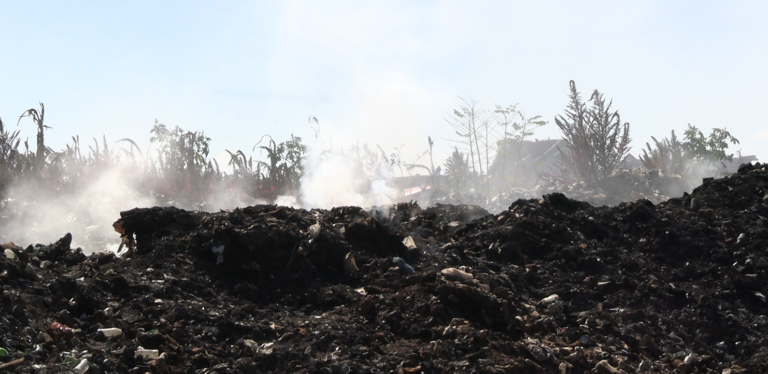
After the receiving the petition council promised to act and resolved to deploy municipal police to guard the landfill against plastic and steel scavengers who often set the dumpsite ablaze resulting in smoke. Council also promised to open the Cambria farm dumpsite by end of last year.
In June 2023 Masvingo City invited Vice President Kembo Mohadi to officially open the Cambria landfill which was yet to be completed and up to now.
In October 2022, Acting City Engineer Kudzaishe Mbetu, said council was only left with construction of the site offices which was already underway.
He was quoted saying council was going to start using the landfill at the end of the same month, adding that three boreholes had been drilled but only the control borehole had been equipped but that .
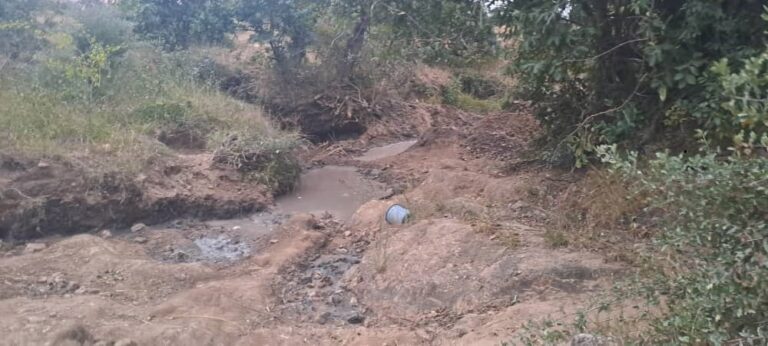
I stepped off the bus at Muchibwa Business Centre in Renco Mine area from Masvingo, with weary eyes scanning the familiar landscape and trying to think of the shortest route home in Chiponda Village, just across Nhedzewa stream. As I walked towards home, I decided to take a detour along the old path across the stream. The brook, which we used to cross on our way to Muchibwa Primary School, was now a shadow of its former self. The water had long receded, leaving behind a vast expanse of sand and rocks. I remembered a few months ago when I last crossed the brook, when the river flowed gently, its crystal-clear waters reflecting the sunlight. All seemed normal but now the stream is in a bad state. As I approached the riverbed, he was struck by the changes that had taken place within a short space of time. The area was now teeming with people, digging and panning for gold. The sound of pickaxes striking the earth and the murmur of conversations filled the air. My heart sank as I realized that the chikorokoza, or illegal gold panning, had finally reached our doorstep. Though there were cases of panning in the same river in the previous years, the rate was very low and serious illegal mining activities were mainly reported in areas like Manyama, Hwendedzo and Bhani in the District and some in Zaka just across Mutirikwi and I never imagined it would come so close to home. One of the panners, a young woman and also a relative of mine, looked up and looked at me. She smiled wearily and began to speak about the harsh reality of their situation. “Kule (uncle) this process is laborious, and we get very little from the tiresome work we do, but we have no option. No one gets enough to spare, it’s just a way of putting food on the table and, in some instances, sending children to school itonditsvakiraiwo basa kutown (please get me a job in town),” she said. Another one said they were aware of the dangers of the work they do as it also poses risky to their animals and the ultimate result of the damage also affect them as they live in the area. “We acknowledge the need to protect the environment, but we’re in a desperate situation and are only looking for survival strategies. These pits pose the same risks to us as they do to others. We have animals as well and other consequences have a way of catching up with us but we do not have an option,” said the panner. I understood the desperation that drove people to this work, people are mining for a living while destroying the future. However, my fear was not just the environmental degradation, but the violence often accompanied with illegal gold panning. We often hear stories of clashes between panners and authorities in other areas, and the thought of it happening in our community is unbearable. The result of the panning is a trail of destruction, including water pollution, soil erosion, and loss of biodiversity. Silt from the Tetenu River, exacerbated by panning in both Tetenu and Nhedzewa, and is flowing into the Nyamaunga River, a major tributary of the Mutirikwi River, which ultimately feeds into Bangala Dam. This raises concerns about the long-term sustainability of the ecosystem and water supply. However, the situation was not peculiar in Muchibwa area but was worse in Muvango and Mashapa areas where people are panning in flowing streams that directly feeds into Mutirikwi River. Ward 25 councilor Tarusenga Mapamba said the situation was not unique to Nhedzewa but was even worse in Muvango and Muzondo villages. Mapamba believes the situation was a desperate measure by locals to survive following Renco Mine’s failure to pay workers for over half a year. “We recently had a tough time rescuing a cow that had fallen in one of the pits in Muvango Village. Until Renco Mine pay workers, the situation will continue and escalate. Many of the people involved are Renco Mine workers who are trying to make ends meet. “Chasing them out is not a viable option as well as that would lead to theft and other consequences as they try to make ends meet,” said Mapamba. One villager Simbarashe Musheche from Musheche Village corroborated Mapamba’s concerns, stating that panners were active in Nyabata River, up to Maramba village and Mavhugwi area some areas that used to be crossing points were no longer viable due to the pits left by panners “Youths, women, and children are the major panners. Areas that we used to cross with scotch carts are no longer crossable even on foot. The damage is very terrible and the river flows directly into Mutirikwi and the gradient from the areas downwards is very steep making it easier for the whole loose sand to find its way into the river and eventually into Bangala Dam,” said Musheche. Musheche called for authorities to intervene and save the community from poverty, particularly Renco Mine to pay workers saying it was the only way that saves the environment. “We call upon Renco Mine to restore its former glory. People in villages around Renco work in the mine and those who doesn’t rely on the mine as well through doing menial jobs for workers as well as selling different wares for survival and in the absence of salaries, people resort to this kind of alternative to make a living,” said Musheche. The Environmental Management Agency (EMA) Masvingo Provincial Environmental Education and Publicity Officer Munyaradzi Mutisi said the agency had received reports of the on goings in the said areas and investigations were carried out. He said they had since engaged with the Zimbabwe Republic Police who were handling the matter and conducting patrols in the affected areas. “The Agency received report of illegal gold panning then responded promptly by conducting an inspection upon which our findings outlined that illegal gold mining was happening. The Agency raised the issue with the Zimbabwe Republic Police which has initiated patrols in the affected area and is currently handling the matter,” said Mutisi. The question remains, can a way be found to break this cycle of poverty and environmental degradation? As the community struggles to survive, it is clear that a solution is urgently needed. Poverty doesn’t have to mean pollution, but it will take concerted effort from all stakeholders to find a way forward that balances livelihoods with environmental sustainability.
A long-running succession battle over the Mugabe chieftaincy was put to rest after the High Court in Masvingo dismissed an application by Professor Emmanuel Dumbu challenging the appointment of Matubede Mudavanhu as substantive Chief Mugabe.
In a ruling delivered by Justice Zisengwe, the court found that the appointment, though made after years of delay was constitutionally valid and consistent with customary practices, given the stalemate that had crippled the clan and traditional leadership structures for over a decade.
Professor Dumbu, a member of the Dumbu house which has claim in the chieftaincy, had sought to nullify the appointment on the grounds that it flouted the Mugabe clan’s “collateral rotation system,” which requires the chieftaincy to rotate among five royal houses and is against the father to son succession.
He claimed he was the rightful heir, nominated at a meeting held at Chikarudzo Business Centre on October 312022, a meeting he said was sanctioned and in line with Section 283 of the Constitution.
He dismissed earlier proceedings, including a 16 October 2017 meeting that resulted in Mudavanhu’s nomination, arguing that the minutes were unsigned, unconfirmed by attending chiefs, and only stamped by the District Administrator a year later. In contrast, he maintained that the Chikarudzo meeting was procedurally sound and constitutionally compliant.
At the centre of the legal argument was whether Mudavanhu’s appointment could stand, having been made under Section 3(2) (b) of the Traditional Leaders Act, a provision the applicant argued was overridden by Section 283 of the Constitution. He further invoked the Attorney General’s Office Act, pointing to a letter from legal officer Ms. P. Rashai who withdrew earlier advice supporting the appointment and advised the government not to proceed.
However, the court ruled that while Section 283 of the Constitution governs the appointment of traditional leaders, the Traditional Leaders Act remains applicable so long as it is interpreted in line with constitutional principles. Citing precedent from Marange v Marange & Ors, Justice Zisengwe affirmed that the President remains empowered to appoint chiefs, especially in circumstances where nomination processes fail to yield consensus.
“In the face of a protracted impasse and conflicting nominations from within the clan and the Provincial Assembly of Chiefs, the Minister was entitled to invoke the fallback mechanism provided under the Traditional Leaders Act,” said Justice Zisengwe.
The court found that attempts to reach a consensus through regular channels had failed for over a decade since Chief Mute Mudavanhu’s death in 2009. In that period, the Provincial Assembly and National Council of Chiefs failed to endorse a candidate. Given that deadlock, the Minister lawfully nominated Mudavanhu, who had served as acting chief for nearly 14 years and belonged to one of the five royal houses.
Justice Zisengwe concluded that while Professor Dumbu had raised important procedural and constitutional questions, the core issue remained the practical failure of traditional structures to produce a candidate over an 11-year period. Resorting to the fallback clause in the Act was both lawful and necessary.
He said the application had been dismissed with costs, stating that the applicant had failed to demonstrate any constitutional violation or customary inconsistency in Mudavanhu’s appointment.
A disturbing incident of assault has been reported in Zaka, Chief Bota area, involving a self-proclaimed traditional healer known as Tsikamutanda where the victim was allegedly manhandled and dragged to the Tsikamutanda’s shrine after refusing to comply with family members’ demand to visit. During the altercation, the victim claimed to sustained bruises and had his shirt torn. The Tsikamutanda ultimately declared the victim had no spiritual issues, leaving many to question the purpose of the forced visit. Thomas Kubvaruno of Banduki Village told TellZim News that his family members including his brother Lawrence and others dragged him to Chisara Village where the Tsikamutanda was on the day in question against his belief. “It’s true, they came to my place after I had refused to go and manhandled me, they tore my shirt and I had bruises all over, however, what concerns me much is that I was declared innocent when we got there. “I had even asked them before going there if they suspect that I had anything or if they were told that I had anything but they heard none of it and force marched me there,” said Kubvaruno. This incident highlights the growing concerns about rogue Tsikamutandas in the area, which have been further exacerbated by the police’s failure to take effective action. Despite launching a manhunt for these individuals, the police are yet to apprehend them, leaving villagers frustrated and fearful. The lack of police action has raised concerns that the situation may escalate, potentially leading to violent confrontations. “We were told that forcing people to go there was illegal and that them being here was also illegal. We read in the news that the Chief was against it and the police were looking for them but no action has been taken so far. “We now fear for our lives and my relatives are even threatening to assault me for reporting the incident and I now fear for my life,” he said. The activities of the Tsikamutandas have been described as a reign of terror in the community. Reports have surfaced of them demanding livestock, household items, and money from villagers, with some cases involving disruption of family dynamics. The community is now calling for urgent action to be taken to apprehend these individuals and put an end to their activities. The Traditional Medical Practitioners Council (TMPC) recently wrote a letter to various departments asking for help to apprehend the traditional healers in the area as well as in Nyajena. MPCZ is mandated by the Government of Zimbabwe under the Ministry of Health and Child Care in terms of the Traditional Medical Practitioners Act [Chapter 27:14] to register, license, regulate, control, supervise and promote the practice of all traditional medical activities in Zimbabwe. In a letter by TMPC Acting Registrar Givemore Kanda, dated May 28 and directed to Officer In Charge Zaka and Masvingo policing districts, and the District Development Coordinators of the two jurisdictions, the council noted with concern the increased illegal activities of fraudulent traditional medical practitioners and persons operating as Tsikamutandas in the said areas. “The council notes with concern the increased illegal activities of fraudulent traditional medical practitioners and persons operating as Tsikamutandas swindling villagers of their possessions in cahoots with some traditional leaders and village heads. “We are seeking your assistance for the arrest and bringing to book, persons operating as Tsikamutandas throughout Masvingo Province including the culprits involved in Zaka and Nyajena Districts. The activities of persons operating as Tsikamutandas are illegal according to the Criminal Law (Codification and Reform) Act (Chapter 9:23) and TMPC does not support such activities,” reads part of the letter.
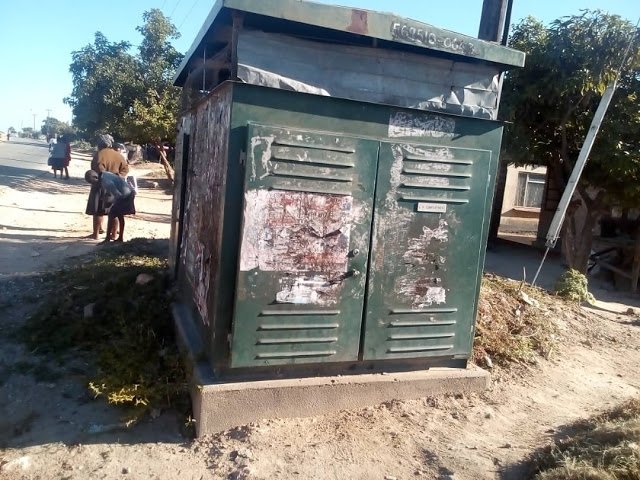
Police in Midlands have confirmed a disturbing trend of electricity infrastructure vandalism after receiving two reports of electricity transformers theft in Mutenderende in Chirumhanzu areas. Midlands Provincial Police Spokesperson, Inspector Emmanuel Mahoko confirmed the theft cases and called for concerted efforts from everyone to fight the problem targeting public infrastructure. “I confirm receiving two reports of electricity infrastructure vandalism in Midlands province. This is a disturbing trend and we urge all stakeholders to safeguard public infrastructure and report cases of vandalism to the police,” said Inspector Mahoko. The police received reports from Faith Chademana, (34) after transformer located about 30 meters from her homestead was stoles and the second case was reported by Lonkina Dzoro (73) of Dzoro Village, Chief Hama in Chirumazu. Both electric infrastructures were removed from their respective poles and vandalised leaving some pieces of metal scattered around the poles. Cases of electricity infrastructure continue to surge in Midlands and the whole country in general with most reports being attributed to theft of copper cables.
A dark cloud hung over the community in Gutu following the sudden death of a 38-year-old man who fell and died while celebrating a friend’s victory in a pool match on June 13, 2025. Masvingo Provincial Police Spokesperson Inspector Kudakwashe Dhewa confirmed the death of Taedza Nyika Manyeruke to TellZim News who was in high spirits cheering his friend’s win when he fell and lost his life. “I confirm the incident whereby Manyeruke of Mudamburi Village under Chief Gutu lost his life after falling while celebrating,” said Inspector Dhewa. On the day in question at around 1930 hours Manyeruke was watching pool with his friends at Makura bottle store at Masvingise Business Centre and he was supporting a fellow villager who is his friend. Manyeruke’s friend won and he started celebrating his friend’s success and started running with the intention of jumping on his friend’s back. Unfortunately Manyeruke missed his friend’s back, hit the door and fell to the ground. He became unconscious and his friends rendered first aid and left him to lie by the shop verandah. Another man who was passing by saw that Manyeruke had already died. The police took the body to Gutu Mission Hospital mortuary for postmortem. The Police found that Manyeruke’s occiput was swollen.
Masvingo Province is targeting to plant 5 000 hectares of winter wheat this season to surpass the 4 000 hectares planted in 2024 with a national target of 120,000 hectares with a national output target of 600 000 tonnes to surpass last year’s 562,591 tones. In 2024, Masvingo province planted 3000 ha missing the target of 4 000ha. Masvingo Agricultural and Rural Development Advisory Services (ARDAS) Director Caleb Mahoya told TellZim News that preparations for winter wheat farming were progressing well across the province with part of the wheat planted later now at germination stage while the other is at booting stage for those who planted earlier. “Preparations went well this season and as we are speaking in various places the crop is now at booting stage and to those who planted late it is in germinating stage. ‘’The province managed to scale up wheat production this season as compared to last season in 2024 and we have the potential to cultivate up to 5,000 hectares as the nation is looking at cultivating 120,000 hectares,” said Mahoya. Mahoya said they were anticipating a good season due to availability of adequate irrigation water across the province following a good rainy season. “The crop situation is commendable and we are hoping for the best since we have enough water across the province, 75 percent of our dams spilled after receiving normal to above rainfall in 2024 to 2025 farming season,” said Mahoya. Mahoya advised farmers to follow good agronomy practices to get the expected yield. “We are encouraging our farmers to follow the best agronomic practices in controlling weeds, use fertilizers in a proper manner, split application according to their soil test requirement and also encouraging our farmers to make sure they irrigate properly, right water management in irrigation perspective, look out for pests, diseases and control them well in time. “As the winter wheat crop progresses through various growth stages, collective efforts of the farmers augmented with the support of expert advice and wise use of resources will be vital in converting the success of planting into a sufficiently fruitful harvest,” he said. Mahoya said the province had only experienced challenges in delayed inputs delivery to farmers this season “The only challenge we have experienced this year was a delay in the delivery of inputs to farmers due to some logistical procedures but now every farmer who was supposed to get the seed got them and have made some progress in farming,” said Mahoya.