….Zaka, Gutu and Masvingo RDCs refuse to release figures
Kimberly Kusauka
Access to information on public funds management, specifically the disbursed devolution funds has been critical, with six local authorities out of nine approached by TellZim News releasing clear breakdowns of how they utilised 2021 funds.
Bikita, Chivi, Chiredzi and Mwenezi Rural District Councils (RDCs) as well as Masvingo City and Chiredzi Town Councils made public the figures they received in 2021 and gave clear breakdowns of how they used the funds.
However, Gutu, Zaka and Masvingo RDCs declined to avail the information raising suspicion of likely underhand dealings and corruption after refusal to even disclose the amounts disbursed.
Chivi CEO Tariro Matavire cooperated and referred the reporter to Engineer Ronald Mashapa to answer all questions.
“Our engineer will send the information tomorrow,” said Matavire.
Chivi Council Engineer Ronald Mashapa gave the amount they received and projects earmarked as well as the balance as at December 31, 2021.
“We received ZW$49,450,000 for devolution and we constructed Bwanya clinic, classroom blocks at Nyahombe and Rubweruchena secondary schools and installed piped water scheme at Chombwe.
“We spent ZW$25,039,897 by December 2021 and we received another ZW$15,000,000 in December last year, so we had a high closing balance. We have more than ZW$23 million as our balance,” said Eng Mashapa.
Bikita CEO Peter Chibhi revealed all the information on their devolution expenditure.
“We received ZW$56,287,000 and utilized ZW$45,225,988.23 by December 2021. We completed Mupamaonde, Budzi and Chibvure clinics.
“We repaired Tafara secondary school block roof, sunk 25 boreholes, constructed classroom blocks at Musiya primary and Tamuka secondary schools.
“We constructed a semi-detached house at Manunure secondary school and procured a back whole loader, Grader and Tipper,” said Chibhi.
Masvingo city Town Clerk Engineer Edward Mukaratirwa divulged their devolution expenditure.
“We received ZW$97,846,720 for devolution disbursement and spent ZW$86,516,084.71 as at December 31, 2021.
“We worked on two projects, Mucheke Trunk sewer and Runyararo North West Clinic,” said Eng Mukaratirwa.
However, Runyararo clinic is yet to open its doors to the general public as the facility is yet to be furnished with the relevant equipment that will enable it to offer services.
Mwenezi CEO, Albert Chivanga gave the reporter information and explained in detail how they spent their devolution funds in the year 2021.
“We received ZW$59, 100, 000 and used ZW$48,815,955.14, as at December 31, we had a balance of ZW$10,284,440.86.
“We constructed one by two classroom blocks at Bubi, Mufula, Valley, Rushangarumwe and Turf Nyangambi primary schools. We constructed a structure at Petronella clinic and all these projects are now at roof level using 2021 disbursements,” said Chivanga.
He said they worked with Mushagashe Training Centre and other local people.
“We engaged Mushagashe Training centre trainees and local people. Mushagashe trainees did the brick work and we are only left with roofing and tiling, which we expect to be complete soon.
“The community benefited in that they were also trained. We are using the leaving no one behind notion,” said Chivanga.
Chiredzi Council CEO Ailes Baloyi took his time to go through their devolution expenditure as he revealed their projects and monetary values.
“In 2021, we received ZW$65,461,100 and we managed to spend ZW$48,731,613 by December. We focused on health, infrastructure, roads equipment, water and sanitation.
“We constructed clinics; Turkey Heart in ward 28, Gwaseche ward 7, Rusununguko ward 32 and Masivamele in ward 8. Of these four clinics two are 100 percent complete and the remaining will be completed during the first quarter of 2022,” said Baloyi.
On water and sanitation he said they drilled 28 boreholes across the district using their own rig.
“We drilled 28 boreholes and they are to be equipped this year with a minimum of 10 being equipped with solar or electricity powered system especially the ones at business centres,” said Baloyi.
He said they purchased a new motorized grader which awaits delivery.
Some local authorities were however not interested in divulging information.
Gutu RDC CEO Alexander Mutembwa did not give any information when the reporter contacted him.
“That’s social media journalism,” said Mutembwa.
Masvingo RDC CEO Martin Mubviro did not cooperate as usual and when the reporter sent him a message on WhatsApp, he replied with a single ‘okay’ on WhatsApp.
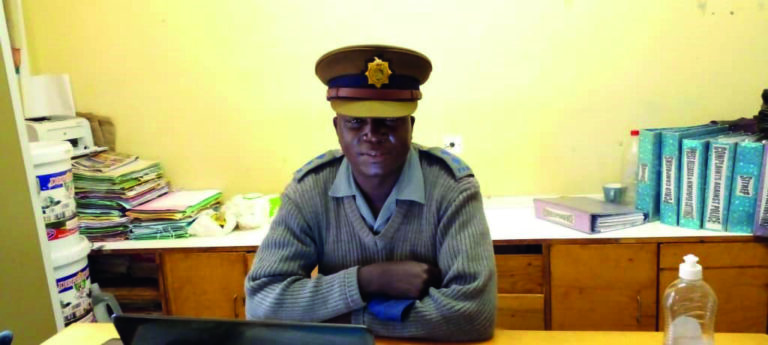
Zaka RDC Chief Executive Officer (CEO), David Majaura seemed agitated when the reporter called him.
“You can send your questions on WhatsApp,” said Majaura.
Two hours later when the reporter reminded him of the messages sent on his WhatsApp, he responded in a hostile manner.
“Not yet, I am busy at the moment. You are doing your work right so am I. So do not say you are being delayed (iwe uri kuita basa rako izvezvi handiti, iniwo ndinenge ndichiita basa, saka do not say you are delayed),” said Majaura.
With such high levels of information concealment, one wonders if ever the principle of devolution, its agenda to serve the interests of the population will be served and thus enhancing participation of communities will not be catered for hence exclusion reign supreme.