… As pfumvudza programme targets 3 million rural farmers
By TellZim Reporter
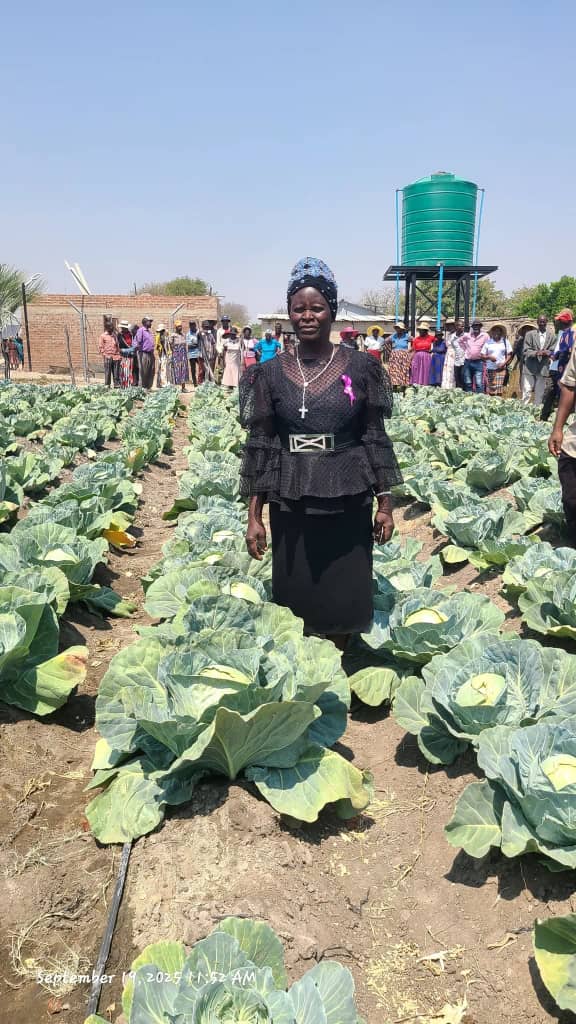
Zimbabwe is targeting assistance for three million rural farmers in the 2025 summer cropping season with inputs, while peri-urban farmers have been excluded from this year’s programme.
This was revealed by the Ministry of Lands, Agriculture, Fisheries, Water and Rural Development Permanent Secretary, Prof. Dr. Obert Jiri, in a statement ahead of the summer cropping season, which he said is anticipated to be better than the previous season.
“This season we are focusing on four programmes, with Pfumvudza targeting 3 million households. This year there will not be any support to peri-urban farmers, so it is predominantly for the rural beneficiaries,” said Prof. Dr. Jiri.
Prof. Jiri said the ministry was ready for the farming season, with both seeds and fertilizer available. “Under the Pfumvudza programme, the government is ready; we have all the seeds in the country, and some of the seeds have started to be moved to our usual Grain Marketing Board depots.
“In terms of fertilizer, we have carry-over stock from last season, and it is available for farmers. We are also working with suppliers to ensure that we do not have shortages and do not delay in terms of delivery,” he said.
He implored farmers to adopt agro-ecological tailoring to ensure success, with farmers in regions four and five, as well as other parts of region three, encouraged to consider growing traditional grains. Those in regions one and two can grow maize, although they are also urged to consider traditional grains.
“We are following agro-ecological tailoring, where we are saying in regions three, four, and five, we are putting predominantly traditional grains. Farmers must grow what is appropriate for that region. In regions one and two, maize should be the predominant crop, but we also encourage those farmers to consider growing traditional grains because they do well,” he said.
Prof. Jiri also stated that farmers who honored the government’s request to return 10kg of grain would be given top preference in the distribution of inputs, in recognition of their commitment.
“Farmers who benefitted last year and have given their 10kg appreciation to His Excellency become the priority in terms of getting Pfumvudza inputs, of course after doing their holing out and mulching. Those dedicated and thankful farmers should get priority. It is all systems go as we wait for the start of the season,” said Prof. Jiri.
The country is anticipating a better season, with normal to above-normal rains expected.
Masvingo – The National AIDS Council (NAC) of Zimbabwe recently took a proactive step toward strengthening responsible journalism by hosting a one-and-a-half-day workshop for journalists in Masvingo Province.
The event, held on September 19 and 20, 2025, at Glenlivet Hotel, brought together representatives from twelve media houses across the province.
The workshop was aimed at enhancing their capacity for sustainable and positive reporting on gender-based violence (GBV), sexual harassment, and HIV-related issues.
Through interactive sessions, local journalists were equipped with up-to-date knowledge, ethical guidelines, and inclusive terminology to improve coverage of sensitive social issues affecting communities nationwide.
Speaking during the session, NAC Masvingo Acting Provincial Manager Munyengetero Masunga emphasized the media’s vital role in shaping public opinion and influencing behavioral change through responsible reporting.
“Journalists are powerful partners in the fight against HIV and gender-based violence. Accurate, sensitive, and stigma-free reporting can encourage survivors to seek support, challenge harmful cultural norms, and inform the public about life-saving services,” said Masunga.
The workshop featured expert presentations from a range of stakeholders, including the Ministry of Information, Publicity and Broadcasting Services; the Ministry of Health and Child Care; the Zimbabwe Republic Police’s Victim Friendly Unit (VFU); Musasa Project; Zimbabwe Association of Church-related Hospitals (ZACH); and the SASA Project.
ZACH Programs Officer Precious Kahungwa stressed the importance of avoiding sensationalism, victim-blaming, or justifying violence when reporting on domestic violence and sexual harassment. She outlined the legal framework for addressing GBV and highlighted the need for survivor-centered reporting.
“Stories must highlight the root causes of GBV such as gender inequality and harmful gender norms rather than merely focusing on the incidents themselves. Misinformed reporting can re-traumatize survivors or even compromise investigations. Journalists need to balance the public’s right to know with respect for survivors’ dignity and confidentiality,” said Kahungwa.
A key part of the workshop involved introducing participants to evolving terminology related to HIV and GBV. Trainers emphasized that outdated or stigmatizing language can perpetuate discrimination and misinformation.
Masvingo Provincial Information Officer Rodgers Irimayi urged journalists to take their learnings back to their newsrooms and champion ethical and sensitive reporting on GBV and HIV.
“The way stories are told can either perpetuate harm or inspire positive change. We are counting on you to be the voice of reason and responsibility. I encourage you to implement what you have learned here, giving GBV and HIV survivors a voice through helpful reporting,” said Irimayi.
Participants welcomed the workshop, noting that it would enhance their professionalism and the quality of information shared with the public and pledged to apply the knowledge gained.
The workshop concluded with a collective commitment from participating media houses to adopt guidelines on survivor-sensitive reporting and to work closely with stakeholders like NAC and Musasa Project in raising awareness about GBV, sexual harassment, and HIV.
The initiative underscores NAC’s ongoing mission to foster a supportive environment where communities, government, and the media work hand-in-hand to combat gender-based violence and HIV-related stigma across Zimbabwe.
By investing in journalists’ skills and knowledge, the council hopes to ensure media coverage drives informed dialogue, supports survivors, and promotes healthier, more equitable communities.
CHIVI – The Rubaya family of Chivi North Ward 4 has emerged as a beacon of innovation and resilience in one of Masvingo’s driest districts, after successfully hosting a field day to showcase their thriving family Village Business Unit (VBU) recently.
Scores of villagers, local leaders, and agricultural extension officers gathered at the Rubaya homestead last week to witness the family’s wide-ranging farming techniques, which have significantly improved food security in their community. The event highlighted how a small-scale farming initiative can inspire transformation in an area traditionally known for drought and food shortages.
From a humble bucket watering system to a sophisticated drip irrigation network, the Rubayas demonstrated how they were using modern farming methods to combat water scarcity and ensure consistent crop production.
Visitors toured their lush vegetable gardens, which are now a reliable source of fresh produce for nearby households and markets as far as Zvishavane.
Acquliner Paradza Rubaya said they started farming using the bucket system and later on shifted to the drip irrigation system after drilling a solar powered borehole using the business proceeds. The produces are being sold to the local market in the community and as far as Zvishavane markets.
“We started our farming using the bucket system using the water from the well and later on shifted to drip system after drilling a solar powered borehole. We are selling our produces to the community and to other outside markets like Zvishavane.” said Rubaya.
In addition to horticulture, the family has diversified into poultry, goat, sheep, and cattle farming enterprises that improve food security in the dry Chivi area and income generation for the family.
“We realized that relying on one farming activity was not enough. By combining horticulture with livestock production, we can feed our family, earn a living, and easy food shortages during tough times. Diversified farming also helps us in reduction of animal supplementary costs since we are now using crop residues as supplementary feeds.” Noted Rubaya.
Pithias Rubaya, Gogo Rubaya, underscored the need for livestock farmers in dry regions to adopt dehorning system as a way of adapting to harsh climatic condition in Chivi district. He explained that the practice helps reduce injuries among cattle and improve survival chances during dry season.
Dehorning cattle in dry areas is important as it helps the animals to cope better with the harsh conditions we face here in Chivi. It also prevent injuries. Farmers also should avoid milking so as to improve the growth rate for their calves and to improve birthrate among the livestock.” Said Pithias.
Speaking at the field day, Ward 4 Mudadisi area, Agricultural extension officer Stanley Mpfumo, who praised the family for setting an example of climate-smart farming in a challenging environment. He emphasized that the Rubaya family business was one of the best individual business unit in the area and the family heeded the advice and knowledge they got from local extension officers.
“The Rubayas have shown that with proper planning and commitment, even dry regions like Chivi can achieve food security .This business unit is one of the best business unit here in ward 4 as it has a diversified farming system from livestock to horticulture production,” said Mapfumo.
Community members also lauded the family’s initiative, noting that their produce, ranging from fresh vegetables to free-range chickens, had reduced the need to travel long distances for food supplies.
The Rubaya family sells their harvest both locally and at Zvishavane markets, generating income that has helped them reinvest in farming equipment and expand their operations. Their success has encouraged other villagers to adopt similar techniques, with several pledging to start implementation of diversified farming.
Ward 4 Councilor Elphas Runoinda applauded the Rubayas for their contribution to local development and highlighted that theirs was the first individual village business unit to host such a field day in the ward..
“What this family is doing goes beyond farming, it is about community empowerment. Their business unit is a model for others in Chivi North to emulate. The family listened to the extension officers to practice farming as a business. We have two more individual village business unit here in the ward and other four for the whole ward.”said. Runoida.
With their innovative approach and commitment to sustainability, the Rubaya family had not only improved their own livelihood but also demonstrated that hard work, unity, and modern farming practices can transform even the harshest of environments. Their efforts are a reminder that food security in rural Zimbabwe is possible when communities take charge of their own development.
CHIREDZI – Schools across Masvingo Province are increasingly turning to agriculture as a powerful tool for institutional development and community resilience, with Chigwedziva High School in Chiredzi South emerging as a leading example through its successful poultry, horticulture, and maize production projects.
The school has established a model for agricultural innovation, where its egg-producing poultry project has become a cornerstone of an income-generation strategy that funds technological advancements. The proceeds from the sale of eggs, vegetables, and maize have been used to upgrade facilities, most notably facilitating the installation of Starlink internet services.
The deputy head of Chigwedziva High School, Benjamin Machuwaire, highlighted the multifaceted benefits of the initiatives. “We recently harvested beans that will be used in the school feeding programme, which helps boost attendance. The income has also allowed us to install Starlink and cover the monthly subscriptions, significantly improving learning in this digital era,” said Machuwaire.
The agricultural projects extend beyond funding, directly addressing local food security. Agriculture teacher Ruben Baloyi, who supervises the poultry project, explained its broader impact.
“Our poultry project is more than just egg production; it is teaching learners valuable farming skills while providing affordable eggs to families in our community. The revenue goes straight back into improving the school, and Starlink is a major achievement made possible by this work,” said Baloyi.
Another agriculture teacher, Benjamin Manzanga, who oversees horticulture and maize fields, noted that the gardens have become a lifeline for the area and a source of employment.
“We grow a variety of vegetables for local sale, and our maize production supports both the school feeding program and nearby households. This work is crucial for food security in a drought-prone region. We have also created jobs for two local community members who monitor the garden and poultry,” said Manzanga.
The school’s efforts have garnered strong community support. Happy Bennet, a local villager and chairperson of the School Development Committee, praised the initiative for reducing food shortages and providing practical skills.
“The children are gaining practical skills in poultry and crop farming. We are now buying fresh eggs and vegetables right at our doorstep, which saves us the cost of traveling to Chiredzi town,” said Bennet.
Nyikavanhu High School in Masvingo District is also contributing to the agricultural revival, despite facing significant challenges. Located in Ward 29 under Chief Nyajena, the school focuses on horticulture but relies on rain-fed maize production due to limited water sources.
Agriculture teacher Joyce Munongo detailed the constraints mainly water supply that limits the school’s potential.
“Water shortage is our major challenge here. We use ZINWA water and have a solar-powered borehole for supplementary irrigation, but its capacity is low. This has forced us to focus mainly on horticulture and use rainwater for green mealies. Despite this, our students are learning resilience and innovation through farming,” said Munongo.
The efforts of Chigwedziva and Nyikavanhu High Schools underscore a growing trend where educational institutions are leveraging agriculture to combat hunger, enhance education, and uplift their communities, demonstrating that innovation and commitment can yield prosperity even in challenging environments.
Villagers in Chief Chimombe’s area of Gutu find themselves caught between a rock and a hard place, forced to contribute towards the late chief’s memorial service and tombstone unveiling, while also being levied for the construction of toilets at Bhasera Police Camp.
The dual demands have sparked outrage among community members who are already grappling with a harsh economic environment that has seen most households struggling to meet basic needs.
Chief Chimombe was not available for comment but one of his aides and messanger Rodger Marozhe, confirmed thaa the chief had indeed requested contributions from the villages. He, however, downplayed the demand, stating that participation was voluntary.
“Chief Chimombe is not forcing anyone to contribute. He only asked those who are able to participate in the Manyaradzo (memorial ceremony) for his late father. So each village is requested to pay US$12. Some of the contributions are also meant for the construction of toilets at Bhasera Police Station,” said Rodgers.
Gutu District Development Coodinator (DDC) Chiedza Tafirei could not be reached for comment and her cell was not reachable and at times went unanswered.
However, Masvingo Permanent Secretary in the Minister of State’s office Dr Addmore Pazvakavambwa said he wanted to get facts on the ground to before commenting on the matter.
‘I will get in touch with relevant authorities to establish the facts. I cannot say what is happening is wrong or right before getting the correct information on what is on the ground. We may say its unfair but that could be the tradition in that area, so I have to establish that first and get back to you,” said Dr Pazvakavambwa.
Disgruntled village heads who spoke to TellZim News said each village under Chief Chimombe’s jurisdiction was been instructed to contribute US$5 plus a six-pack of Chibuku Super beer for the memorial ceremony of the late chief, while also raising separate funds for toilet construction at the local police camp.
“This is unbearable we are being drained from all directions. We are supposed to collect council taxes, now the chief’s office wants money for a tombstone and police toilets from the same villagers who also need to pay school fees among other monetary requirements. Where are we supposed to get all this money when the villagers can barely afford decent meals,” said one village head.
The demands come at a time when many families in the area are struggling to make ends meet amid rising prices of basic commodities and agricultural inputs. Several villagers expressed frustration at what they termed “never-ending contributions” that have become a burden on already stretched household budgets.
Another village head said the demands were creating acrimony between them and their subjects who feel that the leaders are part and parcel of the scheme to milk them.
“Villagers are now turning against us, between the council taxes, clinic fees, school development committee contributions, and now these new demands, they now feel we are part of the problem,” said another village head.
Sources said the Chief was once removed from the same position by his late father after allegations of misusing and abusing villagers. They allege that he once asked for five dollars again to construct the chief’s court when he was acting on his then old father’s behalf.
He was later removed from the post and was replaced by a female cousin who was not from the clan and that angered fellow clansmen who removed her replacing her with the former since he is the oldest son to the late chief.
“The same chief who failed to account for previous contributions for the community court now wants more money. How can we trust him with our money when previous projects remain unfinished,” said one villager
However, villagers dispute the voluntary nature of the contributions, with some fearing victimization if they fail to comply. “When the chief’s office asks for money, it’s never really optional. Those who don’t contribute risk being sidelined when they need assistance with documents or disputes,” revealed one villager who preferred anonymity.
Local councillor for the area, Tinashe Mupindu, acknowledged the villagers’ concerns. “While community development is important, we must be mindful of the economic burden on our people. I urge all authorities to consider the timing and necessity of such contributions,” Mupindu said.
The economic pressure on villagers is compounded by multiple mandatory payments including property taxes, development fees, and educational levies. Many households report having to choose between meeting these obligations and purchasing basic food items.
A teacher at a local school, who spoke on condition of anonymity, confirmed the impact on families. “We see children coming to school without proper uniforms or books because their parents have to prioritize these various contributions. It’s creating a difficult situation for both parents and schools.”
The pattern of repeated financial demands has raised questions about accountability and transparency in the handling of community funds. Previous projects, including the stalled community court, remain fresh in villagers’ memories, creating skepticism about new initiatives.
As the debate continues, the villagers of Gutu face the difficult choice between fulfilling their traditional obligations to the chieftainship and meeting their families’ basic needs in an increasingly challenging economic environment.
The Madyira chiefs council is expected to appoint a substantive chief soon, though villagers remain skeptical about whether this will bring any meaningful change to their current predicament.
Zimbabwe is home to visionary figures who have risen to global prominence, and you, my brother Strive Masiyiwa, stand tall among them. Your recent $720 million decision to build five Artificial Intelligence (AI) factories across Africa is commendable and ground breaking, but it leaves many Zimbabweans, myself included, with a bittersweet feeling: Why is Zimbabwe not part of this transformative initiative?
As the founder of Cassava Technologies, you have been a source of inspiration for decades. You built Econet Wireless into one of Africa’s largest telecom groups and expanded into fields like cloud computing, fintech, and artificial intelligence. We Zimbabweans are immensely proud of your achievements, but, as the old adage goes, “charity begins at home.” It is only natural for us to question why your latest venture excludes Zimbabwe—the very soil that nurtured your dreams and talents.
Why Zimbabwe Needs You Now Strive.
Zimbabwe is grappling with a myriad of challenges like any other developing country: unemployment, technological stagnation, and economic instability, among others. Our youth, in particular, are desperate for opportunities to unlock their potential and contribute meaningfully to the nation’s development. Brother Strive, by investing in AI infrastructure in Zimbabwe, you could empower thousands of young minds and enable them to become global players in the digital economy.
Our National ICT Policy emphasizes the need to embrace information and communication technology (ICT) as a driver of development. However, without the necessary infrastructure to support innovation, this vision risks remaining a distant dream. Imagine the transformative impact of an AI factory in Zimbabwe: jobs would be created, researchers would access cutting-edge tools, and startups could thrive without relying on costly overseas outsourcing.
Your leadership and resources could help Zimbabwe bridge the gap between aspiration and achievement. By prioritizing your homeland, you would help move Zimbabwe from step one to step two, aligning with our Vision 2030 goals of becoming an upper middle-income economy.
The Role of a Big Brother
You have earned your place on the global stage, but with great success comes great responsibility. Zimbabwe continues to look up to you as a guiding light. However, your decision to prioritize other African countries over Zimbabwe feels like a missed opportunity to play the role of a big brother. Yes, your mission to empower the African continent as a whole is noble, but Zimbabwe’s unique challenges require urgent attention from Zimbabweans,you inclusive my brother.. Local talent is brimming with ideas, yet the country lacks the infrastructure to turn those ideas into reality. By establishing an AI factory in Zimbabwe, you would not only address unemployment but also inspire a new generation of innovators who could propel Zim to global heights.
While I personally appreciate that the AI factories also built in part by Cassava Technologies aim to provide local AI infrastructure in major African markets and are also expected to bolster Africa’s position in the global AI arena and reduce dependency on overseas countries , big brother Strive,,the same facilities could also be used to reduce Zimbabwe’s dependency especially on neighboring countries since we are informed of the construction of your first AI factory already in progress in South Africa. My heart personally bleeds on the thinking of Zimbabweans playing beggar and refuge game to access ‘’their own resource produced by their own Strive‘’ from a neighboring country.
A Call to Revisit Your Decision
Your vision for a “Sovereign AI Cloud” that allows African countries to host and run their own AI systems locally is ground-breaking. But Zimbabwe must be part of this vision. I urge you, as a fellow Zimbabwean and a senior educationist, to revisit your decision and consider adding Zimbabwe to your list of countries for AI factories. Investing in Zimbabwe’s digital future will yield immeasurable returns—not just for the country but for the continent as a whole.
Your decision to exclude Zimbabwe is also a reminder of the work we must do as a nation to create an environment that attracts investment. But it is equally a call to you to remember your roots and the dreams of millions of Zimbabweans who look up to you.
Zimbabwe Deserves the Best
Brother Strive, Zimbabweans have been the backbone of the Econet economic empire, supporting it from the ground up. It is only fair that Zimbabweans be seen to benefit directly from this success. While we appreciate your corporate social responsibility efforts, shown especially by promoting education in Zimbabwe, now is the time for you to again plough back and thank your kinsmen in style. Zimbabwe should not come as an afterthought—it should be your foremost priority. After all, home is sweet home, and Zimbabwe deserves nothing but the very best from one of its brightest sons-Strive.
Moving in Line with Global Standards
As we strive to achieve Vision 2030 and move in line with global standards, we need leaders like you, Brother Strive, to lead the charge. Zimbabwe’s future depends on the contributions of its sons and daughters. You, Strive Masiyiwa, have the power to transform Zimbabwe into a hub of technological innovation. Let this be a gentle but firm reminder: Zimbabwe needs you. We look up to you as one of our own, and we hope you will answer the call to prioritize your homeland. Together, we can achieve greatness.
By Staff Reporter MASVINGO – After spending a week in remand prison, Masvingo land developers and businessmen Godard Dunira (57) and Ephraim Gwanongodza (59) were granted bail by Regional Magistrate Innocent Bepura on Thursday, October 24, following a bail hearing that drew significant public attention. The courtroom remained closely packed throughout the three days the accused appeared in court – during their initial appearance and the two subsequent days of their bail application hearing. The proceedings attracted people from all walks of life, including family members, friends, local politicians, and media representatives, all closely following the high-profile case. The two, who are facing fraud charges for allegedly orchestrating a land scam involving the illegal sale of stands on a property known as the Remainder of Victoria Ranch, were released under strict bail conditions. Magistrate Bepura ordered the accused to pay US$200 bail each and to adhere to several conditions, including reporting every Friday at Masvingo Central Police Station between 6 AM and 6 PM. They are also required to reside at their given addresses, refrain from committing similar offences, and are prohibited from interfering with state witnesses. The duo was remanded out of custody until October 29 for their next court appearance. The bail ruling came after a lengthy hearing where the state, represented by prosecutor Innocent Mudzingwa, had opposed bail, arguing that the accused were likely to interfere with witnesses if released. Defence lawyers had countered that their clients were of fixed abode and had been cooperating with police throughout the investigation.
Two Masvingo land developers and businessmen, Godfrey Dunira (57) and Ephraim Gwanongodza (59), have been remanded in custody to Thursday October 2, 2025 for a bail ruling after their application was heard before Regional Magistrate Innocent Bepura. The two are facing fraud charges for allegedly orchestrating a land scam by selling residential and business stands on a piece of land known as the Remainder of Victoria Ranch.
The state, led by prosecutor Innocent Mudzingwa, opposed the bail application during a hearing that dragged for almost two hours. The defence lawyer argued that the duo were of fixed abode and had been cooperating with the police since the beginning of the investigation, which meant they deserved bail. However, the state maintained its opposition, arguing that the accused were likely to interfere with witnesses if released.
After hearing arguments from both sides, the court adjourned and Magistrate Bepura later made the decision to postpone the case to Thursday for his ruling on the bail application.
The court heard that the accused are shareholders of Ravajik Investments Private Limited, a company they formed in 2005. While Ravajik was allocated part of LOT A of Victoria Ranch for development, the complainant in this case, ShinePlus Holdings, was allocated 50 hectares of the adjacent Remainder of Victoria Ranch by the Ministry of Local Government, Public Works and National Housing in 2019. ShinePlus is represented by its Managing Director, Charles Junior Mushinga (39).
According to court papers seen by TellZim News, the accused persons sold stands to home seekers. They allegedly prepared a layout plan for the Remainder of Victoria Ranch, the land legally owned by ShinePlus and began pegging and selling stands. Payments ranging from US$2,000 to US$7,500 totaling US$1 million, were collected from various stand buyers.
The matter came to light in September 2025 when Shineplus visited the area and discovered structures on the piece of land. The matter was reported to the police, leading to the arrest of the two.
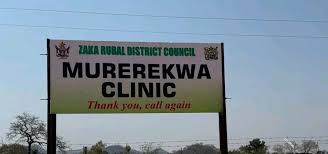
ZAKA – September 3 marked a significant milestone in Zaka district with the commissioning of Murerekwa Clinic, whose construction work started in 2007, by Minister of Local Government and Public Works, Daniel Garwe.
The clinic stands as a beacon of hope for the local community, particularly residents of Ward 08 and surrounding areas who previously had to travel long distances to access healthcare services.
The clinic’s construction began in 2007, initiated by the community’s determination to improve their healthcare.
During the commissioning ceremony, Minister Garwe emphasized the crucial role of councilors in driving development, stating they are the first point of contact for community needs, which then cascade to MPs and the President. He praised the clinic’s fully stocked pharmacy and encouraged people to utilize the facility for regular blood pressure checks.
“I went into the pharmacy, it’s fully stocked, and I got my BP checked. I urge you all to make sure you get checked before you go,” said Garwe.
Minister of State for Provincial Affairs and Devolution, Ezra Chadzamira, also present at the event, jokingly suggested that nurses remove family planning pills to boost the birth rate in the area.
“I have told the nurses to remove all family planning medication in the clinic. We want to make sure we have more children like the sand of the sea. Even the elderly who had given up childbirth, please go and try to utilize this clinic,” said Chadzamira.
Council Chair Fungai Maregedze highlighted the clinic’s benefits, stating it would significantly reduce the distance people travel to access healthcare facilities, especially pregnant women.
Chief Ndanga Born Wilson Makono expressed gratitude to the community for initiating the project and to the council for taking it over, acknowledging the role of MPs in contributing to the clinic through CDF.
“Nowadays, death is mainly caused by BP. We hear someone has collapsed here, another there, but I believe it’s going to be a thing of the past. You now have to come and get your BP checked before you go for a beer drink because you have your own clinic,” said Chief Ndanga.
The completion of Murerekwa Clinic will positively impact approximately 7,323 people, reducing their travel time and costs associated with accessing healthcare services. The clinic is set to benefit people drawn from Ward 08 of Zaka and parts of wards 7, 9, 23, and 34, where several residential stands have been established.
The nearest health facilities were previously Jerera Satellite Clinic (12km) in Ward 19, Gumbo Clinic (10km) in Ward 23, Musiso Hospital (14km) in Ward 19, and Nemauku Clinic (10km) in Ward 34, which were difficult to access due to bad terrain and flooding during the rainy season.
Works at the clinic began in 2007, with the community playing a leading role in mobilizing resources, supported by the Salvation Army Church, CDF, Zaka RDC, and Devolution funds. With the clinic now operational, the community can access essential healthcare services, improving their overall well-being and quality of life.
Over the years, numerous individuals and organizations contributed to the project, including Pastor Captain Zakiyo and Mhembere, former MP. Paradzai Chakona, former Councillor C. Majoni, Coordinator Ward Development Mai Mashanje, Committee led by Joseph Dakwa.
The Ndava family who donated US$450, Mr. James Makiya who donated 100 bags of cement, Ward 8 village heads who donated 8 bags each, former MP Chakona who donated 450 bags, 111 IBR sheets through CDF in 2017.
The District Development Fund 9DDF) provided three builders in 2019, Mr Ziki donated all window frames for the clinic block, Mrs. Madondo 18 door frames, and former MP Davison Svuure donated 50 bags of cement and deformed bars.
The sitting MP who is also the Deputy Minister of Agriculture donated David Marapira provided US$600 for construction of toilets, he also drilled and solarized clinic borehole among other things.
Notable acknowledgement also goes to Mr. Mudziviro who is caretaker since 2013 to date, Councillor Tererai Tererai, Mr Makomeke and the late Cllr Chipato, Mrs Jaricha, and Colonel
Other families that played a role include the Makomeke, and Mudzuri families as well as village heads who raised initial funds where each village in Ward 8 donated 8 bags of cement.
The local authority also commissioned a fire tender, four vehicles, one for the engineer and the other for the planner as well as motorbikes and cellphones for councilors.
In the pre-dawn darkness along the Harare-Beitbridge highway, the deep groan of an overloaded truck echoes through the night. Its suspension sags underweight far beyond legal limits, its tires bulging against tarmac that shows fresh cracks despite recent repairs. This scene plays out daily across Zimbabwe’s road network, but one parliamentarian is determined to change it.
On September 2, 2025, Hon. Discent Bajila, Member of Parliament for Emakhandeni-Luveve Constituency, rose in the National Assembly to present a motion that could transform how Zimbabwe protects its road infrastructure.
Speaking to TellZim News, Bajila said his proposal calls for a nationwide network of weighbridges to finally curb what he described as “the persistent problem of overloading, which has become synonymous with haulage trucks in Zimbabwe.”
“This motion is of great national importance as unchecked overloading accelerates the deterioration of road infrastructure, shortens the lifespan of our highways, and increases maintenance costs.
“By enforcing proper weight limits, the motion seeks to preserve public investment in roads, enhance transport safety, and promote sustainable infrastructure development for the benefit of all citizens,” said Bajila.
In his motion, the parliamentarian emphasized the urgent need for action, stating that “unchecked overloading accelerates the deterioration of road infrastructure, shortens the lifespan of our highways, and increases maintenance costs.” He further stressed that the motion sought to “preserve public investment in roads, enhance transport safety, and promote sustainable infrastructure development for the benefit of all citizens.”
“Introduce comprehensive weight restrictions for goods vehicles on all major highways and suburban roads, distinguishing between road classifications and their respective load-bearing capacities. Establish clear procedures for the measurement and enforcement of these weight restrictions, including the mandatory use of weighbridges and portable weighing scales.
He also proposed the introduction of penalties for non-compliance with the stipulated weight restrictions.
“There should be penalties sufficiently deterrent to discourage overloading and mandate the display of maximum permissible vehicle weights on all goods vehicles, in a form, manner, and position as may be prescribed by regulation,” said Bajila.
The motion comes amid growing alarm over truck-related accidents and road damage. The MP’s proposal recalled several recent tragedies attributed to overweight vehicles.
In July 2025, a severely overloaded haulage truck transporting mining equipment lost control and overturned on the Masvingo-Beitbridge Highway, spilling its cargo and blocking this vital trade route for 18 hours.
Preliminary investigations allegedly revealed the vehicle was carrying nearly 40% above its legal weight limit.
In August, the along-Chirundu Highway, an overloaded timber truck experienced brake failure while descending a steep incline, resulting in a multi-vehicle collision that claimed three lives and injured several others. Witnesses reported seeing the truck’s rear axle smoking from strain before the accident.
In May 2025, along the Bulawayo-Victoria Falls Road near Hwange, an alleged overloaded coal truck overturned while attempting to avoid a pothole, scattering burning coal across the roadway and causing a bush fire that took hours to contain.
The existing weighbridge at Birchnough Bridge, one of the few operational weighing stations in the country, has repeatedly recorded trucks exceeding weight limits by up to 50%.
Similar problems have been reported at the Beitbridge weighbridge, where despite regular checks, many transporters continue to overload vehicles, especially during nighttime hours when enforcement is reduced.
Transport industry insiders describe a system where overloaded vehicles have become the norm rather than the exception saying companies would want to reduce costs by having many trips or more trucks.
“There’s tremendous pressure to move more cargo for less money. Many companies turn a blind eye to weight limits because it’s profitable in the short term – even if it destroys roads in the long term as well as the vehicles involved,” said one truck driver who asked to remain anonymous.
Hon. Bajila’s motion specifically highlighted how overloaded vehicles were destroying the nation’s infrastructure investment, noting that the situation required immediate legislative intervention.
He called for comprehensive measures that would introduce weight restrictions and establish clear enforcement procedures across all major transport routes.
The Emakhandeni-Luveve legislator’s proposal includes strategic weighbridge placement at all major border posts including Beitbridge, Chirundu, Forbes, and Nyamapanda, in addition to expanding existing facilities at Birchnough Bridge.
It also calls for establishing critical domestic checkpoints on national highways and along mining and agricultural export routes.
The proposed system would mirror successful models in neighboring countries where weighbridges have reduced road damage by up to 40% while improving road safety statistics.
For communities along Zimbabwe’s trucking routes, the motion brings hope for safer roads and reduced maintenance costs.