Home Blog Page 417

School teacher fights GBV through poetry

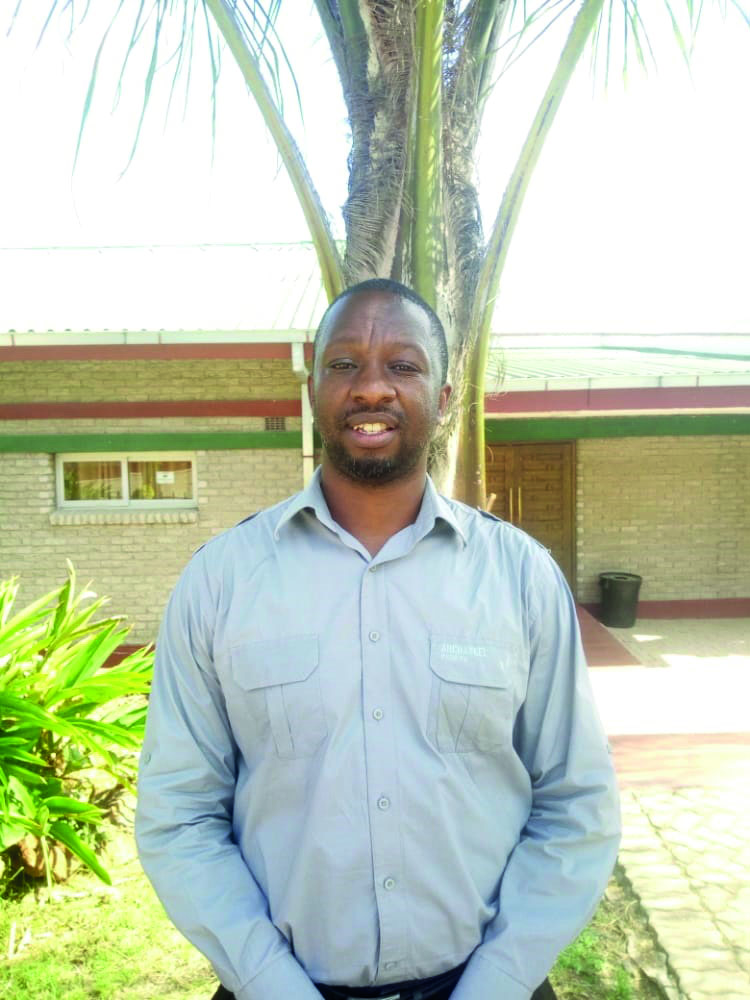
Shephard Chidima and his family 

…puts Bikita in the limelight through creative visual poetry

Believe
Mpofu

BIKITA

A Duma Primary School teacher and avid poet is rocking the airwaves with his
latest production ‘Bonda Nderei’ which talks about Gender Based Violence (GBV).

Shephard Chidima (31),
a novelist and filmmaker, is also leader of Simukai Arts Production drama group
which is based at Nyika growth point.

His latest offering was
released recently on national television broadcaster ZBC-TV as part of his own
efforts to educate people on the corrosive effects of GBV.

The father of two is also
known for his other hilarious poem ‘Hevoi’ which is dedicated to Hevoi FM but
which celebrates the culture of local Shona people.

His latest poetry production,
which is accompanied by visuals, advocates for the rights of women and urges
them to resist domestic violence.

Speaking to TellZim
News, Chidima said he worked on the poem since January but was now happy that
it was launched on the national television broadcaster.

The producer and script
writer said the poem was an admonition against abuse of women by their husbands
as well as a lamentation of the suffering that children go through due to
irresponsible fathers.

He said he penned the
poem after realizing that many families were torn apart by physical, sexual, emotional
and psychological abuses of women by men.

“I grew up in an
environment where women were abused by their husbands. I have seen many men in
my neighborhood changing into abusers after marrying their beautiful wives. My
message to married couples out there is that they should preserve what they
used to do during the infancy of their marriages.

“As young film-makers,
we thought it was important to teach all couples out there that
misunderstandings and disagreements are not solved by violence,” said Chidima.

The short ‘visual poem’
features three cast members namely Charity Munhuwei who plays the victim, Farai
Hunde the perpetrator and Chidima the story writer. 

Bonda Nderei was shot
and edited by Terrence Marume of T&T Productions and the audio was recorded
by Simbarasahe Chagwiza of KwaSimba Studios in Duma, Bikita.

At production stage,
the team faced monetary challenges, with everything reliant on Chidima’s own
meagre earnings for progress.

“We had no money for
the production and this led us to take a long time before we could produce what
we had in mind. We also had very little time to spare since I had to focus on
my daily job as a school teacher.

“I have other finished
books and videos which I am struggling to publish since I do not have enough resources
to get them published as urgently as I would want,” said Chidima.

Chidima contributed
immensely to three anthologies called Dopiro Renhetembo which was published in
2018 as well as Zimbabwe Online Authors and Hwasvisvi Hwenhetembo which were
both published in 2019.


Victorious Makope wants a more developed Mwenezi

Master Makope

Cephas Shava

MWENEZI
– Avhunga Secondary School head Master Makope, who beat 13 competitors by 2 576
votes to win the Zanu PF Mwenezi East parliamentary by-election on May 08, has
promised to represent the constituency to the best of his capability if elected
to parliament.

The
former Ward 5 councillor thanked supporters and his party for bestowing him
with the right to represent them in the Mwenezi East parliamentary by-election
whose date has not yet been announced.

Makope
told TellZim News that his immediate plan was to consult all stakeholders so as
to come up with an ‘inclusive’ development plan for the district.

“The
major role of legislators is to make laws but under my leadership, we will
definitely take it a bit further by driving tangible development. Having worked
as a councillor for many years, I am going to engage and come up with a
development plan for the district. Everyone and every stakeholder will be
involved in this developmental plan,” said Makope.

Makope’s
toughest competitor was Beitbridge-based lawyer Jabulani Mberesi who got 1108
votes, followed by Mike Mudyanembwa who garnered 859 votes.

On
fourth position was Tinashe Nyoni who acquired 459 votes trailed by Marvelous
Chifumuro who reaped 377 votes.

On
the 6th position was the late MP Joosbi Omar’s younger brother Yunis Omar who
obtained 377 votes, followed by Simbarashe Mabhena who got 279 votes.

Other
contestants were Hassim Hoosen 165, Maringire Maringire 162, John Muzamani 162,
Takura Mudavose 157, Moses Muhehi 28 and Sifana Ngavaite with 27 votes.

Makope
is expected to square off with a candidate from the MDC Alliance which is yet
to announce its candidate for the Mwenezi East by-election.

2021 ‘O’ level results: Pamushana High girls outshine boys


Blessed
Chauke

Pamushana High continues to shine
bright in academics, with the school recording a clear 90 percent pass rate in
the recently-released November 2020 Zimsec ‘O’ Level results.

More striking perhaps, is the fact
that female candidates performed far much better than their male counterparts.

Pamushana High School head Agrippa Moyo
said he was delighted by the results which he attributed to a culture of
tireless effort.

He said parents were supportive of
the school in a number of ways and that support had resulted in good
performance by pupils and their teachers.

“We are maintaining the standards for
which we have been known as a school of repute. We want to continue shining in
academics and sport as we have been doing for long. The impressive results are
also a result of the support by parents who have never let us down in all our
efforts to be on top,” said Moyo

The best five pupils are Munashe
Zimbowa, Tanatswa Tadzimirwa, Tanatswa Mutandavari, Makota Mufaro and Isheanesu
Mupiwa who each managed to obtain 13As.

The English language subject recorded
the highest number of As which totalled 126; 76 of them being by girls.

Geography and Shona recoded 96As,
Statistics 80As, History 79As, Heritage Studies 62As, and Accounting 61 As.

In Mathematics 46As were recorded while
Business Enterprise had 40, Computers recored 36, Chemistry 33 and Commerce 24.

Family and Religious Studies (FRS)
recorded 22As, Food Tech 19, Biology, Agriculture 16As and Physics nine

Wood Technology and Literature in
English recorded 8As and six As respectively.

Bota Chieftainship wrangle rages on

Farai Munerei

 …as three families
fight for headmanship

Brighton Chiseva

ZAKA – The delays made by the government
to install substantive Chief Bota in Zaka has caused a lot of problems in an
area suffering wrangles related to the selection of substantive headmen Mushaya
and Dekeza.

The Bota
chieftaincy fell vacant in 2016 year when then chief Chiyo Mugabe died,
sparking a fight for control between his two sons Naboth and Peter Mugabe.

By virtue
of being the eldest, Naboth was supposed to take over but he had been
ostracised for allegedly plying opposition politics in the previous years when
he represented his elderly father in many roles.

His younger
brother Peter took over the role of standing in for his ailing father, but it
all turned sour when the chief died, and after authorities made the late
chief’s younger brother Zezai Charuka acting chief.

Due to
his advanced age Charuka also delegated authority to his son Kamurai Zezai who
was asked to work hand in hand with the late chief’s son Peter.

However,
the two failed to work together as each of them sought to build their own bases
by appointing conflicting headmenships without the consulting the other.

Some deliberations
were done in 2018 to choose the next chief, whom many agreed should be from the
Bwazvo family of the Mutatavikwa house but this has not yet materialized.

A number
of village heads are now calling for the immediate intervention by government
so that a substantive chief can be appointed before the conflict degenerates.

“The
government should make sure that a substantive chief is found as a matter of
urgency. The acting chief is after fattening his pocket and we cannot continue
like this anymore,” said one village head who spoke on condition of anonymity.

In the
Mushaya headmanship, the acting chief is said to be preparing to install Wilson
Nhongo as headman without proper procedures being followed and is alleged to
have asked for five beasts as his payment and has been shown three so far.

The
Mushaya headmanship has five houses namely Mutangiri, Mawarure, Chaurura,
Chinezema, Rusira and Muzongomerwa.

The
headmanship is currently in the Chavurura house’s Mugarajira family which currently
holds it on an acting basis following the death of the substantive headman more
than five years back.

However, deliberations
done later resolved that the headmanship must go to the Mutangiri house which
is made-up of two sub-families namely Munerei and Tavengwa.

Some
deliberations that were done last year in June had resolved that the throne
goes to the Munerei family but it is alleged that the acting chief was bribed
by the Tavengwa family and is now in favor of their ascendency.

When
contacted for comment at some point, the acting chief denied having been bribed
and said he had no power to install a headman but could only guide the process
as the leader of the chiefdom.

“I have
no power to install a headman and people who are saying I am being bribed are
only after soiling my name,” said Zezai.

Nhongo
also said by virtue of being the eldest member and a father to the Munerei he
was supposed to take the leadership of the area saying the Munerei’s are his
sons and could not rule while he was still there.

“I am the
father figure left in the Mutangiri house so I am the heir to the throne not
the Munerei family. They are my sons and if they are to rule it will be after
my blessing,” said Nhongo

However,
an anonymous member of the Munerei family said Nhongo and the Chief publicly
acknowledges that the throne was theirs but they will not rule because they are
stingy.

“The
Chief and Nhongo were heard saying the throne belong to us when the chief was
shown the beasts at Nhongo’s place but will not give us our right because we
refused to bribe him,’ said the family member.

Munerei
family had chosen Farai Munerei as the heir to the throne and claiming that the
families had at some point agreed to his ascendency.

Others
also allege that the acting headman Mushaya bribed the current Zaka District
Development Coordinator (DDC) Memory Dhliwayo to stall the new headman
selection process so that can have more time as acting headman.

When
contacted for comment, Dhliwayo refused to comment as had been her norm saying
she was not authorized to speak to the media so she could not comment on
anything before seeking for permission form her superiors.

“I cannot
talk to the media unless I have been authorized by my superior who is the
Provincial Development Coordinator,” said Dhliwayo

Another
storm is brewing in the nearby area of Dekeza where there is a wrangle over the
substantive headmanship of the area following the death of the substantive headman
in 2017.

The Dekeza
clansmen are saying the time the two year term which a chief or headman should
be on acting basis has already lapsed.

The
Dekeza originally had four houses who are the sons of Chikanda or Gandamina who
had been given the chieftaincy from his father Nyajena.

The four
houses are Zimbende, Chena, Muchinjwa and Magadzire and the throne should
rotate among the four houses as it had been monopolized by a single house for
too long.

ZUPCO overwhelmed by mishika-shika competition

File picture

 …as
Covid-19 third wave beckons

Clayton Shereni

MASVINGO –
Monopoly public transport provider, Zimbabwe United Passengers Company (Zupco)
is feeling the heat of competition due to the resurfacing of pirate taxis and
kombis who are not contracted to the company.

Pirate
taxis popularly known as mishika-shika are now plying all local routes although
they were banned when the first lockdown was declared in March 2020 in response
to the Covid-19 outbreak.

Not
only pirate taxis have resurfaced but kombis too which are not under the Zupco
franchise are operating and charging a $40 fare for all local routes, an amount
equal to Zupco’s charge.

When
the Covid-19 lockdown was loosened, movement and the demand of transport
increased and Zupco has been blamed for failing to increase its fleet.

However,
Zupco Masvingo manager Wiseman Ziweni rubbished the
claims saying the commuting public are ditching Zupco for illegal pirate taxis.

“I
cannot comment much about the issue but all I can say is that those are blue
lies. We have the fleet which can cope with the demand here in Masvingo. What
is actually happening is that we end up withdrawing some vehicles because mishika-shika
will have flooded and commuters then ditch us for them,” said Zuweni.

The
police have also been blamed for failing to ensure that only Zupco-affiliated
transporters are on the road providing services.

With
pressure of a looming Covid-19 third wave, the police have been involved in
running battles with illegal transport operators but to little effect.

ZRP
Masvingo police spokesperson, Inspector Kudakwashe Dhewa told TellZim News that
they are impounding cars of illegal operators.

He
urged those who are operating outside the confines of the law to stop
forthwith.

“We
are making arrests and cars are being impounded on a daily basis. Those who are
pirating should stop immediately and follow what the law dictates because we
won’t hesitate to pounce on them,” said Dhewa.

Pirate
operators have been giving Zupco operators at designated pickup points a hard
time by offering quicker services since they often use smaller vehicles.

Close to 300 households share single water point in Masvingo South

 …children walking 12km
to school

Brighton
Chiseva

NYAJENA
Three
villages with close to 300 households in Kuchakanya area under Chief Nyajena in
Masvingo South constituency are sharing a single water point.

The three villages,
Kuchakanya, Maramwidze and Village 24 are sharing a single borehole located in
Kuchakanya village.

Kuchakanya village head
Munyaradzi Dzivakwe confirmed the sad situation saying the area had seen no
meaningful development since they settled there.

He said water shortages
were among the many problems they faced as a community.

“We are sharing this
borehole with two other villages. My village has 98 households and each of the
other villages has close to the same number of people which is too much for one
borehole.

“We were grateful for the
rains we got this year as some are now drawing water from wells but that does
not last long as most of them are already drying up. We will soon be forced to
converge at the same borehole again,” said Dzivakwe.

He also called on the
responsible authorities to intervene and help with the construction of a
primary school and save the children who travel long distances to Chitakai Primary
and Mudarikwa Secondary or to Tugwane High where they do bush-boarding.

“We have no school in
our area and our children travel close to 12km to Chitakai Primary and to
Mudarikwa Secondary and the distance is almost the same. Those who afford can
send their children to Tugwane High where they do bush-boarding in the nearby
area where they vulnerable to many vices,” said Dzivakwe

Maramwidze village head
Elliot Taruberekera said his village had 85 households and all relied on the
borehole in Kuchakanya village saying their area has never seen any development
since time immemorial.

He said they used to
have a borehole in their village but it broke down a long time ago and has not
been repaired because the pipes were too old and needed replacement

“We used to have our
own borehole here but it was damaged and it needs extensive repairs. However,
the pipes are worn out and new ones are needed if we are to repair it,” said
Taruberekera.

On issue of shortage of
schools, the local leader said they had mobilized resources to construct a
primary school in Kuchakanya village.

He said a classroom
block had been constructed and was now at beam level as the community had
exhausted all the resources.

“The local authority
allowed us to construct a school in the area and we have tried our best but now
we are stuck as we do not have resources to complete the project.

“We once contacted our
local MP Claudious Maronge who gave us 10 bags of cement for the block. He said
there was another secondary school project at Chamanhanzva which he was also
assisting so resources were also scarce for him but if he is done there, he
will come and give us more help,” said Taruberekera

Zimdef no longer a vehicle for looting: Prof Murwira


Professor Amon Murwira

Moses Ziyambi

More employers are now beginning
to trust the Zimbabwe Manpower Development Fund (Zimdef) because it is no
longer a vehicle for self-enrichment but for skills creation, the Minister of
Higher and Tertiary Education Professor Amon Murwira has said.

Speaking to members of the media
fraternity at his offices in Harare last week, Murwira said there has been a
turnaround in how Zimdef is conducting its affairs.

“We have put governance systems
in place and today Zimdef does not borrow and companies that contribute towards
Zimdef are beginning to trust it. So their contributions are increasing; all
these innovation hubs we are building are being built though Zimdef. That is
evidence of a governance turnaround,” said Murwira.

He said there had hitherto been a
culture of non-accountability and transparency at the institution, resulting in
dubious payments being made to individuals.

“When we arrived, we started
putting some of it to good use. I remember by that time, a minister was giving
themselves a quarter of a million dollars called Minister’s Protocol. But I
rejected it. There is no budget system that works like that.

“Their deeds had been given to
CBZ as surety. So people were being paid by CBZ (Commercial Bank of Zimbabwe)
because their own money had been finished. The money had been stolen, there was
no money,” he said.

Murwira’s predecessor, Professor
Jonathan Moyo, who is in self-imposed exile in Kenya, was indicted for
embezzling over US$200 000 from Zimdef.

Moyo’s then deputy Dr Gondfrey
Gandawa, his former personal assistant Shephard Honzeri and then Zimdef CEO
Fredrick Mandizvidza and have also been in courts for conniving to defraud the
fund of hundreds of thousands of US dollars.

Established by Section 23 of the
Manpower Planning and Development Act, 1984 (now revised Manpower Planning and
Development Act Chapter 28:02 of 1996), Zimdef’s objective is financing the
development of key skills needed in the economy.

“Since 2018 to date, Zimdef has
channeled more than $605 million towards the establishment of innovation hubs and
industrial parks as key inputs to industrialisation and modernisation,” Zimdef
claims on its website.

Murwira said the country was
endowed with massive economic potential which required its people ton harness
and turn into tangible wealth.

“This country has a lot of
opportunities and one of the things we have done is just to recognise that
people of this country are very good, they just need a good framework in which
to work. So it’s just the framework the framework we provided and that framework
encourages private sector cooperation and collaboration,” said Murwira.

Masvingo maintains lead in livestock production


Wayne
Ncube

MASVINGO – The latest crop
and livestock assessment report released by the Ministry of Lands, Agriculture,
Fisheries, Water and Rural, Resettlement places Masvingo ahead of other
provinces in cattle production scale in 2020/2021 season.

Despite a drop of 9 661
from last season’s 1 028 976 cattle, Masvingo has maintained the top spot with 1
019 315 cattle.

Provincial Veterinary
head Dr Enerst Dzimwasha told TellZim News that Masvingo’s success premised on enhanced
animal disease control measures which reduced livestock diseases.

He also praised improved
breeding methods by farmers as well as improved pastures due to the early rains
received this season.

“The large cattle
production this season is attributed to the enhanced animal disease control measures
which reduced livestock diseases like tick-bone disease and poverty deaths. Improved
breeding methods, improved pastures and feed due to early rains received during
2020/21 season also contributed to the large cattle production,” said Dzimwasha.

He said farmers should
consistently dip their cattle to maintain their heard.

“Farmers should remain
consistent in doing dipping programs to reduce diseases and maintain herd
production,” he said.

The southern region has
maintained dominance in the country with Midlands recording the cattle
production increase of 989 362 from 921 672, Matelebeleland South followed with
an increase of 629 743 from last season’s 612 924.

Manicaland has
increased its cattle herd from 607 990 to 615 190 in the 2020/21 season.

The report also states
that the grazing condition is fair to good across all provinces except for some
parts of Gokwe North, Zambezi Valley, Nkayi and Gwanda.

“Available grazing is
expected to last up to next season in most districts. However in the northern
parts of the country specifically parts of Gokwe North, Zambezi Valley, Nkayi
and Gwanda are likely to have grazing challenges.

“Generally, communal
areas will have shortage of grazing due to over-stocking and poor quality,”
reads the report.

Work for your own industrialisation, Murwira says

Professor Amon Murwira

 Moses Ziyambi

HARARE – The Minister of Higher and Tertiary Education, Professor
Amon Murwira has warned that no industrialisation will come Zimbabwe’s way
unless local people, in partnership with their own institutions of higher and
tertiary learning, take charge of the effort.

Speaking to members of the media
at his offices in Harare this week, Murwira said the job-looking mentality
rampant in the psyche of citizens ought to be dispensed with.

“Industries come from our
deliberate efforts at higher and tertiary education to grow certain industrial
pipelines and this is exactly how a country industrializes. That’s what
independence means; it means doing your things and being able to produce your
things,” said Murwira.

He said the education system
should no longer be about teaching numeracy and literacy, warning that gone were
the days of looking forward to foreigners setting up all the factories.

“Schools and universities are not
there for decoration, they are serious sources of industrialisation. They are
the springs of industry. All water comes from a spring and every industry comes
from a spring called higher and tertiary education institutions. So these must
be geared towards that.

“But as you know during the
Education 3.0 era, we were training people to work in industries developed at
Cambridge and Oxford. So they would produce and they bring it here, and we go
and work. It would look like these people are so amazing, they are just giving
us industries, and we are working,” lamented Murwira.

He said the new education thrust
adopted by the government was geared at industrialising the country by
developing local capabilities.

“Education 5.0 talks about
industrialisation; and industrialisation talks about a lot of capabilities that
we need for business development, which basically means all our institutions.
It doesn’t have to be measured only by the number of certificates that they
give; not by the number of graduate papers that they write but by the number of
start-ups that they produce.

“Start-ups are businesses that
result from our research culture. As a former colony, we have always seen
industries but nobody told us the source of those industries. Ultimately the
source of any industry is an institution of higher and tertiary education. But
those sources were remote to this country; they were not in this country,” said
Murwira.

Bowser queens emerge at bowser water delivery points

 ...as residents ignore
Covid-19 regulations

Clayton
Shereni

MASVINGO

Concerns have been raised over the emergence of ‘bowser queens’ who are now
taking advantage of the water crisis in the city to arrogate themselves roles
as coordinators of emergency supply points.

In high density areas
especially Sisk (1st-6th streets), some women have gained notoriety for
corruptly using their newfound powers to their own selfish advantage.

This came out during a
Women’s Coalition of Zimbabwe (WCoZ) workshop on Strengthening Women’s Advocacy
for Inclusive Governance (SWAG) in Masvingo.

It was heard that the
so-called ‘bowser queens’ give themselves and their friends special treatment
at water delivery points.

Kesani Chihlangu, a
WCoZ health cluster leader, said the bowser queens demand to get water first
ahead of everyone else, by claiming that the water bowsers come as a result of
their efforts.

“The bowser system is
not workable especially in Sisk because a bowser is parked at certain houses
where the owners get special treatment ahead of others. If you ask why they get
such kind of treatment, they openly tell you that they themselves called the
bowser driver so they deserve to get water first and without limit,” said
Chihlangu.

Contacted for comment,
Masvingo Mayor Collen Maboke said he had not received a formal complaint.

“I have not received a
formal complaint over that issue of bowsers yet. However, a long time ago I
once saw water being delivered in Second Street and I asked why it was not
being done at the designated Border Grounds but I did not get a satisfactory
answer. My office is open for any complaints, water should be delivered at
public places not in houses,” said Maboke.

Complaints have also
been raised over the bowser schedules some of which are in violation of curfew
time which starts at 22:00hrs.

Residents’ pressure groups
claim that women and youth are being harassed after fetching water from the
bowsers and community taps late in the night or in the earliest hours of the
day.

Masvingo United
Residents and Ratepayers Alliance (Murra) programs manager Rumbidzai Magurupira
said the bowser system was commendable but called for the emergency water
supplies services to be given during the day.

“While the bowser
system has come in handy as a mitigation measure against the water shortages,
we are concerned with the scheduling. The bowsers do not get to all areas in
equitable fashion. We call for fairness and equity in the distribution system.

Magurupira implored
council to put an end to the menace of water barons who are monopolizing water
at delivery points.

“Another worry is that
some individuals have become water barons and are monopolizing bowsers at
delivery points, controlling and deciding who gets water. Council should put
measures to stop these unscrupulous individuals and ensure that all residents
get water on an equal and fair basis,” said Magurupira.

Others said the bowser
water distribution points were possible coronavirus infection hotspots unless
effective control measures were put in place.

Residents jostle for
the precious liquid and fail to maintain social distancing while council fails
to enforce ‘no mask no water’ rule.