Home Blog Page 490

Day 17: #Lockdown Picture Gallery

0
Police dispersed a group of daring street money changers at Rutenga grown point today. Maranda business centre and Neshuro growth point were quiet today with shops opening for a very few hours before closing after midday. Dangamvura shopping somplex in Mutare was a hive of activity with a long queue of people seeking to get into TM supermarket. A group of police officers and soldiers were helping to maintain order. Citizen journalists from many rural communities report that some people still believed the fake news that the lockdown was extended. It was a rainy day in Chiredzi and many people kept indoors in the morning but some later got out to do some shopping in town where an army vehicle was parked at Pelagias.
Chiredzi

Aphiri shopping centre, Masvingo

Masvingo

Runyararo West Masvingo

Chiredzi

Rutenga

Rutenga

Majange shopping centre

Mutare

Mutare

Mutare

Stray buffalo kills Zaka man

0
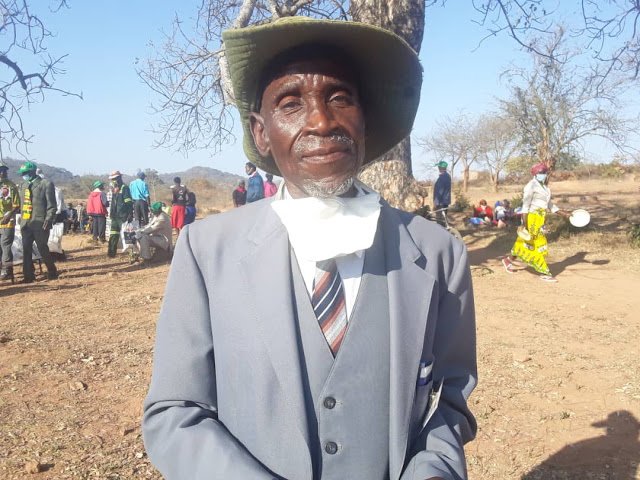
The late Ephraem Chinyere

Brighton
Chiseva
ZAKA – A stray buffalo attacked and killed a
72-year-old man who had gone to take a bath at a nearby stream yesterday, April
14 at around 16:00hrs.
The deceased man was identified as Ephraim Chinyere from Ngwaru village under Chief Ndanga near Muchechetere Secondary School.
Sources from police confirmed the incident and said
the deceased sustained three deep cuts and could have died of bleeding.
“He went for a bath at the river and was
attacked while bathing. He sustained deep cuts on the ribs, buttocks and on the
back,” said the source.
Another source said after the attack, the elderly
man attempted to crawl back home but could not make it.
It is said some village women who had seen him in a
helpless state alerted other villagers but the victim could not make it to
hospital.
Zaka police was alerted and they attended the scene
after they heard the bellows of the buffalo and the noise of breaking trees.
By the time of writing, it had not been ascertained
as to where the buffalo could have escaped from but it is widely suspected that
it came either from Kyle Recreational Park or from Devure Ranch.
Some people from Zaka claim that two buffaloes had
been seen earlier on in the Chiroma area near Bikita district.

Efforts to get a comment from Zimparks national spokesperson Tinashe Farawo failed as he did not pick his phone.

Legal Perspectives: Water Rights in face of Covid-19

0

With Fidelicy Nyamukondiwa
Harare City Council and
the government were recently dragged to court by residents for failing to
provide safe, clean and adequate water during the COVID-19 induced lockdown. Hwange
residents also hauled Hwange Colliery
Company Limited
(HCCL), Zimbabwe
National Water Authority
(ZINWA) and the government to court over water
shortages during the lockdown. Masvingo
City Council
(MCC) has not been spared as Masvingo United Ratepayers and Residents Alliance (MURRA) has filed
an ‘urgent chamber application’ to compel the local authority and national government
to provide adequate water during the lockdown.

Local
authorities’ obligations
Water is a fundamental human right. Section 77 of the
Constitution provides that every person has the right to
safe, clean and potable water. The
section also mandates the government to take measures to ensure residents have
adequate clean water. T
he environment minister delegates the responsibility to provide
water to local authorities like MCC.
In last week’s article
titled “The right to health amid
COVID-19”
, the concept that the state has an obligation to ensure human
rights are progressively realised ‘within
the limits of available resources
’ was explained. To guarantee efficiency, the
finance and environment ministries are mandated to ensure local authorities are
adequately resourced and financed.
City councils do not
wholly rely on government funding. In accordance with subsection 2 of section
276 of
the Constitution, local authorities have “power to levy rates and taxes and
generally to raise sufficient revenue
for them to carry out
their objects and responsibilities. To this end, most local authorities
including MCC recently hiked rates.
Countrywide, residents have raised the concern that, despite ‘exorbitantly’
hiking rates, local authorities have been failing to fulfil their obligations.  In the midst of the lockdown, residents have
been congregating at boreholes and other water points. Whether it is due to ignorance,
negligence or desperation,
most Zimbabweans have not been observing the social distancing
rule to help curb the spread of the deadly coronavirus
.

Responsibility to
pay rates.
Some residents and ratepayers have the misconception that
local authorities are adequately resourced to constantly provide adequate clean
water. This misconception was recently fueled by the fact that local
authorities hiked rates. The fact that local authorities like MCC levy rates does
not however mean that such rates and taxes are being fully paid.
On July 16, 2015 TellZim News published a Top 15 list of debtors
who owed MCC. Topping the list were key government departments. As at May 31, 2016,
Masvingo residents and ratepayers owed MCC a staggering U$36 million in
outstanding debts.  A major blow to MCC
and other local authorities was Statutory Instrument 33 of 2019 which saw United
States dollar debts being converted into Zimbabwean dollar debts.
In a statement, Mayor Cllr Maboke highlighted that MCC was
unable to effectively deliver service as a result of non-payment of bills by
residents and ratepayers As at October 2019, MCC was owed a total amount of
ZWL$50 million. Of the total amount, government departments owed about ZWL$27
million. The city council then took a move to recover the outstanding debts
through its debt collector,
Makausi and
Saratoga Legal Practitioners
. MURRA, through its spokesperson Godfrey Mutimba went on to
plead with MCC to “allow the residents some time to pay up their dues in
installments.”

What
is an Urgent Chamber Application?
Vigilantibus non
dormientibus jura subveniunt
is a Latin maxim which means the law helps the vigilant and not
the sluggard. This legal idiom means that the law protects those who don’t
sleep on their rights. Citizens must be encouraged to timeously approach the
courts whenever they feel their rights are being infringed.
Litigants approaching a court with an ‘urgent
chamber application’
must be able to convince the court that that the application
is indeed urgent. Harare residents were successful in doing so and an order to
compel Harare City Council to supply adequate water during the lockdown was
granted. Hwange residents failed.
Their application was dismissed after Justice Kabasa ruled that the ‘urgent
chamber application’
was not urgent. The court found that the residents
should have timeously sued. In other words, the court found that Hwange residents
have been sleeping on their rights.
Will Masvingo residents be successful? Justice Wamambo is yet
to decide.
Conclusion
Without safe,
clean and adequate potable water, the risk of contracting and spreading the killer
coronavirus disease is horrendously high. Local authorities are obligated to
ensure realisation of the right to water. The government ought to capacitate city
councils by providing financial and other resources. Residents and ratepayers
are obligated to timeously pay rates and taxes to capacitate local authorities.
Some residents and ratepayers hold the view that MCC has been
failing to prioritize its available resources. Whilst this may, to some extent
be true, I personally applaud the MCC for trying. More practical efforts are
needed because there are some parts of the city where taps often run dry for
long periods. Some new residential areas within the city do not even have taps.
MCC water may be inadequate for all but it is clean and safe. Masvingo is one
of the cities where you can safely drink tap water without boiling or
sanitizing it.
Fiat Justitia Ruat Caelum!
Fidelicy
Nyamukondiwa is a legal columnist who writes here in his personal capacity.
Contactable on 0785827154
nhanyams@yahoo.com  https://twitter.com/FidelNyams

Covid-19 hunger: Zim to repatriate citizens stuck in SA

0
David Hamadziripi

Cephas Shava

MWENEZI – Government has
responded to pleas for help by distressed Zimbabweans stuck in South Africa’s
Covid-19 lockdown by coming up with a repatriation plan.
On April 12, TellZim reported
about a desperate group of Zimbabwean in George, Western Cape province, who are
running out of food and are in dire need of assistance to come back home.
After the report, a consulate
staffer called the office requesting details of the group so that they could be
assisted.
 “We saw the stry you wrote and we have been trying to locate
them but without success. We would like to link with them
so that we can see how we help them.
“Those who are willing to get
back home should get in touch with the consulate so that we can arrange for
them to travel safe,” she said.
The group later confirmed having bee contacted by the consulate.
Zimbabwe’s ambassador to South
Africa, David Hamadziripi was later quoted saying those that wanted to go back home
should contact the embassy or the consulate in Cape Town.
On April 09, South African
President Cyril Ramaphosa announced an extension of the national lockdown by a
further two weeks until the end of April rendering most Zimbabweans desperate as
they can no longer fend for themselves.

Day 16: #Lockdown Picture Gallery

0

With a steady increase in the national tally of confirmed Covid-19 positive cases, more people seem to be taking the social distancing rules a bit more seriously. This is evidence by increased awareness on the need for people to avoid handshakes and squeezing. The were more orderly queues at some business centres in Masvingo but five police officers were seen beating up some people found loitering at Rujeko B shopping centre this evening. There was a visible decrease in the number people on the streets of many parts of Senga and Mkoba in Gweru, although big shops in town were teeming with people in the morning. Piarates taxes continued to dodgy police roadblocks in Zvishavane by using new pick-up and droup-off  points. In Rutenga, police maintained a heavier presence than yesterday and this resulted in a quieter environent before 13:00 hrs. In Chiredzi, police took awareness campaign to the street, urging people to avoid uneccessary movements. Very few people were at bus stations waiting for Zupco buses and kombis.

Birchenough Bridge

Birchenough Bridge

Birchenough Bridge

Chiredzi

Chiredzi

Chiredzi

Masvingo

Masvingio

Chitima markert, Masvingo

Just hang on: The good old days will be back

0

Dr Jeofrey Mtemeri
The COVID-19 pandemic has
brought along with it uncertainties among many people across the whole world. The
uncertainties include worries on the unpredictability of what the future holds
in terms of employment, financial stability, children’s education and business.
Meaninglessness and despair hoover around the entirety of the universe. So many
people would be in financial dire straits caused by COVID 19 induced shut downs
of both formal and informal businesses.
Many businesses, for instance, would experience
huge losses. Imagine a farmer whose cash crop was ready for harvest and ready
for the market and all of a sudden, he/she realises that he/she can’t reach out
to customers because of the lockdown. Twenty one days are a long period to wait
for such farmers. Needless to say, people are busy counting the losses. Despite
all these challenges, let us remain positive and proceed to plan B to minimise
the losses. Don’t lose hope. Some vegetables, for instance, can be dried and
sold later. This can salvage the situation to some extent. An old adage says
half a loaf is better than nothing.
People are free agents as
espoused by the existentialists. They are free to make choices that define
their lives. They are rational beings even in times of plagues and pandemics.
Your future lies entirely in your hands.  Make do with what surrounds you and make the
best out of the lockdown time. Try to think outside the box. You can start on a
project whilst you are in such kind of detentions. Think of Nelson Mandela and
many other freedom fighters who were in prison for a long period of time.
Instead of doing nothing and mourning about their detention, they started
writing books or further their education. These acts show the invincibility of
hope even in the most trying times of people’s lives. In other words, instead
of folding hands and counting the losses, people should be motivated by the
fact that they are the masters of their destiny. This is an existential
philosophy that people can make meaningful choices even in the middle of
uncertainties. Make the best out of your helplessness and hopelessness. For
example those with machines such as computers, sewing machines, welding
machines and other gadgets can make use of the time as the sun will rise and
shine again.
Most people have no time
to be with their families as they are always busy trying to make ends meet.
This is unfortunate because, according to Denise Witmer, spending time together
is one of the greatest gifts families can give to one another. Research has also
proven that strong family bonds encourage good behaviour in children, improve
academic performance and strengthen family coherence. Thus, if you have had
little time with your family, take the lockdown as a time to create or recreate
a formidable bond with your family. Learn from your spouse or children. Your
family is important as they are the ones who are at your disposal to give you
counsel that you require to get rid of depression, stress, anxiety and other disorders
that can be caused by the lockdown. This might also be the time you and your
children are together this long. Be the role model that you can possibly be.
Children learn through experiences and modelling from their immediate environment.
In other words, children learn vicariously from those they value the most. Sit
together as a family, possibly around the dinner table and eat as a family.
Cell phones and other electrical gadgets like televisions must be switched off.
You don’t want to divide the family attention. This will strengthen the family
bond and family cohesiveness.
Be patient as the heyday will
be back. Remember this is not the first pandemic that has affected the world. As
far back as 430BC, there was The Plague of Athens which lasted about five years
and killed over 100 000 people. The black death from 1346-1353. This pandemic
wiped over half of Europe’s population. Mass graves were the solution to the
overwhelming death and burial of the dead caused by the pandemic. The London
plague around 1665 killed over 100 000 people. The 2009 influenza pandemic which
was caused by H1N1 virus killed over 100 000 people. All of these are now
history so shall be COVID-19, it will pass. So let’s not be devastated by this
as it will also pass just like other past pandemics.
Some people have already
lost or shall lose their loved ones due to the coronavirus. The grief that
shall be caused by this pandemic may be unbearable. Such people need to be
assisted so that they cope with heartbreaks. Countries such as Spain, Italy,
France and Britain who have so far lost many lives due to COVID-19 need to be
assisted during their time of mourning. People are buried in mass graves and sometimes
in the absence of their relatives. This has a ripple and devastating effect on
the surviving members of the family. Their grieving would be a combination of
anger and confusion. Absence of funeral rituals may be catastrophic in a way.
According to Michelle Drouin, funeral rituals are important parts of grieving
where people are reconciled with the deceased.
In Africa and other parts
of the world, veneration of the dead is very important. Sacrifices and prayers
are done to appease the dead. The absence of such ceremonies may   create
a void between the dead and the living hence, people may dwell in mourning
longer than expected. There is still an attachment between the dead and the
living. Both African traditional religion and Christianity have some common
understanding of the dead such as dressing the dead, body viewing, visiting the
graves early in the morning and sometimes holding ceremonies after some time. These
ceremonies are part of mourning. If all these are not done it creates a void
that would require psychotherapy. Counselling centres need to be created to
help those who did not mourn their loved ones properly. Churches must come in
as support groups to help the nations in mourning. There is always a life even
after the death of the most loved ones.
The outbreak of COVID-19
should be taken as a wakeup call for nations to prepare for such eventualities in
future. So many nations were found with their pants down with very little
resources to fight the disease. Health facilities were not in good shape
despite having some infrastructure in place.
 There is always light at the end of every
tunnel. Being exposed to such dreadful scenarios should help us prepare for the
future. Let us remain vigilant and positive in anticipation of the brighter
future.  With time, the wounds will
always heal. The businesses that we would have lost during the lockdown will
slowly pick up and perhaps thrive or improve because of the timeout that was
made possible by the shutdown.
People’s way of life was
severely affected as they did not have enough food to sustain them during the 3
week long lockdown. Families may have been divided as a result of
misunderstandings that were caused by shortages. Healing of such families may
be necessary after the COVID-19 pandemic. Government, private sector, churches
and all concerned individuals should put resources together to give
psychosocial support and psychoeducation to all the affected.
The COVID-19 impact, so
far, is not as devastating as in other countries such as Italy and Spain. However,
people must continue to observe preventive methods beyond the shutdown. Such
pandemics do not just disappear all of a sudden but will slowly disappear in
the fullness of time. Bathing, washing of hands, use of detergents, maintaining
social distance and avoiding shaking of hands must be maintained for some time.
Let us be positive and wait in anticipation of the brighter future. Every dark
cloud has a silver lining and reports of containment of the pandemic in China
and signs of the slowing rates of infection and deaths in worst hit countries
such as Italy and Spain are encouraging.
Jeofrey Mtemeri (PhD)
Department of Psychology
Great Zimbabwe University (GZU)

Am I dull? Police boss intimidates TellZim

0
Ass Com Nyazema


…I will bring my certificates, I want you to give me a new job

TellZim Reporter

MASVINGO
– In what could be considered to be an act of overzealousness, Zimbabwe
Republic Police (ZRP) Officer Commanding Masvingo Province, Ass Com Taoneyi
Nyezama yesterday (April 11) threatened and intimidated TellZim directors
Passmore Kuzipa and Golden Maunganidze over a published story.
The
senior police officer then kicked the two out of his office, and they approached
Media Institute of Southern Africa (Misa) Zimbabwe lawyer Derrick Charamba of
Hwacha and Ndlovu.
Nyazema,
however, later refused to speak to the duo and their lawyer, as he was angry
for being named in a Muckraker column called Mapombi Adonha.
The
column gave a critical and satirical overview of provincial law enforcement
authorities’ policing of the national lockdown.
“Am
I dull? Who wrote that column? I will bring my certificates to TellZim so that
you can give me a job. Give me your full names and get out of my offices,”
fumed Nyazema.
Kuzipa
said the intimidation was so serious that they had to immediately engage a
lawyer.
“We
did not take the intimidation lightly. Nyazema occupies the highest police office
in the province. He is, therefore, capable of doing anything.  However, refusing to talk to our lawyer even
scared us more, and we are living in fear because we do not know his next move.
“His
insinuations that he wants us to give him a job were not sincere and we take
such ominous threats to our security seriously,” said Kuzipa.
Maunganidze
later spoke to national police spokesperson, Snr Ass Com Paul Nyathi who
advised that TellZim should approach Commissioner General Godwin Matanga with
the matter since Nyazema had refused to meet their lawyer.
“We
strongly felt we were being threatened. We had to engage police spokesperson
Ass Com Nyathi after the provincial police boss refused to talk to our
lawyer. 
“Journalism
is not a crime. There are so many ways of seeking redress when one is not happy
with a story. One can approach the Voluntary Media Council of Zimbabwe (VMCZ)
or the Zimbabwe Media Commission (ZMC), but harassment and intimidation is
unacceptable,” said Maunganidze. 
Misa
Zimbabwe has since issued a statement condemning Nyazema’s actions saying the
media should be allowed to do its work without threats and intimidations.
“Misa Zimbabwe condemns the
intimidation of journalists in the course of their professional duties.
Aggrieved parties are urged to file their complaints with the 
Voluntary Media Council
of Zimbabwe
 instead of taking the law into their own hands. The
Zimbabwe Media Commission is also available as a constitutional body if there
are sections of the society that feel aggrieved.
“It is
of high concern in this case that the police refused to meet with an officer of
the court who was representing the two journalists. We can only hope that the
journalists or their media house are not going to be harassed given the
behaviour exhibited by the Masvingo Police Assistant Commissioner,” reads the
statement.
Charamba
also said he will notify the lawyers’ association about what he regarded as
deplorable behaviour exhibited by the police boss.
“We
are all officers of the law so I did not expect that from somebody of Nyazema’s
social and professional standing. I wanted to engage him because my clients
felt threatened by his statements but he refused. I am raising the issue with
the lawyers’ association,” said Charamba.

Day 15: #Lockdown Picture Gallery

0
A Gweru City Council tractor was sported disinfecting the streets in town. Many makeshift vegetable market stall were seen in some suburbs of Chiredzi as people try to find the means to survive the lockdown trade restrictions. Many people gathered at Birchenough Bridge Primary School for a Social Welfare food distribution programme. Some money changers were doing business in Mpandawana and in Rutenga today albeit not in the usual brazen manner. Police, however, maintained a heavy presence at Maranda business centre.

Mpandawana

Mpandawana

Rivercome Service Station, Chiredzi

Chiredzi

Chiredzi

Social Welfare food distribution at Birchenough Bridge Primary School

Birchenough Bridge Primary School

Birchenough Bridge Primary School

Rutenga

Rutenga

Rutenga

Gweru

Gweru

Chibi Turn Off, a potential coronavirus hotspot

0

Chivi Road

….Chivi District Hospital has 12 gloves, 15 masks


TellZim Reporter

The many cross-border truck
drivers that stop at Chibi Turn Off business centre to rest and pick up sex
workers are aggravating the district’s vulnerability to the dreaded coronavirus, a legislator has warned.
Chivi Central Member of Parliament
(MP) Ephraem Gwanongodza made the remarks while making a contribution during a
recent visit to Masvingo by members of the national Covid-19 taskforce led by
Mines and Mining Development minister Winston Chitando.
“Businesses there might be closed
for much of the day, but truck drivers from South Africa still
park there in their numbers. In the surrounding villages are women who like to
entertain the truck drivers, and the contact that happens makes all social distancing
impossible. I have discussed it with the local councillor and it is our request
that trucks should be banned from parking there because it’s putting our
district at serious risk,” said Gwanongodza.
Speaking at the same gathering,
Chivi South Member of Parliament Killer Zivhu lamented the lack of equipment at
Chivi District Hospital.
“Front-line staff at the hospital
is exposed because there is no sufficient personal protective equipment. They
only have 12 gloves and less than 15 masks and that makes the hospital
unprepared to handle a serious outbreak,” said Zivhu.
In his presentation, the Minister
of State for Masvingo Provincial Affairs Ezra Chadzamira, who leads the
taskforce at provincial level, said there was in excess of $12 million donated
by Tongaat Hulett, Byword Motors and Bikita Minerals being used to equip
identified health centres in the province.
Chivi District Hospital, which
has set up an isolation centre with a capacity of 16 patients, is beset with
many problems including old facilities and erratic water supplies.

Covid-19 hunger: Zimbos in SA beg to come back home

Cephas Shava

MWENEZI
A group of Zimbabweans resident in the South African Town of George in the
Western Cape province are desperately looking for help to be repatriated back
home, saying their host country’s extension of the lockdown was driving them to
the brink of starvation.
On
April 09, South African President Cyril Ramaphosa announced an extension of the
lockdown by a further two weeks until the end of April.
This
has translated to enormous economic difficulty for citizen and foreigner alike,
with the situation even direr for foreigners who live hand to mouth on a daily
basis, with no job security and social security protection.
“Here
in George, the people I know who desperately need to go home add up to 24. We had
convinced ourselves that we could manage for 21 days but the extension has
turned everything upside down. If we remain stuck, here we are definitely going
to die of hunger. It’s better for this situation to prevail while we are in our
home country.
“We
went to seek help at Thembalethu Police Station but they laughed us away and
mocked us. We had expected them to help us get travelling passes so we could
travel back to Zimbabwe.
“On
many occasions, we called the Zimbabwean consulate in Cape Town but nobody
picked the calls,” said Respect Majoni who contacted TellZim on behalf of his
group.
He
said the group consisted of people from Mwenezi, Mhondoro and Beatrice.
“The
little food that we have is fast running out and we don’t see how we will be
able to survive this lockdown. We need to come back home; we are a humanitarian
case. Our government should help us,” said Majoni.
South
Africa, which is the hardest hit country in Africa, has implemented one of the
toughest lockdown regime in the world, with blanket bans almost all travel.
There
is also a strict alcohol and cigarette sales ban.