
Upenyu
Chaota
Chaota
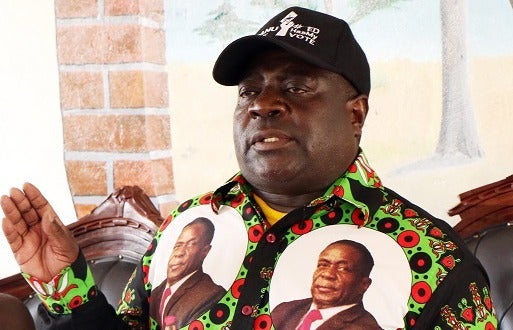
Former Zanu PF national political commissar Rtd Lt-Gen
Engelbert Rugeje remains out in the political cold awaiting reassignment after
President Emmerson Mnangagwa recently stripped him of his position which he
then gave to Victor Matemadanda,
Engelbert Rugeje remains out in the political cold awaiting reassignment after
President Emmerson Mnangagwa recently stripped him of his position which he
then gave to Victor Matemadanda,
Rugeje, whose run as the national political commissar
was marred by disputes after he presided over Zanu PF’s chaotic primary
elections in the build up to the 2018 harmonised elections, was demoted in May
this year and replaced by the garrulous Matemadanda.
was marred by disputes after he presided over Zanu PF’s chaotic primary
elections in the build up to the 2018 harmonised elections, was demoted in May
this year and replaced by the garrulous Matemadanda.
In what many viewed as a well-calculated political
move designed to keep his former military allies in check President Mnangagwa
said he would reassign Rugeje but nothing has happened as yet.
move designed to keep his former military allies in check President Mnangagwa
said he would reassign Rugeje but nothing has happened as yet.
Zanu PF national secretary for legal affairs Paul
Mangwana told a recent Masvingo Provincial Coordinating Committee (PCC) that
Rugeje was not demoted, claiming as a politburo member, he still retained a lot
of power.
Mangwana told a recent Masvingo Provincial Coordinating Committee (PCC) that
Rugeje was not demoted, claiming as a politburo member, he still retained a lot
of power.
“I want to make it clear that President Mnangagwa has
other plans for Cde Rugeje. We do not know his next assignment but for the
benefit of everyone, Rugeje is still our politburo member.
other plans for Cde Rugeje. We do not know his next assignment but for the
benefit of everyone, Rugeje is still our politburo member.
“The President just replaced him with Victor
Matemadanda but that does not mean he was knocked out,” said Mangwana in a
desperate attempt to appease the former army general who cut a forlorn presence
in the meeting.
Matemadanda but that does not mean he was knocked out,” said Mangwana in a
desperate attempt to appease the former army general who cut a forlorn presence
in the meeting.
It is not clear whether Rugeje will soldier on as just
a politburo member without a portfolio of his own.
a politburo member without a portfolio of his own.
Under
Rugeje, Mnangagwa only scraped through to the presidency, winning with a
hotly-disputed, wafer-thin margin of 0.6 percent to avoid a run-off against MDC
Alliance leader Nelson Chamisa.
Rugeje, Mnangagwa only scraped through to the presidency, winning with a
hotly-disputed, wafer-thin margin of 0.6 percent to avoid a run-off against MDC
Alliance leader Nelson Chamisa.
This
poor performance brought Rugeje under immense criticism, with many prominent
party members like Chris Mutsvangwa openly attacking Rugeje and labeling him a
political novice.
poor performance brought Rugeje under immense criticism, with many prominent
party members like Chris Mutsvangwa openly attacking Rugeje and labeling him a
political novice.
There have been rumours that President Mnangagwa
planned to appoint Rugeje Vice Chancellor of the Zimbabwe Defence College.
planned to appoint Rugeje Vice Chancellor of the Zimbabwe Defence College.