Home Blog Page 603

More Zimsec exam anomalies exposed

0

Brighton Chiseva
MASVINGO – The
Zimbabwe National School Examination Council (Zimsec) could be put under
further scrutiny after revelations that the November 2018 exams from grade
seven right up to ‘A’ level were marred by irregularities.
The
glitches ranged from non-inclusive questions, questions that diverged from the
requirements of the new syllabus to different instructions between the specimen
paper and the real exam papers.
Many
anomalies were noted in both the ‘O’ and ‘A’ level Family and Religious Studies
(FRS) examination papers, prompting the Progressive Teachers Union of Zimbabwe
(PTUZ) to raise the matter with the Zimsec board.
In
a letter dated November 01, PTUZ secretary general Raymond Majongwe raises many
issues including lack of coherence between the syllabus and the exams.
“We
write this letter to complain about certain papers that have disadvantaged
leaners in the current examination session. While the new curriculum exposes
the leaners to four religions in the two year course which is commendable, the
FRS 6074 Paper 1, written in November 2018 lacks validity and is not in line
with the syllabus.
“We
believe some of the mistakes that found their way into the paper are either a
symptom of arrogance or incompetence on the part of the officer(s) who are in
charge of setting the items or compilation or both.
“One
major problem that we noted is that there is a difference between the specimen
paper and the paper that came in the final examination,” reads part of the
letter.
Both
teachers and learners, the letter states, felt misled by the syllabus template
as its guidelines did not do justice to them.
Moreover,
the FRS 6074/1 specimen paper was two hours long but the actual paper was
written in two hours 30 minutes. The specimen instructed pupils to choose four
questions each carrying 25 marks but the actual paper required pupils to answer
five questions.
In
response, Zimsec said it took the issues raised seriously and will do thorough
investigations.
“As
the examination council, we do not take lightly these issues and are in the
process of making investigations so as to respond to you accurately and
timeously,” reads part of the response.
A
Divinity teacher told TellZim News some of the pupils wrote four questions as
had been advised by their teachers in the days before the exams while others noticed
the inconsistency and answered five.
Another
teacher said he suspected the typists did not sit down to plan the Divinity
Paper 2 exam, but simply edited the paper 1 which required candidates to answer
five structured questions, each with 20 marks, but then forgot to change the
allocated time and the number of questions to be answered.
The
paper also carried a recommendation for candidates not to spend more than 40
minutes on each question, meaning it would require a candidate who took the
advice more than three hours to complete the paper.
A heritage studies ‘O’ level paper was labeled ‘A level’ and Zimsec had to send an
erratum notifying schools about the mistake.
The
‘O’ level mathematics paper 1 had a question which required pupils to plot a
graph but the points exceeded the size of the graph paper.
Grade
seven teachers also complained about the English Paper 2 whose questions they
claimed were not inclusive; with candidates being asked to write a composition
either on poor service delivery at a hotel or the experiences of life at a
farm.
“What
did they expect children in rural areas who have never been at a hotel or at a
farm to write about? There are also children in urban areas who do not even
have the slightest idea of how hotel service works,” said one primary school
teacher.
TellZim
News reported a few weeks ago that the ‘O’ level Chemistry Paper 3 required
pupils to use highly concentrated Ammonia which affected many student, teachers
and lab technicians across the country, some of them suffering convulsions and
asthmatic attacks.

Parents lament awful Dabwa School grade seven results

0


Brighton Chiseva
ZAKA – Parents with
children going to Dabwa Primary School in Zaka district have complained about the
poor results obtained by grade seven pupils this year.
Parents told
TellZim News the school recorded a 24 percent pass rate, which is the lowest in
the district. They said the school used to record at least a 30 percent pass
rate after every exam sitting but things have suddenly deteriorated to shocking
levels.
When contacted
for comment, Zaka District Schools Inspector (DSI) Samson Chidzurira confirmed
the awful results, saying parents were justified in being worried because the
record was not in sync with what they were used to.
“We are equally
worried because that has not been Dabwa’s pass rate. The school is now at the
very bottom of the district. As the ministry and the district, we should have
time to go and look into the issue to see what could be the cause and map the
way forward,” said Chidzurira.
He said he could
not blame the school head at the moment but will also look at the teaching
staff.
“We will have to
stamp our authority on the school. Though the school head has his own issues, I
cannot blame him in the mean time until we do investigations. I will have to
look at the staff and the parents’ side,” he said.
However, parents
accused the school head William Mandima and his deputy Euvancio Mukuwe for the
poor results.
“The headmaster
is a womaniser and his deputy head is strict for nothing and he is a drunkard.
He is working to destroy the headmaster so that he can take over from him. The
two are only strict with male teachers but female teachers are allowed to do as
they please. They must create a workable environment for teachers to improve
the pass rate,” said one parent.
Mandima
confirmed the poor results but said he could not be held liable alone as he was
just ‘new’ at the school.
“I cannot be
blamed for the poor pass rate. I have been at the school for only eight months
and had been struggling to have pupils come to school. Even during holiday
lessons, I had to call parents to send pupils to school but most of them did
not come.
“Some of the
parents are just after tarnishing the school’s image but they are to blame for
not supporting the school’s efforts. They do not send their children to school
when we request them to do so,” said Mandima.

Farmers urged to grow short-season seed varieties

0

Tiyani Hahlani

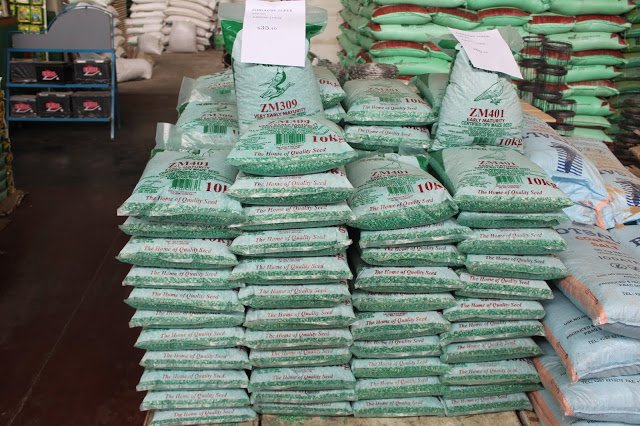
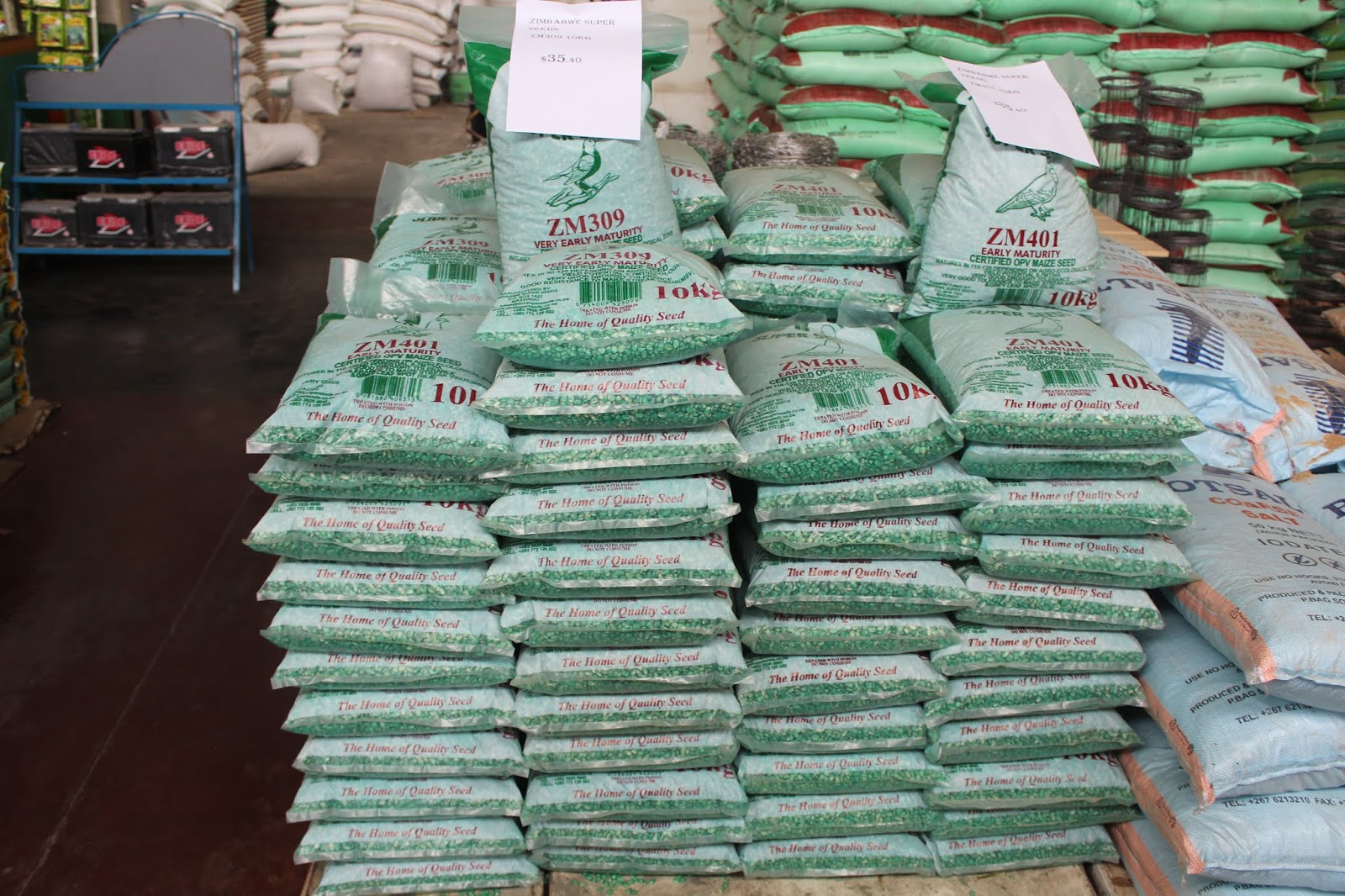
The Meteorological Services Department (MSD) recently released the 2018-19 national rainfall forecast which is being used by farmers in the southern region of the country to select the best seed varieties to plant.
Some seed retailers in Masvingo are using the information to advice farmers on how to approach the cropping season which is expected to receive average to below average rainfall.
One of such retailers is Farm and City Centre which has urged farmers to wisely choose what to plant so as to minimise losses and increase chances of good harvests.
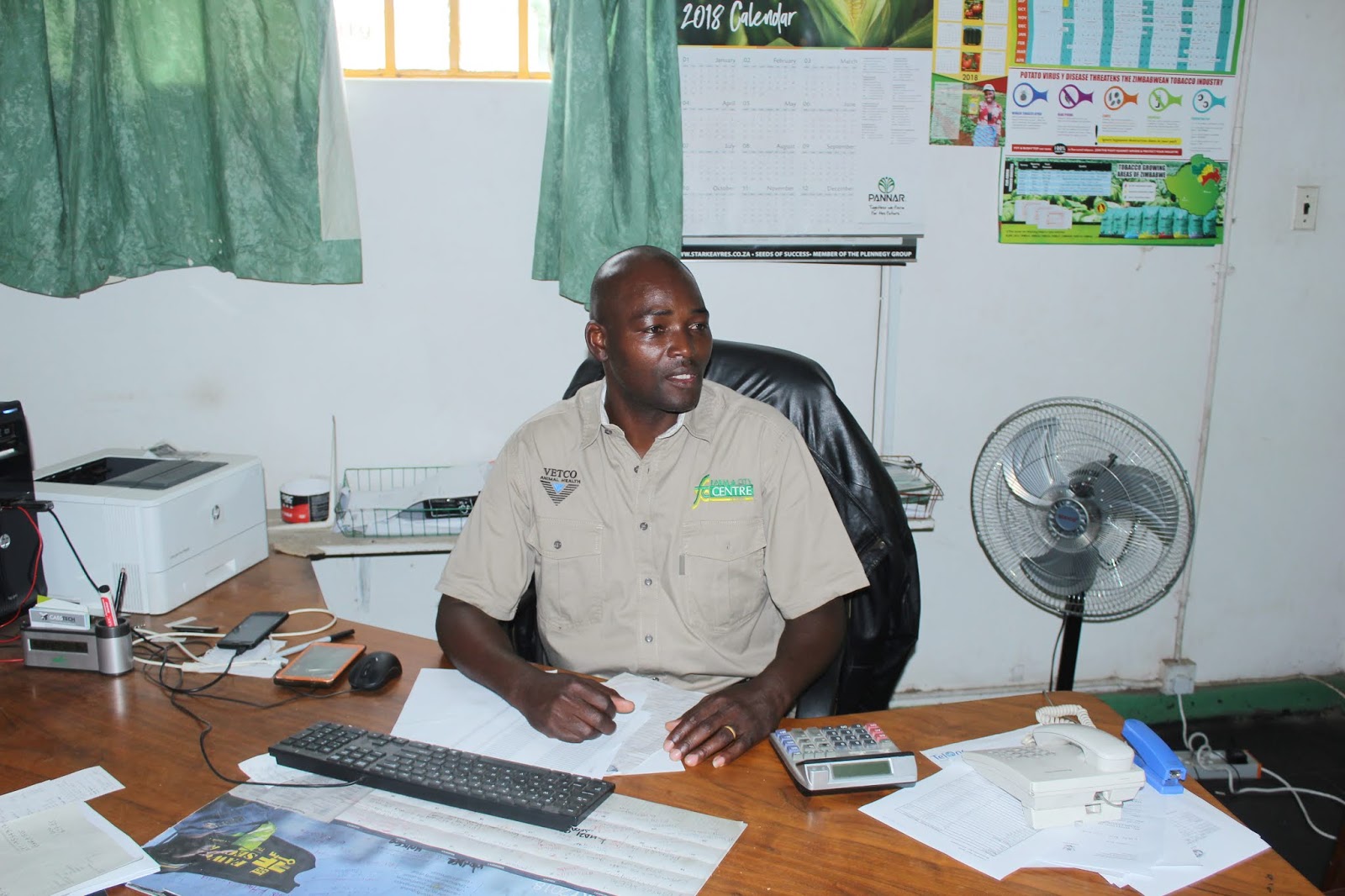
Farm and City Centre Masvingo branch manager, Vengai Defu advised local farmers to choose short season seed varieties that he said were more adapted to producing higher yields with lower rainfall.
“We encourage farmers in Masvingo to use short season plants since they are capable of maturing with the lower amounts of rainfall and a shorter rainy season. Such seeds have a drought escape mechanism which enables them to mature fast with whatever little moisture they can get.

                                                                       Vengai Defu

“In maize, there is MRI 514 which is an early mature variety, C 513(Zebra) which has better yield capacity and also PGS 51 which is drought and heat-tolerant. PGS 51 is mostly suitable for dry areas and has a double cob characteristic and it is resistant to maize streak virus and cob rot,” said Defu.
He also urged farmers to use fertilisers in order to facilitate quicker crop growth as well as higher yield per acre of land.
“Even after knowing the adequate type of seeds to plough, the farmer must also use fertilisers like Compound D and Ammonia Nitrate as they are the best recommended in areas surrounding Masvingo. In areas with little rainfall, Urea must not be used because it is a highly concentrated nitrogenous fertilizer and is fairly hygroscopic,” said Defu.
He said it was also advisable for some farmers in areas like Mwenezi and Chiredzi to avoid maize and concentrate on small grains like sorghum and millet as those require little rainfall to grow and produce.

Community share ownership scheme builds houses at Zvishavane clinic

0


Exsto Makunzva  


ZVISHAVANE – The construction of two staff houses by Zvishavane Community Share Ownership Trust (ZCSOT) at Marira Clinic in Shiku village under Chief Masunda has been greatly welcomed by local people.
ZCSTOS built two six-roomed houses, four pit latrines and erected a 400-metre fencing at a total cost of $30 143.
Headman Siku (Samuel Venge) told TellZim News that he appreciated what ZCSTOS had done at the clinic which is expected to open in early 2019.
“The ground-breaking was done in 2011 and we at first got help from Runde Rural District Council which helped in the construction of t

he clinic. We are pleased ZCSOT has chipped in by building two houses. We are very happy that we got help at such a time like this when the cost of almost everything has doubled.
“Villagers from Shiku travel between seven and 10 kilometres to Lundi Clinic or Dambudzo Clinic so it is really difficult. We hope that will all be a thing of the past when the clinic eventually opens,” said Headman Shiku.
Zvishavane-Runde Ward 4 councillor, Beatrice Mutare thanked the scheme for helping to make the lives of rural people easier.
“The opening of the clinic means a lot to the community. The clinic will make rural life even easier as we will no longer travel long distance for medical attention,” she said.
ZCSOST Chief Executive Officer (CEO) Trust Jinga said the project was conceived following requests from the community.
“Our mandate is to build sustainable livelihoods in Zvishavane through infrastructure and social service development, investment promotion and capacity building. The community proposed the construction of staff houses, toilets and fencing and we responded accordingly,” said Jinga.

TSCZ wants safer roads this festive season

0


Tinaani   Nyabereka


GWERU – The Traffic Safety Council of Zimbabwe (TSCZ) is determined to help keep the number of road accidents very low this festive season, the organisation’s CEO, Obio Chinyere has said.
Addressing stakeholders at the handover ceremony of a traffic training centre built at Cecil John Rhodes Primary School last week, TSCZ Chinyere said the organisation was targeting a 50 percent lower number of traffic accidents than last year.
“We are committed to work hard and reduce accidents deaths from 2000 with the current one million vehicle population. Our engagement with government aims to reduce that by 50 percent as per United Nation traffic regulation standards of which Sadc and Zimbabwe are signatories.
“The training centre is therefore an important facility to teach children to be more vigilant when using the roads. We are all aware that children behave differently from adults in traffic situations because they have physical and mental characteristics that limit their ability to handle complex traffic situations,” said Chinyere.
Speaking at the same event, Minister of State for Midlands Provincial Affairs Larry Mavhima said traffic safety was everybody’s responsibility.
“As enunciated in government plans for economic growth and recovery, the cultivation of the Public/Private Partnerships in road safety infrastructure developments is vital to society. So   being on the road is a privilege but you need to be responsible,” said Mavhima.
TSCZ donated 35 bicycles to Cecil John Rhodes School for pupils to use at the centre while $1000 was given to Mavhima’s office to use on a traffic safety project of his own choice.

Bad roads or bad drivers?

0

…who is to blame for carnage on the roads?


Clayton Shereni

The high number of accidents which have been recorded on Zimbabwean roads in the past few months has alarmed citizens and the country’s safe roads advocacy but the question still remains whether to blame the dilapidated roads or the negligent, half-baked drivers.
The Traffic Safety Council of Zimbabwe (TSCZ) has taken the lead in the campaign against neg-ligent driving by embarking on an extensive awareness campaign this year.
The number of road accidents has, however, continued to rise with many of them being fatal.
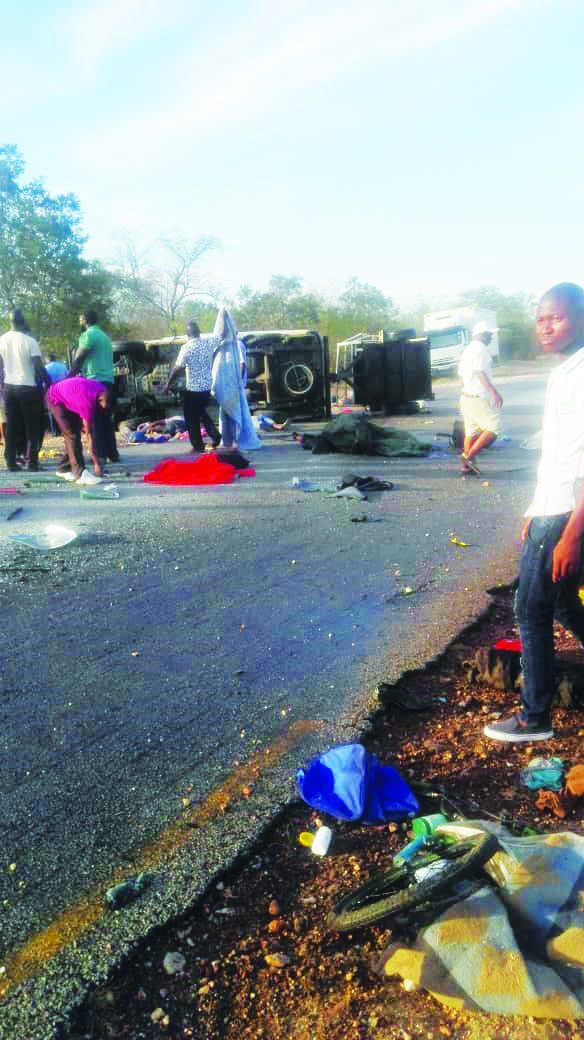
The November 7, 2018, Rusape bus disaster involving Smart Bus Express and Bolt Cutter buses along the Harare – Mutare highway which claimed at least 47 lives could be cited as a good ex-ample of ‘bad driving gone bad’.
By local standards, the state of the Harare-Mutare highway can be described as ‘excellent’, so it can only be the drivers’ errors or something else that caused the tragedy.
Countless more fatalities have been recorded on the road since it was upgraded in 2012, perhaps more fatalities per year than over the previous when it had not been improved.
Many other accidents are happening on the ‘notorious’ Harare-Masvingo highway which motor-ists love to call ‘a death trap’ due to its narrowness, poor maintenance record and the heavy traf-fic it carries daily.
Vehicle side-swipe each other, some encroach into the wrong lane while others engage in head-on collision as they try to avoid potholes, rugged edges or even due to lack of alertness caused by many factors including fatigue and medical conditions.
Along the same Harare-Masvingo highway, one of the most tragic accidents of recent times was when two Jarax buses side-swiped near Pimbi River leaving seven dead and dozens injured on August 23.
TellZim News contacted Passengers Association of Zimbabwe (PAZ) president Tafadzwa George Goliati over the topic and he expressed displeasure over the state of roads.
“Our roads are now in bad shape because quality road engineering is lacking and we thought  Zimbabwe National Road Administration (Zinara) would allocate more money to the rehabilita-tion of our roads especially the Harare-Beitbridge highway but the road has been neglected and has claimed so many lives,” said Goliati.
However, Coach and Bus Operators Association (CBOA) Chief Executive Officer (CEO) Alex Kautsiro thinks road carnage is not caused merely by bad roads but also reckless drivers who do not apply what they are taught.
“If we are trained drivers we are supposed to respond appropriately to the challenge of perform-ing this function. The majority of road accidents in the country stem from human error which, in the case of bad road infrastructure, would be from poor judgement.
“It would be sad day to just appropriate accidents to bad roads and not consider our reaction to these conditions as drivers,” said Kautsiro.
When asked to express his views on this topic, TSCZ spokesperson Tatenda Chinoda took special interest in the Rusape accident which he said could have been prevented if road rules had been followed.
He unapologetically blamed reckless driving and speeding as the major causes of road carnage.
“We note with a concern the many road fatalities in the month of November. Speeding is the greatest error which our drivers are committing. The Rusape accident was the most preventable road traffic crush, our drivers are not following road rules. Drivers can now be likened to Boko Haram because they are now killers,” said Chinoda, referring to the savage Islamist group perpe-trating atrocities in Nigeria.
National police spokesperson Assistant Commissioner Paul Nyathi also shared his sentiments on this issue saying although the country had some roads which are bad, drivers were largely to blame.
“Most of the accidents that we have recorded show that drivers are on the wrong side. They overtake even when it is unnecessary and they are not adhering to road rules. We can partly blame bad roads but some accidents are occurring on good roads and overall, drivers are causing most of the accidents,” said Nyathi.
Another factor which cannot be left out is the issue of half-backed drivers that obtain licenses and they then drive recklessly; often speeding and not following road rules.
In June this year, the Vehicle Inspection Department (VID) fired 62 officers for corruption in-volving the issuing of certificates of competence to undeserving applicants.
Nonetheless, drastic measures have to be taken to maintain and improve the roads, stop negligent driving and end the corruption which continues to taint the VID if the country is to make any positive impact on its road traffic safety record.
There cannot be two way about it because at the moment, the road traffic safety discourse is characterised by discord as to what are the causes of the challenges being faced.

Ignite Afrique donates sanitary pads to Mwenezi school girls

0

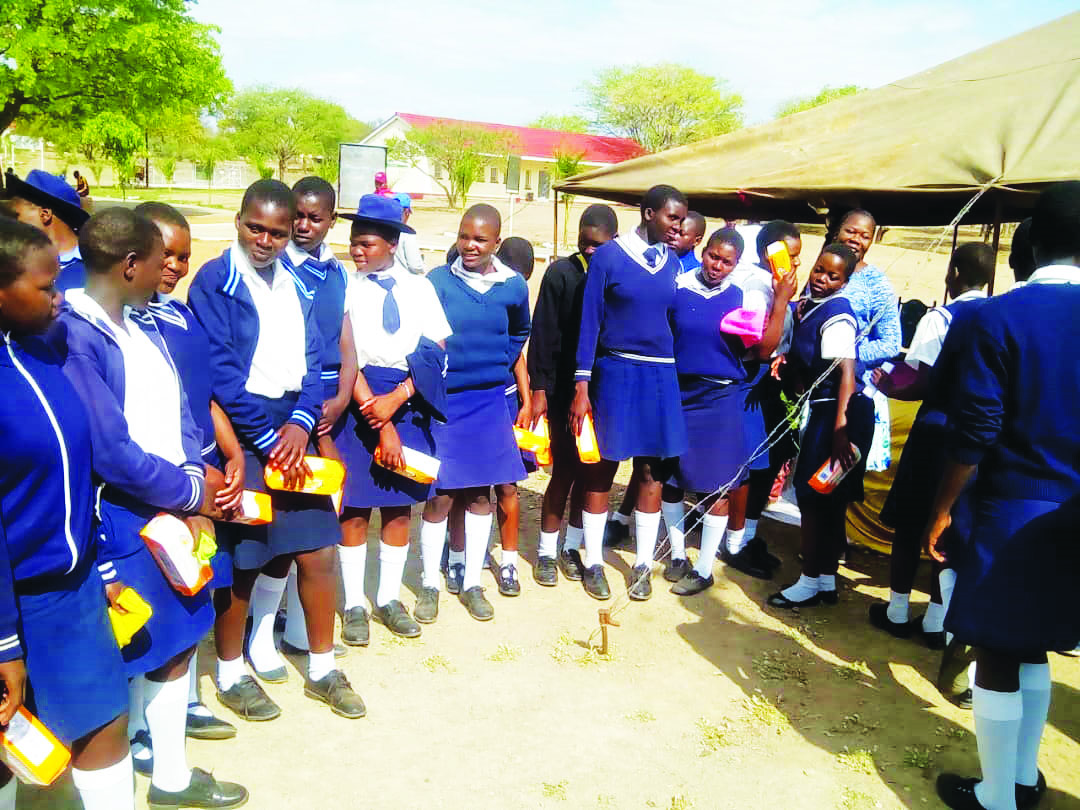
Several children received sanitary pads courtesy of Ignite Afrique

Cephas Shava


MWENEZI – Ignite Afrique, a non-governmental organisation with a focus on empowering women and girls, last week donated sanitary wear to several school girls in the district.
Pupils from 10 schools gathered at Mwenezi Government High School to receive their share from the 2 000 packs of sanitary pads.
Ignite Afrique director, Charles Maregere said his organisation’s goal was to uphold the dignity of women and girls by improving their access to opportunities.
“We felt that addressing girls’ sanitary needs for girls will produce a better generation as female pupils will be able to stay longer at school. Lack of proper sanitary wear in poor communities is a major cause for concern,” said Maregere.
Mwenezi Government High head girl, Chipo Mundanga who is also a junior councillor for Ward 5, said due to poverty and limited access to information, the girl child was the most vulnerable member of society.
“We have no access to proper sanitary wear to make our school time comfortable. Many are missing class and some are dropping out of school altogether. There are also early marriages happening because of poverty and lack of knowledge,” said Mundanga.
With the support from partners like Diesel Technics and Harare-based Turner & Townsend Ignite Afrique has managed to source school fees for four bright but disadvantaged pupils in the district.

Cell Insurance donates furniture to Gresham Primary School

0


Cell Insurance donated various pieces of furniture to Gresham Primary School last week
Darlington Kanyongo


ZVISHAVANE – Cell Insurance last week Thursday extended a helping hand to one of the oldest government-owned   primary schools in the mining town by donating school furniture.
The insurance company donated 100 desks and 100 chairs valued at $7 500 to Gresham Primary at the school’s prize giving day.
Cell Insurance head of operations, Maxman Mutsau who was also the guest of honour at the event, told TellZim News that the school occupied a special place in his heart as his wife is a product of it.
“After receiving an invitation from the school, I told my spouse that I was going to Zvishavane. That is when she asked me what I was going to do for her school. I remembered her sharing with me her life experience at Gresham; experiences about hot-sitting and shortages of furniture and I told myself that I will do something,” Mutsau said.
Gresham Primary School head, Getrude Matutu expressed gratitude for the generous gesture, saying the donation came when it was needed the most.
“The school has an enrolment of 1 828 pupils and the number keeps on multiplying year after year so our classrooms couldn’t support that big number. At the beginning of this year, we started building new blocks to accommodate the growing number of pupils but we did not have enough furniture.
“We therefore say thanks to Cell Insurance Company because a burden has been taken off our shoulders. We really appreciate what has been done here,” said Matutu.

Cloud of shame as bride refuses to wed pastor

0


                Naume Mangwarira                                 Pastor Samuel Kaunda


…wedding day turns into nightmare as bride says no…I can’t marry an abusive man

TellZim
Reporter
MASVINGO
–
The most popular
cliché, ‘kudira jecha’, normally used in political circles last weekend gained
fame in social circles when a Gweru-based apostle with Glory House Ministries
was rejected by his bride on wedding day.
Pastor Samuel Kaunda received the shock of his life
when his fiancée, Naume Mangwarira suddenly grew cold feet on wedding day and
refused to go to the wedding venue.
The circus became the shame of the year for the bride
and her groom’s parents and relatives who had gathered at Masvingo Sports Club waiting
for the duo to arrive in their convoys.
Kaunda’s parents had reportedly flown from the UK for
the wedding.
The big white marque that had been set had to be
pulled down, with people being asked to take away all the food and drinks that
had been prepared after spirited behind-the-scenes attempts to break the
deadlock failed.
Mangwarira, who resides in Mucheke and is with the
Full Gospel Church, is said to have cited physical and verbal abuse as the
major reason she had made the 11th hour decision not to marry
Kaunda.
TellZim News visited the Sports Club venue where the
wedding was supposed to take place last Saturday and saw people loitering
around while relatives of the groom sat dejectedly at their colourfully draped
tables as attempts were still being made in Mucheke to break the deadlock.
The groom showed up at the venue with his convoy but
he later disappeared from the scene after being told his bride had said no.
People who spoke to TellZim News said the apostle was
abusive with his fiancée and at some point raised his hands on her.
“The guy is known to have temperamental issues and he
often times beats her. He does not know how to keep his anger in check and he
takes it up on anyone who is close by.
“Mangwarira was patient but she finally decided she
had had enough of the abuse. She told her relatives that she could not go
through with the wedding,” said a source.
Another close source said Mangwarira made her
intentions a long time before the wedding day but church people convinced
everybody that preparations for the wedding should continue, promising they
will be able to resolve whatever differences that existed between the two.
 “She told us
that she did not want to be married anymore because the guy is abusive. We were
in disbelief because of the status of the guy. We thought that it was a minor
misunderstanding which would be resolved amicably. That is why the wedding
preparations went on as planned.
“We were however left embarrassed on wedding day when
she refused to put on the gown. She said she did not want to condemn herself to
a painful marriage,” said the source.
Another source said Kaunda had failed to be honest
with his UK-based parents, letting them spent large sums of money coming for
the wedding without appraising them on the tensions he had long noticed.
 “Kaunda should
have come clean and accepted reality. This whole shame could have been avoided
had he told his relatives the truth. A lot of money was wasted planning for
something that never came to fruition,” said the source.

Year 2019 must be more gender-sensitive, says Activista

0


Dorcus Chishumba
Youths
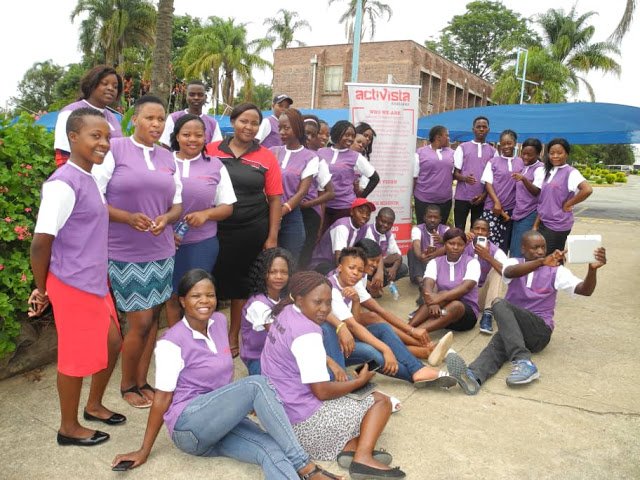
from various districts of Masvingo province last week gathered at Charles
Austin Theatre where they to deliberated on strategies that can be used to end
violence against women and children in 2019.
The
youths gathered under the banner of the Activista movement, and they
deliberated on strategies to tackle gender imbalances to create a more just
society.
The
event was part of a wider programme running under the hashtag theme YouthSolidarityPower
‘Towards Gender Just Societies’.
Many
of the participants mentioned community dialogues, workshops and awareness
campaigns as vital tools for more gender-sensitive communities.
Activista
Masvingo provincial coordinator, Moreblessing Mavhika said it was imperative
that the youth become involved in efforts to create fair opportunities for all.
“Year
2019 should be different from others in that we aim to make bigger
achievements. The onus is on us to spread awareness in the name of gender
equality and equity,” said Mavhika.
Other
participants said the gender injustice affected the ability of women and girls
to fully reach their full potential in socio-economic and political circles,
with those from Chiredzi pointing at how the distribution of sugarcane plots
had disproportionately favoured well-connected men.
Activista
is an international social movement which seeks to address challenges being
faced by youths in their respective communities.
The
movement campaigns against poverty, inequality and corruption among other
social problems in such countries as South Africa, Uganda, Zambia and Zimbabwe.