Home Blog Page 68

War vets fund: thousands left out

…Only top brass benefits from measly fund

By Brighton Chiseva

MASVINGO – A staggering approximate of 4,000 war veterans in Masvingo Province were recently awarded a meager US$150,000 from the US$1.5 Million Presidential War Veterans Fund to be shared among them, which has been described as a slap in the face by critics of President Emmerson Mnangagwa’s term limit extension bid.
Sources within the ruling party said from the US$150 000, the war veterans in Masvingo shared around US$2000 each on February 6, meaning only around 70 people benefited out of around 4000 database of war veterans and collaborators.
The move reveals desperation by a Zanu PF faction aligned to Mnangagwa to keep war veterans on their side following calls by a section of war veterans for Mnangagwa to retire and allow his deputy Vice President Constantino Chiwenga to take over.
The war veteran fund was launched on January 31 to counter war veteran and Central Committee member Blessed Geza’s statements where he said the veterans of the struggle were living in poverty whilst another faction seeks to extend the incumbent’s rule.
In Masvingo, it was launched by the Special Presidential Investment Advisor Dr Paul Tungwarara, who splashed cash in Chivi, as well as promising to drill boreholes at each war veteran’s homestead.
Contacted for comment, the Provincial Zimbabwe National Liberation War Veterans Association (ZNLWVA) Chairperson Killer Makuni confirmed that they met yesterday (Thursday February 6) but refused to share further details saying he could not speak to someone whom he does not know over the phone and referred questions to national executive member Tendeukai Chinooneka.
“I do not know you so I can’t discuss issues of the league with someone I do not know. You can talk to other comrades in Masvingo and arrange a meeting so you can discuss that,” said Makuni.
Ironically, some prominent war veterans from Masvingo like former ZNLWVA chairperson Chinooneka and Western Ezra said they did not attend the event where the money was shared.
Makuni still insisted that Chinooneka who is a war veterans national executive member was present during the meeting.
Chinooneka in turn told TellZim News that Makuni was the right person to comment on the matter since he was the provincial chairperson and also insisted that he never attended any event where money was shared.
“I am a national executive member so I cannot comment on that matter, it has to be commented by the provincial chairperson. I was not present at the event you are talking about, whoever told you that I was there lied to you,” said Chinooneka.
Sources from the party also said the war veterans’ league top brass decided to benefit at the expense of those in the grassroots structures.
Another war veterans boss Retired General Gibson Mashingaidze also refused to comment on the matter saying he could not speak to the media who may distort information.
“I cannot speak to the media, you guys distort information giving people factions they do not belong to,” said Mashingaidze.
At the launch of the Village Business Unit on February 1 in Chivi, Tungwarara gave war veterans who were present US$200 each, where he promised a US$150 000 Fund which they could borrow and start their own projects.
The Chiwenga faction is said to be backed by mainly the war veterans and some disgruntled party members including former G40 faction remnants who are against Mnangagwa’s rule.
The Mnagagwa faction reportedly has the Minister of Legal and Parliamentary Affairs Ziyambi Ziyambi and Minister of Local Government and Public works Daniel Garwe among other key figures at the forefront.
War veterans were very instrumental in Mnangagwa’s rise to power in 2017, with faction aligned to him now desperately trying to be in the war veterans’ good graces.


2030ists afraid of war vets

0

My sincere hope ladies and gentlemen is that those who died for this country know the amount of power that they have, because you can see the amount of jitters ED 2030 pundits developed when Geza and friends cracked the whip. What’s sad though is vakazonyanya kutambura mhani so kungopihwa zvimafufu kudai nekutokanganwa kuti tanga tichimbotaura nyaya dzei. Again, it is considered bad manners to speak while you are eating, that’s why vachimbopota vachiti dii kunge vasiko, vachionera zvavo. Trust them to be back pasina nguva with new concerns, kana vapukuta muromo zvavo. We have a long history of war veterans being neglected by Zanu government, which has also become their trump card, but those people are like a live wire to Zanu macdes. If you guys think I am bluffing, look at what happened to Baba Bona once he crossed that line with war vets: he bathed them with that coloured water, tudhara netuchembere tukatema makotsi nezvitsitsinho and what happened after? Hazviitwe zviya. Vanoera vanhu vaya, hapamihwe mihwe. I am sure right now in Zanu PF they are busy strategizing on how to keep blinding war vets so that they don’t see the light like what vanaGeza have done. A rebelling war vet is Zanu PF’s worst nightmare guys, and the system deliberately makes them suffer a little kuitira kuti kana vopihwa kasomething vanombokanganwa maprinciples plus zvavakaendera kuhondo. But I also think that even if they are bribed, vanhu vacho vane kamwe kaconscience kanoita kuti varambe vachidzoka, which is why vachityiwa like that. They kept Zanu in power since 1980, and every time we have seen real shift mumusangano it’s because vanenge vaine chekutaura. Land reform chaiyo, if you look at it, they were the ones who demanded for a share of what they had fought for, and that changed the trajectory of Zimbabwean fortune for good. That is why I usually say those people needed counselling and serious psychotherapy after ceasefire because remember paya they got ma50k vakamwa zvavo tea nenyama kusvika yapera, only to go chase away whites from farms ndokutanga kugara mutudzimba twemapango kumakombo.
One thing we need to bear in mind though is that Genarari’s relationship with war vets is not just any kind of relationship built on hugananda nekungoda kudya. If you guys listened to what he said kuHeroes Acre the other day about zvigananda you will see kuti the wheels may soon come off. Looking at it, that was a mind game, especially targeted towards the war vets because taking them down the memory lane talking about the liberation struggle days, obviously got one or two of them thinking—real introspection chaiyo kuti asi takamborwirei chaizvo? They were taken back to the bases in the bush where they would share everything, fighting the guerrilla war pasina maresources akakwana vachiita share kusvika nezvemukati, ask Mutsvangwa, nyaya dzemanduwe kuhondo anodziziva idzi. I believe he was indirectly reminding them that if they are not careful, nekuwanda kuri kuita zvigananda, by 2030 they will no longer be relevant, firstly because they know tumbavha utwu tumabornfree only support Zanu for self-enrichment, nothing else. Secondly, they know that their poverty will only worsen with more of those in power seeking for more wealth and more terms. With Genarari openly calling out corruption like that, and subtly referring to My Son Icarus on such a public platform, ndirini Chimbwido I would see kuti shuwa tiri kuvhairirwa nembavha isu tiri isu tairara musango tichirumwa nemarize, iye achisweroimba dzekumasowe mundege. Ma2030ists know that there is a strong bond between war vets and the military, born out of the principle yeNzira Dzemasoja dzekuzvibata nadzo. The reason why they separated Geza from the rest of the war vets and attacked his person kutoziva kuti you can never get away with brushing off mawar vets. Vakaita chipatapata zvigananda kuburitsa neiri pai mari to make sure they grease the hands of the war vets. I even think chero ivo vanaMahiya vacho vanototyiwawo by those who think can handle them, because it does not take much before they switch sides. They know that war veterans have never been afraid of being wrong at any given time, kutambura zvavo. Baba Two knows that once zvaendwa kumawar vet zvatoendwa, and vachatosimba homwe to keep buying them, which may also work against him because once they become stable vaakukwanisa kuzvitengera chingwa, or when the freebies are finished, they will no longer see the point yekuswerosupporter nonsense. It is an endless pit ladies and gentlemen. Their only hope is through eliminating those in the army one by one, which will take way longer than three or even four presidential terms. Iwo magenerari amboita murakatira vedu, kuita as if they were sprayed with something. Of course, age is catching up and all, but the truth is mmm, hapana kunyatsojeka. I wish the war vets could wake up and realize that varikunyengedzwa nemafufu sehuku because being given US$200 sevharamuromo is an insult. That is such a dizzying level of disrespect, especially coming from people you know want to use you to endorse their nonsense. Zvimadhara zviya zvikarwara neprostate cancer inodai kunetsa haina zvainobatsira mari iyoyo, it’s too little. One thing I am sure of zvangu is that shoma iyoyo yakauya is only going to be shared among the leaders vakatojairawo corruption, and it is never going to reach mawar vets chaiwo anoziva nzira dzemasoja. Very soon tinenge taakudzinzwa nyaya dzevakaba Presidential War Vets Funds, mark my words. It’s another scheme to loot, but this time it will have consequences because war vets ndivana Fearfokol, they will speak. Simba rava kuita richipera but trust me macdes, ndopanotonyanya pamuromo ipapo paold age.
I once said the 2030 agenda is never about anything but for those thieving in the name of Zanu to continue thieving, vachichera gold nekuloota kusvika vaneta. The rich becoming richer while the poor become poorer. My only prayer is that we have a few more Gezas, or at least one Geza in each province achiitawo mapress conference. Kuno kuMasvingo Rugeje and crew vobudawo musaga, zvobva zvanakidza. I hope the war vets realize that 1.5 million izita chete, it’s just pocket money to these people, kunonzi kuvaraidzwa nemajiggies like kids. Just imagine someone buying tumuguri twechibage ne$5 000, maYuwesi not zvipepa zvanaMushayazano izvi, hakusi kushaina ikoko? In a place where pregnant women walk kilometres in labour to the nearest clinic. In actual fact I think they shouldn’t have published it, because isu vanaMapombi we did calculations tikatoona kuti mawar vet anojairirwa vakomana.
Let me go ndinokanga maputi angu for lunch, while I munch on rotten bananas. I hear very soon Masvingo councillors will be having mabango emaphone to take good pictures of the raw sewer in Mucheke River. Maybe ndobango rake rake rairehwa naDhagi Dhagi. Everyone angopinda paapinda chatova chigananda, looting yega yega. Let’s wait and see what happens as soon as Makomuredhi finish the peanuts they are being given neveAgenda ava, as we also wait for referendum. Pachanakidza.

New Horizon Pharmacy sponsors Pool Tournament

0

By Tatiana Mhararira

New Horizon Pharmacy recently partnered with Masvingo District Pool Association (MADPA) to sponsor an open tournament which brought together all pool players around Masvingo District on February 1, 2025 at Landmark Bar in Masvingo town.
The tournament, which had 64 participants used the race-to-four format where each individual who won four games first became the winner and proceeded to the next stage of the tournament.
Five ladies participated in the tournament but they used Bobs Tavern for their tournament.
The prizes for winners were allocated as US$150 for men and US$50 for women.
Speaking to TellZim News, MADPA Technical and Development Officer Phillip Pfundo known as Tindo in the pool circles said Runesu Zvarevashe who runs of New Horizon Pharmacies sponsored the tournament and called for more partnerships from other businesses.
“The tournament was a success and players displayed good discipline. We are happy that from our association few to zero players are still engaging in drugs thus our tournaments are also acting as anti-drug abuse campaigns.
“Some of the players who are not employed are now making a living from playing pool which is one of our achievements,” said Pfundo.
In an interview with TellZim News, ladies category winner Lisa Marumbwa said she was excited by winning the tournament saying she never expected to win.
“I am happy because I was not practicing for some time due to off season break. I was not expecting a straight win being crowned the champion in the ladies category,” said Marumbwa.
She said the ladies category had low turnout because ladies had no individual sponsors.
“People think that pool is only played by men that’s why we have a limited number of female pool players in Masvingo district as compared to Harare and Bulawayo.
“Lack of sponsorship is one of the things which reduces the number of ladies who play pool in Masvingo. There is need for well-wishers to also sponsor ladies so that pool as a sport will grow,” said Marumbwa.
The male category winner Donald ‘Donoro’ Mutero who walked away with US$150 said the tournament was tough but he was happy that he sailed through.
“I am happy that I won the first tournament of the year. It’s been long since I last played pool so my chances of winning were very slim even though I have a history of winning.
“The competition was tough but my defensive style of playing well known as touch touch assisted me in winning this tough tournament thus I maintained my winning legacy,” said Mutero.
The tournament was part of the MADPA preparations as the main league is set to kick off on February 22, 2025.

Girlfriend murder suspect found dead

0

By TellZim Reporter

Shurugwi – Police are investigating circumstances surrounding the death of a 27-year-old man who was sought in connection to the murder of his alleged girlfriend.
The man, Tamuka Zireva was found dead in a bush at Beacon Kop, Shurugwi on February 3, 2025.
Midlands Provincial Police Spokesperson, Inspector Emmanuel Mahoko confirmed the incident and urged people to learn to solve disputes amicably.
“Once again as Police we are appealing to members of the public to solve their disputes or differences amicably by engaging a third party. Use of violence is an offence that leads to unnecessary injuries or loss of lives,” said Mahoko.
Sources said Zireva was on Police wanted list in connection to the murder of a Guinea Fowl High School female teacher who was believed to be his girlfriend.
Zireva was a student teacher on attachment at Guinea Fowl.
On February 3, 2025 at about 0900 hours, a passerby saw a dead body under a tree at Beacon Kop, Shurugwi. The body was in an advanced stage of decomposition and there was a bark string tied to a tree above where the body was.
Zireva was last seen on January 24, 2025 in the company of the late Keener Tsanana at Guinea Fowl High School. Keener was found dead in a room at the school the following morning. Zireva was never to be seen until he was also found dead.

USA’s WITHDRAWAL FROM THE WHO-A LESSON OR A LOSS FOR AFRICA?

0

By Dr Nicholas Aribino

On January 20, 2025, Mr Trump signed an executive order withdrawing the USA from the World Health Organisation (WHO). The rationale behind the ejection of the USA from WHO was that WHO had mismanaged the COVID -19 pandemic and parri passu had failed to adopt necessary reforms. This move may be regarded as a kick in the teeth for African leaders as they often build into their national fiscal spaces votes from WHO for health care. Mr Trump is coming into government from a business world where there is no free lunch and where every asset should sweat for the continued growth of a company. For Mr Trump, relations should be built on the basis of quid pro quo. Given his financial mind, Mr Trump’s actions are also informed by the notion of cost benefit analysis. By extension, Mr Trump views the USA’s international commitment to the UN agencies as being too cozy especially for African leaders that he has repeatedly characterised as self-seeking and corrupt out and out. It is the purpose of this opinion piece to discuss the withdrawal of the USA from the WHO and in the process intimating that every cloud has a silver lining.
The USA has been the biggest contributor to the UN. From 1948 to date the USA has contributed USD 10 billion towards the WHO. The ramifications of the USA’s withdrawal from WHO are too ghastly to cogitate given that the biggest social infrastructure of health and childcare in Africa has been borne by WHO. For example, WHO has been offering ancillary support in the areas of research and development, HIV and AIDs, malaria, water and sanitation, measles, cancer, cholera, tuberculosis, immunisation and epilepsy, among other things. WHO also has staff from African countries whose jobs may be on the line as a result of this development. The withdrawal of the USA from WHO may invite significant cuts in votes for Africa leading to the areas that have been supported by WHO struggling to stay afloat. For this writer, Trump’s initiative comes with hard lessons for the African leaders. These hard lessons are akin to the lessons that are given to eaglets by the mother eagle when it wants them to learn to fly and to fend for themselves; the mother eagle destroys the nest. For the eaglets to survive, they will need to adopt and adapt to the changes the hard way by learning every trick in the book. African leaders ought to appreciate that in every situation there is a nugget of gold and that a bent in the road does not mean the end of the road unless one fails to navigate it. With respect to this development under discussion, African leaders should come together to create their own intergovernmental organisation that mirrors the functions of WHO. This intergovernmental organisation can comprise all the 55 African countries and can be called African Health Organisation (AHO). Africa has expanded capabilities and capacities that can drive the idea of AHO to realise its funded mandate of providing healthcare to the inhabitants of Africa. Power lies in the collective. Africa has mineral wealth and medical professionals that can anchor the idea of AHO.
AHO can be an organ of African Union head quartered in any one of the African countries and its personnel can be drawn from people with the requisite expert power from Africa. The infrastructure that can be used to strengthen this structure (AHO) can come from contributions made from all the 55 countries. AHO can engage in boundary spanning with civil society organisations within Africa for financial, technical and logistical support. The resources of AHO could be deployed in health emergencies (pandemic preparedness and response), staff strengthening, acquisition of medical equipment and materials. The organogram of AHO can be made up along the lines of other regional bodies with people appointed based on their competence and good character. African leaders ought to realise that the Northern countries that have global influence like IMF, WHO, WB, UNICEF and other UN agencies thrive on ancient ill-gotten wealth from Africa during the epoch of colonialism and slavery. Africa should consider this ancient ill-gotten wealth as spilt milk. The good thing is that its just milk that was spilt, but the producer of that milk, which is the cow is still alive. The cow in this case is the continent of Africa through its constituent parts (countries). For example, under the belly of the DRC lies mineral wealth worth USD 24 trillion but the DRC is one of the most impoverished African nations. Zimbabwe is also one of the lucky few African countries with numerous minerals, one of which is lithium that can leverage economic growth, yet its economy is tanking. Sudan’s and Nigeria’s area of gifting is oil, yet their citizens are wallowing deep dyed poverty. If the resources of these African countries can be harnessed to good use through votes fenced off for AHO, Africa can easily forget about the USA’s withdrawal from WHO. African countries need to work together through AU to create strong institutions that can serve Africans in times of both peace and conflict, and AHO is one structure that can rise to this occasion.
Storms come with opportunities, this storm under discussion should open the African leaders’ third eye for forming strong synergies around AHO. Sun Tzu, a great Chinese military thought leader advises generals to always be like water that adapts itself to the configuration of the ground. The pulling out of the USA from WHO should stimulate thinking as if there is no box for African leaders so that they can survive this storm.

Managing change in Organisations: Does emergent change offer a coherent alternative to planned change?

0

By Shadreck Zangairai

In one of my previous articles, I presented a topic titled, ‘Can organisations control the pace at which they change’ where I mentioned about emergent and planned change. I got a call from one of the avid followers of this column arguing that emergent change dictates pace in this complex environment as opposed to planned change, hence there can be no planned change in such a situation. I admit that no one has a monopoly of ideas or knowledge, so in that debate, I concurred with him on some of his arguments but we differed on some, which prompted me to write about this topic. It is an undeniable fact that modern businesses are faced with a number of challenges dictated upon them by the turbulent operational environment. The need for change is therefore inevitable if organizations are to remain competitive and survive. There are however divergent views on the most appropriate approach to change and options are between planned and emergent change. Proponents of the emergent approach argue that it is a logical alternate to planned change, whilst advocates of planned change believe that emergent change is just but a complement to planned change. However, I have a strong view that planned change and emergent change are not alternates but complementary to each other. In other words there is no ‘one best way’ or ‘one size fits all’ approach to change.
Organisations and Change Management
The world today is unpredictable because of the fast moving and complex change and no one knows what tomorrow will hold. What is true is that it will be different, more complex and diverse. When change is mentioned, what quickly comes to mind is Top- Down (planned) which is management driven. It is initiated from management down to the lower level. This type of change is suitable in market driven economics such as UK & USA. Using this type of change in Zimbabwe might be difficult because of the economic and political instability. I would not have done justice to my views without starting my arguments by separately explaining the emergent and planned approaches to change.
Emergent Change Approach
Emergent change is unpredictable, unintentional and it can come from anywhere, anytime. If organisations plan for change, they will be not aware of the internal and external factors that might affect their plan. A key assumption on emergent approaches is that for effective change, managers must have a clear understanding of organisational structure, strategies , people and culture. This assist in selecting the most appropriate approach to change and help to weed out barriers to change. Furthermore emergent approach views change as a process that unfolds through the interplay of multiple factors within the organizations. Its rationale is characterised by unforeseen events, disruptions, breakdowns and opportunities that emerge within that period.
However emergent approaches to change may not be completely considered as alternatives to planned change. I concur with some critics who question the applicability of the approach to unique organisational contexts. I believe that organisational performance depends heavily on situational variables and this vary from organisation to organisation, therefore, managers differ in their strategies for change. Since organisations are different in structure, strategy and culture it is not possible to rely on a single approach. I also feel that it is limited to the organisational boundaries where it is applied and how it can be applied.
In addition, the emergent approach to change do not provide an agreed set of methods or guidelines on how to deal with change especially if the organisation is within a turbulent environment. So it is not the best model but it depends on the organisation’s nature, the existing environment and the structure of the organisation. Defining these factors will assist managers to select the correct change model relevant to the organisation, for example a decision to change a type of product by Delta would equate to a pre-planned decision, therefore, it would be ideal to use the planned approach model.
This type of change just manifests itself and is reactive in nature. An example will be communication through WhatsApp, Skype and X (formerly Twitter) that evolved as a new way of communicating without any correspondence to change towards that direction. It happens in a spontaneous, unpredictable and unplanned way. Change in this case will be as a result of a continuous process of experimentation and adaptation to the ever-changing needs of the environment. Change is achieved through a multitude of small scale incremental changes which lead to a major transformation or reconfiguration of the organization. The role of the managers ceases to be planning but to create an enabling organizational climate which leads to innovation. The change is largely in response to the turbulent environment which defies logical planning.
Planned Change Approach
This is the change we deliberately seek. Planned change is pro-active in nature. It is about moving from one state to another in a structured manner following prescribed models or paths. Planned change takes the view that change is intentional, predictable, deliberate, purposeful and systematic and one can pre-plan for it. Planned change was coined by Kurt Lewin and is at times referred to as prescriptive or the Lewinian approach. Planned change therefore is a product of conscious reasoning and action. It is premised on the understanding that the environment is stable. Planned change is usually driven from the top to the bottom focusing on organizational continuous improvement.
Most change leaders are comfortable with planned change than emergent. It is a controlled change with fairly clean boundaries, definable benefits, and vision for the future. Planned change is what is sought unlike the unplanned change which organisations are forced to accept and integrate. For example, technological products such as iPod and iTunes were designed to transform how people buy and listen to music. Their manifestation was planned change by Apple. However, this resulted in unplanned change for Music Record companies such as Gramma, Zimbabwe Music Cooperation (ZMC), Records and Tape Production (RTP), that is if one is coming closer home. Their market diminished gradually. Engaging emergent change in this example would mean how accessible the music and other forms of media are to people. A new or perfect song can be summoned at any time from people’s devices but Apple did not make this happen. People could have resisted the planned change by Apple which could have affected iPod since its inception in 2003. To support this, Apple did not write any memo or letter but the market simply coordinated with each other to evolve on how to listen to the music.
However planned change has got its critics. It is based on the assumption that organisations operate under constant conditions and that everything moves in a pre-planned manner. Because of the current fast changing environment, this approach is weakened. Again, by laying down planning schedules and objectives in advance, it means that the change process is dependent on decision makers who might not be aware of the implications of the plans. In addition, planned change presumes that all stakeholders involved in the change process are willing and interested in implementing it, yet forgetting organizational politics and conflict. Because of such criticism, emergent approach has gained ground. One author, Weick, in 2000, argued that though planned change gets credit from decision makers for delivering new survival strategies but they rarely change the organisational structure and problems usually recur.
To be continued next week!

Zaka village head fines villagers without toilets

By Meditation Mposi

ZAKA –A Zaka village head recently imposed fines on villagers without toilets at their homes, giving them an ultimatum on when they should have built the ablution facilities.

Villagers had mixed feelings over the issue, with some saying it was a noble idea while others said they did not have the required resources even if they wanted to build the toilets.

The concerned village head, Joseph Mutubuki, who is Matigimu Village Head confirmed the development and said he had given villagers ample time of about two years to make sure that each household had a toilet, with most of them complying except for a few whom fined.

“Yes I fined the villagers without toilets at their homes because I gave them enough time to address the situation. We agreed on a timeline of about two years and we agreed as a village that those who fail should have some sort of punishment and that is what I am simply implementing,” said Mutubuki.

He went on to say the decision to fine them was necessitated by the fact that last year (2024) they had three cases of cholera and recorded one fatality in the village so the first step towards avoiding a repeat of that was to have ablution facilities at households.

“We had three cases of cholera last year and one fatality, so I decided to speed up construction of toilets in the village though it’s something that we had already agreed on. The fines are just a tiny slap on the hand for people to take the issue seriously. We understand things are hard and we have allowed people to have at least a proper pit and use grass or paper for walls as a temporary measure,” said Mutubuki.

He went on to appeal to authorities to address water challenges in the area saying people were drinking water directly from Mutirikwi River.

“The village has no single borehole, people rely on wells during rainy season but mainly, they rely on Mutirikwi River and this puts the village at risk in case of an outbreak.

He said the whole village has about 40 households and 10 households were yet to have toilets and each was fined US$5.

Chief Nyakunhuwa born Oswell Maguta hailed the move by the village head saying he was on the right track in enforcing the health requirements that every household should have a toilet.

He said the fine was very minimal and looking at the broader perspective, it was a right call to enforce the requirement that save lives.

“What the village head did is very right, toilets are a requirement for every household and so enforcing their establishment is a noble idea worse considering the minimal fines charged.

“We have three types of people in the community, the ones who know what is required and do, we have those who want to be told before they do what is required and the last group which does not act even if they are told. So this group requires a push for them to act,” said Nyakunhuwa.

He said the charge was very minimal compared to the number of lives that would be saved by construction of toilets at all households in an area.

Ward 17 Councillor Chrispen Watadza said the idea was noble but punishing people could not be the solution. He however urged the village heads not to look at the issue of toilets alone but ensure that their all children I the school going age are going to school.

“The idea is very noble but the village heads should also make sure that their subjects send children to school.at the same time they cannot send sick children to school so while sanitation is of paramount importance, traditional leaders should look at both issues,” said Watadza.

Mupandawana High celebrates stellar Zimsec results

….as 32 learners get 10 points and above at A’ Level

By Tatiana Mhararira

Gutu’s Mupandawana High School is celebrating stellar results after the school attained 91.23percent in the recently released Zimbabwe Schools Examination Council Advanced Level results which showcased teachers and learners’ hard work resulting in outstanding results.

52 learners out of 57 passed two subjects and above. The highest learner Alfred Mboneka had 18 points followed by George Magadzire with 17 points.

Frank Haisa, Takudzwa Nyamunda, Lovemore Zingwena, Patience Mavhimira and Bernard Mudyahoto scooped 15 points making them the school’s third highest learners.

32 learners obtained 10 points and above with the Arts department topping this section. Seven learners had 15 points and above with male pupils dominating the category.

Geography, Economics, Business Studies, Shona Language, History, Family and Religious Studies, Crop Science, Pure Mathematics, Computer Science, Sociology, and Literature in English  all recorded100 percent

In Ordinary level results, the highest learner was Prosper Gonese with 8As, 2Bs and the second highest learner was Tawanda Tachiona with 7As, 2Bs.

Trio nabbed for waylaying, robbing villager

0

By Meditation Mposi

Three men from Chivi are facing armed robbery charges after attacking a villager who was coming from a local business center at dusk.

While three members of the robbery gang were arrested, Police in Masvingo are appealing to members of the public to continue supplying information which will lead to the arrest of the rest of the criminals.

“We appeal to members of the public to continue supplying information which can lead to the arrest of the criminals,” police said in a statement.

Circumstances are that on January 25, 2025 Joe Ndaba (32) of Headman Chipindu area in Chivi was on his way home from Chomuruvati Business Centre at around 1900hours when he was waylaid and attacked by Saymore Runhare (23), Brighton Mazo (19) and a male juvenile aged 17, together with their accomplices who are still at large.

The robbers emerged from a bush and ordered Ndaba to lie down, which he resisted and they hit him with a stone on the mouth, leaving his teeth shaking.

One of the robbers then produced a knife and stabbed Ndaba once on the elbow demanding money from him.

The gang proceeded to forcibly search Ndaba, taking USD$60 he had with him, after which they fled the scene.

Police investigations led to the arrest of Runhare, Mazo and the juvenile while their accomplices are still at large.

MURRA takes Council to High Court over dumpsite

By Perpetua Murungweni

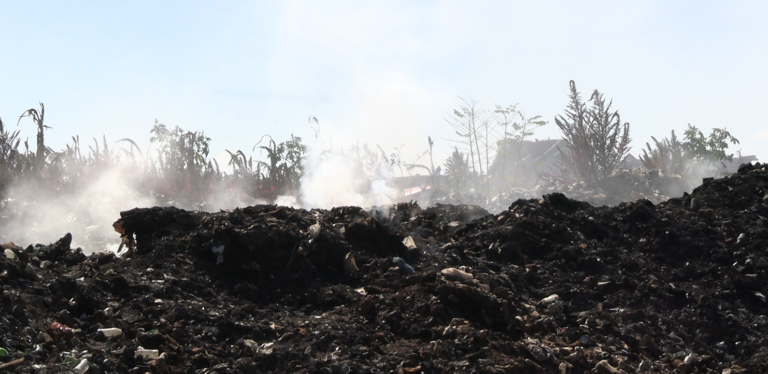
Masvingo United Residents and Ratepayers Alliance (MURRA) in collaboration with Zimbabwe Lawyers for Human Rights (ZLHR) have taken Masvingo City Council to the High Court over the Runyararo West dumpsite which has been affecting residents in the area.

In the High Court application, MURRA is seeking the barring of Masvingo City Council or its workers from disposing waste at the dumpsite located in Runyararo West in terms of the provisions of the High Court Act Section 14 (chapter 7:06).

The residents body argues that due to the continued use of the dumpsite, residents are exposed to an unsafe environment which is hazardous to their health.

“Due to the continued existence and use of the dumpsite, residents in Runyararo West and in Masvingo in general are being exposed to a filthy and unsafe environment which is hazardous to their health. MURRA and its members, who are residents of Runyararo West, have a clear right in relation to a clean and safe environment.

“Masvingo City Council has been aware of the findings of the Zimbabwe Human Rights Commission (ZHRC) and the recommendations of EMA to migrate from the dumping site system to landfill system since 2012 but it continues to make use of the dumpsite for waste disposal with impunity,” reads the application.

MURRA Director Anoziva Muguti said they took council to court because it has been over a decade now since they engaged council on the issue and no action was taken.

“We took council to the High Court because it’s now over a decade since we started engaging them with the issue of the dumpsite,” he said.

Muguti said while council seemed to be in agreement with MURRA on several occasions, in 2023 the local authority lied that the Cambria Farm landfill had started working.

“We have engaged council on several occasions but it is seems the landfill issue is not a priority to them, that is why we decided to approach the High court,” said Muguti.

Masvingo City Council secured 10 hectares of land on Cambria Farm which is on the western outskirts of the city for the establishment of the new landfill in 2019 and was set to move there by the end of October the same year.

Last year in September, Zimbabwe Human Rights Commission (ZHRC) released a report which revealed that council was violating environmental human rights and the right to administrative justice, years after the old dumpsite became cause for concern.

In October Women Coalition of Zimbabwe (WCoZ) petitioned Council over the dumpsite issue and its effects to the nearby residents. After the receiving the petition council promised to take the issue seriously and resolved to deploy municipal police so as to reduce some illegal activities carried out by some residents and to close the old dumpsite and open the Cambria farm dumpsite by end of last year.

Masvingo City Council in June 2023 invited Vice President Kembo Mohadi to officially open the landfill despite it not being functional until now

In October 2022, Acting City Engineer Kudzaishe Mbetu, said council was only left with construction of the site offices which was already underway.

He was quoted saying council was going to start using the landfill at the end of the same month, adding that three boreholes had been drilled but only the control borehole had been equipped.