Home Blog Page 99

Junior Primary shines at national tennis tourney

0

By Staff Reporter

MASVINGO – Four learners from Junior Primary School scooped medals at the recently held national tennis tournament in Harare.
Four players, two girls and two boys represented the school, with all of them winning medals ranging from gold to bronze.
Makanaka Manhopi won a gold medal in red ball girls Stage Two while Cailey Mudube got a silver medal in Stage Three Under 12 Girls Category and bronze in the Girls U12 doubles.
Anotidaishe Mbaura, a boy in Stage Five won two silver medals in the Under 14 boys, also scooping the Most Disciplined Player of the Tournament medal, while Atipaishe Nyandoro who is also in stage 5 won a silver medal in the Under 14 Boys doubles.
Nyandoro and Mbaura earlier got silver and bronze medals respectively at the Baobab Mini Polokwane Tennis Tournament held in Polokwane, South Africa in April this year.
The school sports director Jimmy Makwanda said he was happy with the medals which he said was a clear testimony that the school values both learning and sport and has invested in both.
“The four players made us proud as Junior Group of schools and JPS in particular. We hope to win more medals in the next national tournament.
“As the Junior Primary School sports director, I wish to extend our gratitude to our directors Mr and Mrs Marima for the financial and welfare support they gave our players, not only in tennis but in all other sporting disciplines,” said Makwanda.
He also expressed gratitude to the parents for the unwavering support they render to the school and their kids when it comes to sport and urged them to continue.
“We also want to thank our esteemed parents for their unwavering support. Together we will go far,” he said.
Junior Primary recently won the Best Primary School award in Masvingo at the Sundrive Business Awards and its Director Noah Marima was crowned 2024 Best Entrepreneur of The Year at the same ceremony.

MAYA engages Mutare youths, council

By Heather Buzuzi

MUTARE – Manica Youth Assembly (MAYA) convened a youth forum in the eastern city on September 24 at CCAP Hilltop Sakubva to discuss service delivery issues with residents.
The forum brought together youth leaders and officials from the City of Mutare to discuss urgent service delivery challenges under the theme “Enhancing Youth Participation and Agency in Local Public Service Delivery in Mutare Urban District.”
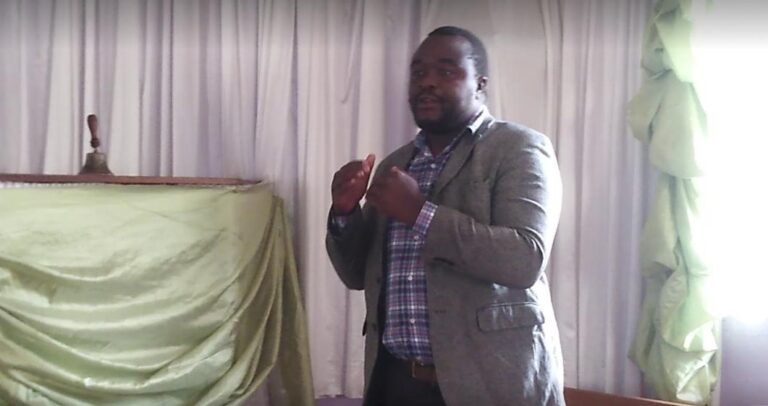
James Mutisi, a representative of people with disabilities (PWDs), spoke about the inaccessibility of public buildings like City Hall and called for the availability of sign language speakers at public service institutions like hospitals.
“We urgently need renovations to make these spaces accessible for everyone. We also call for relevant authorities to make sure there are sign language speakers at public institutions and it is prudent to also introduce a sign language school,” said Mutisi.
Comfort Chirombe, a resident raised concern over ongoing water shortages in Sakubva OTS and Chisamba singles. He further urged the community to report corruption among city council workers, saying transparency and accountability were key to improving service delivery.
Current Maguruwada another resident voiced her concerns about Dangamvura’s expanding population, saying available facilities are not adequate. She said there was need for the establishment of more clinics and schools in the area.
“The population in Danagamvura continues to increase every day but we still have the same facilities. We need more schools and clinics to cater for the everincreasing population. We are also seeing an increase in violence because of poor lighting at night, so there is need for tower lights,” said Maruguwada.
From Garikai 2, Blessing Chitema expressed frustration over a broken sewer pipe in St Joseph’s that contaminates the Sakubva River, a vital resource for local farmers and fishermen. He also lamented the slow pace of development in Gimboki area.
City of Mutare legal officer Lonely Tauya who was representing the local authority at the event, said council had taken note of the concerns, saying some of the issues raised were not the local authority’s responsibility.
“Traffic congestion near the flyover, for example, is due to poor road networks that we don’t fully manage. However, as council we are proposing to introduce a road fund for road maintenance.
“The 5percent increase in levies is necessary due to rising costs for electricity and water services so I urge residents to also hold these entities accountable as well,” said Tauya.
On the issue of Garikai 2 and Gimboki, Tauya emphasized that services could not be extended to areas where residents have not made financial contributions.

Young Paralympian gets scholarship

0

By Staff Reporter

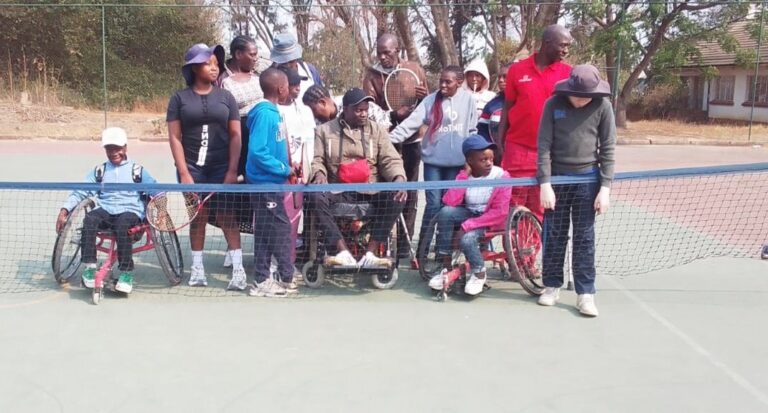
MASVINGO – A 14-year-old wheelchair tennis player, Liberty Manyiwa, recently got a scholarship to study up to form four at Ray of Hope Academy in Sikato area in Masvingo after a sterling performance at Danhiko National Paralympic games held in Harare recently
Ray of Hope Director Chidaushe Mudadi said they gave Manyiwa a scholarship to show the school’s commitment to inclusive education and that hard work should be rewarded.
He said another reason was that he raised the school’s flag and deserved to be rewarded with a scholarship to encourage others to participate in the games.
“We decided to give him a scholarship to study from form one up to form 4. We made the decision to show our commitment to inclusion. Our school does not discriminate even the disabled learners and one such learner has raised our flag higher and put our school on the map.
“This is the reason why we decided to award him with a scholarship that would lessen the fees burden on his guardian,” said Mudadi
Manyiwa said he was happy with the opportunity saying it came as a surprise and thanked the school for the recognition and support through his sporting journey.
He said he started playing wheelchair tennis in 2022 when he was approached by one other local coaches who had seen him in Mucheke stadium where he had gone to watch soccer.
“I was seen by one of the coaches while I was watching soccer in Mucheke stadium, he then asked me if I wanted to try and that’s how I started playing the game.
“I am happy that we won as a team at the Danhiko Paralympic games and I am very happy with the support I got from the school and the all the stakeholders who made it possible for us to participate at the tournament,” said Manyiwa.
The Danhiko Paralympic games were held from September 9 to 22 and several games including visual impairment goal ball, sitting volleyball, deaf netball and football, swimming and other field events.
Masvingo participated in wheelchair tennis and became the overall winner at the tournament.

Masvingo artists complain of lack of recognition

0

By Rangarirai Shanyurai

Masvingo artists have complained over lack of recognition for their work saying artists from other provinces were prioritised on performances during events held in the province.
This came out during an event organized by the National Arts Council of Zimbabwe (NACZ) on September 21, 2024, at Chevron Hotel in Masvingo.
They said the major challenge was exclusion from national events held locally and when they do in most cases they are not paid.
Vadamburi Express Band leader Last Chirambamurivo said the responsible authorities were supposed to make sure that at least two artists are on posters whenever there is an event to promote local talent.
“We are currently encountering various challenges such as exclusion from regional national events like galas and shows, where external artists are often prioritized over local talent. Despite our talent and efforts, Masvingo artists are often overlooked leading to missed opportunities for recognition and compensation.
“We aim to feature at least two local artists on event posters to boost visibility and income and we seek financial support from government offices to improve our studios with better instruments and equipment,” said the artist.
Another band member who preferred anonymity said artists from Harare pocketed a lot of money while local artists got nothing during the Heroes Day celebrations in Masvingo.
“During the Heroes’ celebrations, an artist from Harare was engaged to perform at Chevron Hotel, despite our performance prior to his arrival. The visiting artist played a few songs and got US$500, whereas we received no compensation despite performing diligently from 2100 hours to 0100 hours.
“During His Excellency’s birthday celebrations, local artists were particularly absent from the performance lineup. It appears that local artists should seek recognition and opportunities in Harare before being recognized in their own areas,” he said.
Speaking at the event, NACZ Programmes Officer Oliver Chauke emphasized that Masvingo artists lack unity and cohesion. He suggested that they should establish structures that amplify their voices and foster a spirit of devolution within the artistic community.
“We should establish an association to advocate for our interests if we feel that a WhatsApp group called Zimgroup is not acknowledging us. We must create structures that amplify our voices and promote devolution ensuring that no event in Masvingo proceeds without a local artist featured on the poster.
“As artists, it is our responsibility to communicate with the ministry as well as NACZ presenting our queries and suggestions. Recently the Provincial Information Officer Rodgers Irimayi mentioned in Zimgroup before His Excellency’s birthday that those interested in performing at Nemamwa should submit their names,” said Chauke.

Failure or lack of interest?

… As government fails to meet Abuja and Dakar Declarations year in year out

By Beverly Bizeki     

Zimbabwe is rated among one of the countries with the worst education and health sectors that has led to a serious brain drain in both sectors and this is largely caused by corruption and lack of accountability on the few resources allocated towards these causes. The country is a signatory to both the Abuja Declaration on health which states that 15 percent of the national budget should be allocated towards health and the Dakar Declaration which states that 20 percent of the same be allocated on education.

Both frameworks have become a rallying call to mobilize more resources from government coffers for the health and education sector and government reference both declarations in their sector goals and policy documents.

The question however has remained on whether or not government is failing on meeting the declarations as it has continually fallen short of the stipulated budgets on both sides or this was just a mere lack of interest to fulfill its obligations.

A close look at the budgets for the previous five years shows that government has over the past failed to meet the required targets. In 2021, the health sector received a budget of 12.7 percent of the ZWL $927. 3 billion budget far short of the stipulated 15 percent for the health sector. Minister of Finance and Economic Development Mthuli Ncube lied that the 2022 national budget allocated ZWL$117.7 billion to the Ministry of Health and Child Care which represents 14.9 percent of the budget. The budget allocated that health ministry was allocated ZWL$117.7 billion against a total budget of ZWL$927.3 billion which is 12.7 percent of the national budget.

The 2022 budget set aside 14.9% (ZW$117 billion) of the total votes towards the provision of health care which was an increase from the 13 percent allocated in 2021. Education received the second-highest allocation in 2022, getting 13.1% of the total budget.

In 2023, the Budget set aside 11 percent of total expenditures towards the heath sector. The health sector also benefits from Development Partner support, having received a total of US$408.3 million during the first nine months of 2022. The support went towards the areas of maternal, new born, child adolescent and reproductive health, HIV/AIDS, Tuberculosis (TB) and Malaria prevention programmes, and strengthening of the health delivery systems. In 2023, the sector is projected to receive US$212.9 million

In line with the commitments and the need to ensure a knowledge driven economy, an amount of ZWL$787.8 billion, which was 14 percent of total expenditures was allocated to both primary and secondary, as well as higher and tertiary education in the same year.

For 2024, the government projected set aside Z$6.3 trillion towards the recovery of public health sector services and Z$2.5 trillion towards construction and rehabilitation of medical facilities and procurement of medical stuff and the percentage was 11 percent.

The government also set aside Z$8 trillion of the total expenditures for 2024 for the Ministry of Primary and Secondary Education while Z$2.4 trillion went towards Higher and Tertiary Education which is 12.40 percent.

Amalgamated Rural Teachers’ Union of Zimbabwe Obert Masaraure has however dismissed the fact that government was failing to meet the demands of the Dakar Declaration but said it lacked interest in will as it has been spending its resources on other needs. Masaraure bemoaned government’s appetite for power at the expense of other vital things like education.

“The government of Zimbabwe has the capacity to meet the Dakar declaration threshold on education financing. The consistent failure to adhere to Dakar is just a sign that government has very little regard for education. Their priorities are elsewhere. We have a government led by people who prioritise power preservation ahead of serving the people. They invest more in tear smoke to crush peaceful protests than on exercise books for our learners,” said Masaraure.

Masaraure said ARTUZ was working on pressurizing and persuading the government to be responsible.

“The Amalgamated Rural Teachers Union of Zimbabwe, is employing multiple measures of both persuasion and pressuring duty bearers to own up. ARTUZ gathers evidence of impact of underfunding education and consistently share with duty bearers in a bid to persuade them to act. The Union is also partnering with parents in Parents Teacher Association to collectively advocate for more funding,” said Masaraure.

On the late disbursement of BEAM funds, Masaraure said this had a negative impact on development of schools.

“Late disbursements have a serious negative impact on viability of schools
Schools are failing to meet overheads because they are owed by government
Learners are losing out on right to education as they are barred to access the classroom at times.
The distribution of food for the school feeding program has not been transparent and learners are losing out. We call for devolution of the management of resources meant for education,” said Masaraure.

Youth Decide Director Learnmore Munhangu blamed the lack of political will by government to prioritise education by government saying it perpetuated classes of inequalities amongst the haves and have nots as was in the colonial era.

“The Zimbabwe Constitution, Section 75, guarantees the right to basic state-funded education, yet historical, economic, legislative, policy, and cultural factors persistently obstruct this right. Lack of political will exacerbates our education crisis, perpetuating inequalities stemming from colonial-era racial and class segregation, which deny poor households access to good schools and modern subjects.

To rectify this, we urge the government to allocate at least 20% of the national budget to education, as stipulated by the Dakar Framework for Action. Tackling corruption in the Basic Education Assistance Module (BEAM) program and addressing the brain drain of qualified educators fleeing to neighboring countries is also crucial. The COVID-19 pandemic has left vulnerable children behind, necessitating deliberate action to cover lost ground,” said Munhangu.

Youth Decide Zimbabwe recommends increasing funding, corruption reduction, teacher retention, child marriage prevention, and public-private partnerships to improve education. By addressing these challenges, we can empower our youth and create a brighter future for Zimbabwe. As Nelson Mandela said, “Education is the most powerful weapon which you can use to change the world.”

Ministry of Primary and Secondary Education Communications Director Taungana Ndoro said the government had expectations to meet the Dakar Declaration by 2025 and was working on a number of factors to improve the education system.

“While budget constraints have historically posed challenges, the government is actively working to address these issues. Recent initiatives demonstrate a commitment to improving educational outcomes, such as increased investment. The government has been gradually increasing its budget allocation for education, aiming to reach the recommended 20 percent by 2025. This investment is expected to enhance the quality of education, improve infrastructure, and provide essential resources.

“Efforts to target funding towards under-resourced schools and marginalized communities are being prioritized, ensuring that all students have access to quality education. Mitigating Negative Impacts of Underfunding on Educational Quality and Equity

The Ministry of Education is implementing several proactive measures to improve educational quality and equity. On Strategic Resource Allocation, there is a concerted effort to allocate resources more effectively, focusing on critical areas such as teacher training, infrastructure development, and learning materials. The ministry is fostering partnerships with NGOs and international organizations to supplement funding and support innovative educational programs, enhancing overall educational delivery. Increasing community involvement in school governance is empowering local stakeholders and fostering a sense of ownership over educational initiatives.

To ensure that education funds are utilized effectively, the government is adopting robust transparency and accountability measures such as strengthened financial management systems. The implementation of improved public financial management systems is enhancing tracking and reporting of educational expenditures, ensuring funds are used efficiently.

Engaging parents, teachers, and civil society in budget planning and monitoring has increased accountability and public trust in the education sector.

The government has committed to conducting regular audits and publishing reports on education funding, which helps identify areas for improvement and ensures resources are allocated appropriately.

Establishing channels for feedback from the community allows for timely adjustments and ensures that the needs of educators and students are met.

As the government works diligently toward its goals, there is a strong sense of optimism that by 2025, we will witness significant improvements in public education. The commitment to fulfilling the Dakar Declaration is clear, and the ongoing efforts will undoubtedly lead to a more equitable and high-quality education system for all,” said Ndoro.

Government has, for two years, failed to disburse funds to schools towards payment of the Basic Education Assistance Module (BEAM) fees after the programme was reintroduced, a development that has left many schools struggling which has made some headmasters suggest that government should declare education free for all.


Parents raise alarm over mentally-ill teacher

By Rangarirai Shanyurai

CHIVI – Parents whose children go to Nyahombe Secondary School in Ward 29 of Chivi South are complaining over a mentally ill teacher who they are saying remains at the school despite his erratic behavior presumably caused by his condition.
The parents said they were afraid he could physically harm learners or community members as he is often seen roaming around when he is not in class, calling for his immediate removal from the school.
Some parents who spoke on condition of anonymity said they were in fear for their children as the teacher often lashes out at learners using explicit words, which they said could degenerate into something worse.
“He only comes to class when he pleases and when he does, he always speaks vulgar words to the learners. He barely teaches and we wonder why he is still at the school when he hardly teaches our children?” said one parent.
A fellow teacher at the school said their colleague was posing a threat even to community members as he often roams in neighboring villages, always speaking vulgar words, adding that he was once seen at a local villager’s homestead mimicking an apostolic sect church prophet.
“Our fear now is that he might get harmed in the villages where he frequents, or may end up getting violent. We also fear that with his condition, he may even rape children or women from the area,” said the teacher.
The sources added that the mental patient is allegedly being neglected by his family after accusations of him possessing charms to procure powers and wealth surfaced, with some even believing that the said charms were the ones affecting him.
Community members are said to have once organized a protest at the school to force him out, but it failed to go on following threats of being arrested.
“We wanted to go and demonstrate at the school for that teacher to be removed but we ended being advised against it, so now we are waiting for the responsible authorities to take action,” the parent said.
Chivi District School Inspector (DSI) Evershine Ndongwe said he was aware of the issue, adding that his office had done its part as his papers were now at the provincial office.
“I visited the school and saw him. He however tends to get worse when he fails to take his medication. When he religiously takes his medication, you would never suspect that he has any problems with his mental health.
“We have also processed his papers and submitted them to the Public Service Provincial Office, so we are waiting for their action because we want him taken to a mental health institution,” said Ndongwe.
He added that they tracked his family and found his ex-wife who told them that his condition worsens when he does not take his medication, and now that he was staying alone, there was no one available to remind him to do so.
“When I got to the school he was stable and since he stays alone, we tracked his family and found his daughter and ex-wife. The e-wife told us that they separated because of his illness, because he would turn violent whenever he sees her, threatening to kill her,” said Ndongwe.
Sources said the teacher had been at the school for close to 10 years and is already in his late fifties.

Maranda High qualifies for beach volleyball tourney

0

By Tatiana Mhararira

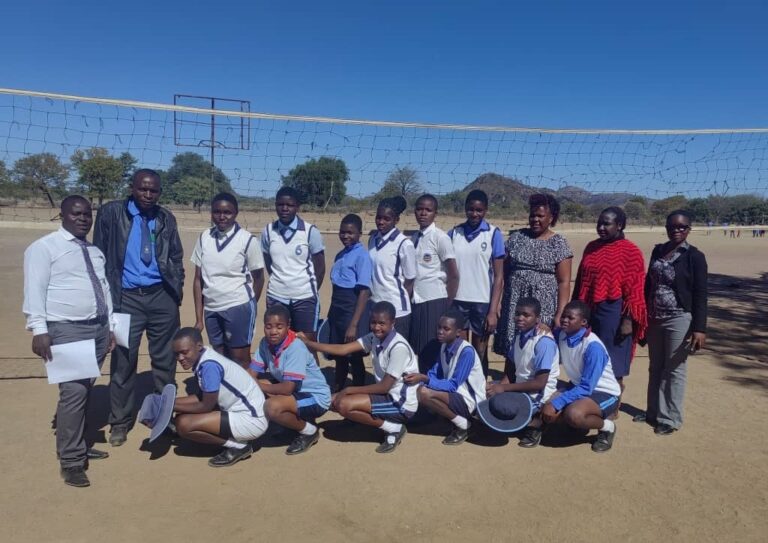
Mwenezi’s Maranda High School beach volleyball team has qualified for the National Association of Secondary School Heads (NASH) national tournament, set to take place in Dendera, Mashonaland East.
The qualification follows their victory at the provincial schools tournament held at St. Antony’s High School in Zaka.
Maranda High dominated the provincial finals and three teams, Under 17 boys and girls teams, as well as the under 20 girls are going to the nationals. The Under 20 boys were eliminated in group stages.
The teams are coached by Nkosilathi Timothy Chandavengerwa and Morrison Magwaza.
Speaking to TellZim News, head coach Chandavengerwa said he was proud about the team’s accomplishments.
“My team is thrilled to represent Masvingo at the national tournament. We are delighted, as this reflects on our hard work. I want to thank the team for their dedication,” said Chandavengerwa.
He went on to say their target was winning this year’s national tournament, with preparations in their final stages.
“This year, we believe we have a strong chance of becoming national champions, given our players’ performances and their readiness to achieve better results than last year, when we returned with a silver medal.
“Preparations for the national tournament are nearly complete, and I would like to extend special thanks to my assistant coach, Magwaza, who is dedicated and invests significant time training the players to ensure they achieve the best possible results,” added Chandavengerwa.
In 2023, the school had three teams competing at the national competition; the under 20 boys and the under 17 boys and girls. The under 17 boys finished second in the finals against St. Faith, while the under 17 girls came fourth, and the under 20 boys came in fifth.

Chiredzi councilors, management clash

By Beatific Gumbwanda

CHIREDZI- Chiredzi Town Council management and councilors clashed during the 50th Ordinary Full Council Meeting after the Audit Committee unearthed several irregularities, with councilors demanding an explanation.
The committee reported that contract workers were paid using borrowed funds from the water and rates account instead of the ZINARA account without the signature of the Town Secretary.
Councilors fumed over an unnamed Head of Department (HOD) but most likely the Finance Director, Lloyd Chimusasa for paying contract workers using the wrong account.
Consider Kubiku, who was the Deputy Director of Works is currently acting as the Town Secretary though he is fourth-in-command in hierarchy at the local authority.
Giving her presentation during the meeting, Audit Committee Chairperson, Sekai Njanjure said the committee noted an anomaly where there was a mismatch of payment vouchers and the pay sheet as well as that contract workers were paid without the signature of the Town Secretary, with funds borrowed from the water and rates account instead of ZINARA account.
Ward 5 councilor, Philimon Muchaendepi highlighted that there was need to empower the internal auditor, Owen Gwasira, with power to do his job diligently without fear of his immediate bosses whom he could not command to write reports of the anomalies he would uncover other than informing them not to repeat the same mistakes in future.
“I think we need to empower the internal auditor with power to do his job diligently without fear of his superiors. He can’t even order them to write reports of anomalies he would have detected,” said Muchaendepi.
Council Vice Chairperson and Ward 1 councilor, Liberty Macharaga said there was need for the HOD in question to write a report of what transpired rather than pampering him.
“Though we need to empower him (Internal Auditor), as council, we are the bosses so we want a report of the anomaly which was detected by the internal auditor,” said Macharaga.
Chiredzi Town Council Chairperson, Jameson Charumbira also suggested that they need to find out what happened and charge those who processed payments without including the Town Secretary’s signature.
“We need to charge these HODs who processed payments without the Town Secretary’s as stipulated by law. There is no need for a resolution, it was purely an administrative duty which needs the offender to clearly highlight in the report of what transpired,” said Charumbira.
The matter was later referred back to the Audit Committee to make an investigation on what was going on.
This comes just after the suspension of Chiredzi Town Secretary, Engineer Wesley Kauma and seizure of his Toyota Fortuner over unpublicized reasons emanating from a Ministry of Local Government investigation.

CBOs call for flexible budget consultations processes

By Beverly Bizeki

Community Based Organisations (CBOs) in Masvingo Province have called upon responsible authorities to provide flexible conditions for local authority and national budget consultations to ensure citizen participation in Public Finance Management value chain processes.
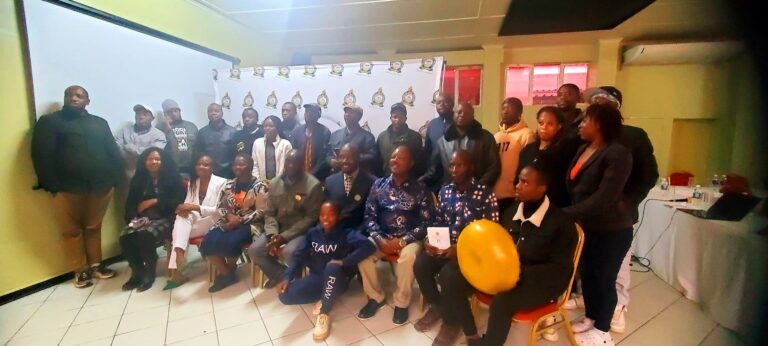
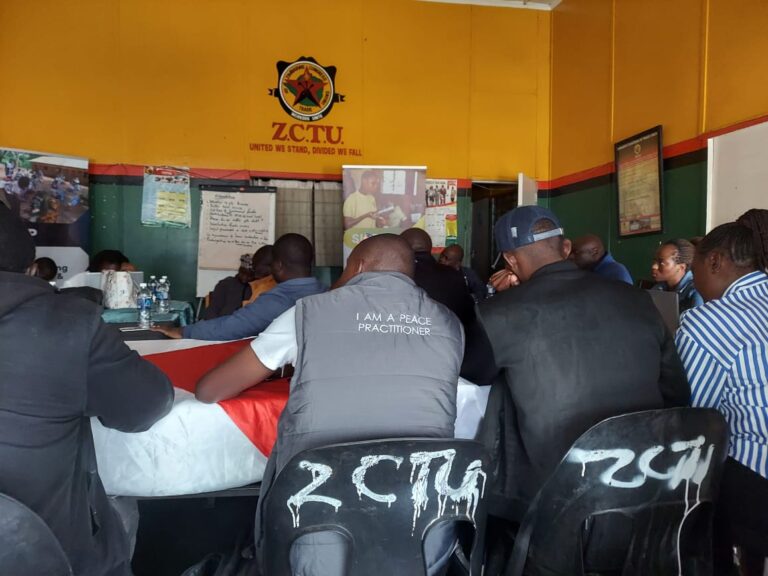
Speaking during a training workshop hosted by Zimbabwe Coalition on Debt and Development (ZIMCODD) in partnership with TellZim News in Masvingo recently, CBOs raised concerns over the way budget consultations were being conducted, which they said restricted citizen participation.
An attendee at the meeting, Sungano Zvarebganashe said the meetings were poorly attended and this was due to limiting conditions set for the meetings.
“Masvingo Province has seven districts but parliament had only set aside two meetings for the province combining people from rural and urban areas. Most people cannot travel to the set venues due to long distances, only those close to the venues will be able to attend. Some folks in the rural areas are not aware that such processes exist yet they are key stakeholders in budget formulations. “Responsible authorities must work on providing room for people to attend and submit their views in terms of the budget consultations,” said Zvarebganashe.
Another attendee, Purazeni Jakata said there was need for both government and parliament to be sensitive when selecting timelines for consultations, which he said contributed to apathy in people’s participation in budget processes.
“Local authority budget consultations in Masvingo are clashing with the Agricultural Show dates and a communication has been made to council to provide dates whereby more people can attend to no avail. This is one of the reasons why these meetings are poorly attended. Again, almost 97 percent of people’s inputs are not reflected in the budget which is why people tend to shun participating in budget consultations as it has become just a formality,” said Jakata.
Attendees also called upon local authorities to improve transparency by providing post budget formulation reviews to ensure that residents’ views are taken into consideration.
“People usually complain about local authorities’ pushing their own agendas at the expense of the ratepayers. We have since advocated for local authorities to have post budget formulation reviews before the budget is submitted to the minister but this has not happened, our wish is to have council bringing back reviews to the ratepayers even at ward level,” said one of the participants.
ZIMCODD facilitator Muchanyara Midzi said the training under its project, Strengthening Institutions and People Participation in Public Finance Management (SIPPP) aimed at equipping CBOs with budget analysis, monitoring and tracking skills for influencing the budget cycle for 2024.
“The training session is critical in strengthening the capacity of CBOs and Residents Associations to ensure their meaningful participation in Public Finance Management value chain and improve Public Finance Management outcomes in the health and education sectors,” Midzi said.
ZIMCODD Economic Analyst Zvikomborero Sibanda urged CBOs to employ the use of critical documents in budget monitoring and expenditure tracking.
“In doing budget monitoring and expenditure tracking, CBOs must make use of critical documents in order to be able to check for deviations or leakages against International Frameworks. There is need to gather and analyse critical documents for effective budget tracking ,” said Sibanda.
Zimbabwe’s Public Finance Management often comes under scrutiny, with the country’s corruption perception index placed at 149 out of 180. Corruption, closed procurement systems and delayed fund disbursements have been highlighted as key reasons for the country’s failure in meeting its development targets hence SIPPP’s objective on strengthening the institutions and people’s participation in a bid to ensure that there is transparency and accountability in the use of resources in the public health and education sectors.
Zimbabwe is a signatory to the Abuja Declaration which calls for the country to allocate 15 percent of its national budget towards public health and the Dakar Declaration which states that government should allocate at least 20 percent of its budget towards education but this has not been the case in Zimbabwe hence SIPPP’s objective on the two sectors.

Pregnant college student pardoned in mbanje case

0

By Staff Reporter

A Masvingo Poly Student who was arrested after being found in possession of mbanje is off the hook after Masvingo Magistrate Elizabeth Hanzie warned and cautioned her against dealing in dangerous drugs last week.
She pleaded guilty to the charges and was released after the magistrate took several factors into consideration.
The magistrate released the 21-year-old student Sandra Ngobo after considering that she had no means to pay a fine and was pregnant so she could not perform community service.
The magistrate also considered the fact that a custodial sentence would affect her attendance of classes since she was a student.
Ngobo was represented in court by Collen Maboke of Ruvengo and Maboke Law Firm.
Circumstances are that Ngobo was found with two packets of mbanje at Masvingo Poly main entrance by police officers who arrested her.
The packets weighed about 0.033 grams.