

By Staff ReporterAbductions and arbitrary arrests remained among the leading human rights violations recorded in Zimbabwe during April 2026, according to a new report released by Zimbabwe Peace Project (ZPP).The organisation recorded 145 human rights violations during the month, affecting at least 3 675 people across the country, a figure ZPP described as alarming.In its latest monitoring report, ZPP raised concern over what it described as a growing pattern in which individuals allegedly abducted by suspected state security agents later reappear in police custody, raising questions about the legality and transparency of arrests.“Recent incidents reflect a deeply concerning pattern in which citizens abducted by suspected state security agents are subsequently discovered in formal police custody, blurring the line between lawful arrest procedures and abductions.“On 23 April 2026 individuals suspected to be state security agents. The victims were likely identified during the distribution of fliers and mobilisation for a planned demonstration. Witnesses stated that the operatives, who were travelling in Mahindra vehicles and carrying AK-47 rifles and pistols, removed the individuals simultaneously from their homes without presenting arrest warrants or identifying themselves,” reads part of the report.ZPP said the MDC members were allegedly abducted ahead of a planned demonstration organised by the party.“Following public outcry and alerts circulated through private media, the victims were later located at Harare Central Police Station at approximately 07:00am, where they remained in the custody of the Zimbabwe Republic Police (ZRP). “Additionally, the seventh victim, a member of the MDC, was arrested after visiting the police station to follow up on the party’s notice for a peaceful demonstration. He was subsequently charged together with the others for allegedly ‘inciting violence’,” reads another section of the report.The report also highlighted the case of Defend the Constitution Platform (DCP) youth leader Emmanuel Sitima, who was allegedly abducted and unlawfully arrested in Mabvuku.“Sitima was assaulted, slapped, publicly labelled a thief allegedly carrying a firearm, and forcibly taken away in an unmarked vehicle before later being delivered to Harare Central Police Station without initially being informed of the charges against him,” reads the report.The report also cited cases involving arrests linked to opposition against Constitution Amendment Bill No. 3.“In another case of unjustified arrests, a commuter omnibus operator was arrested after police allegedly discovered anti-Constitution Amendment Bill (3) campaign material in his vehicle, leading to charges of inciting public violence.“His arrest occurred after he went to the police to file a complaint against ZANU PF youths who had assaulted him at his workplace in Waterfalls, destroyed his property, and forced the closure of his business. Instead of receiving protection and assistance as a complainant, he was arrested, denied bail, and remains in custody pending trial,” reads the report.Apart from arrests and abductions, ZPP also noted cases involving administrative abuse by government and local authority officials topped violations with the organisation documenting 16 such cases during April, including incidents in which citizens were allegedly coerced into making financial contributions towards state functions and local activities.“In Chipinge East, a District Schools Inspectors (DSI), Mr Ndamuka Tarubereka, directed teachers from the district to contribute US$3 each towards Provincial Independence Day celebrations held at Gaza Stadium in Chipinge and instructed school heads to compile lists of those who had paid, while threatening non-contributors with exclusion from possible national incentivised duties,” reads part of the report.The report said similar incidents were also recorded in Chipinge Central and Mutasa Central Ward 13, where teachers and village heads were allegedly pressured to contribute money towards Independence Day activities.ZPP also highlighted allegations from Masvingo South Ward 20 involving community members seeking treatment at Zibhowa Rural Clinic.“In Zaka South, Ward 20, reports from Zibhowa Rural Clinic confirmed that community members seeking medication were being forced by Councillor Walter Masaka and Felix Tambade, an assistant to the village head to pay fees of US$2 for adults and US$1 for minors under the pretext of clinic development, despite the Health Centre Committee and the clinic administration being unaware of the arrangement,” reads part of the report.Masvingo Province in April recorded 24 human rights violations during the period under review, with most cases linked to political intimidation, coercion and restricted access to basic services.“In Masvingo Province, 24 human rights violations were documented, largely reflecting political intimidation, coercion, and restricted access to basic services. The most serious incidents involved forced political participation, including in Bikita South Ward 29, where residents were compelled to sign pre-filled Constitutional Amendment Bill forms under village leadership pressure, with no genuine option to dissent, undermining freedoms of expression and political choice. “In Masvingo Central, Ward 15, an elderly man was harassed and threatened by a war veteran for wearing an opposition party T-shirt during Independence Day commemorations, illustrating restrictions on political expression and intimidation. In Chiredzi East, beneficiaries of agricultural support were excluded from receiving vegetable seed distributions and cash assistance based on perceived political affiliation, constituting discrimination in access to state support,” reads the report.
162 Arrested, $7m Drugs Seized within 5 months in Masvingo
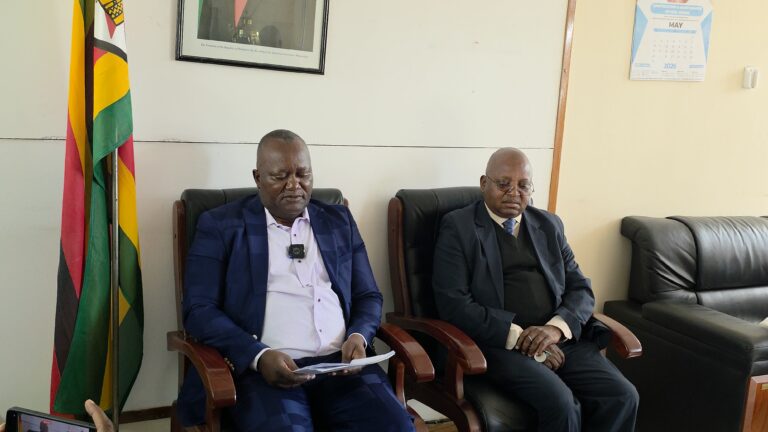
By Staff ReporterMasvingo – At least 162 people have been arrested and drugs valued at over $7 million recovered in Masvingo Province since January, Minister of State for Provincial Affairs and Devolution Ezra Chadzamira has revealed, as the government intensifies its fight against drug and substance abuse across the province.Presenting a press statement on May 21, 2026, Chadzamira said the province was fully committed to safeguarding the wellbeing of all Zimbabweans and building a drugfree, healthy, and productive society under the Zimbabwe MultiSectoral Drug and Substance Abuse Plan 20242030, which was approved by Cabinet in April 2024.“Currently, Masvingo Province is embarking on District DSA Technical Committee trainings under the community reintegration pillar. These trainings are bringing out effects and experiences encountered by families, communities, and the province at large. Three districts have been trained to date namely Chiredzi, Mwenezi and Bikita and the remaining districts are expected to be trained by the end of June 2026,” said Chadzamira.The Minister revealed that from the beginning of the year to date, 162 people, 125 males and 37 females, had been arrested for drugrelated offences, with the majority being youths. Prosecutions and convictions stood at 83, comprising 60 males and 23 females.Recoveries included 533.49 kilogrammes of cannabis, and 7,512×100ml bottles of cough syrups (Broncleer and Benylin). The total value of recovered drugs was put at $7,080,010.Masvingo Province is a major transit point, with most drugs smuggled from South Africa and Mozambique passing through the province on their way to other cities such as Harare and Bulawayo. This strategic location makes the province a critical battleground in the national fight against drug trafficking.During the first quarter, the Supply Reduction Pillar carried out an awareness march campaign at Mucheke Stadium that attracted over 2,000 people of all ages.On the demand reduction side, the province reached 36,336 youths, 15,526 males and 20,810 females since the beginning of the year, with strategies spanning education, awareness, and communitylevel interventions.He said the government was working to expand access to rehabilitation services and integrate restorative care into health delivery systems. He added that training more mental health professionals and providing aftercare services to reduce relapse would be prioritised.Proposed rehabilitation centres across the province include Ngomahuru (Masvingo Province), Clipsham House (Masvingo District), Chambuta (Chiredzi District), Zivuku Clinic (Chivi District), Mushava Clinic (Mwenezi District), Muvava Clinic (Bikita District), and Bota Clinic (Zaka District). The Minister also said Masvingo City Council had offered four hectares of land towards the establishment of a rehabilitation centre.Asked on the issue of corruption towards drug dealers, Minister Chadzamira emphasised that the fight against drug and substance abuse was everyone’s responsibility and urged parents, guardians, community leaders, faithbased organisations, and young people to actively participate.He also disclosed that last year the province launched an antidrug fundraising campaign where individuals and corporates pledged US$27,000. He appreciated those who had honoured their pledges and urged others still to pay.“The fight against drug and substance abuse is everyone’s responsibility. Government alone cannot overcome this challenge without the active participation of families, communities, the private sector, faithbased organisations, and young people themselves,” said Chadzamira.He further announced that his office and the provincial police leadership were open to receiving tipoffs on anyone supplying drugs in Masvingo.“My office is open for tipoffs. The provincial police leadership is also open to receive information on those who could be supplying drugs in Masvingo. It is everyone’s responsibility,” he said.Parents and guardians were urged to remain vigilant and engaged in the lives of their children, while community leaders were called upon to foster environments that discourage drug use and support recovery. Young people were encouraged to make positive life choices and seek opportunities for personal and national development.
Drug dealer teacher jailed over mbanje, crystal meth

By Staff ReporterZAKA – A teacher and Madzibaba sect member who turned his school staff quarters into a drug den has been jailed for eight months after police found dagga in his pocket, more dagga under his sofa, and crystal meth stashed in his bedroom wardrobe recently.Shadreck Chitsama, who torched a social media storm after his bust, appeared before Zaka Magistrate Grace Tupiri on Thursday, May 28, 2026, facing two counts: unlawful possession of dangerous drugs (dagga) under Section 157(1)(a) of the Criminal Law (Codification and Reform) Act, and possession of prohibited medicines (crystal meth) under the Medicines and Allied Control Act. Magistrate Tupiri convicted Chitsama on both counts. On the first count, he was sentenced to four months, suspending two months for five years on condition he does not commit a similar offence. On the second count, she sentenced him to eight months imprisonment, suspending two months for five years on the same condition. The sentences will run consecutively, resulting in an effective eight months behind bars.The state led by prosecutor Davyson Mavenga told the court that on May 12, 2026, at around 1pm, police officers from ZRP Zaka acted on a tipoff and proceeded to Jinjika Secondary School. They met Chitsama along the way, introduced themselves, and presented a search warrant, which the accused read and understood.Upon searching him, one sachet of dagga was found inside his left pocket, leading to his immediate arrest. Chitsama then led the officers, together with the school’s deputy head John Chigavakava, to his residence in the staff quarters inside the school yard.In the living room, another sachet of dagga was found underneath the second sofa from the main door. While searching a heap of shoes near the electricity metre, the accused’s wife, Learnmore Gondo, discovered loose dagga wrapped in a black plastic, which was confiscated.The court further heard that during the search, two sachets of crystal meth were found inside a black monarch bag in the main bedroom, while empty packaging sachets were also recovered from the wardrobe. Another sachet of crystal meth was found underneath the third sofa from the main door.The recovered drugs were taken to Jerera ZimPost for weighing. The accused had no lawful permit or licence to possess the substances.
Delta donates 10 hospital beds to Masvingo Provincial Hospital

By Staff ReporterMASVINGO – Delta Beverages, through its flagship brand Castle Lager, has donated ten stateoftheart hospital beds to Masvingo Provincial Hospital as part of a national programme to support public healthcare, with the province becoming the ninth beneficiary of a pledge made during the 10th anniversary of the National Castle Lager Braai Day.The handover ceremony took place at the hospital today, May 29, where Delta Masvingo Region Sales Manager Leonorah Kateedze delivered the company’s commitment speech. Kateedze explained that the donation was part of a broader pledge to give one hundred hospital beds across the country’s ten provinces, a gesture of appreciation to communities that have supported the brand over the years.“We pledged to donate one hundred stateoftheart hospital beds, which will be distributed across the ten provinces of the country. Delta Beverages remains committed to supporting national development and investing in the wellbeing of the communities that form the foundation of our success. We truly believe that this donation is a fitting way to show our appreciation to the communities we serve, while also playing a part in supporting and advancing public healthcare,” said Kateedze.She said the Masvingo handover marks the ninth of ten such events, and the beds were expected to improve patient comfort and support the hospital’s ongoing efforts to deliver quality healthcare.Receiving the donation on behalf of the hospital, Clinical Services Director and acting Medical Superintendent Dr Richard Makoni said the beds could not have come at a better time, as the provincial referral facility is undergoing major renovations.“We are in a process of upgrading this hospital, so this is a timely welcome development. We really appreciate what Delta has done for us because we are moving towards offering worldclass services and we want to make it one of the best hospitals in the country, so the donation helps us to achieve that. We received ten stateoftheart hospital beds, and they will feed well into our vision,” said Dr Makoni.Delta Beverages’ lager beer business made the pledge during the 10th anniversary celebrations of the National Castle Lager Braai Day. The company has now rolled out the bed donations across all provinces, with Masvingo being the ninth to benefit. The final handover is expected to take place in the remaining province soon.
Amos Chibaya calls for political tolerance

By Staff ReporterCHIVI – Opposition politician Amos Chibaya has called for political tolerance among Zimbabweans, saying they may differ politically but they remain one people, united by shared humanity and the inevitability of death.Chibaya was speaking at the burial of veteran educationist Aleck Tabe (senior), father of Masvingo City Mayor Aleck Tabe, who died after serving the Ministry of Education for 42 and a half years. The funeral, held at the family’s rural home in Chivi, drew mourners from across the political divide, including Zanu PF supporters, opposition members, and ordinary villagers.Chibaya said a funeral naturally brings everyone together, and people should freely brush shoulders regardless of party affiliation.“Here we are at a funeral. A funeral brings everyone together. We have Zanu PF supporters, CCC members, and my party led by Nelson Chamisa. So you can lean on each other; it doesn’t matter. We are at a funeral,” said Chibaya.He said death was imminent and unavoidable, so people should not bother each other because they are one.“Death is nonnegotiable. So while we are still here, let us avoid conflicts, especially us politicians. Politics and church are the same: if you go to the Reformed Church, there is God; if you go to the Roman Catholic Church, there is God. That is what we should do,” he said.Chibaya warned against political violence and urged people not to support politicians more than they should.“There are some who want me to go to Parliament more than I do. If I become an MP, I get a car, and I will not give you that car. Some go on to kill people for that, but the avenging spirits will haunt your family, not mine. When we go to Parliament, we share meals with MPs from other political parties. We will eat well, and from there we tell you to fight,” said Chibaya.He also made a veiled reference to the Constitutional Amendment Bill that seeks to extend the presidential term to 2030, saying no one knows their time of death.“No one is spared when death comes. We may have our wishes, but God may not want that. You may think that in 2030 you will be there; God may say you will not be there. I am not referring to anyone, I am just saying,” said Chibaya.Tabe junior also urged people to practice political tolerance, saying people should live like family and leave politics to politicians.“Here we have people from different parties. This should remind us that we are one community, and we will remain like that. So we should not allow politics to separate us. Let politicians do politics, and the general populace should remain united as neighbours because we borrow salt from each other,” said the Mayor.The burial was attended by several mayors, school heads, government officials, education officers, church leaders, and ordinary mourners, all gathered to pay tribute to the late educationist who had shaped many lives over his fourdecade career.
Teaching Vocabulary Development in English: From Word Lists to Word Power
By Langton Chikaka
Vocabulary is the gateway to learning in secondary school. A learner can sit through a lesson, read the passage aloud, and still fail the comprehension question if the key words remain foreign. In Forms 1 to 4 English Language lessons, the challenge is no longer sounding out words, but understanding, using, and thinking with academic language. Teaching vocabulary well means moving beyond word lists and dictionary copying toward deliberate strategies that make words usable in reading, writing, and real life.Teaching High-Utility Academic Words Once, and Using Them EverywhereNot all words deserve equal attention. Secondary learners meet thousands of words each term, but only a fraction carry the weight of academic success. Words like analyze, evaluate, contrast, demonstrate, evidence, impact, and significant_ appear across English, History, Science, and Geography. They are the language of ZIMSEC questions and of clear thinking. These are high-utility academic words.The mistake is to teach them once in isolation and never return to them. Research and classroom experience both show that a learner needs eight to twelve meaningful encounters with a word before it becomes part of their working vocabulary. One encounter in a copied definition does not count.The alternative is to teach a small set of words deeply and use them everywhere for two weeks. If the English department selects evidence for a reading unit, the Science teacher can use it in a practical report, and the History teacher can use it in source analysis. The word is displayed on a class word wall, used in oral tasks, and applied in writing. Learners see it in different contexts and are asked to use it themselves in sentences about their community or school. This approach changes vocabulary from a list to be memorized into a tool to be used. When learners encounter “impact” in a passage about Cyclone Idai and then use it to describe load-shedding at home, the word moves from passive recognition to active use.Teaching Strategies for Independence: Context Clues, Word Families, and AffixesLearners cannot carry a dictionary into an exam, nor should they rely on the teacher for every unknown word. The goal is to build independent word learners who can decode meaning on their own.Context clues are the first line of defense. Most texts give hints through definition, contrast, example, or inference. In the sentence, “Unlike _abundant_ water in the dam, the river was scarce,” the word _unlike_ signals an opposite meaning. Teaching learners to hunt for these signals turns reading into a problem-solving activity rather than a guessing game. A simple “Context Detective” activity, where learners underline clues and justify their guesses, builds this skill quickly.Word families and affixes multiply a learner’s vocabulary with minimal effort. Knowing the root “struct”= build unlocks _structure, construct, destruct, instructor,_ and _construction_. Knowing common prefixes like _un-, re-, dis-_ and suffixes like _-tion, -able, -ive_ allows learners to break down unfamiliar words into familiar parts. The activity is not to memorize affix lists, but to apply them: find the word _demobilize_ in a text, break it into de + mobil + ize, and infer that it means to reverse mobilization. These strategies work because they treat vocabulary as a system, not a set of isolated facts. Learners begin to see patterns and transfer them to new texts without prompting.Avoiding the Dictionary Copy TrapThe most common vocabulary activity in secondary schools is also the least effective: “Find ten words and write their meanings.” Learners copy definitions from dictionaries, often without reading the example sentence, and forget the words by the next day. The task involves copying, not thinking.The trap exists because it looks like work. Books are full, teachers see evidence of activity, and marking is straightforward. But it fails on three counts. There is no connection to the text being studied, no opportunity for personal use, and no cognitive processing beyond transcription.The alternative follows a three-step rule. First, meet the word in context within the reading passage. Second, explain it simply using a local example a learner understands. Third, require the learner to use the word themselves in speaking or writing. A word that cannot pass these three steps should not be taught at that time.Instead of copying definitions, learners should use five target words in sentences about their own lives. Instead of random lists, words should come from the text of the day. Instead of writing once, learners should use the word three times: in discussion, in a short write, and in review. This shifts the activity from passive copying to active processing, which is what creates retention.Bringing It Together in the ClassroomA practical 20-minute routine illustrates how these ideas work together. Begin by pre-teaching three words from the text, using a sentence and a local example. Read the text and have learners underline the words, using context clues to confirm meaning. Spend a few minutes breaking one word into its affixes and building its word family. End with an exit ticket: write one sentence using a target word about the school or community. Over a term, this routine exposes learners to 90 words with multiple encounters and personal use. It takes less time than marking 45 dictionary lists, and the impact on comprehension and writing is visible within weeks.Assessment and Follow-ThroughAssessment should match the goal. If the goal is use, then test use. A quick write with two target words, a word sort by affix, or a speaking task that requires three academic words will show whether learners have moved beyond recognition. Track errors using simple codes when marking past papers. If 70% of learners lose marks because they copy from the passage, the next two weeks should target rephrasing, using the academic word _rephrase_ itself as part of the instruction.ConclusionTeaching vocabulary development is not about covering more words. It is about teaching fewer words better, and giving learners the strategies to unlock the rest. Select high-utility academic words, teach them in context, and require active use. Teach context clues and affixes so learners become independent. Abandon the dictionary copy trap in favor of activities that demand thinking.When learners can read a passage and say, “I know what _consequence_ means here, and I can use it in my own sentence,” vocabulary ceases to be a barrier. It becomes a tool. And with that tool, learners can access the curriculum, answer exam questions, and participate in the conversations that shape their communities. That is the purpose of teaching words in the first place.
Huge send-off for veteran educationist Alec Tabe
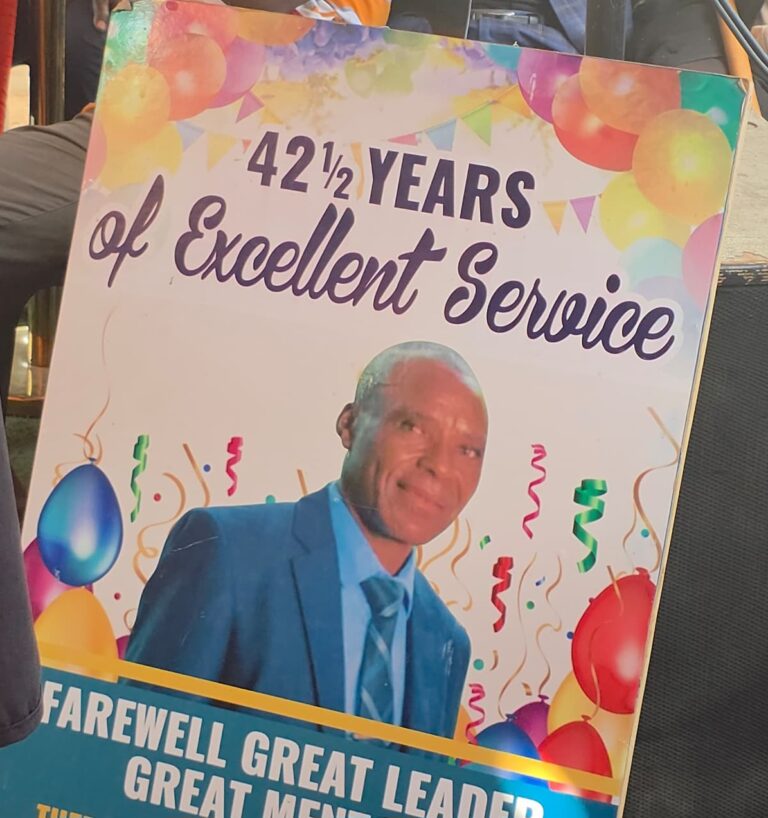
By Brighton ChisevaCHIVI – Veteran educationist Aleck Tabe, who died last Friday (May 22, 2026), received a huge send-off at his rural home in Chivi as people from all walks of life paid their last respects to a man whose journey in the teaching fraternity spanned four decades.He survived with his wife, four children, two boys and two girls and 12 grandchildrenTabe was born in June 1958. He did his primary education at Chisenga Primary School and secondary at Lundi and Dadaya High Schools before enrolling at Morgenster Teachers’ College, graduating in 1980. He later became a headmaster at various schools and also a renowned farmer.He was promoted from teacher to deputy head at Makasi Primary School before being promoted to head at Tadzembwa Primary in 2001. He later transferred to Rujeko Primary School in Masvingo City, where he served until his retirement in 2023.Speaker after speaker emphasized the love he had for his work, his family, and everyone he worked with. Family representatives said they had lost a unifying figure who held the family together. His daughters-in-law described him as their pillar whenever they faced challenges with their husbands, saying he was the best person to approach.His elder brothers described him as the manager of their “family company”, saying he ensured that everything needed for the progress and unity of the family was done. They said he groomed countless family members, sending his siblings’ children and other vulnerable community members to school and supporting them through various empowerment programmes.The church described him as a devout Reformed Church member who never missed any church programme and was always ready to use his vehicles for church activities without asking for payment. They said he would transport firewood and congregants to church using his lorry.His firstborn son, Svitsai Tabe, described him as a rare gem who never asked him to contribute anything towards the education of his siblings, even though all of them were still in school when Svitsai started working.“There is an eightyear age difference between me and the one who comes after me, so it means I started working while he was still in school, along with the rest of my siblings. However, I never paid a single cent towards their education. He would say, ‘I will send my own children to school on my own. I don’t want you to one day bother them telling them that you contributed towards their education,’” said Svitsai.Svitsai, who is now also a school head like his father, said his father advised him to avoid misusing school funds or engaging in improper relationships with pupils.His namesake, Masvingo Mayor Alec Tabe Jnr, said his father imparted leadership skills to him, and as a result, he is now a mayor and able to connect with many people. He noted that many mayors attended his father’s burial as a testament to the elder Tabe’s farreaching influence.Fellow heads from Masvingo City Council schools also paid tribute describing him as a role model who groomed many.Masvingo City Council Chamber Secretary Vitalis Shonhai, who represented Town Clerk Edward Mukaratirwa, said the late was one of their finest heads at council schools and that he left his son to the council, who is now the mayor.“He was one of our best school heads until his retirement. He served well at our school, and when he retired he left us his son, who is our mayor. We work very well with him,” said Shonhai.Masvingo District Schools Inspector Ishmael Chigaba described Tabe as an advisor to him, even though Chigaba held a higher office.“The late was older than me, so he was my advisor despite my holding a higher office. He was elected to the Better Schools Programme board. He would bring the challenges of other heads and advise us on the best way to handle the situation,” said Chigaba.Opposition politician Amos Chibaya said he had been sent by former opposition leader Nelson Chamisa to convey condolences to the Tabe family.Masvingo Provincial Permanent Secretary in the Minister of State’s office, Dr Addmore Pazvakavambwa, described the late Tabe as a role model, saying serving four decades in government was no small feat.“The late Aleck Tabe was a role model. Serving 43 uninterrupted years in government is not easy. It shows who the man was, because many are expelled from work after abusing funds,” said Pazvakavambwa.The huge turnout was a clear sign of the late educationist’s impact. Long lines of vehicles stretched along the roads leading to the rural homestead, with registration plates from across the country. Government officials, opposition politicians, several mayors from different towns, school heads, teachers, MPs, councillors, education officials, the Reformed Church in Zimbabwe leadership, congregants, and ordinary villagers all gathered to bid farewell. The sheer number of mourners, from the powerful to the humble, spoke volumes about the respect and love the community had for the man who had shaped so many lives through education.
Masvingo Business Showcase roars to life

By TellZim ReporterMasvingo Province is set to position itself as an emerging investment and enterprise hub through the inaugural Masvingo Business Showcase 2026, a three-day platform aimed at connecting businesses, investors, entrepreneurs and institutions.The event, scheduled for June 4 to 6 2026 at Urban Lifestyles Hotel in Masvingo, is expected to bring together government institutions, corporates, SMEs, development partners, financial institutions and the diaspora community to promote investment opportunities and enterprise growth within the province.Organised by Elite Experiences & Escapes, the Showcase seeks to become an annual flagship platform driving innovation, collaboration and sustainable economic development in Masvingo.Speaking ahead of the event, co-founder and creative director Tafadzwa Chinembiri Fugede said the initiative was inspired by the need to unlock Masvingo province’s often overlooked economic potential by creating a platform to bridge gaps within the province’s business ecosystem, particularly limited access to markets, investors and collaborative networks.“The inspiration came from recognising the immense potential within Masvingo Province that often goes unnoticed. Masvingo has strong opportunities in agriculture, mining, tourism, land development, entrepreneurship and innovation, yet many local businesses struggle with visibility, investment access and strategic partnerships“One of the biggest gaps is limited access to markets, investors, information and collaborative networks. Many SMEs and entrepreneurs have promising products or ideas but lack exposure, financing opportunities and business support,” said Fugede.According to organisers, Masvingo’s strategic advantages include its agricultural capacity, tourism assets, mineral resources and land availability, all of which position the province as a potential investment destination.Fugede identified agriculture and agro-processing, tourism and hospitality, mining and value addition, renewable energy, land development, SMEs and digital innovation as some of the sectors expected to drive growth in the coming years.“Agriculture and agro-processing remain significantly underexposed, particularly value addition opportunities. Tourism is another major area. Masvingo hosts important heritage sites yet there is still untapped potential in hospitality and tourism investment.“There is often a perception that opportunity exists elsewhere, yet Masvingo itself holds significant potential for wealth creation and sustainable businesses,” said Fugede.Beyond exhibitions and networking, organisers say the event is expected to produce practical outcomes including business partnerships, investment interest, financing opportunities, knowledge transfer and increased market access for SMEs.The event which be free , will also place emphasis on youth entrepreneurship and startup visibility by exposing young business owners to investors, mentors and funding conversations.“We want young people to see entrepreneurship and enterprise as realistic pathways for growth and impact. We want the people of Masvingo to have access to opportunities, information and networks that can support growth regardless of business size or financial position,” said Fugede.While attendance is free, organisations seeking exhibition, sponsorship and partnership opportunities can participate through packages starting from US$250.The Showcase will feature business exhibitions, conference sessions, investment dialogue, policy discussions, SME support initiatives and business-to-business networking opportunities across multiple sectors.The showcase will include sessions like Men of Impact Breakfast on June 6, 2025, a gathering focused on men’s wellness (Mental and physical), leadership, purpose and personal growth, family and relationships among others with the entry fee charged at US$20. For females there will be a Women in Business breakfast meeting focusing on key areas such as leadership and personal growth, business and growth strategy, financial wellness, innovation and entrepreneurship as well as mentorship and support all for US$20 as well. The highlight of the showcase will the awards night to be held on June 6, again where individuals and businesses driving Masvingo forward will be honoured. Ticket prices for the awards night will go for US$40. The awards night will be hosted under the theme ‘Celebrating Excellence, Recognising Impact, Inspiring Growth’. Interested businesses and individuals can contact Elite escapes on +263 78 282 0355 or on +263 71 334 8836
Mental health neglect as only one nurse serve an entire district

By Tadiwa ShunjeMASVINGO – While mental health is one of the major health challenges affecting communities in Zimbabwe, leading to a high rate of suicide, there is a shocking revelation that each of the seven districts in Masvingo Province has only one mental health nurse to serve its entire populationThe revelation was made during a community budget session organized by My Age Africa on May 15, 2026, at the Zimbabwe National Family Planning Council (ZNFPC), where Masvingo district social worker Trish Chimanda said that while there was a crippling mental health crisis in Masvingo, it was largely overlooked.“We are currently dealing with a silent mental health crisis that is disproportionately affecting our young people. The fact that one in four people in our community is struggling with their mental health should be a wakeup call, yet this issue continues to be pushed to the sidelines,” said Chimanda.She said the entire Masvingo City had one mental health nurse to deal with the high population in the town, where drug and substance abuse, one of the causes of mental health problems, is rampant.“It is a desperate situation when you have one nurse trying to serve four clinics in some of our most crowded areas like Rujeko, Runyararo, Mucheke and Runyararo West. Our staff are stretched beyond their limits, and it means many of those who need urgent help are simply not being reached. “Normally a nurse should attend a maximum of 10 patients with mental health issues. This means that some are left untreated since the population is higher, and only two nurses cannot handle it even if they stretch beyond their limits,” said Chimanda.My Age Africa Policy and Advocacy Officer Obedience Mazenge said the unemployment rate for youth was 80 percent, and young people were the most affected by mental health issues, yet at the same time they cannot afford private health services.“Some of them cannot get even 50 cents per day, so where can they find money to see psychologists? These youths cannot go to psychologists because they have no money, meaning the crisis will remain. Thirty percent drug abuse, 45 percent report depression, and only 10 percent report. Clinics are overstretched, and medicines are unaffordable in the private sector,” said Mazenge.Masvingo Provincial Medical Director Dr Amadeus Shamhu confirmed the sad reality, saying the ministry was shortstaffed and they had only one mental health nurse per district to coordinate with all clinics.“At times they get overwhelmed, but it is simply because there is a shortage everywhere. However, in most cases, people with mental challenges go to Ngomahuru Psychiatric Hospital, where they would be referred back to clinics. People with depression and stress do not usually go to clinics unless there is a breakdown or confusion,” said Dr Shamhu.He called upon people to approach clinics if they are facing mental health problems, saying they would receive counselling and, where necessary, medication.Masvingo Root of Development Organisation (MaRODO) founder and executive director Acknowledge Mawere said mental health was not being given the priority it deserved, and one mental health nurse per district was inadequate as cases of mental healthrelated issues were soaring.“As a mental health activist, I’m deeply concerned. One mental health nurse per district is woefully inadequate, especially with rising cases of mental health disorders and challenges. It’s a stark reminder of the neglect of mental health services, not only in our country but across the region. Mental health is still less prioritized,” said Mawere.He said people will struggle to access specialized care, leading to untreated conditions and worsening mental health, because one nurse cannot really serve the whole district effectively. He added that the nurse will also suffer mentally because of the workload.“It is even worse for rural areas. This means traveling long distances to seek help, which demotivates those who may need help, care and support. Nurses will be overworked, burnout is likely, and quality of care will suffer. The mental health of the caregivers and nurses themselves is at risk. Communities will suffer as mental health issues escalate, impacting productivity, relationships, and overall wellbeing,” said Mawere.He said there was need for the government to invest more and provide resources, training, and personnel to address the crisis, adding that his organization was playing a part in addressing the challenge.“It’s time to prioritize mental health, and that is why as a youth organization, we’re trying to fill in the gap with grassroots interventions, improving access to basic mental health care and psychosocial support. There is need for more investment in mental health care for the whole nation, by the government and development partners,” he said.Tafadzwa Gonye, a Community Psychology Intern with the Allied Health Practitioners Council of Zimbabwe, said the challenge was that policies prioritize funding and resources for physical health over mental health.He said the situation had deepened inequalities, turning mental health care into a privilege rather than a right.“Our policies prioritise funding for physical health over mental health. This has resulted in an overstretched mental health workforce and systems that struggle to meet the growing demand for mental health care,” said Gonye.He said with the growing demand for mental health care, the country must increase investments in mental health services by opening more posts for mental health professionals in district health institutions.“Strengthening communitybased health services, investing in preventive care, and expanding the mental health workforce are key steps towards building a resilient society where everyone can access the support they deserve from our institutions,” said Gonye.
Crisis as Bikita health facilities run out of infant vaccines

By TellZim ReporterBIKITA – A health crisis is looming in Bikita District following reports that several health facilities have run out of critical infant vaccines, raising fears of widespread disruptions to routine immunisation programmes and leaving mothers desperate.The shortage involves the Oral Polio Vaccine booster (OPV) and the Rotavirus vaccine, which are administered to infants at six, ten, and fourteen weeks as part of Zimbabwe’s national immunisation programme.Parents and guardians who spoke to TellZim News said they had been turned away from clinics after being informed that the vaccines were out of stock. Some women have been forced to travel outside the district in search of immunisation services, spending money they do not have and enduring long journeys with their young children.Contacted for comment, Masvingo Provincial Medical Director Dr Amadeus Shamhu said he could not immediately confirm the situation and needed to first verify the matter with district authorities.“I am not sure about that position as of yet. I need to confirm with the district first. You can also get in touch with the DMO,” said Dr Shamhu.When TellZim News contacted Bikita District Medical Officer (DMO) Dr Thalia Mungwari, she initially said she wanted to check with the vaccine focal person. The following day, she said she was in a meeting and would call back, but she never did by the time of publishing.Sources familiar with the situation said the shortages had affected several clinics in the district since Monday, May 18, 2026.One woman who visited Negovano Clinic seeking the 14week immunisation dose for her child described the anguish of being turned away.“I went to the hospital to have my child vaccinated for the 14week programme and was told there was no OPV and Rotavirus vaccine available. We were told to check again next week. I also visited nearby clinics, including Mandara, others in Bikita and Nyika, but was told the vaccines were not there,” she said.She added that one of the women who had accompanied her to the clinic ended up travelling to Zaka so that her child could get the booster and vaccine.“One of the women we were with ended up travelling to Zaka so that her child could get vaccinated,” she said.Another mother, who requested anonymity, described the shortages as deeply concerning and urged government authorities to urgently address the situation.“Lack of critical medicines in hospitals is a violation of our rights. This is worrying for us as mothers because we are responsible for the wellbeing of our children,” she said.Without these vaccines, young children are left vulnerable to polio, a highly infectious disease that can cause permanent paralysis and rotavirus, a leading cause of severe diarrhoea that can lead to dehydration, hospitalization, and even death.Bikita District has two rural hospitals, Chikuku and Bikita Rural Hospital and two referral hospitals, Mashoko and Silveira Mission hospitals, as well as about 25 clinics. The reported shortages threaten to undo years of progress in immunisation coverage and leave thousands of infants at risk.