Home Blog Page 219

Renco Mine Juniors win Chivi South League tournament

0

Sports Writer

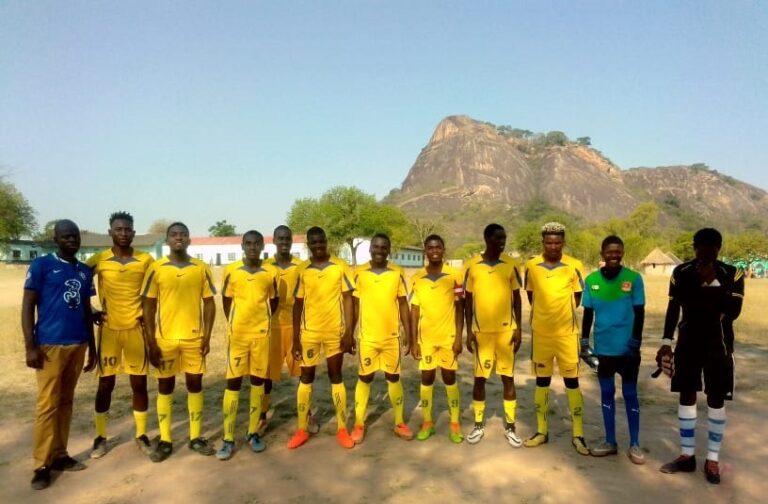
After piping their Chivi South Sunday League fellows to the title, Renco Mine Juniors showed that their lifting the trophy was no fluke as they went on to emerge victors at the off-season tournament held recently at Shongamiti Secondary School.
Chauya Chigero as the team is known dispatched a fighting home team Shongamiti 2-1 in the final where the league’s top six teams (from the just ended season) took part in.
In the semi-finals of the tournament, eventual winners Renco got the better of Chisase 2-1 while Shongamiti beat Lundi Tigers 2-0.
In the third place play-off, Lundi Tigers brushed off the challenge of Chisase emerging 1 nil victors to claim position 3.

Shongamiti FC players

Renco Mine FC Juniors vice chairperson Baureni Chindamu (whose chairperson is Givemore Mahanya) said it has been their aim as a club to improve the lives of people by supporting sporting talent in communities.
“As Renco Mine Juniors, our concept is not about football only but bettering the lives of the youth especially in academics and making sure that their sporting talents are complimented with academic abilities,” said Baureni.
The league which concluded its season 2 two weeks ago is set to kick start the new season on May 28, if all goes well according to the league’s chairperson Tamuka Dewa.
“Now that we have come to the end and concluded Chivi Sunday Super League season 2, we are set to start the new season probably on May 28 and clubs are prepared to resume the sporting activity.
“The previous season in general terms was a good season and so was the tournament that capped its ending. We urge the teams in the league to keep up the spirit in the goodness of the sport and you thus made our league a better one through your commitment though some clubs ended it in a boring manner,” said Dewa.
The tournament had six teams Lundi Tigers, Gwatipedza, Chisase, Academy, Young Hlez and Renco Juniors.

AU called to resist external forces

…As continental body celebrates 60th anniversary

Brighton Chiseva

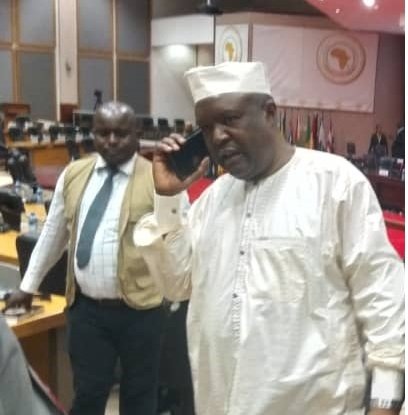
As Africa celebrated the Africa Union (AU)’s 60th Anniversary, Director of Kenya Law School Professor Patrick Lumumba has called on the Pan African Parliament (PAP) to up its game and fight external forces that control Africa many years after its independence.

Professor Lumumba made the call in a speech virtually on Africa Day Celebrations to the African Parliament in Midrand.

He said Africa was not yet independent from its colonial masters as it was still relying on foreign aid for key developments like the construction of Africa Union Headquarters which was done by outsiders and the African Development Bank (AfDB) which has foreign countries like America and Japan as shareholders.

“60 to 70 percent of the AU is catered for by foreign powers, this means there are invisible channels in which the colonial powers control Africa. If you go to Africa Development Bank (AfDB), you will discover that after Nigeria, the second investor is the United States of America and many others are foreign countries, so it’s just African Bank in name,” said Prof Lumumba.

He said the fact that he who pays the piper dictates the tune means that Africa is   independent only in name hence PAP needed to be empowered so that it may have teeth.

He said PAP needed to be popularised saying a random street search in Africa will show that a number of people do not know PAP and what it does.

“If you go to any street in Africa or South Africa where it is headquartered, you will see that that eight of ten people do not know PAP and what it stands for. So what does this mean, the current parliament should be the beginning of embryotic movement towards a modern representation of Africans, within the African continent.

“Pan Africanism will only be held up if you (PAP) become funded locally. So on this 60th anniversary of Africa, the spirit of Africanism should develop in your heads and minds. If you come from Angola, tell your President that you want more power for power to make sure that PAP will not be described by historians as a toothless bulldog,” added Prof Lumumba.

PAP President Chief Fortune Charumbira said as Africa they were happy to celebrate AU’s 60th anniversary which he said for people in many countries was the retirement age.

He went on to say if they were to evaluate the achievements of the Union, they were not too good but this was just the beginning.

PAP’s 2nd Vice President Dr Ashebiri Gayo said he would like PAP to celebrate next year’s Africa Day having resolved some of the organisation’s stumbling blocks.

“How are we going to celebrate Africa Day in 2024? I would like us to have legislative powers as a continental organisation. I would like us to have free movement in Africa that issue has to be resolved. We also need to have achieved the free trade area matter,” he said.

Glow Petroleum targets Zambian market

0

Tinaani Nyabereka

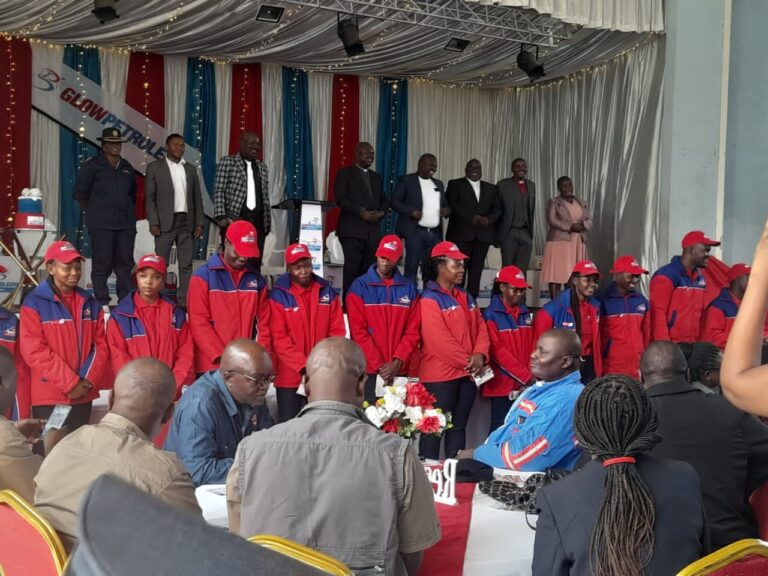
Gweru- Glow Petroleum Company is set to expand its business influence across the Zambezi next year as the energy company is expected to officially open three service stations in Livingstone (1) and Lusaka (2), Zambia.
Confirming the development this week, during the official opening of the Glow Petroleum Gweru branch which was constructed in partnership with the Roman Catholic Church Gweru Diocese, Glow Managing Director Aaron Chinhara said the company was already setting its footprints across the Southern African Development Community (SADC) region.
“Glow petroleum is a 100 percent indigenous energy company and is a family business. So our dream is to expand the company into the Southern African Development Committee region for the benefit of the community and region.
“Come next year, plans are in place to reach out to Zambia and work in the energy sector. We intend to have one filling station in Livingstone and two in Lusaka. We are already working on the modalities to acquire the land needed for these projects.
“The whole business essence is not anchored on money but on the population, we strive to provide services to the people,” said Chinhara.
He added that as a company they were going to stick to the country’s energy regulatory statutes.
“We understand that Zambia has its own fuel pricing which might be different from Zimbabwe but we say each environment has its own business policies and it is key to always adhere to them.
“We are ready and prepared to work with the government and follow all their regulations. Remember its all about giving back to the community,” he added.

Fiscal Transparency: A Panacea to Zimbabwe’s Socio-economic Problems?

By Zvikomborero Sibanda

Zimbabwe is expected to hold harmonized elections in August 2023. Major political parties have already concluded or are at the final stages of primary elections to select their candidates. There are over 210 constituency seats and over 1 000 Wards up for grabs for parliamentary and local authorities’ representatives respectively. The government also indicated that preparation for this occasion is now at an advanced stage.
The major aspect of elections is access to public resources through an electoral victory hence the reason they are often the object of fraught competition and conflict. This is more pronounced in developing nations where fiscal transparency is not a big deal despite it being a prerequisite for good governance. In anticipation of increased opaque fiscal activities during the election season, this week’s column is therefore highlighting the importance of fiscal transparency and accountability (T&A) in government.
Fiscal transparency apprises citizens of how tax revenues are used by the government by providing them a window into Treasury budgets and in turn, those citizens will be able to hold their government accountable. Thus, underpinning market confidence and sustainability. In the same vein, fiscal accountability entails compliance with stipulated laws and regulations, consistency with suitable principles of accounting, accuracy, and fairness of financial statements, and enforcement of the legitimacy of fiscal expenditures. In other words, accountability is the acceptance of responsibility for honest and ethical conduct towards others.
According to Zimbabwe’s constitution, financial management must be responsible, fiscal reporting must be clear, and public borrowing and all transactions involving the national debt must be carried out transparently and in the best interests of Zimbabwe. All public funds must be used transparently, prudently, economically, and effectively. There should also be accountability and participation to ensure that the government and all other public institutions are accountable in the exercise of their PFM functions. In addition, there should be formal and increased opportunities for the public including disadvantaged groups and marginalized communities to engage in all national and local budget processes.
The constitution further highlights that all public oversight institutions including the Office of the Auditor-General (OAG), Zimbabwe Anti-Corruption Commission (ZACC), Parliament, and other bodies with oversight functions concerning PFM should be adequately resourced and be independent to provide effective oversight of the executive branch’s financial management processes. This must be buttressed by the responsibility principle which entails that all public bodies and officials assigned to PFM-related processes are expected to regard their responsibility to exercise their functions in the interest of the public.
Furthermore, effective PFM must be sustainable. This means that the government, public bodies, and officials should thrive to contribute to and protect the financial stability of the nation. The burdens and benefits of the use of resources must be shared equitably between present and future generations.
Last but not least, there must be fiscal equity where all PFM systems are directed towards national development, and in particular the burden of taxation is shared fairly; revenue raised nationally is shared equitably between the central government and provincial and local tiers of government; and expenditure is directed towards the development of the nation, and special provision is made for marginalized groups and places.
Generally, fiscal transparency and accountability (T&A) are the major building pillars for governing democratic nations. Fiscal transparency serves to open the government to those it serves, that is, allowing the public to participate and to keep informed of the government’s budgets, spending, and projects. It is also a powerful weapon against corruption because when government processes become transparent, there will be limited scope for public officials to engage in corrupt activities.
More so, a fiscally accountable government is responsive to the needs of the public it serves. As such, it listens to the voices of all citizens and uses citizen feedback to shape and improve its policies and programs. Therefore, fiscal T&A are key in stimulating public engagement, building public trust & confidence in their government, improving government responsiveness & discipline, helping shine the light on leakages, and improving efficiency in public expenditures.
In an ideal world, there is a full implementation of PFM-related legislation which is key in bringing maximum efficiency in all financial management. If this holds, one would expect the presence of all budget (fiscal) transparency indicators. For example, the government would be ensuring that budget documents and data are open, transparent, and accessible through the availability of clear, factual budget reports which should inform the key stages of policy formulation, consideration, and debate, as well as implementation and review.
Also, all the budgets and government spending will be approved only by the Parliament. In the same vein, the Parliament will be awarded adequate time to scrutinize budget proposals and approve them after extensive public parliamentary debates. At the same time, the citizens will be provided with equal opportunities to directly participate in public debates and the design of fiscal policies. This mainly includes budget consultations and the publication of simplified citizens’ budgets.
Furthermore, there will be unlimited access to all public information, adequate resources, and maximum statutory independence of oversight and control institutions such as the Supreme Audit Institutions (SAIs) – the Office of Auditor-General (OAG) in the case of Zimbabwe. There will also be maximum integrity in public sector procurement. This largely entails the opening up of the entire public procurement cycle including openness in the procurement system (procedures, regulations & institutional frameworks), competitive tenders, bidding documents, contract documents as well as evaluation reports.
Nevertheless, the reality shows that there is a lot to be desired in Zimbabwe’s quest for fiscal transparency. For instance, the parliament follows a whipping system where MPs are whipped/coerced to vote according to their party’s given positions rather than according to their ideology or the will of their constituents. This help to explain why over the years Treasury is realizing budget overruns even without parliamentary blessing knowing that the same Parliament will approve the request for condonation without any repercussions whatsoever.
For instance, despite budget surplus rhetoric, Treasury incurred cumulative budget overruns of ZWL100.7 billion during the period of the Transitional Stabilization Programme (TSP) (2019-2020). It also reportedly spent more than what was planned (US$10 billion) during the 2015-18 period. In the upcoming electoral season, Treasury is likely to incur budget overruns again as spending pressure continues to mount. The dismal performance of the ZWL against the US dollar year-to-date attests to excessive spending and increased liquidity.
Also, underfunding of parliamentary businesses like the Parliamentary Budget Office (PBO) over the years has fuelled the brain drain. The massive exodus of experienced PBO employees is now constraining a more informed engagement between the legislative branch and its executive counterpart. A weak legislature is a free window for Treasury to propose and implement fiscal policies and budgets that are unsustainable. The longevity of Parliamentary underfunding has degenerated into severe capacity issues thereby inhibiting it to perform its crucial oversight function.
The oversight function allows Parliament to assert the system of checks and balances on the Executive branch and acts as the defender of citizens’ interests. Oversight ensures that government policies and actions are both efficient and commensurate with the needs of the public, helps identify misconduct or deficits, and allows for remedial actions against the Executive. In light of the foregoing, oversight is a central means of ensuring good governance and holding the executive to account to prevent or sanction the abuse of authority.
More so, there is a clear disregard for public audit requirements as shown by the continuous late submissions of accounts by public institutions for auditing by the Auditor-General. For instance, the latest 2021 OAG report shows that 71/92 local authorities had not submitted their accounts for auditing as of May 2022. The OAG recommendations are also being ignored as out of 141 findings reported in the 2021 report, only nine (9) were fully addressed.
The nation is also characterized by procurement scandals associated with tenderprenuership deals. These closed deals such as the US$60 million Drax COVID-19 scandal and the over US$300 million Pomona Waste to Energy deal for Harare fail to ensure a fairer and equitable treatment of all potential government suppliers and eliminate competition thus contributing to poor value for money for citizens. In addition, the nation is failing to account for revenues and expenditures in natural resources mostly due to escalating cases of mineral smuggling. For example, government statistics show that forex-strapped Zimbabwe is losing approximately US$100 million of revenue per month (US$1.2 billion per year) to gold smuggling alone. All this is undermining fiscal transparency and accountability and breeding corruption and abuse of public resources.
The foregoing shows that Zimbabwe has weak fiscal transparency and accountability systems, a situation that keeps deteriorating. This, coupled with other election transparency issues such as election procedures, the voters’ roll, and election results counting & tabulation processes poses great risks to the economy and Zimbabwe’s Vision 2030.

Zvikomborero Sibanda is an economic analyst and an astute researcher. He writes in his personal capacity. He can be contacted via email:

bravosibanda@gmail.com
Twitter: @bravon96

PSL reverses ZIFA decision over Bata Stadium

0

…As Sheasham threatens Caps United match boycott

Tinaani Nyabereka

Gweru-based Premier Soccer League (PSL) debutants Sheasham FC have filed their concerns and displeasure to PSL and Zimbabwe Football Association (ZIFA) Football Instance Board (FIB) regarding the ban imposed on Bata Stadium saying if their grievances were not answered, they could not to participate in their forthcoming league match.
The Construction Boys are expected to clash with the Harare giants Caps United this coming weekend (at alternative home ground Mandava Stadium in Zvishavane if the matter is not resolved) with the team is currently on 13th position on the log with nine points from nine matches.
In a letter addressed to ZIFA’s Acting Chief Executive Officer (CEO) Xolisani Gwesela and Premier Soccer League CEO, Kenny Ndebele, this week Sheasham President Clever Mandaza said he was seeking answers pertaining to the ban of the his side’s home ground.
“I am disturbed because the purported reversal of the FIB comes at a time when my team is fulfilling the conditions laid out by the FIB.
“Therefore, I ask the basis for the cancellation of the approval which was done by the FIB and why the reversal does not come through the FIB. May you be kind enough to resolve this before our next game against Caps United as my team will not be able to fulfill the match away from Bata stadium,” read the letter.
Last week the Construction Boys were given the green light to use Bata stadium as their home ground as they hosted Highlanders FC in a match which ended in a draw.
After the encounter, PSL however immediately advised that the stadium had been banned from hosting top flight matches despite the stadium having been approved by ZIFA.

Culture Month celebrations head for Mutasa

Branton Matondo

This year’s Manicaland commemorations of the National Arts Council of Zimbabwe (NACZ) brainchild ‘Culture Month’ will take place in Mutasa district on a date yet to be announced.
Culture Month is an annual feat held during the month of May as a way of celebrating cultural diversity in Zimbabwe.
In an interview with TellZim News, National Arts Council of Zimbabwe (NACZ) Provincial Manager for Manicaland Caroline Makoni said that this year’s celebrations will be held in Mutasa on a date to be pronounced.
“NACZ, which happens to be the brains behind Culture Month dedicated the month of May to celebrations of cultural diversity so for this year’s edition of Culture month it’s running under the theme ‘Promoting cultural diversity, peace, and unity’. The national launch will be in Matabeleland North, Binga and then provinces country wide are going to have their own launches. So ours is penciled for Mutasa district on a date yet to be announced. We rotate these launches in seven districts that we have in the province. Last year we were in Makoni district and the year before, we were in Chimanimani.
“Barring any unforeseen challenges, the launch is definitely on this month but if it’s belated it will be early June,” said Makoni.
Zimbabwean cultural diversity has been commended for standing strong in times of sheer obstacles.
National Gallery of Zimbabwe (NGZ) Manicaland Provincial Director Elizabeth Muusha said it is important that Zimbabweans recognizes this day as it primarily reflects on who you are as a person.
“We have our way of living, from food, clothing, language, and lifestyle and we should respect regardless of the uprising alternative cultures. The arts sector is also pivotal in the preservation of our culture because they reflect our culture,” said Muusha.
Manicaland culture driven organizations are also set to join the nation in this year’s celebrations.
In their official statement Mhakwe Heritage Foundation Trust which advocates for the preservation of culture, heritage and the environment cited that though cultural diversity in Zimbabwe has faced hard-core challenges, it has managed to soldier on.
“This year’s celebrations, pinned on promoting cultural diversity, unity and peace comes at an acute time when Zimbabwean culture is surviving through a series of obstacles. Culture has proved to be resilient in the advent of exogenous influences such as slave trade, colonialism, and globalization,” read the statement by Mhakwe Trust.

Chipinge hosts Manicaland Chibuku Neshamwari Dance festival

Branton Matondo

Mutare-A total of 10 traditional dance groups from Manicaland province are set to battle it out for top honours in Chipinge when they participate in this year’s edition Chibuku Neshamwari Traditional Dance Festival.
Speaking to TellZim News, National Arts Council of Zimbabwe (NACZ) Provincial Manager for Manicaland Caroline Makoni said that for Manicaland province, 10 groups will battle it out in Chipinge.
“This year’s edition is no different to other celebrations because we are just doing it the normal way. The competitions start at provincial level and then graduate into the grand finale. So for our provincial competitions, they will be held at Dzonzai Beer hall in Chipinge. It has hosted quite a number of dance festivals before. 10 groups are going to battle it out at Dzonzai and the winner will proceed to the finals. Let me harsen to say that this is a tripartite programme hosted by NACZ, ZNTDA, and Delta Corporation who are the main sponsors,” said Makoni.
Prize money for gold, silver and bronze at national level are also out. Prize money for the first gong is US$ 15 000. Second placed group will walk away with US$ 10,000 while third placed finishers will pocket US$ 7 500.
The much anticipated traditional dance celebrations which are going to run under the theme ‘Bira Remadhanzi, 60 Years Sithokozisa Ngezomgido’ will be special as they coincide with the organization’s 60th anniversary.
This year’s provincial finals will kick start from May 27 to July 15, 2023.
Dance groups from Manicaland will be heading to Chipinge at Dzonzai Gaza for what promises to be a mind blowing clash.
In official communiqué, Chibuku brewers Delta Corporation cited that the festival, in partnership with National Arts Council of Zimbabwe (NACZ) and Zimbabwe National Traditional Dancers Association (ZNTDA) will kick start with provincial finals from all 10 provinces.
“Chibuku works closely with its partners, the National Arts Council Zimbabwe (NACZ) and Zimbabwe National Traditional Dance Association (ZNTDA), in promoting and developing the arts in the community. Chibuku Neshamwari will kick off on the 27th of May 2023, across the ten provinces in the country. Chibuku Neshamwari will run ten provincial finals, which will culminate in a National Final, where provincial finalists will battle it out for the top spot. Winners get to walk away with monetary prizes at both provincial and national level,” read the statement by Delta Corporation.
The annual event has stood through the test of time having since its debut in Mbare at Mai Musodzi Hall long back.
Delta Corporation is involved, through its principal subsidiary Delta Beverages, in the brewing of lager and traditional beer and the bottling of soft drinks under license from the Coca Cola Company.
It operates one of the largest distribution networks of depots and delivery fleets in Zimbabwe.

Harare handball teams dominate Masvingo Tourney

0

Sports Writer

Harare-based teams stole the limelight in the recently held handball games hosted at Masvingo Polytechnic.
In the men’s category, Ajax from the capital won the Gold medals followed by Manyame Falcons who scooped Silver medals and in third position were Harare City.
The host province’s Great Zimbabwe University (GZU) came out fourth.
In the ladies category, Manyame Sparrows from Harare again settled for Gold while in second position on Silver medals was Harare City and Bulawayo Handball Club won the Bronze medals. In fourth position were Hawks all the way from Mashonaland West province.
Masvingo Handball Board Provincial Chairperson Chirikure Hatifitose expressed appreciation to all those involved in ensuring the tournament was a success before praising GZU though they failed to come out tops on the medals list.
“I want to thank Masvingo Handball Board Executive members for a job well done. Without their sacrifice and commitment, the tournament was going to be very difficult. Special thanks to Rose Rugweda (provincial vice chair), Musana Chirikure (provincial secretary general from Gutu), team work is very important. As well special thanks go to Tafara Muzvidziwa for the logistics.
“Great Zimbabwe University was on fire and played exciting handball. I was impressed with their level of play where some of the team players are my coaching products. I am the one who groomed and coached them at Masvingo Christian College, so I was happy to see them showcasing their talent. The players are Brian Bradley Masendu, Aleck Manyenyawapo, Nobukhosi Moyo, Precious Musundire and Amanda Machinda, I wish them all the best at ZUSA games in Harare,” said Hatifitose.
He also said they have introduced handball at Junior High School.
“We introduced handball at Junior High School this week after Masvingo Open Season Tournament. Next time when we organise a similar tournament, we will also witness Junior High learners showcasing their talent.
“At Junior, we do not just fly but we soar for excellence in everything we do. So I promise you to watch the space. The best is possible and we will be unstoppable,” added Hatifitose.

Masvingo targets 2000ha winter wheat

Beverly Bizeki

Lands Agriculture Fisheries Water and Rural Development Ministry has revealed that it has set a 2 000 hectare (ha) winter wheat target for Masvingo province.
Masvingo Province Agritex Acting Director Nobert Masiiwa said the province is targeting an increase in its yield under the theme ‘wheat self-sufficiency, going for growth’.
“As a country, our vision is to get sufficient wheat for sustenance. As we achieved last year, this year again we expect to produce sufficient wheat with the aim to reach new heights hence the need to increase the area under wheat production and the yield per hectare with Masvingo province targeting 2 000 ha,” said Masiiwa.
The province has irrigation schemes in most of its districts including Chiredzi, Chivi, Gutu, Zaka and Bikita with Masvingo having the highest hectrade.
“We have had inputs from the Presidential Input Scheme with inputs including seeds, fertilizers. We have also channeled inputs from the last farming season towards winter wheat with more inputs coming,” added Masiiwa.
The programme has various stakeholders supporting it, including Agriculture Finance Corporation (AFC) for independent farmers, CBZ Agro Yield and Agricultural Rural Development Agency (ARDA) and the presidential inputs programme for smallholder farmers.
Winter wheat farmers have been assured of electricity supply from the Zimbabwe Electricity Transmission and Distribution Company (ZETDC), according to Masiiwa.
“Farmers are assured of electricity availability with ZETDC promising to provide enough electricity for irrigation schemes,” said Masiiwa.
The province is also targeting an increase of 5 tonnes per hectare from this year’s produce.
“This year we are targeting a yield of 5 tonnes from last year’s recorded yield of 3.8 tonnes and we are expecting to surpass the 2 000 ha which we are targeting to plant.
“On annual shutdown, farmers in irrigation schemes can liaise with the Zimbabwe National Water Authority (ZINWA) to allow for farmers to be able to access water during the planting season as well as allow ZINWA to carry out its operations for the annual shutdown,” said Masiiwa.
The planting season is expected to end on the May 31 after it started on May 1.

Rusitu Tigers’ Ugandan import silences Gem boys

0

Branton Matondo

Chimanimani-based Eastern Region Division 1 soccer league outfit Rusitu Tigers secured an emphatic win over Manica Diamonds Juniors this past Saturday courtesy of a blistering long range strike from Ugandan international Okello Moses.
Moses, who once featured in the biggest club competition in Africa, the CAF Champions league during his stint with Djiboutian side Solar Seven Fc shook the nets with a well taken free kick in the 31st minute that gave Manica Diamonds goalkeeper no chance.
The tall gangling defender had another free kick blocked in the 20th minute, an effort that looked most likely to be going to the back of the net.
The well taken goal in the 30th minute was a top up to Kevin Sithole’s header scored in the 22nd minute after poor cross cutting from the young boys.
Speaking to TellZim News Moses who plays as a center back said the team came in with so much confidence and it was a big reward at the end of the day.
“The game was good because we came with confidence that we should pick the three points. That’s why we are always playing as a team, bringing in that fighting spirit and manage to get maximum points. Taking free kicks is my special technique and I always try to benefit the team through that,” said Moses.
Quizzed on his thoughts of Zimbabwean football as compared to football in Uganda, the former Tuskers Fc (Kenya) and Elmerrick Fc (Sudan) defender spoke positively of the local league.
“Football in Zimbabwe is good, everything is good and there is high competition but our target, we want be promoted into the premier league. I came to Zimbabwe with an objective of playing in the top flight but it was not to be and now I’m plying my trade with Rusitu Tigers and we are pushing for promotion,” said Moses.
Rusitu Tigers gaffer Prince Tafirenyika said the players managed to execute the game plan.
“The game was good and our strategy worked. We didn’t want them to play in our own half. We wanted them to play in their half, so it worked. We got the two goals and that was a confidence booster. At first I thought we were not going to score early but it worked out. Moses is one of the best free kick takers for the team and he is very good on that. We will work on the next game as soon as possible. We hope to get a good result,” said Tafirenyika.
Manica Diamonds Juniors have been dismal at home so far.
Before the encounter with Rusitu Tigers they lost 1 nil against local nemesis Mutare City Rovers.
Meanwhile Mutare City Rovers thrashed JM Busha 5 nil at Sakubva stadium. Buffaloes won 3– 1 against Ruwa Fc at Showgrounds. Fc Wangu Mazodze sits at the summit of log with an impressive 16 points from six outings. Zhalala Zhululu, as they are affectionately known in the football circles is yet to taste defeat in the league. Over the weekend, they got the better of visiting Midway FC 2-1.
Ruwa FC sits at the bottom of the table with three points from 6 games, translating to an average of 0.5 point a game.