Home Blog Page 22

After 43 years of service, ailing ex-councillor finally gets promised vehicle       

0

By Virginia Njovo

CHIVI – Jephias Chimhaka, a ZANU PF councilor who served as Ward 10 councillor in Chivi North for 43 years,potentially making him one of the longest-serving councillors in Zimbabwe’s history was finally gifted a Ford Ranger double cab on September 22, 2025, a vehicle he had first requested back in 2021 when his health deteriorated and he could no longer walk to serve his community effectively.

The 79-year-old, who served from 1980 until stepping down in 2023 due to severe swelling in his legs, received the vehicle from the party through the Ministry of Local Governance in Harare, long after he had given up hope.

Expressing deep gratitude, Chimhaka said the vehicle would ease the mobility struggles that had plagued his final years in office.

“I am so grateful for this gift. I struggled to travel due to health issues, and this shows I have not been forgotten after serving the nation with passion and perseverance. I asked for a vehicle in 2021 when I could no longer walk the ward, but it never came. To receive it now, when I least expected it, touches my heart,” said Chimhaka

His dedication to public service began early. During the liberation struggle, he served as a branch chairperson, coordinating support for fighters, later becoming district chairperson before being elected councilor in 1980.

Throughout his leadership, Chimhaka championed development in Ward 10. He negotiated with the Rural Electricity Fund (REA) to supply power to Chisenga Primary School, Taru Primary School, and Zvamapere Secondary School.

He also played a key role in establishing Zvamapere Secondary School, the sole secondary school in the ward, and facilitated renovations at Hlanga, Chisenga, Taru, and Chigapa Primary Schools.

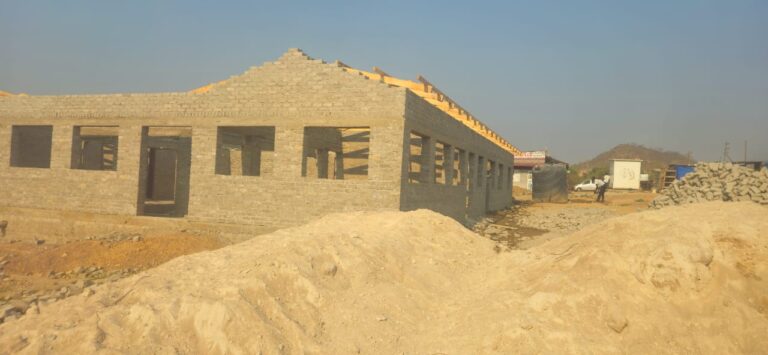
In healthcare, he initiated the construction of Zvamapere Clinic, which, once completed, will serve 32 villages.

For years, the community relied on Takavarasha Clinic, nearly 15 kilometres away, and Chivi District Hospital for referrals.

“People in my community struggled for a long time without a central primary healthcare facility. I managed to facilitate the establishment of a clinic at Zvamapere Business Centre, though it remains unfinished,” said Chimhaka.

He urged current leaders to collaborate closely with village heads to ensure sustainable development.

“I advise today’s leaders to work hand-in-hand with village heads, as they are the immediate custodians of their communities,” he said.

Chimhaka’s legacy reflects a lifetime of service, marked by tangible improvements in education, health, and infrastructure—a record that may well stand as the longest uninterrupted council service in Zimbabwe.

Woman scalds man’s privates with boiling water over beer bottle

0

By Ndinatsei Mavodza

CHIVI – In a shocking act of brutality, a 25-year-old Chivi woman was arrested for attempted murder after she deliberately poured a pot of scalding boiling water over a man’s body, targeting his stomach and genitals, all over a dispute concerning an empty beer bottle.

The vicious attack, which has left the local community reeling, unfolded on the morning of September 17, 2025, at the George Magura Bar in Chiwadza Business Center.

Masvingo provincial police spokesperson Inspector Kudakwashe Dhewa confirmed the gruesome details of the assault, which left the victim with serious injuries. The case was reported to ZRP Chivi on September 19, leading to the suspect’s arrest the following day.

Sources privy to the incident said the altercation began when Charity Chaka confronted Kamurai Tachi, who was peacefully drinking beer with a friend, demanding the return of a single empty bottle he had taken the previous day.

Report indicate that Tachi assured Chaka that a friend would return the bottle, but this seemingly mundane exchange quickly spiraled into violence.

In a fit of rage, Chaka allegedly slapped Tachi, who retaliated with a slap of his own and went away.

In a premeditated act of revenge, Chaka returned to the bar around 8:30 AM armed with a pot of boiling water. As Tachi stood at the bar, she launched her attack, dousing him in the scalding liquid. The water caused severe burns to his stomach and, most disturbingly, his private parts.

The victim was rushed to Chivi Hospital for emergency treatment, where he is currently recovering from the traumatic injuries.

The incident has sparked outrage and fear, serving as a brutal reminder of how a trivial disagreement can escalate into a life-altering violent crime.

ICT Ministry equips Masvingo Junior Parliamentarians with tablets

0

By TellZim Reporter

MASVINGO – The Ministry of Information Communication Technology, Postal and Courier Services handed over 35 tablets to Masvingo Junior Parliamentarians at Charles Austin Theatre on September 22, in a move aimed at enhancing digital literacy and supporting young leaders in embracing technology for learning and communication.

Masvingo Province was among the beneficiaries of a pledge made by Minister Tatenda Mavetera’s ministry. The donation included tablets and Starlink kits to ensure internet access, enabling the young leaders to utilize digital platforms effectively.

The Minister of State for Provincial Affairs and Devolution, Ezra Chadzamira, who represented the government, expressed gratitude to the Ministry of ICT for fulfilling its commitment to supporting youth development in the digital space.

“Allow me to express my gratitude to the Ministry of ICT for honouring their pledge to support junior parliamentarians through this donation of tablets,” said Chadzamira.

He urged the junior MPs to use the gadgets responsibly for both personal development and national growth.

“I urge you to use these gadgets responsibly for your personal benefit and growth, as well as for the benefit of your peers and communities. Partner with the government in the fight against drug and substance abuse within your schools and communities,” said Chadzamira.

Chadzamira emphasized that Masvingo possesses significant potential for growth and enterprise development, which can be fully realized if the youth are equipped with relevant skills.

“Our province has immense potential for growth and enterprise development, but to fully capitalize on this, we must ensure that our youth are equipped with the relevant skills. This is why the government is spearheading a transformation of our Vocational Training Centres (VTCs), aligning them with global trends and offering modern, practical skills that empower youths for both personal and national gains,” he said.

President of the Junior Senate and one of the beneficiaries, Theophilus Bhinzi, expressed gratitude on behalf of the junior parliamentarians, pledging to use the tablets for meaningful campaigns against drug and substance abuse.

“As the Senate President, I am grateful on behalf of my fellow parliamentarians that we are now equipped with tablets and Starlink kits for internet access. This will enable us to run campaigns on digital platforms against drug and substance abuse, which we promise to do with due diligence,” said Bhinzi.

The initiative is part of the government’s broader effort to integrate technology into youth development programs and empower the next generation of leaders through digital tools and connectivity.

WekwaMaramba to launch third album

0

By Ndinatsei Mavodza

Afro-jazz artist Blessing Tendai Maramba, popularly known as WekwaMaramba, is set to launch his third album, Nakai, on October 18, 2025, at Charles Austin Theatre in Masvingo.

Speaking to TellZim News, he said the six-track album include songs such as “Beautiful,” “Nakai,” and “KuHarare and described the project as a social commentary on love, migration, and everyday life.

“This album is a social commentary that explores issues of love, way of life, migration and everything else,” said WekwaMaramba.

A chemical engineer by training and a musician by passion, the “Tine Rudo” hit maker promises a memorable experience for his fans.

“The upcoming album Nakai is a work of love and, as the name suggests, it is a beautiful work of art inspired by diverse sounds. One of the tracks to watch out for is called ‘Beautiful,’ which talks about the beauty of an African lady and what that represents,” he said.

He said tickets were available at Bakers World, Music Conah, and Charles Austin Theatre, with general admission priced at US$5, middle rows at US$10, and special seating at US$15.

Having performed internationally this year in countries such as China and Turkey, WekwaMaramba’s new album blends Afro-jazz with global influences for a rich, unique sound.

“This particular album carries a couple of dimensions because we have toured in China and played at a couple of festivals in Turkey. That exposure brought to us a couple of things that contributed to this particular Nakai album,” he said.

Following the Masvingo launch, the artist plans a local tour, with stops scheduled in Harare and Bulawayo.

WekwaMaramba’s earlier songs, including “I Need a Hug” and “Kumusha,” were featured in the 2020 award-winning local film Gonarezhou: The Movie.

Masvingo hockey star earns place on Zimbabwe’s junior world cup squad

0

By Virginia Njovo

MASVINGO – Alea Ashley Musakaruka, a rising hockey star from Masvingo Province, has secured a spot on the national team set to compete at the Junior World Cup for Under-21 women’s hockey in Santiago, Chile, this December.

Musakaruka, began playing hockey at the age of eight at Kyle College in Masvingo. Her talent, nurtured through consistent support from her parents and coaches, has now culminated in this prestigious national call-up.

In an interview with TellZim News, Musakaruka attributed her success to her family’s unwavering support, describing the selection as a dream come true.

The talented athlete previously represented Zimbabwe’s senior women’s team during the AFCON qualifiers in August 2024, gaining valuable international experience.

“Playing at this level has always been my dream. This is a significant platform for international hockey, especially for young talent in Zimbabwe, and I am thrilled to be part of the team,” she said.

However, Musakaruka highlighted the challenge of securing sponsorship, as players are expected to cover their own expenses including travel, accommodation and meals, pre training requirements, playing kit, visas, medical insurance among other requirements.

“With the tournament dates approaching fast, we are urgently appealing to corporate sponsors and individuals for financial support to help us achieve this dream,” said Musakaruka.

Reflecting on her journey, Musakaruka acknowledged the role of her family and coaches in her development.

“I have grown to love sports through the unwavering support of my family. My parents are my greatest motivators and emotional pillars. My primary goal is to make them proud,” she said.

She emphasized that hockey demands significant commitment and discipline, qualities that have positively influenced other aspects of her life.

“Hockey requires dedication and hard work, and it has taught me to strive for excellence in everything I do,” she said.

Beyond athletics, she plans to pursue academic excellence, aiming to study Aeronautical Engineering while continuing to play college hockey.

“I am committed to balancing my studies and sports with dedication and perseverance,” she said.

Musakaruka also shared a message of encouragement for aspiring young athletes saying they should dream big, put God first, and always compete with pride and passion.

DEAFNESS-AN IMPAIRMENT OR A DIFFERENCE?

0

September is International Deaf Awareness Month. The success goals of September for Deaf people per se are awareness raising regarding Deafness (cultural identity) and deafness (hearing loss), promoting sign language and total communication and supporting Deaf and hard of hearing people. It is the intention of this opinion article to celebrate with Deaf and deaf people in this month of September by exploring the understandings of Deafness within the Deaf community and the medical fraternity.

From the outset, it is important to draw the attention of the readership to the conceptual boundaries between Deafness with an upper-case D and deafness with a lower-case d. There is an understanding by Deaf people that Deafness is not an impairment, but a difference as shall be seen infra. The people who subscribe to Deafness with the upper-case D firmly argue that people who are Deaf have nothing that has broken down that needs fixing. They hold that Deafness symbolises cultural, anthropological and linguistic differences that ought to be essentialised, romanticised and celebrated. For this group of people, a person who is Deaf will not need to undergo audiological assessments to ascertain the nature, severity and degree of his or her hearing loss, rather he or she would need to be understood as belonging to a Deaf Community that has its own source language (Sign Language), normative values and practices. Deafness should not be seen and measured according to deficits in receptive and expressive language. The bottom line behind the Deaf Community is to depathologise Deafness. The Deaf community implies a people with a way of life that ought to be recognised and respected by the hearing world. Each time reference is made to people who hold that Deaf people constitute a community of their own, the word Deaf with an upper-case D should be used. In America, linguistic differentiation, attitudinal deafness, behavioural norms, endogamous marital patterns, historical awareness and voluntary organisational networks have stood out as critical facets of the Deaf community.  One other observation that may need to be highlighted is that the Deaf community does not necessarily involve just Deaf people; people who are not Deaf may decide to join the Deaf community and that is referred to as Attitudinal Deafness. Attitudinal Deafness is characterised by positive affective commitment to the Deaf culture and community.

On the other hand, the word deaf with a lower-case d, views deafness as an impairment. Those characterised as deaf largely have challenges with processing linguistic information. However, people with deafness are not a homogeneous group, their levels of hearing loss may vary. Given this understanding, there is a medical emphasis on audiological examinations that can establish the aetiology of the impairment. The audiological assessments are also done so that intervention and / or management can also be considered for people with hearing impairment. For example, educational placement, counselling of parents of children with hearing loss, type of hearing aids to be used, prognosis of the hearing loss, speech training and training in selective perception of sound. The concept of deafness with a small letter d therefore recognises that deafness is a medical condition that exists in a continuum, that is a condition that has varying degrees (mild, moderate, severe and profound). This understanding of deafness argues that the audiological system has broken down and is crying out for remedial measures. This worldview focuses on integrating children with hearing impairment into the hearing world by teaching them speech, that is the aural-oral approach.

Given the above perspectives, it is important to appreciate that they are as different to each other just as apples are to oranges. Their worldviews inform educational practices differently. For example, the Deaf Community would prefer a curriculum where Deaf children are taught using Sign Language. Sign language is to them a source language that would help them grasp concepts, and Sign Language is a manual language that ought to be given a premium value like any other language in the hearing world. Those in the Deaf Community would stoutly argue that what to teach and how to teach are considerations that should be made with the full consciousness of the needs and rights of the Deaf Community. With respect to those who hold that deafness is a medical condition, the school should emphasise speech training which would help deaf children to fit in the hearing world. This approach has been identified as oralism, and its apologists have been characterised as oralists.

The characterisation of Deafness as either an impairment or a cultural difference would therefore depend on one’s orientation in terms of pragmatic scope. If one is coming from a medical school where the biomedical model rules supreme, deafness becomes a pathology and if one is guided by the Cultural polemic, Deafness is understood as an identity of a cultural and linguistic minority.

By Nicholas Aribino and Adv. Takudzwa Mafongoya (Writing in own capacities)

Mob justice kills mentally challenged man in Chivi

0

By Ndinatsei Mavodza

CHIVI – Police have confirmed the arrest of four suspects in connection with the brutal murder of a 33-year-old mentally challenged man, Shakemore Chihwe Pedzisayi, who was beaten to death by six men on September 20, 2025, over unfounded theft suspicions.

ThE incident adds to a disturbing trend of violent deaths in Masvingo province, coming just days after an unidentified man was found dead in a Triangle sugarcane plantation on September 22, and following another fatal mob justice case in Bikita earlier this year.

Masvingo provincial police spokesperson Inspector Kudakwashe Dhewa identified the four arrested suspects as Nomore Murevegwa (33), Realize Murevegwa (18), Givemore Murevegwa (19) of Chikanga Village, and Fortune Zimoto (43) of Sauro Village.

A manhunt has been launched for the two remaining suspects, Ngonidzashe Zimoto (24) and Martin Zimoto (22).

According to police investigations, the tragedy unfolded around 7:00 AM on September 20 when Realize Murevegwa, who was operating his family’s tuck shop, confronted Pedzisayi after seeing him peering into the shop.

Dissatisfied with Pedzisayi’s response, Realize summoned the five other accused persons who jointly assaulted the mentally challenged man using sticks, fists, and kicks, leaving him unconscious.

A passerby discovered the critically injured Pedzisayi around 8:00 AM and was told by the suspects that they were punishing him for suspected theft. The victim sustained severe injuries including bruises on his shoulders, back, and neck, a facial scar, and swollen thighs.

Pedzisayi succumbed to his injuries at Mwenezi District Hospital at 9:00 AM on September 22, as confirmed by his father, Misheck Pedzisayi, who immediately notified the police.

 Inspector Dhewa expressed concern over the rising cases of mob justice in the province, urging the public to trust formal legal processes rather than taking the law into their own hands.

The four suspects are expected to appear in court soon facing murder charges, while police continue to search for the two remaining accomplices.

The violence in Chivi follows other recent murder cases in the province, including the discovery of a decomposing body in a Masvingo city sewer in August and the fatal stabbing of a woman during a domestic dispute in Zaka last month. These cases have raised concerns about rising violent crime in the province.

Man found dead in Triangle sugarcane plantation

0

By Ndinatsei Mavodza

TRIANGLE – Police are appealing to the public for information after an unidentified man was found dead in a sugar cane plantation on September 22, 2025.

Masvingo provincial police spokesperson Inspector Kudakwashe Dhewa confirmed the incident and urged community members to come forward with any details that could assist in identifying the deceased or locating those responsible.

The body was discovered by Maxwell Zimuto, an irrigator, while he was watering sugarcane. Zimuto reported seeing the lifeless body partially covered with sugar cane trashes.

Inspector Dhewa also emphasized the importance of resolving disputes peacefully.

“Members of the public are advised to refrain from solving conflicts with violence but to use other peaceful means,” said Dhewa.

The deceased, estimated to be in his early forties, was fully clothed in a sunhat and black safety shoes, which were placed by his feet.

A black satchel found nearby contained additional clothing, including white apostolic sect garments, a US$1 note, and a Tecno cellphone without a SIM card.

Police noted that the right side of the man’s head was deformed, and he had a deep cut on his forehead above the left eye.

Zimuto alerted his employers, who subsequently reported the case to the police. The body was been taken to Chiredzi General Hospital for a post-mortem while investigations continue.

Government finally pays ZiG $40 million in BEAM arrears after three-year delay

0

By TellZim Reporter

The government of Zimbabwe has disbursed ZiG 40 million (approximately US$1.5 million) to cover arrears for the Basic Education Assistance Model (BEAM) programme, finally addressing a critical shortfall that has plagued schools since 2023. 

The payment, announced in a post-cabinet briefing dated September 16, 2025, ends a prolonged period of financial strain that severely stunted development and operations, particularly in rural schools.

“Under the Basic Education Assistance Model, Treasury paid ZiG 40 million in order to address the shortfall which existed since 2023 and will continue to prioritize the payment of BEAM funds,” reads part of the briefing.

Themove is aimed at clearing the debts owed to schools for tuition and examination fees of vulnerable learners under the state scholarship scheme.

The delay in disbursing BEAM funds has been a major point of contention, crippling the administration of many schools. The impact was most acute in rural areas, where a significant proportion of learners depend on the programme and school fee structures are already low. Without these crucial funds, schools were unable to pay for basic supplies, maintain infrastructure, or even cover examination fees, leaving beneficiaries in a precarious position.

However, concerns remain over whether the disbursed amount is sufficient to cover the mounting arrears, which have been eroded by inflation. The ZiG 40 million figure converts to roughly US$1.5 million at the official bank rate, but only about US$1 million on the widely used black market, where the rate hovers around ZiG 38/40 for US$1. This disparity has led to questions about the real value of the payment and its ability to meet the actual debt accumulated over two years.

The prolonged neglect had pushed some school authorities to call for a complete overhaul of the system. In November 2024, a rural school head who spoke to TellZim highlighted the devastating reality on the ground. The head revealed that out of 160 learners, 63 were on BEAM, but even the remaining 97 could scarcely afford fees.

“Last year we had 63 learners out of 160 on BEAM. However, of the hundred who were not on the programme, less than 40 learners could afford to pay at least half of the fees. Total fees per term is US$30, which means last year the fees we received was less than US$2 000,” the head said.

“In this case, what development do you think a school can register with such an amount per year? We urge the government to meet its end of the bargain or abandon the programme if they can’t afford it. Another option is to simply declare free education for all because very few learners are paying,” the head added.

This sentiment echoed across the nation, as the BEAM programme had ceased to be beneficial for both the learners it was designed to protect and the schools struggling to stay afloat. The recent payment, while a welcome step, is being viewed with cautious optimism. 

School authorities and analysts alike are waiting to see if this marks a genuine return to consistent funding or is merely a one-off intervention to placate growing discontent. The government’s commitment to “prioritize” future payments will be under intense scrutiny as the new term begins.

MISA Zimbabwe Mourns Veteran Journalist Jemwa

0

By Staff Reporter

The Media Institute of Southern Africa (MISA) Zimbabwe has expressed deep sorrow following the passing of veteran journalist James Jemwa, whose death on September 19, 2025.

In a statement, MISA Zimbabwe Chairperson Passmore Kuzipa said Jemwa, known for his strong passion for photography and videography, would be remembered for his commitment to journalism, often working under challenging circumstances to keep the public informed.

 His death comes after other significant losses in the media fraternity this year.

“It was with a profound sense of loss and sorrow that MISA Zimbabwe learnt of the tragic death on 19 September 2025 of its longstanding member, veteran journalist James Jemwa. Jemwa, who had a particular interest in photography and videography, will be remembered for his daring journalism.

“He loved being in the thick of things, capturing events as they unfolded through his lenses, thus keeping the nation and the world informed of socio-economic and political developments in Zimbabwe,” said Kuzipa.

Kuzipa recalled one poignant moment when Jemwa’s camera was damaged while he was covering a protest in Harare in September 2020.

“Jemwa and his camera were inseparable. When his camera was damaged while covering a protest in Harare in September 2020, Jemwa was visibly dejected and miserable, if not depressed. He could not afford to replace the damaged camera right away, going nearly two years without his beloved tool of trade.

“Jemwa’s face lit up and radiated with great joy when MISA Zimbabwe came to his aid and gave him a new camera. It was like seeing a parent being reunited with a lost child,” said Kuzipa.

Jemwa, who worked as a freelancer and fixer for international broadcasters, died after a hit-and-run accident in central Harare. His passing adds to what has been a difficult year for Zimbabwe’s media industry, which continues to mourn the loss of several experienced practitioners who contributed significantly to journalism in the country.