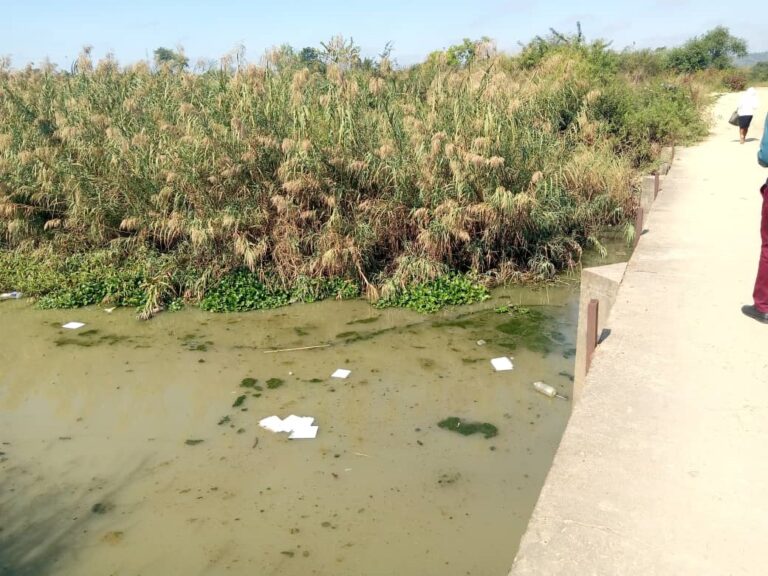
Following almost two weeks of speculation on the flow of raw sewer into Masvingo’s two rivers Mucheke and Shagashe, Masvingo City Council has come out in the open to acknowledge responsibility over the discharge of the effluent into the natural water sources.
Videos over the weekend were circulating showing dead fish in and other aquatic life, presumably as a result of toxins discharged along the two rivers.
The local authority released a statement on May 23, to that effect though they maintain the causes of the discharge to be a result of vandalism on sewer reticulation infrastructure.
“Council acknowledges the recent discharge of raw sewer into Mucheke and Shagashe rivers due to blocked sewer main lines in Mucheke A and Rujeko B as a result of vandalism. Big boulders were deposited in manholes thereby choking the sewer lines.
“Another source of discharge was Rujeko Pump station where we experienced pump breakdown. Our engineers are working flat out to repair the pump station. We have attended to the sewer blockages and we also routinely monitor trunk sewer lines,” read part of the statement undersigned by Town Clerk Engineer Edward Mukaratirwa.
The statement also revealed that council has since taken samples of the contaminated water to ascertain if it is raw sewer that caused massive deaths of aquatic life especially fish over the past weekend with residents reportedly picking the dead fish for resell and consumption.
“After the incidents, we collected and sent samples to a reputable laboratory in Harare for tests. We are therefore awaiting the results from the laboratory in order for us to ascertain whether the alleged death of fish was caused by raw sewer discharge or other chemicals that might have been deposited in the water bodies.
“Our engineers have committed to complete repairs at Rujeko pump station by May 26. Our sewer Rodders will always be available to attend sewer bursts. Residents are therefore encouraged to report vandalism,” added the statement.
Masvingo Environmental Management Agency (EMA) office has been reluctant in taking action save for the response in which they just encouraged council to attend to the problems and after further probe they promised to compile a report which they kept on promising to release in form of a statement.
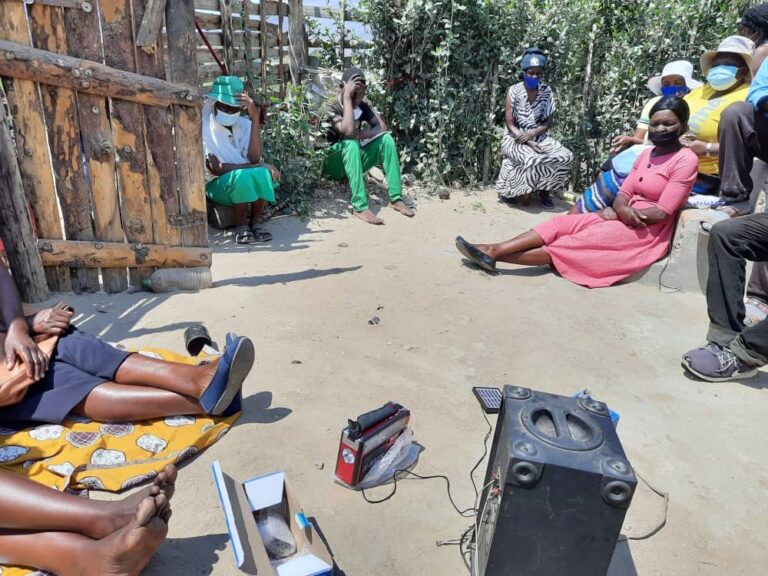
As radio still plays a vital role in today’s world via information dissemination, Zimbabwe Coalition on Debt and Development (ZIMCODD) has partnered local communities in radio programmes as a way of trying to connect them to issues to do with public finance management to find solutions for local challenges.
Speaking to TellZim News Darlington Madzonga, a Social and Economic Justice Ambassador with ZIMCODD for Glenview South, Harare said radio listening clubs are community based clubs where people meet to listen and discuss public finance management issues as part of economic consciousness for development.
Glenview South, Harare ZIMCODD Listening Club
“Normally a club should have 15 people and are expected to complete six episodes for them to complete the modules.
“Issues discussed include debt, tax, budget process, inequalities in society, movement building and other public finances,” said Madzonga.
He also added that his community has benefited a lot from these clubs and they have managed to engage council on issues affecting them.
“My community has benefitted tremendously from the clubs. In harvesting outcomes, the community has managed to engage council on issues ranging from refuse collection, water supply, allocation of market stalls and car parks.
“Through the clubs, Glenview district office was forced to come up with a client charter, an instrument that gives contacts and modalities of approaching council to report faults and ensure engagement.
“Residents are now literate on public finance issues, ZIMCODD is building a social and economic justice movement,” added Madzinga.
Masvingo Radio Listening Club facilitator Ephraim Mtombeni said that the programme has got potential to empower marginalized communities.
Members of Masvingo ZIMCODD Radio Listening Club
“Radio Listening Club is a participatory communication platform that has the potential to empower poor communities into action that could lead us to sustainable social change and development. It creates a neutral platform where the skits improve the capability of citizens to demand accountability and transparency at local level.
“Most importantly it educates communities on their rights and responsibilities in public finance management to strengthen transparency and accountability in PFM. The participants managed to submit their priorities to the Members of Parliaments (MP) towards the Constituency Development Fund,” said Mtombeni.
Community Resource Monitoring Agent (CORA) for Lupane district Casuel Moyo said radio listening clubs is about PFM be it on government/public or private institutions and they use radio skits when they are doing their activities or programmes.
Lupane Radio Listening Club
“We are monitoring issues on accountability and transparency with focus on public finances where we engage the general public, stakeholders and government employees.
“We generally discuss government accountability mechanisms thereby trying to reduce corruption in central or local authority sectors,” said Moyo.
He also said this has benefited his community in airing views on financial management.
“This has benefited the community in airing views on financial management where they needed especially on controlling their natural resources in communities hence engaging government officials,” he said.
Vice Chairperson of ZIMCODD Eastern Region Benneta Goneso said that the programmes done by ZIMCODD are benefiting them as a community.
“These radio listen programmes done by ZIMCODD really benefit the community as they have access to information and people are being well-taught of their rights and responsibilities as citizens. Once the community is empowered with information, they will be in a position to help fight against corruption,” said Chimeura.
CORA for Gutu District Matilda Nehohwa also said radio listening clubs increase awareness and gives the community better knowledge about their rights.
“Radio listening clubs increase awareness, gives knowledge to citizens about their rights. It widens awareness scope on issues of debt, PFM, service delivery; basically it’s a good way of information dissemination and a way of equipping citizens about their rights.
“The community gets brightened on finance issues, they even get to know that they have a say in what they pay and also that they are the beneficiaries of revenue collected by government. They also get to know that debt affect everyone and it weakens service delivery for them,” said Nehohwa.
Movement building assistant for Gweru district Grace Mashingaidze said community radio listening programmes were designed to raise level of economic literacy among ZIMCODD members and communities at large.
“Community radio listening programme is an improved access to information and powerful participatory communication approach where villagers in isolated communities have access to public finance management information and it’s designed to inform them on their rights and responsibilities,” said Mashingaidze.
She stated that the community is benefiting a lot because the skits are all in Zimbabwean languages making it easier for every individual to understand.
“The skits are in different languages Shona, English, Ndebele which makes it easier for communities to understand and participate.
“There has been an increase in participation among women, youth and people with disabilities. Citizens now demand transparency and accountability from duty bearers on different platforms, they are now asking the HOWFAR question and even demanding feedback,” she added.
Community Radio listening clubs are helping rural population participate in the development of both their communities and themselves. The clubs enable members (women, men and youth) to share concerns and take collective action.
In collaborating with rural radio stations that feed and broadcast their discussions, the clubs have become agents of change in different societal aspects.
GWERU- Postal and Telecommunications Regulatory Authority of Zimbabwe (POTRAZ) in partnership with government last week hosted the International Girls in ICT commemorations where echoes were made on enhancing the participation of girls in Information Communication Technology (ICT).
Speaking at the engagement last week, POTRAZ director Gift Machengete said in as much as the country was driving towards the empowerment of the girl child, there was also need to embrace the boy child to address gender disparities.
“The boy child should not been left out because boys also have the much needed ICT skills. Let us therefore be wary of neglecting the boy child so much that we would end up having a problem where the boys are far much behind while their female counterparts will be far ahead of them.
“Potraz has embarked a number of initiatives aimed at enhancing ICT access to all especially in the marginalized communities. As POTRAZ, we believe in inclusivity and in leaving no one behind, which is why we have been rolling out information centres in communities. While our efforts are all-inclusive, statistics released by the United Nations shows that women and girls use the internet 12.5 percent less than men and boys, with some 46 percent of boys accessing the internet on their phones, compared to 27 percent of girls,” he said.
He further said girls access digital technology at a later age than boys.
Guest speaker Information, Postal and Courier Services Minister Jenfan Muswere said it was estimated that 5 million jobs would be lost by 2030 due to replacement by ICT systems.
“As we implement the girls in ICT and bridge the digital gender divide, it is important that we create the appropriate environment and policy realignment to sustain the interest of not only young girls but their male counterparts as well.
“My Ministry will work hard to ensure the availability of ICT infrastructure throughout the country to help provide internet connectivity and equip schools as well as various community information centres as information technology is going to overtake the traditional jobs by the year 2030,” he said.
Regina Mundi High School Priest-In -Charge, Rev Father Gilbert Chibhira said girls suffered most through the use social media platforms and hence the programme was an eye opener to the leaners.
“This day will open up the eyes of these young female leaners who we feel are abused through social media platforms. We hope this interaction will open up their eyes.
“Under the theme Access and Safety”-Ensuring every girl has safe and meaningful access to digital technology and ICT with over 150 careers in the technology sector,” said Chibhira.
The International Girls in ICT Day was set by the International Telecommunications Union (ITU) to inspire and empower young women and girls to take up ICT careers and become active participants in the information industry.
Bikita Rural District Council (RDC) is reportedly allocating stands on wetlands which are declared no go areas for any construction activities.
Bikita Residents and Ratepayers Association (BIRRA) acting secretary Mark Mutengani confirmed this and said for years council has been allocating stands on wetlands.
“Yes I can confirm that Bikita RDC is allocating stands on wetlands at Mushanduri Business Centre. This is health hazard to community since the wetlands spill water into Mujiche River which is a major source of water for domestic and animal use. Mujiche River is threatened and disaster is looming. The allocation of stands in wetlands is not only done at Mushanduri but the same is done at Makuvaza Business Centre,” said Mutengani.
He also added that there are also houses built on wetlands including Duma locations where residential stands were allocated.
“We have also houses built on such lands in Duma location where residents struggle to reach their houses especially during the rainy season. Only last year over eight stands were again squeezed on another wetland for residential use in Duma and those were allocated to council staff, relatives and friends. The level of abuse and lack of respect for the law is surprising. Community tried to advise our council in their different portfolios, but our council staff is arrogant and adamant to respect community voices,” he added.
One resident who spoke on condition of anonymity concurred with Mutengani as she said council has for the past years allocated stands on wetlands.
“Yes I am one of the residents whose house was allocated on wetlands in Duma location and council has been doing that over the past years. Government had said that wetlands are no go areas but council is allocating stands on wetlands,” said the resident.
Contacted for comment Bikita RDC Chief Executive Officer (CEO) Peter Chibhi said they only received a complaint on Mushanduri and they are attending to the issue.
“We received a complaint on Mushanduri stands. Environmental Management Agency (EMA) and RDC are attending to the complaint and the issue is receiving urgent attention,” said Chibhi.
Social Economic Action chairperson Tendai Mafuka urged residents to reject being allocated stands on wetlands.
“We need to teach our communities about wetlands and the dangers of building on such areas showing them practical examples. If they are equipped with knowledge, they will be in a better position in case council offers some stands on wet areas, to then reject or even call the responsible authorities because most innocent people are being victims of the negligence or greediness of guys from council.
“Environmental laws should be embraced, wetlands are disappearing and their vitality being compromised as they peg stands on wetlands, when the unfortunate happens they then try to address the issue. I think the policing system needs to be balanced as well because looking at it from an environmental perspective, it’s lagging behind especially looking at Urban Development Policies,” said Mafuka.
She also added that residents should not blame the responsible authority when they face demolition.
“Everyone who settles on wetlands should not blame government on modalities when they face demolitions. However, they should be very careful on who offers them the space, therefore in this case the unlawful development should be prohibited by the responsible authorities,” she added.
Increased threats of climate change are critical to the protection of Wetlands which is critical to the survival of ecosystem and water sources.
Zimbabwe Environmental Law Association (ZELA) said the wetland sites in Zimbabwe are protected by the laws of Environmental Management Act (EMA) (section 73 of the constitution).
Masvingo residents have cried foul over raw sewage discharge into Mucheke River albeit via the incomplete trunk sewer project as they claim to live in fear of a possible disease outbreak after Masvingo City Council reportedly discharged raw sewage into the river while arguing they were fixing a vandalized manhole in Rujeko A suburb.
Speaking to TellZim News Masvingo Residents Forum (MRF) chairperson Brighton Ramusi said the raw flow of sewage poses a health hazard to residents.
“The flow of raw sewage into Mucheke River is a perennial problem that requires a long lasting solution. It is a health danger not only to residents but also to the animals that drink water in the river. The trunk sewer project has continued at snail pace while the sewer bursts continue to worsen, this has been exacerbated by the continuous growth of residential areas without dealing with the fundamental problem of fast tracking the project.
“It is horrible if not terrible for the city fathers to continue allocating stands without completing the trunk sewer project. Recently council extended Pangolin residential area without increasing the capacity of the sewer system,” said Ramusi.
He also blamed the Environmental Management Agency (EMA) for folding their hands and do nothing about the issue.
“It is unfortunate that (EMA) is doing nothing about it. We have managed to engage the city fathers and they promised to attend to the burst pipes but the flow is still there, hence council must prioritize the completion of the project,” said Ramusi.
Masvingo Service Delivery Residents and Ratepayers Association (MASDRRA) Secretary General Moses Mavhusa said council is shifting blame on poor service delivery matters by citing vandalism and theft.
“We are greatly concerned with the alleged theft and vandalism of sewer infrastructure reported by Masvingo City Council, but however we hope this is not a scapegoat by the service provider whereby they try shift poor service delivery provision failures by citing vandalism and theft. Do they have any police report on the allegations? We would like to know the factual truth about this matter as we urge residents to protect sewer infrastructure but also demand quality maintenance of these structures. Its high time council finishes the construction of the trunk sewer project which started more than a decade ago. As residents we do not accept any justification on such a delay on the completion of the project by the city fathers,” said Mavhusa.
Masvingo United Residents and Ratepayers Alliance (MURRA) spokesperson Godfrey Mutimba said residents are furious on the flow of raw sewage into Mucheke River as it is contaminating the source of water.
“As residents we are so much concerned and furious over the issue of raw sewage that is flowing into our main source of water Mucheke River through Mucheke trunk sewer. We feel that it is hazardous to our health as sewage in contaminating our water and we fear that it will trigger out break of water borne diseases as we have seen dirty water gashing out of our taps.
“We have tried to contact council in several manners through advocacy, awareness and lobbying together with other organizations but we get responses that this is due to due to irresponsible residents who are breaking pipes. We urge our residents to desist from such wrong doings. We call for the sewer pipes to quickly be fixed so as to protect our residents,” said Mutimba.
Masvingo Town Clerk Engineer Edward Mukaratirwa said that the reporter should take a picture of such a case and bring it to council so that they can attend to and fix it.
“As a responsible resident, you should have taken a picture and come with it to show council what is prevailing then council will take action,” urged Eng Mukaratirwa.
Completion of the ‘legacy project’ has remained a headache for the local authority after its construction began after over a decade ago.
It has been a week now since raw sewage started flowing and the city fathers and EMA are yet to fix the problem.
There has been a sharp increase in the number of child vendors across Zimbabwe as the country’s economy titters on the brink of collapse, consequently pushing underage children out of school, forcing them to join thousands of vendors scattered across the country.
Findings by the SOS Children’s Villages International show that an estimated 1.6 million Zimbabwean children live in extreme poverty, without access to the most basic resources such as food, decent housing, safe drinking water and sanitation facilities.
Statistics from Zimbabwe Coalition on Debt and Development (ZIMCODD) April Policy Digest said approximately 20 children join the streets everyday as beggars and vendors while less than 10percent of Zimbabwean children between 6-24 months of age consume a minimally acceptable diet.
“UNICEF 2021 Zimbabwe Annual Report propounded that Zimbabwe has weak child protection systems that have failed to ensure the safety and well-being of children. UNICEF reported that, ‘4.8 million Zimbabwean children live in poverty and 1.6 million children live in extreme poverty’. The most prevalent issues for impoverished children in Zimbabwe include malnutrition, education, sanitation and access to potable water. The Food and Agriculture Organization (FAO) reported that less than 10percent of Zimbabwean children between 6-24 months of age consume a minimally acceptable diet. The figure further projects poverty in the lives of Children,” wrote ZIMCODD.
The Coalition against Child Labor in Zimbabwe last year placed the number of child vendors across the country at 112,000 which shows that Zimbabwe’s struggling economy is responsible for rising numbers of child vendors
Narrating how she became a vendor, a minor barely 11 years old who moves from office to office and every corner in Masvingo city center with a tray of bananas said she is forced to do vending in order to supplement income at home.
“I no longer go to school because my mother failed to pay my fees. We used to stay in Rujeko, but now we have no fixed aboard because we were also chased out when my mother failed to pay the rentals. In the morning my mother and I leave home, a shack that we built on our own, to come to town and sell these bananas because that is where we find some of the money needed to buy food.
“Sometimes when it is too cold in the morning, mother instructs me to stay behind and follow later so that I do not get flue. We do not walk together in town, my mother goes in her direction and we meet home after work which has been our routine since last year. I hope things will get better and we will have a place to stay and I can go back to school just like other children. I no longer cry or complain like I used to do because my mother told me that we will die of hunger if I do not do it,” she said.
Vendors Initiative for Social and Economic Transformation Director Samuel Wadzai said there was a huge surge in numbers of children into child vending and the numbers became worse after the Covid-19 pandemic.
“According to a survey that we conducted, there was a surge in children turning into vending and the situation became worse after Covid-19 because in most cases parents took their children to streets so that they can help them raise income to survive. It’s happening across the country but situation is dire in Harare, Bulawayo, Mutare, Masvingo and Gweru. We have seen a sharp rise and to us this amounts to child labour since these children are expected to be at school.
“If you look at the age ranges of these children, you would realize that they should be at school, learning. It’s a sad situation and as an organization we are trying to come in and see how we can help these parents and guardians so that they can work on their own without recruiting their children. In terms of statistics, on average you would find more than 200 000 children daily on the streets which is very sad because it’s a huge number and those children should be at school,” said Wadzai.
The rise of child vendors and child labor itself is happening at a time the country is a signatory to a number of conventions that protects children from abuse including the UN Convention on the Rights of Children.
The International Labour Organization (ILO) defines child labor as work that is mentally, physically, socially or morally harmful to children and that interferes with their schooling and that too include child vending.
According to the Child Resource Institute Zimbabwe, there are 188,356 child vendors operating in towns, cities and rural areas in Zimbabwe who are according to the constitution are being deprived of their rights to access quality education, shelter, health services, social security and social care.
A source at Masvingo Provincial Social Welfare Office (who preferred anonymity) said the province has tried to get children off the streets by taking them to their homes and orphanages
“Statistics are usually found at the national office but issues of child vending are very sensitive that is why we always try our best to remove as much children as we can on the streets. It is difficult to trace those children who will be coming from home to sell because their parents are the ones who send them to do that and it is difficult to take them away from their parents because they would be telling you they are trying to sustain their income.
“But those who will be on the streets without anywhere to go, we take them to orphanages and for example last year, all the children who were on the streets and exposed to Covid-19, we removed them from the streets,” said the source.
Economic woes that have become prevalent in the country coupled with hyper-inflation and Covid-19 did not spare the struggling masses as more learners resorted to vending due to failure to go to school during the lockdowns.
Mwenezi- A dark cloud has engulfed the community of Mwenezi West’s Sosonye area following the death of a 13-year-old boy on (Saturday) May 14, when a donkey-drawn cart which he was guiding lost control and overturned, fatally crashing his head.
Tinomutenda Ngwenya who was doing grade seven at Mwenezi Government Primary School was guiding a donkey-drawn cart alone early in the morning of Saturday when the freak accident occurred.
Mwenezi Primary School Head Wilfred Ndlovu confirmed the tragedy saying the boy was trapped for almost two hours before a passer-by alerted his family.
“The boy was one of our grade seven pupils and we are really saddened by his untimely death. The incident occurred when he was coming from his aunt’s homestead.
“Although the deceased is the only one who knew what really transpired since he was alone on the fateful day, from the look of things it is assumed his donkey-drawn cart went upside down after hitting a pole trapping him inside and crashing his head.
“The accident only came to light after a minor passed through the scene and he immediately alerted the boy’s mother only to rush to the scene and found the boy already dead,” said Ndlovu.
ZPC Munyati lost control of their emerging and well waited for winning run as they registered yet another disappointing loss to a Zvishavane based John ‘Senior’ Phiri coached Loss Control side over the weekend.
The two teams shared spoils back in February in a first leg encounter played at Munyati thanks to former Sheasham regular Shepherd Sithole who equalized from the penalty spot for ZPC Munyati in the final minutes of the game.
ZPC Munyati who are popularly known as Tigers in local football circles returned home bitter this past Saturday following a disappointing loss to Makwasha based Loss Control through a 40th strike from second choice striker Menford Mudzimu.
The power utility pack got their fair share of chances in the first half but failed to convert them.
ZPC Munyati who are now under the watchful eyes of former Ziscosteel and ZPC Kariba gaffer Godfrey Tamirepi registered their first loss of the second round of fixtures following an exciting two nil win against a shuffled Midlands State University (MSU) side at Munyati stadium on May 7.
The Redcliff based coach was recently shown the exit by ZPC Kariba after a chain of poor results bitterly decorated by seven losses, four draws and two wins.
Rodwell Dhlakama who temporarily coached ZPC Munyati for three weeks has since been replaced Tamirepi at Kauya Katuruturu, managing three points from his first two outings.
Goal scorer Menford Mudzimu showed glee and surprise on the goal which proved to be the difference in a tight contest.
“It was a quick rebound type of a goal and I was standing at the right position in the 16 yard box. I was not really expecting to score that way but at the end of the day what matters most is that the ball is at the back of the net. It’s always good to score at home, thanks to the boys,” Mudzimu added.
Loss Control skipper and centre half Jonathan Chitera showed delight on the hard fought victory against a seasoned and resurgent side in the name of ZPC Munyati.
“The game was good but because football is competitive, tension was the order of the day. It was not an easy win but a hard fought one,” said Chitera.
Chitera who was also the captain during the tenure of recently ousted gaffer Brighton Pamirwa applauded the presence of Sir John Phiri at the helm of Loss Control technical department highlighting that his efforts brewed a hard earned win this past Saturday.
“I’m not perplexed with John Phiri’s performance towards the team because he has been my former coach at FC Platinum Under-19 when he managed to usher the team to the division 1. Phiri is capable of hard work and elevating the team. Not only does he believe in fitness as the most important thing, but he is a result driven gaffer.
“Phiri is very encouraging whenever we make mistakes to him it’s not a big thing. He is a coach who mean business and it proved handy in our win,” he added.
The former Shabanie and Fc Platinum Under-19 head coach Phiri took charge of the youth driven Loss Control from Brighton Pamirwa.
Meanwhile men from the barracks Chapungu and Tongogara clashed forces and shared spoils in a 0-0 final score line.
FC Platinum Under-19 got the better of Genesis furnished side Dulibadzimu in a 1 nil final score.
Struggling Kwekwe United were beaten once by the sharks MSU as the students managed a 1 nil win at Mkoba stadium while third placed Vumbachikwe drew 1 all with a resurgent Paramount in Gokwe. Telone shared spoils with Sheasham at Ascot stadium.
President of the Chiefs’ Council Chief Fortune Charumbira has breathed fire after Zanu PF Masvingo provincial leadership snubbed the burial of late top civil servant Dr Sylvester Maunganidze at the late’s rural home in Muzenda village under Chief Nemauzhe in Chivi South.
Dr Maunganidze was conferred a provincial hero status on the day of burial and Chief Charumbira who is believed to be of the same clan with the late diplomat expressed grief over failure by top party leadership to pay last respects to their former colleague.
Speaking at the burial on Thursday (May 19), Chief Charumbira breathed fire and warned people against factionalism hinting that it was the reason why provincial leadership did not attend the burial.
“I thank the President for giving a hero status to this man. However, in most cases where one has been declared a hero, we see the army waiting to perform a gun salute. As Chief Charumbira and the Chiefs’ council president, I am not happy; we wanted to see a number of dignitaries with different top positions, even from Harare and some local, so I am not happy.
“To you Mugabe, you are the deputy chairperson, I am allowed to say what I am saying here, and you will not follow and ask me after. In circumstances like these, let us show unity in the province, I know Mr Hungwe (Josiah) is not here because of his health so I exonerate him,” fumed Chief Charumbira.
He went on to say there was need for the army gun salute to be performed mandatorily before calling for unity in the party.
“On that note, Masvingo Province let me warn you, please unite, unite, the province fought hard for us to get into the new dispensation, it was the leading province until former first lady Grace Mugabe said Masvingo you are causing trouble by supporting Mnangagwa, we no longer want you in Zanu PF. “Zvino tahwa kuti, tsamba yekunzi vaita gamba yangozobuda nhasi saka kuti timbomira toti masoja imbouyai, mongoziva vanoda zvakarongeka saka vaizoda kumbogadzirira saka uchavigwa hake pasina pfuti (However, we heard the conferment letter only came today so we couldn’t stop the burial to call the soldiers, we know they would want to prepare first, so he will be buried without the mandatory gun salute,” added Charumbira.
He went on to say he was not happy with the attendance especially from Zanu PF party and said he has the liberty to warn them against not attending funerals of prominent people like Maunganidze but attending those of nonentities.
He however exonerated provincial chairperson Robson Mavhenyengwa who he said he knows where he was, saying the other top leadership was supposed to be there as they do on other occasions where ‘nonentities’ are buried.
Charumbira described the late Maunganidze as one who contributed to the rise of the current president leading a team disguised as Masvingo Technocrats which was meant to propel Masvingo people saying it was a political move meant to push someone from Masvingo in top political positions which finally resulted in Mnangagwa being president.
Party provincial vice chairperson Trust Mugabe said he had been send by provincial chairperson Robson Mavhenyengwa to announce the hero status saying communication only came in the morning.
“I have come here to tell you what I have been sent to deliver by Mr Mavhenyengwa that has come from the President. After looking at what the late did, President Emmerson Mnangagwa has conferred provincial hero status to Maunganidze. However, I am sorry that the communication came late; it came this morning around 8 am.
“We could have brought the Minister of State and the army but when they got the information, they said it was at short notice that is why they are not here. However, Maunganidze’s works are known in the party and government. He worked hard even during tough times to make sure that Zanu PF ruled this country,” said Mugabe.
Dr Maunganidze popularly known as Bradah died in Harare at a private hospital on Sunday (May 15) evening.
He held several positions in government ministries including being permanent secretary in the Ministry of Tourism and Hospitality, as well as being principal director in the Ministry of Information in former President Robert Mugabe’s administration.
Gweru-A number of households from Senga area had their properties attached by the messenger of court at the instigation of Gweru City Council in a bid to force ratepayers to settle their outstanding bills.
The development comes after Gweru City Council effected a 5percent interest on all debtors as residents were said to be snubbing their bills, with only a few honouring them up.
Speaking to this publication Gweru City Public Relations Officer Vimbai Chingwaramusee confirmed the development and said council was taking the litigation route to force debtors to settle their bills.
She added that all in all ratepayers now owed the local authority about ZW$ 1.7 billion in debts and as of December 31, 2021, council debt was at ZW$ 1.1billion.
“Yes, I can confirm that 10 residents had their property attached last week as the local authority engages in litigation to force them to settle their debts. It is an on-going process and we encourage residents to settle their bills or approach council for payment plans.
“Attaching property is the last action that council takes. No one can be caught unaware because before going to the courts, council sends letters of debt notification to the clients. Upon receiving those letters, normally clients take action and come to make payment plans. If nothing is done, then council takes the legal route. As a council we have an open-door policy hence we encourage residents to make payment plans to avoid the legal route,” said Chingwaramusee.
She added that the local authority however was owes its creditors over ZW $ 300 million.
“The local authority owes its debtors approximately over ZW$ 300 million, so if residents meet their obligations, the local authority was going to offset its creditors and would be left with more revenue to improve service delivery.
“We continue issuing final demand letters and for those who do not respond, we take the legal route culminating in the issuance of summons,” she added.
Speaking during the 693 Ordinary Council Meeting last month, Gweru council Human Resources Committee chairperson and Ward 10 councillor Charles Chikozho said as a committee they were working on mechanisms to recover all debts as a local authority.
“We are coming with mechanisms which we think will help us in our revenue flows, we are trying to recover what we are owed by residents and business community. This 5% interest is coming as a credit and debt collection mechanism which will help us to recover our money. “This penalty we are proposing is not meant to fix residents because we have genuine residents who are paying their bills but we have some who have since shunned their bills for good. Those not paying are the ones who are likely to be affected by this 5%. To those who are paying their bills, we greatly appreciate and consider their efforts towards improved service delivery,” said Chikozho.
Ward 17 councillor Farai Muza echoed that council was in need of money to run its operations.
“Let’s not take the issue of debts lightly. As council we need money to run all operations like what councillor Chikozho said, so a robust mechanism is needed to address the issue of debt at hand,” he said.
Most local authorities around the country are experiencing challenges to recoup their money from debtors with mostly government departments being big institutional debtors.