Home Blog Page 60

Outcry over government 48-hour ultimatum on vendors

By Staff Reporter

The government’s recent directive for local authorities to remove all illegal vendors from the streets within 48 hours has sparked outrage among vendors, Civic Society Organizations (CSOs), and other stakeholders with many arguing that the government should take responsibility for the country’s deteriorating economy and lack of proper infrastructure rather than penalising struggling citizens.
Zimbabwe Congress of Trade Unions (ZCTU) Acting Secretary General Runesu Dzimiri condemned the move in a statement released on March 13, calling it heavy-handed and insensitive.
“The directive by Local Government Minister Daniel Garwe is completely insensitive and reactionary. Many of these vendors are not in the streets by choice but out of necessity, as the economy has failed to create jobs. Our streets are filled with thousands of graduates from tertiary institutions, thanks to ill-conceived economic policies that have failed to revive the country,” Dzimiri said.
He urged the government to address the root cause of street vending that is high unemployment rather than targeting vendors.
“Instead of harassing vendors, the government should first restore economic growth and create the millions of jobs it promised. If that happens, vendors will disappear overnight. The informal economy is now the country’s largest employer, and authorities must acknowledge and support it,” he added.
Vendors Initiative for Social and Economic Transformation (VISET) Director Samuel Wadzai Mangoma also criticized the directive, arguing that it reflected a lack of understanding of the realities faced by informal traders. He urged the government to engage vendors and explore strategies for formalizing their businesses.
“This operation demonstrates a failure to recognize the livelihoods of countless individuals who depend on informal trade for survival. Rather than using punitive measures that will displace vendors and worsen their struggles, authorities should engage with them, understand their challenges, and implement supportive policies,” Mangoma said.
Mangoma said informal traders play a vital role in urban economies, filling gaps left by the formal sector by providing essential goods and services. He called for policies that recognize their contributions rather than undermining their rights.
“VISET advocates for policies that support and integrate informal workers rather than eliminating them. Dismissing their concerns disregards their significant role in the economy. The government must reconsider its approach and seek collaborative solutions that uplift rather than dismantle livelihoods,” he said.
Local Government Minister Daniel Garwe gave all local authorities a mandate to clear illegal vendors from the streets citing health and security concerns in the areas where they were operating from.

Delta commissions two blocks at Mudzengi School in Chirumhanzu

By Rangarirai Shanyurai

Delta Corporation, a leading beverages company commissioned two by four fully furnished blocks classroom blocks and ablution facilities at Mudzengi Primary School, a satellite-rural school in Chirumanzu district in the Midlands Province on March 10.
As part of its tradition for the past 25 years, Delta commissions two classroom blocks every year and this year, Mudzengi Primary was the recipient.
The event was officiated by Midlands Minister of State for Provincial Affairs and Devolution, Owen Ncube.
Delta Corporate Affairs General Manager, Patricia Murambinda said in a statement, the company was committed to giving back to the community and they recognized the importance of education in the lives of citizens.
She said the project was a testament to the company’s dedication to supporting education and empowering future generations.
“This significant investment in education infrastructure is part of Delta’s commitment to giving back to the community and promoting academic excellence. We are thrilled to handover these state-of-the-art classrooms to Mudzengi Primary School.
“As a responsible corporate citizen, we recognise the importance of education in shaping the future of our nation, and we are committed to supporting initiatives that promote academic excellence,” said Murambinda.
The classroom blocks have modern amenities and furniture as well as ablution facilities to provide a conducive learning environment for learners.
Over the past 25 years, Delta has assisted 20 primary schools across eight provinces. In Matabeleland North the schools that benefitted from the programme were Tschongogwe, Siyachilaba and Mucklenuck while in Matabeleland South the beneficiaries are Simpane and Fairview.
In Midlands’s province the beneficiaries are Kushinga, St Faith Munyamana and Mudzengi while in Masvingo Shonganiso and Chihambakwe benefitted.
Nehumba, Rukangare, Mutsamvu benefitted in Manicaland while Mamvuramachena, Muchedza, Cheuchi in Mashonaland West.
Magamba, Murongwe and Sanya benefitted from Mashonaland Central Province and Nyamakuyo in Mashonaland East.

Speak our local language: Chief tells Minister

…Traditional leader slams English speeches in rural areas

By Virginia Njovo

Chief Nyakunhuwa born Oswell Maguta recently raised concern over speeches delivered in English during public events especially in rural areas saying it was becoming a barrier to audiences who do not understand the language.
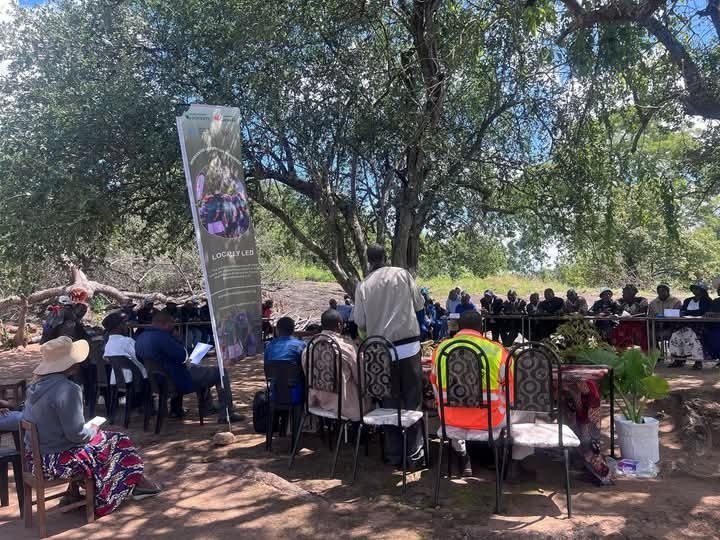
Speaking during the official opening of the Zaka Community Seed Bank in ward 17 on Wednesday, Nyakunhuwa said villagers should be addressed using local languages for them to get the message.
“I want to thank all implementing partners who have partnered with our government to bring development in my area which is a commendable but I am requesting that next time when you prepare speeches, please consider the people whom you are addressing because they will not get anything from what you would have said,” said Chief Nyakunhuwa.
Nyakunhuwa requested for interpreters in scenarios where the presenters might not be familiar with the local language of the area.
“It is better to have an interpreter when using English or other languages which is not common in that area especially here in my area I recommend you use Shona for the benefit of all,” said Chief Nyakunhuwa.
Chief Nyakunhuwa applauded the Minister of Environment Climate and Wildlife for the effort she made to attend the event saying other ministers do not come when expected.
“I want to thank you all for coming, especially our honourable Minister Dr Sithembiso Nyoni for coming here herself. We are tired of preparing tirelessly for ministers who do not show up and send their deputies or Permanent Secretaries which drains energy of those who would have taken time to prepare for the events,” said Nyakunhuwa.
One of the villagers who spoke to TellZim after the Chief’s speech said Nyakunhuwa was correct about the issue of language as in most cases they would leave the event without understanding anything form what the guests would have said.
“In most cases we won’t hear anything from these gatherings, language barrier is a concern during these kind of gatherings where we get to see Ministers but won’t hear anything they say,” said the villager.
Chief Nyakunhuwa‘s stance on condemning speeches in English when addressing rural communities highlights the importance of language and communication in cultural and community settings.

War veterans are lunatics

Zvisina ziya rangu iwe maoko angu siya!!, nhasi ndamuka ndri mumood yekuimba zvangu ndichiona vanhu vachiita basa rekurwirana zvinhu zvemahara. Ini semunhu who died for this country, I have respect for fellow combatants, I mean the real war veterans not the sellouts who pretend to be. I know the real comrades cannot be easily Hukuwinked, I mean, inonzi hoodwinked kkkk, we have a new word in the dictionary courtesy of the Minister of youths, Tino Machaikaire, I just know anonzani Tino but I am not sure if its Tinoba or Tinopenga, but I am sure you all know him. So before I am Hukuwinked to talk about other issues, let me talk about Tungwarara and the war veterans. Surely the so called war veterans are lunatics, how can they be silenced nemabasikoro when others got 50k and left the country broke gore riya? Are these real Warvets who allow themselves to be silenced by bicycles? No, vana mukoma chaivo havadaro, they know why they went to war, it was to liberate Zimbabwe for everyone’s benefit not ivo chete. I also feel for the pretenders who are accepting the freebies by one Chigananda Tungwarara. If anyone sees him please tell him to stop it and respect our elderly. Iwe Tungwarara tiitire mushe, those are old madalas vatori nemaproblem emisana nemakumbo and you want them to stress again vachichova mabhasikoro. Dai ari mamotor bikes better. Imagine with the state of our roads and an old man is cycling. Sure this is where we are as a country, we have been reduced to paupers who clap hands for crumps while thieves are feasting at the high table. Rambai fufuro maWar Vets, akadaro wani JD Hungwe kkk, don’t be bribed by these little things, you should demand for equality and improvement of the economy so that everyone can buy their own bike. I think the honest truth is that war veterans are all lunatics, except a few who can stand up for themselves. Imagine that lady who got a car for shacking her bosom and bottom. How many people got cars for being able to raise their fists higher than others? vamwe got vehicles for bootlicking and the people who fought for independence get bicycles, haa zvimwe itai muchiti munotamba. Instead of the war veterans advocating for equality and an end to arbitrary detention of opposing voice and freedom of speech, they are busy clapping hands for mabhasikoro. I want to call upon all real war veterans to join Mapombi on a free Dhara march recently. I won’t tell you the date because chingapindirwa nevakomana vemacheap nylon suits and black sunglasses so just wait for the signal.

Axed Zanu PF members pledge unwavering loyalty to party

By Brighton Chiseva

Fired and suspended Zanu PF members have declared their unwavering loyalty to the party, a move that has raised eyebrows, amidst factional squabbles through which they were axed from the party.
Gutu East MP Benjamin Ganyiwa and Kudakwashe Gopo were fired over a litany of allegations which are linked to their resistance of the ED2030 agenda.
Contacted for comment, however, Ganyiwa and Gopo declared unwavering support to the party, adding another layer of complexity to the already tumultuous Zanu PF landscape.
Speaking to TellZim News, Gopo said the allegations leveled against him were false, saying the Politburo was misled by the provincial disciplinary committee.
“I respect the decision of the Politburo, I do not blame them because they were misled by the province I am being accused of disrupting meetings and being against the 2030 agenda, which is all false.
“It started long ago before the 2030 agenda came when I was provincial chair, they reassigned me and now they are saying I am against 2030. They accuse me of disrupting meetings which is all a lie. I will however remain loyal to Zanu PF,” said Gopo.


Gopo was fired in 2014 on allegations of undermining the President, undermining the decisions of the Politburo and was accused of being against the elevation of then First Lady Grace Mugabe before he was readmitted by the second republic.
On his part, Ganyiwa said Zanu PF was the only party he knew since birth so he was going to continue serving in or out of the party which he said was bigger than individuals, and the decision to expel him was for the greater good of the party.
“I will remain loyal, patriotic, faithful, committed and dedicated to keep on working positively for the revolutionary party Zanu PF whether from inside or outside, with or without a party position as it will forever remain my only permanent political house/home I have known since my childhood.
“I may have supporters who loved me but at the same time it must be understood that I don’t own people of my own, all people belong to Zanu PF,” said Ganyiwa.
Ganyiwa was accused of disloyalty after holding meetings without notifying leadership, being in a constituency WhatsApp group where people denigrate leadership and failed to reprimand them.
He was also accused of fanning factionalisms by holding meetings with people outside the district as well as name dropping where henclaimed to be close to the national leadership hence he did not take orders from the provincial leadership.
Analysts who spoke to TellZim News said the members were insane to continue supporting a party that fired them.
Political analyst Dr Arthur Fidelis Chikerema said they were loyal to the party, which meant they were benefiting a lot from the party so going against the party meant that they may lose everything they had which was why they said it was cold outside Zanu PF.
“If you see a person saying he was expelled from a party and said I will remain loyal, it means there’s a lot that he or she benefits from that organization. These guys abuse their power whether they are members or leaders.
“You know that if you go against Zanu PF policies totally they will strip off all the benefits. They will take all what you acquired during the time you were in Zanu PF so to keep that they will claim to be loyal,” said Dr Chikerema.
He said a lot of people were begging to be readmitted because they know the benefits of being part and parcel of Zanu PF.
Another analyst Dr Nicholas Aribino said being in Zanu PF meant one has access to many resources so they would rather claim to remain loyal so that they get readmitted when time comes to benefit though it was illogical do so.
“It is not an undying commitment to the party that is motivating them but what they can realize out of their continued association with the party,” said Dr Aribino.
Political commentator Rashweat Mukundu said the claim to remain loyal to the party was because of the factional wars and they were anticipating that if another faction wins then they would be readmitted.
“Factional suspensions in Zanu PF are temporary depending on the outcome of the factional wars. If the suspended members are still having their bets on a preferred leader then their desire is to remain as close to the party as they can be and still.
“This is all a game of thrones amongst the same people. Politics is never about principles but self-interest none of the political leaders we have are pushing a principle but selfish agenda,” said Mukundu.

Chilonga Bridge swept away

By Beatific Gumbwanda

Chilonga Bridge, which crosses Runde River was on March 12, 2025 washed away, severing a critical connection between Chiredzi South and the Chiredzi Central Business District (CBD).
The bridge played a vital role in the district’s development, providing the shortest route from Chiredzi Central to Maputo through the Sango Border post.
Chiredzi District Development Coordinator (DDC) Lovemore Chisema who chairs the local Civil Protection Unit (CPU) confirmed the complete destruction of the bridge to TellZim News following its closure in February by authorities who anticipated its collapse.
“The bridge is severely compromised, destroyed, and no longer passable. Fortunately, we did not record any casualties,” said Chisema.
The collapse of the bridge has severely disrupted life in Chiredzi South, leaving communities like Chikombedzi and Majijimba isolated. The Runde River, which the bridge spanned, is now impassable, highlighting the urgent need for an all-weather, high-rise bridge to restore access.
The development has left thousands of Xhangani people stranded in Chiredzi South Constituency, cutting them off from Chiredzi Central Business District (CBD).
Originally built as a temporary solution after the collapse of Chipinda Bridge in Gonarezhou National Park in 2000, Chilonga Causeway has now met the same fate, swept away by the raging waters of Runde River, 25 years after the devastation caused by Cyclone Eline.
In February this year, Chisema warned motorists against using the causeway, even after water levels subsided, declaring it too dangerous.
Despite two decades of promises and annual budget allocations for its reconstruction, no action was taken by the central government.
Former Chiredzi South legislator, Retired Brigadier General Kalisto Gwanetsa, had pushed for its prioritization, leading to site assessments and design plans.
Current Chiredzi Central Member of Parliament, Ropafadzo Makumire, had been vocal in Parliament, lobbying for the bridge’s construction.
Deputy Minister of Transport and Infrastructural Development, Joshua Sacco, promised that a new, standard bridge was going to be constructed, with four potential sites having been identified and budgeted for.
The bridge is a crucial link between Chiredzi South Constituency and Chiredzi Town, where residents access essential services such as birth certificates, banking, medical care, and business opportunities.
Tragically, its absence has resulted in numerous fatalities during rainy seasons. Among the lives lost were a three-year-old child whose body has never been recovered, a professional diver from the Buchwa Police Sub-Aqua Unit, a soldier, and several civilians.
As the Runde River continues to dictate the fate of the Chilonga Bridge, thousands remain stranded, with no immediate solution in sight.

Teenager seeks financial assistance for hernia treatment

By Rangarirai Shanyurai

A 14-year-old boy, Tawanda Fofo, from Nyambirai Village, Chief Zimuto, Masvingo is desperately seeking financial help to undergo surgery for a hernia condition that has left him in constant pain.
With his family unable to afford the costly procedure, the teenager is appealing to well-wishers to help him raise US$1 400 and get the treatment he urgently needs.
Speaking to TellZim News, Fofo’s mother Sheilah Chimanga said he had been battling the condition since 2023, and of the required amount, US$600 was for the heart test and US$800 for the hernia operation.
“He was diagnosed with a hernia in 2023 when he was in Grade 5, but we have been unable to raise the US$1 400 needed for his treatment. His testicles have started swelling due to the condition,” she said.
She said the boy’s grandmother had been assisting with other costs, but their financial situation remains dire.
“His grandmother has been trying to help, but she is struggling. We have no other relatives to turn to. I am appealing to well-wishers for any assistance,” she said.
Fofo, who is a learner at Mahoto Primary School in Masvingo, said he had been subjected to bullying due to his condition.
“I am bullied by other learners at school who always insult me for my condition. The hernia affects my chest and backbone, and my health is deteriorating. Sometimes, I struggle to walk long distances due to complications,” said Fofo.
Those who wish to assist can contact Sheila Chimanga at 0773897792.
A hernia is a medical condition where an organ or tissue protrudes through a weakened area in the muscle or connective tissue that normally holds it in place. This can occur in various parts of the body, such as the abdomen, groin, or upper stomach.

The Welfare of children in Zimbabwe: A Constitutional Promise Under Article 19

By Loreen Musemburi

Article 19 of the Constitution of Zimbabwe Amendment) (No. 20) Act, 2013 provides that the government of Zimbabwe should adopt policies and measures that ensure that matters relating to children, and the best interests of children are paramount. Thus, the State has an obligation, within the limits of the resources available to it, to ensure that all children –

  1. enjoy family or parental care, or appropriate care when removed from the family environment
  2. have shelter and basic nutrition, health care and social services
  3. are protected from maltreatment, neglect or any form of abuse and
  4. have access to appropriate education and training.

The State also has an obligation to take appropriate legislative and other measures—

  1. to protect children from exploitative labour practices; and
  2. to ensure that children are not required or permitted to perform work or provide services that—
  3. are inappropriate for the children’s age; or
  4. place at risk the children’s well-being, education, physical or mental health or spiritual, moral or social development.

These provisions are in accordance with international treaties, such as the United Nations Convention on the Rights of the Child (UNCRC) and the African Charter on the Rights and Welfare of the Child, to which Zimbabwe is a signatory. Throughout the years, the government has offered a comprehensive and child-centered approach to welfare aligning to the Basic Education Assistance Module (BEAM), to provide free education to underprivileged children and social welfare initiatives aimed at supporting orphaned and abandoned children. Embedding child welfare into the supreme law of the land demonstrates Zimbabwe’s proactive approach to protecting the interests of its youngest citizens. The government’s duty to prioritize the needs of children guarantees that policies and programs are structured to enhance their well-being, thereby minimizing inequalities and establishing a robust foundation for future generations. The emphasis now shifts to the efficient execution of this fundamental responsibility. For these legislative protections to have a real impact on Zimbabwe’s children, there needs to be sufficient financing, policy enforcement, and community involvement.

Although Article 19 of the Zimbabwean Constitution appropriately emphasizes the importance of children’s welfare, its actual impact is debatable given the challenging circumstances that numerous children encounter today. The well-meaning provision, however, fails to translate into effective action, resulting in countless Zimbabwean children remaining at risk of poverty, abuse, and lack to access to basic needs. A significant shortcoming of Article 19 lies in the disconnect between its policies and their implementation. Despite the Constitution’s assurances of education, healthcare, and protection for children, the harsh realities of economic struggles and ineffective governance have hindered the fulfillment of these essential rights. Many children, particularly in rural regions, continue to face barriers to quality education stemming from school fees, a shortage of teachers, and insufficient learning resources. In a similar vein, the healthcare system faces significant challenges in delivering sufficient services, leaving many children grappling with malnutrition, avoidable illnesses, and restricted access to medical facilities.

Furthermore, the problem of child labor and abuse continues to persist, even in the face of existing legal safeguards. The current economic turmoil has compelled children to resort to street vending, domestic labor, or even hazardous work just to make ends meet. Recent accounts of child marriages, sexual exploitation, and domestic violence are on the rise, underscoring the inadequate enforcement of laws designed to protect children. The lack of a strong social welfare system intensifies these difficulties. A significant number of orphaned and vulnerable children are left without the essential support they need, a situation exacerbated by government programs that are both underfunded and understaffed. In the absence of adequate funding and dedication from those in power, Article 19 stands to become little more than a mere symbolic gesture, failing to serve as a practical protection for the rights of children.

Immediate action is required to ensure that Article 19 fulfills its intended role. It is essential to prioritize increased government funding, stricter law enforcement, and community-driven support systems. Only then can Zimbabwe transform its constitutional commitment to protect children’s welfare from mere rhetoric into a tangible reality for every child across the nation. Examining this issue through a community psychology lens, especially with an emphasis on Ubuntu, reveals that the strength of this constitutional provision is compromised by a diminishing sense of communal responsibility and collective care. What has happened to the notion that says, “it takes a village to raise a child”? This idea embodies the essence of Ubuntu, resonating with the fundamental principles of community psychology that emphases the interconnectedness and shared humanity.

More so, another gap of clearly defining the involvement of communities in the realm of child welfare. However, economic challenges, the divide between rural and urban areas, and social fragmentation have weakened this communal support network, resulting in increased vulnerability for many children. The Constitution assigns responsibility to the state forgetting that the state constitutes the people. Where there is lack of strong community-driven solutions the effective of implemented policies cease to make sense as mandated. Traditional leaders, churches, and local communities frequently remain uninvolved or unaware of the ways in which they can contribute to child welfare initiatives. The absence of awareness and advocacy has resulted in society neglecting children rather than taking proactive measures to improve their adverse conditions. Many families facing the challenges of poverty and unemployment find themselves unable to fulfill their children’s fundamental needs, while the formal social welfare system grapples with being overstretched and underfunded. In the spirit of Ubuntu, which promotes shared responsibility, it is disheartening to observe that in contemporary Zimbabwe, orphaned and vulnerable children frequently find themselves abandoned, struggling to survive with minimal support from the community.

Moreover, the absence of psychosocial support for children facing distress is a significant issue. Ubuntu places a strong emphasis on the importance of emotional and moral support within communities; however, contemporary social dynamics have diminished the strength of traditional support systems. As we witness an alarming increase in child neglect, drug abuse, and school dropouts, it becomes imperative to adopt a community-focused strategy for child welfare. This approach should emphasize the importance of mentorship, emotional support, and united efforts to safeguard our children. For Article 19 to achieve its full potential, Zimbabwe needs to revive the essence of Ubuntu in its child welfare policies and practices. It is crucial to establish community-based child protection committees, implement culturally relevant support structures, and foster stronger partnerships between the government and local communities. Restoring the values of Ubuntu offers Zimbabwe the opportunity to elevate Article 19 from a simple constitutional declaration to a vibrant reality, ensuring that every child genuinely belongs and flourishes.

To bridge the gap between policy and reality, a fundamental tenet of community psychology of decentralized support, advocating for solutions that arise organically from within communities instead of depending exclusively on government interventions can be implemented. Additionally, creating local committees focused on child protection, equipped with the skills to recognize and address issues of abuse, neglect, and exploitation, can lead to tailored interventions that resonate with the unique circumstances of each community. Ubuntu highlights the importance of interconnectedness, asserting that the responsibility of raising a child lies within the community as a whole. The traditional extended family structures have seen a decline, largely influenced by urbanization and economic challenges. Programs that link the elderly with at-risk children, including mentorship and foster grandparent initiatives, offer essential guidance, emotional support, and a feeling of belonging for those children lacking stable family environments.

Community psychology emphasizes the importance of empowering families rather than merely helping. Creating community savings groups, launching income-generating projects, and implementing skills development programs for parents can enhance household stability, guaranteeing that children obtain the care and resources essential for their well-being. However, numerous children endure trauma stemming from abuse, familial disintegration, and financial struggles, often without adequate psychological assistance. Establishing counseling programs within schools, creating peer support groups, and developing community wellness centers can significantly aid children in navigating challenges and fostering resilience.

The surroundings in which a child grows play a crucial role in their development. In Zimbabwe, a significant number of children are deprived of secure environments where they can play, learn, and interact with their peers beyond the classroom. Creating centers that cater to children in the community, offering recreational activities, tutoring, and mentorship, promotes their social and emotional growth while shielding them from harmful influences like crime and drug abuse. For the policies to truly make an impact, it is essential that communities engage not merely as recipients of policies, but as dynamic contributors in the process of shaping and executing them. Enhancing collaborations between the community and government, with the involvement of local leaders, parents, and youth in child welfare initiatives, guarantees that policies are tailored to the specific context and address local needs effectively.

While Article 19 represents a progressive legal measure, it is important to recognize that legislation by itself cannot bring about meaningful change in the lives of children. Genuine transformation occurs when communities embrace responsibility for child welfare. Through the principles of Ubuntu, collective action, and empowerment, Zimbabwe has the potential to transcend mere policy declarations, fostering a society where every child is genuinely nurtured, safeguarded, and given the opportunity to flourish.

The guidelines established in Article 19 offer a clear path forward for enhancing child welfare. Through ongoing government initiatives, active community involvement, and global assistance, Zimbabwe has the potential to fulfil its promise of left no child behind. Article 19 stands as a commitment to the future of Zimbabwe’s children. It embodies the country’s aspiration for a community where children are safeguarded, educated, and empowered to grow into accountable members of society. Keeping children safe isn’t just about having the right policies in place. It is a shared responsibility that calls for a change in how we all think. Therefore, to genuinely safeguard children, policies must prioritize enhancing community engagement and expanding mental health resources. This approach will ensure that every child, regardless of their background, has the opportunity to flourish in a secure, nurturing, and empowering environment. Children serve as the cornerstone of a nation’s future, and their welfare mirrors a country’s dedication to human rights and sustainable development. They are not just a matter of legal or economic interest; they reflect a bigger picture of social and psychological factors.

Psychology Lecturer in the Department of Psychology at Women’s University in Africa, lmusemburi@wua.ac.zw

231 health facilities in Masvingo

By Staff Reporter

Reports from government have revealed that Masvingo Province is now home to 231 health facilities, a move that is meant to improve health service delivery in the province and nationwide.
This was revealed by Masvingo Provincial Affairs and Devolution Permanent Secretary Dr Addmore Pazvakavambwa at a press discussion organised by TellZim in Masvingo recently where he unpacked the state of the province in the health sector.
“Masvingo Province now has 231 health facilities. This could be disaggregated like 13 secondary health facilities, seven being mission hospitals, six government, three private. 12 rural hospitals, 14 mission clinics, 71 government clinics and 104 council clinics,” said Dr Pazvakavambwa.
Dr Pazvakavambwa said the increase on construction of health facilities subsequently had an effect on reducing the walking distance which has drastically reduced from an average of 20km to about 8km.
“The fact that these have been increased means there is an effect on the walking distances. The walking distance has been reduced remarkably in most cases five to eight kilometres yet before it was around 20km,” said Dr Pazvakavambwa.
On drug availability, the province is still lagging behind with a staggering average of 55-57 percent.
Women from the province and the rest of the nation have been complaining over walking long distances, especially during pregnancy to access health facilities which has resulted in some women in rural areas to opt for backyard maternity homes which has its own fair share of problems.
Villagers from Mushandike, Gwengavi and Makasi in Masvingo rural have raised concerns over access to health facilities citing that they had to travel for at least 10km to get a clinic which is disheartening as sometimes they only get prescription with no medications available at the clinics.

MoHCC capacitates village health workers to treat minor diseases

By Meditation Mposi

The Ministry of Health and Child Care (MoHCC) has empowered Village Health Workers (VHW) to treat common diseases in their villages as they can now access medicines for treating such.
Speaking during a Press Club Discussion organized by TellZim in Masvingo on March 5, Provincial Health Services Administrator Samson Nyoni who was representing Provincial Medical Director (PMD) Dr Amadeus Shamu said the move was meant to assist in managing the spread of diseases from local level.
“We have increased the strength of village health workers, some have been given access to drugs in terms of treating minor illnesses like malaria enabling them to provide timely and effective primary health care.
“VHWs can now manage a range of minor health conditions reducing the need for patients to travel to health facilities as these live in communities. Where there is need, a person has to walk from where they stay to a nearby facility so that it is accessible and cost effective. Once it has been detected that they need higher level services that’s where they can access a Rural or a District Hospital,” said Nyoni.
Nyoni also revealed that government had made efforts to reduce the average walking distance of patients to 8km.
“The average walking distance for patients is now 8km but previously, patients would walk an average of 20km to access health facilities,” said Nyoni.
Masvingo province now has 231 health facilities.
Nyoni also said health facilities were accessed in hierarchy and patients had to follow those stages to get services.
“When there is need for higher services that is when they can access rural hospitals, district hospitals and provincial hospitals because the rural hospitals have become the referral center for the clinics.
“At the Provincial Hospital we have ambulances that are ready to go to Bulawayo and Harare and where there is need for that person to be airlifted as far as from Chikombedzi that is when we call for assistance,” said Nyoni.