Home Blog Page 104

CBAP donates maize seed to RCZ congregants

By Meditation Mposi

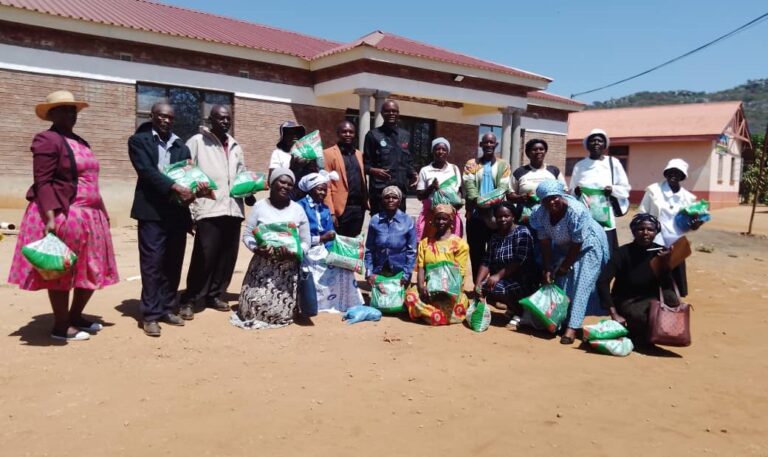
Reformed Church in Zimbabwe (RCZ) congregants from Pamushana and Mutsambwa communities in Bikita and Zaka recently received maize seed donations from the Community Based Aid Programme (CBAP).
Speaking during the distribution, CBAP Director Samuel Mhungu said the donation was a component of a project where congregants were empowered so they can feed their families and give to the needy.
“The maize seed distribution is a component of a diaconal project where congregants are empowered with seeds to assist them during the farming season. Upon harvesting, the congregants keep some of the produce to themselves and donate some to the vulnerable members of the society including the aged, the sick and the disabled.
“Maize seed distribution is multipurpose in that it empowers individuals who receive the grain as well as the church and the community and is part of the economic empowerment intervention to the Reformed Church in Zimbabwe congregants to improve living standards of the vulnerable in society,” said Mhungu.
He said apart from maize distribution, CBAP had poultry projects for community members in which beneficiaries were given startups and would plough back into the community.
“Apart from the maize seed distribution, we do poultry projects where we give congregants initial startups so that they can sell and re-invest into the project and give some to vulnerable members of the society” said Mhungu.
One of the beneficiaries from Pamushana, Jenipha Tofarasei expressed his gratitude and said the maize seed was beneficial to the locals as they prepare for the farming season.
“We thank CBAP for the maize seeds as we are preparing for the farming season. When we harvest and get about ten to twelve bags of maize, we donate at least two bags to the vulnerable and keep the remaining to ourselves. The programme always come at the right time and we are grateful,” said Tofarasei.
Another congregant from Mutsambwa, Benson Mugombi said he was elated by the distribution programme which he said helps to ensure food security.
“I am impressed by the maize seed distribution by the CBAP; it helps the church and the community in terms of food security. We also have a garden which was funded by CBAP where we grow some vegetables and watermelons which we sell to generate income and give some to the vulnerable people in our communities,” said Mugombi.
A total of 70 people benefitted from the two congregations with each getting a 5kg bag of Pioneer or Seedco 555.

Boreholes drying up in Masvingo rural

By Tatiana Mhararira

Five boreholes in the Mbeva area, Masvingo rural have dried up leading to water shortages for the villagers in the area for several months now.
The drying up boreholes are located in Mudare, Zano, Gwinyangwi, Muzakwatira and Machokoto areas and that has led to water challenges in the village.
The El Nino induced drought has contributed to the drying up of boreholes, with villagers opting to use water from unprotected water sources.
Speaking to TellZim News, ward 14 councilor Misheck Nzvinginya confirmed the issue and said the drying up of boreholes has caused villagers to travel a distance to access water.
“The dried boreholes has caused villagers to travel long distance to get water.
The water table has decreased due to El Nino so people are finding it hard to access water from their usual sources.
“Villagers are struggling to get water. They move to people with boreholes to get safe water to drink,” said Nzvinginya.
Nzvinginya said their area has one solar powered borehole which many fail to access and they appeal for more solar powered boreholes.
“Our area has one solar powered which is at Mapa and not all villagers can access it. We appeal for more boreholes so that everyone can have water at their door step,” said Nzvinginya.
One of the villagers, Noah Machote said they were facing a serious water crisis as a community.
“The water challenge has become a serious problem and we have failed to access clean water to drink as a village. Moving a distance to get water is a problem,” said Machote.
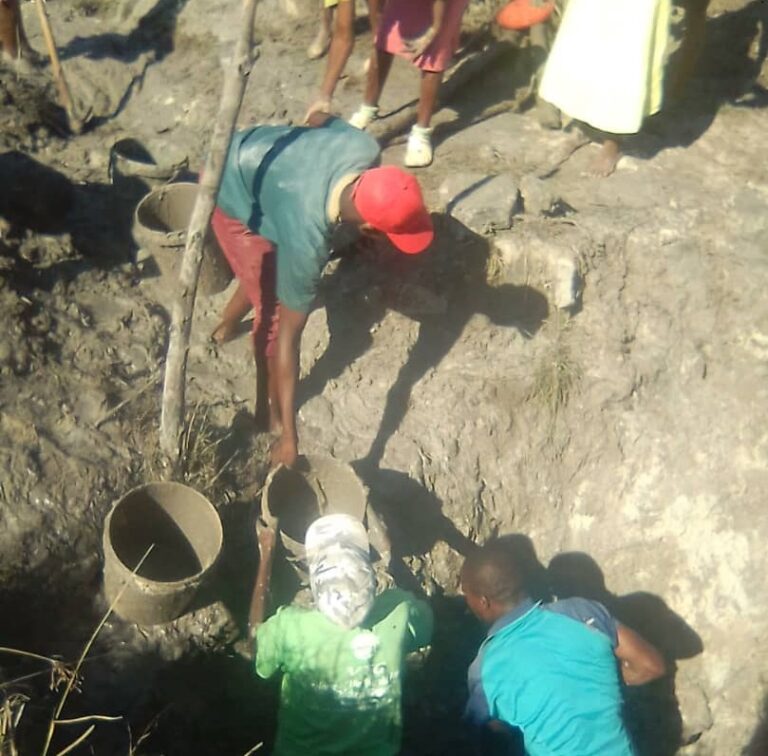
One of the unprotected water sources is about 1,2 meters deep and the villagers has used stones to allow users to access the well which has reached a level of coming out as a mixture of water and mud.

Partitioned mall retail units take over Zimbabwe

….as 600k Zimbabweans own retail cubicles in CBDs across ten towns-Research
…..We can’t wish away informal economy takeover-Analysts

By Perpetua Murungweni/Beverly Bizeki

Over 600 000 Zimbabwean entrepreneurs across ten towns now ply their trade from partitioned mall retail units, a situation that has marked the death of departmental and hyper stores in the country, much to the benefit of property owners, real estate investors and tax collectors.
In a research conducted by liberal thinktank COMALISO, lettable partitioned mall retail entrepreneurs have taken over most Central Business Districts (CBDs) across the country, responding to property owners who convert shops into retail cubicles generally not more than 20square metres.
In Masvingo CBD, departmental stores such as Meikles, Tsungai, Truworths, Clicks among others have long been closed, with the properties now partitioned into these small informal retail units.
Government and other commercial buildings like Great Zimbabwe University Heritage Centre, (now Dzimbahwe Mall) ZimParks Building, Kyle House, Mutangiri Building, Victoria Hotel and ZimPost Building now follow the same model.
Attracting this breed of entrepreneurs are new buildings that include Commercial Centre, MUSA Enterprises, Masvingo Trade Centre, Sunrise Mall, among others in Masvingo town.
Masvingo’s Tsungai Complex which is one of the biggest spaces letting out partitioned retail units has about 310 cubicles with spaces averaging US$80 rentals upstairs while spaces downstairs cost about US$110 per month.
The Zimbabwe Statistics Agency (ZimStats) says almost 86 percent of Zimbabwe’s adult population is into informal trade, an indication of decimating formal industry, and according to COMALISO, wishing away these mall retail units, which it called Lettable Partitioned Mall Retail Units (LPMRUs) is mere delusion.
“To hallucinate that this is a passing phase and that departmental stores like Haddon and Sly, H.M Barbours, Meikles, Bradlows will resurrect is nothing but self-delusion,” reads part of COMALISO’s press statement.
Analysts have said that through necessary support, the informal sector can drive economic growth, if only government could come up with policies that regulate taxation, insurance and access to capital.
Economist Collen Jonasi said the informal sector could help eradicate unemployment if properly regulated, however adding that taxation of the informal sector makes it detrimental to the economy, and with a lot of tax evasion by these entrepreneurs, government does not benefit much to a thriving informal sector.
“Informal sector activities are difficult to integrate into the formal economic activities because these people do not want to pay taxes yet tax is one of the major revenue sources for government and since the informal sector is very illusive it then becomes difficult to tax,” Jonasi said.
The informal traders themselves brought up what they said was double taxation by Zimbabwe Revenue Authority (ZIMRA), because at ports of entry when they are importing goods for resale they pay customs duty, and are required again to pay an additional monthly tax for each retail unit, which they said perpetuates smuggling and tax evasion.
“I find the taxing system burdensome as we are expected to declare our goods at ports of entry while at the same time, you have to pay tax at the end of the month. I think this contributes to the continuous smuggling of goods through borders,” said one trader.
Tsungai Traders Association Chairperson Simon Mungate bemoaned the economic environment in the country which he said was influential to the operating conditions for most traders.
“The economy in Masvingo is largely based on the existence of tertiary institutions that form a fair part of our market. Business was viable when the economy was performing well but now that the economy is not doing well, business only peaks during civil servants’ pay days and when tertiary institutions open.
“We have access to bank loans but the interest rates are quite high for us. New traders also find it difficult to access loans due to either lack of collateral in form of stock or the backing of the association hence they get smaller amounts than required. The payback period is short because paying back in a period of six months is not always favorable,” said Mungate.
Economic analyst Professor Talknice Saungweme said more could be done to equip the informal traders with skills, so they can diversify into manufacturing and other trades, other than just selling imported goods.
“They lack skills and the country needs to take a holistic approach in terms of trying to equip these young people with skills through programs like vocational training, while they are also given space,” Prof Saungweme said.
Research conducted by World Bank Groups, shows that there is little growth in the private sector and this is due to a limited number of quality jobs. Only 33 percent of workers in Zimbabwe receive a salary, well below peers in the region and globally suggesting a limited share of quality jobs despite workers possessing relatively higher skills.
Moreover, competition from informal firms has tended to lower the productivity of formal firms by around 24 percent on average, compared with firms that do not face such competition.
The apathy of economic growth in Zimbabwe, via the formal sector, since the 1980s and more so after the introduction of ESAP in 1991, has led the informal sector to become a key producer of goods and services, becoming a safety net for the jobless. The sector curbs poverty, promotes the concept of self-reliance and inevitably contributes to the economic growth of the country.

Human wildlife conflict: hippo kills fisherman

By Meditation Mposi

As cases of human-wildlife conflict continue to soar, a fisherman from Monyoroka Village in Triangle recently died after being attacked by a hippopotamus at Mutirikwi River in Triangle recently.
The matter was confirmed by Masvingo Provincial Police Spokesperson Inspector Kudakwashe Dhewa who encouraged members of the public to avoid fishing in crocodile and hippo infested areas.
“I confirm the death of Felix Chitokisi (34) who was killed by a hippopotamus while fishing. We encourage the public to avoid fishing in places infested by crocodiles and hippos,” said Dhewa.
Circumstances are that on August 24 Chitokisi went to Mutirikwi River for fishing with his two friends. On arrival, they started fishing at different points but they could see each other.
One of Chitokisi’s friends Calisto Chiwenga (57), saw a hippopotamus coming from the water charging towards them and alerted his friends. They all ran away in different directions going back to the village.
Upon arrival in the village, Chiwenga and the other friend noticed that Chitokisi had not yet arrived.
They mobilized other villagers and went back to the river to search for Chitokisi but could not find him.
The next day they returned to the river to continue with the search and found Chitokisi’s body floating in the water. His body was injured with cuts on the stomach, arms and back.
As human population continues to grow, agriculture and infrastructure development, continues up the ladder and climate change impacts continue to be felt, cases of human wildlife conflict are becoming more frequent.
In 2023, a Zaka couple and their son were left badly injured after being severely attacked by a clan of hyenas in Bota communal lands. Robert Maroyi was mauled on the face and head while his wife Muchanyara Munoda was mauled on the hands and lost both palms.Their son Rwatiringa Maroyi was also attacked and sustained injuries.
In 2020, it was reported that twenty people died after being attacked by wild animals across the country, while several others were injured.
Most of the fatalities were recorded in communities near wildlife habitats where animals increasingly come in contact with humans after straying in search of water and food while in some cases animals stray from their habitats as people vandalize perimeter fences of such areas.
Communities in wildlife rich areas around Chiredzi District have been living between a rock and a hard place due to constant battles with animals that encroach into their villages in search of food and water destroying their crops resulting in hunger and starvation among people.
Speaking in parliament in September, Masvingo Senator Sam Chapfudza highlighted the ballooning elephant population which has surpassed Hwange National Park’s carrying capacity by a significant margin.
According to Chapfudza, the elephant population in Hwange had gone up from 15 000, the designated limit to a staggering 65 000. This overpopulation has resulted in elephants venturing outside the parks boundaries, destroying crops and endangering villagers.
He lamented the tragic loss of life caused by these encounters, leaving children orphaned and families shattered.

Chief exposes Zanu PF

…“We are not allowed to install opposition members as village heads”

Brighton Chiseva

ZAKA – Chief Bota born Tafirenyika Bwazvo of Zaka recently exposed how Zanu PF interferes in the selection of traditional leaders saying they were ordered not to install village heads or headmen who do not support the ruling party.
Bota was speaking on the sidelines of an ongoing wrangle for Manyetu village headship following the death of substantive village head Isau Manyetu in March this year.
Bota is accused of fleecing the warring parties some money promising both contenders the post, a development that has delayed the installation of a new village head.
Asked for a comment on the matter, Bota denied having been paid by either side but said they had agreed to appoint one of the late village head’s sons who was loyal to the ruling party than the other faction led by the deceased’s brothers and aligned to the Citizens Coalition for Change (CCC).
“They are lying, I have never asked them for any cent, infact when I went there, they never gave us fuel money as they are supposed to do.
“We chose the village head who is son to the late and is loyal to Zanu PF, the other faction is aligned to CCC so we cannot choose someone who does not tow the ruling party line. They are the ones who lie that I asked for money from them whereas they did not give me anything,” said Bota.
Asked if they chose village heads on party basis, Bota said they were told by Zanu PF leadership that they were not supposed to install leaders who supported the opposition party.
He also said the person they had installed apart from supporting Zanu PF was also the rightful heir according to their family tree and had his brothers’ blessing since he was not the eldest son.
“We cannot appoint someone who is not Zanu PF; we had a situation here when we appointed another village head from Nhenjana. The eldest member of the family was appointed but (Zanu PF provincial) chairman Mavhenyengwa asked me why we had installed someone who was not Zanu PF.
“Fortunately the guy had just returned to Zanu PF but the chairman didn’t know, so these are the situations that we try to avoid. We also used their family tree and the one who was installed argued that the village belonged to his father and does not include his father’s brothers who were now claiming authority.
“Though the one who was selected is not the eldest son, he has his brothers’ blessing and they all agreed to appoint him since he is the one who stays in the area,” said Bota.
Contacted for comment, Mavhenyengwa denied ever calling Bota over the appointment of village heads and said that was the responsibility of the chiefs and the District Development Coordinator (DDC)’s office.
“We as a party are never involved in the selection of traditional leaders. We simply work with the one who is there. The Chief and DDC are responsible for that and they do it following their tradition.
“I don’t have Chief Bota’s contact number, so there was no way I could have called him. I only used to have the late acting chief’s number,” said Mavhenyengwa.
The wrangle is between the late village head’s sons who fronted Solomon Manyetu to take over the reins following their father’s death.
However, the late village head’s brother Trymore Masipiki is challenging Solomon’s ascendency saying he is the one who should take over.

Man rapes, impregnates cousin

0

By Rangarirai Shanyurai

A 27-year-old man from Chivi recently appeared before Masvingo Regional Magistrate Bishard Chineka facing charges of raping his female cousin.
Chineka remanded the accused person (name withheld to protect victim) in custody for continuation of trial on October 5, 2024.
It is the state’s case as presented by Prosecutor Liberty Hove that the accused who is a cousin to the complainant proposed love to the complainant sometime in April this year, which she turned down.
On June 6, at around 1230 hours the accused went to the complainant’s homestead knowing that her parents were not around and that she was with her young brother and grandmother.
The accused found the complainant in the kitchen while she was alone cooking then followed her to the bedroom where she had gone to collect soya chunks that she wanted to cook.
He followed up on his proposal but the complainant denied. He blocked her from going out of the bedroom, closed the door and raped her.
After the incident, the accused threatened to assault the complainant if she revealed the matter to anyone.
The complainant later told the accused person that she had missed her period, after which the accused’s wife later learnt about the pregnancy and informed the minor’s parents.
The complainant’s mother reported the matter to police on July 8 leading to the arrest of the accused.

School head appeals for financial assistance to undergo heart surgery

By Virginia Njovo

A school head at Chibaya Primary School in Masvingo District is appealing for US$14 500 to undergo a heart surgery in India at Fortis Memorial Research Institute, Gurugram City.
Misheck Chenjerai (52), told TellZim News that his heart had two blocked valves that were not functioning properly hence the need for heart surgery which is to be done in India.
“In August this year I was diagnosed with a heart problem when I was told that two valves on my heart are not functioning properly and there is need for an operation to be done urgently in India. I am appealing to well-wishers to assist me in raising the required amount so that I get treatment early,” said Chenjerai.
A father of three, Chenjerai said he is going through a difficult time as he can no longer perform heavy duties and that is affecting his family financially.
“I have three children and my wife is also a civil servant. We cannot raise the money needed for the surgery from both our salaries. The condition has made it difficult for me to carry out any side hustles to raise the money as I am no longer able to perform any heavy duties,” he said.
He further said the condition was already affecting his work as a school head as it demands him to do more on the ground which is difficult for someone in his condition.
“Some of the duties required to be performed by a school head need someone who is more active but it is now challenging for me to be more effective due to my health condition,” said Chenjerai.
His wife, Mercy Chenjerai who is also a teacher at the same school said they were going through a difficult time with doctors saying the surgery should be done urgently.
“We are going through a difficult time as a family as my husband’s condition keeps getting worse by the day and we are unable to raise the money. Our plea is for well-wishers to assist us in raising the required amount of money so that he can be able to undergo the required surgery on time,” said Mercy.
Well-wishers can help Misheck Chenjerai and his wife using the details below:

Ecocash: 0774035406
FBC Nostro Account No:
3555 113300172
FBC Account: 3055113300172

Spirit medium stops operations at Renco Mine

Brighton Chiseva

RENCO MINE – Mining operations had to be suspended for two days at Renco Mine amid fears of workers’ death as had been foretold by a local spirit medium whose demands had not been met.
Sources within the mine said the spirit medium told mine management that they had to clear all salary arrears to please the workers, after which they were to conduct an appeasement ceremony so that the mine becomes productive.
Though no comment could be obtained from mine authorities as the General Manager Taurayi Nyamukondiwa was not answering his cellphone, sources said the mine had since engaged local traditional leadership and had back to back meetings trying to map a way forward.
Contacted for comment headman Muchibwa real name Maduviko Manyise confirmed the development but could not shed more light as he referred his spokesperson Maseko Manyise.
Maseko said there were challenges at the mine, of which they were engaged by the authorities and had fruitful discussions which resulted in the workers going back to work.
“There were issues at the mine which I think mine authorities are better positioned to share with you. However, we had a fruitful meeting and we addressed the workers who later went back to work. So now we are working on mapping a way forward to avoid similar issues,” said Maseko.
He said the area, just like any other had some traditional rituals that used to be done but had been forgotten but now the ancestors had come through one of them to revive the practices.
“We know like any area, there used to be traditional rituals and ceremonies that were done but were now being forgotten. The mines used to carry out these with local traditional leaders and that is what we are reviving now. The ancestors are now speaking through the younger generation and some may not understand but that is what we are trying to address,” said Maseko.
Sources who spoke to TellZim News said the mine was failing to honour traditional rites and that was causing all the challenges they were facing and were ignoring what they were told by the spirit medium who allegedly emerged recently after years of silence.
“Three months ago, the medium told the mine to pay workers and make sure they were happy then after that they will appease the ancestors so that the mine becomes productive. He said if they failed to do that, there will be regrettable occurrences and coincidentally, one person died in the mine last week
“The medium warned that if workers go down the mine on September 9 it will be at their own risk. So the mining department refused to go down the mine saying the management should lead the way if they are to go down,” said the source.
Sources said last month the mine recorded one of the lowest productions to ever been recorded and many believed the mediums’ words are coming true.
“The medium said if his demands are not met, the mining machinery will stop working and it will be difficult to get gold. The bow mill in the plant area stopped working on September 3 and only resumed work on September 9 in the afternoon but it was hard operating it.
“As had been warned by the medium, the mine recorded its worst production and recorded less than two grams and that has never happened ever since,” said the source
Another source said the mine was clearing the arrears and had cleared up to June and was left with July and August salaries.

Masvingo Birthday Bonanza rolls on

0

Ladies and gentlemen, my sincere hope is that you are keeping hydrated in this hot weather, even with the erratic water supply you just drink yezvibhorani iyoyo. Again with Zesa doing what it is mandated to do, what it knows best—switching off electricity, even when it’s not at fault, council now has an excuse, and a good one at that, of not providing water to residents, but we keep the hope up. Ko handiti we were promised that very soon there will be solar power at Bushmead and water rationing will be a thing of the past? It’s just that as a typical Zimbabwean I have lost count of things that we are told daily since many years ago they will be things of the past. If propaganda was capital, or if it could boost the economy, I’m sure Vision 2030 will now be a thing of the past before we even get there, kkkk. If you see varakashi praising nonsense you will think whoever is complaining about anything in Zimbabwe is crazy. I see these days they are in overdrive on social media platforms spewing rubbish day in day out, and even those from Masvingo have been recruited and are performing very well vanaKiri Charumbira, kusimbisa musangano kumasero. There is also one with a surname familiar with Masvingo, Chivi in particular, called Mukungunugwa who is busy threatening international comedian Learnmore Jonasi on social media platform X. I wonder if he or she is related to MP Huruva, and if he is, haa mutsiurei honourable arikutinyadzisa seprovince. Tell him even propaganda, just like patriotism has its limit. How many times shall we be laughed at as a province; just the other day, Mai Nhingi was dropping a baby on its head at that Doek and Slay flop. Wherever you turn, ‘Masvingo yazviita zvakare’. Some of the things are too difficult to defend when I am discussing with my fellow vagabond friends in the streets, have mercy on me please, one day I will leave you muchishorwa mumastreets, kkkk.
In this hot weather I just wish I was Tshabangu, or maybe if I had only a quarter of his attitude and bravery I could be drinking something very cold, in an airconditioned vehicle. I wish I didn’t have any shame at all because I could be eating naanaMunhu Mutapa and queens right now. You may say all you want but that man outwitted both Zanu and CCC to get what he wanted. Nhasi angoti murifa zete, while you are busy fighting each other in the streets. If anything, I think he is the ultimate winner in all this. He made fools out of everyone, including those in Zanu because what political capital will someone like Tshabangu bring in the long run? Bango Rako Baba Bertha could be better because we know he was in the opposition picture for a long time before he sold out, and its a fact he has some sympathizers who argue that he probably did it out of bitterness. Tshabangu was just planted like those SADC palm trees, and ended up getting into Senate, and now being invited to state events, where he rubs shoulders with the shefus, including vemargarine pamapendekete vanaChandaizment. Tshabangu restored my faith every day that its true, Mwari vanosimudza marombe kubva muguruva. Have you seen his recent pictures? He stopped foaming on the mouth, yaiva nhamo iya varume, kkkk. I am sure even our own Councillor Masimba has stopped burping after eating council food, he is now used to eating in excess. Zvaingoda Councillor Ma Dorca whom I heard knew very well how to treat herself at those council feasts after full council meetings. One day I should pass by when they are having one and clean my intestines with good food, not the rotten bananas I eat here at Chitima. How is our own Masvingo Senator Cde Sam Chapfudza? Iwo maSenator anomboita basa rei, I have never heard of him even kuno kuchitima kwaaishandira since he became senator.
Speaking of Masvingo, once again we have been remembered ladies and gentlemen because the ‘sadaka’ is coming to us this time. I will never forget the year 2016 when Ba Bona hosted his birthday feast at the same venue our new found Munhumutapa is hosting his. I remember Uncle Bob sitting next to Madzibaba Nhenjana kkkk. Where is that clown by the way kkkk. I ate leftovers from that venue for days, even though I had to walk back to town on foot because the truck that had brought us in its trailer had returned to wherever it came from. One thing I know is that Masvingo is only for such things—maleftovers and endorsing nonsense. At that Mugabe birthday back then, there were even hired spirit mediums who were used to endorse him. For Baba Two the ground has already been set, Masvingo was the first province to push the third term agenda, so I am sure the bootlicking level will be at an all-time high. The Bootlickers Club will obviously be in attendance, grinning and kneeling before their master, like I saw them giggling like toddlers in a bus on their way to Precabe Farm to praise their father for being an excellent farmer. Hanzi Mama Oki is the patron of the Agric4She, whatever that is. I just thought, what in the North Korea is this, haa this teapot shaped country ifirimu. Listen guys, Baba Two is following right in his predecessor’s footsteps, because the lessons are lost on him. People toured the Gushungo dairy farm, with Dr Amai in tow, just like what recently happened kuSherwood kuKwekwe musi uno. Birthdays were celebrated, days were pronounced, titles claimed, just like we are seeing, although the common denominator is always Masvingo being the playground for the Birthday Bonanza buffoonery. Izvo hazvichinji. Once the sirens for their motorcades are silent, we are back to our usual man-made poverty, waiting to endorse yet another nonsensical thing. We know that choosing the Great Zimbabwe Monuments venue, as well as the Munhumutapa title is a strategy, for what, I am yet to find out, but trust me, before the cock crows three times day after the feast, I will have the answers. You know me, ndiri gentleman handivanzi. What I am sure of however is we are going to have some masvikiro business going on there, endorsing and blessing the ‘Munhumutapa’. I wish these masvikiro will one day tell the truth about the looting and corruption, like the one from Renco Mine did. Manje we always hear about how the current President is the one chosen by the ancestors to lead. I just think there is somewhere where we are being fooled. The good part however about ED coming to Masvingo is that we get a lot of new temporary infrastructure—new roads, newly painted buildings, etc. A week after this, you will see, all the potholes will be back to their usual places. Buses that had long broken down were painted new in Mashava for Baba Two’s tour, with cattle brought to CSC to be seen by the country’s first citizen. I can imagine the confusion those cattle had, kkkk.
Anyway, let me go ndinokanga maputi angu for lunch, I don’t want to eat too much junk because I will be there at Great Zimbabwe feasting with others. Vagabonds like us have an advantage of eating even what has been thrown away, but I am sure I won’t miss one box rechicken inn, or maybe a loaf of bread made from wheat yekuSherwood. I hope all my good friends descend to Masvingo for the party, especially Runaida, Dr Gire, and my very best Mphoko. I hope he will be seated in the same tent with other bootlickers, giving them notes on how to properly lick their master’s boots, kusvika pakuda kupa mudzimai waShefu kambani yacho. Mboko imboko!

AU AND SADC: WALK YOUR TALK ON DISABILITY

0

By Aribino Nicholas (Writing in own capacity)

The African Union (AU) and the Southern African Development Community (SADC) are both intergovernmental organizations whose territorial units largely begin and end with the geography and history of Africa. However, with liquid modernity they now find themselves having a lofty connection with geoeconomics and geopolitics dating back to the Berlin Conference of 1884 -1885 where Africa was defined and subsequently ruled according to borders. Africa will not be an island onto itself because of its historicity. Africa by definition is a polymorphous continent comprising 55 countries (AU) and within Africa there is a subregional grouping namely SADC which comprises 16 countries. It is the purpose of this opinion piece to interrogate the seriousness with which AU and SADC approach disability in general and persons with albinism in particular.
From the outset, it is worth noting that the rights of people with disabilities in general and persons with albinism are not a bonus of good times. Essentially, equality rights are human rights in both good and bad times. It is against the above argumentation, that the AU came up with the African Union Protocol on Disability 2018 and that SADC at its recent summit in Harare, Zimbabwe (17-18 August, 2024), adopted a Declaration on the protection of people with albinism. A tooth-pick analysis of these initiatives by these intergovernmental organisations shows that the intentions are good but the outcomes of such intentions are unfortunately poor when measured against quantitative and qualitative indicators. For example, the African Union Protocol on Disability was crafted in 2018, and to date it has only been signed by 14 African countries and ratified by 14 African countries. This protocol under discussion can only come into effect after it has been signed and ratified by 15 member states of the AU. Poring over the protocol, one finds progressive and unique provisions that speak to the structural, behavioural and attitudinal conditions conducive to the mistreatment, killing, oppression, discrimination, segregation, othering, objectification and thingification of people with disabilities in general and people with albinism in particular. Pursuant to the above polemic, in some parts of Africa people with disabilities are seen as a threat to the gene pool of human species and to that effect they are either hidden from public glare or killed. An Amnesty International report of 2020, reports that approximately 151 people with albinism have been killed in such countries as Malawi, Mozambique and Tanzania since 2014. 76 deaths are attributed to Tanzania. People with albinism are killed due to socio-cultural beliefs that associate their body parts with the enhancement of luck in business and love.
It is against the above understandings of what society can do to people with disabilities in general and persons with albinism in particular, that the AU and the SADC couched the protocol and the declaration respectively. However, this writer would want to submit that for a goose to lay golden eggs, it will need food and nutrition security to be guaranteed. The initiatives of the AU and SADC on people with disabilities in general and persons with albinism in particular are good on paper but the implementation matrix is pathetic. Implementation is a function of plans and budgetary provisions at the level of individual countries, however the AU and the SADC should build into its programming M and E mechanisms as feedback loops on their expenditure of efforts. It is a fact that a country’s plans and votes (budgetary allocations) towards a certain cause, programme, project, goal or objective constitute public statements of political will and commitment. The AU and the SADC in both documents are not clear on the financing of the popularization and implementation matrix of the instruments under discussion. If, for example, as a matter of policy, I would want my wife to be curvaceous if not bootylicious, it will be incumbent upon me to finance my policy by buying ceravita, potatoes, eggs, vegetables and meat and also to provide an emotional and psychological environment as a catalyst to the fulfilment of my policy. This is not what the AU and SADC have done regarding disability, if for instance AU can look for USD 5.5 billion and SADC USD 3.3 billion from the UN and other well-wishers to feed the starving Africans, why can’t the same supranational bodies look for financial support to avert the killing and abuse of people with disabilities in general and people with albinism in particular? People with albinism are multiply minoritized because of their skin color that is susceptible to cancer, poor eye sight, gender, age, and class, among other intercutting variables that combine to oppress and complexify their lives.
People with albinism need mobile cancer clinics, sunscreen lotion, eye glasses and protective clothing, among other things. Surprisingly, in some countries like Zimbabwe which has roughly a population of 10 000 persons with albinism, sunscreen lotion is not exempted from duty when it is imported. There is a bi-directional link between disability and poverty, most persons with albinism cannot afford to import sunscreen lotions and let alone buy from their local territorial units because the pricing is out of their reach. This also persuades this writer to think that for SADC to adopt a declaration on the protection of persons with albinism is a demonstration of lack of political will and commitment towards the safeguarding and protection of persons with albinism because a declaration is not legally binding as it depends on a country ‘s probity. Summitry diplomacy is associated with the adoptions of declarations, the feel-good arguments which in most cases are vacuous. The AU protocol on disability in its entirety is a sound instrument that just needs to be ratified and naturalized by individual African countries by way of locating disability close to the proximity of power. The AU and the SADC are long on planning and short on implementation, their thinking on paper is flawless, but this thinking without implementation is like a pig’s tail which covers nothing.