Home Blog Page 107

Quelia-bird free season to boost winter wheat harvest

0

By Tatiana Mhararira

Masvingo Province is set to meet its winter wheat target as the province has had no reports of marauding quelea birds which are a major threat to wheat farming.
The province has about 2 926.77 hectares under winter wheat for the 2024/2025 season and is expecting a yield of 17 500tonnes.
In an interview with TellZim News, Ministry of Lands, Agriculture, Fisheries and Rural Development Provincial Director Caleb Mahoya said there were no reports for the marauding quelia birds in the province yet.
“So far we have not received reports on any area which has been affected by quelia birds,” said Mahoya.
Provincial Agriculture Specialist Jonas Chinyavada said they had came up with several ways to curb the quelia birds in the province including the use of drones for thick clustered bushes if need arises.
“We are working with Parks and Wildlife nets team to control feasible birds mainly in the Lowveld where sugar cane and acacia trees are found.
“For trees with five metres and above, boom sprayers have been used, with Mushandike Irrigation Scheme utilizing the method. Drones have been used for areas with thick clustered bushes,” said Chinyavada.
Chinyavada said the department had conducted trainings with farmers on ways to prevent quelia birds and use of indigenous methods.
“Trainings have been done on the identification of quelia birds and a quick robust system has been activated as alarms are raised throughout the province. We urge farmers to use indigenous methods such as whistling and banging bells,” said Chinyavada.
As the winter wheat grows towards harvesting, farmers have been advised to take heed of the advice given to them by Agritex officers as well as some indigenous practices which they know so as to maximise their harvests.

Cholera still a threat in Chiredzi

By Beatific Gumbwanda

CHIREDZI-Though the government recently declared that the country is now cholera free, the Ministry of Health and Child Care (MoHCC) is still on high alert in Chiredzi as major causes and key drivers of cholera are still active in the district.
The ministry has so far managed to administer 84 454 oral cholera vaccinations across the district. This was revealed during MoHCC cholera sensitization meeting with journalists at Chiredzi General Hospital where it was highlighted that the ministry was on high alert despite having not recorded any case in a few weeks.
Speaking during the sensitization meeting, Chiredzi District Health Promotion Officer, David Maziva said they were still vigilant because the major drivers of cholera were still there in the district.
“We have not recorded any cholera case over the past few weeks and we are still on high alert because we don’t know when the disease will strike again.
“We still have low water and sanitation coverage in the district. There is poor access to clean water, some people are still drinking from unprotected water sources like canals and using sugarcane fields as toilets.
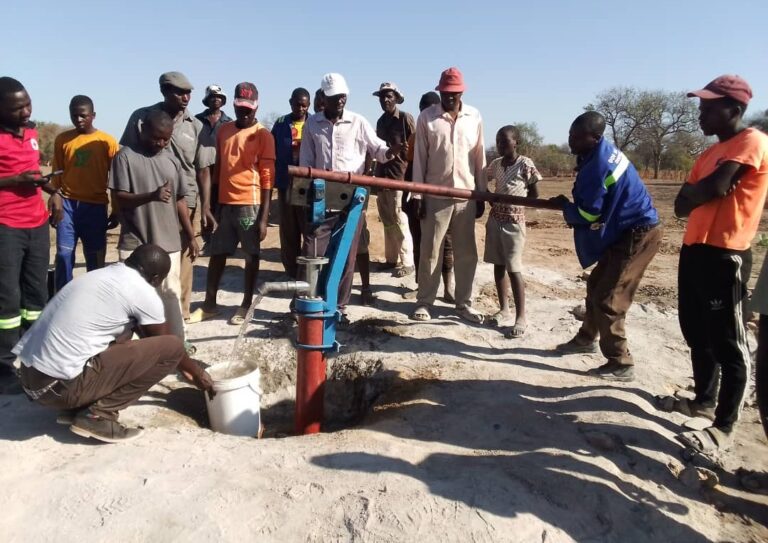
“We are still holding cholera awareness campaigns and making efforts to improve on water and sanitation. New boreholes are being drilled by various stakeholders, like in Mkwasine, the Mkwasine Management Committee was forthcoming as it helped in drilling some boreholes,” said Maziva.
District Nursing Officer (DNO) Leonard Bhasera said vaccine acceptance was high and even the apostolic sect members, who do not usually seek medical attention, came in numbers without being forced.
“Acceptance of Oral Cholera Vaccination was high because many people experienced the deadliness of the disease. We had an overwhelming support from the community as we managed to exhaust all the vaccines we were allocated,” said Bhasera.
He also urged those who received the Oral Cholera Vaccines to continue exercising hygiene as well as drinking from safe spots.
“Those who were vaccinated should continue exercising hygiene and drinking from protected water sources. Food should be cooked thoroughly and eaten whilst hot,” added Bhasera.
Chiredzi, which last experience life threatening cholera cases in 2008, was one of the major cholera hotspots this year, recording a sizeable number of cholera confirmed deaths.

CBAP trains communal farmers on forest regeneration

By Virginia Njovo

Community Based Aid Programme (CBAP), recently trained farmers in Zimuto area on forest regeneration, aimed at restoring deforested areas using natural methods.
Zimuto area falls under Region IV in the Southern part of Zimbabwe, known for having a variety of vegetation species as well as being a game ranching area but had been ravaged by deforestation and climate change.
The reforestation drive is aimed at restoring the lush canopy of destroyed forests by the local farmers as well as maintaining the remaining vegetation as they conduct their farming activities.
Facilitating the training at Zimuto Township on August 19, 2024, CBAP director Samuel Mhungu said they had a vision of a greener tomorrow which involved maintaining the remaining natural trees in Masvingo Rural District Council (RDC), starting with Wards 1, 2, and 19.
“We are training traditional leaders, with the goal of making them lead their communities in the thinning process, so as to restore forests and reduce carbon emissions, ultimately improving oxygen levels,” said Mhungu.
The group presentations at the training revealed that in 1980, the Zimuto area was known for growing wheat and rice in its wetlands, which today is non-existent as there are no more wetlands left.
They also pointed out that due to deforestation, there was no more game left in the area, which was previously known for a variety of wild animals.
Chief Zimuto’s representative at the training Fortune Shawarira said they welcomed the regeneration project since they also had the desire to have their old identity of where they were known for agricultural production.
“This natural regeneration project is a valuable initiative because of its goals and objectives in restoring the pride of Zimuto. Zimuto was historically known for traditional rice production in our wetlands (deketa), which no longer exist today. Our area was also renowned for its diverse game meat, attracting people from various places to come and hunt. However we nolonger have wild animals here.
Reforestation is a complementary approach to protection and maintaining the earth’s forests. In Zimbabwe landscapes, forests are highly degraded while in some cases they have been completely cleared.

Masvingo Christian Academy knocked out of Mai Hondo Tourney

0

By Rangarirai Shanyurai

Masvingo Christian Academy under 16 footballers were knocked out in the group stages at the Mai Hondo Memorial Tournament on August 31, 2024 in Mutare after losing 0-1 to Bright Star.
Masvingo Christian Academy Chairperson Takesure Hlupo cited age cheating as the major result of the team’s exit from the tournament and emphasized need for fair play also addressing issues related to cheating in such tournaments.
“It was a learning curve and we would not compromise on our values by cheating and that was the major reason why we were eliminated in the group stages.
“The tournament was good, though I feel much still needs to be done regarding cheating. We ended up drawing followers because of our correct young football players. To us it was not about winning but showcasing young football talents,” said Hlupo.
He said though they were knocked out early in the tournament, the team got exposure and got a soccer kit.
“On a positive note, by participating in the tournament, we received a complete set of jerseys, socks and two balls,” said Hlupo.
Commenting on the age cheating, Mai Hondo Youth Sport Trust spokesperson Tapiwa Mbutsa said the vetting process was done properly and one team was disqualified.
“We implemented a vetting exercise prior to the tournament where we required various documents and engagements with schools to prevent age cheating. Vetting is an ongoing process that takes places before, during and after the tournament and we take a zero tolerance stance on age cheating.
“We even disqualified City Strikers team which had gone through the qualifiers using an over-aged player.
La Sakubva lifted the boys’ soccer trophy while Nyamauru won the girls soccer while St Joseph primary won the girls netball.

FC Wangu Mazodze tastes first defeat

0

By Tatiana Mhararira

FC Wangu Mazodze well known as ‘Kingdom Boys’ in soccer circles tasted its first defeat against Triangle United FC nicknamed ‘Sugar Sugar Boys’ at Gibbo Stadium in Triangle recently.
The Kingdom Boys, who had never gotten any lose this season received their shocking defeat by the Sugar Sugar boys and lost with a goal to nil ending their unbeaten streak.
FC Wangu Mazodze expected to recover after Triangle players scored the first goal but that was the end result of the match.
Speaking to TellZim News, FC Wangu Mazodze Spokesperson Blessing Kwesha said the match against Triangle United FC was one of the difficult matches leading to their first loss.
“Our game against Triangle United FC left a bitter taste in our mouths. After going for 20 games without testing defeat this match left our legion of fans hurt, but definitely we will bounce back.
“I congratulate Triangle United FC. The game could have gone either way, the players had scoring chances which they failed to utilize or we had to accept defeat,” said Kwesha.
Kwesha said in the upcoming match they expect a win from the Kingdom Boys.
“The team’s upcoming match against Great Zimbabwe University FC is our chance to get back to our winning streak. We won’t take this game lightly as GZU FC has proven from their last encounter against Chiredzi Stars FC that they can be a pain in the neck.
“They are riding on winning emotions so we will be alert. The Kingdom Boys are in their best condition we expect nothing but a win,” said Kwesha.
FC Wangu Mazodze, coach John Nyikadzino said he was not impressed with the loss but was happy with the performance the boys showcased on the pitch.
”Like any other coach I was not happy with the result but the boys showed outstanding performance as they considered a goal trying to respond to get the equalizer but failed.
“Losing a game is part of football but we are now looking forward to our next game. What is important to us is to win and remain on top of the log,” said Nyikadzino.
Nyikadzino said it was important to make of such loses to learn and develop.
“After the loss against Triangle it is important for players to develop game by game. The players’ previous performance though l wasn’t expecting the outcome. I want the players to develop from the way they displayed against Triangle FC,” said Nyikadzino.
The Kingdom Boys are currently the log leaders with 51 points. The Sugar Sugar Boys are on second position with 38 points. Their next game in Mucheke Stadium is against GZU FC which has 11 points.

Politicians, promoters exploited me: Mauchi

By Virginia Njovo

Talented Shona poet Abel Mauchi (49) is a bitter man, saying politicians, promoters and online content creators have been exploiting his talent for nothing, using him only to promote their work while he remains struggling.
Speaking to TellZim News, Mauchi, who is known for performing at political rallies, said in most cases he only got a plate of sadza as payment for his performances despite him leaving people craving for more due to his word-smithing.
“Back home my family would be expecting something tangible from all these activities, but I will go back with empty pockets after being given a plate of sadza, and it is not like they would not have promised to pay. They would always give me a run-around when it is time to pay,” said Mauchi.
The poet said apart from being called for interviews by podcasters and online content creators for nothing in return, politicians who sought his services during campaign periods would still not pay a dime.
“I am treated like I do not exist by politicians when it is not campaign time, and when another campaign period comes, they reach out, use me to make their supporters happy then dump me after,” Mauchi said.
Mauchi has performed at both ruling party and opposition rallies, something he said should not be cause for concern in a country that recognizes art as it is, not attaching partisan titles to what a poet like him does.
“Towards the SADC Summit, I penned a poem titled Karekare, endorsing President Emmerson Mnangagwa’s chairmanship but it didn’t go anywhere despite sending it to relevant people whom we trusted to publish it, but in our industry which is full of saboteurs, it did not go anywhere,” said Mauchi.
Mauchi added that artists from Masvingo were being neglected by promoters on events that take place in the province, while they bring in artists from Harare whom they pay easily and expect those from the province to perform for free.
“When artists from Harare come to perform at events organized locally, they are paid handsomely, while local artists like me are considered as last option, with nothing to show for it,” he said.
Mauchi, who calls himself ‘Shefu Mudhesve’ started poetry in 1992 while he was staying in Chitungwiza Seke Unit N, and says he has written over four thousand poems, claiming he can recite over a thousand of them.

Unclear roles, politics behind clashes between SDCs, School administration

By Rangarirai Shanyurai

The lack of clearly defined roles of the School Development Committees (SDC) has been referred as one of the major reasons behind the ever increasing clashes with school administration, a situation which stifles development at many learning institutions in the country.
A survey by TellZimm publication recently showed that about five schools in Masvingo Province had conflicts over SDC elections since January this year mainly due to misunderstandings over mandate and responsibilities.
Ministry of Primary and Secondary Education (MoPSE) Director of Communications Taungana Ndoro said the conflicts had become a common feature in Zimbabwean schools, citing overlapping of roles between the two parties and overlapping of political interests into school business as the major cause.
“These types of tensions and challenges around SDC elections and operations are deeply concerning and seem to be symptomatic of deeper problems within the education system. Some of the key factors that may be contributing to these heightened conflicts include lack of clear roles and responsibilities. There may be ambiguity or overlap in the defined roles and decision-making powers between the two leading to power struggles.
“Politicization of school governance, in some cases, SDC elections and processes may be influenced by partisan political interests, rather than focusing on the best interests of the school community. Inadequate training and support of SDC members, who are often volunteers might also be another challenge as they may not have the necessary skills,” said Ndoro.
Ndoro also highlighted mistrust and resource constraints as other reasons behind the continued conflicts.
“Breakdowns in communication and transparency between school leadership and SDCs can foster an environment of suspicion and confrontation. Disagreements over allocation and utilization of limited school funds and resources may be a source of tension,” said Ndoro.
He said it was important for government to have clear legal and policy frameworks that govern roles of both parties to avoid role overlapping while training remains crucial for SDC members.
“To address these issues, a multi-pronged approach may be necessary including reviewing and clarifying the legal and policy frameworks governing roles and responsibilities of school authorities and SDCs, ensuring a clear delineation of powers and accountability mechanisms.
“There is need to provide comprehensive training and capacity-building programmes for SDC members to equip them with the necessary skills and knowledge to effectively participate in school governance.
“Promote greater transparency and open communication between school leadership and SDCs, fostering a culture of collaboration and mutual respect and strengthen mechanisms for resolving disputes and conflicts, such as establishing impartial mediation or grievance redressed processes,” said Ndoro.
“There is need to consider ways to depoliticize school governance and ensure that decisions are driven by the educational needs and wellbeing of leaners, rather than narrow political interests.
“Ultimately, the goal should be to create an environment where school administrators, SDCs, and the broader community can work together constructively to improve the quality of education and address challenges facing Zimbabwe’s schools. This will require a sustained effort and a commitment to putting the interests of learners first,” he added.
Progressive Teachers Union of Zimbabwe (PTUZ) Dr Takavafira Zhou said the conflicts were due to conniving between either parties often to benefit from school finances.
“Indeed there are many conflicts in schools such as Ndarama High School, Victoria Primary, Victoria High School, Gokomere High, just to mention a few. In some instances we have the same people being retained in the SDC/SDA over protracted periods because they connive with administration to fleece the schools of the money for personal benefits. In other instances administrators who ordinarily are ex officials in SDA/SDC enter into tenders without parents’ representatives and when parents raise objections, the administrators’ nichodemously work for a shortened term of office or boot them out of office.
“In other instances, parents representatives use political power to prolong their stay in office and school administrators are petrified to legitimise their illegitimacy. Responsible authorities also flout the Statutory Instruments in the appointment of SDC/SDA with the consequent friction with parents. Some Ministry officials at district and Provincial offices also support administrators that are flouting regulations because of kickbacks from school administrators,” said Dr Zhou.
Dr Zhou said the best way to address the challenge in schools was through observing the laws guiding conducting of elections and ensuring each department knows its roles for checks and balances.
“The best way forward is to respect the legislation in place and create harmonious relations in schools. It is sad we have officials sleeping on duty when nasty happenings are ensuing in schools. Fundamentally, an SDA/SDC committee must be in office for a year. An AGM must have a chairperson’s report and treasurer’s report that must be audited, and ratified by parents. Selection of a new committee must be independent from any interference by the administration at any school.
“Administrators must never interfere with the selection of parents’ representatives, except on the following laid down regulations such as Statutory Instrument 379 of 1998 or Ministry of Primary and Secondary Education handbook. Ministry officials must educate administrators on proper observance of regulations guiding the appointment and operations of SDC/SDA. School administrators must not usurp powers of SDC/SDA chairpersons and treasurers.
“Ultimately, it must be realized that being an administrator or being in SDA/SDC must not be a licence to loot resources that must be channeled to the improvement of learning and teaching in a school,” said Dr Zhou.
One school head who spoke on condition of anonymity said the conflicts were centered on various characters of the major stakeholders.
“Situations in some schools need to be sanitized. Many schools are beset with problems of a varied nature but they centre mostly on the character of major stakeholders parents or communities and school heads or administrations. In some cases teachers too have a hidden hand in some of these conflicts. Some communities are so obsessed with what goes on in schools for different reasons, some parents are concerned with their fees that they are keen to follow up, more so if they have suspicions about the way the school administration handles the fees,” said the head.
At Victoria Primary School, clashes between the two parties resulted in the SDC filing their case at the courts of the law against the school while at Duma Primary School elections were totally abandoned and moved to a later date with allegations of political interferences in the elections.
Victoria High School once had a similar case of parents demanding an audit at the school against the then head John Muzamani after pass rates deteriorated at the former elite school.
At Ndarama High School there was high tension and parents were required to bring identity cards for verification before gaining access to the annual general meeting.
At St Joseph High in Zaka, the elections were postponed indefinitely and no date has been set for the election to take place.
Parents at Shakashe Primary School have also been on record having clashes with the school admin and SDC over allegations of misplaced priorities.

Neshuro learner wins ZPCS marathon race

0

By Tatiana Mhararira

Mwenezi District’s Neshuro High School learner, Rudo Moyo recently won a gold medal at the Zimbabwe Prisons and Correctional Services Commissioner General’s Goodwill Trust Fund half marathon race held at Chikurubi Dam View on August 24, 2024.
Moyo, also won a prize of US$75 as the first runner-up in the 10km race for juniors aged 16 to 19.
Speaking to TellZim News, Moyo said her win did not come as a surprise, it was hard work and commitment that paid off.
“I won the tournament because I worked tirelessly with the assistance of my coach and some community members who persuaded me and gave me much-needed moral support.
“It was an exciting experience participating in such a big tournament and I was determined to win and put my area on the map,” said Moyo.
Moyo’s coach, Stephen Mpofu said he was excited by the courage and confidence shown by the athlete which ultimately resulted in her win.
“The athlete showed maximum effort which resembled enough preparation and determination that gave her the results.
“The courage and level of confidence that Moyo showed to participate at this tournament considering that it was her first time participating at a big tournament considering her background was amaizing.
“She was not shy to showcase her talent despite coming from a marginalized area of Neshuro, is my hope that she will continue to shine in all the tournaments she will participate in,” said Mpofu.
He appealed for sponsorship for the talented athlete to travel to other tournaments saying financial constraints usually affect them and they end up missing some tournaments.
“I am also appealing to well-wishers who want to assist the athlete in the forthcoming events the Kasambezi tournament in Binga and these events helps in grooming Moyo and also exposing her to more stiffer contests,” said Mpofu.

Electricity shortages affecting winter wheat production

By Meditation Mposi

Farmers at Rufaro Irrigation Scheme in Masvingo North have raised concern over continuous electricity shortages hitting the province which they said was adding to water shortages farmers were already facing due to the El Nino-induced drought.
Speaking during a winter wheat field day at Rufaro Irrigation Scheme on August 28, Minister of State for Masvingo Provincial Affairs and Devolution Ezra Chadzamira said most irrigation schemes were being affected by power outages which made it difficult for farmers to get enough water for the crops.
“There is an outcry in irrigation schemes over power cuts which has left us doubting whether it is load shedding, electricity faults or sabotage. Farmers spend the whole day without electricity only to have electricity at around 2200hours then it is switched off at 0400hours, which shows farmers are not being prioritized in electricity distribution.
“We have agreed with Zimbabwe Electricity Supply Authority (ZESA) to give farmers priority on the little electricity available for sustenance of agricultural projects. In as much as there are faults and load shedding, the agricultural sector should be prioritised,” said Chadzamira.
Chadzamira further urged Zimbabwe National Water Authority (ZINWA) and its partners to drill more boreholes to complement the existing presidential borehole scheme to assist farmers with water for their projects.
“The Presidential Borehole Scheme is there to provide boreholes to each ward across the country. Water is a necessity to farmers and agriculture is now the greatest business. These projects must be taken seriously for they give us food and money to survive. The next time l come here I want to see progress from ZINWA,” said Chadzamira.
Masvingo North Constituency Member of Parliament (MP) Brian Mudhumi said the ongoing load shedding and poor response from ZESA was affecting the pumping of water for irrigation.
“When we report to ZESA officials about electricity faults, they give us low voltage power to operate the pump, even when we report problems they do not respond in time, sometimes they say they have no fuel and I give them only to respond after three or four days. If the province is to achieve its target for wheat then ZESA needs to take irrigation schemes seriously,” said Mudhumi.
ZESA representative at the field day, Alpha Mataga promised to do better and to hand over the plea to his bosses for better services.
“For the past weeks there was load shedding due to some technical issues. The other unit which supplies electricity was down. Farmers must report faults so that they can be fixed on time,” said Mataga.
ZINWA officials present at the tour also promised to drill another borehole to add to the six available at the scheme since the other one was not working.
“We are going to drill another borehole for farmers, we promise to put this on our borehole projects list, to help with the supply of water on this project,” said the ZINWA representative.
Farmers were further urged to consider using solar systems as an alternative when there is no electricity as the water table is now very low.
Four villages are in the Rufaro Irrigation scheme and each has 50 hectares of wheat and the whole irrigation is expected to produce 45 metric tonnes of wheat after harvesting.
Inputs for the winter wheat crop were received through the presidential input scheme and government has sent experts from different departments including ZESA, Agritex, ZINWA, AFC Bank, Grain Marketing Board (GMB) to monitor the projects.

Chiredzi communities unite to fight water challenges

By Beatific Gumbwanda

CHIREDZI- Communities in Chiredzi recently launched an initiative to contribute funds towards drilling boreholes at village level amidst the El Nino-induced drought.
The villagers mobilized themselves to contribute funds towards the purchase of borehole casings and fuel for the drilling rig, with Chiredzi Rural District Council (CRDC) coming in with expertise and the drilling rig for the exercise.
Chiredzi RDC Chairperson, Aspect Mashingaidze, applauded the communities for mobilizing their funds and partnering with CRDC to ease water challenges.
“Council is working with the communities on a Community Initiative Program where the communities mobilize financial resources towards the procurement of borehole casings and fuel and we provide the drilling rig,” said Mashingaidze.
He said they were drilling 60 meters but can go beyond depending on the contributions made for a particular hole.
“On average, we are drilling around 60 meters per borehole. So far we have started with ward 24, where we have 14 boreholes for 154 villages. Ward 1 has seven borehole sites for seven villages. Ward 3 has one village borehole site while ward 20 and 23 got two boreholes each.
“We have two schools and 24 village sites. We applaud the communities for coming up with the idea for the provisions of clean water to the communities,” said Mashingaidze.
Communities mobilized a total of US$ 31 000.00 while the provisional budget for the council in drilling and maintenance of the drilling rig amounts to US$17 000.00 for the projects.
Ward 24 councilor Tinashe Matanhuse said the idea came following persistent water challenges in his ward as well as the outbreak of cholera where villagers were walking five to six kilometers to fetch water from Mukazi River.
“We did not have access to clean water as villagers would walk five or six kilometers to fetch water from Mukazi River. The other thing that motivated the villagers to come up with such an initiative was the recent cholera outbreak. So far we have drilled seven boreholes though two of them were dry holes,” said Matanhuse.
Ward 20 councilor Tawanda Boora, said the communities were pressured to this initiative by the distances they have been walking to water points to get fresh water.
“Due to persistent water shortages the communities have been facing, they came up with such an initiative where we engaged our local authority to provide us with the drilling rig while we contribute money towards the purchase of fuel and drilling casings,” said Boora.
Ward 1 councilor, Learnmore Muvengi also highlighted the same water challenges and added that the communities were even planning on solarizing the boreholes for easy access.
“The fewer boreholes we have were overwhelmed so we decided, as communities to contribute money towards drilling boreholes as four villages were drinking from the same borehole. So far two villages got their shares and they are planning on solarizing their boreholes,” said Muvengi.