Home Blog Page 108

Maternal services in Zimbabwe free yet costly

By Perpetua Murungweni

In his presentation on the Mid Term Budget and Economic Review sometime in July, the Minister of finance and economic development professor Mthuli Ncube in the 2024 budget said, government committed ZiG$9.5 billion towards health system in the country.
“Mr Speaker Sir, the 2024 National Budget committed resources amounting to ZiG9.4 billion towards consolidation of the recovery of the public health system in all levels through provision of the necessary medical personnel, medicines, accommodation, rehabilitation and construction of health facilities, as well as provision of the appropriate medical equipment.
Of this amount, ZiG3.8 billion was earmarked for rehabilitation and construction of health infrastructure and procurement of medical equipment. In this regard, during the first six months of the year, ZiG2.5 billion had been extended to the sector with the bulk, ZiG2.3 billion going towards employment costs, as well as ZiG166 million for hospital support and ZiG66 million towards Infrastructure Development,” said Prof Ncube.
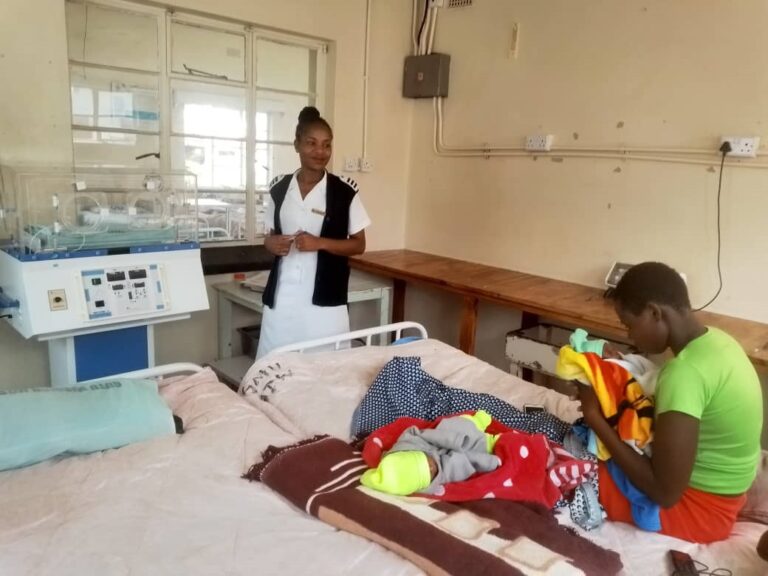
However, there is nothing to show for it as the health system in the country is still in bad shape characterised by shortage of medicine and equipment in health institutions. Expecting mothers are forced to spend own money to buy necessary equipment despite the fact that government says maternity health is free.
While others look back to the journey of motherhood with joy, it is a different case for Tariro Taonei (not real name) after witnessing the sharp end of the poor health service delivery in the country, recalling how she gave birth to a decomposing baby despite following her antenatal visits religiously.
“My first maternity experience was terrible, I never missed my antenatal visits for regular checkups where they check the wellbeing of the mother and the unborn child. What breaks my heart the most is I went for a checkup 3 days before I gave birth to a decomposing baby. I was left with questions regarding the importance of these checkups if they couldn’t notice that my child was dead. They even said everything was ok,” said Taonei.
Taonei said, together with her husband they were left shattered by the incident and the costs they incured to have the mother cured thereafter.
“After the incident I had to go to a private doctor for the removal of retained products of conception, and had to pay around US$300. We are shattered; the free services came at a price for us and we will never forget this incident,” said Taonei.
This is the situation a number of women go through in Zimbabwe, losing babies and forking out money to pay for maternity services despite the Zimbabwean government’s promise for free maternal services.
Expecting mothers are still facing hidden costs, of private hospitals and private doctors and cost of basic medical supplies leaving many to wonder if the policy is making a difference in reducing maternal mortality rates or masking a more complex issue.
Contacted for comment why people pay for equipment needed during birth, Masvingo Provincial Medical Doctor (PMD) Dr Amadeus Shamhu said maternity was indeed free but could not comment more saying the best person to comment was the Permanent Secretary in the Ministry of Health and Child Care (MoHCC).
Another lady claims that at six months, she was told that her stomach was full of water an ultrasound scan was performed which also came out saying the same thing.
“On my third pregnancy, I went to Masvingo Provincial Hospital to register for my six months pregnancy and the nurses told me that I was not pregnant but my stomach was full of water.
“The ultrasound scan was done and came out saying the same thing. I was very angry and disappointed because I could feel the baby kicking and moving in my stomach. I then went to a private hospital where the doctor confirmed my pregnancy and I had to pay USD 20 consultation fee for every checkup until I gave birth and a sum of US$300 for delivery,” said the woman.
Another woman from Rujeko in Masvingo told this publication about her traumatic experience with her first pregnancy at a local clinic after being told to buy a number of requirements which the hospitals should provide.
“I had a very traumatic experience as a first timer, I almost bled to death because I had no cotton wool during labor. I was told to come with a delivery pack on the day of delivery which consist of cotton wool, surgical and latex gloves, cord ties and cord clamps but could not afford it and nurses attended to me after I had bled for 2 hours saying that they had no cotton wool.
“After a long time of bleeding I was then transferred to Masvingo Provincial Hospital where I delivered my child through caesarian section. I had to go through blood transfusion to replace the lost blood and one sachet of blood costed US $100 each and was prescribed 3,” she said.
Another woman Nyasha Mutengiwa said there were no adequate equipment and material in maternal health facilities making it expensive for waiting mothers to access the service despite it being said is free.
“There seem to be no or inadequate equipment in hospitals because some of the examinations that requires equipment you are told to go and get them somewhere else where you have to pay for the service.
“What is the use of an ultrasound scan at Masvingo Provincial Hospital, when I was asked to go and get a scan elsewhere where I had to pay? Why can’t nurses at Mazorodze clinic refer us to Masvingo Provincial Hospital to get free scans and bring them back,” Mutengiwa said.
A random observation in the city pharmacies shows , the basic delivery kit costs around US$30 where four packs of surgical gloves cost US$6, 500g cotton wool costs US$14, cord clamps US$1, methylated spirit US$2, latex gloves US$2, and tetracycline US$2 which the brings the total cost to about US$27.
The situation is also bad in council clinics where expecting mothers are often anticipated to buy supplies required for birth delivery with Masvingo City Health Director, Suzanne Madamombe confirming the service was free but the clinics sometimes run out of supplies passing on the cost to the pregnant women and girls.
“No money is paid if you are a known pregnant person. Clients are given the list of these items as NatPharm does not supply these items at times and our stores department will be out of stock,” said Madamombe.
Many women, especially in rural areas, have limited access to healthcare facilities. This often forces them to opt for home births, which can be risky due to lack of skilled birth attendants.
There are usually no waiting shelters at the health facilities especially in rural and marginalized communities. These shelters provide a place for women to stay during the last weeks of pregnancy, ensuring they are close to medical facilities when they go into labor.
One village community health worker in Zaka said it was difficult to get transport to rush an expecting mother to the hospital during emergencies in their areas.
“In our community its difficult to get a car, to rush women to the hospital when she’s in labor and if we can’t get a car, we are forced to use a scotch cart or at times the expecting mother is forced to walk for a long distance to clinic,” said Tariro Nduna.
Another woman from Zaka said she delivered in a cart and the baby died before reaching the clinic saying there were few waiting shelters in Zaka forcing them to go the clinic when we are due.
“Here in rural areas there are few waiting shelters and in most cases we are to be rushed to the clinic when we are in labor. Two years ago I delivered my baby in a cart on my way and the baby died before reaching the clinic. This year I’m pregnant and expecting to deliver in September and I’m afraid as to what will happen,” said the woman.
My Age Zimbabwe, a youth led organization that champions youth leadership participation, gender equality and health rights of adolescence and young people, communications and advocacy officer Veeslee Mhepo said most of the problems young girls and women were facing during birth were due to inadequate funding and lack of resources at government hospitals.
“22 percent of young women in Zimbabwe’s 20–24 age groups have given birth under difficult circumstances. Due to expensive medical expenses, cultural beliefs, and inadequate funding and resources at government hospitals, many pregnant women and girls in Zimbabwe choose to give birth at home.
“Home births can increase a woman’s chance of getting potentially fatal birth-related injuries, such as obstetric fistula, particularly in young women who might not have access to knowledge about the condition’s causes and treatment. Obstetric fistula treatment and prevention in Zimbabwe is hampered by a number of factors, including cultural norms, a lack of knowledge, and financial limitations,” said Mhepo.
According to World Health Organization (WHO) a minimum healthcare spending is $86 per person, yet in Zimbabwe the budget allocates around $20 per person. This breeds a lot of problems for the healthcare system.
The healthcare system in Zimbabwe is underfunded and under-resourced. This usually results in overcrowded maternity wards, equipment shortages, and inadequate medical supplies which can lead to incorrect risk assessments and treatments.
According to the country’s 2024 budget, ZWL $6, 3 trillion was allocated to the health sector seeking to improve health outcomes and reduce the need to seek medical treatment outside the country. The allocation was also meant to consolidate recovery of public health sector services, such as adequate drugs and medical supplies.
Zimbabwe has been rated among countries with the worst maternal death ratios with some of the reasons behind the sorry situation in the country being the high cost of accessing the ‘free services’ which has shut most expecting mothers away from health facilities on this most important period of their lives resulting in many deaths.
Statistics from ZIMSTATS 2022 Preliminary Results of the 2022 Housing and Population Census have revealed that the estimated mortality rate in Zimbabwe is 363 per 100 000.
Reasons behind the high mortality rate include poor health seeking behaviours among expecting mothers who have complained that despite the service being deemed free by government, it had become expensive as government health facilities are underfunded and under resourced against the prevailing economic conditions which makes it impossible for the greater part of the population to seek services at private facilities.

Journalists urged to embrace AI for enhanced storytelling

By Passmore Kuzipa

Zimbabwean journalists have been urged to embrace the use of Artificial Intelligence (AI) to combat information disorders that are threatening free flow of information.
Parliamentary Portfolio Committee on ICT Postal and Courier Services member, Budiriro South legislator Darlington Chigumbu said journalists should acquaint themselves with Al tools that help fight fake news and information so they improve their literacy in technology.
Chigumbu was speaking during the AI Regulation In The Age of Information Disorders held at Monomotapa Hotel on the sidelines of the Media Institute in Southern Africa (MISA) 2024 Annual General Meeting (AGM) on October 25, 2024 in Harare.
“To successfully implement, adopt and deploy artificial intelligence journalists need to have skills and sound knowledge of AI. There is need to give these machines a chance to understand information through our work so that it will be able to mimic the correct information. AI is generating fake news because the information of our work does not exist in its memory,” said Chigumbu.
He also said journalists play a crucial role in fighting information disorders through the use of AI.
“As we are faced with challenges in addressing information disorders in the age of AI, journalists in particular hold a crucial role in ensuring the integrity, accuracy and transparency of information our people rely on every day.
“Journalists are the first line of defence in combating information disorder, for them to effectively do so they need to be capacitated with digital literacy in AI education.
“They must also be capacitated with verification tools, that will enable them to verify and be able to counter misinformation, leveraging AI to counter AI is very important,” he said.
Speaking at the same event, Information Technology (IT) expert Chris Musodza said AI has came with a lot of challenges that require a legal framework.
“AI comes with problems that require a legal framework. It widens the digital divide gap because most of the AI applications run on the internet and it has amplified how much people rely on the internet,” said Musodza.

Neglecting electricity precautions threaten public safety-ZERA

By Virginia Njovo

As electrical fault cases increase in Zimbabwe, Masvingo province included, Zimbabwe Energy Regulatory Authority (Zera) has raised concern on the failure to follow safety regulations as the major driver behind the problem.
Speaking during a stakeholder engagement meeting held on October 17, 2024 at Flamboyant Hotel in Masvingo, the regulatory board highlighted that some of the regulations were impractical.
Victor Sibanda who was chairing the programme indicated that the failure to do house inspections by Zimbabwe Electricity Supply Authority (ZESA) after every ten years poses risk to property owners.
“If we look at it, the last inspection was held in 2014 and now is the time when property owners should do re-inspection to ensure safety from electricity. In most cases some of these properties are not inspected as it is the duty of property owners to engage Zesa and not vice-versa,” said Sibanda.
In Masvingo within a period of one month, a boarding facility that housed Great Zimbabwe University (GZU) students was destroyed by fire due to a suspected electrical fault, while a Midlands State University (MSU) Zvishavane Campus hostel was also reduced to ashes.
Sibanda added that after wiring premises, it was better for the artisan to issue a certificate for reference sake and also lamented poor electrical works, fitting and installations.
“It would be better if there will be certification after wiring the house so that there is a traceable reference.
“Works and installations are deemed to be electrically unsafe if conducted in places that prevent accidents. Works and installations are also electrically unsafe when the equipment and materials used for works and installations have defects.
“They are considered to be unsafe when standard colour coding of equipment conductors or cables is not adhered as follows: red phase one, yellow phase two, blue phase three and black neutral,” he said.
While on repurposing of electrical appliances, he encouraged property owners to ensure that the work is carried out by competent people as specificified in Section 3 of these regulations.
He said if these regulations are adhered to, there is assurance that risks of electrical fault fires can be reduced.

Moyo honors cane cutters

By Beatific Gumbwanda

CHIREDZI-Former Chiredzi Town Council Chairperson and farmer Francis Moyo recently appreciated his farm cane cutters with excellence awards amounting to US$10000.
Moyo held the awards ceremony at his Buffalo Range farm, where 38 of his cane cutters received awards based on their cutting performances, with the best cane cutter, Wonder Moyo who harvested 68 bundles walking away with a scotch cart, abicycle, wheelbarrow, a hoe and a branded cup.
Speaking during the ceremony, Zimbabwe Sugarcane Research Experiment Station (ZSAES) Senior Research Plant Pathologist Petros Zvoutete said like any other farm employee, a cane cutter is a valuable asset as his work, and if done properly, will ensure a better harvest in the following season.
“Cane cutters are not just valued at the number of bundles they harvest, but how they harvest the cane, with base cutting being recommended as it promotes the next ratoon to produce more sugarcane. As ZSAES, we used to have these cutting competitions and local levels which later grew to international level where we competed with Eswatini and Mozambique,” said Zvoutete.
Chiredzi Productive Cane Growers Association (CPCGA) Chairperson, Collins Changamire, who was the guest-of-honour encouraged sugarcane farmers to give value to all farm workers, including irrigators and weeders, as they all give value to the crop.
“Today we are celebrating the hard work which was exhibited by cane cutters though however we should also recognize the work done by all farm workers including fertilizer appliers and irrigators. Their contribution is all aimed at giving the best results at the end,” said Changamire.
Francis Moyo, who won an Excellent Farming Award last year from Tongaat Hulett Zimbabwe (THZ), had an average yield of 80 tonnes per hectare, with a total average of 8000 tonnes of cane delivered to Tongaat Hulett Zimbabwe this season.

“Do or Die”

0

By Dr Isiah Dhliwayo

In the paradigm of Christian perseverance, the aphorism ‘do or die’ resonates as a clarion call to unwavering resolve. This idiomatic expression encapsulates the existential imperative to confront life’s trials with unrelenting fortitude, emulating the stalwart determination of the Psalmist who declared, ‘I shall not be shaken’ (Psalm 16:8).
In this crucible of faith, believers are beckoned to embody the apostolic exhortation to ‘run with endurance the race set before us’ (Hebrews 12:1), surrendering to the divine imperative that necessitates an unyielding commitment to spiritual victory.”The only way to survive the trials of life is to face them with faith.” – Charles Spurgeon
In this theological context, ‘do or die’ transcends mere mortal resolve, becoming an invocation to invoke the supernatural enablement of divine grace. It is an acknowledgment that, in the face of overwhelming adversity, the believer’s only recourse lies in the omnipotent sufficiency of God, who ‘works all things together for good’ (Romans 8:28). Thus, the ‘do or die’ imperative becomes an act of faith, a testament to the unwavering conviction that, in Christ, ‘we are more than conquerors’ (Romans 8:37).”

Doggedly determined to reach one’s objective in life,the idiom ,”Do or die “or matar o morir in Spanish or 拼死一搏,孤注一擲…in Chinese (Traditional)evolves reflecting or characterized by an irrevocable decision to succeed at all costs.”The greatest glory in living lies not in never falling, but in rising every time we fall.” – Augustine of Hippo

Immense fecundity of one’s imagination

in this contemporary life whether from a circular or Christian perspective in relation to the idiom ” Do or Die ” ,urges one to make great efforts in bringing success to one’s families and loved ones as the ultimate goal , and if one fail then it would result in challenges and unfulfilled dreams and expectations. Surely those of absorbent, fructiferous, prolific of golden dreams will unabattedly make it.

Historically,the slogan “Do or Die” was given by Mahatma Gandhi in the Quit India movement. In his Quit India speech on August 8, 1942, at the Gowalia Tank Maidan in Bombay, Gandhi urged people to “Do or Die.”

Amidst life’s tempestuous journey, when trials and hardships beset, do not succumb to despair. Draw upon the wellspring of inner resilience, and with unyielding determination, forge ahead, for it is in the crucible of adversity that character is tempered and greatness is born.”Perseverance is the Christian’s safeguard against losing his way.” – John Calvin.

Do or die, encapsulates the urgency of making a heartfelt commitment to one’s beliefs and living out those beliefs with dedication and sincerity, as this decision is seen as essential for one’s spiritual well-being and eternal destiny. It underscores the gravity of choosing between faith and unbelief, righteousness and sin, with eternal consequences hanging in the balance.Its do or die now !”We are not saved by our works, but we are saved for our works.” – Karl Barth.

From a Christian perspective, it echo the call to fully commit to one’s faith, embodying the idea that true discipleship requires an unwavering dedication to God’s purpose, even in the face of adversity. This mirrors Scripture’s emphasis on taking up one’s cross—an invitation to embrace the challenges of living out one’s beliefs.”Do not pray for an easy life, pray for the strength to endure a difficult one.” – Bruce Wilkinson

This idiom conveys a sense of urgency and commitment, implying that one must exert every effort to succeed, even at the risk of failure or serious consequences
Do or die evoke themes of grace and reliance on God. While we are called to “do,” our true strength comes not from our own efforts but from divine assistance. The tension between human agency and divine grace reminds believers that while they must act with determination, it is ultimately God who grants success and sustains them through trials.

“The true Christian is not one who never falls, but one who, having fallen, gets up, confesses, and continues.” – Martin Luther.Thus, “do or die” serve as a potent reminder of the commitment required in faith, the importance of perseverance in challenges, and the recognition of divine support in our endeavors.

Councilors clueless on new landfill progress

By Brighton Chiseva

Masvingo councilors seem clueless over the progress at Cambria Farm landfill which was prematurely commissioned last year but is yet to start operating as council continues to give excuses over the delay.
This came out during a full council meeting held in the council chambers on Monday (October 29) where it was said the local authority failed to purchase necessary equipment needed to allow the landfill to work due to financial challenges.
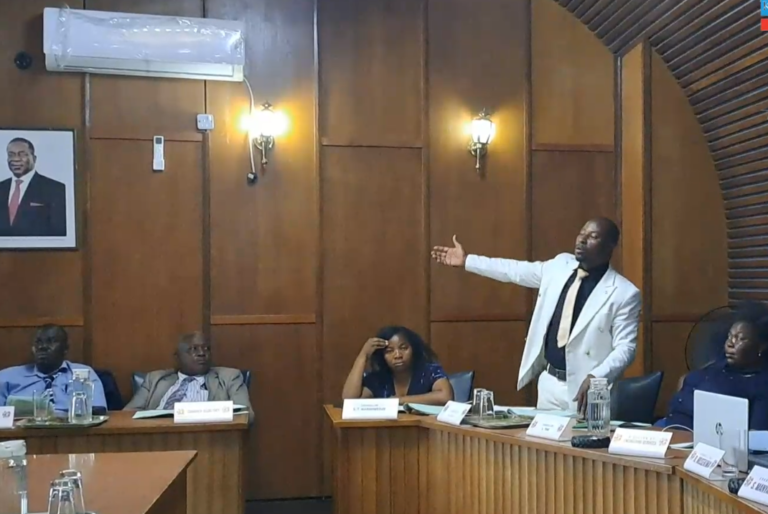
The deputy mayor and Ward 5 Councillor Daniel Mberikunashe asked the relevant committee if the landfill was working saying the councilors should be told the truth so that they do not lie to residents.
“We want the relevant committee to tell us the truth on Cambria Farm. Is it working or not? If it’s not please tell us the truth so that we know what to tell residents. We have been telling them that the project was completed and its working,” said Mberikunashe.
The chairperson for the Health, Housing and Environmental Services Maxwell Madhuna said he was told that the project was stalled due to financial challenges to purchase the required machinery to start working.
He said they enquired and discovered that the compactor cost around US$700 000 and council was not in a capacity to part away with that money to purchase the compactor.
“We asked the management to enquire on the prices of the compactor that is needed at Cambria farm. We were told that it cost around seven hundred thousand dollars and we cannot afford that at the moment.
“We however resolved that council buys a Bulldozer and Roller which is around US$300 000,” said Madhuna.
Ward 2 Councillor Benson Hwata in whose ward the old Runyararo West Dumpsite is located said council was not serious on the matter and said it was supposed to be given top priority ahead of any other project.
“The issue you have raised here is a very sensitive one and no one should be laughing here. As we speak now people are in smoke since morning. We need to treat this as a matter of urgency and moving from the old dumpsite should be top priority.
“If we delay people will die. Do we not have residents to serve? No one here understands the situation because we don’t stay there and I think I should take you all with a lorry so that you see what I am talking about,” fumed Hwata.
Ward 10 Councillor Sengerayi Manyanga weighed in and said if purchasing of the required equipment was taking long then they were supposed to have temporary solutions to the challenge. He suggested that they fence off the Runyararo west dumpsite and put security to monitor those who start fires.
“We need to have a temporary solution and I suggest we fence off the old dumpsite and put our municipal police there to guard. Currently they are guarding Cambria landfill but there is nothing there. Those who want to scavenge for plastics will be allowed to enter with strict warning from the security guards,” said Manyanga.
He went on to say there were squatter camps in the dumpsite saying it was becoming a harbor for criminals who ply in Victoria Ranch and Runyararo West suburbs.
In a video circulating on social media, none of the alleged scavengers commented on the Monday fire saying the fire just erupted from the ground and said they survive on collecting plastic so they could not burn them down.

Field boundary issue ends in jail sentence

0

By Rangarirai Shanyurai

A Mberengwa man was jailed four years after he severely assaulted his neighbour during a field boundary scuffle.
Fortune Hove (32) of Gazimbi Village, Mberengwa was charged with attempted murder, for which he was initially sentenced to six years, but two years were conditionally suspended.
In a statement on its official X handle, the National Prosecuting Authority of Zimbabwe stated that Hove went to the complainant’s house and asked him to accompany him to his place to resolve a boundary dispute.
Whilst on their way, Hove started accusing the complainant of clearing his field on the boundary and the conversation culminated into a heated argument. Hove pulled a knife from his pocket and stabbed the complainant once on the neck severely injuring him.
The matter was reported to police leading to Hove’s arrest.
The NPAZ urged members of the public to find peaceful ways of resolving disputes and avoid taking the law into their own hands.

CCJP engages Bikita villagers on disability rights

0

By Tatiana Mhararira

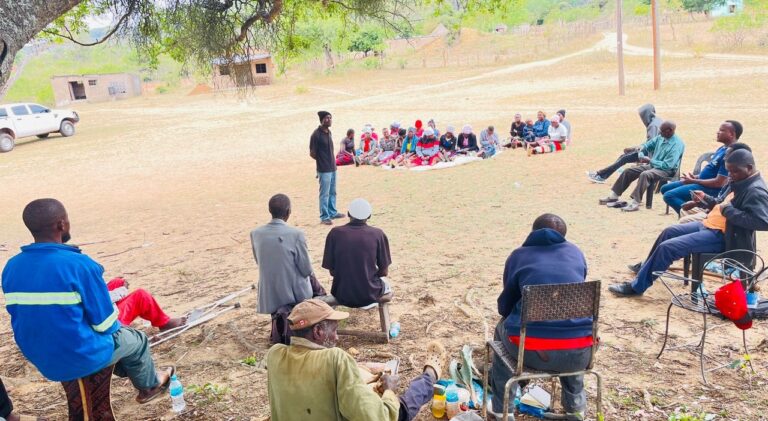
The Catholic Commission for Justice and Peace (CCJP) conducted a Citizens Duty Bearers Engagement Forum with Kufakunesu villagers in Ward 13 of Bikita West on disability rights, allowing villagers to share their perspectives on the topic on November 1, 2024.
The community engagement program enabled villagers to discuss actions that could be taken to support people with disability in the community.
Several key issues were raised by the villagers, including the lack of consideration for voices of people living with disabilities (PWDs) during public meetings, the absence of ramps in most public toilets to assist the disabled, exclusion of PWDs from food donation distributions, leaving them without support and it was noted that non-disabled individuals could not adequately represent the interests of the disabled.
CCJP project officer Barnabas Matenga said the community engagement was aimed to amplify the voices of PWDs and ensure their rights were respected.
“The programme strengthen the capacity and opportunities of various marginalized citizens and organized citizen groups, particularly women, youth, and PWDs, to exercise their rights and advocate for change across Masvingo.
The capacities of PWDs were developed, creating spaces for them to engage with duty-bearers on relevant human rights issues, hold them accountable, and collaboratively implement agreed-upon action plans. This project elevates the voices of PWDs, enabling them to advocate for their rights and needs,” he said.
Addressing villagers at the same event, ward 13 Councillor Elliot Chapinda stressed the importance of transparency in resource allocation among villagers, including PWDs, and stressed that public infrastructure should accommodate disabled individuals.
“Corruption is rampant, as the responsible authorities fail to provide transparency in sharing donations, leaving disabled people at a disadvantage. This is an issue I wish to address while advocating for disability rights in my ward.
“By law, every institution should have ramps for PWDs, and boreholes drilled in this area should be located close to where PWDs reside. As a community, we also want to combat discrimination against albinos, as they are human beings like the rest of us,” Chapinda said.
Chapinda encouraged the PWDs to move along with the digital age so as to get information on time.
“I also encourage disabled individuals in the area to embrace modern technology and gain access to information. They should strive to obtain smartphones to receive information quickly through WhatsApp and other social media platforms,” he said.
Speaking to TellZim News after the event, one of the villagers, Walter Manasa, said CCJP’s community engagements and training sessions helped villagers understand their constitutional rights.
“The training made us aware of our human rights, particularly through the previous community engagement that focused on Section 56, reminding us that no one should be left behind in any aspect.
“These training sessions provided by CCJP have taught us how to manage conflicts peacefully without resorting to violence. This has contributed to a reduction in gender-based violence (GBV) cases among PWDs and has fostered respect for diverse viewpoints during public meetings,” said Manasa.
Mavis Mazhara, a PWD, said that the community engagement has allowed her to voice her opinions and access resources just like able-bodied individuals.
“Today’s meeting enlightened me on the need to share my views with the councillor. I have learnt that even though I am disabled, I am an important member of the community and should benefit from resource allocations just like everyone else in the village,” said Mazhara.
Another villager Samuel Kufakunesu said the engagement was significant, as it taught him how to better coexist with PWDs and understand the challenges they face in the community.
“The meeting organized by CCJP has shown us how to live harmoniously with PWDs and collectively address the challenges they encounter so they can lead fulfilling lives, just like able-bodied individuals.
“We proposed that anyone building a toilet at their home should consider that one day they might become disabled or have visitors with disabilities, so these factors should be taken into account by the entire village when constructing new facilities,” said Kufakunesu.
As a way forward, the community established a disability advocacy committee to assist in promoting disability rights.

Runyararo West Secondary School plans scraped

By Staff Reporter

Masvingo City Council has said the local authority has no funds to construct another school in Runyararo West and the land that was reserved for the school will be given to Francis Aphiri for its expansion.
This comes after calls by residents urging council to build a secondary school in the suburb to cater for learners from the area.
Francis Aphiri Primary is set to construct a satellite school to ease its ever increasing enrolment on the land that was earmarked for the sole secondary school in the suburb.
This came out in a full council meeting held on Monday October 28 where it was noted that the Health, Housing and Environmental Services Committee resolved that Francis Aphiri be granted permission to use the land.
“The report of the Director of Housing and Social Services on the application by Francis Aphiri Primary School, for permission to construct a three-storey classroom block to ease the problem of hot sitting was considered.
“The Committee noted that the idea was noble but there was no space at Francis Aphiri Primary School, and also that the school was already congested since there were 2 650 learners. It was proposed and agreed that Council should offer the School a new site to establish a satellite school to ease congestion of learners at Francis Aphiri Primary School.
“It was proposed that the site originally earmarked for a Secondary school near North West Medical Clinic be changed to a Primary School site to accommodate the request by Francis Aphiri Primary School. The Committee agreed that the proposed storey building be constructed at the new site. The Committee also agreed that Council would avail another site for a public Secondary School in the locality,” read part of the committee minutes
The matter however sparked debate in council chambers as councilors felt they were doing a disservice to council by giving away land earmarked for a secondary school to a primary school.
Ward 2 Councillor Benson Hwata said it was not fair for council to delay construction of a secondary school in the area as learners were struggling to get places in the few secondary schools available.
“You want to allow the construction of another primary school in Runyararo West but where do you think all those learners will go? The available secondary schools are already congested yet you want to add another primary,” said Hwata.
Councillor Sheron Marombedze weighed in saying council was supposed to find another place for Francis Aphiri’s primary school extension or construct double storeys at the school.
Ward 5 councilor Daniel Mberikunashe said the reason why enrolment at Francis Aphiri was ballooning was a result of Victoria Ranch suburb which was not in Masvingo City’s jurisdiction so they were not supposed to be forced to make decisions based on that.
“The reason why Francis Aphiri’s enrolment continues to rise is because of learners coming from Victoria Ranch. The housing scheme there should avail land for schools to cater for the learners from there. We can’t be forced to make decisions because of people out of our jurisdiction. We cannot give away the land that we had allocated for a secondary school, it has to remain as such until we get resources to construct it,” said Mberikunashe.
Masvingo Town Clerck Engineer Edward Mukaratirwa however said the decision was made after considering that constructing a double storey at Francis Aphiri would mean more learners at the school and that would deprive other learners from accessing certain services like sport, as all the leaners would have to use the same grounds so some will end up failing to get a chance.
He said another reason was that the area was closest to the main Francis Aphiri school for easy management and council would negotiate with another church which had been given land to construct a primary school but was failing and if they agree, council will repossess the land for construction of a secondary school and the church will get another place.

Chiredzi Council clears air on Chigarapasi closure

By Beatific Gumbwanda

CHIREDZI-Chiredzi Town Council recently assured its stakeholders that Zimbabwe’s largest beer garden, Chigarapasi, which was closed on September 30, 2024 following the expiration of the operator Big Five Beers’ lease, will be reopened soon after following the proper tendering procedure.
Initially, the council closed down Chigarapasi in December 2016 in compliance with a Ministry of Local Government, Public Works, and National Housing directive that stipulated that non-profit-making entities were to be closed.
This led to an outcry as over 1000 families were making a living from the beer hall and the local authority resolved to lease the property in 2017.
Big Five Beers had been operating the beer garden since then until the expiry of the lease prompting the closure of the beer hall awaiting another tender process.
Speaking to journalists during the Chiredzi Town Council media engagement at Clevers Hotel recently, CTC Chairperson Jameson Charumbira said the tendering process of the beer garden would be held soon.
“I want to assure you that we have not yet awarded anyone with a lease to operate the Beer garden, but we are in the process of assessing the situation at the beer hall before we tender. As councillor, we are not involved anyhow in the tendering process, and I would like to inform you that due diligence will be taken before awarding anyone with the lease,” said Charumbira.
Chigarapasi beer hall opened doors in the early 1980s mainly as a recreational place for the low-income earning workers in the Lowveld sugarcane industry and seats on16 273 square meters.