Home Blog Page 127

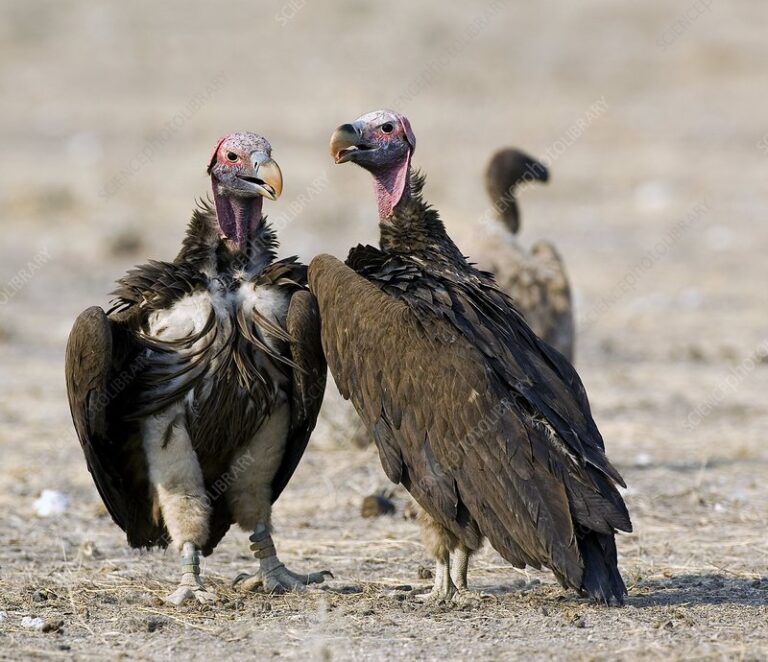
N’angas vs Prophets: Who is using vulture body parts?

By Theresa Takafuma

Mbuya Kanengoni, a traditional healer from Masvingo claims to have come face-to-face with vendors who sell vulture body parts that are then used for belief/faith -based purposes in Chiredzi.
She said they told her how people use the various scavenger bird parts to foretell, heal and summon spirits, adding that the so called sprouting Christian ministry churches were the biggest culprits in this practice.
The elderly traditional healer however distanced the organizations she is affiliated to, ZINATHA and Traditional Medical Practitioners Council of Zimbabwe (TMPCZ), from the use of vulture body parts in traditional medicine, saying she had done some research work with conservationists in trying to protect the endangered vultures.
“Last year I worked with a researcher from Birdlife Zimbabwe and we went to Chiredzi where we saw people selling vulture body parts, from heads, feathers, claws, bones and even the brains. We asked them what the parts were used for and they told us that self-styled prophets are the ones who buy the parts because they believe that they get superpowers from them.
“They said it was mainly ministry prophets who use the vulture parts to create talismans that they use in prophesying, which is why they end up being able to tell people’s names and addresses like, ‘your name is James, you stay at house number this and that’ as if they are accurately prophesying,” Mbuya Kanengoni said.
According to her, traditional healers registered under the ZINATHA do not use vultures in their trade, as they receive awareness from conservationist organisations like Birdlife Zimbabwe and the Zimbabwe National Parks and Wildlife Department.
Bishop Joshua Musiiwa, who is the Newlife Apostolic Church leader however said he believe that those who use vultures in prophesying are just black magicians who manipulate the vulture parts to use their dark magic charms.
“I believe this is hurombwa (use of charms for riches or power) because there is no way we can just take a vulture’s head, crush it, steam or use it anyhow without putting charms and someone then starts prophesying or healing. It is just the use of charms disguised in the use of vultures.
“My worry however is that, those in remote areas where these things are rampant do not have enough information that can deter them from senselessly killing vultures. I hope Birdlife gets to these areas so that even those who go there to buy do not find them,” Musiiwa said.
The vulture population in Zimbabwe is severely endangered, with five species namely the white-backed, white-headed, hooded, lappet-faced and Cape Vultures being critically vulnerable, according to the International Union for Conservation of Nature’s Red List.
While 61 percent of the vulture population decline in Africa is attributed to poisoning, 29 percent is still attributed to use in traditional medicine, where faith and traditional healers use vulture body parts for rituals.
On May 22, 2024 Birdlife Zimbabwe, an organization that promotes birds conservation, in conjunction with TMPCZ held a training workshop for traditional, faith-based healers, herbalists and other relevant stakeholders in Masvingo to raise awareness against the use of vultures in belief-based healing.
Speaking on the side-lines of the workshop, Birdlife Zimbabwe Preventing Extinctions Programme Manager Leeroy Gerald Moyo said what key issue was for traditional healers to know that indeed, vultures were endangered and there were laws that govern the scavenger birds.
“Various aspects came out of the workshop as some denied using vulture body parts for traditional medicine, but some do use them; however the most important thing was for them to know that there are laws that govern these vultures.
“They may use other alternatives like plants amomg other things, instead of vultures because they are endangered. We were mainly looking at the Parks and Wildlife Act Chapter 20:14 which stresses that vultures are part of the specially protected animals,” Moyo said.
Reports have also shown that those involved in vulture parts trading make brisk business as they are much sought-out for in traditional healing circles, with one full bird costing approximately US$600.
There have also been reports of traders cutting the birds to sell single body parts, with one traditional healer who refused to be named saying a head could cost between US$60 and US$100 around Chiredzi and Triangle.
“The parts are believed to work for varying purposes, for example, a head has different healing purposes to a feather, and bones serve a different purpose with wings for example,” said the healer.
TMPCZ Chief Licensing Officer Jennifer Mauzhende said the council saw it fit to collaborate with Birdlife Zimbabwe to raise awareness against the use of vultures, as there has been a lot of speculation alleging that traditional and faith healers, as well as herbalists licensed under them were the ones using vultures in medicine.
“As a council that works with traditional and faith healers, herbalists, distributors and traditional birth attendants, we saw it fit to educate them that they should look for other things to use in their work, not vultures.
“They have to know that being caught with any vulture part is a liable offence that warrants arrest. Here they were taught about the role of vultures in nature and eccosysterm, so that they do not abuse them,” Mauzhende said.
Seasoned traditional healers also argue that the use of vulture body parts in belief-based healing is a new phenomenon introduced not very long ago because healers always used other materials, be it in healing, fortune telling or foreseeing.
Sekuru Chikunya, a seasoned traditional herbalist who is also TMPCZ Masvingo Provincial Chairperson said traditional healers and prophets used to look for various other things to use in healing and ritual performance, not vultures.
“Since time immemorial, no one really used vultures for healing. We always knew that if a person gets possessed by ancestral spirits, those spirits were the ones who would make the person dream of the herbs and medicines to use.
“For prophets we knew that they would pray using salt and milk to heal people. Those of the masowe sect used muchakata tree barks (mobola plum), and no one used vultures, it is a new phenomenon in traditional and belief-based healing,” Sekuru Chikunya said.
Studies have shown that there are ecological consequences to the vulture population decline, which include changes in the community composition of scavengers at carcasses in the wild, increasing potential for disease transmission between mammalian scavengers.
The Zimbabwe Vulture Action Plan has been put in place to reduce the threats to vultures in the country, in order to protect what remains of the endangered scavenger bird.

Explosion claims two lives at Dohwe Gold Mine

0

By Tinaani Nyabereka

In a tragic incident at Dohwe 118 Gold Mine in Mberengwa, two miners lost their lives while three others sustained injuries following an explosion on June 8, 2024.
James Ndebele (38), of Maglas Township in Zvishavane, and Alfred Hove, 19, from Village Bricks under Chief Bvute in Mberengwa, were fatally struck during the blast.
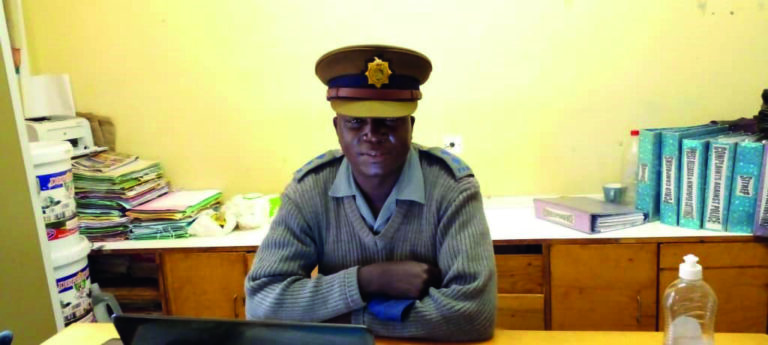
Midlands Provincial Police spokesperson, Inspector Emmanuel Mahoko confirmed the development.
“I can confirm an incident where a mine reportedly blasted and killed two people. The incident serves as a reminder of the risks associated with mining activities and underscores the importance of adherence to safety guidelines to safeguard the lives and well-being of miners.
“We urge miners to exercise utmost caution and diligence in their work,” Mahoko said.
Circumstances given were that Ndebele and Hove were laboring underground in a mine shaft while their colleagues worked on the surface. The sequence of events leading to the explosion unfolded when Hove requested fire to light his cigarette.
In response, one of the miners on the surface tossed a burning firewood log into the shaft, accidentally igniting a cache of explosives. The explosion however was immediate and catastrophic, claiming the lives of Ndebele and Hove.
The three miners who were outside the shaft at the time of the explosion suffered varying degrees of injuries as debris and shrapnel were hurled through the air by the force of the blast. Quickly, authorities were notified, and investigations into the incident are currently underway.
In another incident, Zimbabwe Republic Police confirmed receiving a report of a fire incident that occurred in Mkoba 16 Gweru on June 8, 2024 at around 1500 hours. A house in the area had one of its bedrooms catching fire.
It is alleged that property comprising two beds, a wardrobe, blankets, and various clothes were destroyed. Residents managed to extinguish the fire before it could spread to other rooms.
The matter was reported to the Police, Fire Brigade and Zimbabwe Electricity Transmission and Distribution Company (ZETDC) who attended the scene.
The cause of the fire is yet to be ascertained including the valuation of the destroyed property. Investigations are still in progress.

Man in court for paying tollgate fee with fake money

0

By Bright Zhou

A 28-year-old man from Rujeko C, Masvingo appeared before Masvingo Magistrate Court Ivy Jaona for paying a tollgate fee using fake money.
Preference Chihumura was remanded out of custody waiting for continuation of trial on June 17, 2024.
It is the state’s case as presented by Prosecutor Nobuhle Moyo that on November 2, 2023 at around 1100 hours Chihumura approached the Lothiam Tollgate along the Mutare-Masvingo road on his way to Zaka.
Chihumura gave a US$10 fake note to the Zimbabwe National Roads Administration (ZINARA) officer as payment for the tollgate fee.
The ZINARA officer then suspected that the US$10 was fake money, and Chihumura was requested by the officer to park his vehicle aside for further verification.
Upon confirming that the money was fake, the ZINARA officer then handed over Chihumura to police officers who were at the tollgate who further handed him over to the Criminal Investigation Department (CID) Masvingo for further investigations.
CID detectives then found out that the US$10 was fake and Chihumura was arrested.
In his defence, Chihumura told the court that the the money he used to pay for the tollgate was not his as he had borrowed a sum of US$200 to add on to his lobola money he was going to pay in Zaka on the day.
“The money I used to pay for the tollgate was not mine as I had borrowed US$200 from a colleague, a storekeeper at Rujeko C business center so that I could add onto my lobola money. I was shocked to be told by a ZINARA officer that the money was fake,” said Chihumura .

400 dead bodies cross SA border into Zimbabwe every month

…Mourners smuggle goods in coffins

By Brighton Chiseva

The Zimbabwe Revenue Authority (ZIMRA) at Beit Bridge Border Post has revealed shocking statistics of Zimbabweans who die in neighboring South Africa, with the port of entry recording an average of 100 deceased people per week which translates to 400 per month.
The revelation was made during a tour of the upgraded border post by journalists from Masvingo, Chiredzi, Zvishavane and Beit-Bridge following a customs and exercise training for journalists held at Flamboyant Hotel on June 10 and 11.
Addressing journalists, Port Health Officer Silibaziso Nkala said causes of death on the bodies they inspect varied from chronic illnesses, accidents, gunshots and knife stabs, among others.
“Here we clear bodies’ of people who die in South Africa. So when they get here we verify to make sure they are carrying bodies because people can do anything in the name of smuggling.
“On average we record plus or minus 100 per week so on average we process 100 deceased people passing through here into the country, locally and we have very few who will be in transit. The causes of deaths vary with some dying from chronic illnesses, accidents, stab wounds and gunshots,” said Nkala.
She said they were however worried about people who try to smuggle other goods together with their dead relatives and said they had trouble oftentimes trying to educate mourners-cum-smugglers.
“We also have a duty to make sure that people are not mixing dead bodies with other goods, we have mourners who try to smuggle goods like fuel which they hide in coffins and hearses, but in most cases, we bust them because we do a thorough search before they are allowed to pass.
“We then educate them about the dangers of smuggling goods and that they cannot pass without being detected here,” said Nkala.
She further said the port also processed several dead people entering South Africa from Zimbabwe saying most of them would be truck drivers or their spouses.
“We do record some dead bodies who cross to South Africa from Zimbabwe but mainly they are truck drivers or their spouses who would have died in Zimbabwe or other countries and pass through here to South Africa,” said Nkala
She said the facility was open every day but people preferred weekends especially Fridays to pass so that they bury their loved ones during the weekend.
“We are open 24/7 but people mainly come on Fridays since they will be at work during the week and would want to bury their relatives during the weekend,” she said
She also said there were children who were born in South Africa who will be going back home for the first time.
ZIMRA BeitBridge Regional Manager for Customs and Exercise Lonto Ndlovu lamented the porousness of the border saying people could smuggle a lot of things since the border area stretches for more than 100km and they could not be everywhere to monitor.
This then means that the number of people who cross into the country could be bigger than the recorded one, as other people use illegal entry points.
“The border area is so porous and we cannot be everywhere to monitor all entry points, people use these illegal routes to smuggle goods in and out of the country,” said Ndlovu.
The tax collector is now using the aid of drones to monitor the entry points, and the drones can monitor the border area for 10km radius.
Data from the International Organisation for Migration (IOM) shows that more than a million Zimbabweans are living in South Africa and most of them have entered the country illegally.
The number of deaths recorded from the neighboring country has resulted in the proliferation of funeral insurance companies that transport the deceased back home.

MOPSE commissions Chivi BSPZ centre

By Perpetua Murungweni

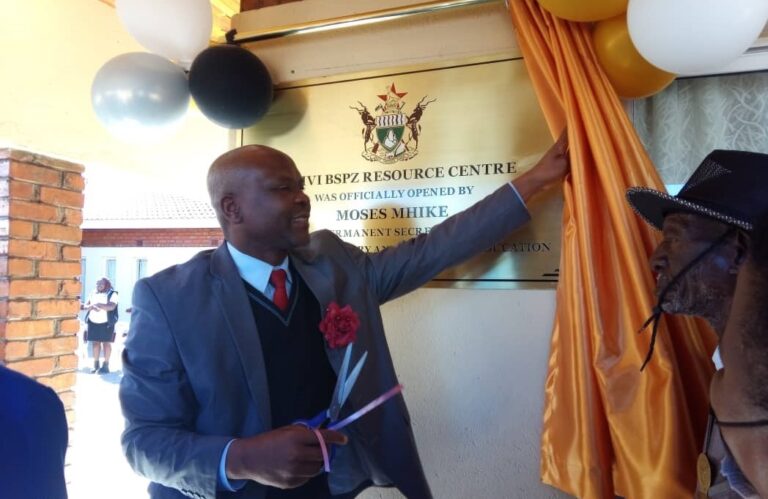
Ministry of Primary and Secondary Education (MoPSE) on June 13, 2024 commissioned Better Schools Programme in Zimbabwe centre (BSPZ) at Chivi Growth Point which is the district education headquarters.
Speaking at the commissioning, MoPSE Permanent Secretary Moses Mhike said the centre will enhance quality of education in the district.
“This initiative marks a significant milestone in our ongoing commitment to enhancing the quality of education in Chivi District. It represents an investment in the future of our children, our community and the nation.
“The BSPZ will assist in the provision, promotion and development of inclusive quality and relevant education in primary and secondary schools and this event signifies a major step forward in our commitment to providing quality education for all,” said Mhike.
Mhike said the centre is a demonstration of the Ministry’s commitment to education provision and as well as a symbol of hope and is where the skills of learners are shaped.
“Chivi BSPZ centre is more than just a physical structure, it is a shining example, a symbol of hope and progress, which is also a demonstration of the Ministry’s commitment to education provision. This centre should be a place where minds are shaped, skills honoured and characters formed.
“Education is the cornerstone of progress and development in the society. This centre should serve as an anchor of progress and acceptance to move the Ministry’s full realisation of the intended education outcomes amongst our children.
“It will serve as a hub for novelty cooperation and support enabling our teachers, district personnel and school heads to work together more effectively to achieve the goals of the ministry. Education is not just a responsibility of schools and teachers but a collective endeavour that requires active participation from parents, community members and policymakers,” said Mhike.
The Permanent secretary also acknowledged the efforts of all those who contributed to the success of the programme and urged all stakeholders to join hands in supporting the BSPZ program.
“As we commission this centre we want to acknowledge the tireless efforts by the Chivi Rural District council in availing land upon which this structure stands and my deepest gratitude goes to all those who contributed to the realisation of this program, your collective efforts have been instrumental in bringing us to this momentous occasion.
“I urge all stakeholders to join hands in supporting this program and ensuring its sustainability for generations to come. As Ministry we are going to be equipping the centre with laptops, you have done your part and we will do our part,” said Mhike.

Indeed Chivayo akachibata kuti dzviiii!

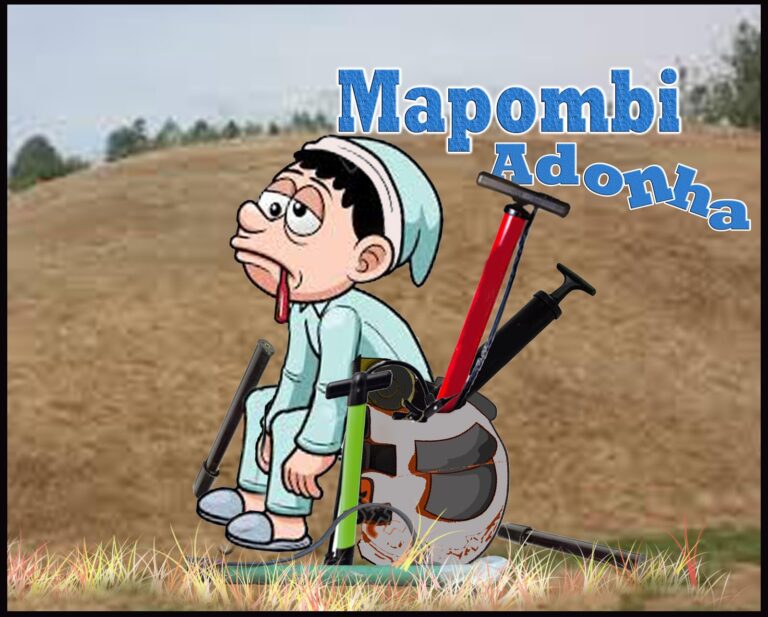
Kkkkk Mapombi read the Zanu PF Youths League’s statement on Wicknell Chivayo following his leaked voice note in which he revealed how he has captured the government particularly President ED? Mapombi concluded that the Youth League succumbed to unnecessary pressure, or probably they responded because they thought they were expected to, but the truth is the statement was nothing but an embarrassment to themselves. In fact it further exposes and confirmed the capture Chivayo allegedly spoke about in the leaked audios. By the way, is Mutuvi still the Minister of Finance and Uneconomic Development? Sorry I’m being corrected pano kuti it’s called Economic Development, not Uneconomic Development. Ruregerero shuwa! Back to my issue, it seems Mthuli is no longer the man in charge of the country’s purse – he has been too quiet of late. Or kuti kugumirwa kushaya zvekutinyepera nazvo now? Mapombi has seen Dr John the 2nd and Finance Deputy Minister Kuda Mnangagwa hogging the limelight since the run up to the introduction of Zimbabwe Gold (ZiG). I have not seen Mthuli in a while Cdes, and this only tells us 2 things; that is, either Mthuli is now stuck or his deputy has too much unfettered powers that he decided to take the back seat so that he allows the Mnangagwa to run the show. Mapombi doesn’t care much about Mthuli though because he failed dismally to stabilize the economy since 2018. He even tried to contest in Cowdray Park and lost dismally to 28-year-old Sibanda kkkkkk Kudyiwa nemwana wezera remwana wake hameno wechingani kkkkk kusvodesa kwazvo. Good riddance anyways – the citizens don’t deserve such nonsense. Let me get back to my Chivayo issue. So the Youth League scribed something that lacked depth. In fact the response further exposed ED because we have seen him several times with Chivayo to the extent of introducing him to Kenyan President William Ruto. They were also together at ED farm in Kwekwe as well as at Mbungo when Chivayo donated US$1 million to Mutendi. We have seen it all Cdes; so to try and come up with some funny statements and wanting to exonerate ED from having a close relationship with Chivayo kwakutsvagawo uta nemugate uko. There earlier the youths league accept that Chivayo indeed akachibata kuti dzviii, I mean kuti dzviiii dzviiii the better. The man is currently in charge and akaita inonzi tamba tamba chidembo muswe ndakabata. Chidembo chakabatwa kuti dzviiii hakuna kwachinoenda chero youths league ikaita dzungu renhema rokuda kuonekwa iro. The man is currently in charge and akaita inonzi tamba tamba chidembo muswe ndakabata. Chidembo chakabaywa kuti dzviiii hakuna kwachinoenda chero youths league ikaita dzungu renhema rokuda kuonekwa iro. Who doesn’t know that Chivayo is being given tenders from the Gwanda Solar project worth over US$170 million, the ZEC tender about US$40m and now the Starlink one – and you think zvinoitika kana usina kuchibata kuti dzvii muno muZimbabwe? We have seen them together several times at public places, and some sectors were even complaining about Chivayo violating protocol. But because akachibata kuti dzviii nothing has been done about it. Of course Chivayo denied that it’s him talking in the leaked audios but still akachibata zvake kuti dzviiii pafeya. Who, in normal senses, would give another tender to someone who was given another tender almost 10 years ago and delivered nothing? We are experiencing serious power cuts this winter because someone failed to deliver the solar power project but that very same person is given other tenders. That’s a clear sign of government capture and it’s very pathetic. I have read articles by anana Joji alleging name dropping what what kkkkk varume musationa semafuza. Kutya hedu kudhuurwa nepfuti zvakaitwa vamwe August wegore riya asi chokwadi tinacho. There is no name-dropping at all because we have seen them together several times, and the audios simply confirmed what is already in the public domain. Not only Mudhara is captured but the whole government and chakabatwa kuti dzviiii namadzibaba Chivayo. Kana dziri nhombo dzemuteuro apa dzakashanda apa kkkkkk haaa ndotomboendakowo chete kumasowe kwaBaba Katsiru ndimbondopiwawo muteuro pamwe ndingaitirwawo zvakanaka ndikabva kwedu kuChitima uko because ndanzwa nemaputi and rotten bananas. Anyways, it’s almost lunch time let me go ndindokanga zvangu maputi angu for lunch. But before I go, Mapombi would like to ask kuti ko Kembo Mohadi munomutambudzireiko? Why are you troubling Kembo Mohadi that much? Why don’t you allow him to rest ondotamba zvake nemukadzi nevazukuru? Aaaah by the way he is single zviya kkkkk so ondotamba hake nevazukuru. Save him from that embarrassment – I can’t, I can’t, shame. May he get well soon. But the best for him is to retire so that he rests, izvi zvekuita strain the body every day going to work at that age is not good. Imagine sekuru vese vaya vachirohwa nechando pa Airport waiting for ED to come back from Russia uko kwavaida kupa Putin some hyenas kkkkkk haaa handisati ndakamboona zvakadaro ini shuwa murume mukuru kundoreva kuna Putin kuti Zambia yandishatira ndibatsireiwo kkkkkkk unodemba Mugabe chokwadi. And to think someone needs a third term pakadai wotoona kuti ndomashura chaiwo. Chete Masvingo yagara ine dzungu zvayo inongoshandiswa to push certain agendas and narratives but with absolutely nothing beneficial at the end. Let us learn to respect the constitution. ED is not the only person who is capable to run this country in Zanu PF, there are too many. Mapombi feels sorry that ED wants to repeat the same mistakes by Mugabe and he thinks kuti iye akangwara kudarika everyone in Zanu PF kkkk we have seen that before Murambwi. At one point Gushungo thought he was invincible exactly the same way ED thinks right now but where is Bob today? A good dancer knows when to leave the stage, izvi zvokuda kufira pachigaro izvi kudhara ikoko siyanai nazvo Murambwi. I once warned Mugabe about this vamwe vakati ndinorwara pfungwa. Anyway, Mapombi will find time to talk about this in detail. For now let me go and eat maputi angu zvangu. Kana vane ZiG ndipeiwo veduwe. Iyo mari yekungoita launch mobva matoivharira ikoko kuRBZ shuwa kkkkkk hanzi ine simba risingaite ZiG yacho hahahaha iyo yakavharirwa kuRBZ. Ko kana ine simba tipeizve tiishandise kuno kuChitima kwedu kuno kkkkkk haaa zvandinooneswa ini Mapombi ini zvokwadi unosvika pakuzorora.

Journalism educators launch network

….Maunganidze inaugural president

By Decide Nhendo

Journalism educators from Zimbabwe have come together and launched an association, the Zimbabwe Journalism Educators Network (ZIJEN) which they said is aimed at promoting quality journalism through empowering journalists so that they can operate well in the era where citizen journalism is threatening professional journalism.
Speaking during the launch at Great Zimbabwe University (GZU) Hebert Chitepo Law School, the inaugural ZIJEN president Golden Maunganidze who is also the Media Institute Of Southern Africa (MISA) regional chairperson said the launch of ZIJEN was a well thought move as it came at a time when the media landscape was uncertain.
Maunganidze said the network was a way to make sure that media educators after discharging duties in the classroom will remain engaged in the broader environment through engagement with other stakeholders to ensure that the journalism ecosystem remains competitive providing excellent information as well as classy journalists.
“I say it’s a momentous and historic occasion we are witnessing here as the network will greatly change the complexion of the media landscape in Zimbabwe and forge new allies with other knowledge workers in consistently breaking new ground, which is required in this age of disruption, complexity, volatility and uncertainty,” Maunganidze said.
He said the network was going to see through important matters that affect media operations and look for better ways and initiatives to add value to the media fraternity in Zimbabwe.
“Our organization will therefore become very critical in areas such as research, standardized curriculum, policy formulations, community service, innovation and industrialization to add value to the media fraternity in Zimbabwe,” said Maunganidze.
Maunganidze said media stakeholders had been asking for an organization that includes journalism instructors so that they can bring to the discussion table ideas and views that will shape the media environment.
“ZIJEN is an organization born out of the growing calls by the media stakeholders to have a voice from journalism educators in the media discourses and process that ultimately shape the media environment for our motherland,” said Maunganidze.
GZU Vice Chancelor Professor Rungano Zvobgo hailed the initiative and implored the network to advocate for policies required in journalism programmes to deliver high quality training.
“I see ZIJEN as a vital resource to continually improve quality of our journalism education. This is a broad field of education encompassing broadcasting and media consultancy as well and ZIJEN will no doubt serve as a guiding light to profer advice and expertise as training institutions educators strive to meet the evolving demands of the profession. I hope ZIJEN will be a bold principled voice that advocates the support of regulation and autonomy that journalism programmes require in order to deliver the highest quality training and prepare students for success.
“A key aspect of such success is to incalcate in our students the value of responsible citizen journalism whose thrust is development and guided by good ethics and intergrity,” said Prof Zvobgo.
The US Embassy Head of Public Affairs Larry Socha lauded formation of the network which he said was crucial in navigating the changing industry and promised to support the initiative through sharing of expertise, networks and resource for the success of the organisation.
“The creation of ZIJEN is a testament of your commitment to a bedrock of democracy, a free and independent media.
Collaboration among journalists and journalism educators is essential to develop skills, adapt new technologies and continue to ask the right questions to move our societies and our communities forward.
Closing the gap between practise and the field is one of the laudible goals of this network, the US Embassy in Zimbabwe join you in this mission. The creation of this platform provides another platform for collaboration. It allows us to join African partners across the continent as well as international friends such as IMS, Swedish Embassy to understand where we can bring American expertise, networks and resources to be of service to the Zimbabwean people and their contributions to the global community.
Today’s media environment is not an easy terrain to navigate, disinformation and the misuse of machine learning which tend to destabilise the information space, financial challenges are all part of a changing environment but our work together must ensure that climate change does not leave the media industry a desert,” said Socha.
Swedish Embassy representative at the event Wonder Jekemu said the launch of the network was timeous as it came during a time when journalism requires a new understanding to meet the needs of the transitions happening around globally.
The network is coming at a time when the media in Zimbabwe and indeed the entire world is going through rapid transformation. The world is going through an era of environmental, social and economic transformation both at local and global level. These challenges demand a new understanding of the role of journalism in society hence the need for the establishment of ZIJEN.
The network launched today will assist in developing a criteria for excellence in journalism and will better address the journalism training needs of today and future generations,” he said.
Speaking at the same event, Zimbabwe Union of Journalists (ZUJ) president George Maponga applauded, the move by individuals and organizations to come up with the idea to form ZIJEN and said the move was going to bear fruit since the task was going to include journalism educators from various media entities with varying backgrounds and ideas.
“I commend this association of journalists for its commitment to shaping the future of journalism in the country through journalism training in Zimbabwe for excellence in the field.
“The network is going to empower the next generation of journalists to uphold the highest standard of professionalism and integrity through sharing knowledge, skills, and experience with them,” said Maponga.
Also present at the launch were representatives from the International Media Support (IMS), US Embassy Head of Public Affairs Section, Larry Socha, representatives from Swedish Embassy, Media Alliance in Zimbabwe (MAZ), Media Institute of Southern Africa (MISA), Zimbabwe Media Commission (ZMC), Zimbabwe Broadcasting Corporation (ZBC) among others.
Solidarity messages were also poured in from the African Journalism Educators Network (AJEN) by Professor Franz Kruger.

Masvingo City non-revenue water headache persists

By Beverly Bizeki

Masvingo City Council’s non-revenue water headache continues to persist with latest statistics from the local authority showing that council had lost 42.31 percent in April 2024.
The local authority has been recording losses of large sums of revenue through non-revenue water and the council’s Public Works and Planning Committee minutes dated May 9, 2024 show that the lost water translated to US$359 152.51, a slight decrease from March’s US$384 135.60.
“It was reported that the non-revenue water for April 2024 was 42.31 percent which translated to US$359 152. 51,” read part of the minutes.
Council has cited that some of the reasons behind the high non-revenue water include free water to residents through water bowsers and metering inaccuracies.
“The Acting Director of Engineering Services highlighted that a study was conducted to find out the causes of non-revenue water in the city. The report highlighted the following findings; free water to the residents through water bowsers, the issue of unbilled properties, a number of properties were not being billed due to stuck meters, gate locked and buried meters. Metering inaccuracies were also noted,” read part of the minutes.
Council highlighted that there was need to account for water supply in Clovelly and attending to burst pipes on time to save water.
“It was highlighted that council should increase the response time to attend to burst pipes in the city to save treated water. Residents should be informed about channels for reporting burst pipes. It was highlighted that Clovelly Suburb was reticulated hence water supply should be accounted for like in other suburbs,” the minutes read.
It was also highlighted that council should deal with illegal connections speedily.
Ward 10 councilor Sengerayi Manyanga has been on record saying council should own up water meters and replace the non-functional metres for increased efficiency in billing residents.

Three Chiredzi men on the run for murder

0

By Beverly Bizeki

A 22-year-old man from Tshovele Village, Headman Chitsa, Chief Tshovani recently died at Parirenyatwa Hospital days after he was assaulted by three men who accused him of stealing cellphones.
Masvingo Provincial Police Spokesperson Inspector Kudakwashe Dhewa confirmed 22-year-old Vengai Tshovele’s death and said the three accused persons were still on the run.
“I can confirm the death of Tshovele who died at Parirenyatwa after being beaten by three men from Chiredzi. The three suspects are still at large. Members of the public should not take the law into their hands or administer justice,” said Dhewa.
Circumstances are that on May 13, 2024, Godfrey Khurivale and Absolek Ndali both from Ndali Village together with Answer Musaingira from Keep 1 Village Headman Chitsa, Chief Tshovani teamed up and went to Tshovele’s homestead where they took him to task accusing him of stealing two cellphones.
Tshovele admitted committing the crime after which he showed the three where he had hidden the cellphones and they recovered them.
The three then took Tshovele to the owner of the cellphones’ homestead and took turns to assault him with logs on the way before dumping him on the road.
He was seen by a passerby who took him to his home and administered primary care although the matter had not been reported to the police. On May 23, Tshovele was taken to Chitsa Clinic for medical attention where he was referred to St Peter’s Hospital in Chipinge and was attended to.
Tshovele was discharged the following day and was told to come back for a review on May 27. However, on May 26 a human rights defender is said to have taken him to Parirenyatwa for further treatment where he died on May 31.

Workforce Transformation in the Age of Automation

0

By Shadreck Zangairai

It is an undeniable fact that we are living in the era which is driven by the adoption of new technologies at an exponential rate. Some call this era the fourth industrial revolution. Analytics, artificial intelligence (AI), cognitive technologies, and the internet of things (IoT) enable a new fusion between the digital and the physical worlds, creating a more holistic, interconnected digital enterprise. As noted by Deloitte in 2018, the change is not only global and technological, but also social and economic. This article will focus on how the demand for workforce skills will change with automation, how organisation can adapt to AI, and how to build the future workforce.
AI applications are designed to assist human beings think better. They enable performance of tasks that normally require human intelligence, such as visual perception, speech recognition, decision-making, and translation between languages. Automation will speed up the shift in required workforce skills that have been witnessed over the past years. The strongest growth in demand will be for technological skills, hence this will affect demand for basic digital skills as well as advanced technological skills such as programming. Demand for emotional and social skills such as leadership and managing others is expected to rise and the demand for higher cognitive skills will also grow moderately, for some skills, while it will also rise sharply for some other skills such as creativity.
However, other skill categories will be less in demand. Results from an MGI research on Automation, basic cognitive skills, which include basic data input and processing, is expected to decline by 15 percent while demand for physical and manual skills, which include general equipment operation, will also drop, by 14 percent. Skill shifts will play out differently across sectors. Healthcare, for example, will see a rising need for physical skills, even as demand for them declines in manufacturing and other sectors. Companies will need to make significant organizational changes at the same time as addressing these skill shifts so that they may remain competitive. A survey of more than 3,000 business leaders in seven countries by MGI highlights a new emphasis on continuous learning for workers and a shift to more cross-functional and team-based work. As tasks change, jobs also need to be redefined and companies will need to become more agile. Independent work will likely grow. Leadership and human resources will also need to adapt: many companies will lament that their executive team lacks sufficient knowledge to lead adoption of automation and artificial intelligence. The feeling will be that they lack the necessary skills for automation adoption which will hurt the organisation’s future financial performance.
As a result of this gap, competition for high-skill workers will increase, while displacement will be centred mainly on low-skill workers. High-skilled workers are most likely to be hired and retrained, leading to a raise in wages. Firms in the forefront of automation adoption expect to attract the talent they need, but slower adopters fear their options will be more limited.
The biggest question is how will demand for workforce skills change with automation. According to an MGI research on automation and AI in the workplace. The next 10 to 15 years will see the adoption of automation and artificial intelligence technologies transforming the workplace, as a result of people increasingly interacting with smarter machines. This interaction between technologies and human-machine will bring numerous benefits such as higher economic growth, improved corporate performance, and new prosperity. Furthermore, automation will replace aging workers which will also help solve societal problems as well. For instance, in the health fraternity, AI-powered machines are more adept than expert doctors at diagnosing some diseases from X-rays and MRIs. Trade agreements such as the Zimbabwe-China partnership has led to supply of such sophisticated machines such as those mentioned above.
What this means is that such technologies will also change the skills required of human workers. This is not a new phenomenon for skill shifts in the workforce because skill requirements have changed ever since the first Industrial Revolution reconfigured the role of machines and workers. There is a global complain from companies in trying to match the needed talent. Conversely, workers often complain about being underqualified or even overqualified for their jobs. Skill shortages and mismatches have negative implications for the economy and the labour market. Findings from the MGI researches (A future that works; Automation, employment and productivity; Jobs lost, jobs gained; Workforce transitions in a time of automation; Artificial intelligence; the next digital frontier) indicates that this can lead to increased labour costs, lost production due to unfilled vacancies, slower adoption of new technologies, and the implicit and explicit costs of higher unemployment rates. Interestingly, appropriate skills can boost economic growth.
To understand which skills will be needed more and those needed less, the MGI researches looked at the economy as a whole and in depth at five sectors: banking and insurance; energy and mining; healthcare; manufacturing; and retail. MGI’s hallmark micro-to-macro approach uses micro insights from industries and companies to inform broader macroeconomic trends. This assisted in identifying some of the key skill shifts in the future that will profoundly affect not just individual workers, but also companies and organizations.

To be continued next week….

Disclaimer: The information contained herein does not serve as alternative to legal advice. The author do not accept any liability for any damages or losses suffered as a result of actions taken based on information contained herein.

Shadreck Zangairai is a Human Resources Practitioner and for feedback, email: shadreckzanga@gmail.com,
+263772939877/713068365