Home Blog Page 181

Understanding gifted children

0

By Dr. Nicholas Aribino 

Gifted people are as scarce as the teeth of a hen. Despite the scarcity of this outlier of a group of people, Zimbabwe has had its fair share of gifted people in the likes of Professor Jonathan Moyo, Professor Arthur Mutambara, the late president of Zimbabwe, Robert Gabriel Mugabe, Learnmore Jongwe, Dambudzo Marechera, the late Professor Masipula Sithole, Tendai Biti and Professor John Makumbe, only to mention a few. This opinion piece intends to shine light on who gifted children are by identifying physical and behavioural characteristics that are identified with them.
Gifted children are children who have a superior degree of general intellectual ability. Essentially, gifted children are highly intellectually tuned and their Intelligent Quotient (IQ) is upwards of 140 in terms of IQ range. Gifted children grasp and understand new ideas quickly and have a keen general interest in a variety of disciplines. They are curious-always seeking new knowledge, asking many intelligent questions, exploring new games, toys, objects and experiences at length. Gifted children challenge the system in that most teachers are ill-equipped to deal with their diverse intellectual needs. The retentive memory of gifted children is uber good, they may remember things you wish they had forgotten. They are found in most cases being leaders among their peers and their peers do not quite understand them as they may label them as having psychosocial disabilities. The gifted children may also not understand the cognitive structures of their peers, as they may fail to comprehend why their peers are failing to solve given tasks which may be game to them (this is easy-Aaaah zvakapusa izvi). Research has it that gifted people die early because of stress and loneliness as a result of society’s little understanding of them.
Gifted children also have unusual and advanced vocabulary spans, superior conversation skills, as well as an early development of a sense of humour (The late president Robert Mugabe was just super good here). They have advanced reasoning ability as well as accelerated physical and verbal problem-solving skills. Pursuant to the above, this category of children under discussion also has early speech and language development. They also learn to read on their own at an early age, enjoy and become absorbed in challenging tasks and experiences and have longer attention spans and are able to handle frustration more easily than their peers. Gifted children are also keen observers and are more advanced and become bored with activities that are still of interest to their peers. Research has also revealed that gifted children are advanced in gross and fine motor coordination. They are easily bored with routine tasks or repetitive programmes. Over and above the foregoing, they are self-motivated. The create new games, activities, experiments and experiences and learn foreign or second languages much faster than their peers.
Gifted children do not give common answers to questions. For example, if you were to ask a gifted child how one would gain access to a classroom, instead of saying through the door, a gifted child may say through the window or through the roof.
Dealing with gifted children requires parents and teachers to think as if there is no box, because an emphasis on conservative thinking may stifle the acuteness of their intellects. Parents and teachers should provide greater challenges for gifted children so that they do not become bored which in turn can lead to them withdrawing from their social networks. Open-ended activities and opportunities should be provided for these children. For example, in a teaching and learning environment gap filling questions should be avoided, context should be provided for expanded capabilities for gifted children. Arguably, for this group of learners, conformity should be stressed only where necessary (rules for safety, taking turns, sharing and so on). Observably, gifted children may need help in developing social skills, because they may disengage from their social networks because of two things which are, their failure to understand them and the failure of the significant others and peers to circumscribe them. Guardians and teachers should endeavour to stimulate the intellectual energies of these children by also providing advanced equipment and materials.
In a classroom situation the gifted children should be used as the teacher’s crutches in assisting struggling peers through pair work, group work and peer tutorials. Where inclusive education is concerned, gifted children become handy as an internal support system that can be used to assist their peers in various areas of learning. The gifted children can be a source of indiscipline in a classroom environment if their intellectual energies are not correctly harnessed to and productively aligned with their capabilities because they finish their tasks fast and remain with nothing to do. In the light of the above understanding, their tasks should be tuned to their level-quantity and quality of work should match their intellectual prowess. It is also worth considering to give them extension work and have them skipping some grades where necessary. Teachers who are not creative may see gifted children as difficult. These children are not difficult, but are just different from the average students who define the door as the only point of entry into a classroom. A gifted child in either a family or school environment should be considered as an asset that can add value to the family, school, community or society. However, the family or the school can either make or break a gifted child by either missing or dismissing his or her precocious abilities. For every goose to lay golden eggs, nutritious food should be provided and similarly for every gifted child to realise his or full potential a rich, nurturing and conducive environment should be provided.

Dr. Nicholas Aribino : ZIMCARE Trust Country
Director and is writing in his own capacity.
Contact : +263715617095

Poor uptake of school re-entry programme for adolescent mothers

… As only 3.3% remain in school after pregnancy

Beverly Bizeki

Efforts to keep the girl child in school after adolescence pregnancy have remained low despite the introduction of a school re-entry policy which allows girls to continue with school after falling pregnant whilst in school.
A study conducted by Centre for Sexual Health and HIV AIDS Research Zimbabwe (CeSHHAR) together with the Ministry of Health and Child Care, UNICEF, UNESCO and UNFPA has revealed that only 3, 3 percent returned to school and 59 percent said they were aware of the provision.
“Only 59 percent of the adolescents were aware of the provision to continue school during or after pregnancy. Despite public awareness of the re-entry policy only 3, 3 percent of the adolescents remained or were retained in school after pregnancy while the majority had no intentions of returning to school,” reads the report.
The report cited childcare responsibilities and fear of stigma as some of the reasons why they do not want to get back to school.
“Parents and some community leaders had reservations regarding reintegration of the pregnant adolescents in schools. Parents feared that the reintegrated of pregnant and adolescent mothers will negatively influence other adolescents and might result in more pregnancies in the schools,” reads the report.
The study shows that there is still more that needs to be done in terms of debunking such norms that dissuade girls from continuing with their studies even after falling pregnant in order to empower the girl child.
“There is need for investments in fighting harmful social and gender norms. Policies need to go beyond simply allowing return to school by addressing the supportive conditions required to enable adolescent girls to return to and stay in school,” reads the report.
COTRAD Information Officer, Leah Matavire said there was need for policies and practices to ensure that leaners are readmitted into school after getting pregnant and policies to protect them from harassment.
“There is need for counselling for girls who get pregnant whilst going to school because there are cases of stigma and harassment from other students, serious counselling is required for such students,” she said.

Half of Zim population offline – Min Mavetera

Tanyaradzwa Tizora

The Minister of Information Communication Technology (ICT), Postal and Courier Services Tatenda Mavetera has revealed that more than half of the Zimbabwean population has no access to the internet, creating a digital divide among citizens.
Mavetera was speaking during a joint commemoration of World Post Day 2023 and the 2023 International Day for Universal Access to information (IDUAI) that was held on October 23 at Madhlangove Primary School in Chivi district of Masvingo Province where she said access to information was the key enabler to the attainment of vision 2030.
She said though the country’s internet penetration rate was above half, it was still low and does not look very different from the 70percent offline in other African countries.
“As our internet penetration rate is above 50percent, almost half of the country’s population remains offline and does not look very different from more than 70 percent offline in other African countries.
“We strive to ensure that we leave no one and no place behind as we journey towards the attainment of the National Development(NDS1 and NDS2) and in particular ,the digital economy by 2030,” said Mavetera.
She said the primary barriers to access to internet is the affordability of devices and lack of awareness and alternative strategies to extend affordable access to communications are urgent.
“We simply cannot carry on doing things the way we have been doing and expect the exponential changes we require .Today we have launched the Public Finance Management System (PFMS) Kiosk at the district development in Chivi and we have also launched the Chivi Community Information Centers (CICs) at Chivi Post Office, both of which will extend affordable access to communications, among other benefits,” said Mavetera.
She went on to say as the ministry they were seized with development of ICTs to ensure access to information and internet by everyone.
“The Ministry of ICT, Postal and Courier Services, is seized with the ICT development of this country and beyond in terms of ICT governance, that is, policies and regulations; infrastructure development, to provide ubiquitous and robust access; as well as applications development; and cyber security,” said Mavetera.
Mavetera encouraged operators to collaborate so that the sector which is key to the socio-economic growth of the country continues to evolve, thus embracing new skills, new technologies and new ideas.
“I have already called for ideas that leave no one and no place behind .My door is open and I’m looking forward to engaging with every one of you as we take the Post to the next level,” she said.
Mavetera assured people that her Ministry will continue to play a crucial role in the digital transformation agenda by providing accessible and affordable ICT platforms to local communities to achieve universal access to information, therefore impacting the aspirations of NDS1.
The International Day for Universal Access to Information (IDUAI) was proclaimed by the UNESCO General Conference in 2015 following the adoption of a Resolution which declared 28 September of every year as the International Day for Universal Access to Information (IDUAI) to increase awareness of the right to information.

Chiredzi DDC urges communities to build climate proof houses

Decide Nhendo

Chiredzi District Development Coordinator (DDC) has called for Chiredzi communities to construct houses and infrastructure that are either climate proof or climate sensitive after the windy storms of October 20 and 22 left a trail of destruction of properties in urban and rural locations leaving some families homeless.
DDC Lovemore Chisema said that as a long term measure to cope up with the complicated weather conditions being imposed by climate change, people have to build houses that are climate sensitive that cannot be easily destroyed by wind or heavy rains so that they have safe shelter especially during the rainy season.
“As climate change is real, communities must construct houses that are either climate proof or climate sensitive as a long term measure so that even when heavy rains or harsh winds come up, families will not be left without shelter,” said Chisema.
The hailstorm which took place on October 20, swept away roof tops at several houses, with Ward 8 Chiredzi town being the most affected.
12 houses had their roofs partly or completely blown off and in Chiredzi Rural District Council ward 25, 12 households were affected; ward 26, seven houses were affected and ward 29, 112 homesteads were either partly or severely damaged.
On October 22, a windy storm affected 14 households of which four households had their houses destroyed and in all destructions only two people were injured and no deaths were recorded.
Appealing for assistance to help the victims of the windy storm, Chisema said climate change is real and is bringing along sophisticated weather conditions evidenced by the trail of destructions left within the whole country.
“Meanwhile as we are saddened by these destructions which have left some families without safe shelter, we continue to appeal for assistance from all those who are willing to give a hand to those affected in order to assist the affected families,” said Chisema.

Only one incubator for Gutu Mission Hospital

Admire Chatindo

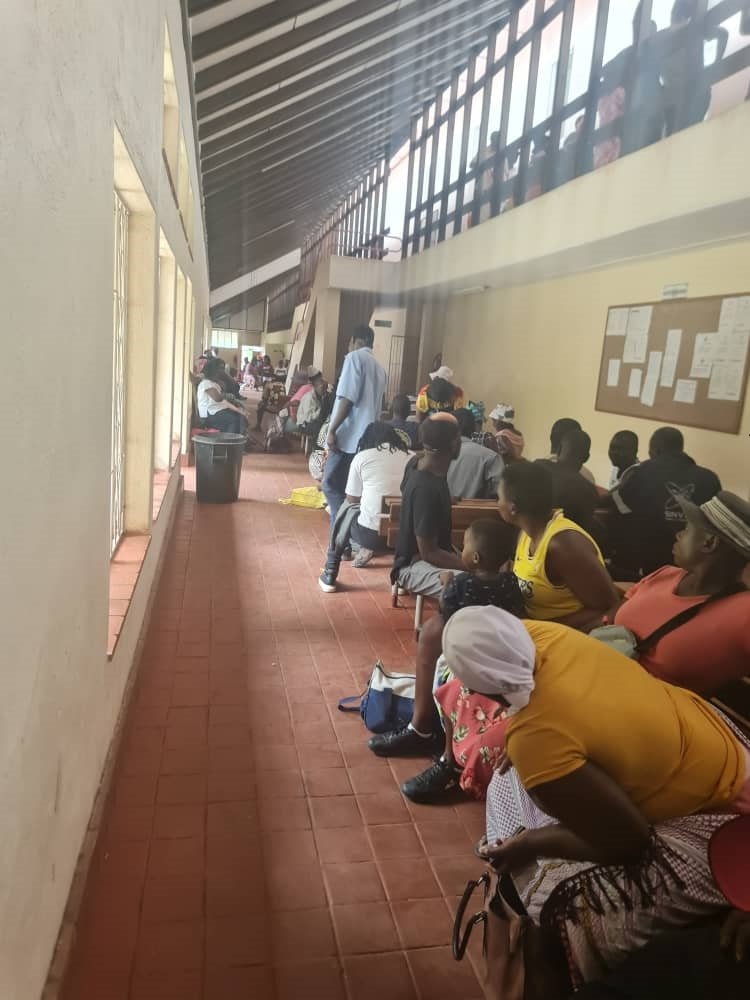
The situation in government and council health institutions has reached deplorable levels, with church health facilities not being spared as a case of the Reformed Church in Zimbabwe (RCZ) Gutu Mission Hospital which has only one incubator in its maternity section.
The machine is crucial to save lives of infants who are born prematurely and could be a disaster if more than one infant needs the service at the same time.
There was a case of a woman who delivered premature twins babies and the Mission Hospital had to take turns to incubate them and luckily they both survived.
One can imagine the disaster if they were born from different mothers and that would definitely mean a hard time for nurses to control the issue of the incubator for each mother who would be caring for her own child.
RCZ health secretary Samuel Mhungu said the situation was not good and said they were appealing for help in that regard and many other challenges facing the referral hospital.
“We only have one incubator and if it happens that we have for example, seven mothers who deliver premature babies at the same time, we would then resort to them taking turns to incubate their babies and this endangers the lives of the infants,” said Mhungu.
He said another challenge they faced was that of water saying the taps were dry and that was not an ideal situation for a hospital.
“The other challenge that we are facing is that of water, as you can see, the taps are no longer functional and as a hospital facility it’s difficult to function without it.
“We are also having a challenge of shelter for our expecting mothers; as it stands we can house a limited number of waiting mothers in a small room and some of the conditions they are subjected to are not safe,” he said.

Mnangagwa orders Mthuli Ncube to fund innovation hubs

Beverly Bizeki

President Emmerson Mnangagwa has ordered Finance and Economic Development Minister Mthuli Ncube to finance innovation hubs and industrial parks in state universities to allow young people to see their inventions succeed in order to meet the developmental needs of the country.
Speaking during a tour of the Great Zimbabwe University (GZU) Innovation Hub at Robert Mugabe School of Education, Mnangagwa said the inventions were an important exercise and deserved government’s funding and support.
“The students who are producing these technological gadgets do not know how useful they are to us, in the second republic, we produce innovation hubs at every state university and this is the result of the philosophy of having innovation hubs where our talented girls and boys can exercise their dreams to produce goods and services and as you go round you will see the products being produced from fruits and herbs in our country.
“We used to think things must come from overseas but the younger generation must produce goods here and send them across the seas. In the past we used foreign currency to import these things but now it is happening locally and this is what we mean by having an innovation hub and Mthuli Ncube must fund these projects whether the fund produces goods or services they must allow our young people to dream and dream, succeed or fail but allow them to dream and produce domestic products,” said Mnangagwa.
In his keynote address, Mnangagwa also called upon the private sector and development agencies to partner with GZU in commercializing inventions.
“Similarly, I call upon the private sector and development agencies to partner with the university to accelerate the commercialization and adoption of inventions and products from our innovators.
“The application for registration of 15 trademarks in beverages, health supplements, skin products, wine and jam as well as patents for music instruments and two agro-innovations are welcome developments,” he said.
The hub was commissioned after the university’s graduation ceremony where 4899 students were capped by Mnangagwa.

Prize galore at Silveira High School

0

Staff Reporter

BIKITA – It was a prize galore at Silveira High School last week when learners, teachers and staff members were awarded for different achievements and disciplines at the speech and price giving day held at the Catholic-run school.
16 learners got awards for being outstanding in different subjects in form one with Allan Mamhute scooping the Best Male Student while the Best Female learner award went to Beyonce Matikiti.
In form two, 18 learners scooped awards for being best performers in different subjects with Tendayi Mutyambo being awarded best male student, while the best female student award went to Adorable Chisoma.
The best male learner in form 3 was Kudakwashe Mavetera who was best in Geography, Heritage Studies, History, Accounts and Biology whilst the best female learner Kimberly Chapwanya was best in Shona and BTD where 24 learners scooped awards.

Silveira High leaners follow proceedings during the speech and price giving day

In form 4, 22 learners were honored, with Tinashe Munhundiripo being the best male student whilst Emilda Rambanapasi scooped the best female student.
25 learners were awarded prizes in form 5 where Arthur Bande and Tatenda Sibanda were awarded best male students in Arts and Science respectively.
Mecktilda Gava and Chiedza Gomera were named best female students in Arts and Sciences categories respectively.
At upper 6th, Takunda Ngirivani and Danai Eston were named best male and female students in Arts respectively while Charleen Banya and Cardette Dhliwayo were named best male and female students in sciences.
Other categories that were awarded are sport, church, best 2022 ‘O’ level and Choir.
The guest-of-honor at the event, Catholic Vicar General Reverend Father Samson Mutsvanga said the awards were a result of hard work and dedication and thanked teachers for inspiring the learners.
“I want to congratulate all learners who have been awarded prizes today, your hard work and dedication have paid off. I would also like to thank teachers and ancillary staff of this school for their tireless efforts in educating and inspiring these young people,” said Fr Mutsvanga.
He went on to encourage learners to continue to grow in faith and thanked parents for the support they gave to the school.
“I encourage all of the learners today to continue to grow their faith, study the bible, pray regularly and participate in sacraments. I want to express my gratitude to you parents for the support you have given to Silveira as evidenced by your presence here today and the success of numerous projects that you have funded and continue to fund,” said Fr Mutsvanga.

Men shun teaching profession

…as women dominate by over 80% of Masvingo Trs enrolment

Tanyaradzwa Tizora

A shocking disparity of females’ versus male trainee teachers was revealed during Masvingo Teachers College graduation ceremony recently, where it was said women trainees were 86percent of the total enrolment.
If the statistics are anything to go by, one will be forgiven to conclude that men are shunning the once sought after profession which in the past was dominated by men.
The total enrollment statistics show that the total number of 2022-2023 students stood at 1 739, with 1 496 females (86percent) against 243 males (14percent).
The Primary school section had a total number of 1 130 students where 1 065 females (94percent) and only 65 males (6percent).
The Secondary school section had a total number of 609 students with 439 being females (71percent) and 178 males (29percent).
Commenting on the disparity in enrollment statistics, Masvingo Teachers’ College Principal Benson Mutambudzi said something needed to be done or else the teaching fraternity would be dominated by women.
“It is worrying that teachers’ colleges enrollment statistics towards female students is becoming so glaring that if nothing is done, the teaching fraternity is going to be entirely occupied by women and that should pose a national concern,” said Mutambudzi.
A total of 676 students graduated at the College with 490 females graduating from the ECD and Junior course against 26 males and 117 females graduating from the Secondary Science Teacher Education Programme (STEP) against 43 males.
Mutambudzi said despite the disparity in enrollment statistics Masvingo Teachers College has enrolled its 6th Secondary Science Teacher Education Programme (STEP) setting it apart from the four colleges given a mandate to train Secondary Science teachers in 2018.
“Out of the four colleges given a mandate to train Secondary Science teachers in 2018, no one else is on the 6th intake yet except “Gango” (the institution’s nickname).In this area we lead and others follow,”added Mutambudzi.

Fight against sanctions not a political battle: Chadzamira

Perpetua Murungweni

Zimbabweans have been urged to rise above political divisions that hinder them from fighting against sanctions, with Masvingo Minister of State for Provincial Affairs and Devolution Ezra Chadzamira saying the battle is not only for politicians but for everyone to free the nation from the chains of sanctions.
Speaking at the anti-sanctions ceremony held at Masvingo Civic Centre on October 25, 2023, Minister of State for Provincial Affairs and Devolution Ezra Chadzamira urged all Zimbabweans to unite as one and put aside political differences in the fight against sanctions.
“Fellow Zimbabweans the fight against sanctions is not merely a battle of politics, it is a struggle for the very livelihood of our people. We must rise above the divisions that have hindered our progress and unite as one transcending political affiliations and personal differences. Together we can build a future that is free from the chains of economic oppression,” said Chadzamira.
Chadzamira also said that Zimbabwe will not yield to the sanctions and will not abandon its path of using its capabilities for the country’s development.
“We are not and will never yield to the sanctions conditioning and strangulating effects. We will never give up on sacred ideals and goals of our protracted armed liberation struggle and will not abandon, the path we have chosen for ourselves as sovereign people to develop modernize and industrialize our great motherland Zimbabwe using own capabilities,” said Chadzamira.
Chadzamira expressed his gratitude to African Union and progressive forces for their support and solidarity in fighting against sanctions.
“On behalf of the people and the government of Zimbabwe I express profound gratitude to SADC, the African union and other progressive forces to the support and unwavering solidarity we continue to receive as we struggle against illegal sanctions imposed on us by some western countries.
“This is a day SADC designated yearly to express its opposition to outrage against illegal sanctions against Zimbabwe until they are removed. I stand before you today with a heavy heart burdened by the weight of a nation’s struggle, today we unite with SADC region Africa and a progressive world to condemn the long-standing injustice meted out against the people of Zimbabwe by a few western nations acting unilaterally and outside the UN charter,” said Chadzamira.
Chadzamira said sanctions hinder the development of the nation affecting every aspect of the society.
“Sanctions have plagued our beloved nation for far too long thus impeding our progress stifling our growth and living our people in a state of despair.
“They have cast a dark shadow over our hopes and aspirations affecting every aspect of our society from our economy to our education, from our healthcare to our infrastructure. Today we stand together resolute in our determination to bring about change.
“We call and reiterate that these illegal sanctions must go. The people and the government of Zimbabwe deserve a chance. Zimbabwe is a nation rich in resources, talent and potential,” said Chadzamira.
Speaking at the same event, Secretary for Provincial Affairs and Devolution Dr Addmore Pazvakavambwa said sanctions have cast a dark shadow over the nation of Zimbabwe.
“Sanctions have cast a dark long shadow over our nation impeding our socio-economic progress and affecting the lives of ordinary citizens, the vulnerable women and our children. Today we take decisive steps to make and contribute in making a decisive voice towards the fight against sanctions.
“This gathering represents our unwavering determination to stand up against injustice and advocate for the removal of sanctions that hinder our nation’s growth,” said Dr Pazvakavambwa.

Rains leave trail of destruction in Masvingo

Bright Zhou

The rains that Masvingo Province received on October 22, 2023 left a trail of destruction in Masvingo District with ward 25 and 35 of Masvingo South recording a number of homes that were affected leaving some families homeless.
Ward 25 Councillor Tarusenga Mapamba confirmed the devastating effects of the rains saying they were calling upon relevant authorities to chip in to assist affected families.
Mapamba said they were still carrying out assessments to determine the full range of the damage and costs.
‘We are still gathering information and village heads are compiling lists of affected people and the extent of the damage. We are also calling upon different stakeholders to come to our aid with different forms of help.
At Muchibwa hospital, four roofing sheets and ridges were blown off; the nurse-in-charge’s house’s four roofing sheets and ridges were damaged and three nurses’ houses had some of the roofs damaged.
The rains wreaked havoc in Muvango village where a number of houses were destroyed to ground level leaving some families without shelter as 35 homesteads were affected including a three roomed flat from the village head’s homestead that was also destroyed to the ground.
Of the 35, 18 households in the low lying areas near Mutirikwi river, houses were damaged where both walls and roof were destroyed while 17 homes in the high ground near Renco Mine’s Atlas shaft had only roofs blown away.
In Chiponda Village, 31 households were affected where a total of 133 roof sheets were blown off and damaged.
17 households were affected in Ruchicha village where 51 sheets were blown away and 12 window panes were damaged.
47 roof sheets and nine window panes were destroyed in Takarusenga Village while other villages like Muzondo and some across Tetenu River like Mukazi recorded some damages as well.
In ward 35 (Renco Mine), the charge office had its roof carried away as well as four houses in the compound had their roofs destroyed.
Close to town the rains had some damages at Sikato Primary School and some surrounding areas. At Sikato two classroom blocks had their roofs carried away.
Several structures were demolished at a plot allegedly belonging to the late Dr Silvester Maunganidze in Sikato.
Toilet concrete slab roofs were carried off as well as school classroom blocks at Gwengavi Primary School.