
Ladies and gentlemen, I hope you all saw what I meant when I said kwatiri kubva ndokwatiri kuenda. I am pretty sure that you have now accepted that ‘nyika inotongwa nevana vangu’ kkkkkk. Someone said we should rename this teapot shaped country Zimbanagwa so that it makes real sense. Following the announcement of the cabinet, takangozvionerawo tega kuti haa ikabati chaiyo, yekumba kwavo chaiko, nothing to cry home about. Unosvika paunozorora. But one thing is apparent in that cabinet; kwaGutu ED anotokuda zvekudaro, just look at the number of people who made it into cabinet from that district. Unozoshaya kuti Chamisa kakaresvei zvaakakamaka, kachingobvawo kwaChiwara wani nhai vedu. On election day, all Masvingo polling stations opened at 7am, vamwe vachizovhota kondoidza the following. Ende huye kwakavhotiwa not mbichana. I guess that is one of the reasons the province got such a huge reward. When Mapombi heard that cabinet was about to be announced ndakatofanogeza maMuchekezve ini thinking dzaingogona kungowirawo mutswanda wanike hapana chembwa vatenzi vararira mangai.
I was fascinated during the week with how discussions about certain individuals who made it into that cabinet. People were on each other’s throats arguing about credentials of the new ministers. Just like our very own new Councilor Alaika Time ve ‘vhest biolence’, and Clr Tafara Masimba who belched loudly on camera vaguta mipunga nekokora yekanzuru, wedu Mavetera akabva azarurawo huru when asked about her new portfolio. Dear Minister, what were you on about pamaCALA neICTs? Mabiyangu munotisvodesereiko? A simple Google would have saved you the embarrassment of being a high sounding nothing in front of the camera. Kuumba hari dzemaCala neICT zvinowirirana papi? The nation is suffering from high data tariffs, plus the digital divide being widened by this, and then you come and show us how clueless you are about your ministry—ndochii ichocho? Mapombi anenge achitodawo masaisai kuno kuChitima kuti ndizive zvirikuitika muglobal village, bva shungu dzinopera nezvakadai zvatinoitirwa neteam rekwaMai Welli, kkkkk.
Don’t get me started on what Mahere and Ostallos did kunaMavetera. What was that nhai maNew honorables? You display such disgusting mentality in public, mozoti hee people attack us unnecessarily. Cde Ostallos that was very wrong and Mapombi condemns it with the utter abhorrence it deserves. I hope the apology you made in that regard was sincere, otherwise mmm mafungiro iwawo haachadi munhu waHonorable so. I have also heard that Ostallos is in trouble with the law, and the charges keep piling. Asi nhai imi vanhu veZanu, do you think we cannot see that this is simply a ‘lawfare’ you have launched against opposition and dissenting voices? We all know your modus operandi, and this does not surprise us at all. Mapombi also saw Maureen Kademaunga and Harare deputy mayor Kadzombe in the same predicament. Cheza and the Chirumhanzu four makavharira. Job Sikhala is still languishing in prison. Ngarivhume ariko futi kuseri ikoko. Nhaka kunongosareni Mapombi kuno kuChitima, but you people hamutombosvodi kana. My prayer is that we get to 2028 nyika ino isati yava monarchy because where we are going hakuna kunyatsojeka.
Our police does not even have the shame; they arrest these people vombochengetwa vasina zvavo charge, waiting for that other department to come up with trumped up charges to prove their case. Every institution is under the influence of our drunken politics, hakuna yaunoti iyi. Just look at the bureaucracy in government departments and other state institutions, even uchida kuita business or investing, the red tape inongokuudza wega kuti we are in the pits of hell.
You see, our problem in this country is political leadership. Musazoti ndakupandukira hurumende zvamurimi, let me explain. Politics of patronage is our biggest undoing that is why we find clowns and monkeys in positions of power making critical decisions that affect everyone’s livelihood. And izvozvo zviri kwese, kumusangano unotonga nemimwe yacho, reason why you get slogans like ‘Dhagi Dhagi Chete Chete’, ‘Pfee’ and ‘Ngaapinde Hake Mukomana’. The only goal is kupinda in power, zvekuti what will you do for the masses yatove imwe nyaya. Our politics is too short-sighted and it’s all about usurping power and amassing wealth, zvevanhu dololo. Mapombi watches with disdain muchiita madrama enyu kumapato uko, knowing very well it is going to spill into policy making. The truth of the matter is we all suffer, especially now that we have made the clear distinction of which party controls where; pese panobhadharwa mvura nemagetsi Zanu hainongi and kwese kunoonekwa rice kamwe pagore CCC hailumiwo. If you look at the people you voted for, starting right from local authorities’ mega munongoona kuti maingovhotera zita remusangano, no substance at all. Vapei mukana wekutaura if you want to really know the leaders you stood in long queues to vote for, most of them hapana nezviripo and some don’t even know their mandates. Chero dai makauya kunditora ini Mapombi here at Chitima mobva mandipfekedza dzeyellow ndopinda paballot, I was going to get a seat mukanzuru umu ndikaswera ndotodzvovawo fanta sanaTafara Masimba. The only difference however will be inini ndinoonera manje, although I’m a vagabond anorarama nemabanana akaora.
What amazes, or rather amuses me however is how we find ourselves in the same situation every five years. I don’t know hangu those who studied psychology kuti what got us here, but one day we need to realise the power the masses have in changing this narrative. Kusvika riini vanyai tichitambura? Handiti you heard ED chanting gore riya kuti ‘the voice of the people is the voice of God’, imimika ndimi maibvigwa kunzi voice of God, asi ani, kkkkkk. Munotambura henyu but hanzi you are the voice of God, and that is a strong affirmation. Mukomana on the other hand anenge achingodeedzerawo, ‘dzosai mazepe emwana, gore rino ndakarima mhiripiri’ kkkk, kuseka nhamo kunge rugare. One day people will wake up and realize kuti taiitiswa.
Guys, tell me, what’s going on naJenarari? It looks like his faction is lying low after elections. Zvamanje manje Campbell ndoari kurira, hoping kuti haavhuri large very soon kumadhirezi uku like he is used to. Anyway, regai ndinokanga zvangu maputi angu for lunch before you accuse me of yep yepping. Mukaona Teurai Ropa naMphoko just say hie to them on my behalf. Moti yanga iri sei Inaguresheni kkk. Mboko imboko.
Enter the ‘lawfare’ season
Masvingo Youth Soccer Academy off to Mutare
Decide Nhendo
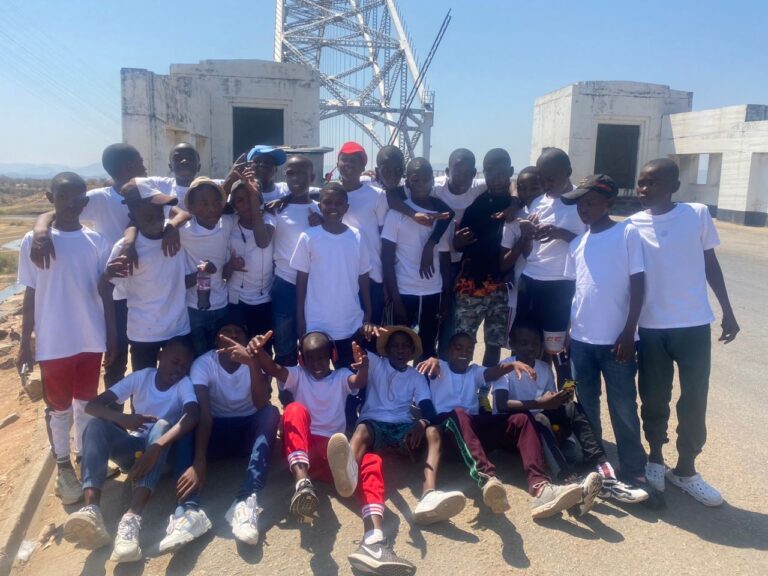
Masvingo Youth Academy Under 15 boys soccer team have travelled to Mutare for the Mai Hondo Memorial Annual Tournament where they are expected to display their talent on September 17 and 18.
Mai Hondo is a soccer tournament hosted in Mutare ever year and is organized by Blessing Mutsaka in honor of his late mother and the Masvingo under 15 youth side are ready to compete at their best at the tournament.
The team got financial support from Progress Musepa, Byword Logistics, Advocate Phillip Shumba, Maxwell Chiminya and Irvine Mtizwa of Flame Steel Engineering.
Speaking to TellZim News, Masvingo Youth Academy head coach Billiard Muchenje said the team was ready to represent the province as the young boys have been given a chance to show local and international football clubs what they are made of.
“We will give all our energy to represent the province with distinction as this is a great opportunity for exposure for our young boys,” Muchenje said.
Muchenje said their main aim was to create competitive players who will be able to reach greater heights
“Our goal is to develop young talent and give these young boys a platform for them to showcase their talent even to abroad soccer teams to fulfill their dreams,” said Muchenje.
Masvingo Youth Academy has been placed in Group D where they will play three teams namely PStars, FC Reactors and Majesa where the winner and second placed team will qualify to quarter finals.
University lecturers in Zimbabwe in a sorry state of affairs

By Nicholas Aribino
University lecturers in Zimbabwe work like elephants and feed like rats at the end of the day because their salaries are too measly to allow them decent lives. Most university lecturers in Zimbabwe have well-polished academic furniture like PhDs and are indeed conversant with and deeply grounded in their areas of academic and professional orientations, but what they get as their employment costs do not justify their academic and professional positionalities. It is indeed, the object of this opinion piece to flag out the tribulations of university lecturers in Zimbabwe.
In a healthy economy university lecturers would safely be found in the middle class; they would constitute a good cash cow for taxation by the government. One of the signs of an ailing economy is the conspicuous absence of a middle class. Zimbabwe at the moment does not have a middle class, only two distinct classes stand out -the very rich and the very poor. The poor are getting poorer by the day and the rich are getting richer by the day through illicit commerce. Those who have worked hard like university lecturers in Zimbabwe to be where they are now are not by anyway enjoying the fruits of their hard work, rather they are just getting by through survivalist approaches which take away their self-respect and dignity. For example, university lecturers’ salaries do not come with any surplus for meeting the demands of their households. From the university lecturers’ employment costs there is no take home, because the so called take home is not even enough to take them home. Some university lecturers ask for a ride from their students into town after their lectures; this kind of practice constitutes status-inconsistence and others scramble for a seat on the ZUPCO bus with students coming from their classes. With respect to the former, it is unethical because how objectively can a lecturer assess the work of a student who would have given him or her a lift into town. The form, content and substance of university education in Zimbabwe is going down the tubes as a result of a demotivated academic workforce. Arguably, lecturers teach according to their values and movere (motivation). Academicians should have decorum; they should not be enticed by students into doing things that may end up compromising their personhood and the reputation of universities to which they are tied. University education is both a process and a product, as a process, lecturers should be involved in procedural justice in discharging their funded mandate by investing equal time in educating all the students. Where members of the academic staff are struggling to make ends meet, they are taken advantage of by students from rich families who would give them freebies or gifts and, in the process, lecturers may award undeservedly marks to rich students at the cost of students coming from disadvantaged social groups who have no freebies to offer. As a product, education should have intellectually, socially and morally tuned graduates, but alas, the process through which students undergo in universities which largely lack organisational and procedural justice has corrupted them because of a dejected academic community that can bend backwards to accept gifts to influence assessment.
Under-investment and over-investment of efforts by teachers / lecturers are now rampant in the education system of Zimbabwe; those students who can afford an extra dollar for extra tuition will get more attention from the teacher/lecturer (over-investment) and those students who cannot afford an extra dollar for extra tuition known as ma-eke (literally meaning eking out a living) will get very little attention from the teacher / lecturer (under-investment). In higher education those students who spoil lecturers with money for data, lunch and transport may access privileged information and even examination papers. The education system in Zimbabwe is now highly privatized, corporatized, commercialised and commodified. Public schools have remained public schools by way of just definition, everything that happens in these public schools has taken the face of a free-market economy where services are structured according to the capability and capacity of the consumer to pay for education. The same goes for public universities, for example to access public universities one needs official fees for his or her education and ‘user-fees / pays’ also for lecturers that may come in many forms. For example, there are evidential pieces in Zimbabwe to prove that in some universities female students’ thighs have become tables on which assignments and examinations are marked. Low remuneration may also impel some male lecturers to regard female students as commodities in the market to enjoy. When lecturers lose self-respect and dignity because of meagre salaries, they may do all horrible things out of frustration.
The policy of Education 5.0 (community service, lecturing, research, innovation and industrialisation) in Zimbabwe will not succeed as long as the working conditions of university lecturers are not addressed by the government. Surprisingly, very few political elites send their children to public universities, as they consider private education and good institutions in the global North for their children. The rich in the global periphery (developing countries) are in the habit of sending their children to private education in the global metropole. In the context of Zimbabwe, the academic community is further demotivated to carry out research in various facets of social phenomena because the fiscus does not ring-fence significant economic resources for research and development. Innovation and industrialization are informed by research, brain circulation between and among academic communities, logistical and technical support, brain -exchange activities between and among universities, but the government of Zimbabwe’s expenditure of effort towards research and development is failing to stand out like a diamond in a coal-field. One cannot expect a goose to lay golden eggs if it is not given adequate food. Similarly, university lecturers cannot effectively embark on community service, lecture effectively, carry out research to improve on innovation and industrialization if their presence in intellectual landscapes are just seen like mosquitoes sitting on an elephant. Zimbabwean universities need support from the national budget in order for them to retain critical academic staff who can help the country to realise the goal of being an upper middle -income society by 2030. The country has adequate resources in the form of mineral wealth that can be used to transform Zimbabwe into a global economic power-house. Many lecturers are leaving Zimbabwe en-masse to develop other economies because Zimbabwe has failed to retain its pool of talent; skills-flight can only be mitigated with the restoration of the dignity of the academic community.
Dr. Nicholas Aribino : ZIMCARE Trust Country
Director and is writing in his own capacity.
Contact : +263715617095
Decline of Strike activity in Zimbabwe

By Shadreck Zangairai
Last week I started a debate on whether decline in strike activity reflects that conflict is no longer an important feature in contemporary employment relationships. This week I will continue with my analysis. It seems employers have taken advantage of the vulnerability of workers to exploit labour at will. Some employers went further to bar employees from subscribing to unions. A research by Tarugarira concluded that employers further threatened to draw upon the wide pool of desperate job seekers in the event of a strike action. Such environment and conditions forced workers to suffer quietly thereby desisting from strike action. Their voices are suppressed. Those employees who cannot stand the heat will leave employment and cross borders in search of greener pastures. Conflict is there but people have leant to ignore or live with it. This contributed to the decline in strike activity thereby supporting the notion that conflict is not an important feature in contemporary employment relationships.
To add on, the unemployment rate in Zimbabwe reflects the imbalance of the working class versus the unemployed. Due to the retrenchments and company closures experienced since the turn of the millennium, many people got involved in informal employment. This weakened trade unions since their powerbase and strength is in numbers and unity. Trade unions also became disjointed because of failing to serve the interests of its members who in turn looked at other alternatives. This means that those workers who were left at work could not match the bargaining strength of the employers hence they are suppressed and keep quite. The image portrayed is that conflict is not important in the workplace because people have leant to live with it. According to the Marxist conflict theory, it emerges because company owners are seen as making profits by paying workers less than their work is worth, thus exploiting them. Here lies the core of industrial conflict.
Furthermore, the decline in strike activity is also necessitated by the restrictive laws passed by the government such as Maintenance of Peace and Order Act Chapter 11:23 or political interference. These are aimed at disrupting labour meetings, restricting information deemed to be politically volatile and frustrating any efforts to organize meetings. These laws made it practically impossible for legal strikes to take place. Period 1996-1999 was evidenced by mass strikes being initiated by the ZCTU. To combat the situation, the government introduced such laws which prohibited workers or their representatives to engage in collective job action without seeking authority from the police.
Trade unions were seen as a threat to the government hence imposition of the restrictive laws. Since then, the impact of strikes began to weaken. For example, in 2021 and 2022, a call for strike action by the nurses association was not a success because the government used the state machinery such as media, police and army to discourage people from participating. Even calls for strike by teachers unions recently was a flop because the government used everything at its disposable to deny the action. All this brought fear to workers who were left defenseless and this led to decline in strike activity. However such laws only reduced strike activity but cannot eradicate conflict in the workplace.
All in all, reasons for the decline in strike activity to some extent, deals with the effectiveness of the negotiating strategies available for settling disputes. If procedures exist whereby grievances can be speedily formulated and efficiently channeled into negotiating strategies, strikes will be unlikely. The use of the economic power such as strikes, to control conflict in employment relationships should be the last resort because of its adverse effects on the economy. Parties in employment relations have leant that before resorting to strike, they have to exhaust mediation and conciliation efforts to try and solve the dispute amicably and avoid industrial action as much as possible. Of late organisations have engaged in strategies that help create good workplace relations and manage conflict so as to avoid collective job action. Such positive strategies have seen the decline in strike activities reflecting that conflict is not an important feature in employment relations. However there are some negative strategies being employed that have led to the decline in strike activity. This includes use of restrictive laws to control strikes, disjointment of trade unions and use of power by those who own the means of capital. High unemployment may have made workers reluctant to strike over pay. Workers may have become more defensive, trying to protect their jobs, rather than trying to improve their standards of living by increasing their wages. In my next article I will focus on the disjointment of trade unions and its implications in resolving industrial conflicts.
Disclaimer; Shadreck Zangairai is the Principal Human Resources Officer at Masvingo
Provincial Hospital. He writes in his personal Capacity
(shadreckzanga@gmail.com)
Gokomere pupil caught with 40 girls’ pants

Beverly Bizeki
A Gokomere Primary School pupil has left people tongue tied after he was found in possession of more than 40 girls’ underwear exiting the girls’ hostel on September 10, 2023.
Masvingo Provincial Education Director Shylatte Mhike said her office had not received a report to that effect and would confirm from the District Schools Inspector (DSI).
However, the school head Aquanos Mazhunga confirmed the matter and said they were still investigating.
“I can confirm the incident, however, we are still doing investigations to get to the bottom of the matter, we will furnish you once we finalize,” said Mazhunga.
The incident was uncovered by one parent who had gone to the school to drop his daughter and was asked to leave the learner’s bags at the hostels which is where he met the boy exiting the girls’ hostels.
“I went to Gokomere to drop off my daughter on Sunday (September 10). I found the matrons in a church service and they asked me to leave her bags at the hostel and apparently there was no one at the hostels.
“Upon leaving the bags at the hostel, I met a young boy and asked him what he was doing in the girls’ hostels and he lied saying he was there to drop a female student. I believed him at first but got suspicious after seeing that there was only one other parent’s car and mine, of which he failed to identify the child he had come with and when I asked again he tried to run away.
“I got hold of him and searched him only to find girls’ underwear stashed in his trouser and jacket pockets,” said the parent.
The parent said when he questioned him about the underwear he told him he said he had not stolen them but his friends had left them with him.
“When I asked him he denied stealing the pants and said his friends left the pants with him and we took him to the matron who told us the pupil in question was always on the run and there had been reports of girls’ pants missing at the school.
“The security personnel was called and confirmed that the pupil had been caught at the prefects’ hostel earlier on showing he had a record of stealing girls’ pants,” said the parent.
The parent implored the school authorities to investigate the matter and take action immediately saying there could be more to the incident and could have been using the pants for some evil acts.
“The school authorities should get to the bottom of this matter, if he was stealing food or other items we could be saying maybe its hunger or he wants to sell and make extra cash. Stealing female underwear is weird and when I caught him he wrestled trying to escape and he is so powerful that no girl can match him,” said the parent.
The Sin Of Homosexuality

By Solomon Chimange
God’s first institution that He ordained in the Garden of Eden was marriage between a man and a woman for life. Genesis 3:24 says, “Therefore a man shall leave his father and mother and be joined to his wife, and they shall become one flesh.” God created them male and female (Genesis 1:27). God ordained marriage was composed of a man and a woman. He created them Adam and Eve, not Jim and Tim, or Helen and Ellen.
The sin of sodomy (homosexual relations between men) gets its name from the wicked city of Sodom, which God destroyed. In Genesis 13:13 we read, “But the men of Sodom were exceedingly wicked and sinful against the Lord.” In Genesis chapter 19 the two angels, who were sent by God to destroy the wicked city of Sodom, stayed the night with Lot in his house. The homosexual men of Sodom came to Lot’s house and “called to Lot and said to him, ‘Where are the men who came to you tonight? Bring them out that we may have sex with them’” (Genesis 19:5). The door of Lot’s house was shut and the homosexuals “came near to break down the door” (Genesis 19:9). So the two angels of the Lord “struck the men who were at the doorway of the house with blindness, both small and great, so they became weary trying to find the door” (Genesis 19:11). The next day after Lot and his family fled Sodom, “Then the Lord rained brimstone and fire on Sodom and Gomorrah, from the Lord out of the heavens” (Genesis 19:24). And “the smoke of the land went up like the smoke of a furnace” (Genesis 19:28). This shows how God detests wickedness, which includes the sin of homosexuality.
In the New Testament we read, “And turning the cities of Sodom and Gomorrah into ashes, condemned them to destruction, making them an example to those who afterward would live ungodly” (2 Peter 2:6). God’s destruction of Sodom and Gomorrah should be a warning and example for us today of what God has planned in eternity for those who would live ungodly.
In preferring to accommodate the sin of homosexuality, many try to lessen the ugliness of the sin. It is not an alternate lifestyle, but a perverted lifestyle. The term “gay” is a misnomer. This is only a futile attempt to bolster their sinful image. They are not gay as in happy, but miserable in their wicked and corrupt lifestyle.
Some contend they cannot help being homosexual. Homosexuals are not born that way. People learn to be homosexuals just as they learn to be alcoholics. This is what they have chosen to do.
A homosexual can be saved and go to Heaven, but he or she cannot continue in their sin (Romans 6:1-2). Sin must be stopped if it is to be forgiven (Luke 13:3). Homosexuality, adultery, fornication, lasciviousness are all sinful perversions of what God ordained for marriage. In 1 Corinthians 6:9-11 we read, “Do you not know that the unrighteous will not inherit the kingdom of God? Do not be deceived. Neither fornicators, nor idolaters, nor adulterers, nor homosexuals, nor sodomites…will inherit the kingdom of God. And such were some of you, but you were washed, you were sanctified”. Notice that some of the Christians at Corinth had been homosexuals and sodomites, but they had given up their sin when they obeyed the Lord by being washed and sanctified in baptism. But they could not be saved if they went back into their sinful lifestyle. “The Lord is…not willing that any should perish, but that all should come to repentance” (2 Peter 3:9). God does not want anyone to be lost, but people who miss Heaven and end up in the burning fires of Hell will only have themselves to blame.
Solomon Chimange is the founding member and Senior Pastor of New Life Christian Fellowship. He is also The Director for Southern Africa Carmel Bible Institute. Solomon is a Distinguished Proffessor of Practical Theology at Carmel. He also holds a Doctor of Divinity Degree and a PhD in Systematic Theology. Solomon is a teacher par excellence and is a Chartered Christian Instructor.
FC Wangu Mazodze slides to 2nd position

Decide Nhendo
FC Wangu Mazodze which had maintained a grip on the first position finally slid to second position after losing to visitors Rusitu Tigers at Mucheke Stadium on Sunday.
The loss reduces the team’s chances of promotion into Premier League (PSL) a dream they have been harboring since the start of the campaign.
The team played very well but missed a number of clear chances and eventually lost by a goal to nil.
FC Wangu Mazodze spokesperson Sukuoluhle Ndlovu said despite the loss, they still had chances to get back on top and to continue with the campaign.
“We still have hopes for PSL promotion, we once got on second place but we managed to return on the top of the log, so we will be the log leaders once again soon since we are only 2 points behind log leaders Tenax FC,” said Ndlovu.
She said the team played very well but failed to score, but they are still in the game and hope to capitalize on their next game.
“Nothing went wrong, the team played to its best, they just failed to convert the chances they got into goals and we lost all the 3 points, but we are still in the race because we are confident that we are going to win against Ruwa based Midway FC,” said Ndlovu.
She said they were prepared to bounce back saying their technical team was doing its best for the team to come back to its winning ways and will no longer tolerate any loss or draw.
“Our technical team is doing its best to make sure that the team goes back to its winning streak and eventually make it to promotion,” said Ndlovu.
Tennax FC is now on top of the log with 41 points followed by FC Wangu Mazodze with 39 points. On third position is Bikita Minerals with 37 and Rusitu FC is on fourth position again with 37 points.
Cholera outbreak hits Bikita

Faith Duri
17 cases of cholera have been recorded in Mukanga area in Bikita near its border with Zaka District after a report of several people tested positive to the disease as of September 11 2023.
Masvingo Provincial Medical Director Dr Amadeus Shamhu confirmed the outbreak saying they had received a report of 17 cases were no casualties yet.
“It’s true, we have a cholera outbreak in Mukanga area of Bikita and as of September 11, 17 people had been hospitalized at clinics in Bikita.
“So far I haven’t received reports about deaths and I am yet to get an update of the situation from the district office and I will enquire to hear if there is any casualty so far and will update you,” sai Dr Shamhu.
Sources in the affected areas said one person from Makura area died on Tuesday (September 12) at Bikita District Hospital where he was admitted.
Masvingo recorded its first cholera case in May 2023 after Zimbabwe had recorded nearly 1 700 cases since the outbreak was reported in February. Chiredzi and Mwenezi recorded their first cases on April 29, 2023 after six victims were reported to have been hospitalized in Masvingo province with Mwenezi and Chiredzi districts being among the red zones.
A March 15, 2023 Cholera Situation Report from Ministry of Health and Child Care (MoHCC) indicated that 31 new cholera suspected cases and 3 laboratory confirmed cases were reported and Chivi was among those cases. Bikita District had also confirmed a cholera death in March 21, 2023 which makes the current outbreak the second in the district.
Cholera is a potentially life-threatening bacteria disease that causes severe diarrhea and dehydration. It spreads through contaminated food and water, and is most common in areas with poor sanitation and limited access to clean water.
Zaka RDC to elect Council Chair, vice today
Perpetua Murungweni
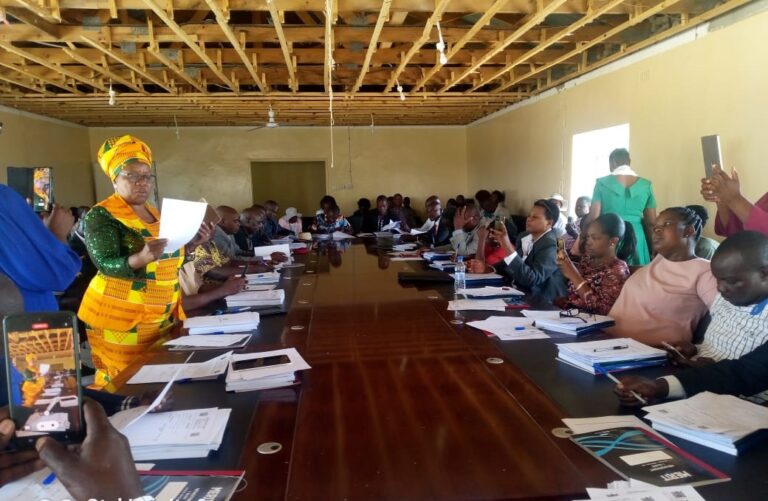
Zaka Rural District Council (RDC) is set to elect its council chairperson, vice and committee chairpersons from the newly elected councilors today at the council offices in Jerera (September 13)
A number of councilors have been said to be positioning themselves for the two top posts.
Chrispen Watadza of ward 17 is said to be eyeing the post, having been in council for two terms as he is also experienced with council operations. He previously chaired the finance and audit committees and is a local school head which makes him a better candidate in terms of academic qualifications.
Aleta Makomeke is another candidate eyeing the post. By virtue of being a woman, she stands a better chance if the gender card is pulled. She is an education inspector and former councillor for ward 5 Masvingo RDC. This means she is qualified both in terms of experience and education.
Another woman eyeing the post is Zaka Zanu PF District Coordinating Committee Chairperson (DCC) and Zaka South MP Clemence Chiduwa’s wife Fungai Maregedze.
Being Chiduwa’s wife can work both in her favor and to her disadvantage, the advantage being that her husband had influence in the selection of councilors in the primaries as DCC chairperson and could easily whip them into voting for his wife.
That could however also work against her as some councilors were complaining about her getting into council through the quota system saying it was nepotism and will cause centralization of power.
Another name is Benjamin Chikuni of ward 27. Chikuni has experience in council having been there for two terms. Chikuni is also a village head in his area under headman Dekeza, Chief Bota.
Ward 18 councillor Hakufiwi Hakufiwi is also tipped for the chairperson’s post. His main advantage is that he stays in Jerera which makes him closer to council chambers. He is a former prosecutor which makes him better in terms of education. However, he has no experience in council business as it is his first time in council.
Women participation, representation remains low
Perpetua Murungweni
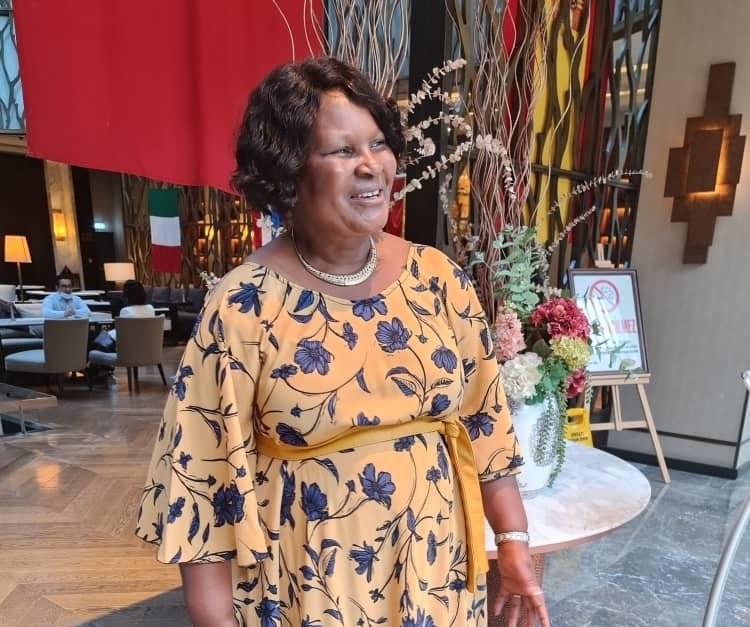
Despite various moves by government like introducing the quota system to include women into council and parliament through proportional representation, women’s participation in politics is still very low as evidenced by the number of women who got into positions through the ballot in 2023 elections which is lower than in 2018.
Gender and Media Connect National Director Patience Zirima commented on the decline in women political participation saying there was need to enhance equality to encourage participation of women in politics.
“The quota system has increased the number of seats that are available for women but it has failed to enhance the quality participation of women in competitive politics especially at constituency level because when the quota system ends we will continue to see fewer women competing in competitive politics at constituency level.
“Politics is a ‘boys’ game, a ‘boys’ club within political parties themselves and with the national processes, women are left behind in terms of participation because there is a lot of discrimination and marginalization of women at different levels of politics in this country,” said Zirima.
Zirima also said lack of policies at national level hinders women political participation.
“Lack of clear policies at national level pushes women away from the game. At national level the policies are there that says there should be 50-50 but the challenge is how then the law compels political parties to ensure that the policies do exist beyond the quota system,” Zirima said.
Zirima also cited political violence meted on women within their political parties as one of the factors dissuading women from participating effectively.
“There is violence against women within political parties at all levels, we have a lot of these cases where women have been attacked and it intimidates and stops women from participating because when women are attacked young women become afraid to take part and violence is a big factor in terms of limiting women participation in politics,” said Zirima.
Community Tolerance Reconciliation and Development (COTRAD) information officer Leah Matavire said women are affected by patriarchal nature of societies to participate in politics.
“The patriarchal culture in Zimbabwe, breeds low self-esteemed in women especially within local power structures and makes it impossible for women to compete for political power. In these societies, people think women should be confined to the kitchen, rearing children and doing household chores. Women are seen as inferior to men, not as smart or as powerful,” said Matavire.
Mwenezi West MP Priscilla Moyo said her political journey was not easy because of her gender.
“My political journey was not easy because I am a woman I encountered a number of problems such as hate speech from my male contestants, I was called a prostitute and was told that politics is for men not women, I was looked down upon within the community because I am a woman and also I suffered body shaming.
“I was told that I should not contest because I am a daughter in-law in Mwenezi, most people said the position was not for daughters-in-law but for those who were born in Mwenezi, yet people are forgetting that by the virtue of marriage I automatically become a child of Mwenezi,” Moyo said.
Moyo said that there is need to empower and educate communities that politics is for everyone because most women are scared to take part due to what other women encounter.
“There is need to empower women because they suffer from lack of resources; most women do not have the financial muscle to pull off a full campaign and to participate.
“At intra party level we find that a lot of women do not have the space to fully participate, because they lack the links to people with power to make decisions within the political party to get nominated,” said Moyo.
Proportional representative Tendeukai Matara said political participation was not easy for women saying they face more challenges than experienced by their male counter parts.
“As female politicians, we face problems that prevent us from running for political offices, including gender stereotypes, body shaming; the community questions our sexual life and we are labeled prostitutes,” said Matara.
The 2023 election witnessed a drop in the number of elected women for the national assembly where only 22 out of 70 women who contested for national assembly were elected with the Citizens Coalition for Change (CCC) getting 10 women, while Zanu-PF got 12.
According to statistics, in 2018, 14.4percent of contesting candidates for the National Assembly were women and out of 210 seats, 26 were subsequently elected to office.
In this year’s election, 70 women out of 637 seats contested for the National Assembly, and 22 were elected to office. Elected women in the National Assembly for 2018 accounted for 10percent seats in this year’s election which is a decline of 2,4percent from the 12.4percent in 2018
This year’s election saw only one woman contesting for presidency as compared to 2018 where four women contested.
Zimbabwe has signed and ratified a number of regional and international instruments that call for gender equality, but equality seems to be a challenge in politics.