Home Blog Page 2

​Procurement delays Tshovani Stadium refurbishment

​By Beatific Gumbwanda
​CHIREDZI – Plans to refurbish Tshovani Stadium remain in motion despite significant
delays in the tendering process, with budgeted funds for the project reportedly still
intact.
​Chiredzi Town Council (CTC) had initially expected work to commence in late December

  1. However, administrative hurdles have stalled progress.
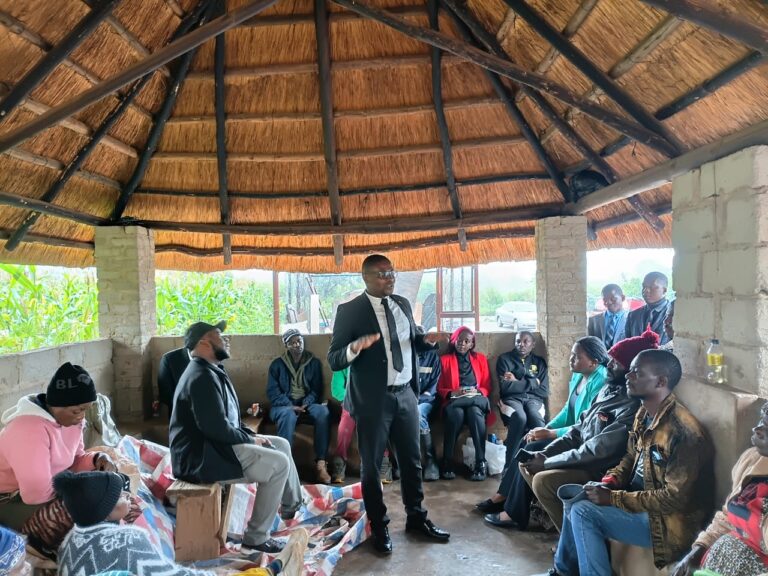
    ​Addressing residents during a recent ward development feedback meeting organized by
    TellZim News, CTC Vice Chairperson and Ward 1 Councilor Liberty Macharaga
    confirmed that the local authority is still committed to the project.
    ​“Refurbishment of Tshovani Stadium is still on the cards. As a local authority, we have
    set aside the beer levy from 2025 and 2026 toward the stadium. I can assure you that
    work will begin as soon as the tendering process is finalized ” said Macharaga.
    ​Macharaga explained that the initial timeline was derailed by procedural errors and a
    lack of competitive bids.
    ​“Tendering began in late November, and we hoped work would start by late December.
    However, we were informed of errors in the initial process, which forced us to re-tender.
    This required a mandatory 21-day waiting period,” he added.
    ​He further noted that the second attempt yielded only one bidder.
    ​“While we were advised that we could proceed with a sole tenderer, the history of
    Chiredzi demands high levels of transparency. We felt it was best to re-tender again to
    ensure a fair process. Interestingly, the first round had over ten interested parties who
    did not resubmit in the second round. We have urged them to resubmit their documents,
    and we hope for a successful outcome this time,” he added.
    ​Tshovani Stadium currently serves as the sole major sporting facility in Chiredzi. Beyond
    the main stadium, Macharaga urged local youths to identify smaller spaces for
    recreational development to help combat drug and substance abuse.
    ​“I encourage the youth to come up with ideas. For instance, one group identified a
    space outside Tshovani Stadium where a multipurpose court for basketball, netball,
    tennis, and volleyball could be built. I have already pledged 10 bags of cement toward
    that initiative and promised to engage the business community for further funding,”
    Macharaga said

Masvingo Provincial performance analysis of development projects by district

By TellZim News

MASVINGO – Masvingo Province’s seven District Development Coordinators recently gathered at a stakeholder meeting at Masvingo Poly on March 3 to present performance reports on development projects in their respective areas, giving a rare glimpse into progress across the province’s districts.

The presentations covered infrastructure development, water and sanitation, health facilities, education, irrigation schemes, and land administration among other indicators. TellZim News analysed the reports to rank districts based on project implementation, tangible outcomes, and evidence of development momentum.


1. Gutu District – Leading with Completed Projects 

From the presentations which may be different from what is obtaining on the ground, Gutu District represented by the Disctrict Development Coodinator (DDC) Chiedza Tafirei, emerged as the best performing district, demonstrating a strong track record of completing projects rather than merely initiating them.

The district celebrated the completion and commissioning of the Sotisosi solar project, a significant milestone in rural electrification. At Lowland Irrigation Scheme, ploughing has been completed with 10 plots already under cultivation, showing tangible progress in food security initiatives.

In health delivery, Gutu successfully upgraded a rural facility to a clinic, with the application for upgrading submitted and medication now being provided. The community is already benefiting from improved health services, with the facility now admitting patients.

Gutu also showed forward thinking by providing a building for a proposed rehabilitation center, although the DDC said funds were still required to complete the project. On road infrastructure, routine maintenance covering 40 kilometres has been completed on key routes including Gutu-Buhera, Zimuto-Chatsworths, and Gutu-Kurai roads, despite funding challenges stalling further progress.

Gutu’s strength lies in completing what it starts, with the Sotisosi solar project and clinic upgrade standing as tangible evidence of effective project management.


2. Chiredzi District 

From Chiredzi’s presentation done by DDC Lovemore Chisema, the district demonstrated a wide range of development initiatives, showing engagement across multiple sectors from education to irrigation and disaster response.

The district responded swiftly to an emergency when Chikombedzi Hospital’s outpatients ward roof was blown away by a storm. With assistance from Gonarezhou, the roof has been fixed, although ceiling and paint work remains.

Chiredzi district said it was addressing water needs across several wards. Ward 5’s request for safe drinking water through boreholes had been submitted, but drilling had not commenced due to the Rural Infrastructure Development Agency (RIDA) rig that was reportedly broken down, requiring alternative partnerships.

In infrastructure, the Chilonga Bridge Causeway rehabilitation in Ward 7, it was reported that a contractor was identified, with work awaiting water levels to subside. Ward 27 had made significant progress on business sites, with a layout plan adopted, stands pegged, and construction already in progress by beneficiaries.

However, the district faces challenges in education and health facility establishment. Requests for a secondary school in Ward 12, a secondary school in Ward 1, and a clinic in Ward 1 remain at motion stage, awaiting council resolutions to proceed. The Masapase Irrigation Scheme also was reported to be at planning stage.

Chiredzi’s comprehensive approach across multiple sectors places it second, though the gap between planning and implementation needs addressing.


Masvingo District

Masvingo District led by DDC Joyce Chikugu, showed impressive progress in infrastructure development, particularly under the presidential borehole scheme where 56 boreholes had been drilled. Five have been equipped and were expected to be solarized, while China Aid donated 15 bush pumps. Five more boreholes are planned, with Chatikobo and Murinye Clinic now operating with boreholes.

The district made significant strides in road maintenance, with 571 kilometres graded in total where 258 kilometres were done by Masvingo RDC and 313 kilometres by RIDA. Low-lying bridges have received attention, with Matizi Bridge completed in 2025 and Nyaukaka bridge at 54 percent completion. Mutirikwi bridge designs were reported to have been completed by the Ministry of Transport.

On environmental issues, the district addressed land degradation from mining activities through backfilling and rehabilitation. In the Chomugwaku area, where gravel mining occurred, 300 trees were planted as part of land preservation efforts.

Interventions on illegal settlers have been carried out in Wards 9, 5, and 7. The Zvinyaningwe Irrigation Scheme, covering 46 hectares, was completed.


4. Bikita District 

In his report, Bikita DDC Bernad Hadzirabwi, indicated that the district is making strategic investments in water infrastructure, with upgrading of the Rozva water plant through resending of filters set to increase volumes from 60 cubic metres to 100 cubic metres per hour. Although major activities are on hold due to resource unavailability, water coverage in residential areas was improved from 60 percent to 85 percent. Resuscitation of two boreholes as backup is in progress.

The district is addressing a major health gap, as Bikita is the only district in the province without a government district hospital. Council was paying for a topographical survey which should be completed in the first quarter of 2026.

Electrification and solarisation of boosters is in progress in Pamushana Ward 11 and Chirombe Ward 20, with plans to establish another booster in Mukore Ward 8. Proposals for outstanding areas are ongoing.

Road rehabilitation on the Makuvaza-Chiredzi road was budgeted for this year, with tendering in progress. The Negwari Irrigation scheme remains at proposed site stage with no progress, awaiting funds. 

In a significant policy intervention, Bikita Minerals was reported to be following a Ministry of Mines policy of 80 percent local employment and 20 percent outsiders, with employment ongoing. Title deeds for small-scale farmers in Wards 29 and 11 are being addressed by council and Lands.

Human-wildlife conflict in the Save Valley Conservancy was being attended to promptly, with ongoing community awareness campaigns.

Bikita’s strategic focus on water and local employment policies shows thoughtful development planning.


5. Mwenezi District 

According to the DDC Isaac Mutambara’s presentation, Mwenezi is focused on establishing foundational infrastructure in resettlement areas. Clinics have been pegged at Tshobelele, Mujuneri, and Mayezi, now awaiting construction to begin. This addresses a critical gap, as resettlement areas currently have no clinics.

The district has identified 18 war veterans for decent burial, awaiting funding from central government. All seven chiefs in the district have been allocated stands at the growth point, strengthening traditional leadership presence.

Petronella Clinic has reached 98 percent completion, a significant milestone for health service delivery in the area.

Mwenezi’s progress is steady but foundational, with many projects still awaiting construction or funding.


6. Chivi District 

In his presentation, Chivi DDC Innocent Matingwina said Chivi residents are already benefiting from Muzhwi and Tugwi Mukosi dams, with Bwanya Irrigation Scheme serving 300 beneficiaries, Gororo Irrigation Scheme with 72 beneficiaries, and Nyahombe Irrigation Scheme with 78 beneficiaries. Fishing cooperatives are set to operate soon, and electric power generation from the dam is planned.

However, the district struggles with poor road networks. Road construction is ongoing with only 2 kilometres of regravelling completed, and maintenance will only resume after the rain season.

On land issues for war veterans and widows, only 28 percent of the layout plan has been written to the provincial head for war veterans, indicating slow progress.

Chivi shows potential through dam-based development but implementation on the ground remains limited.


7. Zaka District

Zaka ranks lowest due to internal governance issues that threaten development momentum. Instead of talking about talking about developmental progress, the DDC Nyaradzo Tongofa centred his presentation on how she addressed leadership divisions and fights in the district. Discord within the local authority has necessitated tripartite meetings between the CEO, council chair, and District Development Coordinator every two weeks to solve problems.

Positively, capacity building programmes for councillors have been conducted, with all councillors trained to understand their positions and the executive trained on their roles. A team-building exercise is planned for the second quarter.

On environmental issues, the Environmental Management Agency (EMA) is conducting trainings to help communities set up standard fire guards to address veld fire problems.

While Zaka is taking steps to address internal conflicts and build capacity, governance challenges suggest development implementation may be hindered until these issues are fully resolved.

Masvingo passport office ‘too small’ for e-passport operations

0

By TellZim Reporter
Reopening of the Masvingo passport offices will be delayed for some time with the
government saying the existing offices are ‘too small’ to run an e-passport operations with a
new building to be constructed.
Responding to a question in Parliament by Masvingo Urban MP advocate Martin Mureri on
the reopening of the offices, Minister of Foreign Affairs and International Trade, Amon
Murwira, said the current offices at the Masvingo Provincial Registry were too small to
accommodate the infrastructure required for the e-passport project.
“The Ministry through the Civil Registry Department plans to roll out the e-passport system to
the remaining two provinces (Bindura and Masvingo). However, installation of the e-passport
infrastructure requires adequate and suitable office space. The current offices at Masvingo
Provincial Registry are too small and cannot accommodate the e-passport,” said Prof
Murwira.
Prof Murwira said the Ministry had engaged its private partner, Garsu Pasaulis, to assist with
the construction of the required, new state-of-the-art building. .
“To address this, The Ministry has engaged its private partner Garsu Parsaulis to support the
construction of a new state of the art building similar to the provincial registry office recently
commissioned in Mutare. The roll out of the e-passport system to Masvingo Provincial Office
will therefore commence once the new building has been constructed. Engagements
regarding the construction of the provincial office are ongoing,” he said.
The e-passport was rolled out in January 2022 and has since been rolled out to various
provinces and Masvingo Province has only one in Mwenezi District in Masvingo which is not
convenient for the rest of the province.
The people in Masvingo have however been forced to travel to other provinces such as
Midlands and Harare to apply for passports after the closure of the passport offices in
Masvingo District.
The situation has resulted in increased costs for applicants who must travel long distances to
access the much desired service.
To date, the government has issued close to 1.8 million electronic passports since the
programme began in January 2022.

Zaka plane crash, new details emerge

0

By Simon Masore
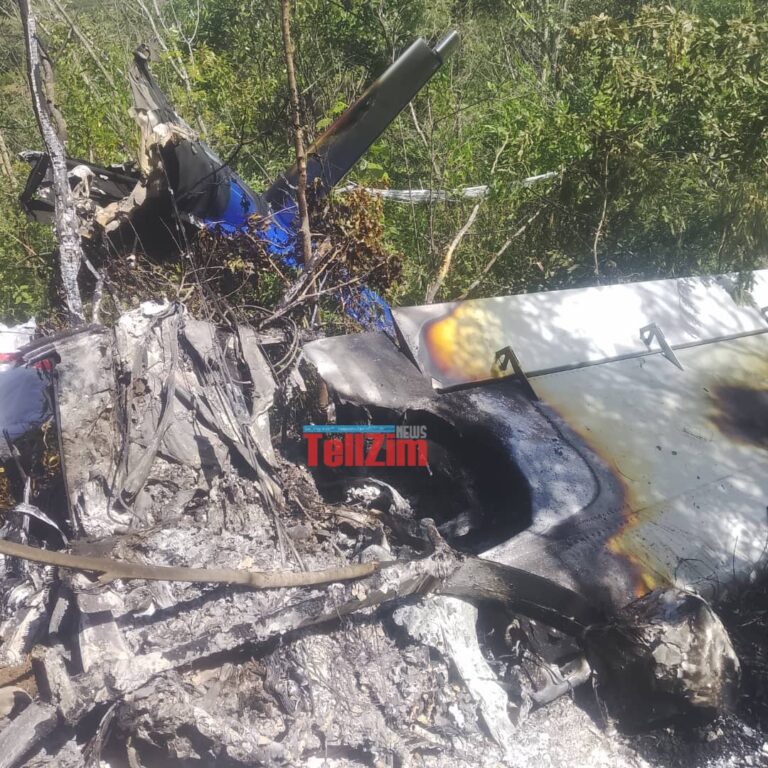
MASVINGO – New details have emerged regarding the tragic plane crash that claimed the life
of a pilot and seriously injured his wife in a mountainous area between Zaka and Bikita districts
on Sunday morning, with witnesses now revealing that the woman attempted to escape using a
parachute moments before impact.
Police have confirmed the incident, which occurred at around 11 AM in Nyoka Village,
approximately 85 kilometres southeast of Masvingo. Investigators from the Civil Aviation
Authority of Zimbabwe have since been dispatched to the scene to establish the cause of the
crash.
“The Zimbabwe Republic Police confirms an aircraft crash which occurred on 15th March 2026
at around 1100 hours at Nyoka Village, Zaka, Masvingo Province.
One person was killed while another person was injured when an aircraft carrying two occupants
crashed before being engulfed by fire. The aircraft, which was travelling from Komani
Aerodrome in Mt Hampden, Harare to Chipinda Pools, had reportedly developed a mechanical
fault and began emitting an unusual sound,” reads the police statement.
According to eyewitnesses who spoke to TellZim News, the aircraft was mid-air when
something burst, causing it to start swerving and descending rapidly. The pilot desperately tried
to navigate the plane before it ultimately nose-dived and crashed among trees and tall grass and
later caught fire.
Sources identified the two occupants as husband and wife and said moments before the crash, the
woman reportedly attempted to escape the aircraft using a parachute.
However, the parachute became caught in the plane’s wings before tearing apart, causing her to
fall separately from the aircraft which was lowering to the ground.
She crashed to the ground a few metres away from where the plane eventually nose-dived,
breaking both legs in the process.
Villagers who rushed to the scene said they arrived while the wreckage was still burning. They
could see the pilot trapped inside the burning aircraft but were unable to open the doors to rescue
him.
The aircraft later burst into flames again, creating an opening that allowed villagers to finally
access the wreckage.
Using a tree log, the community members managed to pull the pilot’s body from the burning
plane.

Tragically, the pilot was already dead and had been burnt from the waist downwards. Witnesses
described seeing his right leg still trapped inside the aircraft after being badly burnt, while bones
from his left leg were exposed due to the severity of the fire.
Two villagers, Jairos Nyoka and Jeffrey Nyoka, were among those who bravely helped retrieve
the pilot’s body from the burning wreckage.
The injured woman was found screaming in pain, repeatedly asking if her husband, who was
trapped in the plane, was still alive.
Villagers who attended the scene said they tried to ask her what had happened and what the
couple had been doing before the crash.
The injured woman was rushed to hospital, and her current condition remains unknown. Some
locals claimed the couple are believed to be Australians, although authorities had not confirmed
their identities at the time of writing.
Ward 2 Councilor Sarah Mamvura who also visited the crash site corroborated the sources
accounts to TellZim News saying she had face to face interviews with the immediate responders.

Masvingo Province shines in 2026 performance evaluation ceremony

0

By TellZim Reporter
Masvingo Province emerged as one of the top performers at the 2026 Performance
Evaluation Ceremony held in Harare, scooping five awards across different categories and
reaffirming its growing reputation for strong public sector performance.
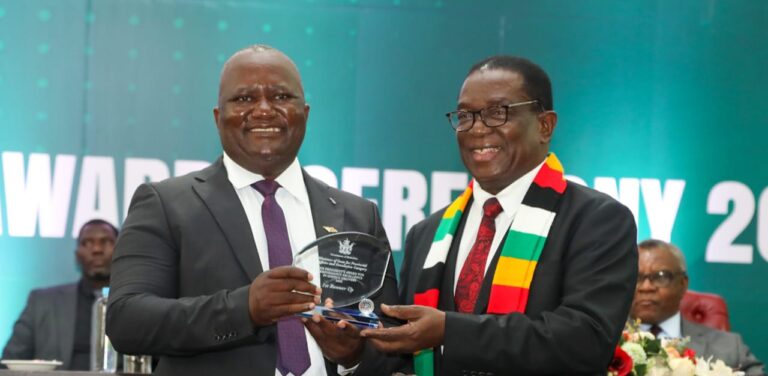
Minister of State for Provincial Affairs and Devolution for Masvingo Province, Ezra
Chadzamira, was named Best Performing Minister of State for the second consecutive year,
highlighting the province’s continued progress in implementing government programmes.
Masvingo also celebrated another repeat achievement after Provincial Affairs and Devolution
Permanent Secretary, Addmore Pazvakavambwa, was once again recognized as the Best
Performing Permanent Secretary for Provincial Affairs and Devolution.
At local government level, Masvingo City and Ward 4 councillor Alec Tabe, received the
First Runner-Up award in the Mayor/Council Chairperson category for urban local
authorities.
In the rural local authority category, Chivi Rural District Council earned recognition after its
Chief Executive Officer was named runner up in the Best Performing Rural District Council
CEO category.
Meanwhile, Chiredzi Town Council was ranked the third best-performing urban council.
In other categories announced during the ceremony, Tourism and Hospitality Industry
Minister Barbara Rwodzi was named Best Performing Cabinet Minister, while Permanent
Secretary in the Ministry of Lands, Agriculture, Fisheries, Water and Rural Development,
Prof Dr Obert Jiri won the Best Performing Permanent Secretary award.
Manicaland Province Minister of State for Provincial Affairs and Devolution, Misheck
Mugadza, was named the second-best performing Minister of State.

GZU Law School empowers Bikita community on Environmental Laws

0

BIKITA – Students from the Environmental and Mining Law Unit recently visited Chief Marozva in Bikita for a two-day community engagement and legal awareness programme aimed at educating residents about environmental protection and mining laws.

The programme, held from March 11-12, was organised by the Environmental and Mining Law Unit in partnership with the Zimbabwe Environmental Lawyers Organisation (ZELO). 

The initiative aimed to empower local communities with legal information that can help them understand and respond to environmental challenges linked to mining activities.

The delegation included ten law students, led by Executive Dean Mr Maphosa, together with law school librarian Mr Mafuta and environmental law lecturers Miss Masiya and Mrs Ndlovu. 

The team met with Chief Marozva and his headmen to discuss environmental concerns affecting the community, including water pollution and land degradation caused by mining.

During the engagement, the students and lecturers held legal awareness sessions to help residents understand their rights and responsibilities under environmental and mining laws. 

Community members were encouraged to report environmental damage and to make use of legal support structures available to them.

The Environmental and Mining Law Unit also explained its role in providing legal education and assisting communities to better understand environmental justice.

On the second day, the delegation attended a guest lecture hosted by the law school legal aid clinics at Great Zimbabwe University. 

The lecture brought together legal and environmental experts to discuss environmental law, mining regulation, human rights and access to free legal aid.

The session featured Mr Mtisi, Deputy Director of ZELO, as well as representatives from the Forestry Commission of Zimbabwe, the Zimbabwe Human Rights Commission and the Zimbabwe Parks and Wildlife Management Authority. 

Speakers highlighted the importance of protecting natural resources while ensuring that communities benefit from legal knowledge and support.

Organisers said programmes like this help strengthen the relationship between universities and communities while promoting environmental justice in mining areas. 

They recommended more awareness campaigns and continued collaboration to support sustainable development.

Tugwi Mukosi 15MW hydropower plant establishment takes shape

0

By Beverly Bizeki

The establishment of a 15 megawatt hydroelectric power plant at Tugwi Mukosi Dam is set to begin, marking a major step toward unlocking investment opportunities at the country’s largest inland dam in Zimbabwe nearly nine years after the dam’s completion.

The power project, expected to cost about US$30 million, will be implemented by Tugwi Mukosi Hydro Power Station, a company incorporated in 2022 and licensed by the Zimbabwe Energy Regulatory Authority to develop the facility.

Speaking during a Tugwi Mukosi inception meeting recently held at Urban Lifestyles Hotel, Ministry of Energy official Sostain Zivuku said the engineering contractor Sinohydro Corporation went on site in 2025 and has already begun constructing accommodation for staff.

Zivuku said the project had already secured funding, with US$18 million mobilised from the Public Service Pension Fund.

“In 2022, a company called Tugwi Mukosi Hydro Power Station was incorporated and licensed by ZERA to start a 15MW power station. The power plant will be constructed at the cost of about US$30 million and US$18 million has been mobilized from the public service pension fund,” said Zivuku.

Zivuku said although preparatory works have started, civil works were temporarily halted earlier this year after the Zimbabwe National Water Authority requested further geological assessments to ensure that blasting required for the construction of the plant would not compromise the structural integrity of the dam wall and other infrastructure.

“They are currently at the dam site and the main works that they are doing is drilling to get samples to ensure the ground is good enough to hold a 15MW power plant and also to check the rock formation because a decision has to be made on whether the power plant will be built on the ground or underground,” he said.

He added that procurement of key equipment such as turbines and transformers had also experienced slight delays due to processes requiring engagement with the Reserve Bank of Zimbabwe.

Once construction begins fully, the project is expected to take about 18 months to complete.

Electricity generated from the plant will be transmitted through a 38 kilometre transmission line linking Tugwi Mukosi Dam to Renco Mine, where a substation will connect the power to the national grid.

The hydropower project forms part of broader efforts by government to maximise the economic benefits of the dam, which holds about 1.8 billion cubic metres of water and has remained largely underutilised since its completion nearly nine years ago.

The push to accelerate development around the dam was highlighted during the inception meeting, where government officials, planners and traditional leaders discussed plans to evaluate investments linked to the reservoir.

Permanent Secretary for National Monitoring, Evaluation and Learning in the Office of the President and Cabinet Fananai Madambi said the evaluation was a Cabinet directive aimed at ensuring the dam generates meaningful returns.

“Tugwi Mukosi is one of the major investment structures by the government. Any investment is supposed to give us the desired return on investment. The purpose of this evaluation is to determine the benefits that should be realised and where we currently stand,” said Madambi.

Meanwhile, Chief Chivi born Adeline Mauswa welcomed the development, saying communities in the drought-prone district were already benefiting from some irrigation schemes linked to the dam and urged the government to prioritise local employment.

“The dam is beneficial to us in Chivi because this is a dry region, and we already have some irrigation schemes coming from it. But we urge the government to increase the number of irrigation schemes so that more communities can benefit. We are also looking forward to the establishment of the power plant and hope that residents from Chivi will be considered for employment,” said Mauswa.

Officials from the Department of Spatial Planning also confirmed that a master plan to guide investment around the dam is already in place and will soon be submitted for further approval before being opened for public review.

Drug traffickers arrested with 200kg of mbanje disguised as blankets

0

By Ndinatsei Mavodza
MASVINGO – Eleven suspected drug traffickers were arrested on March 10 after police
intercepted a load of about 200 kilogrammes of dagga that had been disguised to look like
blankets in an attempt to avoid detection.
The Zimbabwe Republic Police (ZRP) confirmed the incident in an X post and said the
suspects who are both men and women were travelling from Beitbridge when they were
stopped during a police operation.
The dagga had been carefully wrapped and packaged in a way that made it resemble blankets,
a tactic believed to have been meant to avoid suspicion during transportation.
During the operation, officers also recovered unregistered medicines that were found in the
suspects’ possession.
The 11 suspects were arrested at the scene and are expected to appear in court facing charges
related to the illegal possession and trafficking of drugs.
Police say investigations are still ongoing to determine whether other people could be linked
to the trafficking syndicate.
In a statement, ZRP warned that the fight against drug trafficking and substance abuse
remains a top priority.
“The Zimbabwe Republic Police reiterates that there is no going back in the fight against
drug trafficking and substance abuse. All individuals involved in the illegal production,
transportation and distribution of drugs will be arrested and taken to court,” the police said.
Drug trafficking cases have been rising across the country and border towns such as
Beitbridge are often used as entry points for drugs being moved into Zimbabwe.
Police have urged members of the public to report drug dealers and suspicious activities in
their communities to help reduce the spread of illegal drugs.

ZANU PF Masvingo pledges unwavering support for third amendment bill

0

By Ndinatsei Mavodza

MASVINGO – The ZANU PF Masvingo Provincial Executive Committee (PCC) has thrown its weight behind the Third Amendment Bill, which seeks to extend the presidential term limit by two years, during a meeting held on March 12, 2026.

Addressing a gathering that included visiting ZANU PF Politburo members, Masvingo Provincial Chairperson Robson Mavhenyengwa expressed the province’s firm commitment to the proposed constitutional amendment. 

The provincial leadership was appearing before the top brass, which included Secretary General Jacob Mudenda, Treasurer General Patrick Chinamasa, and Secretary for Security Lovemore Matuke, Secretary for Legal Affairs Ziyambi Ziyambi and secretary for commissariat Munyaradzi Machacha.

“As Masvingo, we are behind conference resolution number one and the Amendment Bill number three. We had our PCC and conducted inter-district meetings, educating people about the bill, and we are in the process of going down to all our 630 party districts, similar to what we did after conference when we went to the districts informing them about resolution number one,” said Mavhenyengwa.

He emphasized the importance of grassroots mobilization, noting that stopping at inter-district level risked leaving some communities uninformed and said they were having meeting at every level to make sure that all members are informed.

“We realised that if we stop at inter-district, some chairpersons will not cascade down our message to the people on the grassroots, so we are going down there as leadership to make sure that everyone is aware of what we are doing” Mavhenyengwa added.

Mavhenyengwa said Masvingo was fully prepared for the public consultations on the bill, which are set to be conducted by Parliament.

“We have seven centres established in Masvingo where consultations for Amendment Number 3 Bill will be done. So we are ready to defend the party and government position,” said Mavhenyengwa.

In his address, Secretary General Jacob Mudenda clarified the meaning behind the party’s 2030 slogan, explaining that it carried dual significance.

“The 2030 slogan means two things, making Zimbabwe an upper middle income economy by 2030, as well as extending the presidential term. People should not just make slogans without understanding what they mean,” said Mudenda.

Mudenda also issued a stern warning against factionalism, urging party members to rally behind established leadership structures. He emphasized that the Provincial Chairperson remains in position until the next election, likely after 2030, and called on all members to support him rather than creating parallel structures.

He further warned against regionalism, reminding party members of the liberation struggle’s unifying spirit.

“During the war, people were united for a common goal to liberate Zimbabwe, despite tribe or region,” he said.

The Constitution of Zimbabwe Amendment (No. 3) Bill, 2026, seeks to introduce significant changes to the country’s supreme law. Among its key provisions is the extension of the presidential and parliamentary terms of office from five to seven years . 

The bill also proposes replacing the current system of directly electing the President through a public vote with a parliamentary process, where Members of Parliament and Senators sitting jointly would elect the President.

Other proposed changes include the establishment of a separate Zimbabwe Electoral Delimitation Commission to handle the delimitation of electoral boundaries, transferring voter registration functions from the Zimbabwe Electoral Commission (ZEC) to the Registrar-General’s Office, and expanding the Senate from 80 to 90 members through the addition of 10 presidential appointees. The bill also seeks to abolish the Zimbabwe Gender Commission and transfer its functions to the Zimbabwe Human Rights Commission.

However, the bill has attracted criticism from some quarters. The Zimbabwe Lawyers for Human Rights (ZLHR) has expressed concern that the amendments threaten to erode constitutionalism and concentrate excessive power in the executive. 

The bill is currently undergoing a 90-day public consultation process before it proceeds to parliamentary debate.

Minimum wage increases by 8% for Agro-subsector

0

……..as NEC Agriculture moves to strengthen relations with sugarcane Agriculture subsector

By Beatific Gumbwanda

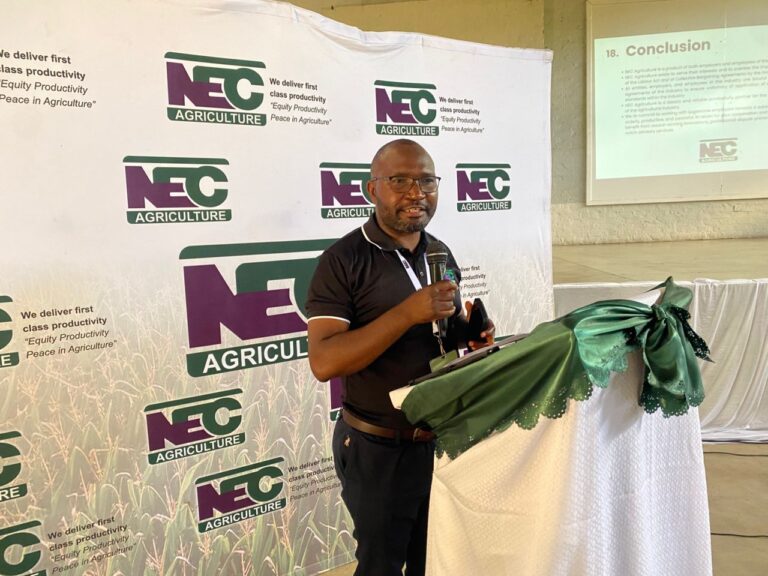
The National Employment Council for the Agricultural Industry (NEC Agriculture) recently held a significant employer engagement session with stakeholders from across the sugarcane subsector,  where it indicated that the minimum wage has increased from the initial US$137 to US$148 in the Agro-subsector, which is a biggest achievement towards attainment of vision 2030 of an upper middle class economy, TellZim News can report.

NEC Agriculture hosted its inaugural stakeholders’ engagement meeting with the sugarcane subsector at Palm Tree Place to plan the way forward through dialogue designed to inform and motivate, where it highlighted that the minimum wage had just increased by 8%, from US$137 to US$148, which is a significant milestone towards attainment of an Upper middle income economy by 2030

Since its establishment in 1991, the National Employment Council for the Agriculture Industry in Zimbabwe has aimed to promote social justice and democracy within the industry through social dialogue, bringing together employers, any individual employer wishing to participate, and registered trade unions representing workers.

The meeting was attended by representatives from the Ministry of Public Service, Labour and Social Welfare, leadership from the Zimbabwe Sugarcane Growers Apex Council, and employer associations from across the Lowveld region.

NEC Agriculture’s Chief Executive Officer, David Madyausiku, opened the meeting by recognising the significance of the sugarcane subsector, which spans from agricultural enterprise into manufacturing, energy production, and even advanced material sciences, where he indicated that through Collective Bargaining Agreement (CBA), the minimum wages had increased from US$137  to US$148.

“We all know how the adage is true that sugar is in all that we eat, and the importance of this subsector to this agricultural industry, to manufacturing, to energy production, and nowadays even in the material sciences, can only be understated by the ignorant,” 

“Through the recent CBA, the minimum wage in the Agricultural subsector has just increased by 8%, from US$137 up to US$ 148, making it a significant step towards attainment of vision 2030,” said Madyausiku.

This view was supported by NEC Agriculture Chairperson, Tsitsi Nyirenda, who urged farmers to leave a legacy that future generations will admire.

“Have you created your own blueprint in line with the Nation’s 2030 vision? What are you going to bring to the table? Your children should thank you for efficiently utilising the land after you are gone,” said Nyirenda.

Muchena emphasised that this was a reminder of how crucial the industry’s labour relations are.

He also mentioned that the Council has a fully operational regional office staffed by three full-time employees, a deliberate investment in proximity and responsiveness to the region’s employers and workers.

“They are there to meet your needs, and with your support, they will continue to perform the essential work of your employment council,” added Madyausiku.

The meeting was initiated by the formal gazettal of the Job Evaluation Report for the sugarcane subsector, registered as Statutory Instrument 224 of 2025, which officially codifies jobs and grades across the industry.

This provided an opportunity for employers to understand what the instrument means for their operations and workers, breaking down legal jargon into practical workplace guidance.

Muadyausiku concluded by highlighting the current challenges and opportunities within the context of the national Vision 2030 strategy, Zimbabwe’s blueprint for achieving upper-middle-income status.

“We are in a time of great complexity. However, we are also in a time of great optimism, and cooperation guarantees it. Divisions destroy the prospects of it,” said Madyausiku.

Bernadette Chipembere Tamba, Chairperson of the Zimbabwe Sugarcane Development Association (ZSDA), also stressed in her vote of thanks the importance of ongoing engagement between NEC Agriculture and sugarcane farmers through improved communication processes that will continually enlighten both parties about the intricacies of the industry.