Home Blog Page 3

Heavy Hailstorm Tear Roofs Off Homes in Two Shurugwi Villages

0

By Staff ReporterSHURUGWI – A violent hailstorm accompanied by strong winds swept through Chiriya and Mutandavari villages in the Mfri area of Shurugwi South on April 20, blowing roofs off several homes and leaving a trail of destruction.The storm struck around 4pm, catching residents off guard. In Chiriya Village, the hardest hit was the home of Edson Mpofu, whose seven-roomed house had its entire roof blown off. The home of 90-year-old Dzoki Mutwayo, popularly known as Mbuya Magidha, was also badly damaged, as was a five-roomed house belonging to Mudavanhu Chimunhu. Another resident, Shylet Ducha, also lost her roof.At Penny Dendere’s home, hailstones left a deep crack on one of the walls. Farai Ngariyako lost one roofing sheet, while Simbarashe Matsanzikeni saw his toilet structure collapse during the storm.In Mutandavari Village, a five-roomed house belonging to the Maturure family lost its roof, while Egina Mutandavaro and Sekai Mutandavari each lost two roofing sheets. The Chibahure homestead also lost two sheets.Ward 5 councillor Jeniffer Shumba confirmed the incident, saying the community was shocked by the misfortune.“We were caught off guard. The storm came with such force that within minutes, roofs were flying off. As a community, we managed to pool resources to assist those affected,” said Shumba.She added that Edson Mpofu, who lost seven sheets, managed to buy replacements and also helped the 90-year-old Mbuya Magidha with sheets to restore her roof. Local residents also chipped in with labour to assist the affected families.However, said noted two of the affected houses currently remain deserted because their owners are either in the diaspora or in other towns.“Tow homesteads were not repaired, the occupants are away, so those houses are still in a bad state. We hope they will be able to return and make repairs soon,” she said.No injuries were reported. Affected families are now working to restore their homes with the help of neighbours and local volunteers.

Chiredzi RDC Takes Over Rehabilitation of Key Rutenga-Boli-Sango Road

By Beatific GumbwandaCHIREDZI – Chiredzi Rural District Council has assumed responsibility for rehabilitating a badly damaged 20-kilometre stretch of the Rutenga-Boli-Sango road in the Makambe area, partnering with the Ministry of Roads and Infrastructure Development, sister local authorities, and other stakeholders after years of unfulfilled promises.The Rutenga-Boli-Sango road is a major artery in Chiredzi South Constituency and serves as the shortest route connecting Zimbabwe to Maputo through the Sango Border Post. The road’s poor condition has severely affected trade, tourism, and the movement of goods and people, particularly during the rainy season when parts become impassable.The deterioration comes against a backdrop of long-standing unfulfilled government promises. In 2024, the Ministry of Transport and Infrastructure Development purported to have secured funding from the Development Bank of South Africa for the upgrade of Sango Border Post and the construction of the 149.9-kilometre Sango-Rutenga/Chiredzi Road. Two years later, nothing has materialized.In an interview with TellZim News, Chiredzi RDC Chairperson Aspect Mashingaidze said the council had stepped in to address the most critical section of the road.“We have taken over the Rutenga-Boli-Sango road rehabilitation in the Makambe area. This is a Ministry of Transport and Infrastructure Development road being attended to by CRDC as a partnership arrangement to improve accessibility and trafficability of a 20-kilometre stretch which had been badly damaged by the rains,” said Mashingaidze.He added that stakeholders rallied together to raise 2,200 litres of diesel to power the rehabilitation effort.“A total of 2,200 litres of fuel was raised by stakeholders, including support from the Ministry, Chiredzi Town Council, Koala Park Abattoirs, Wenjaile Logistics (Pvt) Ltd, myself, Mr Chidhakwa, and Mr Ngwenya. We sourced equipment from councils, a grader and TLB from CRDC and a tipper truck from Chiredzi Town Council,” he said.Mashingaidze expressed hope that the partnership model could be extended to cover more sections of the road network in the district.Chiredzi South is one of Zimbabwe’s most remote yet strategically significant constituencies. Its proximity to the Port of Maputo, one of the busiest ports in the region and its location within the Great Limpopo Transfrontier Park, a major tourism destination, make good road infrastructure critical for economic development.Improved access would boost cross-border trade, tourism, and agricultural value chains, particularly for sugarcane, citrus, and livestock farmers who rely on efficient transport to markets.However, the constituency remains neglected. Its only link to the urban centre of Chiredzi the Chilonga Bridge requires an estimated US$75 million for proper construction. Reports indicate only ZiG30 million (approximately US$1.2 million at the bank rate) has been allocated, a figure barely scratching the surface of what is truly needed.The current rehabilitation of the Rutenga-Boli-Sango road, though limited to 20 kilometres, is seen by locals as a welcome stopgap measure.

Teacher scoops best pfumvudza farmer award

0

By Yvonne P ManganiGOKOMERE – While many civil servants rely solely on their monthly salaries, a 53-year-old teacher from Stanislaus Primary School chose a different path, scooping the top farmer award in Matova Village, Ward 3 under Chief Zimuto, after excelling in the Pfumvudza farming method.Esther Mwapenya was named the overall winner during a field day held on April 17, 2026, which drew more than 200 villagers from different wards, councillors, and village heads.The guest of honour was Ministry of Lands, Agriculture, Fisheries, Water and Rural Development Masvingo Provincial Advisory and Rural Development Services Director Courage Mahoya.Mwapenya, who planted Panner 53 seeds using the Pfumvudza method on seven plots, said she is expecting at least seven tonnes of maize. She encouraged other women to take up farming and avoid laziness, emphasizing that women are the backbone of the community.“I planted Panner 53 seeds through Pfumvudza on seven plots, and I am expecting plus or minus seven tonnes. “That is why I want to encourage other farmers, especially women, to use the Pfumvudza method because it is costeffective in terms of manure and moisture conservation,” said Mwapenya.The Pfumvudza programme, which requires minimal space and is ideal for smallholder farmers, allowed her to produce food for her family while still fulfilling her teaching duties.For her prize, she received two 20kg bags of Valley Seeds maize seed, an oxdrawn plough, chemicals and other farming implements.On his part, Mahoya said they were expecting a bumper harvest from Pfumvudza compared to last season since there were more hactarage under pfumvudza compared to the previous season.Valley Seeds National Chief Agronomist Tinashe Bvukumbwe urged farmers to follow the advice of agricultural extension officers.“Farmers, I encourage you to consider climate change because it is here to stay. As farmers, we should stand together and fight against it. Do not buy seeds just anywhere; first get advice from farming assistants because seeds differ from type to type,” said Bvukumbwe.Chief Zimuto Gilson Makusha, applauded the Pfumvudza programme, saying it had greatly benefited the community.“Problems are now few because most villagers are practicing Pfumvudza, from the chief down to the least resident. When we attend functions, even at funerals, we encourage people to practice this so as to achieve our President’s Vision 2030,” he said.Villagers under Chief Zimuto expressed happiness with the Pfumvudza programme and said they were more than ready for the next rainy season to practice it again.

Ministry of Lands, unveils transformative initiative to drive rural industrialisation

0

By Virginia Njovo

The Ministry of Lands, Agriculture and Rural Development has unveiled a transformative initiative aimed at advancing rural industrialisation, noting that agriculture and land-based investments are key drivers of rural and national economic growth.Speaking during the stand visit at the Zimbabwe International Trade Fair in Bulawayo recently ministry’s Permanent Secretary, Professor Obert Jiri, said government was implementing the Agriculture, Food Systems and Rural Transformation Strategy.“The Government of Zimbabwe is advancing rural transformation. We are now seeing that agriculture and land-based investments are among the most powerful drivers of rural and national economic growth, four times more effective than any other sector because they spur faster industrial transformation when paired with local beneficiation.“The overall thrust is clear build grassroots economies around specific products and keep value addition local to accelerate rural transformation and industrialisation across Zimbabwe,” said Prof Jiri.Prof Jiri further encouraged parastatals such as the Grain Marketing Board, ZINWA Agricultural Development Authority, Agricultural Finance Corporation, Agricultural Marketing Authority, and Kutsaga to spearhead rural and agricultural transformation by expanding their roles.“Parastatals should reinvent themselves as drivers of rural and agricultural transformation, operating as integrated and commercially viable entities with a focus on food security, economic development and value addition,” he said.At the 2026 Rural Industrialisation Indaba in Bulawayo, Minister of Lands and Rural Development, Vangelis Peter Haritatos, said Government was shifting from policy to production.“The Government is now moving from policy to production, prioritising action over talk. Land is the bedrock of development, and rural economies must move up the value chain by processing, packaging and profiting locally rather than exporting raw materials.“Agriculture’s gross value rose from US$5 billion in 2019 to US$10.3 billion in 2025. However, we are now focusing on value addition and beneficiation, not tonnage. Anchored in National Strategy 2, the Zimbabwe National Industry Policy, and the Agriculture and Food Systems Rural Transformation Strategy 2, Government is scaling Rural Development 8.0 nationwide to establish local industrial hubs and aggregation centres that bring together Government, the private sector and rural partners, turning rural production into industrial output,” said Haritatos.

Masvingo City unveils major infrastructure projects to drive metropolitan vision

0

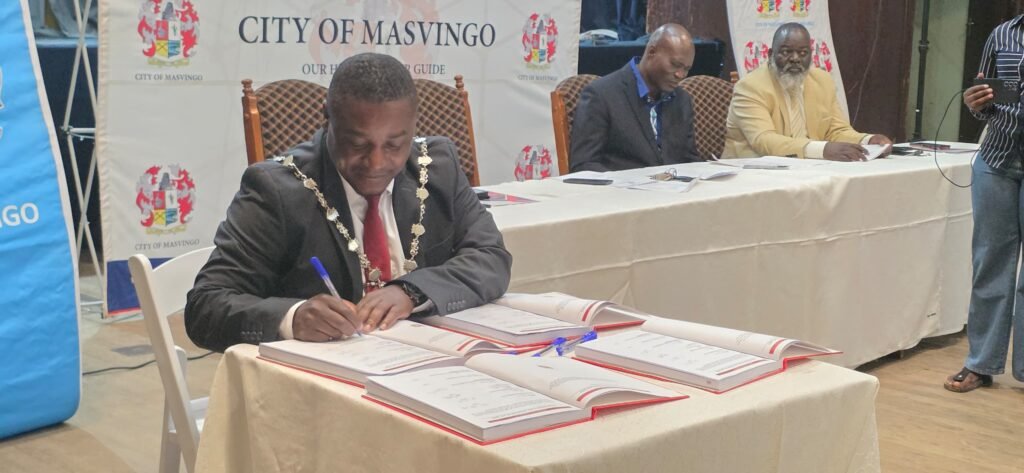
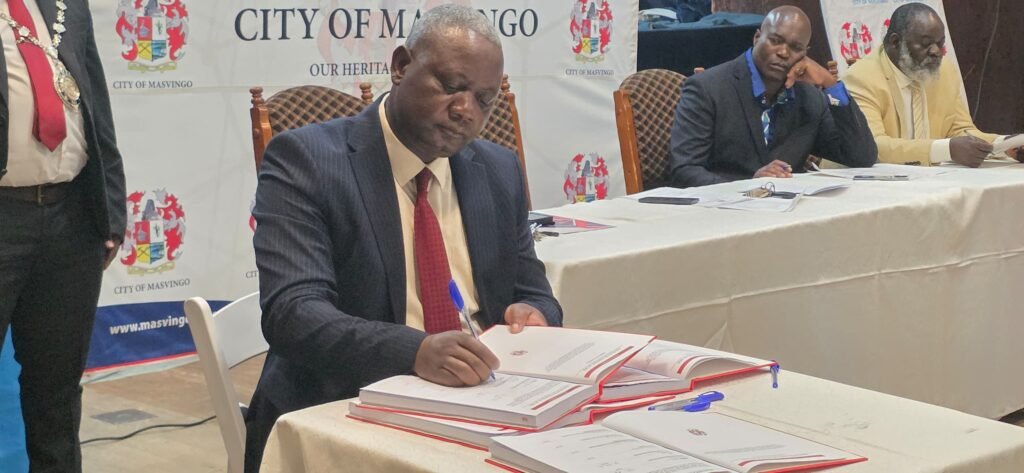
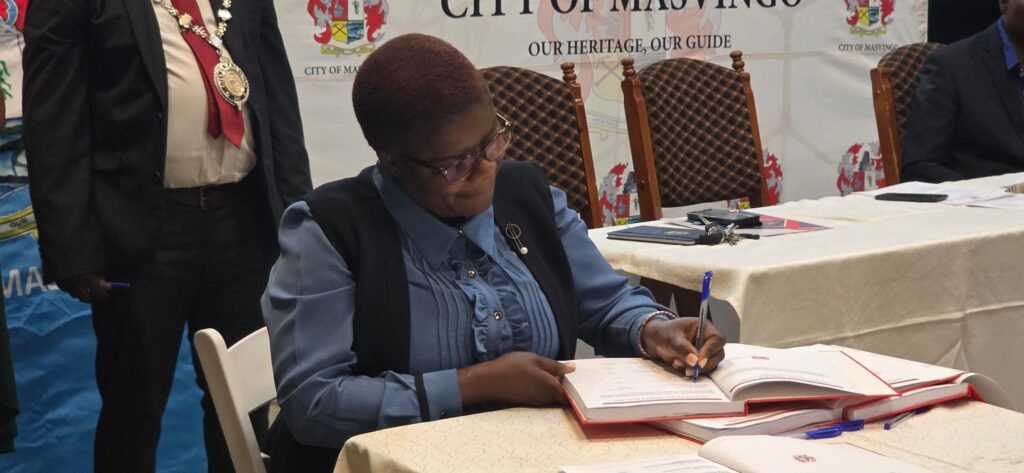
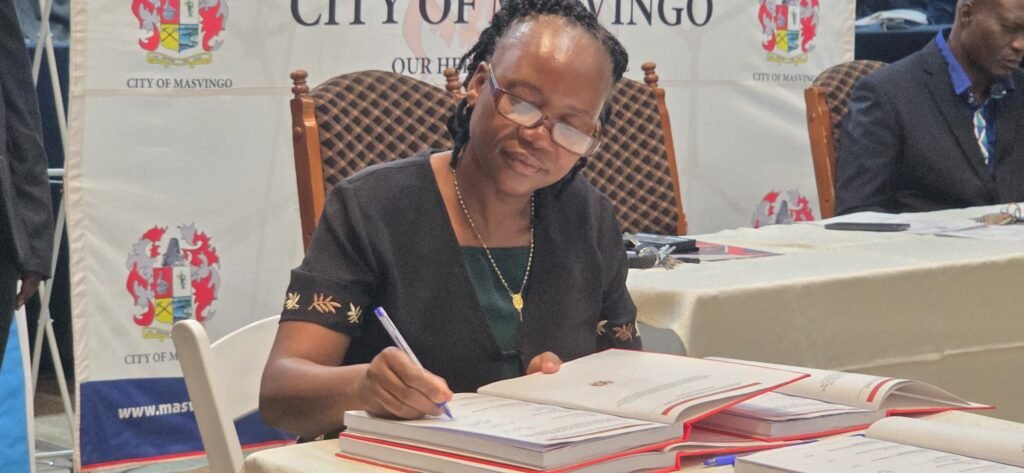
By Staff ReporterBULAWAYO – Masvingo City Council has unveiled an ambitious infrastructure development programme featuring a new swimming pool, a maternity wing, a truck stop, a secondary school, and a 150-kilometre road rehabilitation project, as part of its drive to become a world-class metropolitan city by 2030.Speaking to Great Zimbabwe University Campus Radio at the Zimbabwe International Trade Fair (ZITF) where the council is showcasing “Brand Masvingo”, Town Clerk Engineer Edward Mukaratirwa detailed several key projects at various stages of completion.“Currently we are constructing a swimming pool in Runyararo suburb, which will serve the greater part of our high-density suburbs including Mucheke, Runyararo and also part of Rujeko. We are almost complete with that project. The pool has been completed, and we are now working on the changing rooms and landscaping the site,” said Mukaratirwa.He went on to say a maternity wing at Runyararo Clinic was now open to the public and council was working on fully equipping the clinic“That facility is now open to the public, though we are also in the process of fully equipping it. But expecting mothers are now using that facility,” he said.He said a major truck stop was under construction along the Beitbridge-Masvingo Highway and now at 90% complete. “The changing rooms, toilets and other facilities are there. We are now finalising the landscaping. We expect that by the first week of May, trucks should be starting to park there. It will bring quite a lot of convenience and safety for the truckers,” he said.The Town Cleck said council was also set to construct a new Secondary School in Runyararo, which will be the city’s second secondary school after Rujeko Secondary.“We have already written to the Ministry of Primary and Secondary Education for them to approve our site. We are happy that they have promised us that within this coming week, our approval should be coming, paving the way for physical construction work to start on the ground,” said Mukaratirwa.On road rehabilitation, he revealed a major programme targeting nearly 150 kilometres of roads this year saying the machinery was already on the ground ready for work.“We have already bought the necessary equipment, a dozer, an excavator, a roller, and a grader. Three of those pieces have been delivered to Masvingo, and our operators are undergoing training as we speak. What is only outstanding is the delivery of a grader, which we are expecting in the next two weeks,”said Eng Mkaratirwa.Eng Mukaratirwa described the ZITF as a vital platform for interaction with government agencies and industry partners saying that it allows the council to resolve outstanding issues and forge new partnerships in one convenient location.“It is very important for us to be here, first for interaction. We need to interact with government agencies that assist us in our daily operations, raise issues with them, have side meetings, and get outstanding issues resolved. It’s convenient because everyone else will be here. We are also interacting with industry and potential partners in different service delivery areas,” he said.He also highlighted Masvingo’s strategic position as a key link to the country’s borders. “We are a hub in terms of connectiveness, being very strategically positioned at the centre of the major cities in this country. That makes us a major connection point to the border facilitating trade and movement of goods and people to and from South Africa and Mozambique. As such, we have a transit population of almost about 5 million people per year who pass through the city,” he said.He appealed to the Masvingo community to support the local authority by honouring bills and contributing to development and also implored them to come and advice council on their expectations rather than just complaining“We can only sustain service delivery if there are resources to support. We want our stakeholders to support us and also to come up and contribute to the development of our city,” he said.

Degrees of distress: The Economic and mental cost of being a student at campus

0

By Fine ChiviruAs the sun drops behind the Great Zimbabwe horizon, darkness does not only arrive on campus pathways. For too many students, it settles in the mind—quietly, daily, and dangerously. We keep treating student mental health as an individual weakness or a private matter to be endured. It is neither. It is the predictable outcome of a system that piles pressure onto young people while stripping away the support that would help them survive it.From Africa University to Midlands State University, the pattern is the same: academic pressure collides with rising living costs, shrinking opportunities, and deepening isolation.Consider Sekai (not her real name), a final year student whose biggest worry is no longer the next test—but the semester balance: US$400 still outstanding. She has three siblings still in school. Her parents scrape together fees term after term, and she feels the weight of their sacrifice every time a deadline approaches. She rents off campus, and when money for rent arrives late, the stress is immediate and humiliating. And like many finalists, she carries an extra fear that no lecturer can mark: what if there is no job after graduation?When students are worrying about rent and food, “focusing on assignments” becomes a slogan, not a realistic expectation. Many are stuck chasing basic needs—the bottom of Maslow’s hierarchy—long before they can think about “self-actualisation” in the classroom. Some try to hustle between lectures; others make riskier choices to survive. Tarisai (not her real name) says she depends on an older, married man for upkeep. That dependence leaves her with little bargaining power, including around safer sex, and exposes her to harm she did not come to university to face. If we can name these realities, we can stop pretending this is simply about ‘resilience’.Distress may be common, but seeking help is not. In Zimbabwe, mental illness is still heavily stigmatised; many students fear being labelled “weak” or “mad” if they are seen asking for support. On many campuses, counselling services are understaffed and overwhelmed—and private psychological services are priced beyond student reach. Gender expectations make it worse: men are told to “man up”, not speak up. Tanaka (not his real name) told me he would rather go for a drinking session than visit the clinic to manage distress. That is not bravado; it is a warning sign.Add a high cost of living, a shrinking job market, and a loud “success” narrative on social media, and chronic stress becomes the norm. For some, alcohol and drugs turn into an escape route. Campuses and surrounding communities increasingly talk about misuse of cough mixtures such as Bron Cleer and the spread of crystal meth—substances that intensify anxiety, depression, and risky behaviour. We also hear, far too often, of students who self-harm or die by suicide after academic failure, relationship breakdown, or financial collapse. Even when these tragedies are whispered about, they are rarely confronted with the seriousness they deserve.If universities can require registration fees, attendance, and examinations, they can also require care.Mental Health First Aid should be introduced in the first semester for every student—not as a once-off talk, but as practical training on recognising warning signs, supporting peers, and knowing where to get help. Resilience and emotional intelligence should be integrated across faculties, and peer-support networks should be properly trained and supervised, not left to improvise in emergencies. Universities should also expand low-cost, confidential counselling (including after hours) and use telehealth platforms that offer evidence-based tools such as cognitive behavioural techniques in local languages. Most importantly, university leadership must treat mental health services as core infrastructure—like libraries and laboratories—because a degree that costs a student their wellbeing is not an education success story. It is institutional neglect.Fine Chiviru is a final year psychology student at Great Zimbabwe University

Zaka high learner invents sunflower oil hydraulic jack, seeks sponsorship to fulfil ambition

0

By Staff ReporterZAKA – A Form Six science student at Zaka High School has developed a hydraulic jack prototype that operates using sunflower oil instead of expensive GTX oil, earning recognition at district, provincial and national level. Progress Munashe Mtisi, who studies Mathematics, Biology and Chemistry, now appeals for sponsorship to commercialise his innovation and advance his education.Mtisi’s hydraulic jack model uses oil extracted from sunflowers, a readily available resource in Zimbabwe. He said the idea came after observing that existing jacks are expensive because they rely on costly GTX oil.“I designed my hydraulic jack model after seeing certain challenges in our society. Number one, it was a way of cutting cost constraints as I discovered that existing jacks are more expensive since they use GTX oil. I implemented this idea to cut those cost constraints since my hydraulic jack model will operate with oil from sunflower under the theme of utilizing available resources,” said Mtisi.He also highlighted educational and entrepreneurial motivations, noting that the innovation aligns with Education 5.0, which promotes teaching, research, community service, innovation and industrialisation.“We want these young scientists to implement their ideas practically. Prototyping assists them to see the concept of fluid mechanics and Pascal’s law. I also came with the innovation of using oil from sunflower because sunflower contains natural fat acids which give decent lubricity to moving parts. “This oil is biodegradable and non-toxic, so it is environmentally friendly and leads us to socio-economic progress and self-reliance,” he said.Mtisi noted that his prototype addresses limitations of existing jacks, including slow lifting speed. “I implemented this to cut those limitations so that it can be a lifeline for productivity and safety.”His model emerged as the best under Zaka District, went on to win at Masvingo Province level, and proceeded to the National Chishawasha Career Expo sponsored by Nyaradzo Funeral Assurance Company, where the guest of honour was First Lady Dr Auxillia Mnangagwa. Mtisi presented his model on behalf of all secondary schools in Zimbabwe and has been selected to exhibit at the Zimbabwe International Trade Fair in Bulawayo in April 2026.The hydraulic jack works on Pascal’s law, which states that pressure applied to a confined fluid is transmitted equally in all directions. In this model, sunflower oil serves as the hydraulic fluid, transmitting force from a small pump to a larger piston, thereby multiplying the input force to lift heavy loads. Unlike conventional jacks that require expensive GTX oil, sunflower oil is locally produced, renewable, and significantly cheaper. Additionally, sunflower oil’s natural viscosity ensures smooth operation of the pump and valves while its biodegradable nature eliminates environmental hazards associated with oil leaks or disposal.Mtisi sees the prototype as a springboard for business. He aims to commercialise the product, create jobs, and reduce dependence on imported hydraulic fluids. “I designed my hydraulic jack model for entrepreneurial opportunity. I prototyped this hydraulic jack so that I can assess demand before mass production, as I have discovered that existing jacks are expensive and not affordable for personal use or for small-scale users,” he said. He said hydraulics were widely used in Zimbabwe’s mining sector in lifting heavy machinery and moving massive loads. He added that with adequate resources, he could industrialise the idea and boost economic growth.“A hydraulic jack is a testament from car repairs to construction. This model can be used in mines to lift heavy equipment, in workshops, on farms, and even in the braking systems of vehicles,” he said. His model emerged as the best under Zaka District, won at Masvingo Province level, and proceeded to the National Chihawasha Career Expo sponsored by Nyaradzo Funeral Assurance Company, where the guest of honour was First Lady Dr Auxillia Mnangagwa. Mtisi presented his model on behalf of all secondary schools in Zimbabwe and has been selected to exhibit at the Zimbabwe International Trade Fair in Bulawayo in April 2026.Speaking to TellZim News, his father Jonah Mtisi, said he was discharged from the Zimbabwe Republic Police on medical grounds after suffering an ankle fracture in a road traffic accident while in the line of duty. He said he was not paid fairly and has been struggling to make ends meet since 2023. The boy’s mother, Alice Mtisi, works as a vendor.“I am appealing to well-wishers, companies and the government to sponsor my son. He has shown great potential, but we cannot afford to take him further. He needs help to advance his education and to turn his prototype into a real product that can benefit the country,” he said,

GZU finally breaks through with derby win

0

By Tadiwa Shunje MASVINGO – Great Zimbabwe University FC secured their first win of the season with a 2-0 victory over Power FC in a heated Gaths Mine Derby clash on April 19, 2026.Coming into the match with two losses and two draws, GZU needed a positive result and they delivered.Prince T Makurumidze opened the scoring in the 37th minute before Tafara A Mhaka doubled the lead in the 49th minute to put the visitors in control.Just before halftime, tempers flared leading to a chaotic incident that saw both teams reduced to ten men. Power FC goalkeeper Edward Munyama was sent off for violent conduct after biting an opponent, while Makurumidze was also dismissed for his involvement in the same incident.Despite that, GZU stayed organized in the second half and defended well to secure a clean sheet and all three points.Speaking to TellZim News, Great Zimbabwe University coach, Taurai Mabaya said his side was well prepared and followed their plan.“We were prepared physically and mentally and the game went according to plan. We dominated and converted our chances,” said Mabaya.He said the players rose to the challenge in a tough derby, showed discipline and proved they were stronger both physically and mentally adding that it was a must win match.“The boys rose to the occasion. It was a derby and discipline was required. Physically and mentally we were the better team. It was a must win match.”Looking ahead to the next game, Mabaya said his team must stay focused.“Going into our next match against Bikita Minerals FC on April 23, 2026 we have to remain focused,” he said.The result sees GZU move up the table to 13th position with 5 points after five matches, while Power FC remain near the bottom in 18th place with 4 points from the same number of games.The win could be a turning point for GZU after a slow start to the season, while Power FC will need to improve discipline and results in their upcoming matches.

Minister Chadzamira calls for stiffer penalties on drug traffickers

0

By Yvonne P ManganiMASVINGO – Minister of State for Provincial Affairs and Devolution Ezra Chadzamira has called for stiffer penalties on convicted drug traffickers, warning that lenient sentences allow dealers to return to the streets and continue destroying young lives.Speaking as guest of honour at a drug and substance abuse awareness campaign held at Mucheke Stadium on April 14, 2026, Chadzamira urged the judiciary to send an unambiguous message to those profiting from the distraction of the youth.“The government stands with you. The judiciary of Masvingo Province is our critical pillar in dismantling the networks that sustain drug abuse. We urge the application of firm, constant and proportionate sentencing for those convicted of drug trafficking and supply. A trafficker who gets a lenient sentence returns to the street bolder. The judiciary must send an unambiguous message to those who profit from the destruction of our youth,” said Chadzamira.Hundreds gathered at the event, including students from Masvingo Teachers College and Great Zimbabwe University, law enforcement officers, local residents, ZRP Spokesperson Commissioner Paul Nyathi, and Masvingo Provincial Police Commissioner Fredrick Mbengwa.Chadzamira warned that substance abuse was eroding the province’s social fabric and future workforce.“We cannot build Masvingo on broken dreams. Say no to drugs and yes to opportunity,” he said.He also highlighted the First Lady Auxillia Mnangagwa’s efforts in leading community engagement and establishing rehabilitation centres.“I call on community members to collaborate with religious leaders and the judiciary to dismantle drug networks and advocate for stringent sentencing for drug trafficking,” he said.Commissioner Nyathi and Commissioner Mbengwa attended alongside the CID Drugs and Narcotics unit, who mounted displays of confiscated substances and outlined enforcement efforts. Officers detailed common drugs circulating in the province, including illicit cough syrups and crystal meth, and explained penalties under current legislation.Commissioner Nyathi underscored the importance of unified efforts across households, schools and government departments.“When we combine the authority of the state with the moral strength of the community, no enemy can withstand us. Together, let’s reclaim our communities. Together let’s protect our children. Together let us build a Masvingo Province and a Zimbabwe that is free from the curse of drug and substance abuse,” said Nyathi.Masvingo Province remains at high risk due to its position as a key transit route from South Africa, where most of the illicit drugs enter the country. Police have intercepted significant consignments destined for other provinces, and in some cases, drug traffickers have resorted to concealing substances such as broncleer cough syrup, illicit syrups, and mbanje inside coffins to evade detection. Despite these challenges, law enforcement agencies have continued to nab many drug dealers operating along the corridor.Oscar Pambuka, a former ZBC news anchor and former drug user, shared his testimony at the event saying drugs affected everyone who use them.“Drugs do not care about your status, age or profession. If you test the drug once, especially crystal meth, automatically after every two hours you will hear voices commanding you to repeat the drugs again and again. Everyone is at risk,” said Pambuka.Great Zimbabwe University student Sam Nhodo, who serves as the university’s Students Representative Council Minister of Health, said anyone involved in drug activities who fails to report them was effectively promoting drug use in the community.“Everyone who is involved in drug activities, be it selling, using or even knowing both the seller and the buyer, if you do not report, you are promoting drug use in the community. As a youth, I have been given the authority to report these activities as an eye of the police,” said Nhodo.A mother who lost her child to drug abuse also spoke, saying it was now her duty to protect and teach other children about the dangers of drugs.Regina Munyamani urged parents to keep a watchful eye on their children.“In cases where kids go and do drugs, they end up indulging in adult activities, promoting teen pregnancies.”ZRP Masvingo urged the public to report drug peddlers and pledged increased patrols around schools and colleges. The campaign closed with a pledge from attendees to support drug-free zones in schools and communities.

Tractor accident claims another life in Chiredzi

0

By Karen Sibanda MASVINGO – Two people lost their lives in separate road traffic accidents that occurred in different parts of Masvingo Province on April 13, 2026 as another tractor incident claimed life of Chiredzi man.Masvingo Provincial Police Spokesperson Inspector Kudakwashe Dhewa confirmed the tragic incidents saying the province recorded two fatal crashes on the same day in different locations, which claimed two lives. “We recorded two fatal road traffic accidents on the same day in different areas of the province, resulting in the loss of two lives,” said Inspector Dhewa.In the first incident, which occurred around 1pm along an unnamed dust road linking Golden City Business Centre and Chilonga Business Centre, Chiredzi, a 39-year-old man died after falling from a moving truck.The deceased, Thomas Chauke (39) of Chief Chilonga area, was travelling as a passenger in an unregistered yellow truck driven by Gideon Machisani (20), who is also from the same area. Chauke allegedly fell from the moving vehicle and was run over by the rear left wheel. He sustained severe head injuries and died on the spot. His body was taken to Chiredzi General Hospital for a post-mortem examination.Chauke becomes the fourth person to die in a tractor incident in Chiredzi as three othersdied in almost similar incidents in the past few years. One of the most tragic incidents occurred on October 12, 2024, when a 21-year-old driver, James Hobwani of Magumire Village 1 in Chiredzi, lost his life. Hobwani was driving a Londini Solis tractor with two passengers on board along the old Zaka–Chiredzi road. Upon arriving at the 1km peg, he lost control of the vehicle, causing it to overturn. Although the tractor landed on its wheels, Hobwani sustained severe spinal injuries and was rushed to Chiredzi Provincial Hospital, where he died upon arrival. The two passengers were also injured, with one reported to be in a critical condition.In another heartbreaking case, a 30-year-old tractor driver from Zvishavane, Sydney Shava, died on May 11, 2025. Shava was driving a Massey Ferguson tractor with three trailers along a dust road near Zone 14 in Triangle when he hit a hump. He was thrown from the tractor, and the wheels of the trailers ran over him. Shava sustained fatal head injuries and died at the scene. The passenger on board was unharmed. His body was taken to Chiredzi District Hospital for a post-mortem examination.In another incident that happened in September 2025, Wellington Chivasa, from Farm 195 Mkwasine, became the latest victim when he lost control of a blue New Holland tractor on a dusty road. After hitting a bump, he was thrown from the vehicle and tragically crushed under its right rear wheel.The passenger who was on the tractor with Chivasa escaped unhurt and immediately alerted other residents in the area. In a separate incident that occurred earlier that day at around 4 am along the Gororo–Shongamiti Road near Ngundu, a 31-year-old motorcyclist died after losing control of his bike.The deceased, Tyros Machivenyika (31) of Headman Gororo area, was riding a green and black motorcycle when he reportedly lost control at an unnamed bridge. The bike veered off the road and struck a bridge pillar, causing him to fall and hit his head. He sustained serious head injuries and died at the scene. His body was taken to Neshuro District Hospital for a post-mortem examination.Inspector Dhewa urged motorists and all road users to exercise caution at all times, warning against dangerous practices such as carrying passengers in the back of moving trucks and speeding, especially on dust roads and at night. He also encouraged motorcyclists to wear protective gear, including helmets, and to remain alert when approaching bridges and uneven road surfaces.Police continue to call on the public to prioritise road safety in order to reduce fatal accidents.