
By Own Reporter
HARARE – President Emmerson Mnangagwa has declared September 15, his
birthday, a public holiday to be known as Munhumutapa Day.
The new public holiday was gazetted through Statutory Instrument 148 of 2026
under the Public Holidays and Prohibition of Business Act (Declaration of Public
Holiday Notice, 2026). According to the statutory instrument, September 15 will be
observed as a public holiday every year.
“It is hereby declared that the 15th of September every year henceforth shall be a
public holiday to be known as Munhumutapa Day,” the notice reads.
The declaration mirrors a similar move made in 2017, when former President Robert
Mugabe’s birthday, February 21, was declared a public holiday. The day was
gazetted as Robert Gabriel Mugabe National Youth Day through Statutory
Instrument 143 of 2017, following intense lobbying by the Zanu PF Youth League.
Mugabe was born on February 21, 1924.
At the time, the decision drew sharp criticism from opposition parties. The MDC
described the declaration as “an insult to Zimbabweans,” arguing that Mugabe was
“not a demigod” and that the country already had a Heroes’ holiday to commemorate
its liberation heroes. The party said it would scrap the holiday if elected into power.
Munhumutapa Day is allegedly intended to commemorate the legacy of the pre-
colonial Mutapa Empire and its contribution to Zimbabwe’s history and identity.
The day coincides with President Mnangagwa’s birthday, with this year marking the
third edition of the commemorations, to be held in Mvurwi, Mashonaland Central
Province, with more than 30,000 youths expected to attend.
Mnangagwa Declares Birthday Public Holiday as Munhumutapa Day

New school for Mutimurefu Prison Camp, surrounding communities
By Tadiwa Shunje
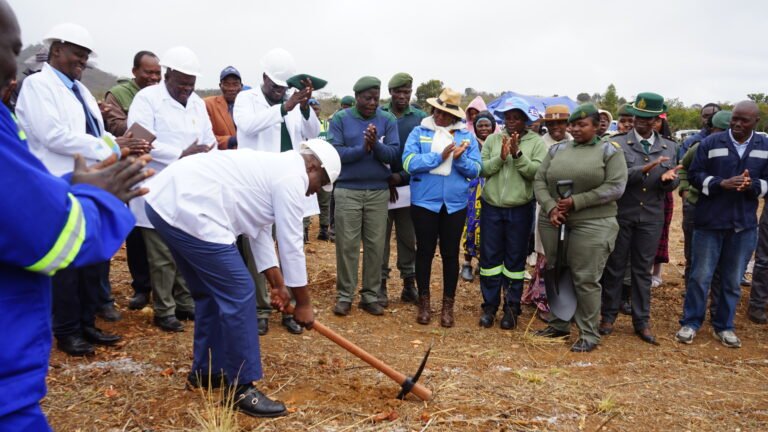
MASVINGO – Children from Mutimurefu Prison Camp and surrounding communities who
have for years walked up to 23 kilometres to access education will soon have a school closer to
home, after the Zimbabwe Prisons and Correctional Service broke ground for the construction of
Mutimurefu Primary School in Ward 4, Masvingo District.
The groundbreaking ceremony, held on September 8, 2026, marked the beginning of a project
expected to ease long walks for learners, with some previously walking more than five
kilometres while others travelled as far as 23 kilometres to Masvingo town.
“A school represents hope. It is where children acquire knowledge, discover their talents,
develop discipline and prepare themselves to become responsible citizens and future leaders.
“As a donor, my contribution is driven by the belief that every child deserves access to a safe and
conducive learning environment, regardless of where they come from,” he said.
He commended ZPCS officers for their collective contribution towards the project and urged
parents and the Mutimurefu community to take ownership of the school once completed.
Mudhumi also called on Government, ZPCS, traditional leaders, community members,
development partners and other stakeholders to continue working together to ensure the success
of the project.
“As we break ground today, let us remember that we are laying more than a physical foundation.
We are laying the foundation for knowledge, opportunity, empowerment, and a brighter future
for the children of Mutimurefu.
“We see many children walking long distances to school, which is not good. By the time they get
to school, they will be tired, and it also exposes children, especially the girl child, to various
risks. Sometimes, when we see them along the way, we even have to give them a lift. So this
project is aimed at ensuring that these children have a school closer to where they live,” said
Mudhumi.
ZPCS Officer Commanding Masvingo Province, Commissioner Nelson Chikwature said the
groundbreaking ceremony was part of the service’s efforts to contribute meaningfully to
educational development and sustainable transformation in the community.
He said Mutimurefu Primary School was a ZPCS initiative that reflected the organisation’s
commitment to community involvement and transforming lives through education.
“Mutimurefu Primary School is our initiative reflecting our commitment to community
involvement and transformation of lives through education.
“We submit gratitude to Mudhumi who has shown support as a donor and played a pivotal role
in this initiative,” he said.
Chikwature said the project was anchored on the belief that education provides the foundation
for empowering individuals and producing responsible citizens.
He said the construction of the school represented an investment in the future of children in the
Mutimurefu community.
“Through this project we are therefore investing in the future of the children of Mutimurefu
community,” Chikwature said.
He said the groundbreaking marked the beginning of efforts to create better opportunities for
future generations in the area.
Presenting an overview of the project, Principal Correctional Officer Emily Spinyu said the
construction was a direct response to the educational needs of the Mutimurefu Prison Camp and
surrounding communities.
Spinyu said access to nearby schools had remained a major challenge, with some children
walking more than five kilometres to access education while others travel as far as 23 kilometres
to Masvingo town.
“The Mutimurefu Prison Camp and surrounding communities have experienced a growing
population of school-going children. However, access to nearby schools has remained a major
challenge so need for a school in this area is therefore clear and urgent,” Spinyu said.
She said the nearest schools included Mazare Secondary School, approximately eight kilometres
away, Zishumbe Primary School about 10 kilometres away, and Wenedzo and Beza schools,
approximately 12 kilometres away.
“For children, these distances are significant. Long journeys to and from school are physically
exhausting and can expose learners, particularly young girls, to various safety risks,” she said.
Spinyu said about 150 school-going children are estimated to come from the Mutimurefu Prison
Camp annually, while surrounding communities have a potential primary school population of
about 500 learners and a further potential of approximately 200 secondary school learners.
The school will cater for learners from Early Childhood Education A to Grade Seven and will
include eight two-classroom blocks, a three-classroom ECE block with child-friendly toilets, an
administration block, separate toilet facilities for boys and girls, a library and two computer
laboratories.
The project will also have a playground and sports field, borehole, 5 000-litre water tank, solar
power system, perimeter fence and school gate.
Spinyu said the main objective was to provide adequate learning space for more than 300 pupils
within a five-kilometre radius while improving access to education, increasing enrolment and
reducing school dropouts.
She said the Ministry of Primary and Secondary Education had approved the construction of both
a primary and secondary school at Mutimurefu, with the long-term plan being to develop the area
into an education centre serving the prison camp and surrounding communities.
The contractor said the current construction phase is expected to be completed within 75 days.
Spinyu, however, said the wider development programme was planned over a 10-year period,
subject to the availability of resources and continued stakeholder support.
Masvingo sharpens clean-city drive ahead of tourism showcase

By Tadiwa Shunje
MASVINGO- City of Masvingo has intensified efforts to keep the city clean and attractive as the
province steps up preparations to host the 2027 Sanganai/Hlanganani World Tourism Expo, with
provincial and local authorities calling for lasting changes in waste management beyond the
latest city-wide clean-up campaign on September 4, 2026.
The clean-up exercise, led by Masvingo Provincial Affairs and Devolution Minister Ezra
Chadzamira, Tourism and Hospitality Industry Minister Barbara Rwodzi and his deputy Tongai
Mnangagwa, brought together government officials, businesses and other stakeholders as the
province seeks to present a clean city to tourists and delegates expected for the tourism
showcase.
Speaking after the clean-up, Chadzamira said the exercise was particularly important as
Masvingo prepares to welcome visitors from Zimbabwe and beyond, but stressed that
maintaining a clean environment should not be limited to organized clean-up days.
“We have gathered here in the city of Masvingo because it is fitting that our leaders, industries
and other stakeholders lead by example as we join the world in the clean-up movement. This
exercise is not a stand-alone event; it is our national contribution to the global movement of
citizens standing together against littering, illegal dumping and poor waste management
practices,” Chadzamira said.
He said the clean-up campaign should be used to encourage responsible waste management
practices, including waste separation, recycling and reducing unnecessary waste.
“Today we say clean-up must move beyond a once-off collection exercise. It must become
prevention, responsible consumption, waste separation, recycling and sustained community
action, consistent with our national thrust of promoting zero waste. I therefore urge you all to
remember that keeping our city clean is everyone’s responsibility. Government cannot make
every street, market and home clean, and secondly, we must keep it clean after the clean-up. It
must translate into behaviour change, not a one-day improvement that fades by the following
week,” he said.
Chadzamira also challenged industries and manufacturers in Masvingo, particularly those in the
textile sector, to take greater responsibility for the waste they generate.
“I mainly appeal to the industrialists and manufacturers in Masvingo, including our textile sector,
to take the lead in waste separation. As they produce plastic packaging, offcuts and textile waste,
these must be separated, recovered and channeled into recycling rather than being left to choke
our drains and open spaces. They should undertake clean-ups in their surroundings, support
material recovery and explore practical alternatives to single-use plastics,” he said.
He said stronger participation by businesses in waste management could also create economic
opportunities through recycling and reuse.
“Where business is involved in proper waste separation, they are not only protecting the
environment; they are opening the doors to new green jobs in reuse and recycling. Our clean-up
steering committees should continue working throughout this period as the province prepares to
host the 2027 edition of the Sanganai/Hlanganani Zimbabwe. I urge you all to ensure that we
maintain a clean city, as quite a number of visitors are going to visit this place. Let us keep
spreading the message of keeping our city clean and let this continue as a habit,” said
Chadzamira.
Masvingo City Council Town Clerk Eng Edward Mukaratirwa said the city was also
strengthening its waste management systems through investment in equipment and the use of
data to identify the major sources of litter.
He said the local authority conducted a waste survey in 2023 to establish where most of the litter
was coming from and the quantities being generated, information which is now being used to
develop targeted strategies.
“In 2023 we carried out a waste survey to establish where our litter was coming from and the
amount of waste being generated. From that survey, we developed strategies to deal with the
waste, and we have hope that enhancing those strategies will help us keep our city cleaner,” said
Eng Mukaratirwa
He added that Government had approved the purchase of three refuse compactors, with the
tendering process already completed.
“We also want to thank the support we continue to receive from central Government whenever
we need to purchase equipment such as refuse compactors and other machinery. This year,
Government approved us to buy three compactors and we have awarded the tenders. They are
now on the way, and this is part of our strategy to deal with waste. We assure you that we want
this city to remain clean forever,” he said.
Eng Mukaratirwa also acknowledged the continued support of businesses and other stakeholders
in the city’s clean-up initiatives, citing Great Zimbabwe Realtors, N Richards, NetOne, Econet
and Bywood Motors among those supporting the events.
Masvingo City finally relocates buses to Mucheke after years of failed attempts
By Staff Reporter
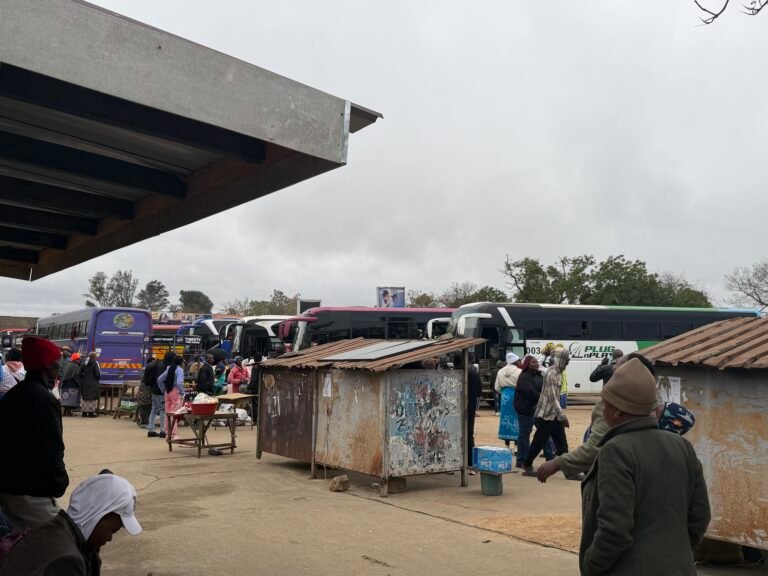
MASVINGO – The City of Masvingo has finally moved long distance buses from the
Central Business District to the Mucheke Bus Terminus, ending years of failed
enforcement and resistance from transport operators that had seen the directive
delayed since 2022.
The relocation, which took effect today (September 8, 2026), follows a directive issued
by Mayor Alec Tabe during a full council meeting last week, when he gave bus
operators a oneweek ultimatum to vacate informal loading points in town, including Old
Croco Motors and Chicken Inn, and comes after the recent evacuation of all
Mushikashika taxis from the CBD to designated areas at Old Aroma and the main
Chicken Inn.
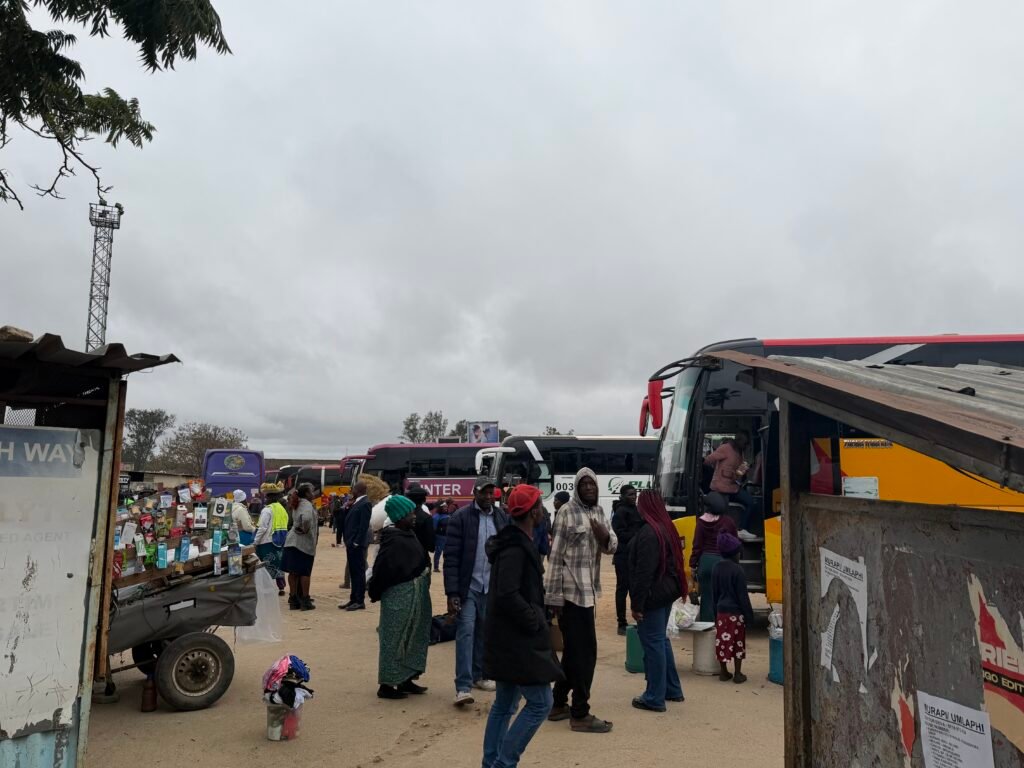
The move marks a significant victory for the local authority, which had made repeated
resolutions to relocate buses since 2022 but consistently failed due to operator
resistance, coordination challenges between municipal police and ZRP, and the poor
state of facilities at Mucheke Rank.
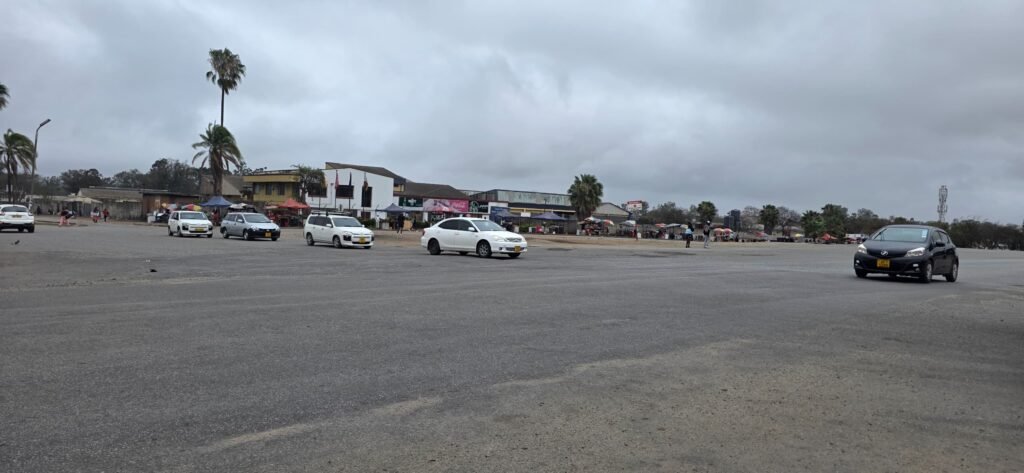
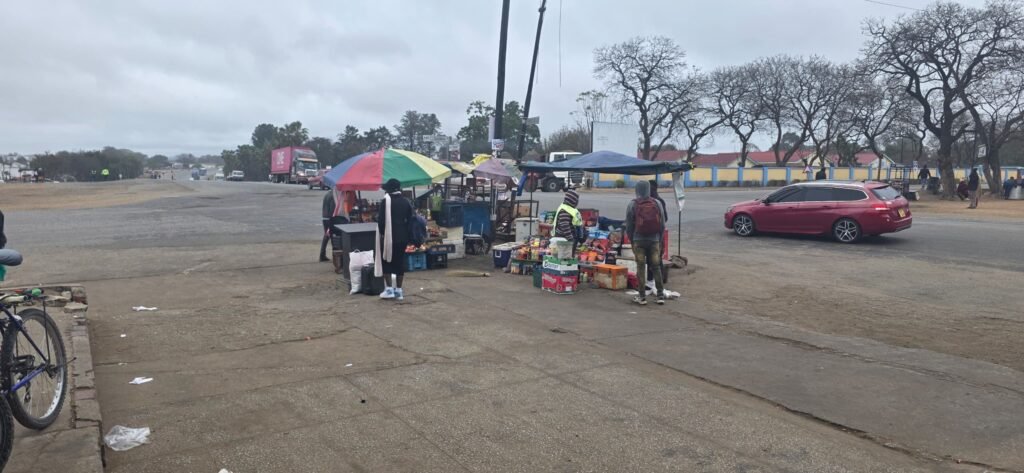
Mucheke Bus Terminus was abandoned over a decade ago, with buses shifting to
scattered, unregulated points in the CBD. The issue first resurfaced in June 2022 when
Full Council resolved that all buses should use Mucheke from June 1. Nearly two weeks
later, nothing had happened, with then Mayor Collen Maboke at the time blaming
coordination issues between municipal police and ZRP.
In August 2022, council suspended the resuscitation “pending completion of road
rehabilitation” and proposed a minirank at Croco Motors instead.
In February 2023, council resolved to take over refurbishment of Mucheke Rank directly
to speed it up. Between 2024 and 2025, reports continued to describe the refurbishment of Mucheke Rank as a “pipedream.” Council had wanted to upgrade it to a “state-of-the-art
rank” with private partners, but buses remained loading in the CBD.
During the recent full council meeting, councillors raised concerns over the state of
Mucheke Rank, arguing that the council should renovate it before moving buses.
However, Mayor Tabe stood his ground, insisting that all necessary renovation works
would be done while buses were already operating at the rank.
“We will work on that while the buses are there. Out of every chaos there is a solution.
Moving buses to Mucheke would also create more space for mushikashika to operate
locally,” Tabe said.
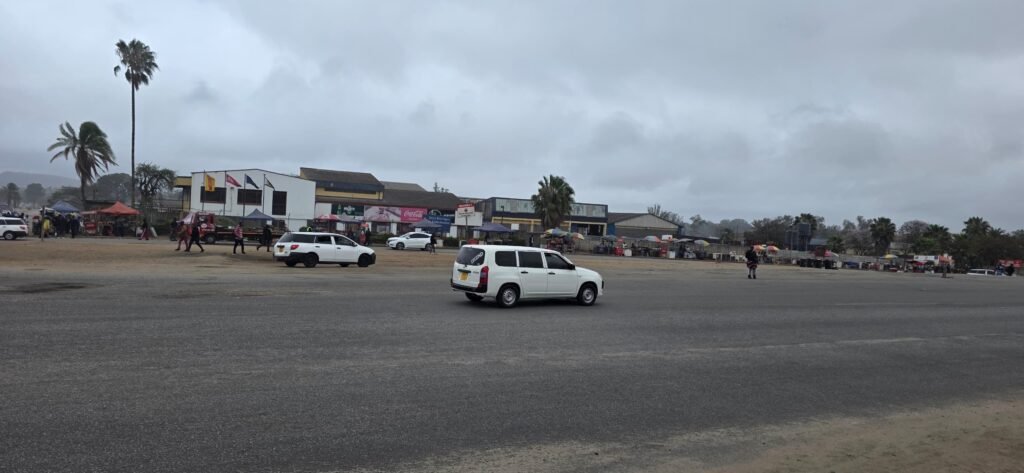
The move is expected to decongest the city centre and allow local mushikashika
operators to have designated operating areas in town but outside the CBD.
The relocation has been welcomed by many residents who are already seeing a change
and order in town.
Shop owners operating at Mucheke Rank have expressed gratitude, as the return of
buses is expected to boost business.
However, vendors who had been plying their trade at Old Croco Motors and other
informal bus loading points have been hurt by the relocation, as the buses were a major
source of customers for their goods.
The recently adopted 20year master plan to 2045 aims at creating a commercial
corridor linking Mucheke Bus Rank to the CBD.
This proposal indicates that the relocation is part of a larger vision to restore order and
improve the city’s spatial governance.
From Institutions to Interiors: How Zimbabwe Can Redefine Mental Health Care

Community Psychologist Intern Lillian Shoko explores the policy reforms needed to make
halfway homes and home-care a reality.
Mental health policy is not simply a document that determines where people receive treatment. It
reflects how a society understands human dignity, recovery, and the role of communities in
supporting people experiencing psychological distress. From a Community Psychology
perspective, Zimbabwe’s mental health system must move beyond a predominantly hospital-
centred model towards a decentralised, recovery-oriented continuum. However, to be effective,
this shift cannot be aspirational—it must be brutally practical.
Zimbabwe has made important strides. The country has strengthened primary-health-care
approaches and participated in the WHO Special Initiative for Mental Health. Notably,
the Friendship Bench has been a global success story for addressing common mental disorders
like depression and anxiety in primary care.
Yet, we must be clear: the Friendship Bench is not a cure-all. It is not designed for severe
conditions such as schizophrenia, bipolar disorder, or prolonged psychosis. These require a
robust, step-down infrastructure—and here, the system is failing. The WHO’s situational
assessment found that Zimbabwe has only two psychiatric hospitals, with 0.42% of the total
health budget allocated to mental health, the bulk of which goes toward maintaining these
centralised institutions.
This concentration of resources raises a critical question: If we are committed to community-
based care, where do clinically stable patients go when they are not yet ready to return to
independent living?
The Missing Link: Why We Need a Bridge
One of the gravest weaknesses in our current system is the abrupt transition from a highly
structured ward directly back to the family home. Without an intermediate level of
care—halfway homes, supported accommodation, or community residential
rehabilitation—discharge often becomes an abandonment of responsibility.
To fix this, we must explicitly establish and fund a graduated continuum of care:
Psychiatric hospital → Halfway Home/Supported Residence → Home-based Care →
Community Participation → Independent Living.
However, building this continuum requires confronting several uncomfortable realities head-on.
- The Funding Dilemma (Where does the money come from?)
Advocating for new facilities without addressing the national purse is naive. However,
evidence from global health economics shows that community-based residential care
costs significantly less per patient-day than a bed at a central psychiatric hospital. We do
not necessarily need a massive new budget allocation; we need reallocation. The Ministry
of Health should mandate that a fixed percentage of the current mental health budget be
ring-fenced for community step-down facilities. Additionally, the government must
aggressively pursue public-private partnerships with faith-based organisations and NGOs
that already operate residential facilities, converting existing infrastructure into licensed
halfway homes. - The Burden on Families (Home is not always a sanctuary)
From a Community Psychology standpoint, we cannot romanticise “home-based care.”
Many Zimbabwean families are economically strained, lack basic psychoeducation, and
are influenced by cultural/spiritual interpretations of illness that may lead to neglect or
harmful practices. We cannot simply discharge a patient into a home without a support
structure for the caregivers.
The policy must therefore mandate caregiver training, routine respite care (to prevent
burnout), and modest state stipends for families acting as primary caregivers.
Deinstitutionalisation without supporting the family unit results not in empowerment, but
in institutionalising the burden within the household. - The Workforce Crisis (Who will staff these homes?)
Zimbabwe is suffering a catastrophic brain drain of nurses, clinical psychologists, and
occupational therapists. A halfway home without skilled staff is merely a holding cell. To
solve this, we must pivot to task-shifting and upskilling. Psychiatric nurses should be
trained to lead these community residential units, supported by environmental health
officers and community health workers. We do not need a psychiatrist in every halfway
home; we need a robust, well-supervised tier of mid-level practitioners who can
administer medication, provide occupational therapy, and oversee relapse prevention.
- Infrastructure and Medication (The basics are non-negotiable)
Operationalising a halfway home in Zimbabwe means dealing with erratic water supplies
and power outages. These facilities must be designed with sustainable boreholes and
solar energy from the outset. More critically, a halfway home is useless without
consistent access to psychotropic medicines. The policy must explicitly tether these
community residences to the national Essential Medicines Supply Chain. Relapse is often
caused by empty pharmacy shelves; community care must guarantee biological treatment
continuity alongside psychosocial support. - The Stigma Barrier
We cannot ignore the “Not In My Backyard” syndrome. Communities often resist hosting
facilities for mental health recovery due to deep-seated stigma and fear. Placing a
halfway home in a suburb without preparation will likely trigger protests. Therefore, the
policy must budget for intensive community sensitization campaigns that must
precede—not follow—the establishment of any such facility. Neighbours must be
engaged, educated, and turned into allies before a single patient is moved in.
The Path Forward
Zimbabwe does not need to choose between psychiatric hospitals and community care. It needs a
functional continuum where hospitals provide acute specialist treatment, halfway homes provide
rehabilitation, and families are supported to provide long-term wellness.
Deinstitutionalisation without community alternatives results in abandonment, not
empowerment. But deinstitutionalization with a pragmatic, fully-costed, and sensitively
implemented plan for residential rehabilitation, family support, and workforce upskilling will
save lives and restore human dignity.
The policy document must not just state what we want; it must detail how we will pay for
it, who will run it, and how we will keep the medicine stocked. That is the practical revolution
Zimbabwe’s mental health system
Chiredzi residents welcome hospital renovation pledge, demand medicines and specialists

By Beatific Gumbwanda
CHIREDZI – Resident leaders here have welcomed the government’s commitment to
rehabilitate Chiredzi General Hospital, but say the facility also urgently needs a nursing school,
specialist doctors and, crucially, a reliable supply of medicines for patients referred to it from
across the district.
United Chiredzi Residents and Ratepayers Association (UCHIRRA) Chairperson Josphat Tizirai
welcomed the renovation pledge but stressed that it should not be a once-off gesture but a
standing government obligation under the minimum service delivery standards.
“It’s a noble idea and their duty to do that regularly as its part of the seven pillars of minimum
service delivery standards. They should also provide medication to these referral hospitals, and it
will be extra nice to the people of Chiredzi,” said Tizirai.
Chiredzi Residents and Ratepayers Association (CHIRRA) Chairperson Jonathan Muusha
echoed the sentiment, saying the hospital’s importance to the wider Lowveld made its
rehabilitation even more urgent.
“As Chiredzi Residents and Ratepayers Association, we applaud that move for the renovations,
because Chiredzi hospital is a very busy district hospital which serves a large population area,
including the community from Mwenezi, Zaka and the five constituencies,” Muusha said.
He added that the government, through the Ministry of Health, must also establish a nursing
school to benefit local children, and the hospital must have specialist doctors, a notion which had
been raised in parliament by Chiredzi Central legislator Ropafadzo Makumire.
The Ministry of Health and Child Care recently pledged to renovate Chiredzi General Hospital
under the Independency Legacy Programme after Makumire pressed Deputy Minister of Health
and Child Care Sleiman Timios Kwidini on the government’s efforts to modernize the facility.
Kwidini acknowledged the need for rehabilitation, adding that the hospital required infrastructure
upgrading to improve service delivery, and that the Ministry was aware of several problem areas,
including its mortuary and other ageing infrastructure.
In parliament Makumire directly asked the Minister of Health and Child Care why medication
was no longer readily available in public hospitals.
“In a lot of areas in our country, residents face a number of challenges in terms of accessing
healthcare; they are just given prescriptions, and they go to buy medication from pharmacies.
What is Government doing in terms of ensuring that residents get all the services from
Government hospitals after getting treated, and that they get their medication from the local
pharmacy?” asked Makumire.
In his response, Kwidini confirmed the shortage was real, saying it was difficult to get a constant
supply of medications in hospitals
“I agree with the Hon. Member that there are some medications which are not accessible in
public hospitals. In the recent past, medication was accessible all over, but we had a challenge in
terms of getting a constant supply of medication. For now, it is true in hospitals; we do not have
all the medication; we have some,” said Kwidini.
He said the Ministry was pursuing partnerships to close the gap, including local manufacturing
arrangements for minor ailments and direct deals with manufacturers of other medicines through
NatPharm.
Acquittal failures cost Chiredzi Town Council millions in ZINARA funds
By Beatific Gumbwanda
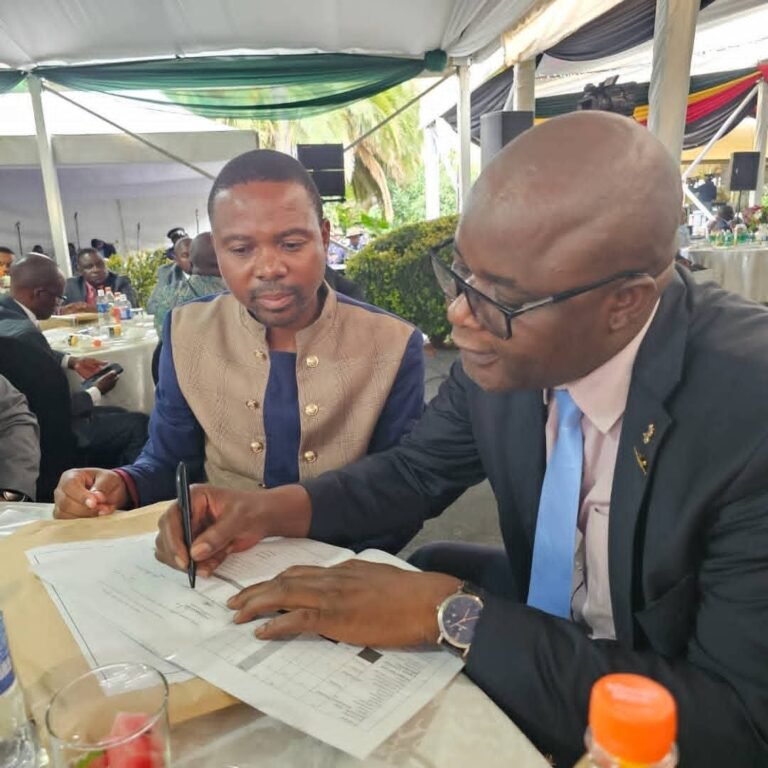
Chiredzi Town Council (CTC) accessed barely a third of its 2025 road funding allocation from
the Zimbabwe National Road Administration (ZINARA), after repeatedly failing to submit
acquittals on time, even as its sister local authority, Chiredzi Rural District Council (CRDC),
drew down the whole of its allocation, TellZim News can report.
Chiredzi Town Council Chairperson, Jameson Charumbira, confirmed the sad reality, saying it
was not only Chiredzi Town Council, but several councils were caught in between, as the funds
were accessed in stages, and for 2026, they were sitting at around 60%
“Unfortunately, it is our council which was mentioned, but it’s not only Chiredzi Town Council;
there are several other councils which were in the same bracket with us, with others having
utilised as low as 16%.
In 2026, we are happy to announce that we have so far utilised more than 62% of our allocated
ZINARA funds,” said Charumbira.
The revelation came in Parliament last week and lays bare a governance gap between the two
Chiredzi local authorities, raising fresh questions about financial management and accountability
at Chiredzi Town Council, whose residents continue to grapple with deteriorating roads despite
government funds sitting unclaimed.
Deputy Minister of Transport and Infrastructural Development, Joshua Sacco, told Parliament,
whilst responding to Chiredzi Central Member of Parliament, Ropafadzo Makumire’s question,
that ZINARA disburses funds to road authorities strictly on an acquittal basis, in line with the
National Monitoring and Evaluation Framework, where a road authority fails to account for
funds already received, subsequent disbursements are withheld until that acquittal is done.
“Indeed, it is worrisome that many rural councils and town councils fail to submit acquittals on
time, resulting in prejudice where funds that are available from ZINARA are not disbursed,
hence disadvantaging our people. We have noticed that in some cases, procurement processes are
not followed properly,” said Sacco
For the financial year ended 31 December 2025, ZINARA had allocated Chiredzi Town Council
ZiG4, 960,746.98 for road works. The council received only ZiG1,836,219.20, just 37% of that
allocation, because it had delayed submitting its acquittal for the very first quarter of the year,
only filing it in December 2025, effectively locking itself out of further disbursements for the
rest of the year.
Chiredzi Rural District Council, by contrast, received its full allocation of ZiG4,030,402.96,
100% of what it was owed, which the Deputy Minister attributed directly to the rural council’s
ability to acquit previous disbursements timeously.
Both councils fared better on fuel allocations, each accessing 100% of the litres allocated for in-
house road maintenance: CTC received 7,740 of 7,742.04 litres allocated, while CRDC received
6,400 of 6,401.91 litres.
Despite the funding shortfall, CTC recorded some output during the period, including the
reconstruction of a 0.5km stretch of Inyathi Road, completed in January 2026, alongside grading
of roughly 20.63km of gravel and residential roads, gravelling of a further 7.4km, and patching
of about 20.6km of tarred roads. The council also reported drain-opening works covering 40km
and desilting of 47 culverts.
CRDC’s works were spread across a wider rural network, with projects on roads including
Samba-Nyabongwe (60km), Twiza-Crooks Corner (38km) and Chanienga-Mavhavaza (38km),
among others, plus pothole patching on the Hippo Valley road and desilting of 45 culverts.
Raising a supplementary question, Makumire said it was concerning that government funds
meant to benefit residents were going unspent simply because the local authority in her
constituency was failing to acquit on time. She pressed the Ministry on what measures were
being taken to sanction officials responsible for the delays.
“What measures are being put in place by the Ministry to ensure that those who do not acquit in
time are sanctioned, especially those responsible for the acquittals,” asked Makumire.
In response, Hon. Sacco acknowledged that the problem was not unique to Chiredzi, noting that
many rural and town councils nationally fail to submit acquittals on time, prejudicing the very
residents the funds are meant to serve. He pointed to weak adherence to procurement processes
within councils as a root cause, calling for both the training of council procurement officers and
stronger political will from council leadership.
More pointedly, the Deputy Minister flagged a pattern in which urban councils divert money
earmarked for road infrastructure toward administrative costs and, in some cases, salaries and
wages a practice he said explains why some councils are unable, or unwilling, to account for
funds as required. He appealed to Members of Parliament to press their local councils to use
road-maintenance disbursements strictly for their intended purpose.
“As in some cases, councils, especially urban councils, use money that is supposed to be for road
infrastructure for administrative costs, in some cases, salaries and wages,” added Sacco.
Pupurai Togarepi also weighed in with a follow-up, arguing that ZINARA and the Ministry
needed to tighten oversight of how funds are distributed and used, noting that Parliament had
repeatedly received reports of abuse of these funds from Members across the country.
“It is repeated everywhere, and you continue to give them money. Why are you giving thieves
money? Why are you not coming up with a situation where you have an extension officer
140 international buyers arrive in Masvingo ahead of Sanganai/Hlanganani/Dzimbahwe Expo
By Tadiwa Shunje
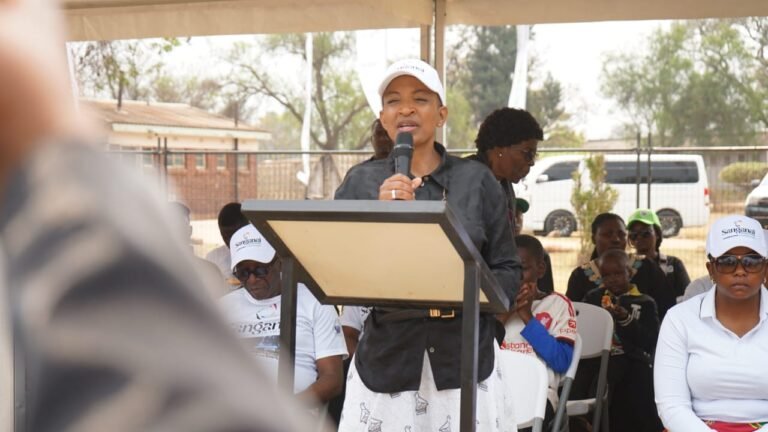
MASVINGO– Minister of Tourism and Hospitality Barbra Rwodzi says nearly 140 international buyers have arrived in Masvingo ahead of the 19th edition of the Sanganai/Hlanganani/Dzimbabwe World Tourism Expo.
Speaking at a gastronomy and music carnival held at Caravan Park on September 52026, Rwodzi said the buyers arrived aboard three flights.“In the morning at 7:30 we received the 1st flight and just after 10:30 we received another flight, the third flight today.
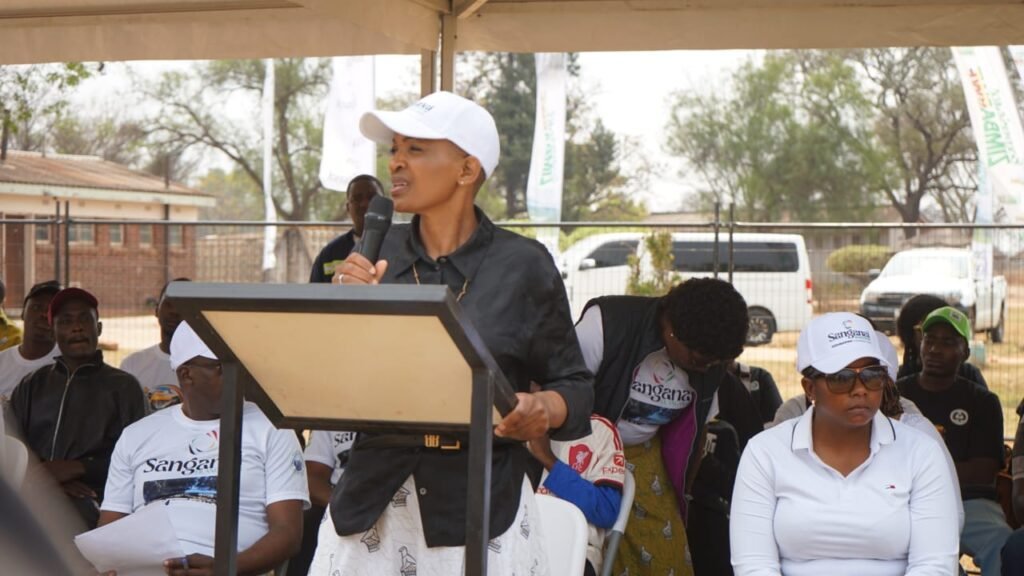
These flights are loaded with international buyers, that is the beauty of it,” she said.Rwodzi said this year’s buyer numbers have surpassed the Ministry’s target.
“Our international buyers this year have surpassed our target, they are almost 140. Some of them are already taken off to Chiredzi, Zaka, Tugwi-Mukosi,” said Rwodzi.
She said the buyers are in Masvingo to experience the province so they can market it after the expo.
“They are here to explore Masvingo Province so that when they go back after Sanganai they will be selling Masvingo Province, not just Vic Falls as usual,” said Rwodzi.
Rwodzi said the Ministry has divided tourism into 13 sub-clusters in line with Vision 2030.
“We have divided tourism into 13 sub-clusters so that we as people in tourism understand what each area in tourism requires. As we have done this, we align with the President’s Vision 2030 of an upper middle income society.”

The Minister also called for improved accommodation at Caravan Park. “We have spoken to the Minister that we have to increase accommodation here at Caravan Park. There should be a lodge or guest house where people can eat and drink, then sleep there,” she said.
Permanent Secretary in the Ministry of Tourism and Hospitality, Dr Takaruza Munyanyiwa, said the carnival was held to celebrate Masvingo’s hosting of the expo.
“Our objective is to celebrate our hosting of Sanganai/Hlanganani/Dzimbabwe here in Masvingo, which is the 19th edition.”Minister of State for Masvingo Provincial Affairs and Devolution, Hon. Ezra Chadzamira, said the province was honored to host the event.
“We are deeply honored by this vibrant edition of Sanganani/Hlanganani/Dzimbahwe 2026 gastronomy and music carnival. “Gastronomy is not about food only, but the celebration of our history through our local dishes,” he said.
Performances were done by Andy Muridzo and Diana Samukange and other local artists.
Ropafadzo Apostolic Church celebrates 20th Anniversary
By Staff Reporter
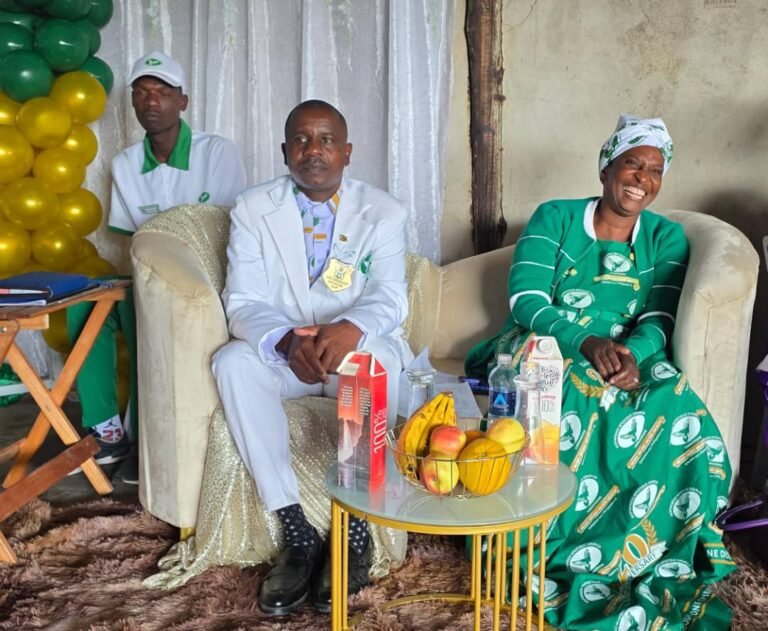
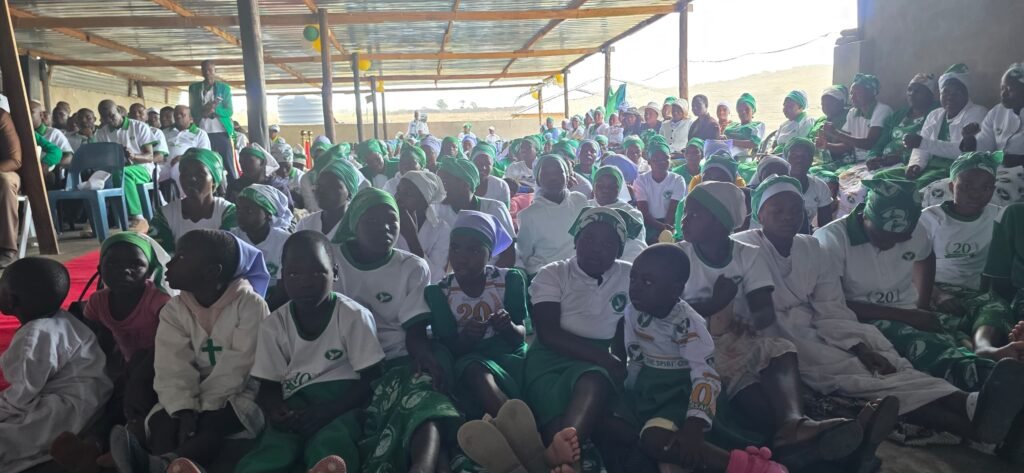
MASVINGO – Ropafadzo Apostolic Church, one of the many apostolic sects, celebrated its 20th
anniversary at its headquarters in Masvingo’s Victoria Ranch, marking two decades of a journey
that began with a reluctant call, endured years of resistance, and has now grown into a
transnational ministry with 50 branches across Zimbabwe, Botswana, South Africa, and
Namibia.
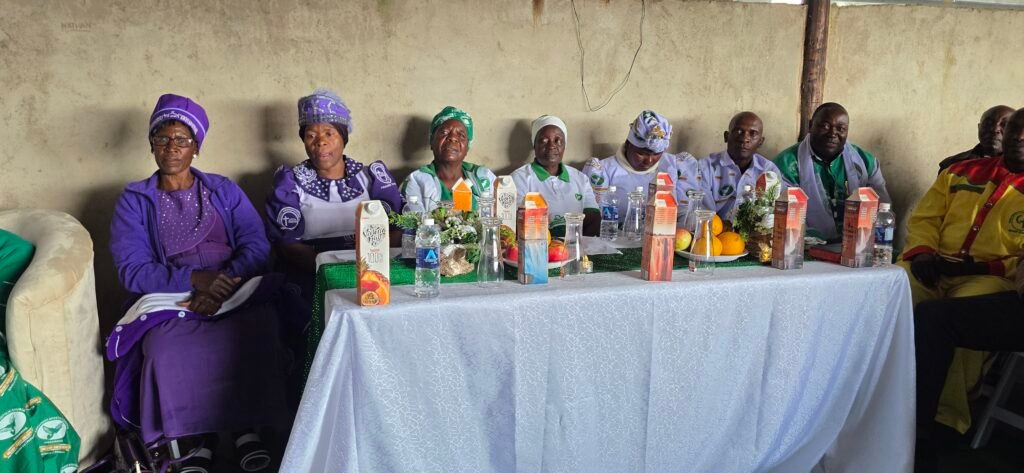
The colourful event, marked by poems, songs, and testimonies, brought together leaders from
various apostolic sects and other churches, all gathered to celebrate not just survival, but
transformation, a deliberate break from the stereotype that apostolic and African Indigenous
Churches are poor, backward, and disconnected from modern development.
The church founder, Archbishop Michael Maredza, chronicled his remarkable journey, narrating
how he first received a calling in April 1996, when God told him to form a church and name it
Ropafadzo.
Born in Zaka, in Maredza Village under Chief Bota, and a product of Chipfuti School, Bishop
Maredza had been baptised in 1993 in the Zion Apostolic Church. He later joined Chiedza
Apostolic Church, where he received a prophecy that he would one day become a church leader.
That prophecy, however, did not prepare him for the intensity of the calling that would come in
April 1996, a calling he resisted for nearly a decade.
“I received the calling in April 1996, but I resisted for several years. Every attempt to avoid the
call was met with misfortune. I faced dismissals at work and other challenges, all pointing to the
fact that I should obey God’s command,” Said Archbishop Maredza.
It was not until 2006 that he finally surrendered, forming Ropafadzo Apostolic Church. The first
Sabbath service was held on Mangwandi Mountain in Masvingo Town, a humble beginning that
eventually grew into a church with branches across the region.
“When I finally formed the church in 2006, we went nearly two years without growing. The
breakthrough came later, and now we have branches across Zimbabwe, Botswana, South Africa,
and Namibia,” he said.
Unlike the common perception of apostolic sects focusing solely on prophecy and spiritual
healing, Ropafadzo Apostolic Church has taken a bold step into education, establishing two schools,
Chipumho Secondary School in Zaka South, Maredza Village, established in 2021, and
Ropafadzo Primary School in Chirumhanzu, Ward 10, Juru Business Centre, established in 2022.
.Speaking to TellZim News, the church’s Education Secretary, Forward Musemburi, said the
schools represented a deliberate shift away from the old tradition where African Indigenous
Churches were known only for prayer and poverty.
“Our role is not only preaching the word of God but also helping the needy. Bringing schools to
marginalized communities is a positive step in the right direction because once a community is
educated, it becomes easy to develop. We also urge other sects to invest in education,” said
Musemburi.
He added that the church was ambitious and wanted to establish more schools across different
areas while growing and modernizing the existing ones.
Musemburi emphasized that Ropafadzo Apostolic Church was working hand-in-hand with the
government to build schools and ensure that children receive quality education and gain
employment opportunities.
“Our schools encourage practical subjects, and we have trained teachers who are passionate
about their work. Even though our schools are in rural areas, we also encourage technology
studies,” he said.
He thanked the government and local Members of Parliament for their support. At Chipumho
Secondary School, electricity has already been connected this year, a major milestone for the
rural institution. At Ropafadzo Primary School, the process is at an advanced stage, and the
church expects electricity to be connected at any time.
“We want to thank our government through our MPs for the support. Electricity changes
everything — it opens doors for computer studies, evening classes, and modern teaching
methods,” Musemburi said.
The church has appealed to well-wishers, businesses, and development partners to support its
education initiatives.
Junior Jewels of Masvingo holds 3rd Annual Children’s Modelling Contest

By Staff Reporter
MASVINGO – The Charles Austin Theatre came alive over the weekend as Junior Jewels of
Masvingo hosted its annual children’s modelling contest under the theme “Unveiling the Hidden
Gem,” bringing together young models aged 3 to 16 from across Masvingo for a day of fashion,
talent, and cultural celebration.
Beyond the runway, contestants presented culture through traditional dances, attire, and
performances that showcased Zimbabwe’s heritage.
The cultural segment drew loud applause as children proudly displayed their roots alongside
modern fashion, with organizers saying the event was designed to build self-esteem, public
speaking, leadership, and cultural pride in young participants.
After an exciting competition, four queens were crowned. In the Teen Category, Anifa Hungwe
emerged victorious, while Marylin Chigaridzano took the Junior Category. Precious Sakala was
crowned Little Queen, and Zenzile T Zigwati won the Mini Category.
The Little Category had a special moment when Precious Sakala, aged four, was crowned Little
Queen, while Angel Chirindo, aged five, was named 1st Princess for the second year in a row.
Both youngest contestants received standing ovations for their confidence and charm.

Contestants walked in school uniforms, formal wear, and dresses, and introduced themselves to
judges while sharing their future dreams. One highlight came from Michelle Tatanamsa, an 11-
year-old pupil from Victoria Primary School, who confidently declared her ambition to be a
doctor and said she was passionate about tennis.
Organizers said the theme “Unveiling the Hidden Gem” reflected the organization’s mission to
discover and nurture talent in children, providing a platform for self-expression and cultural
pride.
The event marked another successful edition of the annual competition, which continues to grow
in popularity, drawing participants and families from across Masvingo