Home Blog Page 225

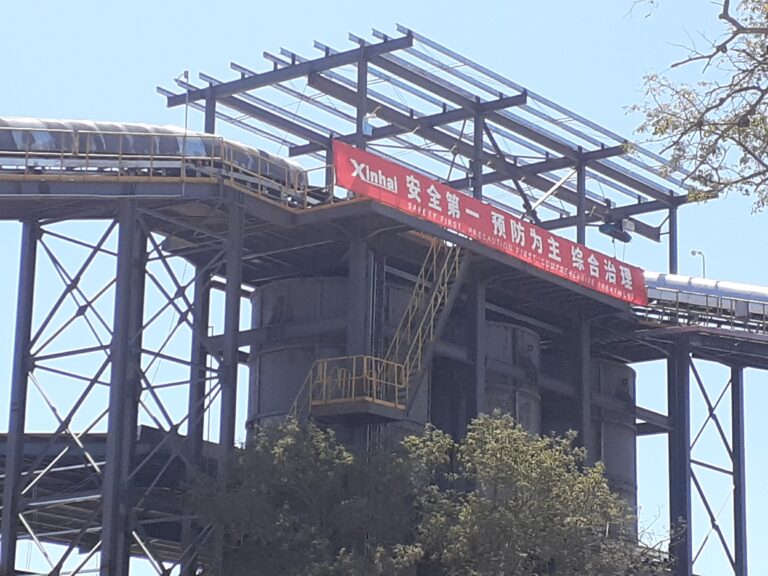
Bikita Minerals in massive CSR projects

Beverly Bizeki

Award winning Sinomine at Bikita Minerals has continued to raise the standard of Corporate Social Responsibility (CSR) with the company picking up on projects started by the previous owner.
The company won two awards in 2022 in Responsible Investment and Social Impact Award both at South East Region and national levels.
Mine Manager David Mwanza confirmed the developments during a media tour held recently and said the company picked up projects that were being done by the previous owner.
“When Sinomine took over in 2022, the company helped in the commissioning of Shumbaimwe Clinic where the company also installed a 12.2 KVA solar system for the clinic,” said Mwanza.
Although the project was spearheaded by Domboshava community led by Chief Marozva in 2016, Bikita Minerals chipped in and donated towards the construction of the clinic until its completion and official opening on March 30, 2022 under the CSR programme.
The clinic which benefits 22 villages has three staff quarters which also benefit from the solar system installed at the clinic and a functioning tap water system from the two tanks installed at a nearby mountain which serves the clinic and a nearby school.
Mwanza said the company provided its workers with construction materials for building their own homes.
“We have been on the record for assisting our employees with quarry stones for construction purposes but have only stopped for a little while for further beneficiation and will resume after processing again,” said Mwanza.
The company is on record for drilling seven boreholes, five for Masvingo West Community and for ward 22 in Bikita.
Finance Manager Amanda Makausi revealed that the company is on record for having US$ 2 million set aside for the corporate social responsibility in the construction of a new 132 KV power line from Tugwi-Mukosi to Bikita Minerals although the project is still at its infancy.
“This year alone, we are going to spend US$ 2 million towards rural electrification of communities surrounding the mine as we are constructing a line (power line) from Tugwi-Mukosi to Bikita Minerals whereby the community will be taken on board and get employed in clearing the route,” said Makausi.

‘Facts remain sacred for media during elections’

TellZim Reporter

Journalists and media practitioners around Zimbabwe have been reminded of the need to value facts when preparing news articles for public consumption especially during elections.
The call was made by veteran journalist Cris Chinaka in Harare on April 24 during a training workshop for journalists drawn from various media outlets across the country.
Chinaka said it was imperative for journalists to always adhere to the profession’s ethics that is being factual, truthful and accurate as that is the only way to build trust in their audiences.
“Facts remain sacred during elections. Facts are what will distinguish traditional journalism from social media when it comes to election reporting.
“During seasons like election times, journalists and the media fraternity get challenged to prioritize facts and thus every one of you is required to dwell on facts in every report you may compile for the general public,” said Chinaka.
He also urged journalists to be innovative and come up with relevant ideas that address societal needs in the communities they serve.
“Journalists’ roles are to come up with ideas on areas that need to be fixed and that is part of the media’s primary role in ensuring development and accountability,” he added.
Chinaka also urged journalists to remain professional that is sticking to their professional codes of conduct and thus executing their duties effectively.
The journalists were further taken through the tips of what constitutes enough election reporting coverage that is mapping (broader appreciation of the national map, constituencies and wards), numbers (demographics, polling numbers, officers and even stations), historical context of the nation’s polls, personalities (parties and individual politicians involved) as well as processes involved during elections.
Journalists were also taken through an appreciation of the use of mobile journalism during elections and after by trainer Privilege Musvanhiri.

Budding artists welcome MARODO initiatives

TellZim Reporter

Budding music artists from Masvingo urban who got recording contracts from a programme initiated by Masvingo Root of Development (MARODO) last weekend (April 22) have expressed gratitude to the organization as they say the initiative will help develop their careers.
Some of the artists from the total 17 who made it to the contract awards after the screening process said the programme would help uplift their careers through being able to record their songs which could not have been possible due to the harsh economic conditions in the country.
Kennedy Ganda whose stage name is ‘KennyGizzy 99’ an Afropop and jazz genre artist expressed happiness after making it into the basket.
“I am very happy for getting the opportunity to showcase my talent like I did today. I am hopeful the contract will help afford me a chance to interact with experts in the music industry while at the same time recording my work.
“This is the kind of help I was looking for considering that I am a young artist who still has a lot more to learn as I grow my musical career. Right now I have a strong belief that this chance may unlock more opportunities and can use it as a launch pad for my musical journey going forward,” said Ganda.
Another female artist, 24 year-old Ashleigh Zingoni (Afro pop) said she will now be able to record her musical works courtesy of MARODO recording contract.
“I am delighted upon being chosen among the final 16 and will be able to record my work from the contract we are given by MARODO. Recording has always been expensive for us as artists and we could not be able to visit studios with our works.
“I hope to live up to the billing in terms of the challenge that lies ahead as we work and that is when it comes to activism through music. On behalf of all young people who thronged Mucheke hall today, I would like to thank the organization for affording us the opportunity we have for so long been waiting for,” said Zingoni.
Emmanuel Mangwarira whose stage name is Luvante (dancehall) said now that artists have been given recording contracts, they were going to come up with finer pieces of work unlike in the past.
“I am very grateful to the recording contract. There is a lot of talent in us as young people but we always face challenges when it comes to recording expenses and MARODO has come to our rescue.
“We are going to ensure that we put an extra effort and hard work to justify why we got selected into the final 16. I can promise that since we are going to be aided in our recording, we will come up with improved quality music,” Mangwarira said.
MARODO founder Acknowledge Mawere expressed happiness over the turn out and how the youthful artists exhibited their talent and the message they packaged.
“We were super impressed by the turn-out both from the audience and artists. We had over 55 artists and what was interesting was the smart/clean lyrical content they delivered to the audience. “The various songs composed were in support of our theme ‘NoToGBV’ as well as shunning drug and substance abuse.
“The short listed candidates would get training in music advocacy covering topics like music writing, entertainment law, advocacy, gender, marketing and content monetization from trainers with vast knowledge about the industry probably starting from next week,” said Mawere.

Zim education transforming at snail pace–MoPSE

Brighton Chiseva

Permanent Secretary in the Ministry of Primary and Secondary Education Tumisang Thabela has said transforming the education system to suit the everyday life Zimbabwean situation was moving at a snail pace, far less than anticipated.
Thabela who has been on record saying the education system was still divorced from the current situation said steps were being taken towards achieving the desired results but the pace was not as fast as they anticipated.
Speaking during a media engagement workshop organized by MoPSE in Darwendale recently on curriculum review, Thabela said they were receiving a lot of feedback on the curriculum review process, a development that shows the ministry is in the right direction.
“We are receiving a lot of feedback on curriculum review. However, change is difficult to accept, that is why we still have challenges. We are doing teacher training and capitation but it takes time to adapt. Some people are not comfortable to use ICT so we still have a long way to go,” said Thabela.
In a move aimed at aligning and transforming the education sector with the Zimbabwe’s everyday life, the Ministry of Primary and secondary education introduced Continuous Assessment of Learning Activities (CALAs).
Since their inception however, CALAs have brought a huge burden on all stakeholders involved, who are learners, teachers and parents.
Parents have been complaining for some time that they are the one doing CALAS on behalf of their children who are finding it difficult to do most of the tasks that they are required to do.
Since the activities contribute 30 percent to the total examination mark, parents are then forced to do the work on behalf of their children and those who cannot have resources end up paying teachers to do them.
On the other hand, teachers are also complaining that many of them are yet to grasp all the concepts involved in teaching and monitoring of CALAs and that the work that needs to be done is too much for one teacher since most classes have more than the standard teacher-pupil ratio.
This has opened a window for teachers to be involved in unscrupulous means of earning extra cash through charging pupils to help with CALAs.
The pupils on their part are also complaining that the work required is too much and some of the things needed are beyond their reach hence they are forced to fork out money to buy some of the requirements as well as transport to where they can get the material needed.
Thabela however, said parents should not pay for CALAs saying there should not be any cost attached to the doing of CALAS and teachers are aware of that.
She said teachers should give CALAs that can use locally available resources not those that would require parents to fork out money to buy materials.
“Parents should not pay for CALAs either to the teacher to help their children or to buy requirements. They should be done at zero cost and teachers are well aware that they should give tasks that need locally available resources unless they go out for educational tours,” said Thabela
She also warned parents against doing the work for their children but rather assist.
On the issue of awarding more marks to CALAs owing to the labour, resources and time needed for them to complete them, Thabela said they were still engaging relevant authorities to look into the matter.
“As we are doing the curriculum review, we are going to liaise with ZIMSEC and other stakeholders and look into the issue of reviewing marks.
She also said the competence-based curricular was being overshadowed by Higher and Tertiary Education’s 5.0 philosophy saying they will engage stakeholders and the media to promote it so that people understand what it is all about.
Speaking at the same event, the Ministry’s Director of Information Taungana Ndoro said they were in a process of decentralizing access to information especially to the media which he said was key in giving vital information to stakeholders.
“We are working on something to do with decentralization of access to information and soon information will be found at provincial offices,” said Ndoro.
On the issue of parents paying teachers for CALAs and conducting of extra lessons, Ndoro said parents were the ones to blame since they are the ones paying teachers saying they should shun such practices and report to the relevant authorities.

Good Deeds donates food hampers, clothes to underprivileged

Tinaani Nyabereka

Gweru- City Council last week received food hampers and clothing donation from the Good Deeds Network as part of the organisation’s social corporate responsibility.
The donations, meant for the underprivileged were handed over to the municipality by Good Deeds Gweru coordinator Cosmas Nemutenzi in partnership with Gweru Lions Club.
“It is our singular honour in partnership with Lions Club to donate these food hampers and clothes to the City of Gweru as part of the organisation’s corporate social responsibility. We hope the donation will have an impact and contribute to the Mayor’s Cheer Fund,” he said.
Receiving the donation on behalf of the local authority, Gweru Deputy Mayor Edson Kurebgaseka expressed gratitude towards to Good Deeds.
“It is my singular honour to welcome the Lions Club and Good Deeds representatives to the City of Gweru. It is a privilege to have you here as you handover your donations to us.
“On behalf my council, I wish to express my sincere gratitude towards Lion Clubs and Good Deeds for this gesture of good will as this donation could not have been timelier than now.
“Many seem to forget that there are those who stay within our communities who are in dire need of help and this gesture reminds us of their apparent need. As a local authority, we try to raise funds in cash and pledges which are aimed at helping the underprivileged families and orphans in Gweru.
“However our help is never enough, so donations and contributions done by organisations such as you are greatly appreciated,” he said.
Kurebgaseka however encouraged other organisations and independent parties to work hand in hand with local authorities.
“We encourage you as organisations out there not only to improve service delivery but in areas of philanthropy as well.
“Your generosity means everything to us and to the community we serve,” he added.

Safety of journalists, freedom of expression under siege – Misa Zimbabwe

Courage Dutiro

As the world marks the 30th World Press Freedom Day, Media Institute of Southern Africa (MISA) Zimbabwe Chairperson Golden Maunganidze in a press statement said the safety of journalists and freedom of expression faces an onslaught from ‘enemies of a free press’.

This year’s May 3 commemorations are running under the theme Shaping a Future of Rights: Freedom of expression as a driver for all other human rights.

In his speech for the 30th world Freedom day, Maunganidze said the shrinking of press freedom space is a drawback on other human rights.

“In celebrating this year’s World Press Freedom Day (WPFD), UNESCO notes that media freedom, the safety of journalists and freedom of expression has been under attack, thereby impacting the realisation of other human rights,” said Maunganidze.

Maunganidze also said this year’s anniversary is an equally important event for Zimbabwe which is going to hold its harmonized elections on a soon to be proclaimed date.

“It is also an equally important event for Zimbabwe which will be holding its general elections, of which freedom of expression (online and offline), media freedom and access to information are vital in assisting citizens in making informed decisions and choices,” he said.

He added that deepening and entrenching freedom of expression and media freedom in Zimbabwe, as provided for under Section 61 of the Constitution, will go a long way in ensuring that citizens enjoy other rights enshrined in the Bill of Rights.

In 2022, the country witnessed an increase in the number of journalists that were assaulted, threatened and harassed at political gatherings and rallies, while others were also barred from covering national events.

In other cases, journalists face unlawful arrests and assaults by police while conducting their lawful professional duties.

He also said after holding nationwide engagements in partnership with the Zimbabwe Republic Police (ZRP) and MISA Zimbabwe’s alliance partners under the auspices of the Media Alliance of Zimbabwe, no reports have been recorded of media violations.

10 mo baby in urgent need of cancer treatment

0

Tinaani Nyabereka

Chivi– A ten-month old baby from Chivi in Masvingo is in dire need of financial assistance to undergo an emergency cancer treatment.

Tanyaradzwa Dhuve has reportedly gone for three days without feeding due to his deteriorating health condition, with Chivi District Hospital requesting US$ 200 dollars to partially attend to her situation.

The baby’s caretaker Beauty Shangarai is appealing to well-wishers and the corporate world for help to save the young life.

Makadii Zimbabwe, mwana wamuri kuona anonzi Tanyaradzwa, ari kuda rubatsiro, abatwa chirwere chegomarara). (How are you Zimbabwe? The child you are seeing is Tanyaradzwa Dhuve and is in dire need of financial assistance to undergo cancer treatment).

“The baby has not been taking milk for the past three days as US$ 200 is needed to clean her body and acquire drips so that she can eat. She is required to be taken for further medical attention at Parirenyatwa Group of Hospitals in Harare. The baby also needs milk to complement her food supplies,” she said.

Those willing to assist Beauty Shangarai can get in touch with her on the contact details below:

Mobile Number: 0779976217 (Innbucks & Ecocash)

Name: Beauty Shangarai

ID : 83-237338R-83

Junior High appoints new, experienced deputy head

Tellzim reporter

Junior High School (JSH) has shown its continuous quest towards provision of quality education to its learners following the appointment of well-seasoned educationist Munyaradzi Mataruse.

Mataruse with a wealthy experience in the education circles was appointed to the position on May 1, 2023 to join the ambitious school located in the leafy suburb of Rhodene in Masvingo.

Announcing the appointment, JSH Director Noah Marima said the school is excited on the joining on board of an experienced administrator.

“I am pleased to announce the appointment of Mr Munyaradzi Mataruse as the deputy head effective May 1, 2023. Mr Mataruse brings a wealth of experience to Junior High School. He joins us from Riverton Academy where he held various administrative positions over the past 16 years.

“Mr Mataruse joined Riverton Academy in 2008 and rose through the ranks from the position of teacher, Head of Department (HOD) Sciences, Senior Master and most recently deputy head and Head of Cambridge examinations,” said Marima.

Mataruse has two decades in the education field according to Marima where the former is well-travelled which points to his experience.

“Before joining Riverton, taught at Churchill High School where served from the year 2003-05. From 2006-08, he was at Mutare Girls High as the HOD Sciences.

“Please join us in welcoming Mr Mataruse to JHS. We wish him every success,” added Marima.

Among his professional qualifications, Mataruse holds a Bachelor of Science with the University of Zimbabwe (UZ), Masters of Science with Bindura University of Science Education (BUSE), MED (Chemistry) again with BUSE.

New highs for Bikita Minerals

… As mining company eyes US$ 1 billion revenue in 2024

Beverly Bizeki

Sinomine owned Bikita Minerals has reiterated its aim to achieving new highs ever since the Chinese takeover in February 2022 which has marked a notable increase in revenue and productivity with the mine targeting US$ 1 billion revenue in 2024.
With the coming in of the new Spodumene Quartz Intergrowths (SQI) expected to be complete by July this year, the company is targeting to increase the revenue as well as number of employees.
Speaking during a media tour of Bikita Minerals on April 25, 2023, Bikita Minerals Finance Manager Amanda Makausi said the company has made notable improvements ever since the company changed hands with the company now being one of the biggest contributors of tax in Masvingo province.
Makausi said the company was targeting the revenue to increase to US $1 billion in 2024.
“When Sinomine took over in February 2022, we were producing plus or minus 2 500 tonnes per month and our prices were around US$ 500 per tonne. As at March 2023, we are producing plus or minus 10 000 tonnes a month and the price of Petalite has since increased due to the world market and we are selling our petalite at US$ 2 500 per tonne,” said Makausi.
Makausi highlighted that the company’s revenue has also increased from the pre Covid-19 era where the company would record plus or minus US$ 25 million annually to US$ 25 million per month.
“Our revenue is US$ 25 million per month. Pre-Covid 19 era we were doing approximately US$ 25 million annual revenue but in 2022 we recorded our sales of US$ 47 million and in 2023 we are projecting around US$ 750 million depending on the commissioning of the new plants. From 2024, we will be looking at US$ 1 billion annual revenue,” said Makausi.
The company has also recorded increases in taxes as the rate of employment and investments are ongoing.
“In terms of taxes, in 2022 we were averaging around US$ 50 000 per month in terms of employment tax but now we are contributing to around US$ 150 000 per month with a lot of indirect tax which comes in because of a US$ 200 million investment taking place in terms of expansion of the existing Petalite plant and the Spodumene plant,” explained Makausi.
Mine manager David Mwanza said the company is headed for growth since the Chinese takeover in 2022 with an increase in employment.
“In February 2022, the company had 343 employees but the number has increased to 660 as at March 2023 with the number expected to increase to 1 500 upon completion of the Spodumene plant anticipated in July,” said Mwanza.
Mwanza also said the company provides a production bonus to its workers on a monthly basis.

Zim losing millions through unregulated cross-border money transfers

TellZim Reporter

Treasury is losing millions of potential foreign currency remittance taxes through operations of unregistered and unregulated international money transfer agents who have penetrated the financial services sector, across the breath and length of Zimbabwe.
An investigation on this trend has established that unregulated money transfer agents are operating in all the country’s major cities and towns while others have established offices in growth points.
The investigation, done over a month by the reporter, masquerading as a client looking for convenient ways to receive money from relatives outside Zimbabwe confirmed the existence and operations of informal money transfer agents in Masvingo that move money across the borders of Zimbabwe, bypassing the formal banking system.
The companies have offices in many other areas in Zimbabwe, with treasury losing potential revenue in both direct and indirect taxes.

How it is done
While unmediated, cross-border money transfers are not a new thing, the practice is growing rapidly and is now a preferred choice of moving money by people who are discouraged by the scrutiny in some cases, and charges, imposed by formal institutions such as banks and international money transfer agents.
Public trust is also growing, because the agents are giving out money instantly.
The trend has grown significantly lately, buttressed by its accommodation of homeward remittances by undocumented clients in countries like South Africa, Mozambique, and Botswana, who are otherwise constrained by the demands of formality.
Zimbabwe National Statistics Agency (ZimStat) 2022 October figures show that there are over 700 000 Zimbabweans living in South Africa alone, with only 178 000 (25percent) having work permits.
Another ZimStat report, First Quarter 2022, states that the number of formally employed people in Zimbabwe is around 900 000, which translates to 10percent of the working-age population estimates, signifying the dwindling of the formal working space.
A lot of Zimbabweans have crossed the borders into neighbouring and far-off countries, searching for greener pastures.
The upside of this is that it has grown the forex remittances base considerably. Official Reserve Bank of Zimbabwe (RBZ) figures show that the 2022 remittances value was pegged at over USD1.5 billion, up from USD1.4 billion in 2021, but the figures only account for remittances made through the official regulated channels.
The formal banking systems have failed to accommodate undocumented Zimbabweans outside the borders as clients for remittances, and this has emboldened and expanded the informal money transfer sector based on the use of the “hawala” system.
The hawala system allows for an informal transfer of funds from one person to another without the actual movement of money, permitting anonymity as it requires no documentation.
Arthur (not real name) is a 25-year-old who regularly receives money from his brothers in South Africa through Instant Express Transfers, a Masvingo money transfer company that has offices in the CBD and Pretoria, South Africa.
He says the system is very convenient and more accommodating than the formal channels.
“My brothers are not documented in South Africa, they are border jumpers so they cannot send money home through Mukuru. The queues are not as long. I know there are inherent risks but it is balanced out when you consider convenience,” Arthur said.
The system allows for an exchange of money without passing through the banking system or financial bodies and is prohibited in many countries including the US, Pakistan, and India among others.
In Zimbabwe’s case, unregistered money transfer companies have become hawala operators, with offices at home and abroad, mostly in South Africa and Mozambique.
They offset balances between the different offices across the borders, without money passing through the official national payment system.

Laws being broken
A lot of unregistered money transfer companies are facilitating the unregulated expatriation of funds by withholding potential funds to Zimbabwe, in direct contravention of the Reserve Bank of Zimbabwe (RBZ) Act [22:15], the National Payment Systems (NPS) Act [22:43], and the Exchange Control (EC) Act [22:05]. Statutory Instrument 145 of 2017 The EC Act [22:05], which criminalize the unauthorized movement of funds to and from Zimbabwe, with such transactions categorized as “illicit”.
The statutory instrument defines “illicit transactions” as the “illegal transfer/export of foreign exchange and/or assets from Zimbabwe and/or offshore retention of foreign exchange and/or assets due to Zimbabwe, without relevant regulatory authorizations”.
Paragraph 4(7)(k) of S.I.145/2022 speaks to the operations of unregistered money transfer companies that use the hawala system by defining illegal expatriation as “…retention of funds offshore which were supposed to be received in Zimbabwe or which were not sanctioned by Exchange Control or provided for in current Exchange Control policy.”
It then seems that with more accountability and better treasury systems, the value of remittances could be much higher and contribute more to the national fiscus.
The unregistered money transfer companies have managed to grab a sizeable market share from mainstream players like Mukuru, World Remit, and Access Forex among others by offering instant transfers and quicker service times for those who are willing to take the inherent risk in no-mainstream transactions.
Lynn (not real name) is an agent for Instant Express Transfers. Her office has a desk and three chairs only, and she does all her transactions on a mobile phone which she then records in a counter book.
“The process is very simple; the system is instant. Once the sender hands over the cash to our agent in South Africa, they are given a receipt number which they then forward to you here. The same receipt number is also sent to my WhatsApp for reference then you can collect your money,” she tells this reporter.
According to Lynn, her office in Masvingo CBD is just one of Instant Express Transfers` over 20 branches around various urban centres and growth points, where they facilitate transfers to and from South Africa as well as locally.
“Our branches are many. Some around Harare, Bulawayo, Beitbridge, Jerera, Nyika, Gutu, and other places – there are 23 branches,” she said.
Several other money transfer agents in the CBD alone work the same way as Instant Express Transfers, with more being at the busy Exor cross-border bus termini on the city outskirts along the Masvingo-Beitbridge highway.
Silvia (not real name) works for one of these agents in the CBD. She reveals her company has “runner-shops” which provide the cash used to settle receipts of transferred amounts locally without the need for the cash to be sent from South Africa.
“We have shops that bring in good money locally, so we easily pay recipients here. The cash deposited in South Africa is then used there to buy “runner” orders for our shops here because things are cheaper there,” she said.
The same system is used by another agent located at Guni House in Masvingo, which has offices at Bosman bus terminus in Pretoria and in Johannesburg.
The system has become very popular to the extent that even registered cross-border transport companies now operate money transfer services, albeit without requisite licenses.
A popular logistics company runs a backroom office in the CBD which deals with money transfers only and has little to do with transport.
The unregulated hawala system that is commonly practiced by these money transfer companies prejudices the government of revenue as it circumvents both the RBZ and the ZIMRA systems.
Cross-border money transfers are not exempted from the Intermediated Money Transfer (IMMT) Tax payable to ZIMRA, determined by Statutory Instrument 92 of 2022 (S.I. 92/2022) at 4%. S.I. 92/2022 states that “…The intermediated money transfer tax chargeable in terms of section 36G of the Taxes Act shall be calculated at the rate of —…(b) zero comma zero four United States dollars or part thereof on every United States dollar transacted for each transaction on which the tax is payable.”
Silvia claims that their company handles transfers of large amounts and volumes of foreign currency for their clients.
“We can handle over US$3 000 per day as the cumulative figure, but such volumes are usually during month-end days. Our daily average is roughly 30 to 50 transactions which give between US$2 000 and US$2 500,” she said.
If a person in South Africa sends money to a relative in Zimbabwe through the formal channel, the 4percent IMMT tax is activated and becomes collectible by the government.
Commenting on the issue, finance expert and senior lecturer in the Banking and Finance Department at Great Zimbabwe University, Dr Rabson Magweva said the losses can only be calculated by the volumes of transactions.
“The net loss is 2percent transactional cost multiplied by the volumes that are being pushed,” Dr Magweva said.
He also said government losses may be difficult to quantify but they are real.
“When remittances are made through the formal banking channels, it means that the government receives IMMT tax, and effectively this means increased inflows and a wider tax base. This implies that the use of informal unregulated remittances aids tax evasion and shrinks the tax base,” said Dr Magweva.
He said some of the lost value cannot be quantified directly in monetary terms, but has long-reaching effects on the value of money in Zimbabwe.
“Our statistics become unreliable because of unrecorded transactions pushed through the informal operations of the unregistered money transfer companies, and these implications affect the formulation and implementation policies, for example, inflation or exchange rate policies, they are likely to be ineffective. Receivers of money from the informal hawala usually go directly to the black market, thus fueling the parallel market and affecting the exchange rate as well,” he said.
South African-based economist and researcher, Onias Mugowo said that these unregulated agents violate both local and international laws.
“When the cross-border transactions contravene both national and international laws, they can be considered to be either illicit financial flows or money laundering, depending on their volume and purpose,” Mugowo said.
The unregistered transfer agents are also indirectly prejudicing the government of collectible taxes as their operations reduce the market share and profits of mainstream companies.
By law, all companies must be registered to operate in Zimbabwe so they can pay appropriate registration, licensing fees, and requisite security deposits with the RBZ as contained in the operational guidelines for Authorised Dealers with Limited Authority (ADLAs) – money transfer agencies and Bureaux de change (2021).
RBZ governor Dr John Mangudya did not respond to calls while the RBZ public relations department did not respond despite asking for questions in writing.
Follow-up phone calls were made to the PR department, and they indicated that they were waiting for response and clearance from the Financial Services Unit (FSU) and the Exchange Control Unit.