
Home Blog Page 243

Rural women face more challenges in political participation

Perpetua Murungweni

Despite the progress that has been made in increasing the participation of women in politics in Zimbabwe, women’s participation in government at all levels, from the local to the national, remains extremely low due a number of challenges that women face.
Zimbabwe has signed and ratified a number of regional and international instruments that call for gender equality in all angles of life.
However it seems as if women from rural and marginalized areas are the most left out as they face a lot of challenges that affect their full participation in politics.
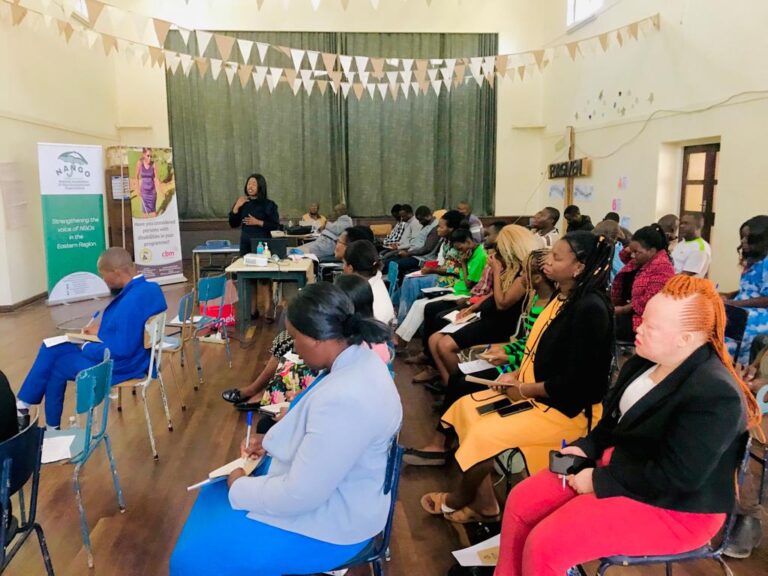
The revelation came out during an engagement meeting held by Women and Law in Southern Africa (WLSA) and Masvingo United Residents and Ratepayers Alliance (MURRA) on April 17 where stakeholders invited women participating in politics from different political parties to discuss their challenges and share ideas on how to overcome them.
Speaking during the meeting Zvarebwanashe Sungano, ward 4 MURRA chairperson cited violence as one of the major challenges that pushes away women from participating in politics, especially those in rural areas because the political environment there is not conducive for women in the space.
“Violence is one major challenge that women in the rural face and pushes them away from participating because the political environment in the rural areas is not conducive for them and they also suffer from domestic violence as their husbands might beat them trying to stop them from being politically active.
“Women are also objectified and seen as sex objects, their contributions are not viewed in any manner other than that they have slept with male leaders to attain certain positions and this has forced many of them to stay away especially those in rural areas because the women who run for public office typically attract inappropriate attention and are seen as being loose and immoral and their private lives are put under the spotlight.
“Female politicians also face gender stigma from male colleagues and are often appointed to marginal positions such as the women’s quarter where they are given seats in the Parliament that do not give them a chance to participate in policy making,” said Sungano.
She also pointed out that Zimbabwe currently has no legal framework for political parties to adhere to gender equality.
“Most women both from urban and rural areas face a lot of gender related challenges because currently Zimbabwe lacks legal provisions constitutionally that enforce gender balance in political participation,” added Sungano.
Community Tolerance Reconciliation and Development (COTRAD) information officer Leah Matavire pointed out that women in rural areas suffer from patriarchal societies more than those in urban areas and this affects their participation in politics.
“The patriarchal culture in Zimbabwe, breeds low self-esteemed women especially within local power structures and it makes it impossible for women to compete for political power and in these societies, people often see women as belonging to the kitchen, rearing children and doing household chores. Women are seen as inferior to men, not as smart or as powerful,” said Matavire.
Women in rural areas lack political education and there is poor dissemination of information, said Joyce Mhungu of Women Coalition of Zimbabwe (WCOZ).
“Women in rural areas are restricted from freedom of association because gatherings are usually prohibited by the traditional leaders and dissemination of information becomes difficult to provide political education to rural woman,” said Mhungu.
Women usually hesitate to take part in politics because of capability gaps between men and women said Tendeuka Matara a member of the Citizen Coalition for Change (CCC).
“Women are less capacitated than men in terms of education, preparation, contacts and resources needed to become effective leaders and unlike male politicians, female politicians face specific barriers that may prevent them from running for a political office, including gender stereotypes and balancing work and family,” said Matara.
Matara also called for women to come together and challenge the system that hinders women to prosper in politics and for women to support one another and those participating in politics.
“As women, we should stand up for ourselves. Let’s come together and claim our rightful positions in government, let’s support each other with all we have and those who are taking part without looking at each other’s political parties but let’s have one goal which is to increase our participation in politics,” added Matara.
Women Affairs District Development Officer (DDO) Fortune Sinamayi said the department of women affairs is there to economically empower women by giving them loans that will help them take part in politics.
“The department of Women Affairs and Social Welfare offers financial support to women by giving them loans so that they can campaign during elections and the loans are given to every woman despite their political affiliation,” said Sinamayi.

Zimbabwean workers no longer enjoy the Unity, Freedom and Work-ZCTU

0

Perpetua Murungweni

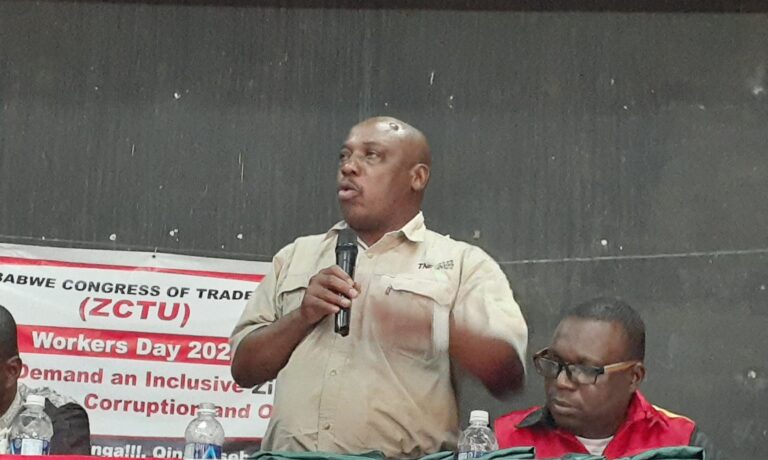
Labour movement the Zimbabwe Congress of Trade Union (ZCTU) has expressed concern over the deteriorating working conditions Zimbabwean workers found themselves working under.
In a speech released by ZCTU Secretary General Japhet Moyo to mark the 43rd Independence Anniversary on April 18, the labor board said workers are suffering from a debilitating economic malaise that had pauperised the working class.
“Our 43 year journey has seen us going through good times that we glorify and rough patches of unimaginable proportions. The hopes and aspirations that the country envisioned in 1980 have not been met and particularly for workers, we are no longer enjoying the Unity, Freedom and Work. We mark this day on a sad note as a result of the debilitating economic malaise that has pauperised the working class.
“The status of a worker has diminished in independent Zimbabwe to the extent that the older generation reminisce with nostalgia and fondness ‘the good old working days under colonialism’ when wages had value and they could develop themselves and their families from their earnings unlike today,” said Moyo.
He also indicated that today’s laws no longer protect the rights of ordinary workers.
“Workers are no longer protected by the law as was in the early 1980’s. The laws of the land are not being fully upheld to protect workers and citizens. Our working environment has gradually deteriorated from independence. Workers in the formal and informal sectors are suffering from repressive and capitalistic laws that deter them from fully exercising their rights.
“From colonial slavery, workers are now in the modern day slavery savaged by their own kith and kin that now control the means of production and their foreign investor friends. Today local workers under foreign investors particularly the Chinese are no better than the slaves of the between 1700 and 1850. It has become worrisome that our government is failing to protect its own citizens from exploitation while stifling the democratic space for trade unions and CSO’s,” added Moyo.
The labour body criticized government over failure to ensure security on part of land reform beneficiaries who are with no tittle deeds.
“Over the years, the majority of our citizens remain economically vulnerable. Beneficiaries of the land reform programme do not have title deeds and survive at the mercy of the ruling party which may strip them of the land at any instance. The same applies to rural folks who are currently being displaced from their ancestral lands to pave way for foreign investors.
“Urbanites bear the brunt of broken down infrastructure. Basic services like water, electricity, roads and hospitals are hard to come by and infrastructure is dilapidating at a frightening pace. Most urban suburbs are receiving water for less than three days a week while going for over 18 hours without electricity a day. Our roads are all decorated with pot holes and no longer navigable, hospitals are in a poor state and schools do not have adequate components for learning,” said Moyo.

Do not do CALAs for learners: Ministry

Beverly Bizeki

The Ministry of Primary and Secondary Education (MoPSE) has urged parents to support the ministry’s initiative to bring about a robust system of assessing learner progress in the Competence Based Curriculum through the Continuous Assessment of Learning Activities (CALAs) by not doing some of the work that is assigned to learners or in other cases buying the learners models.
This was revealed during a media engagement workshop for the curriculum review of the 2015-2022 framework held at the Zimbabwe Institute of Public Administration and Management (ZIPAM) recently.
Zimbabwe School Examinations Council Research Manager Francis Chirume said that the doing of CALAs by teachers and parents on behalf of learners is a gross malpractice.
“Parents who buy models for their children are hindering learner activity. CALAs are meant to bring about a generation of knowledge, application of knowledge through problem based activities hence learners must fully participate in this work to ensure originality and creativity is realized in our pupils,” said Chirume.
The ministry introduced the CALAs as part of the Competence Based Curriculum for Primary and Secondary Education in 2015.
“We are no longer teaching for competition but we have since moved to unlocking the learners’ potential through these CALAs which is why we require the full participation of learners when doing their work.
“CALAs measure competences that are knowledge, skills and attitudes acquired during the teaching and learning processes on a continual basis that is in progression,” added Chirume.
MoPSE Permanent Secretary Tumisang Tabela said the assessment framework is meant to assess skills and competences in learners and not in academics only.
“The Ministry has also introduced a new assessment framework which is fit for purpose considering that we could not continue assessing a skills and competence based curriculum using a framework meant for academics only. The new assessment model takes into cognisance pupils’ different abilities and flairs including skills, inherent talents, values and other achievements both in and out of class.
“The CALAs have thus become a key part of how we accredit the overall performance of a learner as a system. As we review the curriculum, all these aspects will also be reviewed to ensure they are in line with the educational aspirations of the country,” said Tabela.
Marks for certification are collected from Grade 6-7 that is grade 6 first term to grade 7 second term, Form 3 first term to Form 4 second term, Form 5 first term to Form 6 second term with learners expected to complete five CALAs at every level.

Ninga Dzenharira rocks Mutare

0

Branton Matondo

Norton-based Mbira ensemble Ninga Dzenharira came to the party this past Monday and Tuesday arousing fans with their innate yet amusing traditional sounds at Club Mandisa.
Ninga Dzenharira shared the stage with Tryson Chimbetu who also had good Sungura outing at the popular imbibing arena.
Ninga Dzenharira band Leader Florence ‘The Lioness Shumbakadzi’ Nyamazana appreciated the response from Mutare.
“The turnout was very good. I am so touched with how Mutare community appreciates and embrace Mbira music. It was not just a show but also a cultural tour,” said Nyamazana.
Nyamazana added that Ninga Dzenharira will be back next month.
“On May 26, we will be here at club Mandisa. The following day which is the 27, we will be at Rozvi Gazebo kwaMatongo in Dangamvura,” she added.
In an interview the band’s bass mbira player Clever Basvi showed amazement on the turn out Mutare at their show.
“Since it was our first time to play in Mutare, the turnout was amazing. For the two days, we played here people really supported the show,” said Basvi.
The band which consists of 12 members, eight males and four female members felt the support from Mutare fans.
The outfit’s backing vocalist and drum player MackAngel Culture Katsiri said he did not expect the numbers at the show also thanking Mutare for the support.
“We did not expect the atmosphere at the show. The sound system was on point and people were happy of our performance,” said Katsiri.
The group has 5 albums and few singles. For this year they have released two singles, Hope dzerombe and a collaboration Mhofu Ndakakumirira.
Mutare has so far been grabbing the attention of mbira lovers.On the 31st of March well traveled ensemble Mookomba and Mutare based outfit Ntswai Ntswai left spectators wanting more at the 300 seater Courtauld Theater.

Modern vegetable market for Chiredzi on cards

Beatific Gumbwanda

CHIREDZI-Renovations on the popular vegetable market ‘Banana Market’ in the light industrial site is nearing completion and is likely to benefit close to 500 vegetable vendors.
The works are being done by Chiredzi Town Council under the Urban Resilience Building Programme, where governments of Japan and Australia and their implementing partners World Food Programme (WFP) and Plan International injected US$ 43 000.
Chiredzi’s vegetable market, which was a ticking health time bomb due to lack of proper toilet system as well as running water has been a beneficiary from the funding set in order to improve food security and sustainable resilience capacities.
Chiredzi Town Council Acting Town Secretary Engineer Wesley Kauma said the project came at a time when the local authority was in dire need, with the funders installing a solar powered borehole as well as piped water scheme and vegetable shades that will accommodate both bulk vegetable sellers as well as retail vegetable sellers.
“We have a project called Urban Resilience Building Programme where governments of Japan and Australia are funding with the aid of their implementing partners, World Food Programme and Plan International covering eight wards in Chiredzi Town.
“The total funding is US$ 43 000 and main objective is to improve food security and sustainable resilience capacities. Chiredzi often experiences perennial droughts and of late, floods. There is also Cholera threats and Covid-19, so the programme is building resilience amongst the low income earners,” said Kauma.
The project is earmarked towards rehabilitation of the banana market, solar powered borehole and piped water scheme, poultry production, detergent production, hydroponics gardens and mushroom farming.
Engineer Kauma also highlighted that Plan International rehabilitated a market shed for vegetable retailers as well as a shed to accommodate wholesale vegetable vendors and piped water scheme.
“Plan International rehabilitated one market shed with a capacity to accommodate 150 vendors as well as a market shed for bulk vegetable sales that accommodates 50 traders. They also installed a solar powered borehole and constructed a piped water scheme including washing basin for vegetables.


“Chiredzi Town Council then constructed a new market shed and reconstructed the second shed, both with a capacity to accommodate 236 vendors,” said Kauma.
He also indicated that there are plans during the next phase of the programme to construct perimeter walls right round the markets so that trading is controlled and no person will be allowed to sleep inside the market as the premises will be locked after trading hours.
He also indicated that they intend to refurbish the existing structures and turn them into booking houses for long distance traders coming with their wares from different parts of the country.

Power cuts stress Mutare meat marketers

Branton Matondo

With electricity now a thing of the night and power cuts lasting 18 hours over the duration of five days a week, meat producers and retail operators from Mutare have lamented on the dread brought about by the power crisis.
Power cuts have reached a climax in Mutare since the start of the year.
The rampant power cuts crisis has not spared the meat market sector and an inquiry on the state of meat marketers in Mutare has revealed that many retailers and meat producers are forced to resort to costly measures so as to cope up with the consistent power cuts.
Medium scale fish farming project Spring Glory fish that farms, harvests and sells its Tilapia produce in Mutare Central Business District (CBD) is one of the affected meat producing strongholds in the region.
Spring Glory Fish farm Coordinator Simon John lamented on the financial stress brought about by power cuts.
According to John, who manages the leading fish farming projects in Mutasa South Constituency, farming and preservation of fish has been put at high risk by the incessant power cuts that have ravaged Manicaland and Zimbabwe as whole.
“Load shedding has affected our business especially in terms of harvesting. This has forced us to supply the product at such a low price because fish is highly perishable. There is always no power to run blast/refrigeration machines in order to preserve our fish” said John.
Following the trend of incessant power cuts, TellZim News also got in touch with owners of butchers and meat markets in Sakubva and other parts of Mutare to hear their views on how business has been fairing.
A retail owner from Chikanga identified as Chinyanga said it’s very difficult to operate selling a perishable product in such strenuous conditions.
“The situation is not only hard for us but it’s also hard for both suppliers and the customers. It’s very difficult operating a business that bases on a perishable product like meat because you need electricity 24/7 to maintain that freshness. You find out sometimes that customers no longer want to buy meat from our butchers because they fear that they will buy rotten meat,” said Chinyanga.
Johannes Murombwa said business has gone as of late and it’s difficult to bounce back using generators.
“As for me, l incurred huge losses. It becomes even worse because using generators also requires more money in terms of fuel and maintenance. So in general, we can say the situation is very tough for all those who sell meat. At times the butcher is empty because it’s very difficult to sell meat without electricity around,” said Murombwa.
Zimbabwe estimations indicate that around 1 700 megawatts are needed daily to supply electricity for the citizens but the country has failed to meet a minimum of 1 000 megawatts mainly due to dilapidated power stations like ZPC Munyati and Harare power stations.
During the start of the year, power cuts extended from three to five days a week. The turnout for March and April saw most parts of Mutare power cuts becoming a daily routine with electricity visiting for not more than five hours during midnight and early morning hours.

Poor street lighting propagates robbery, mugging cases

Tinaani Nyabereka

Gweru- Poor street lighting and dysfunctional traffic lights in the city of progress continue to pose threats to the community.
The development was confirmed by ward 3 councillor Martin Chivhoko during a full council meeting held recently.
Gweru continues to experience deteriorating service delivery provisions in areas such as water and sewer reticulation lighting, road infrastructure among other things.
“What is the environment committee doing about the issue of lights? We always hear about areas such as Senga, Mkoba and Athlone but we never heard about anyone talking of areas which don’t have streets lights. Are you doing anything to improve street lights in areas which don’t have?
“Areas such as wards 3 don’t have tower lights and people continue to be robbed and mugged at bus stops, early in the morning and even at night. What is council doing to address this issue? We need to prioritize the safety of residents,” said Chivhoko.
Environment, Works and Town Planning committee member, ward 17 councillor Tawanda Magidi said the finance committee had not disbursed much funding for the lighting project.
“You happen to be the finance committee chairperson, the keepers of money, you are crying but you didn’t give us money for the lights,” he said.
Ward 15 councillor Trust Chineni who happens to be the chairperson of the Environment Committee said the issues of lighting were being looked at.
“Yes, we as council we passed the resolution to light up all our streets but some areas still are lagging behind.
“Also on the issue of traffic lighting, we said we are going to install new lights and leave Zhang’s like that. We still await to hear management’s decision as they said they will look into it as soon as possible,” Chineni said.
Gweru Acting Town Clerk Livingstone Churu said the issue of traffic lights was at their desk as management and work was in progress to see its commencement.
Gweru council has gone close to decades without proper functional traffic lights and this continues to pose serious threats to motorists and pedestrians at intersections.
Council has however revealed plans to install new traffic lights, side by side with the old ones, whose case is in court.
Last month Gweru Council Spokesperson Vimbai Chingwaramurasee said arbitration was taking too long to deal with pending traffic lights issues.
“As council, we realised that arbitration was just taking too long and for us it is indeed of paramount importance to ensure that we have traffic lights in the city of Gweru.
“So we have since resolved to have parallel robots running whilst those under arbitration will not be touched.
“We are going to have those very soon. Our team is on the ground to see how much that will cost us,” she said.

Eastern Region reacts to poor officiating outrage

0

Branton Matondo

With the 2023 edition of Eastern Region Division One Soccer League already underway having two fixtures played, the top brass at Hughes Street, Masvingo has urged clubs to file informed and accurate reports rather than blazing the social media with undocumented poor officiating allegations.
Clubs and fans included have already shown dislike towards officiating of games in the first and second week of fixtures.
Speaking to TellZim News, Eastern Region Soccer League Chairperson Wisdom Masimba said clubs should follow the protocol and desist from blazing social media.
“As a region, we call for clubs to compile reports and send them to the region so that they are reviewed by the referees committee. We do not work with hear-say because it’s not how it works,” said Masimba.
He however warned referees that when their names appear consistently on many reports, action will be taken.
“We however warn referees whose names continue to pop up on various reports compiled by clubs. If that happens, the region takes action,” he added.
Chief on the complains list is the match pitting Grayham and Mutare City Rovers played on the on April 7.
Grayham top striker confided with this publication to say that the centre referee bribed him with US$ 3 as a cover up for his dubious no penalty decision when Mutare City Rovers goalie Tafadzwa Dube double barrelled the striker in the 18 yard box.
New comers Rusitu Tigers have also filed a report on poor match officiating on their match against Grayham Fc.
Mutare City Rovers gaffer Luke ‘Vahombe’ Masomere said it was a surprise after the referee ended the match at exactly 90 minutes.
“I was really surprised when the referee was supposed to add like 10 minutes or so of added time but he didn’t even add a single minute. I really don’t know why he did it because there were a lot of stoppages in the second half, the goalkeeper faking injuries every now and then,” said Masomere.

Assailants storm mine, get away with property, money

0

Tinaani Nyabereka

Kwekwe-A mine employee was alone on duty at Moss 21 mine when four unknown men arrived armed with a pistol, a knife and machete, stormed the mine and took away property worth thousands of dollars.
The incident occurred along Harare-Bulawayo road near Truckers inn on April 12, 2023 around 0100 hours.
It is reported that the suspects forced the mine guard to lie down and tied his hands and legs.
They went on to search the complainant and took his US$ 10 and a cell phone before breaking into the workshop through the roof.
From the workshop, they took the following property: a generator, grinder, welding machine, two gas cylinders, one 2 horse power submersible pump, one fan, a 3 kg gas tank and two Kango black pots.
They also forced entry into carbon rooms where they got away with 300 kilograms of pregnant gold carbons.
A report was made at ZRP Kwekwe Rural Police who attended the scene and investigations commenced.
No arrests were made and the total value stolen is US$ 18 055.
Midlands Provincial Police spokesperson Inspector Emmanuel Mahoko appealed for assistance with information.
“We appeal to the public as always for assistance in the investigation of this case,” he said.

Government to replicate Kariba town set up in Chivi

… As Tugwi-Mukosi dam creates vast opportunities for Masvingo

Perpetua Murungweni/ Beverly Bizeki

The government is set to replicate the tourist attraction system after Victoria Falls and Kariba towns in Chivi following the completion of Tugwi-Mukosi Master Plan which is set to open opportunities for both local and international investors.
This was revealed by the Minister of State for Masvingo Provincial Affairs and Devolution Ezra Chadzamira during an engagement meeting between residents, local government and the media organised by Zimbabwe Union of Journalists (ZUJ) in Masvingo on April 21; 2023.
“There is going to be a town around Tugwi-Mukosi where we are going to have universities, colleges or even residential stands and shopping malls. In fact we are going to replicate the system in Kariba or in Victoria Falls towns,” said Chadzamira.
With about 40 000 hectares (ha) of land set for irrigation, the dam is also set to turn Masvingo into a greenbelt following the availability of water for agricultural purposes.
“In agriculture, we are going to irrigate about 40 000 ha where we are going to get the water from the dam. Some of the water is already being used to water sugarcane plantations and some will also be invested into citrus farming,” added Chadzamira.
Tugwi-Mukosi with a combination of other dams is going to assist towards food security according to Chadzamira.
“With a combination of other dams, Tugwi-Mukosi is going to assist in food security as government has earmarked 70 000 ha of land under irrigation schemes,” said Chadzamira.
Chivi Rural District Council (RDC) Human Resources and Administration Officer Archibald Ncube who was representing Chivi Rural District Council Chief Executive Officer (CEO) Tariro Matavire during the press club meeting also revealed that the local authority has earmarked residential as well as industrial stands.
“At the moment our growth point has 500 residential stands available for this year 2023 ready for our take, 14 stands for Flats as well as industrial stands on offer and 100 ha of land set aside for solar investment project. The power that is going to be generated is going to benefit the Chivi community.
“There is also land available for fish processing plants and crocodile farming,” said Ncube.
Chivi RDC and Masvingo RDC are the two administrative authorities over dam and have the responsibility to facilitate Tugwi-Mukosi investment opportunities around and within the dam.