
Ladies and gentlemen, I decided to sign a peace truce long back with the two men at the Reserve Bank of Zimbabwe but Panonetsa has just poked me again in the eye prompting me to react swiftly to his provocation. Yeah its aluta continua nemahumbwe at the tallest building in the capital. These guys never run short of surprises and just when the whole nation had just shifted attention away from them, they come again with another surprise package of foolishness. The whole country is busy singing anti-drug abuse songs in schools, growth points etc but none has had the guts to take the massage to where it is needed, to where drugs are being abused. Panonetsa and Mthuli are smoking something chete. Its more than Mutoriro, Kambwa, Guka makafela, crystal meth even mbanje dzekuBinga or Mozambique hadzisvike apa.
As if the move to sell gold coins under the false pretence that they were arresting inflation and act as a store of wealth was not enough, Panonetsa abhema dzeMalawi zvakare and has introduced the RBZ gold backed digital tokens haaayas chete semunhu asina kuita economics maybe I am just hitting the bushes. But just using common sense, one can see that these guys have failed, gedye gedye failed, austerity 2 percent measure failed, banning multi-currency failed, gold coins failed, how on earth will gold digital tokens work? Its simple guys, this is just another ploy meant to further fatten the pockets of the few elite at the expense of the general majority. The guys are taking the nation for a ride and I wonder why Scarfmore the village lawyer keeps extending the contracts of these two musketeers who have and continued to hold the country’s economy at ransom or maybe varikubhema dzemuGreen house. I am just told that Muthuvi is a Cambridge University graduate who was also a professor at Oxford but where is he borrowing his economic principles from? Yaaa the two are a total disgrace and failure to the people of Zimbabwe. Mthuli is at it again after promising Wifi in Cowdray Park, now he wants to ship out all young people from the area through the now useless nurse aide courses which has enriched those who are training students. Kana muchida kuona kuti pari kudyiwa mari just go paMucheke Hall apa and see how the Redcross training institution has transformed.
Zimbabwe soo, it never cease to amaze, we thought we had forgotten the Gold Mafia issue and focus on elections then booom, another one kkk. Yaa, the ‘white gold’ now has its own mafia who I would prefer to call ‘Lithium Mafia’ and the guys are just on a serious looting spree ndati huyai muone.Chimutemo chekuti no lithium is exported before processing was just a fallacy, Yes. Turning to reality on the ground, there is nothing of that sort because the mineral is not only being looted and exported, but on a larger scale through these porous borders. Small artificial mountains made of the precious lithium have just popped up in Masvingo industrial area where even an ore cleansing plant had already been set up to break down the ore into smaller particles, but were the authorities caught off guard prior to the discovery or that points to how corruption has chewed the Zimbabwean societal flesh to the bone? Maybe that’s the way Second Republic has taken to resuscitate the dysfunctional industries. These so-called all weather friends are now all weather looters, the way they frequent Masvingo CBD, one wonders what their missions would be but after such a discovery, then those few questions concerning their daily missions maybe answered. Lithium is being looted at Bikita Minerals and is being exported. I heard some big names are being fingered ipapo, the Likes of ana Mandebvu, Koti, Gopo among others kkkkk, let’s wait and see what the iron lady Mai Marume will do with the culprits she claimed to single handedly apprehend.
Turning to 2023, its closer by the way, Zanu PF is yet to finalise its candidates I have seen a number of circulars coming out on the criterion to select women’s quota, councillors etc, gore rino tichadzidza zvakawanda. Ukuwo ku Chamisa Chete Chete one man band, ah not one, kuna Fadzi naOstallos kkkk. Yes, ndovari kurira, I hear they are yet to conclude their selection criteria and hanzi iri kuuya list kupera kwemwedzi kkkk. Makudo ndemamwe I have seen it. That’s why Zanu PF is now copying from CCC hanzi kwakudiwa masubjects to be councillor. Mukati Mai Dorca vanopabuda ipapa? Hameno let’s wait and see but ward 1 icharema chete kkk.
Right, to Musoro Bhangu Madhuku if you have Ubuntu, it’s high time you tell Togarasei to quit politics and focus on his cattle farm which he filled nemombe nemari yekuba, only time will tell but I think the court challenge was just some last kicks of a dying Alliance kkkk, pfuma yekuba inozvimbira. Dhagi aatojaira zvekuti at some point in time I just thought that whenever people spoke of a captured Judiciary, maybe they are talking of Dhagi judging by the way he would score legal victories over whoever would face him before the courts. Just at a time when he thought it was going to be normal procedure of capitalizing on technicalities on way to victory, this time the opposite was true and it seems to signal the end of the road for Chauruka akatonhodzewa uyu. I can see the writing is on the wall. I was hoping to see MDC primaries but I doubt achauya.
But zvatinoitirwa muZimbabwe so, Togarasei hires Musorobhangu Madhuku to represent him to postpone elections which he, I mean Musorobhangu as NCA president want to contest. Nxaa, what’s that, people have no principles out there, ndozviya zvana Chombo naBiti gore riya, ndakambokuudzai, I won’t talk about the Zuva issue ndingavirirwa ndatukwa zvangu netwumbwa twaNero kkk. Oti hatudi kunzwa mukuru achitaurwa nezvake just like vana Va Papa kkkk, kungodaro chete ndinobva ndaGaya Makandiwa kkkk. But where are they, I mean Magaya and Makandiwa, mukati Gold mafia documentary vakatoroionawo imi, Zii Zii yacho yanyanya veduwee, imi vanhu tengerai vana Papa data vaone zvakaitwa umwe wavo Angel. Kana umwe aresva vana Papa dzidzai kutsiurana imi.
Madhuku strategy is at work these days kkk, I heard he is also representing our own Sipambi, Chief Charumbira in his case where he asked for a kiss, a mere kiss for that matter kkkk, madzishe enyu aya. But moti Madhuku aisaona here kuti Dhagi was going to face humiliating defeat, I guess he is on his way to the fire escape route from politics because his party is dead, not only dead, dead and buried. Yaa the way he was basking in short lived glory after the ConCourt highlighted that his challenge to the delimitation report had merit; no one knew or even thought he would lose unfashionably like he did. Amanaka, the whole bench that deliberated on the matter, Mwari ave nemi. How would you rhetorically ask Dhagi which constituency he was representing when in actual fact you knew the opportunist was just riding on court technicalities and the confusion that engulfed the opposition movement after the appointment of Nero by the late Tsvangirai to lead the party? Dhagi haatorina vanhu zvechokwadi izvo zvakaonekwa even last year during the council and parliamentary election reruns where Zanu PF and CCC dominated iye ari kumaterrace seakaramwa
Enough of Dhagi, just thinking of him and the RBZ guys makes me want to puke, dai ndaitorutsa mabond coin, ah maGold coin I mean. Before I go zvangu kunokanga hangu maputi for lunch, I am asking anyone with access this guy Cleopas Chidodo kuti hatina kupusa and Mwari ndewemunhu wese. Ko Bona naSimba vava papiko. Soon they will be divorcees. I wonder how elders like Mphoko allowed this to happen, I though akasiirwa mhuri naUncle Bob kuti aone mhuri kkkk. Iye azonyararawo Mphoko wacho, kuti zii kudai, Mboko Imboko!!!
Its time to quit politics Mwonzora
Zanu PF embarks on healing exercise to avert ‘Bhora Musango’
Brighton Chiseva
MASVINGO –The ruling party Zanu PF Masvingo Provincial Coordinating Committee (PCC) has embarked on a healing process in the province to try and unite party supporters who were torn apart by the chaotic primary elections held last month.
Masvingo Provincial Spokesperson Pepukai Chiwewe said the exercise, which will be done at district level, seeks to make sure that all party supporters rally behind President Emmerson Mnangagwa and the party despite losing or winning of their preferred candidates during the primary elections.
“We are starting party district rallies with Chivi district. We call all our members to attend these rallies as scheduled,” said Chiwewe.
Chiwewe said the primary elections were done and dusted so it was prudent for party supporters to make sure that they leave past differences behind and look at the bigger picture.
“Primary elections are now behind us and every Zanu PF member is now campaigning for the party to win without compromise,” said Chiwewe.
He went on to say on May 13, they will be in Masvingo district followed by Gutu on the 15th, Bikita and Zaka districts follow on 16 and 17 respectively. Chiredzi and Mwenezi will be covered on 18 and 19 respectively.
Though Chiwewe said there were no contentious areas where there are serious contestations, the party’s Provincial chairperson Robson Mavhenyengwa told the last PCC meeting that some party members were mooting a bhora musango, a situation which needed urgent action.
There are constituencies like Gutu East where the winner George Vhengere was disqualified and replaced by Benjamin Ganyiwa who had come second.
Gutu East people recently petitioned party authorities over the issue and are threatening not to vote for Ganyiwa whom they say was imposed on them.
Another issue is in Zaka on women’s quota where Aleta Makomeke was declared winner by the politburo ahead of Confidence Mukau who was even missing on the list of candidates released by the commissariat department.
However, after some weeks it was then alleged that Mukau was the winner and the DCC went on to declare her as the winner contrary to what was released by the politburo.
The same situation is haunting people in Zaka as they still don’t know who the party’s representative is between the two.
Masvingo to host National handball tourney

Sport Reporter
Masvingo Province is set to host the National Handball Open Season tournament at Masvingo Polytechnic from 13 to 14 May 2023.
Masvingo Handball Board Provincial Chairperson Chirikure Hatifitose said they will be hosting teams from all the ten provinces that are coming to the Open Season Tournament with teams arriving on Friday (May 12) and upon arrival, coaches and referees will undergo a refresher course on the game’s new rules.
“Teams from all the 10 provinces will arrive on Friday. On the same day at 5 to 8pm, we are going to have a refresher course for coaches and referees to update them on the new rules for the game of handball,” said Chirikure
Chirikure said there will be lots of prizes for the winners both clubs and individuals which include trophies and medals.
He said they felt honored as the provincial executive to host such a big event saying they hope the event will attract more sponsors.
“The tournament is going to be very interesting. It is of great importance and we are highly honored as Masvingo province Handball Board. It is our hope that this tournament will also attract some handball sponsors,” he said.
He also appealed to all sport lovers in the province to attend the tourney which he said was resuming after a long break induced by Covid-19.
“I am appealing to all the stakeholders in the province to come and enjoy handball. This tournament is unique after a long break that was caused by the Covid-19 Pandemic,” he added.
He went on to thank Masvingo Poly for providing the sporting facilities and Masvingo Christian College for providing handball goal posts and accommodation and as well as the Zimbabwe Handball Federation for allowing Masvingo to host the unique tournament.
Gents teams that are expected at the tournament include Eagles, Falcons, Harare City, Black Rhinos, Bulawayo, HC, MSU, Hawks, Tigers, Saints, GZU, Chidyamakono, Dewure, Masvingo Christian, Victoria High, Masvingo HC, Masvingo Poly, Hardshots, Mutambara, Ajax, Bulawayo Poly.
Ladies teams include Sparrows, City Queens, Black Rhinos, Hawks, Tigresses, MSU, Saints, Chidyamakono, Masvingo CC, Victoria High School, Mutambara, BHC, and Bulawayo Poly.
Pakistan – Zimbabwe cricket outing benefits Manicaland tourism sector

Branton Matondo
Mutare-The four day scheduled innings between Pakistan A and Zimbabwe A at Mutare Sports Club have been dubbed an eye opener on how Manicaland can benefit from foreign tourism through sport.
Speaking to TellZim News on the side lines of the match, Manicaland Secretary for Provincial Affairs and Devolution Edgars Seenza said the Pakistan envoy is overwhelmed by the scenery of Manicaland citing that tourism can benefit largely through sport.
“Pakistan is a giant as far as cricket is concerned. Their coming here is really a pleasure to us. We should indeed take advantage of this not only to watch but learn how they play. At the same time it has brought business in the sense of Whitehorse. I have heard from the captain that they are enjoying their stay. I then tasked them that you are coming as cricketers but you also should come as tourists and one of them said he will have his honeymoon here. So l was very happy. We also have Nyanga area and I then asked them to go and see the beauty, time permitting. We are very happy as Manicaland to host Pakistan,” said Seenza.
Asked on how sport can fit in government engagement and re-engagement programmes, Seenza said sport, like cricket portray a good picture of Zimbabwe in the process attracting potential engagements from foreign players.
“Indeed that’s one way because we will portray a correct image of Zimbabwe to some of these countries. In my discussion with them, they were concerned with issues of safety but now they are so mesmerized by the freelance, they are playing freely and they are moving around freely and enjoying the tranquillity. That alone makes them our ambassadors. So when they go back and tell others what they have seen, there will have a better understanding on issues of investment. It helps us a lot in luring as many investors as possible,” he added.
One of the players from Pakistan shared his thoughts on Manicaland and the scenery.
“This is a good place, I am really enjoying it. Last week we were in Kwekwe and now it seems as if we moved out of Zimbabwe. Even the food ,we are really enjoying,” said the player.
Cricket has for long been viewed as a pivotal player in engaging the outside world in terms of tourism.
One of the strongest bonds to ever come out of cricket is South Africa and India, two nations that continue to share investment opportunities and relations through the sport.
Zimbabwe and Pakistan are playing 3 test series, one in Kwekwe, one in Mutare and the other one in Harare.
Innings match at Mutare Sports Club was a four day match from May 10-13.
Impressive Shungu hands Westside nerve-wrecking win

Branton Matondo
MUTARE-Westside had the gods to thank this past Monday (May 1) as they shrugged stiff competition from their opponents Mutare Sports Club on the last hurdle of the game courtesy of some fantastic bowling from the youngster Marshford Shungu.
Mutare Sports Club got the ball first at the much anticipated final during midday.
MSC’s experienced duo of Tendai Chatara and Donald Tiripano settled for early wickets.
Bowling from the Mozambican border end, spin bowler John Masara proved too good for Westside middle bagging two wickets in a space of one and a half over.
Westside registered a not so fantastic 125 runs on the scorecard courtesy of some exceptional batting from Definite Mawadze.
In final over of the match, the match turned out to be a scorcher between young Marshford Shungu and Mutare Sports Club last hope Spencer Magodo.
Needing four runs from five balls Shungu, a left arm bowler bowling from the Town End hit the deck with so much precision hitting the middle wicket.
The fall of young Magodo marked a nervy 4 run win for Westside.
Westside head coach Square Square was delighted by the ultimate turn of events on the last dot of the clock though he was irked by the betting display from his charges.
“At the start of the game, we didn’t actually put a good score on the board. The 125 total was a low score meaning that if we were to win the game, we have to field well and bowl with precision,” he said.
Quizzed on whether the weight of games throughout the week had an effect on the pitch Square had a totally different view.
“As you can see, we used two tracks throughout the competition. We used one track in three days and then the other track for four days. Nothing much really changed. The condition of the pitch didn’t change anything.
“We have so many tournaments coming up with national tournaments like the NPL league, so this bash was a preparation for the biggest club tournament in Zimbabwe” he added.
Mutare Sports Club head coach Silent Mujaji appreciated his team’s display with the ball.
“I think the guys played very well, bowled well earlier on. Chatara and Donald took some early wickets and we managed to restrict them to 125 which was a good total to chase. Betting wise, we were not able to keep our wickets and chase the total but at the end it was good batting from young Spencer Magodo. He tried to chase the game which was good to see from him,” he said.
Mujaji added that the focus now is to prepare for the National Premier League which is scheduled to start soon and also get them to play for Mountaineers.
Meanwhile Masters youngster T. Gosho scooped two awards, the bowler of the tournament award and player of the tournament.
Westside middle order batsman Definite Mawadze clinched the best batsman of the tournament.
Westside went home US$ 750 richer. This year’s edition of Manicaland Cricket Association T20 Bash was graced by four teams, Westside, Mutare Sports Club, Dragons from Malawi and Masters from Marondera.
Editorial Comment: Farmers must prepare for veld fire season
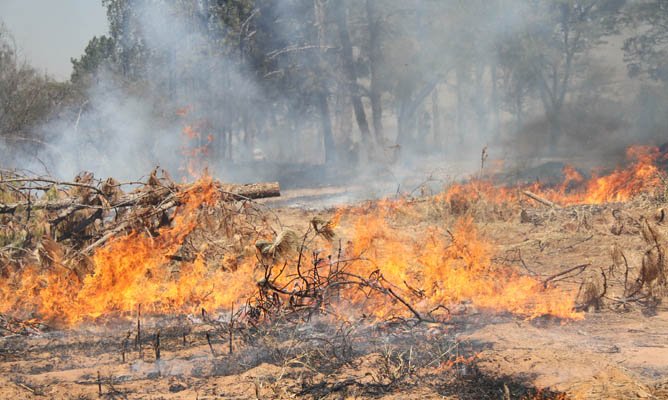
With 2022-23 cropping season coming to an end save for the winter farming, the need for farmers to come up with measures to ensure the marauding veld fires are put under check become more important as never before.
After the harvesting processes currently underway, farmers are reminded of the need to ensure fire guards are put in place to protect the country’s vegetation from the devastating effects of fire during the dry season. Under such a scenario, farmers are reminded of the need to act swiftly to fight the scourge of veld fires.
So many forests have been destroyed by veld fires and human actions are mostly to blame over such cases and losses. With the dry season beckoning, all stakeholders should be seen playing own roles so that a collective action in fighting the destruction of forests.
The Environmental Management Agency (EMA) should take a leading role in the fight against destruction of veld fires. EMA should take a leading role in ensuring all stakeholders adhere and conform to set rules and regulations and that will be the only way to ensure forests are protected.
Always raising awareness and disseminating the relevant information to the general public is also another way to fight these veld fires. Thus EMA should make sure there is total adherence by farmers to the creation of protective fire guards and there is need to be strict even it means imposing stiffer penalties to those who fail to implement what is required of them.
In remote areas, EMA should make use of traditional leadership and EMA environmental monitors to help save forests and arable land including those species who use it as a habitat from destruction. The monitors should be monitored periodically as a way of ensuring they execute their duties effectively in respective areas of jurisdiction.
Communities should be taught to have an appreciation of the importance of use of fireguards as they are the only way to handle or put out stray fires. In that same vein, reporting mechanisms should be made available to the general public where EMA would also be required to swiftly respond to cases of veld fires.
As such, farmers may form committees in their locality to deal with veld fires as a way of safe guarding their premises from destruction. Farmers need to be pro-active than reactive to veld fire issues.
Manicaland table tennis shines amid sponsorship challenge

Branton Matondo
Mutare-Manicaland table tennis players, who have wailed for long on lack of sponsorship rose to the occasion at this year’s edition of Zim Open Table Tennis tourney in the capital Harare scooping gold, silver and bronze medals in different age groups.
Kudakwashe Madoro who participated in the Under 10 category scooped silver behind Kundai Goremushanu from Old Windsor Primary School.
Trust Madoro who already has over 40 medals in his six year career was the major highlight as he proved too good for his age.
Trust, aged 14 scooped gold in Under 15 cluster ahead of Emmanuel Muzeza from Winwood College of Mashonaland East.
As if that was not enough Trust went on to scoop a well-deserved bronze medal in the Under 21 group behind Makanaka Muriravanhu (Gold) and Kuzivakwashe Chidakwa (Silver) from Goromonzi High.
Commenting on the tournament held at Divaris Makaharis, Coach Kudakwashe Madoro said the tournament was tough but Manicaland representatives managed to get their name on the medals board.
“We went to Harare with 12 players from under 10 to open. It was a tough tournament altogether. However, we managed to win in various age groups. Nyasha Ganyekanye scooped silver, Adriel Kasikira scooped bronze and Tristein Gororo finished fourth. All of them are from Rock of Ages Primary. In the boys Under 10, Kudakwashe Madoro scooped a Silver medal and Kuzivakwashe Nyamasoka scooped Bronze. In the girl’s under 12, Tamukanashe Katsikira settled for Bronze. Then in the Ladies open, Vimbai Makuvaza scooped Silver and in open men, Mulungisi Moyo settled for fourth place,” said Madoro.
Madoro added that participants from Manicaland would have gone with more than 12 athletes but the main obstacle is poor funding and sponsorship in the sport.
“The reason why we went with 12 athletes is that athletes fund themselves. We are appealing to the corporate world to assist us in terms of funding so that our players are able to participate. Since table tennis is still not yet a main stream game, there is no funding. We have a lot of talented players that fail to participate in these tourneys. This weekend, there was a tournament in Gauteng, South Africa but no one managed to go there to represent us. There is also a Capetown open tournament in South Africa underway but there is also no one there from this side,” he added.
Meanwhile Vikram Singh, who has vast experience in the sport was edged by rising talent Tinotenda Fambira in the Open Men finals.
Fambira won 3-2 after a stellar performance in the final set.
The two day tournament graced by athletes from all four corners of Zimbabwe was sponsored by Divaris Makaharis High School, Chakaz, Old Mutual, Devine International Travel, Nashenic Freight Services and Huatai Batteries.
Table tennis is a staple in the eastern parts of the world. Over the years, the mini version of court tennis has grown through leaps and bounds in Africa.
It’s difficult to find relevance -Hip hop sensation Arthur Kay

Branton Matondo
MUTARE-Budding Mutare based hip hop artist Arthur Takudzwa Kaaraidze who is known in music circles as Arthur Kay is bubbling with excitement following his latest released album recently took time to shed on his career.
While the hiphop genre took time to feature prominently on the local scene, Arthur Kay said he has worked on a number of projects, which he believes are going to take the local hiphop scene by storm despite the road being bumpy.
“So far I have worked on a couple of projects with Pathum records and C Bleech Music. With Pathum I have worked on an album called Pathum which was released in 2018. It was nominated for the best duo in 2020 at Zim Hip Hop awards.
“After that I worked on a mix tape called Takudzwa (We’re Honoured) in 2020 with Pathum records which featured Aguila, Top dogg, Chana and Herb mixed and mastered by Pathum records and produced by Tupoetik, Aky oan and Sos. I then started a project with C Bleech music and we worked on a project (album) called Chikanga which we released on March 22, 2023.
“Relevance is a challenge as a hip hop artist but it can be worked on because people need to relate and understand the art of hip hop. In terms of finances, it’s also a challenge because marketing wise, finances are very much crucial in the industry,” he added.
Arthur Kay also declared his wishes to work on collaborations with prominent artists and shed light on his recently released album which seems to have left the artist on cloud nine.
“I have done collaborations with artists like Aguila on a number of tracks. I have worked with Chana, Virus and Chakwiiti. I’m also looking forward to working with prominent artists in the future.
“On my latest album, I can say social experiences motivated this project. Growing up every day in Chikanga facing reality, I believe as a youth there are a lot of things we take for granted as time passes by and we don’t advise each other on things that are crucial in our lives, so I used this project as a voice to speak all the matters that we tend to give a blind eye to,” he said.
Arthur Kay also highlighted that he is working on a new project though he could reveal much on it.
“Yes, I am currently working on many projects but cannot mention much upon that upcoming project,” said Arthur Kay.
Adventurous RBZ: Finding A Balance Is Becoming a Tall Order

By Zvikomborero Sibanda
Generally, monetarists believe that price inflation is always and everywhere a monetary phenomenon. This view holds for Zimbabwe, a country that has struggled to enjoy durable stability whenever it has access to money printing machines. The local currency is injected into the system at a faster pace than the rate of growth of economic activity in the real sector.
Since the introduction of the Zimbabwe dollar in 2019, the Reserve Bank of Zimbabwe (RBZ) has tried to implement a myriad of policy actions to clamp instability including the enactment of an infamous ban on all commercial bank lending. In addition to gold coins which have failed to arrest incessant ZWL and price instability, the Bank is now introducing digital gold tokens. The column, therefore, seeks to explore the benefits and likely shortcomings of gold tokenization.
The RBZ introduced gold coins in July 2022 in an attempt to clamp incessant ZWL decline and out-of-control price inflation by reducing the domestic demand for the US dollars (USD) and mopping excess ZWLs in circulation. RBZ statistics show that as of 10 March 2023, a cumulative 31 866 gold coins had been sold for more than ZWL25.8 billion. However, price developments show that the injection of gold coins is outpaced by the injection of new ZWL liquidity into the economy as fiscal spending escalates ahead of the 2023 harmonized elections. This is exerting excessive borrowing pressure on the Treasury. Latest RBZ statistics show treasury bill (TB) issuance gaining 4% in February 2023 to reach ZWL332.6 billion. In year-on-year terms, issued TBs mounted by a staggering 576% from ZWL49.2 billion in Feb 2022.
Increased fiscal spending coupled with rising quasi-fiscal operations from the RBZ is creating excess ZWL liquidity and destabilizing the exchange rate. Latest February 2023 statistics show ZWL-denominated broad money (M3) spiking by 13.2% to ZWL1.21 trillion from January 2023 levels. In annual terms, the monetary aggregate registered a 334% growth from ZWL279.38 billion attained in February 2022. Disaggregating M3 into ZWL and USD components removes the effect of exchange rate movements. As such, these statistics are showing unsustainable growth in money creation putting pressure on ZWL prices to mount.
The latest April 2023 inflation statistics show the weighted consumer price index (CPI) gaining 2.3 percentage points on March 2023 rate of 0.1%. The increase in April blended inflation rate is the biggest monthly jump since June 2022. Elevated inflationary pressures particularly for ZWL transactions are largely emanating from the massive deterioration of the local currency against the US dollar in both markets. In year-to-date terms, the ZWL has lost about 34.7% and 55% in the official interbank and alternative markets respectively. Largely due to forex liquidity challenges in official markets, businesses are forced to benchmark their ZWL prices at or above the parallel rate. Yet, RBZ exchange regulations allow only for a 10% margin above the prevailing official rate.
Apart from the exchange rate pass-through to inflation, price inflation is also being fuelled by prolonged electricity load-shedding (rationing) schedules. Generally, electricity is a critical production enabler, its scarcity is an albatross to domestic production as it increases business operating costs. In addition, fragile global supply chains due to the Russia-Ukraine war are sustaining global inflation thereby disproportionately affecting net-importing nations like Zimbabwe through imported inflation -mainly high prices of food, fertilizers, and fuels.
With ZWL and inflation running amok, the monetary authority has now introduced digital gold tokens. Tokenization operates on the premise that the use of technology such as distributed ledger technology (blockchains) enables the conversion of real-life tangible assets such as gold into digital tokens representing them. These can be further split into fractions, meaning that everyone can own a part of the asset they are keen on without possessing a large financial capital.
The gold-backed digital tokens will be issued with effect from 8 May 2023. The tokens will be fully backed by physical gold held by RBZ and shall be introduced in two (2) phases; Phase 1 where gold-backed digital tokens (e-gold cards/wallets) will be issued for investment purposes and Phase 2 where digital tokens will become tradable and capable of facilitating person-to-person (P2P) and person-to-business (P2B) transactions and settlements.
Generally, gold is considered a safe haven investment during downturns and financial crises because of its long history of use as a store of value. Helping it achieve this status are its properties: malleability, portability, aesthetic appeal, virtual indestructibility, universal acceptance, liquidity, and rarity. So, hypothetically, the gold-backed digital tokens complementing the physical gold coins will deepen Zimbabwe’s shallow financial markets, slow ongoing rapid economic re-dollarization, and strengthen the ZWL.
To extract the maximum benefit, the RBZ must adopt advanced technologies such as distributed ledger technology which guarantees transparency and efficiency of transactions and are even difficult to disrupt. Also, advanced technology ensures that all transactions are safely recorded as no documents can be falsified since all data is immutable – it cannot be modified by any person. This will circumvent the dangers of reliance on centralized traditional database systems. These are highly prone to manipulation, may be hacked, and are susceptible to genuine human error.
The tokenization initiative also requires frequent auditing of gold reserves (backing the digital tokens) in RBZ vaults by reputable and independent audit institutions. This will help avoid prior experiences with bond coins which were introduced in 2014. The RBZ introduced the bond coins on the pretext that they were supported by a US$50 million facility extended by the AfricanExport–Import (Afreximbank) bank. Over time, it emerged that authorities minted the coins beyond their collateral limit due to a lack of frequent audits. The bond coins ended up trading at a premium to the US dollar as opposed to the official 1:1 fixed rate. So, if there are no trusted audits of the quantum of gold reserves in vaults versus issued digital tokens, the tokens risk suffering the same fate as bond coins. More so, there is a great need to guard against gold leakages caused by theft and fraud.
Nevertheless, in reality, the use of gold or its variants will likely fail to ameliorate the fragility of the local currency and resultant chronic inflation. This is mainly due to dwindling market confidence and trust in the government which consistently exhibits policy inconsistencies and lacks transparency and accountability – rising corruption cases perpetrated by both elected and unelected public officials.
Zimbabwe also lacks adequate infrastructure to support advanced technologies which are key in ensuring gold production tracking & monitoring to minimize chances of gold leakages and illicit trading. Traceability measures help in curbing criminality as information such as the exact source of gold, holder of gold buying license, and amount of taxes paid on gold exports can be collected and analyzed. Official statistics which are too conservative thanks to Al Jazeera’s Gold Mafia documentary indicate that the nation is losing a staggering US$1.2 billion annually to gold smuggling alone.
These rampant illicit flows will militate against the accumulation of gold reserves which are crucial in supporting the value of gold e-cards. Enabling smuggling are porous borders and ports of entry. The Mines & Minerals (Minerals Unit) Regulations of 2008 (SI 82) established a crack unit, Minerals Unit, composed of the Ministry of Mines, the police, and RBZ. This Minerals Unit however seems to have been captured by a gold smuggling syndicate. It is also demonstrating severe constraints in discharging its mandate partly due to excessive political interference in gold mining, marketing, and trading decision-making.
Furthermore, the nation lacks a clear gold policy. The current policies are not hinged on a clear policy framework for the exploration, production, beneficiation, marketing, and management of gold thus creating room for policy reversals and inconsistencies. Also, there is a limited political will to fully implement direly needed economic and structural reforms to strengthen institutional & regulatory framework, curb leakages, improve social fairness & inclusion, thwart fiscal indiscipline & impunity, and eliminate prevailing excessive pricing distortions inhibiting market competition and innovation.
Zvikomborero Sibanda is an economic analyst and an astute researcher. He writes in his personal capacity. He can be contacted via email:
bravosibanda@gmail.com
Twitter: @bravon96
Drunk Chiwundura man kills own father

Tinaani Nyabereka
Chiwundura -A 43-year-old man was arrested after fatally assaulting his 76-year-old father in an incident that occurred on April 30, 2023 at around 0700 hours in Kurimakwakanaka village under Chief Gambiza in Gweru.
Midlands Provincial Police Spokesperson Inspector Emmanuel Mahoko confirmed the incident and urged the members of the public to respect life.
“Once again, we urge members of the public to desist from resorting to violence when resolving disputes to avoid unnecessary loss of lives,” he said.
On April 30, 2023 and at about 0700 hours Amos Tshuma (43) reportedly arrived at his father’s homestead from a beer drink.
It is alleged that he had a misunderstanding with his sister and started assaulting her.
Remias Tshuma (76), father to Amos tried to refrain him from further assaulting his sister.
It is said that this did not go well with Amos who turned to his father and assaulted him indiscriminately all over the body with a stick until he died on the spot.
Matter was reported to the police who attended the scene and arrested Amos.