Home Blog Page 241

Man robs family, kidnaps, rapes woman

0

Tinaani Nyabereka

GWERU- Police are investigating a case of robbery, theft and kidnapping which happened over the weekend on March, 18 2023.
Midlands Provincial Police Spokesperson Inspector Emmanuel Mahoko urged members of the public to assist the police with investigations.
“We appeal to members of the public to with information to approach any nearest police station or make use of suggestion boxes.
“May those members of the public staying in close proximity establish vigilant groups and effective communication so that when such mishaps occur, people can mobilize and help each other,” he said.
It is reported that a lone man, arrived at a house while the occupants, a woman and her children were asleep.
The children included a daughter (21), three sons (18), and two (10) all names withheld for ethical reasons.
The man forced open the main door and demanded the woman to pay him US$ 60 he was alleged to have been owed by a previous occupant of the house.
He was given US$ 45 and he forcefully took with him the 21 year old girl saying he would only release her when he gets the remaining US$ 15.
The girl reportedly came back the following day and reported that she had been raped repeatedly in a nearby bush.
Police attended the scene and investigations are currently underway.

Op-ed – International Year of Millets: a global opportunity to direct policy attention to the nutritional and health benefits of millets

By Patrice Talla – FAO Subregional Coordinator for Southern Africa and FAO Representative in Zimbabwe, Eswatini and Lesotho.

This year we are celebrating the International Year of Millets. The year was endorsed by Members of the Food and Agriculture Organization of the United Nations (FAO) and its Governing Bodies and declared at the 75th Session of the UN General Assembly (UNGA) in March 2021. FAO is the Agency taking the lead in celebrating this year.

The focus on Millets could not be timelier. They offer valuable solutions in the face of climate change and the need for nutritious foods.  They are climate resilient, nutrition rich, resistant to pests and diseases, and have the ability to grow on arid lands. Millets are, therefore, an ideal solution for countries to increase food security or food self-sufficiency with the potential for everyone to attain better production, better nutrition, a better environment, and a better life.

As such, the International Year of Millets is a global opportunity for us to direct policy attention to the nutritional and health benefits of millets and their suitability for cultivation under adverse and changing climatic conditions, and to deepen our determination to accelerate progress on the Sustainable Development Goals. The International Treaty on Plant Genetic Resources for Food and Agriculture of the FAO and, in particularly, the International Treaty’s Benefit-sharing Fund (BSF) supports agricultural programs in developing countries, including those supporting the diversification of food crops in the face of changing climate, growing populations and the need for nutrition. That includes the (re-) introduction of traditional crops, such as millets, which have valuable benefits for all.

The International Treaty works with farmers and policy-makers around the world to take care of the seeds and other plant material that form the basis of our food from plants. Through its Benefit-sharing Fund (BSF), the International Treaty supports vulnerable and marginalized farming communities in developing countries to conserve and sustainably use crop diversity, to ensure food security and adaptation in the face of climate change. It contributes to farmers safeguarding millets and other crops around the world. It also calls on nations to protect and promote Farmers’ Rights, and is the first legally-binding international instrument to do so and to explicitly acknowledge the enormous contribution of indigenous communities and smallholder farmers toward the plants that feed the world.

The International Treaty’s BSF provides a bridge between all actors in the agricultural diversity food chain. It brings together farmers, plant breeders, civil society, research institutions and other stakeholders to solve local and global agricultural challenges. To date, the BSF has supported 80 projects in 67 developing countries around the world, including Malawi, Zambia and Zimbabwe. The BSF functions with major contributions from the European Union, Italy and Norway, among others.

In Zimbabwe, the BSF has made significant contributions to household food security and resilience. In marginal and low rainfall regions of Zimbabwe, women farmers are now increasingly relying on millets (such as finger millet, pearl millet and sorghum) to ensure food and nutrition security for their families and for income generation. Within the semi-arid environments of Zimbabwe, millets are becoming the new “maize,” because of their abilities to adapt to climate change induced droughts. Community Seed Banks supported by the International Treaty’s BSF have greatly contributed to reduced production costs, providing timely easy access to local seed varieties.

Future of food and nutrition security lies in participatory seed breeding

In Zimbabwe, women in Farmer Field Schools (FFS) have played a major role in introducing new millet varieties through Participatory Variety Selection (PVS) as well as enhancing popular millet and sorghum varieties through Participatory Variety Enhancement activities. Results of some of these PVS demonstration plots contributed to the release of two sorghum varieties being evaluated in 141 demonstration plots in Malawi, Zambia and Zimbabwe under a BSF project.

Women famers in Zimbabwe have also gone out of their way to ensure that the local market of traditional grains is strong.  Farmer groups, working within their FFS, have gone into seed production of sorghums and millets, seed exchange through seed and food fairs at community levels where they exchange seeds of these cereals, knowledge and recipes.

Policy attention on millets critical to ensure that everyone is food secure

Policy advocacy meetings on Farmers’ Rights conducted in Malawi, Zambia and Zimbabwe, have contributed to discussions and development of the Seed Bill in Malawi and the development of the National Strategy and Action Plan on Plant Genetic Resources for Food and Agriculture (NSAP on PGRFA) in Zimbabwe; however, more policy interventions are needed to ensure that everyone is food secure.

The success of the National Strategic Action Plan in Zimbabwe depends on deliberate actions to restore millets at the center of production, enhance the preference of millet based diets, increased consumption and utility. We encourage Zimbabwe and Southern Africa to take deliberate actions to conserve, protect, restore, sustainably manage and use millet biodiversity.

Millets offer opportunities for strengthening food security and bolstering economic growth. That means we need to ensure millets are integrated into mainstream agriculture, diets, industries and health for all.

Achieving Zero Hunger requires collective action

To achieve the full potential of millets requires us all to take collective action. Everyone has a role to play – from governments and private sector companies to the general public and even youth. We need to work together to unleash the potential of millets for human well-being, food systems, poverty alleviation and the adaptation of agriculture to climate change.

We must address the global decline of the production of millets and a diverse food basket, as humanity has become too reliant on a narrow selection of crops and species. We must foster collaboration across funding partners, governments, civil society, private sector, and the technical community to ensure the benefits of millets are equally distributed.

Non-governmental organizations (NGOs), cooperatives and civil society working directly with farmers need to share best practices for cultivating millets and provide farmers with practical support, training and ways to better connect to the market. Civil society and NGOs should form networks and action groups to promote the availability, accessibility and affordability of millets.

Researchers and academic institutions should dedicate resources to researching millets, their nutritional values, properties and characteristics, as well as appropriate mechanization and other methodologies that can make millet cultivation more sustainable.

FAO fully supports the government of Zimbabwe’s sustained promotion of small grains through input support programmes such as Pfumvudza, and encourages relevant value chain players in the food and agriculture sectors to complement the government efforts to consider millets as a strategic crop.

Traditional leaders milking Zanu PF candidates

…as ruling party gears for primary elections

Brighton Chiseva

MASVINGO – Traditional leaders in Masvingo province mainly in Zaka district are making a killing from Zanu PF candidates who are campaigning ahead of party primary elections set for Saturday March 25.
Candidates who spoke to TellZim News on condition of anonymity said Chiefs were demanding up to US$ 500 to gather people in an area; a flat fee of US$ 20 is needed for the headmen while village heads demand at least US$ 10.
The practice is being done across the province but is more significantly in Zaka district with all the three Chiefs allegedly involved.
“When I went to Chief Nhema’s area mainly ward 1, 2, 5 and 10, I talked to the party chairpersons in that area and they told me that they have no power to gather people without Chief Nhema’s approval. The Chief then demanded US$ 500 for him to allow me to gather people in his area and I am having challenges to campaign in his area,” said the source.
Another candidate said the practice cuts across all Chiefdoms in the district, if one wants to gather people there are fees that vary from village heads to Chiefs.
“If you want to campaign in Zaka, you have to pay a fee which they call ‘mari yefodya yamambo’ (The Chief’s snuff). All village heads demand a flat fee of US$ 10 while headmen demand a flat fee of US$ 20. The amount varies with Chiefs, others charge you while others will accept anything like US$ 50,” said another source.
Contacted for comment Chief Nhema born Rangarirai Bwawanda dismissed the allegations as fake asking the reporter to reveal the source.
“Who lied to you like that? There is nothing like that and please tell me who told you so that we ask him where and when I demanded that money,” said Nhema before handing the phone to one aspirant Davies Marapira whom he was with.
Marapira confirmed the snuff fee saying it was the custom everywhere in Zimbabwe saying people ought to respect traditional leaders.
He went on to dismiss that Nhema was demanding US$ 500 saying he had not been asked to pay that amount and was yet to give Chief Nhema his token.
“That’s a lie; Chief Nhema doesn’t charge people. However, one has to give the Chief a token called ‘fodya yaMambo’ and it’s a tradition even if you go to your home area and ask the Chief, he will tell you the same. You cannot just gather people in an area without paying that token to the traditional leaders.
“I have been addressing people today and have since given the token to headman Gonese whose area I was in. I am yet to give the Chief his, but he never demand,” said Marapira.
Constitutionally, traditional leaders should be apolitical but in most cases they are seen bedding Zanu PF and they are used to intimidate members of the opposition in their areas of jurisdiction.

Police Commissioner General 21 km road race roars into life

0

Colleen Chitsa

Athletics lovers are in for a treat at popular entertainment spot Caravan Park in Masvingo when the Zimbabwe Republic Police (ZRP) Commissioner General of Police’s 21 km road race roars into life on March 25, 2023 at 0600 hours.
ZRP issued a statement confirming the race which would be run in different age group categories.
“Athletes will compete in 5, 10 and 21 kilometer categories which include wheelchair, masters, grandmaster and tertiary. Winners will walk away with various prizes.
“Registration fees are as follows: 10 and 21 km –ZW$ 5 000 and 5 km- ZW$ 2 000. Registration is being done online and will close on March 24, 2023,” read the statement.
Masvingo provincial police spokesperson inspector Kudakwashe Dhewa said the event is open to everyone.
“Everyone is free to come and participate in the race,” said Dhewa.
Athletes will compete in 5km, 10km and 21km categories which include wheelchair, masters, grandmaster and tertiary among others.
Participants will be categorized in different age groups which are; Masters/mistresses category which ranges from 50-59years, Grandmasters/ mistresses from 60-69 years, veterans from 40-49 years and wheelchair category. There is also junior category for those below 20 years.
Those who wish to participate in the tournament are advised to register online and the registration will close on March 24 2023.
Winners in the 21 km cateogory will walk away with various prizes among them US$ 550 for winner, US$ 400 for second placed and US$ 300, US$ 200 and US$ 100 for fourth and fifth placed respectively. In the 1o km race, winner gets US$ 200, US$ 150 for second placed and US$ 100 for third placed for seniors. In the juniors category, the winner gets US$ 150 while second and third placed get US$ 125 and US$ 100 respectively. Those in wheelchairs will compete in 5 km race where the winner gets US$ 300 while first runner up gets US$ 150 and second runner up gets US$ 100.
The event sponsored by Old Mutual Zimbabwe will be officiated by the Commissioner General of Police, Godwin Matanga.
For more information, potential participants can contact Superintendent Chimukoko on (0242) 701848 or 0772 421 189 and Inspector Kangomba on (0242) 0716 299 673.

NGZ worried over artists’ livelihoods

Branton Matondo

The dwindling art market has led to low consumption of paintings and sculptures placing artists’ livelihood at risk, the National Arts Gallery of Zimbabwe (NGZ) Manicaland province has said.
Though a lot of Zimbabwean and African stories are told through expressive curving of stones and fine revealing of paintings, the same effort is not being complimented by the bearish market.
In an interview with TellZim News, NGZ Regional Director for Manicaland Elizabeth Muusha said the consumption of paintings and sculptors is currently in a sorry state and this has casted a dark cloud on artists livelihoods.
“Consumption of art is very low and it’s really affecting livelihoods of producers. It is our wish that we see better and improved markets in post Covid 19 era,” said Muusha.
A survey at National Gallery of Zimbabwe in Mutare revealed that sculptures on sale range from US$ 200 to US$ 350.
She added that artists are left out of National economic blueprint National Development Strategy 1 (NDS 1) because there is no market to propel them.
“As a nation, we talk of taking Zimbabwe to a middle income economy by 2030 but as arts sectors, our hearts bleed because there is no market. There is a gap when it comes to understanding the power of painting and sculptor. It is our wish to have a stable market so that artistic works are recognized,” said Muusha.
Standard Association of Zimbabwe (SAZ) Business Development and Marketing Manager for Manicaland Nelia Chabuka promised that SAZ will assist artists in breaking existing barriers.
“As SAZ, the question that comes to our minds is, what role are we playing to make these artists go further and compete internationally? So we have standards in place that will assist them to break all the barriers, be it quality barriers or language barriers to mention but a few. Whatever they are using in the art and whatever they producing is it of good quality?” said Chaduka.
She added that artists should stand their ground and let their voices be heard.
“Regions like Manicaland do not appreciate art, so it’s high time that they should stand up for their own and make their stories known. It starts with them and no one else,” she added.
As a way to enrich the culture of appreciating art, Muusha said government needs to review the education curriculum and make art one of the main subjects.
“The education system is not recognizing art. Art time is composition writing time or correction time or gardening time. There is need to review the education system,” added Chaduka.


Zimbabwe structured debt dialogue is a step in the right direction

Zvikomborero Sibanda

In the past two weeks, my arguments were resonating well with dollarization proponents. I, however, cautioned that dollarization must not be a long-term solution to Zimbabwe’s existing challenges. With time, it is more damaging, especially to small import-dependent economies like Zimbabwe.
The rapid re-dollarization of the economy experienced last year as evidenced by the Reserve Bank of Zimbabwe’s (RBZ) metrics is an economic policy awakening to a historical fact that dollarization is nearly permanent.
The only escape gate is through the implementation of prudent market-driven policies and reforms taking examples from among a few countries like Poland and Israel that successfully de-dollarized their economies.
But the reluctance by responsible authorities to implement robust reforms risk cementing Zimbabwe’s position as a permanent member of the globally dollarized economies. To me, dollarization only postpones the problems, which is why I support it to be part of a solution set only for the short-to-medium term horizon.
Zimbabwe has been recycling its socio-economic and financial challenges since 1980. Hence, the persistence of adverse expectations, currency volatility, high inflation, dilapidating infrastructure, high cost of doing business, poor public service delivery, and abject poverty.
With the rapidly shaping African Continental Free Trade Area (AfCTA), permanent dollarization will be a big challenge for domestic firms. As such, swift policy actions must be taken now lest Zimbabwe plunges into a self-isolation camp away from AfCTA freely trading partners. With USD use, local firms will be rendered uncompetitive thus forcing Zimbabwe to institute protectionist trade policies and import substitution measures.
What actions then must be taken by the government to circumvent the looming economic disaster? As explained earlier, authorities must embark on a well-prepared reform agenda. I am glad that the government has taken the public debt resolution route.
Western creditors have been clear since early 2000s that Zimbabwe must reform its economy, public institutions, political systems, and state-owned enterprises as a prerequisite to receiving debt relief.
With the government now laser-focused on tackling the debt conundrum, it signals its willingness to institute needed reforms. In essence, the government and its creditors will be exchanging debt relief and reforms.
Some readers may have reservations about the prioritization of debt. As a fan of debt resolution, let me briefly provide some context of why it debt resolution is critical.
Zimbabwe is inarguably rich in natural resources including those facing high global demand. But minerals require huge investments into exploration, surveying, and heavy machinery to be located, quantified, extracted, and transformed into finished products.
Guided by the development models followed by China and other Asian Tigers like Japan and South Korea, rapid economic transformation is only possible in a friendly business operating environment that attracts foreign investors.
Due to increased financial repression, many developing nations are largely characterized by shallow domestic financial markets. Inevitably, external sources of finance must be explored to augment and support these weak domestic financial markets.
Access to finance is a precondition for progressive development as many investors use debt financing from reputable international financiers to fund major projects. Furthermore, to import raw materials and other key supplies abroad, many players including foreign banks are also involved in this transaction value chain.
However, because of the US Office of Foreign Asset Control (OFAC) financial restrictions on Zimbabwe coupled with an expanding public debt, many foreign corresponding banks are now shunning the Zimbabwean market as a de-risking strategy.
In other words, unsustainable public debt stock is increasing the country’s investment risk premium. A risk and return analysis would show many potential investors and credit providers avoiding heavily indebted nations to minimize default risks.
So, to reduce debt-related risks and increase access to cheap external sources of finance, the debt problem must be resolved. It comes with a package of reforms to increase transparency and accountability in government. This is also one of the key drivers of private-sector investment.
Last month, Zimbabwe held a high-level structured debt dialogue with its creditors and development partners. The dialogue was attended by the President of Zimbabwe, senior government officials, former Mozambique President Joaquim Chissano, African Development Bank (AfDB) President Dr. Akinwumi Adesina, and civil society organizations among others. This debt dialogue shows that authorities are now committed to resolving the ballooning debt currently standing at US$17.6 billion – about 65% of the national output (GDP).
While this debt level is consistent with the Public Debt Management Act which caps Zimbabwe’s debt-to-GDP ratio at 70%, it is exceeding the 60% threshold set by the Southern Africa Development Community’s (SADC) macroeconomic convergence targets.
More so, accumulating arrears and penalties show that Zimbabwe is in debt distress, that is, it is struggling to pay its debt and restructuring is required. These arrears and penalties are now constituting 45% of total external debt (US$14 billion) with the bulk (62.6%) being owed to bilateral creditors.
Over the years, Zimbabwe has tried to resolve its unsustainable debt stock to no avail. Doomed past initiatives include the 2015 Lima Process, the 2012 Zimbabwe Accelerated Arrears Clearance Debt and Development Strategy (ZAADS), and the 2010 Sustainable and Holistic Debt Strategy.
However, this time, it is likely that the ongoing debt dialogue processes will bring positive results. The intuition behind this position is the inclusion of a facilitator in one Joaquim Chissano. Former President Chissano is an elder statesman, seasoned politician, and diplomat who is crucial in cultivating political will to implement direly needed reforms.
Also, adding clout to the dialogue is the roping in of AfDB chief, Dr. Adesina, an economist and banker, as Zimbabwe’s debt champion. Dr. Adesina fully understands the demands of instituting economic and institutional reforms. By virtue of also representing Zimbabwe’s major creditors, the AfDB chief will be key in negotiating debt relief including the possibility of removal or suspension of sanctions. This is needed to reduce Zimbabwe’s investment risk premium thus improving capacity for debt servicing.
For full debt relief, creditors are demanding that Zimbabwe institute robust economic, governance, and land tenure reforms. These reforms fit squarely to Zimbabwe’s aspirations of durable macroeconomic stabilization through the restoration of market confidence in the Zimbabwe dollar (ZWL), thwarting of prevailing market pricing distortions, improving competition, encouraging disruptive innovation, and strengthening public institutions that are regarded by development economists as the rules of the game.
More so, land tenure reforms that seek to strengthen the protection of land rights including the settlement of a US$3.5 billion Global Compensation Deed to former farm owners will likely bring closure to the chaotic and bloodbath fast-tracked Land Reform Programme of the early 2000s. Thus, paving way for increased agricultural production and productivity through reduced reliance on state subsidies and increased farmers’ access to finance.
Nevertheless, the timing of the ongoing structured debt dialogues is worrisome and may likely constrain progress. It is generally difficult to garner full political will for robust implementation of reforms like political and electoral reforms from a government facing a re-election year. The quest to win an electoral vote, especially in its rural stronghold will likely force the ruling political administration to continue spending excessively and unsustainably.
Be that as it may, the initiation of these debt discussions is a move in the right direction which has the potential, post 2023 election period, to bring a lasting solution to Zimbabwe’s decades-long debt distress.

Zvikomborero Sibanda is an economic analyst and an astute researcher. He writes in his personal capacity. He can be contacted via email:

bravosibanda@gmail.com
Twitter: @bravon96

ZIMET donates to Mwenezi’s marginalized elderly

Cephas Shava

Mwenezi-Zimbabwe Empowerment Trust (ZIMET) recently donated an assortment of food hampers to some elderly from across Mwenezi district.
The donation handed over at the local authority’s Rutenga Council Hall in the presence of ZIMET president Alexia Kuona saw a total of 72 elders receiving a hamper comprising 5 kg mealie meal, 4 kg rice, 2 kg sugar and 2 litres cooking oil among several other assortments.
Speaking at the handover event, Kuona urged the recipients to embrace the culture of giving in their respective communities before encouraging them to embark of self-sustaining projects.
“As you receive these food hampers, we also encourage you to cascade the spirit of giving to those whom you are residing with in your villages. We are not here to just give you something to immediately consume but we need you to be shining examples in your various communities, initiating self-sustaining projects. We need you to be ZIMET’s key ambassadors in your respective homes,” said Kuona.
The organization’s provincial secretary Leonard Chanyau told TellZim News that they are also working on empowering villagers in marginalized communities to self-sustain and currently they have embarked on diverse trainings, among several farmers in Mwenezi’s ward 13 on silage and cake making.
ZIMET’s donation ceremony was graced by Mwenezi District Development Coordinator (DDC) Isaac Mutambara who praised the organization for its helping hand and urges its patrons to continue with the good works towards needy communities in the district.
ZIMET is an organisation whose vision is to become a respected socio-economic trust relevant to the empowerment of the people of Zimbabwe through access to their natural heritage.

All systems go for Zanu PF Primaries

… 99.9 percent of candidates sail through

…. Gutu Bigwigs sail uncontested

Brighton Chiseva

It’s all systems go for Zanu PF primary elections following the politburo’s deliberations last week that saw the approval of 99.9 percent of the CVs submitted for the election.

The election is going to take place on Saturday (March 25) having been postponed from the previously set date (March 18) with the party election directorate saying it had received more CVs than expected and needed some time to go through them.

Zanu PF National Spokesperson Christopher Mutsvangwa released a statement to the effect and said President Emmerson Mnangagwa had said all people should be allowed to contest except those with criminal records.

“Approximately 99.9 of the candidates sailed through because President Emmerson Mnangagwa said no one should be left behind for any frivolous reason except where the candidate had a criminal record,” said Mutsvangwa.

Masvingo Provincial Chairperson Robson Mavhenyengwa said he was yet to receive official list from the party headquarters but he was sure that only one candidate was disqualified.

“All candidates sailed through except only one, Mutonho Mutonho from Gutu West. However, I am yet to receive the official document with successful candidates in the province,” said Mavhenyengwa.

From the unofficial document that is circulating on social media however, Christopher Mashuro from Gutu East was not recommended by both Masvingo province and the National Election Directorate (NED) and so was Tongai Matutu from Mwenezi North.

In Gutu, three bigwigs will go uncontested and these are Mines and Mining Development Minister Winston Chitando for Gutu Central and John Paradza, Gutu West, whose opponent Mutonho Mutonho was not recommended.

Yeukai Simbanegavi will go uncontested for Gutu Women’s Quota while Lovemore Matuke will go it alone for the senatorial post.

Paradza is the national vice secretary for youth league, a post he won after winning the provincial contest which means he commands some respect both at provincial level and nationally.

Simbanegavi’s constituency Gutu North was collapsed by delimitation exercise and had to seek solace in the women’s quota allocation which has less completion.

Chitando is President Mnangagwa’s close ally having been picked as a non-constituency Minister in 2017 and later got a seat in 2018. He is powerful and well-resourced and that could have worked in his favor.

Matuke on the other hand has been Senator for the district and is very powerful in the district, province and at national levels being the Secretary for Security and Politburo member.

Most of Gutu candidates including Paradza and Simbanegavi first contested for their seats with Matuke’s blessing.

Another candidate who will go uncontested is Naledi Maunganidze from Chivi South who is vying for Provincial Youth Quota seat.

Zaka North has the highest number of candidates after nine of the candidates who submitted CVs sailed through.

Bikita South, Chiredzi west, Masvingo South, Masvingo Central, Mwenezi East, and Zaka Central have seven candidates each.

Only Masvingo Urban and Chiredzi Central have two candidates each with Mwenezi North likely to have two if Tongai Matutu is disqualified.

Masvingo DJ in court for malicious damage to property

0

…ordered to pay the complainant US $150

Beverly Bizeki

Popular Masvingo DJ Michael Juwawo appeared in court for damaging his wife’s friend’s car after following an altercation triggered by suspected infidelity.
Juwawo (35) who works at Infinity Bar Downtown appeared before Masvingo Magistrate, Conceptor Ngwerume on March 14 and was asked to pay US $150 for the damages he caused.
The court heard that on March 13, 2023, the complainant Aleck Chikombe who is a friend of Juwawo’s wife went to the latter’s place of residence at Longlands Compounds Madondo Business Center, Zimuto Masvingo at around 0300 hours to give the accused’s wife a burger.
Upon arrival at the place, Chikombe was welcomed by Juwawo who received the burger and asked why he (Chikombe) brought food his wife.
An altercation arose between the two as this did not go down well with the accused and started chasing Chingombe towards his car.
Juwawo took Chikombe’s car keys leading to a scuffle between the two.
The accused was overpowered and he took a tin, hit the front windscreen and right view mirror once causing damage to the Toyota Hiace.
The court ruled that the total value of damaged part of the vehicle is US$ 150 and ordered Juwawo to pay the money before the end of this March.
The court also stated that the complainant was provocative.

FOC donates bicycles to three Gutu schools

Precila Takabvirakare

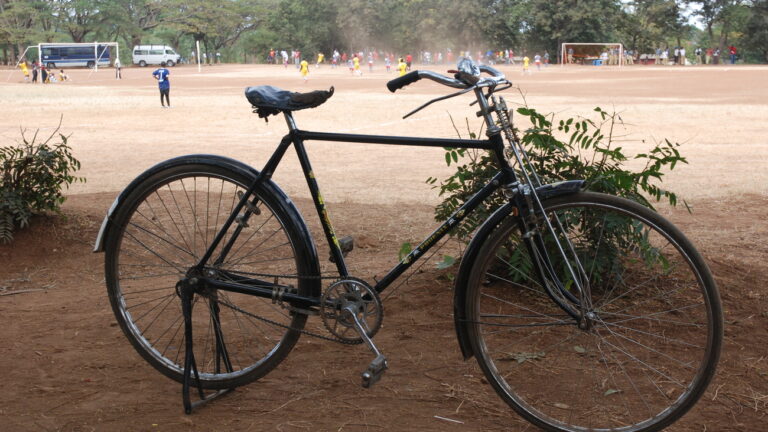
For Our Children (FOC) organization last week donated 55 bicycles to three high schools in Gutu district with about 55 girl children benefiting, 20 being from Domborembavha, 20 from Mushayavanhu and 15 from Mpandawana High Schools.
FOC is a Non-Governmental Organization (NGO) born out of realization that the economic conditions in the country are increasingly difficult for some families to provide adequate academic essentials for their children to pass their studies hence they need help.
The programme also aims to empower girl children from the marginalized communities so that they can excel mostly in science subjects.
Speaking at the handover ceremony at Mushayavanhu High School, FOC director Sissy Chinhamo urged the learners to be focused as they are trying to provide essentials for them to succeed.
“We are giving you these bicycles so that you can come to school early, so be motivated, read your books and be someone in life. We are playing our part by providing you with essentials, so you should play your part by reading.
“You are our seeds; we know if you succeed, you are going to have an impact in the society as you will be able to help others just like the way you are being helped. So I encourage you to be serious for the benefit of others,” said Chinhamo.
Mushayavanhu High School head Alex Gandiwa appreciated the support that their learners are getting from FOC and encouraged students not to misuse the bicycles.
“We really appreciate the support that you are giving our learners, first it was text books and solar lantern lamps, now its bicycles. The text books and reading lamps helped these learners as we noticed an improvement in their performances, therefore we encourage them to take this support seriously and keep on focusing on their studies. We also advise them to use their bicycles well and not to abuse them or divert the use,” said Gandiwa.
Previously the organization donated reading modules and solar lantern lamps to the learners.