
On quite a number of occasions, I told you of something peculiar and unusual happenings to befall the nation but some of you have taken me for granted. I have always seen it coming and like someone who possesses the true quality to do so, I will always stick to my mandate ndinofira kureva chokwadi ndatodya mududzo. During the last days of the First Republic led by the late Uncle Bob, strange things began to take place on the political front which saw the elevation of Dr Stop It to a position that many felt was meant to strategically position the latter to assume presidency at one point. Akapotsa aenda nacho chimuti paya Gire, thanks to the cunning and ambitious E.D and the Generari for stopping that from happening. We thanked the two for rescuing the country from Bob’s jaws only to be subjected to the same or worse by the saviors. Now the so called ‘Second Republic’ is doing the same thing. KuFrench Revolution history lessons ndoyataiti ‘they learnt nothing and forgot nothing’. Zvakaoma hazvo Auxillia atori Secretary for Environmental Affairs and atori futi nepost muPolitburo macho, saka zvasiyanei Bob naScarfmore, it’s just old wine in a new bottle. Hazvina Kuperera ipapo ladies and gentlemen, my concerns are now on the delegation that went to Malabo, Equatorial Guinea ikoko kwaMbasogo one of Africa’s longest serving dictators alongside Bia of Cameroon. Can anyone school Mapombi on this issue beside that petty explanation given by Jamwanda when the same character Emmerson Jnr attended meetings with Europe’s last Dictator Lukashenko of Belarus? Emmerson Jnr again was part of government delegation to Malabo where we were told kuti vakanopiwa maCharlets ivo vaScarfmore. I heard kuti tongombeya vatobuda futi nhasi to Addis Ababa Ethiopia pamwe vatoenda vese.
In what capacity is Emmerson Jnr travelling with government delegation when he holds no post in that very government? Haaa Scarfmore tinyareiwo inga tanzwirira nenhamo wani. Bearing in mind that Mbasogo’s son is his deputy, it boggles my mind fellow Zimbabweans when I start thinking of the model of governance this Zim is heading towards naED while people are watching. Don’t you think he is leaning on the ropes? Isn’t he being groomed to take over? Mirai muone zvenyu. I am informed the same Jnr Emmerson is progressing up the ZNA hierarchy and as we speak atova Major mamanje anoitwa Lieutenant Colonel and mbai mbai tozonzwa ava Commander, everything is possible from the booklet these dictators read from. Is Zimbabwe slowly turning into a monarchy, What is this guy up to guys, I need answers not the silence you have always provided fellow country people. Manje Manje this country will become dynasty uPresident hwosiyiranwa kunge uSabhuku. People say we should not speak ill of the dead but is the one to be blamed kasiya akura munhanga wedambiro pa Malabo apo. When he sold ammunition to Simon Mann and later arrested them kuti varikuinda kunoita Coup kuEquatorial Guinea. Kkkkk the Generari who vowed that the military would intervene to save the revorution in 2017 should revisit his words for the same revorution is now under threat or is already undermined. Regai Winky akamboti panotungana dzomudanga mahwani anenge atanga, apa tototaura nekuti danga redu rine shape yeTeapot iri roda tibatsirane muono.
Speaking of Winky D, I never wanted to intervene in these Zimdanzihoo issues all along and I will not be dragged into such useless debates, all I want to say is regai Winky D arire paanodira and who is closer to Holy 10, I don’t have time to talk much about him but can someone please tell him to shut up and concentrate on making his small dread locks grow into a real mane, we don’t have time to listen to his bull shit tava vanhu vakuru. That’s all I can say for now about the little man from Zaka rinopisa. Talking of Zaka, I hear the politics of Masvingo is centered on Zaka these days, ko Kumakwishu kkkk. Ana Svuuure have been defeated on the ground and I hear he has resorted to N’angas kkk. Hanzi arikufamba nen’anga mumota. Itai zvasvinu Hon or modzokera kunogadzira ngoro kuMbare ndotokuudzai oh kkk. But chinyika chinoka, I heard Svuure is an engineer by profession but he used the knowledge he acquired there kugadzira ngoro kkk. Musadaro veduwee.
Forgive me ladies and gentlemen, I have to ask, I think the best person to answer my question is Themba wekwaMliswa, yes Themba ane gumbura revana kkk. Chakabereka zvacho chibaba chiya. Kudyara vana pese pese kunge vanokohwewa vamwe vachiti kubereka seri neseri semuPaw paw, anyway, let me mind, my own business. But nhai Themba can you please tell us where Susan Mutami is? Where is she, kakunyarara aka mmm it’s too much. Is everything ok with her? Am worried sekuti ini naye we have something in common, yes, she copied me pakurevesa apa kkk. I am not sure hangu zvimwe but ndakabata paya paakati mukuru vane black mark pachidzva kwaaa. Iwe Susan uripiko kkkk, we are still waiting to hear from you. Chete in Zimbabwe they don’t want women who are talkative like me kkk. They have since silenced Dr Stop It, tevere Susan, kuti havandivingewo ivava. Nhaka ndichaswera ndavingwa zvangu nevakomana vemagirazi in cheap nylon suits. But vagondiiteikowo ini ndinofira kureva, I dare them to come. Even in the eye of the Generari himself, I can say it like gogo Mahofa who told Uncle Bob kuti Masvingo will not contribute mombe to his pledge to AU gore riya kkkk.
But chimai chaiva nezvivindi chiya, I wish she was alive achiona zvoitwa nyika, I think chaipira Mashavi. Zvinobva zvandifungisa Masvingo Zanu PF Godfather JD Hungwe, I last heard him not feeling well. I liked that guy, he used to tell people kuti rambai fufuro, and he was against corruption at all costs. he is the longest serving governor of Masvingo who has nothing to his name, kana imba chaiyo handifungi kuti dzinayo kkkk. Same same with the then MDC MPs of 2008-2013, kungombeya now havasisina kana bhara zvaro kkk, I won’t mention names but umwe ndewepaBikita apoo, vamwe paMasvingo ipapa kkkk inonzi from here to zero iyoyo.
Asi vana vaUncle Bob misoro inopisa vanenge vakatodza mai maonero angu, ummm mukuru akazvara hake horomori or horomokwa mbudzi dzegomo. I am informed Robert went on a rampage destroying property worth 12K US aguta mumera kuStrathaven kwaigara Tsvangison uko. Haa these two boys Robert Jnr and Chatunga are spoiled brats serve for muroora wekwaChikore Bona anange akadzikama hake. Just wish times could be reversed, haaa Uncle Bob vairanga vana ava vadai kutanda serunyemba vachidya mari dzenyika dzakabiwa kana vadhakwa voita hondo. Zuro ndizuro wakaramba kubuda mari muMujolo nhasi woputsa midziyo, nxaaa dzikama uite zve Basketball not zvawaakuita izvi unonosotwa nanaMuvevi kuChikurubi, just that there is selective application of the law, otherwise waimbonzwa manakiro ekurumwa neInda netsikidzi uchikwabvura. How is the CCC strong man Wiwa at Chikurubi, just like his fearlessness that sends waves of fear if he is around and they resorted to jailing him.
Before I go zvangu to look for rotten bananas since maputi asiri kukangika nemvura iri kunaya iyi, let me say thumps up to the CCC guys here, I heard they are doing door to door kumaruzevha ikoko, ndiyoyo chaiyo kwete kungwarira Twitter and Facebook. You heard ED gore riya saying tambai navo muSosho media imomo, imimi why not also get into rural areas motambawo navo imomo. That’s fair game Mboko imboko !!!
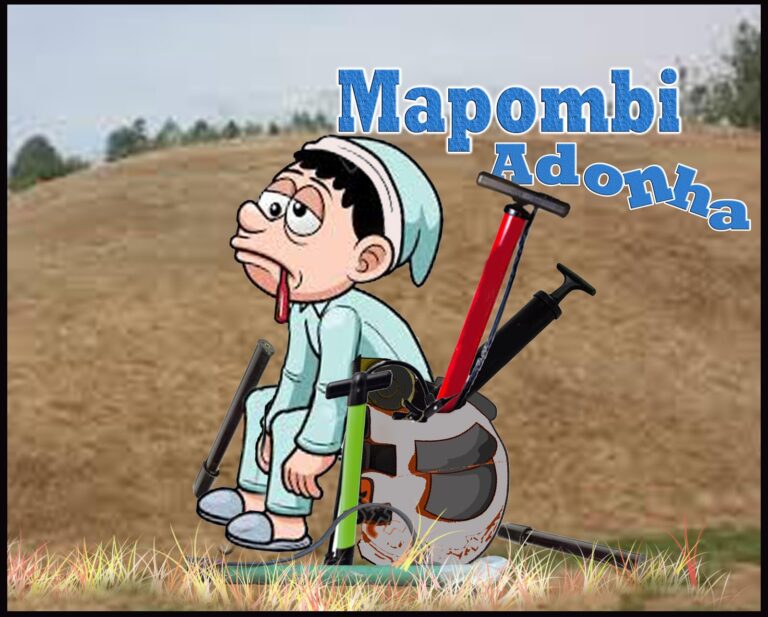
Zim slowly turning into a monarchy
Chivi teenager appeals for tumor removal financial help
TellZim Reporter
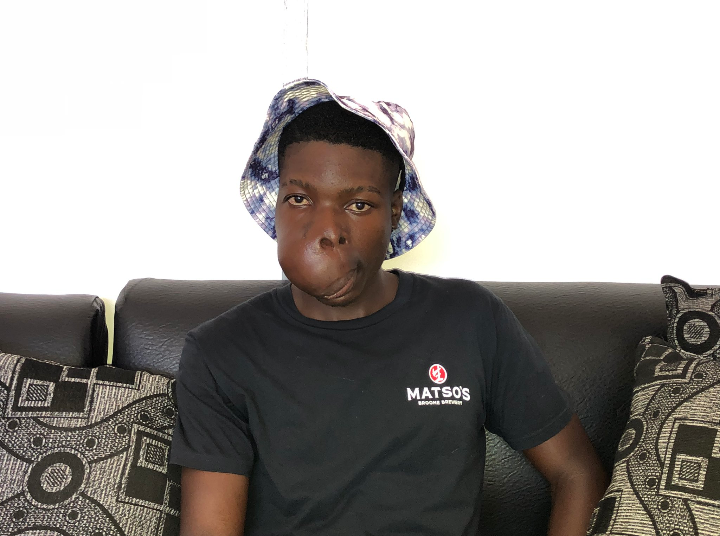
A teenager from ward 16 in Chivi Central is appealing for financial help to have a vicious tumor that has taken much of his face removed at Parirenyatwa Group of Hospitals in Harare.
Tatenda Mupfurashanga (17) has had the growth since he was only four years old, and has already been operated on twice to remove the tumor which continues reappearing.
Mupfurashanga is due for another operation but is in need of US$850 to cover the operation fees, excluding hospital and medication fees.
“My parents cannot afford the required money since they are just communal farmers. I am appealing to well-wishers to help me so that I continue with my life normally.
“I sat for my ordinary level exams last year at Chongogwe High School and I passed four out of six subjects and I would want to continue with my education if possible, but at the moment the growth is really hindering me from being my best self,” Mupfurashanga said.
Community Rehabilitation officer for ward 16, Chivi, Albert Imbayarwo said Mupfurashanga had the potential to assist his parents if he continues with his education, but the growing tumor was now deterring him from realizing his full potential.
“He had an operation in 2014 and another one in 2015, but due to lack of funds as well as Covid-19, he could not have another one. It seems as if the bones in his face keep growing hence the need for regular surgeries to remove the bulging growth in his face.
“Tatenda also needs to have a social life and to socialize with his peers which now is becoming difficult because of his condition. We are appealing to Zimbabweans and other well-wishers to please help him so that he leads a normal life again,” Imbayarwo said.
Well-wishers can contact the family on 0777460832 or 0786567457.
Grassroots table tennis up for change in Manicaland
Branton Matondo
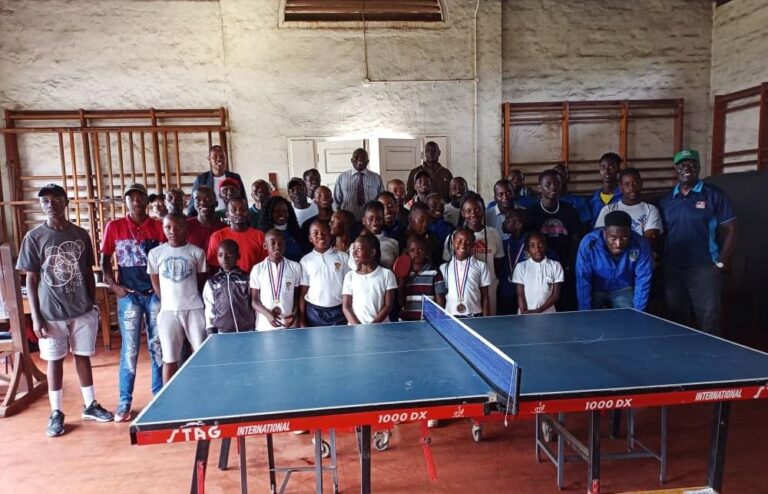
Manicaland Table Tennis Association (MTTA) is looking forward to closing the gap in table tennis following the initiation of a training programme held at Moffatt Hall last month where 28 teachers from public schools.
Speaking to TellZim News MTTA chairperson Nelson Murenje said the response from Mutare has been great especially focusing on the girl child.
“The response is overwhelming especially in schools, even those in districts outside Mutare. This rise in female teachers involvement in the sport coaching is encouraging. This will definitely boost women participation in the sport at all levels.
“We are mobilising resources so that we reach out to all the seven districts of Manicaland. That’s our plan,” said Murenje.
Table tennis is one sport that has been swallowed by mainstream sporting codes in Zimbabwe and popularity of the sporting discipline has for long been fading if not dead especially in terms of grassroots development.
Ten female teachers participated.
The idea behind the programme was to equip tutors with table tennis skills and certify them at the same time.
Training syllabus at the workshop was based on the standard Zimbabwe Table Tennis Union (ZTTU) coaching manual which includes theory, physical exercises and drills.
In an official report compiled from the workshop MTTA laid bare their plans going forward.
“We wish to execute our plan of action of holding such coaching workshops in all districts of Manicaland, create a special and effective way of involving secondary schools in table tennis activities and engage organizations or individuals to partner the association in the district coaching outreach programmes,” read the statement by MTTA.
MTTA looks to involve schools within Mutare and other districts in its drive to change the image of the sport.
‘Shift from creativity to professionalism’

Tinaani Nyabereka
Gweru- based graphic designing and creative company Gracian Creative Agency (GCA) has taken a leap further towards changing the livelihoods of young creative designers through an encouragement by advising talented designers to shift from creativity to professionalism.
The call was made during a Young Creative Capacity Building Engagement which was held in Gweru last week (Saturday).
The engagement which was focused on scouting and nurturing young graphic designers across the province was also inspired by efforts to remove young people from drug and substance abuse.
Gracian Creative Agency Founder and Creative Arts Mentor Remberance Mutero said a great business experience had been drawn from his life situation which motivated him to become a great designer.
“We came to capacitate talented young people who have graphic and art designing skills. We are saying yes courses are there, but you mustn’t necessarily own a degree or an ‘A’ level certificate to be a graphic designer .Have the mind set and skills alongside passion to spread art through impacting designs.
“I am a graphic designer not because I trained, No, my life experiences changed my situation. I grew up in a tough life environment where I had to work for me to eat, cloth and go to school or even buy clothes every day. I am a product of the life experiences which I encountered, that’s why l am inspiring other youth out there to discover themselves.
“As I stand today before you, I am finishing my degree in Computer Engineering this year with Midlands State University because I embraced and believed the art of graphic creativity. We need more of such initiatives and brains among youth even for us to resist things like drugs and substance abuse as well as other social ills,” said Mutero.
He further encouraged young designers to register their brands and companies.
“From this year going forward, let’s adopt a business minded format, register our companies and brands to penetrate the markets. Uphold professional business values with clients in order to grow yourselves,” he added.
A Graphic designer and Pastor Simon Mugodo said it is always good to learn new business ideas.
“There are many things we take simple in business which derail us from professionalism. Imagine things such a receipt, quotations, meeting deadlines and even engaging in work contract matters as they define working operations on a daily basis.
“We must learn and embrace new ideas in order to grow the graphic designing industry. Besides Pastoring, I am a young graphic designer and this has pushed me further, I now own a company called ‘Stratos Branding,” he said.
An upcoming Creative student, Emmanuel Hlambelo however said most young designers were struggling to price their works and this was hindering growth in the designing markets.
The Arts and Designing industry has emerged to be one of the most competitive and growing sectors which embraces uniqueness, creativity and innovativeness in order to sustain the designing career on various facets and markets even globally.
Mupandawana High goes commercial
TellZim Reporter
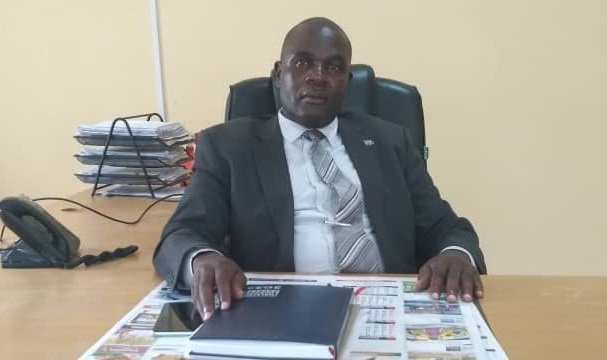
GUTU – Mupandawana High School is implementing government decision to allow schools to go commercial so as to open revenue inflow to complement parents’ efforts in raising funds for school operations.
Speaking during the official commissioning of the school administration block on Thursday (16 February) 2023, the School Head Tranos Mbwirire said the school was realizing some profits from hiring of the school bus.
He said apart from bus hiring, the school also makes money from the school tuck-shop where they sell foodstuff and other basic commodities.
“We are proud owners of the school bus which we hire out and realize some profits which we use for school development projects. We also have a tuck-shop again which sells a variety of goods and we are getting some money from there as well,” said Mbwirire
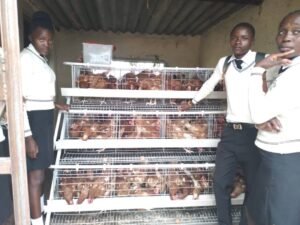
He went on to say for skill based learning, the school was involved in a number of agricultural projects where they also get money from the sale of the produce.
The school has 260 broiler layers under battery cage system and the chickens produce at least six crates of eggs per day.
Apart from egg project, the school boasts of 63 ducks and several ducklings which they sell in batches to individuals and businesses.
The school also has 36 occupied beehives which they harvest from time to time and sell the honey in and out of Gutu.
They have a fishpond which is currently under repair and the head said once repairs are complete they will have to restock new breeds which are competitive on the market.
“Our fishpond is under repair and once we are done, we want to get a new breed because we realized that the previous one did not perform as we anticipated. We also have bee hives which give us money when we harvest,” said Mbwirire.
The school also runs a vibrant piggery project as well as crop production with most of their land being under bean production.
Mupandawana High has a total number of 1152 leaners with 584 being boys and 568 being girls. The staff compliment is 45 teachers and 5 support staff.
Mbwirire said the school has a shortage of 8 teachers since they should be 53 but said they were aiming at growing the school pass rate especially at O level which had been affected by Covid-19.
“Our aim now is to grow our pass rate, at ‘A’ level we are always above 90 and we are striving towards 100 percent. At ‘O’ level we have always been above 50 percent but we had dropped a bit due to Covid-19 but we are now back on track,” said Mbwirire
Men Living with HIV amplify voices in cancer fight
Tinaani Nyabereka
Gweru -Network of Men Living with HIV (ZMN+) has called for the closure in the prostate cancer care gaps in Zimbabwe.
The call was made during the commemoration of World Cancer Day on February 4 with this year’s theme being “Closing the care gap” and will run for the next three years from 2022 to 2024.
However, last year’s theme was centered on bridging the knowledge gap for health services especially providers and the investment gap.
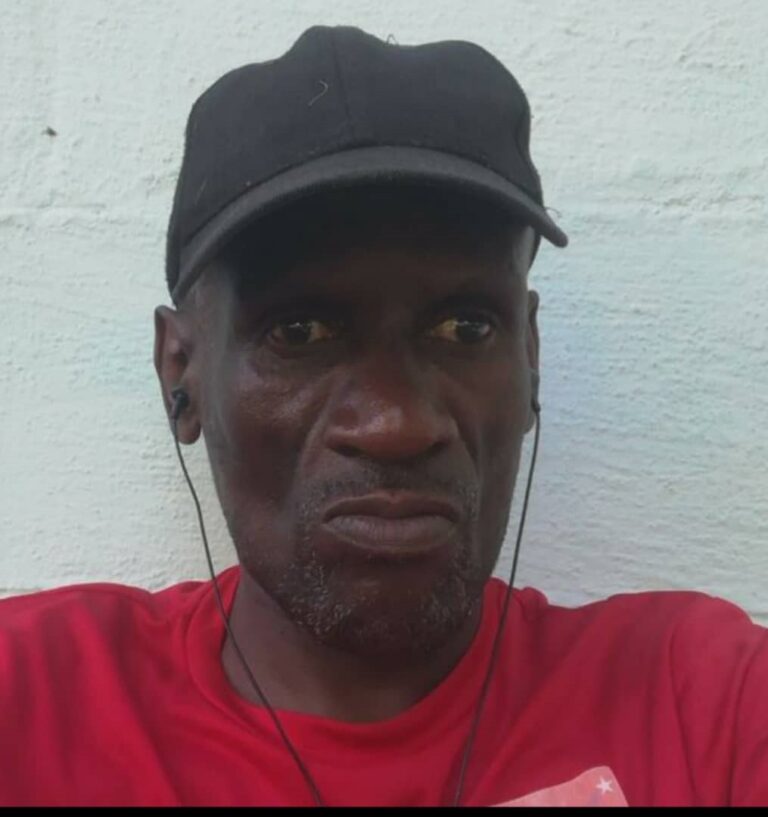
Beat Non Communicable Diseases Zimbabwe Network director and national secretary for ZNM+ Jacob Ngwenya said there need to amplify voices in bridging the care gaps against cancer.
“As men we are just standing aside and watching our peers struggling with prostate cancer and majority of them succumbing to death because of the cancer. If you check, the print, electronic and social media are very much awash with cervical and breast cancer campaigns to combat the two cancers but not prostate. I am not advocating for a shift but inclusivity in service provision.
“The Ministry of Health and Child Care and other private players have done very well to provide services for cervical and breast cancer. As men living with HIV, we call for a policy shift that will also see prostate cancer given the attention it duly deserves. Prostate cancer knows no boundaries, it is affecting men everywhere in Zimbabwe (both in rural and urban areas)”, he said.
Ngwenya added that the fight against cancer doesn’t have any social status as it affects everyone.
“This type of cancer (prostate cancer) is found in men who are 40 years old and above. As men ages, the prostate gland which is responsible for the production of spears grows big and blocks the urethane which is responsible for carrying urine or damages the body’s urinary control mechanism which leads to lack of urine control.
“Usually after growing big, cancerous cells start growing and in worst case scenario the cancer spreads to other parts of the body.
“Prostate cancer screening is very expensive in the country as it involves some tests and ultra sound scans which are beyond the reach of many men.
“Those who are formally employed and are on medical aid have better survival chances than those without. Women get free cancer screening for cervical cancer but men have to pay to be screened for prostate cancer.
“Rolling out of prostate cancer awareness is long overdue as many men are losing their lives slowly but sure. Men should also change their attitudes towards health and embark on good health seeking behavior. Masculinity backed by ascribed gender roles have seen a lot of men dying from curable diseases.
“So we are taking it to our own hands to enlightening our fellow men on changing their perception towards health so that they reduce their risky behaviors. We also remind them that women’s health is in their hands and they need to ensure response to safeguard the health of others,” he added.
Ndarama High: a government school with unmatched determination
…as school posts impressive ‘O’ and ‘A’ level results
TellZim reporter
Masvingo urban based government school Ndarama High continues to blaze the education trail, positioning itself as a giant among academic powerhouses in the province as it fared well in the 2022 Zimbabwe School Examinations Council Ordinary and Advanced level examinations as usual.
The school recorded a 95.5 percent overall pass rate for the Advanced level class of 2022.
Among its strengths, Ndarama boasts of academic prowess in Science subjects with Biology, Chemistry, Computer Science and Sports Science learning areas scoring 100 percent. Geography recorded an overall pass rate of 94 percent, Mathematics had 92 while Physics recorded 84.60
Other learning areas that recorded 100 percent passes are Literature in English, Shona, History and Family and Religious Studies.
Economics and Business Studies followed up with 83.30 and 87.20 percent respectively.
Ephrage Rugara scored 25 points in Commercials followed Rahaad Phili on 20 points, Shebbah Mudzingwa, Kuzivakwashe Mugwira and Ketty Mureri all on 19 points in Sciences. Three other learners were tied on 17 points followed by 17 fifteen pointers in Sciences, Commercials and Arts.
In the Ordinary levels, the school shone with the highest scoring learner Makanyezi Jabulani coming out with 13 As followed by Takunda Kwara at 12A, Tatenda Chinyenye with 11 As and a B. Blessing Machele scored 10 As and a B while Mitchael Nyakahembe and Lenon Mozondo had 9 As and 4 Bs.
A host of other learners followed with 5 to 8 As.
Economic History, Physics, Musical Arts, Textile Technology, Building Studies, Food Technology and Art all recorded 100 percent passes.
Such passes in the latter five learning areas show the school’s commitment to production of self-reliant academic products.
Physical Education recorded 98.8 percent, Heritage Studies had 98.7, History 88.2, Biology 86.1, Computer Studies 85.7, Family and Religious Studies 83.2, English Language 81.3 and Metal Technology 80.
The overall school pass rate stands at a whopping 79 percent even with such a large number of exam candidates.
What the man-in-charge has to say
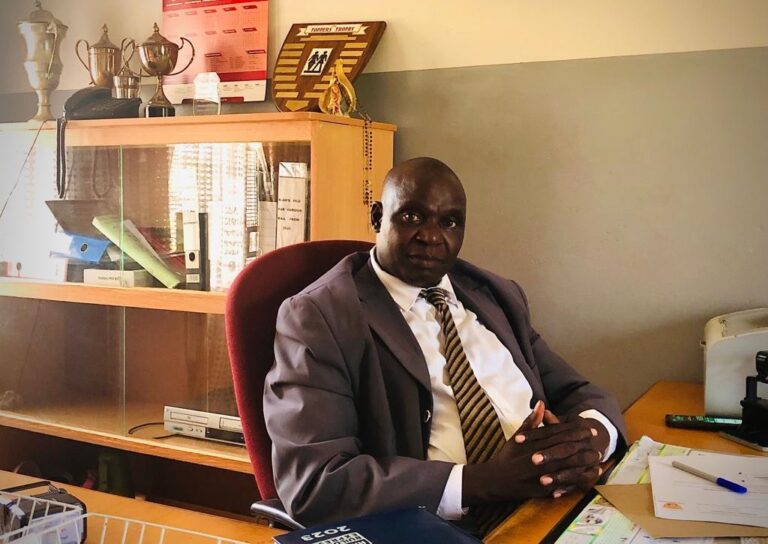
Despite operating in a restrictive environment characterized by a huge enrolment and limited resources as a result of the relatively low school fees paid by learners, the school remains committed to the cause of educating the province and posting impressive results according to School Head Oddy Matongo.
Running under the theme ‘Beating the previous best’, Matongo said the school strives for excellence and called upon parents to join forces with the school’s administration so that results keep on improving.
“The evidence we have shows that despite being a day school, Ndarama has proven itself a force to reckon with as learners have dropped from more established schools like Gokomere to join us while some are commuting from areas like Chivi and Bhuka on a daily basis.
“Parents on the other hand should bear with teachers and consider their plight that is in terms of their upkeep so that we maintain the standards. The school has at times experienced a staff exodus where we lose experienced teachers like right now we have lost our seasoned Accounts teacher,” said Matongo.
Hard work, commitment and team work: the key behind success-History teacher

After leading the class of 2022 that saw a total of 28 learners scoring As in the Advanced level examinations, with 16 Bs and 2 Cs, history teacher Trida Huni said she cannot even believe it that such a big number of learners managed to come out with flying colours. The percentage pass rate in history is 100.
“I can’t even believe it right now that we managed to post such impressive results. I am still in a state of shock at realization that the learners had done so well and today we are celebrating the fruits of hard work. Laziness is not part of our vocabulary at Ndarama.
“At first, the learners had negative attitudes and perceptions towards the learning area but we did well to convince them and they positively responded and they become cooperative. The secret behind our success story is hard work where we would give learners a lot of written work as a way of preparing them when it comes to Essay writing and the skills required in writing those academic pieces. I had to motivate the learners that through hard work, they were going to achieve something good,” said Huni.
She went on to pay tribute to fellow teachers in their line department and team work as another factor behind the good results.
“Team work involving fellow teachers in our department is also another factor. At times, I had to consult other teachers in the department here and there and fortunately, they would chip in and assist. At the end of the day we got to realize these good results,” she added.
Departmental team work behind our success story- FRS teacher

Though running short of words to explain how such good results were attained, Precious Munyaradzi said the spirit of togetherness that brought together teachers in their department and learners is the secret behind the fairy tale run.
Family and Religious Studies (FRS) had the highest number of As totaling up to 30 with 14 Bs and 2 Cs resulting in a 100 percent pass rate in ‘A’ level.
“All I can say is that we work together as a group and thus can attribute the high pass rate percentage to team work with fellow teachers. We always look at ways of how best we can motivate our learners so that they do away with the negative attitude towards our particular learning area,” said Munyaradzi.
Hard working culture and learners’ effort crucial- Maths teacher

Also in denial of lagging behind is the Mathematics department where both Ordinary and Advanced Levels fared well as is shown by the results obtained.
Maths teacher Chipo Chizimba said despite the subject at times encountering challenges in terms of ‘phobia’ on the part of learners, the department remains determined and committed to producing good results.
“Maths phobia is one major undoing that affects most learners. So what we have done at Ndarama is that we start by ensuring that we clear and get rid of the phobia by showing learners how possible it is to pass Mathematics. These young learners need an appreciation of their capabilities and after clearing that ground, then you inculcate the spirit of hard work in them.
“I always remind our learners that their part is two thirds while the teacher is responsible for one third for results to come out good. At Ndarama, we always encourage our learners to work hard. The fact that Mathematics is a daily subject shows the amount of work that is required of the learning area. Motivation, hard work and the way we celebrate with learners in event of good results even at end of terms are key drivers behind our success. That way we show an appreciation of the effort by learners and that keeps on motivating them to even work harder,” said Chizimba.
She also said extra lessons for free that are done during weekends or even holidays also helps drive the ambitions of the department.
“Sometimes we give learners extra work even if it means coming to school during holidays or over the weekends. As teachers, we do this for free for our aim is to make sure we show all the love we have for the success of our learners and in turn they put more effort to please us. It’s all out of sacrifice,” she added.
Zimuto High raises flag high in ‘O’ level results

Beverly Bizeki
Reformed Church in Zimbabwe-run academic power house Zimuto High School has raised its flag high after posting impressive results in the recently published Zimbabwe School Examinations Council (ZIMSEC) 2022 Ordinary level results.
The school notched a sterling 85.45percent overall pass rate with 188 learners passing five or more subjects out of the 220 who sat for the examinations.
The school also recorded 85 percent pass rate for students who passed five or more subjects including English language where 187 learners passed.
For learners who passed five or more subjects including English Language and Mathematics, the school recorded a 75.45 percent pass rate with 166 learners passing the exams.
Of the 220 students who wrote five or more subjects, 166 students passed English Language, Mathematics and Science marking a 66 percent pass rate.
In English language, 208 of 220 pupils passed the exam marking a 94.98 percent pass rate while 172 learners passed Mathematics to produce a 79.26 percent pass rate.
The school also recorded high pass rates in Computers where all 71 pupils who sat for the paper passed marking a 100 percent pass rate.
Learners from the 2022 class also performed well in Biology, Chemistry and Physics where the school posted 93.75 percent, 96.8 percent and 94.83 percent respectively.
Learners also attained 100 percent pass rate in other learning areas such as Heritage, Statistics, TTD and PESMD.
Incessant rains worsen state of roads in Mutare
Branton Matondo
Mutare-Residents from Mutare have called for City fathers to improve on road surfacing techniques following massive erosion and pothole extensions witnessed in Chikanga and Sakubva suburbs due to late heavy rains that are still pouring since February 9.
After going for a month and a half without proper rainfall, Mutare began experiencing heavy downpours last week.
Though the rains bring joy to farmers, road users have raised concern on the massive erosion and pothole extending even in Mutare’s low density suburbs.
One of the hardest hit places is Chikanga market in ward 14.
The market place which lies in Mutasa South constituency’s construction was facilitated by former MP for the constituency Irene Zindi to shelter vendors through the use of Constituency Development Funds (CDF).
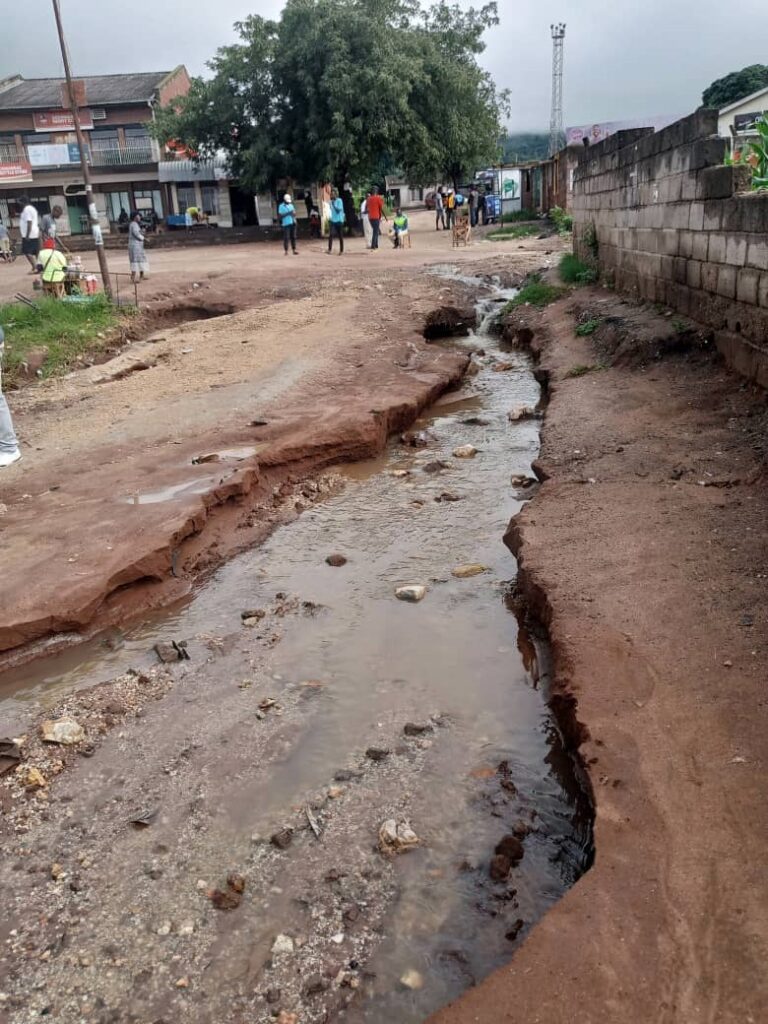
Sharp gullies have been created posing danger to people who want to access the market.
Mutare Residents and Ratepayers Association (MURRA) Programs Director David Mutambirwa said council should act up quickly because it’s a hazard that will culminate into a sad story one day.
“The rains have brought and will continue to bring about massive road damages. If you look at Chikanga market area, poor drainage and road infrastructure has robbed the market of its former glory. Gullies formed due to massive soil erosion at the market has made the place inaccessible,” said Mutambirwa.
He added that council should act urgently before the situation degenerates into a disaster.
“City council should urgently address the issue not only for easy access but for security as the gullies pose great hazards among residents, especially senior citizens, children and people with disabilities,” he added.
Council has been carrying out pot hole filling exercises since last month using gravel.
The process has been brought to scrutiny as residents opt for better ways others than removable gravel.
Donald Chitakaira a resident from Maonde said road networks within Sakubva need immediate action from council.
“The state of our roads within Sakubva is bad and with more rains falling, it’s going to be worse. We really call upon the local authority to act because it’s not only a danger to motorists, but also to residents,” said Chitakaira.
Manicaland is expected to receive heavy rainfall between 65 to 120 mm from February 16-20 to the 20. This comes after Meteorological Services Department (MSD) released a warning notice on the February 15.
Manicaland is expected to receive of rain within 24hrs.
In a statement the MET Department has warned citizens to be on look-out for the rains.
“Residents from the province should look out for heavy rains (in excess of 50 mm), flash flooding in areas with saturated soil, wetlands, and impervious grounds as well as along basins,” read part of the statement.
3 minors, one adult nabbed for mbanje

Tinaani Nyabereka
GWERU- Police in Midlands have arrested three minors and one adult female for smoking mbanje and engaging in unlawful dealing with dangerous drugs.
The incident occurred on February 6, 2023 at around 1100 hours in Zvishavane.
Circumstances given are that police recovered 75 plants of dagga with an average height of two meters from a garden belonging to Loyd Sibanda of Ziyabangwa village, Zvishavane.
The recovery followed a tip off received by police who swiftly reacted to the information and efforts to locate Sibanda who is at large are in progress.
Midlands Provincial Police spokesperson Inspector Emmanuel Mahoko confirmed the arrest of three juveniles aged 16 years and Sibonile Masaire (38) at George Chipadze Secondary School in Zvishavane.
“The three minors were caught during the act of smoking dagga by one of the school teachers. A police report was made and the three implicated Sibongile Masaire as the supplier.
“A search was conducted at Masaire’s residence and 1.35 kg of dagga was recovered. The three minors were released into the custody of their guardians while Masaire is in police custody. We urge members of the public to desist from drug abuse and value their health and also guardians of young children should shun drug and substance abuse,” said Mahoko.