Home Blog Page 30

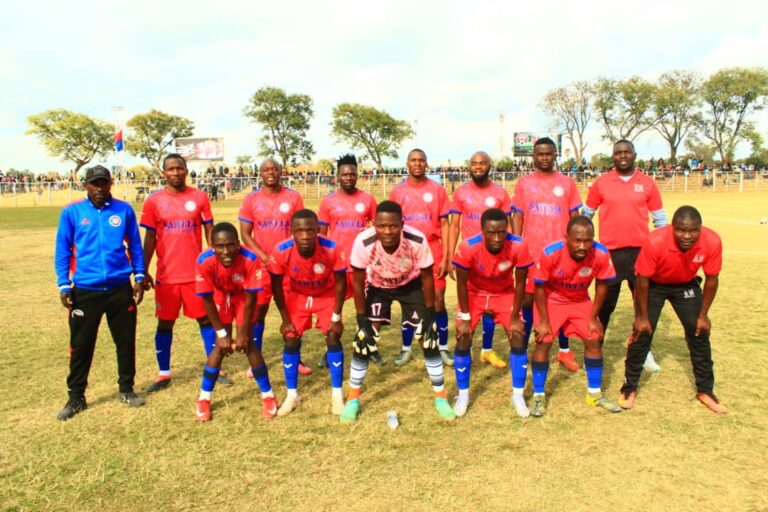
Una Una triumphs 2-0 in Masvingo derby with 10 Men

0

By Tatiana Mhararira

In a thrilling Masvingo derby, Una Una proved their mettle by overcoming a 10-man disadvantage to triumph 2-0 over arch-rivals FC Wangu Mazodze yesterday (July 21).

The match, played at Mucheke Stadium, was a closely contested affair that showcased the determination and resilience of both teams.

Despite being reduced to 10 men after Spencer Gonyora was given two yellow cards in the middle of the second half, Una Una’s players refused to give up.

Adam Tende was the hero for Una Una, scoring both goals in the 52nd and 81st minutes with his first goal setting the tone for the win, while his second, which earned him a yellow card for jersey removal while celebrating, sealed the victory.

The win marked Una Una’s second derby triumph this season and sent a strong statement about their dominance in the Masvingo derby.

FC Wangu Mazodze, on the other hand, will be looking to regroup and bounce back from this defeat. In a stunning move, Wangu Mazodze announced the firing of their coach, Philani Ncube, on their Facebook page just before the final whistle.

Una Una supporter Samson Tatenda Masunga expressed delight at the win, praising the match officials for fair officiating.

“I am happy with the win. This means a lot to us as fans. This is our season, and our hopes for getting the Premier Soccer League ticket are certain,” Masunga said.

The win puts Una Una in third position with 35 points just like FC Hunters which is on second position on goal difference. FC Hunters has a goal difference of 23 and Una Una has 16.

The log leaders Tenax FC lost to Deportivo La Murambinda 1nil but remained on top of the table with 37 points.

Una Una will face Deportivo La Murambinda in their next match and Mazodze will face Rusitu Tigers.

Zimbabwe Junior Parliament: A Balanced Perspective on Merit and Symbolism

0

By Aleta Makomeke- Senior
Educationist.

As a dedicated educationist, I feel compelled to address some media reports criticizing Zimbabwe’s Junior Parliament and the symbolism of the “Mnangagwa scarf” which raises important but heavily one-sided concerns. While his critique highlights some valid issues regarding child welfare, governance, and political symbolism, it is imperative to approach this matter with a balanced and objective perspective on the selection process and the broader role of education in society.
As an educationist and advocate for youth development, I have observed firsthand the processes involved in selecting the Junior/Child President and running the Junior Parliament. Contrary to the claims, the selection process is not manipulated to favor the politically connected, but rather conducted with fairness, transparency, and merit at its core.

The Selection Process
It is crucial to recognize that the selection of the Junior/Child President, Junior Council and Junior Parliament is conducted by the Ministries of Primary and Secondary Education and Youth by with integrity and merit. The two ministries play a pivotal role in ensuring that the process of selecting a Junior/Child President, junior councilors and junior parliamentarians involves rigorous debate competitions and evaluations based on merit. These activities foster critical thinking, public speaking, and leadership skills among the youth. These are not just ceremonial exercises but valuable opportunities for building future leaders. Once selected, the Ministry of Local Government is also involved in conducting the induction process of junior councilors, facilitating skills exchange programs and operations. The involvement of these Government Ministries enables the selection process to reflect a diverse array of voices and perspectives among the youth. The Government Ministries are committed to fostering a platform where children can express themselves freely and responsibly.
Skepticism about the authenticity of this process undermines the tireless efforts of educators, policymakers, and communities who work to uplift young leaders. The insinuation that the process is politically manipulated reflects a lack of understanding of the structures in place and disrespects the hard work of educators who facilitate the children to earn their positions through dedication and merit.

The Scarf
The concerns about the partisan nature of the scarf worn by the Junior /Child President, Lionel Mazarire warrant discussion. The issue of the “Mnangagwa scarf” has become a polarizing topic. While some view it as a partisan symbol, it is essential to recognize that symbols can hold different meanings for different people. The scarf, adorned with the colours of the Zimbabwean national flag, can in my view just be interpreted as a sign of patriotism and national pride. To dismiss it outright as a “badge of political fealty” is to impose a narrow, subjective interpretation on an otherwise neutral item. Instead of teaching children to fear or reject symbols, we should encourage them to engage critically with symbols and their meanings. Let us teach them to form their own opinions, not by parroting what critics or loyalists say, but through informed discussions and debates.
I urge us not to conflate the single symbol with the broader objectives of the Junior Parliament. The scarf, while politically charged should not overshadow the significant accomplishments and opportunities provided to our youth. It is vital for young people to engage with surroundings critically, developing an objective mindset rather than succumbing to subjective interpretations of a national symbol-the Zimbabwean flag.

Junior Council and Junior Parliament
The setting of the Junior Council and Junior Parliament is a noble exercise that provides young Zimbabweans with a platform to express their views, concerns, and aspirations. Allegations that it has been “hijacked” by political agendas is not only unfair but also diminishes the significance of this institution. As stakeholders, we have a duty to support initiatives that empower children, rather than tearing them down with cynicism. The Junior Parliament is not perfect, but it is a step in the right direction. The platform helps to foster a culture of leadership, inclusivity, and civic engagement among the youth—values that are crucial for building a better Zimbabwe. Issues of school drop out, educational inadequacies, early marriages, drugs and substance abuse are some of the challenges currently bedeviling the education system. These issues are real. These are areas of concern where all stakeholders—parents, educators, policymakers, civic society, the corporate world and the government—must focus their attention on. However, it is vital for all stakeholders to approach these challenges with a mindset geared towards providing solutions. All stakeholders are implored to work collaboratively with the government to address these challenges and ensure that our children receive the support they need.
It surely is counterproductive to conflate these systemic challenges with the symbolism of a scarf or the supposed flaws of the Junior Parliament. Let us not lose sight of the bigger picture. Addressing child welfare and education requires collective effort, constructive dialogue, and actionable solutions—not divisive rhetoric. Rather than viewing the Junior Parliament as a mere political tool, we should see it as an educational initiative that empowers the youth. It offers them a chance to engage with issues affecting their lives, encouraging them to think critically and articulate their views in constructive dialogue. We must focus on nurturing a generation of leaders who are capable of navigating complex societal challenges, not simply reacting to them. Let us as Zimbabwe, work together to cultivate a generation that is empowered, informed and capable of making meaningful impact in our society.
As an educationist, I call upon all Zimbabweans to approach issues of youth development with objectivity and fairness. Instead of criticizing initiatives like the Junior Parliament, let us work together to strengthen and improve the initiative. Let us teach and encourage our children to think critically and independently, to engage with symbols and ideas thoughtfully, and to use platforms like the Junior Parliament to advocate for meaningful change. Zimbabwe’s future lies in the hands of its children. It is our responsibility to nurture them with hope, not skepticism; with opportunities, not obstacles; and with empowerment, not division. Let’s help the youth to develop both an objective and subjective understanding of their world, equipping them with the tools to engage thoughtfully with the issues that matter most.

Aleta Makomeke is a Senior Educationist (Writing in my personal capacity).
M. Ed Tech ; MSc Governance & Leadership.

New battle lines drawn for Nyakunhuwa chieftaincy

By TellZim News Reporter

A bitter dispute over chieftaincy was brewing for some time in Zaka District. The appointment of a new Chief, Oswell Maguta of the Baramanza family as Chief Nyakunhuwa had sparked outrage among the five houses which claim to have a legitimate claim to the throne of Nyakunhuwa.
In a letter seen by TellZim News, dated 14 July 2025, addressed to a Mr Magwaza and others from Zimudzi and Associates Legal Practitioners, the High Court granted their application for condonation of the late filing technicality.
The development means those who oppose the appointment are now able to wedge their legal battle against Maguta which was once dismissed over a late entry technicality.
“We write to advise that the High Court, Masvingo granted your application for condonation for late filing of an application for review. The next step is to file the application for review within 15 days and we propose that we meet at our offices on the 16th July 2025 at 1200 hours to discuss the matter and map the way forward,” read the letter.
The five houses namely Mutsvangwa, Mutonhori, Mututuvare, Murembwa, and claim to have been the rightful claimants to the throne since the formation of the chieftaincy.
The Nyakunhuwa chieftaincy derives its name from the heroics of a highly-decorated strategist and military genius named Chamagwenjere, who defied his health ailments to establish his own territory.
Despite his wounds oozing worms and producing an unbearable smell, Chamagwenjere soldiered on, earning the moniker Nyakunhuwa. Legend says that Chamagwenjere fought tirelessly to build his territory and believed that his brothers and cousins, who did not partake in his struggles, should not share in the spoils.
The five houses argue that Chamagwenjere, son of Donoro, established a ruling class that should remain within his lineage. Donoro’s brother, Muyengwa, is said to be the forefather of the Baramanza clan, which, according to the five houses, has no legitimate right to the throne.
They argued that, historically, only the five houses have enjoyed turns to the throne, and a Baramanza ascendency was the first time the chieftainship has gone out of these houses that’s why they were challenging it.
They said after Chamagwenjere’s death, the throne went to Mukazi of the Murembwa family, then to Matorevhu of the Machingambi family, who held it until 1920.
The chieftainship remained in the Machingambi family under Mafuratidze until 1941 and Mashawi until 1944.
Chiwoniwoni from the Mutsvangwa family took over until 1971, followed by Zimunga from the Machingambi family and Dzviti from the Mututuvare family.
The most recent ruler from the five houses was Mashavave from the Machingambi family, who reigned until his death in 2015.
The disgruntled families claim that archival material shows that the Mutonhori family has never held the chieftainship so it was the house’s turn to sit on the throne.
With this historical background, the claimants are determined to fight for what they believe is rightfully theirs. The dispute had made its way to the High Court, where the claimants had challenged the installation of the Chief.

Mwenezi’s Makugwe primary girls’ soccer team shines at zonal tourney

0

By TellZim Reporter

Joy and jubilation erupted in the remote areas of Mwenezi as pupils, teachers, and the community celebrated the Makugwe Primary School girls’ soccer team’s impressive victory during the Zonal competitions securing a ticket to represent the zone at district level.
The team, representing Cluster 15, displayed a classical touch of soccer, beating Takadevhu Primary School, which represented Cluster 14, in the final. The match, held at Maranda Primary School, ended in a stalemate 0-0, but Makugwe emerged victorious in penalties.
Before reaching the final, Makugwe had impressive wins against Cluster 16 (Peter Peregwe Primary), scoring 2-0, and Cluster 2 (Machena Primary), winning on penalties after a goalless draw.
The team’s head coach, Nicholas Goredema, affectionately known as “Bhudhi Mboma,” expressed his delight and promised a strong performance in the next stage.
The team’s impressive display, left spectators in awe. The goalkeeper, Crenna Zhou made excellent saves, keeping a clean sheet in some matches.
The solid defense, led by sweeper Prudence Shumba, was reminiscent of Zimbabwean legend Dazzy “Delio” Kapenya. The midfield duo of Regina Zhou and Aisha Shumba, also known as Madhawu, worked tirelessly, coordinating their movements to perfection.
Thembi Ngwenya, nicknamed “Mazvese,” was the outstanding player of the day in the final match, showcasing pace and deft touches that left markers struggling to keep up.
With their impressive performance, Makugwe will represent the Zone at the Inter-district competitions, set to take place in Rutenga.
The team assistant coach Paul Tigerwe also promised fireworks as the team prepares to face long-time powerhouses like Chingami, Masogwe, and Rutenga.

Ngomahuru Hospital appeals for help to establish agricultural projects

By Virginia Njovo

Ngomahuru Psychiatric Hospital is appealing for assistance to support its agricultural initiatives, aiming to improve the institution’s productivity and contribute to food security.
The hospital heavily depends on external funding and hand-outs from well-wishers and the corporate world to sustain operations.
Speaking to TellZim News, Ngomahuru Medical Superintendent Parirenyatwa Maramba said they were pleading for sponsorship to set up an irrigation system.
“If sponsored, we can become self-sustainable, boosting the welfare of our patients. Ngomahuru has survived on donations for decades and yet we have underutilized land that at the institution. If sponsored we can become self-sustainable since we are already a charity home, doing everything for free,” Maramba said.
He said they were into cattle and goat farming but at a very smaller scale that it cannot sustain them and needed more to expand.
“The hospital currently engages in small-scale cattle and goat farming and we hope to expand the livestock production. If we get the sponsorship we are seeking, we can then become self-sufficient and improve patient care,”said Maramba.
The hospital faces significant challenges, including deteriorating infrastructure, inadequate resources, and insufficient support for patients.
The institution’s buildings and sewer systems are outdated, and there is a shortage of essential supplies, including detergents.
Many patients face neglect, with some being abandoned by their relatives without financial support or visits. Some have been admitted for more than 20 years.
In some cases, families fail to claim the bodies of deceased patients, leaving the hospital to handle the burden. The stigma surrounding mental illness exacerbates these challenges, leaving patients reliant on the nursing staff and fellow patients for support.
The hospital’s financial struggles have resulted in limited capacity to provide quality care, and the introduction of a private ward has offered some relief, generating revenue to meet basic needs.
Nevertheless, the institution requires substantial support to address its systemic challenges and provide adequate care for its patients.

Free Methodist Church reunites after two decades of division

By TellZim Reporter

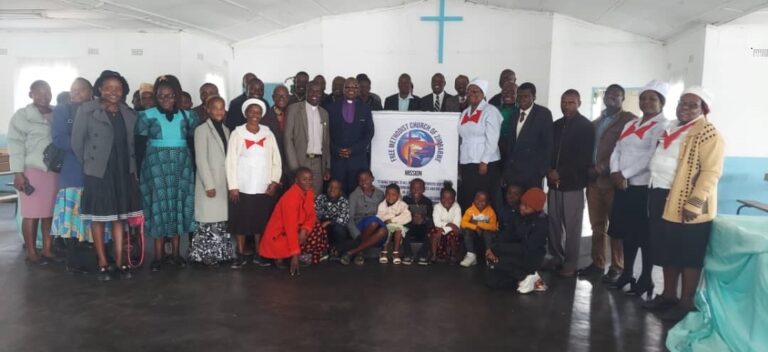
After nearly 20 years of separation caused by internal leadership disputes, the Free Methodist Church of Zimbabwe has officially reunited, marking a significant milestone in the church’s history. The church celebrated the reconciliation on July 13, 2025, ending years of division that had led to the formation of two factions: Free Methodist Church of Zimbabwe A and B.
The rift, which began in 2007, was a result of disagreements among senior church leaders. The matter eventually spilled into the courts, which ruled that those who had broken away could only return if they adhered to the church’s constitutional framework.
Church Bishop Isaya Isaiah Masiya expressed deep satisfaction at the reunion, saying the prolonged split had hindered the church’s growth and fractured fellowship among congregants.
“I am happy with what has happened today, after having spent many years with the church split. Our members had conflicts, and the matter went out of hand. We went to the courts, where it was ruled that the other members who had left should submit to the constitution of the church.
“We have tried so many times to reconcile to no avail. The separation affected how we fellowshipped, especially among congregants, and it affected our growth,” said Bishop Masiya.
He acknowledged the role played by regional Bishops in encouraging reconciliation.
“I am grateful to other bishops in various countries in the region who have kept encouraging us to reunite. We have also been discussing this with other pastors, questioning why we are not getting along when we are preaching love to congregants. To the fellow congregants, we invite them back since we have reunited. Let us continue with the good work of the Lord together,” he said.
Local pastor Kabelo Dube, who had been among those who left, reflected on the impact the split had on the church.
“We left this place for the past 20 years and have been fellowshipping elsewhere with a section of the people who were not satisfied with what had happened. We lost quite a number of congregants because of that division. It is not easy to invite a person to church to the point where they become a member.
“This division hurt us as a church because we saw many people even stopping going to church. These divisions affect congregants more than leaders because they have their trust in them, believing we should lead in the same direction, and when we split, they do not know where to go,” said Pastor Dube.
He said despite the breakaway, their spiritual attachment to the church remained though it took long for them to reunite with others.
“We were not able to change the name of the church because our hearts were still with the church. We did not leave because we were against the doctrine of the church, but the leadership of the moment chased us away.
“Though we wanted to come back, but it took long for us to be heard until 2023, where an area fellowship involving Mozambique, South Africa, Zambia, and Zimbabwe gave us a chance to air our grievances. We are grateful that later on in April, the Bishop requested us to resubmit our queries, leading to this development,” said Pastor Dube.
Dube said the conflict had begun with accusations against pastors who were allegedly not following church doctrine, which resulted in the dismissal of eight pastors.
“The split was caused by conflicts between the leadership back then, which accused some of the pastors of not following the doctrines, and eight pastors were fired. The matter was brought to the courts, and we thought it was better if we stopped the fighting. We stopped responding to some of the court processes, and the other section won the case.”
Despite the painful past, Dube said the group’s return was motivated by their belief that the church was bigger than any individual.
“We were inspired to reunite because this church does not belong to anyone. It was started by missionaries who had a desire for Zimbabweans to know God. Hence, we thought we should all come back together,” he said.
A congregant who witnessed the reunion said they were relieved and hopeful that things will improve for the better.

Bishop Masiya (Left)

Masvingo Carling Black Label provincial champions crowned

0

By Tatiana Mhararira

The Carling Black Label provincial pool tournament, held at StopOver Gardens on July 12, 2025, ended with an exciting finish.
Four winners secured a ticket to represent the province at the national tournament in Bulawayo next month (August).
Great Zimbabwe University (GZU) student Lisa Marumbwa and Malvern Manamike were crowned provincial champions in the female and male categories, respectively.
Their impressive performances throughout the tournament were rewarded with a US$200 cash prize and five cases of Black Label cans, each containing four six-packs.
In the female category, Ester Mutambanebanga won second position, followed by Patience Pasipamire and Charity Katema. Tapiwa Musaona came second in the male category, followed by Pride Mananavire and Gamuchirai Jani.
The top two in each category will proceed to the next tournament. A total of 152 males and 12 females, drawn from across the province, participated in the provincial tournament, showcasing the growing popularity of pool in the region.
In an interview with TellZim News, Marumbwa said she was excited that she won the tournament, though it came as a surprise.
“The tournament was a bit tough. It wasn’t an easy one since everyone played their best and wanted to win. I faced a serious challenge of panicking during game time. My opponent would lead while I trailed behind, but I focused throughout till I reached the finals and won. The main secret behind my success is consistency and love for the game. Pool is a sport that I have loved, and whenever I play, I play wholeheartedly.
“I dedicate my success in my mother, who is my biggest supporter. Not all parents allow their children to play pool, especially a girl child. I am grateful to my coaches, Trust Asima Makwinja and Martin, for their guidance,” said Marumbwa.
Marumbwa also said she was going to train harder to excel at the national tournament. “At the national level, I am going to do my level best to raise our province’s name high. I will do everything in my power to make my fellow pool players proud of me.”
Manamike said he was excited about winning such a tournament for the first time.
“I was overwhelmed with joy when I won the tournament. I felt I had achieved something big, though there is still a long way to go. This is my first win at a provincial level, but it’s not going to be the last,” said Manamike.
He also said the early stages of the tournament were easy, but it got tough towards the end.
“The tournament went so well in the early stages, and I was so relaxed because I was playing against people who were yet to make their names in the sport. However, when I reached the final, the game became tougher because I played against last year’s champion, who had a lot of support from the people, but I was composed and won the game. I said I was going to put more effort into training for the national tournament since I would be carrying the province’s name,” he said.
Masvingo Pool Association Vice Chairperson Kudakwashe Mudekunye said the level of competition was different from last year’s and they believed in the winners.
“The level of competition was fairly high, and most of the top players were eliminated in the first and second rounds, giving the opportunity for less popular players to emerge and excel in the competition,” said Mudekunye.
Mudekunye said they were happy with the number of participants that increased in the male category but noted a decrease in the female category.
“The number of participants was higher than last year, where we had almost 100 participants, and this year we had 152 participants in the men’s category, which shows sport growth in Masvingo. However, there was a slight decrease in the women’s category because last year we had about 20 participants,” he said.
As the champions prepare for the national tournament, anticipation builds within the community. The success of the event not only highlights the talent in Masvingo but also strengthens the bond among local players and proves to be a significant platform for talent identification and development.

Malvern Manamike( left) male category champion pose for a photo with MAPA Vice Chairperson Kudakwashe Mudekunye (right)

Tragic accident claims one, six injured along Ngundu Tanganda road

0

By Tadiwanashe Mberikunashe

A tragic road accident claimed the life of one passenger and left six others injured on July 14, at around 0700hours along Ngundu-Tanganda Road.
The accident happened near the 87km peg after the driver of a Nissan Caravan minibus lost control of the vehicle and hit a stationary truck.
Masvingo Provincial Assistant Police Spokesperson Assistant Inspector Masauso Patinyu confirmed the incident to TellZim News and urged members of the public to prioritize their safety when driving on the road.
“I confirm the death of one person in an accident that happened along Ngundu Tanganda road. Drivers must always be attentive and cautious, especially when approaching stationary vehicles. Road safety remains a shared responsibility,” said Ass Insp Patinyu.
The accident occurred when a silver Nissan Caravan minibus that was carrying 12 passengers, driven by Nelson Jawa (27) lost control and collided with a stationary international truck.
The truck, which had a mechanical breakdown, was parked on the roadside with its hazard warning triangles properly placed at the front and rear.
The impact caused the minibus to overturn once before landing on its right side.
One female passenger, Tendai Zimove of Triangle, died on the spot after sustaining severe head injuries. Six other passengers were injured in the crash, with one reported to be unconscious and the remaining five in stable condition.
Police and emergency services attended the scene and the injured were rushed to Chiredzi General Hospital. The body of the deceased was also transported to the same facility.

Outcry as teacher collects pupils saliva during lesson

. . .parents unsettled, worry over the ‘new teaching method’

By TellZim Reporter

A teacher from Mushavhi Secondary school in Bikita, (name withheld), has come under fire for allegedly collecting saliva samples from an entire class of learners, sparking concerns among parents about the unconventional teaching methods.
Learners and parents who spoke to TellZim News questioned the unusual method used by the teacher during one lesson, and their primary concern is the unknown disposal of the soiled paper.
The incident follows another one from Nehanda Primary School in the same district where two teachers allegedly draw blood from 19 pupils using syringes and parents are worried over the recurring unusual behavior by teachers.
Contacted for comment by TellZim News, she asked the reporter to go back to the sources and ask them what had transpired or to visit the school to get more information.
“Go back to the people who told you and ask them why I did that, they know or you can alternatively come to the school. There are some leaners who saw me disposing off the paper so I don’t know what’s the issue,” she said.
The school head Peter Zvibodo was not available for comment as his cell went unanswered several times
Leaners who spoke to TellZim and refused to be named for fear of reprisal said the teacher started the lesson by discussing self-preservation and self-control, particularly for girls, emphasizing the importance of avoiding promiscuity until they complete their education.
To drive the point home, she allegedly asked all leaners to spit on a clean sheet of paper, with only two refusing to comply. The teacher then folded the paper and asked a student to write on it, but the leaner declined, citing the paper’s contamination with others’ saliva.
The teacher allegedly used this demonstration to illustrate how others perceive someone who engages in promiscuous behavior, likening it to the soiled paper. She then took the folded paper outside, reportedly to dispose of it behind the toilets, raising concerns about the potential health and safety implications.
What’s more disturbing is that despite leaners complaining to other teachers, the matter seems to have been swept under the rug.
Education officials have visited the school multiple times, but the issue was never addressed sparking concerns that she could be connected to higher offices.
“We were shocked that the matter seemed to have died within the school premises because it was never taken up. When we saw education officials visiting the school, we thought they had come for the matter, but we were shocked to learn they had come for another case involving the teacher and the head, not ours,” said one leaner.
Parents who spoke on condition of anonymity for fear of exposing their children called for an investigation into the teacher’s methods, questioning whether her approach was acceptable.
“The teacher is new at the school, she came late last year, and we have never heard of such a method of teaching. She came from college to this school, and we want the education officials to investigate her case and hear if her way of teaching is accepted,”
Other parents questioned her sincerity to want to dispose the paper herself whereas the class was full of leaners whom she could have asked to dispose the paper.
“Why didn’t she end one of the leaners to dispose the paper, her saliva were not there so why was she not disgusted by the leaners’ saliva,” queried one parent

Zanu PF member faces US$150K lawsuit over Sikhala book launch chaos

By TellZim Reporter

Zanu PF member Esau Mutanho is facing a US$150,000 lawsuit as compensation for violently disrupting the launch of the Footprints in the Chains: The Life of Job Sikhala book in Masvingo last week.
The author, Munyaradzi Angero Savanhu, through his lawyers Mhishi Nkomo Legal Practice, has given Mutanho seven days to pay or face legal action.
The book, which chronicles the political persecution of opposition politician Job Sikhala, was being launched at Charles Austin Theatre when chaos broke out and Mutanho was captured on video grabbing books from the stage and hurling them at attendees.
“Our instructions are to demand, as we hereby do, that you immediately pay the sum of US$150,000 being compensation suffered by our client as a result of your unruly interruption at the launch within seven days. Failing which, we have instructions to institute legal proceedings without further notice,” reads part of the letter.
Savanhu is seeking damages for vandalized equipment, stolen and destroyed books, venue and transport costs, and lost revenue from book sales. The author says 350 copies of the book were lost during the fracas.
The legal notice also alleges that Mutanho and a group of others not only destroyed property but also physically targeted speakers. One individual reportedly threw a wooden pulpit at Dr. Takavafira Zhou, a guest speaker on stage.
Savanhu told TellZim News that he had lost 200 copies of the books and 150 copies of his other books that were meant to be sold at the event.
He also said he had failed to make a report to the police as he was told that the matter had to be reported to the DISPOL first before they could take note of the matter.
Masvingo Provincial Police Spokesperson Inspector Kudakwashe Dhewa however denied saying no such