Home Blog Page 33

Masvingo defies national hunger crisis with cereal surplus

By Virginia Njovo

While nearly half of Zimbabwe’s population is in urgent need of humanitarian assistance, Masvingo Province appears to be weathering the storm, thanks to a strong agricultural season that has left it with a cereal surplus.
According to a recent UNICEF report released on May 29, 2025, approximately 7.8 million Zimbabweans, up from 4 million in 2024, are now food insecure. This alarming increase is largely attributed to the devastating El Niño-induced drought, which has triggered widespread crop failures, livestock losses, and water shortages.
“The heavy rains and flash flooding came at a time when some districts were yet to recover from the effects of the El Niño drought. Late onset of rains and delayed planting may negatively impact crop yield, and some districts may lose crops due to excessive rains. As a result, 7.8 million people, including women and schoolchildren, remain at risk,” reads part of the report.
However, in contrast to this grim national outlook, Masvingo Province has reported a successful farming season.
Masvingo Provincial Affairs and Devolution Permanent Secretary Dr Addmore Pazvakavambwa, said the province produced 396 metric tonnes of cereal, far exceeding the local consumption requirement of 190 metric tonnes for its 1.6 million residents.
“This season, Masvingo is not much affected. We have over 200 metric tonnes surplus, and all our seven districts received normal to above-normal rainfall—except for Chivi, which may need assistance about 10 months from now,” said Dr Pazvakavambwa.
He said Masvingo contributed 40 percent of the country’s small grains, and local poultry production was thriving with over 2.8 million chickens recorded across the province.
“We cannot say we are in a dire situation in terms of food security in the province,” he emphasized.
Yet, even with Masvingo’s relative stability, the broader crisis cannot be ignored. Zimbabwe is also grappling with public health emergencies, particularly in informal settlements and high-density areas.
As of April 30, the country had recorded 740 confirmed cholera cases and 20 deaths, with over 125,000 people infected by common diarrheal diseases so far this year. Malaria cases are also climbing in several regions, further straining Zimbabwe’s already fragile health system.
The worsening humanitarian situation calls for immediate, well-coordinated national action.

Court orders Masvingo City to decommission Runyararo West Dumpsite

By Virginia Njovo

The High Court in Masvingo has ruled in favor of Masvingo United Residents and Ratepayers Alliance (MURRA) that Masvingo City Council should stop using Runyararo West Dumpsite  as it was posing threat to public health.

Last year, Masvingo United Residents and Ratepayers Alliance (MURRA) in collaboration with Zimbabwe Lawyers for Human Rights (ZLHR) have taken Masvingo City Council to the High Court over the Runyararo West dumpsite.

In the ruling, the High Court gave Masvingo City Council upto 31 December 2025 to decommission the dumpsite that has become a menace for people in Runyararo West and Victoria Ranch.

“The operation of the Court Order is stayed until December 31 2025 to enable the 1st responded (Masvingo City Council) to cease operations at the Runyararo dumpsite and migrate to the Cambria Farm landfill,” read the judgment.

In their High Court application, MURRA was  seeking to bar Masvingo City Council and its workers from disposing waste at the dumpsite located in Runyararo West in terms of the provisions of the High Court Act Section 14 (chapter 7:06)

MURRA argued that due to the continued use of the dumpsite, residents were exposed to an unsafe environment hazardous to their health.

“Due to the continued existence and use of the dumpsite, residents in Runyararo West and in Masvingo in general are being exposed to a filthy and unsafe environment which is hazardous to their health. MURRA and its members, who are residents of Runyararo West, have a clear right in relation to a clean and safe environment.

“Masvingo City Council has been aware of the findings of the Zimbabwe Human Rights Commission (ZHRC) and the recommendations of EMA to migrate from the dumping site system to landfill system since 2012 but it continues to make use of the dumpsite for waste disposal with impunity,” reads the application.

Masvingo City Council secured 10 hectares of land on Cambria Farm which is on the western outskirts of the city for the establishment of the new landfill in 2019 and was set to move there by the end of October the same year.

In September 2024, Zimbabwe Human Rights Commission (ZHRC) released a report which revealed that council was violating environmental human rights and the right to administrative justice, years after the old dumpsite became cause for concern.

In October Women Coalition of Zimbabwe (WCoZ) petitioned Council over the same issue and its effects to the nearby residents.

 After the receiving the petition council promised to act and resolved to deploy municipal police to guard the landfill against plastic and steel scavengers who often set the dumpsite ablaze resulting in smoke. Council also promised to open the Cambria farm dumpsite by end of last year.

In June 2023 Masvingo City invited Vice President Kembo Mohadi to officially open the Cambria landfill which was yet to be completed and up to now.

In October 2022, Acting City Engineer Kudzaishe Mbetu, said council was only left with construction of the site offices which was already underway.

He was quoted saying council was going to start using the landfill at the end of the same month, adding that three boreholes had been drilled but only the control borehole had been equipped but that .

Renco Mine Community caught between poverty, environmental degradation

By Brighton Chiseva

I stepped off the bus at Muchibwa Business Centre in Renco Mine area from Masvingo, with weary eyes scanning the familiar landscape and trying to think of the shortest route home in Chiponda Village, just across Nhedzewa stream.
As I walked towards home, I decided to take a detour along the old path across the stream. The brook, which we used to cross on our way to Muchibwa Primary School, was now a shadow of its former self.
The water had long receded, leaving behind a vast expanse of sand and rocks. I remembered a few months ago when I last crossed the brook, when the river flowed gently, its crystal-clear waters reflecting the sunlight. All seemed normal but now the stream is in a bad state.
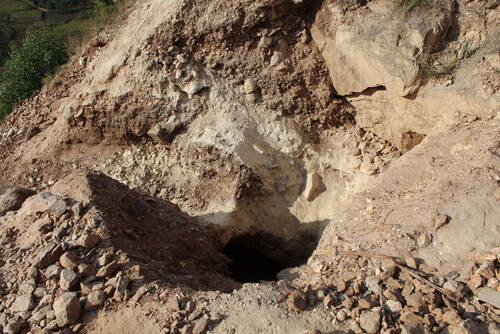
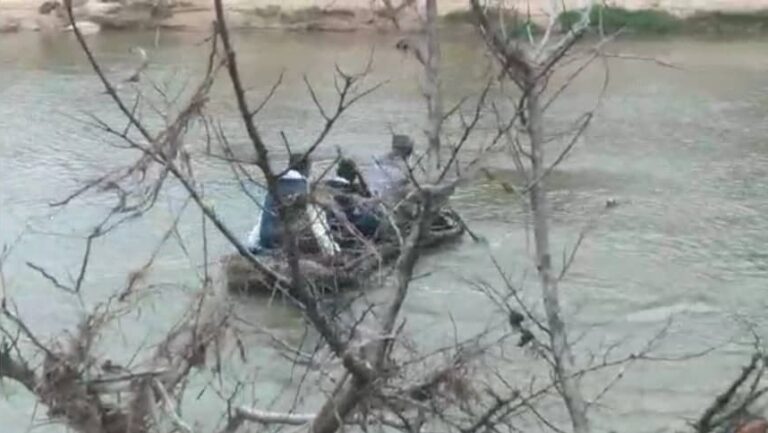
As I approached the riverbed, he was struck by the changes that had taken place within a short space of time. The area was now teeming with people, digging and panning for gold.
The sound of pickaxes striking the earth and the murmur of conversations filled the air. My heart sank as I realized that the chikorokoza, or illegal gold panning, had finally reached our doorstep.
Though there were cases of panning in the same river in the previous years, the rate was very low and serious illegal mining activities were mainly reported in areas like Manyama, Hwendedzo and Bhani in the District and some in Zaka just across Mutirikwi and I never imagined it would come so close to home.
One of the panners, a young woman and also a relative of mine, looked up and looked at me. She smiled wearily and began to speak about the harsh reality of their situation.
“Kule (uncle) this process is laborious, and we get very little from the tiresome work we do, but we have no option. No one gets enough to spare, it’s just a way of putting food on the table and, in some instances, sending children to school itonditsvakiraiwo basa kutown (please get me a job in town),” she said.
Another one said they were aware of the dangers of the work they do as it also poses risky to their animals and the ultimate result of the damage also affect them as they live in the area.
“We acknowledge the need to protect the environment, but we’re in a desperate situation and are only looking for survival strategies. These pits pose the same risks to us as they do to others. We have animals as well and other consequences have a way of catching up with us but we do not have an option,” said the panner.
I understood the desperation that drove people to this work, people are mining for a living while destroying the future. However, my fear was not just the environmental degradation, but the violence often accompanied with illegal gold panning.
We often hear stories of clashes between panners and authorities in other areas, and the thought of it happening in our community is unbearable.
The result of the panning is a trail of destruction, including water pollution, soil erosion, and loss of biodiversity. Silt from the Tetenu River, exacerbated by panning in both Tetenu and Nhedzewa, and is flowing into the Nyamaunga River, a major tributary of the Mutirikwi River, which ultimately feeds into Bangala Dam. This raises concerns about the long-term sustainability of the ecosystem and water supply.
However, the situation was not peculiar in Muchibwa area but was worse in Muvango and Mashapa areas where people are panning in flowing streams that directly feeds into Mutirikwi River.
Ward 25 councilor Tarusenga Mapamba said the situation was not unique to Nhedzewa but was even worse in Muvango and Muzondo villages. Mapamba believes the situation was a desperate measure by locals to survive following Renco Mine’s failure to pay workers for over half a year.
“We recently had a tough time rescuing a cow that had fallen in one of the pits in Muvango Village. Until Renco Mine pay workers, the situation will continue and escalate. Many of the people involved are Renco Mine workers who are trying to make ends meet.
“Chasing them out is not a viable option as well as that would lead to theft and other consequences as they try to make ends meet,” said Mapamba.
One villager Simbarashe Musheche from Musheche Village corroborated Mapamba’s concerns, stating that panners were active in Nyabata River, up to Maramba village and Mavhugwi area some areas that used to be crossing points were no longer viable due to the pits left by panners
“Youths, women, and children are the major panners. Areas that we used to cross with scotch carts are no longer crossable even on foot. The damage is very terrible and the river flows directly into Mutirikwi and the gradient from the areas downwards is very steep making it easier for the whole loose sand to find its way into the river and eventually into Bangala Dam,” said Musheche.
Musheche called for authorities to intervene and save the community from poverty, particularly Renco Mine to pay workers saying it was the only way that saves the environment.
“We call upon Renco Mine to restore its former glory. People in villages around Renco work in the mine and those who doesn’t rely on the mine as well through doing menial jobs for workers as well as selling different wares for survival and in the absence of salaries, people resort to this kind of alternative to make a living,” said Musheche.
The Environmental Management Agency (EMA) Masvingo Provincial Environmental Education and Publicity Officer Munyaradzi Mutisi said the agency had received reports of the on goings in the said areas and investigations were carried out.
He said they had since engaged with the Zimbabwe Republic Police who were handling the matter and conducting patrols in the affected areas.
“The Agency received report of illegal gold panning then responded promptly by conducting an inspection upon which our findings outlined that illegal gold mining was happening. The Agency raised the issue with the Zimbabwe Republic Police which has initiated patrols in the affected area and is currently handling the matter,” said Mutisi.
The question remains, can a way be found to break this cycle of poverty and environmental degradation? As the community struggles to survive, it is clear that a solution is urgently needed. Poverty doesn’t have to mean pollution, but it will take concerted effort from all stakeholders to find a way forward that balances livelihoods with environmental sustainability.

Court dismisses Mugabe chieftaincy contestation

By Beverly Bizeki

A long-running succession battle over the Mugabe chieftaincy was put to rest after the High Court in Masvingo dismissed an application by Professor Emmanuel Dumbu challenging the appointment of Matubede Mudavanhu as substantive Chief Mugabe.

In a ruling delivered by Justice Zisengwe, the court found that the appointment, though made after years of delay was constitutionally valid and consistent with customary practices, given the stalemate that had crippled the clan and traditional leadership structures for over a decade.

Professor Dumbu, a member of the Dumbu house which has claim in the chieftaincy, had sought to nullify the appointment on the grounds that it flouted the Mugabe clan’s “collateral rotation system,” which requires the chieftaincy to rotate among five royal houses and is against the father to son succession.

He claimed he was the rightful heir, nominated at a meeting held at Chikarudzo Business Centre on October 312022, a meeting he said was sanctioned and in line with Section 283 of the Constitution.

He dismissed earlier proceedings, including a 16 October 2017 meeting that resulted in Mudavanhu’s nomination, arguing that the minutes were unsigned, unconfirmed by attending chiefs, and only stamped by the District Administrator a year later. In contrast, he maintained that the Chikarudzo meeting was procedurally sound and constitutionally compliant.

At the centre of the legal argument was whether Mudavanhu’s appointment could stand, having been made under Section 3(2) (b) of the Traditional Leaders Act, a provision the applicant argued was overridden by Section 283 of the Constitution. He further invoked the Attorney General’s Office Act, pointing to a letter from legal officer Ms. P. Rashai who withdrew earlier advice supporting the appointment and advised the government not to proceed.

However, the court ruled that while Section 283 of the Constitution governs the appointment of traditional leaders, the Traditional Leaders Act remains applicable so long as it is interpreted in line with constitutional principles. Citing precedent from Marange v Marange & Ors, Justice Zisengwe affirmed that the President remains empowered to appoint chiefs, especially in circumstances where nomination processes fail to yield consensus.

“In the face of a protracted impasse and conflicting nominations from within the clan and the Provincial Assembly of Chiefs, the Minister was entitled to invoke the fallback mechanism provided under the Traditional Leaders Act,” said Justice Zisengwe.

The court found that attempts to reach a consensus through regular channels had failed for over a decade since Chief Mute Mudavanhu’s death in 2009. In that period, the Provincial Assembly and National Council of Chiefs failed to endorse a candidate. Given that deadlock, the Minister lawfully nominated Mudavanhu, who had served as acting chief for nearly 14 years and belonged to one of the five royal houses.

Justice Zisengwe concluded that while Professor Dumbu had raised important procedural and constitutional questions, the core issue remained the practical failure of traditional structures to produce a candidate over an 11-year period. Resorting to the fallback clause in the Act was both lawful and necessary.

He said the application had been dismissed with costs, stating that the applicant had failed to demonstrate any constitutional violation or customary inconsistency in Mudavanhu’s appointment.

Man assaulted for refusing to visit Tsikamutanda in Zaka

By Staff Reporter

A disturbing incident of assault has been reported in Zaka, Chief Bota area, involving a self-proclaimed traditional healer known as Tsikamutanda where the victim was allegedly manhandled and dragged to the Tsikamutanda’s shrine after refusing to comply with family members’ demand to visit.
During the altercation, the victim claimed to sustained bruises and had his shirt torn. The Tsikamutanda ultimately declared the victim had no spiritual issues, leaving many to question the purpose of the forced visit.
Thomas Kubvaruno of Banduki Village told TellZim News that his family members including his brother Lawrence and others dragged him to Chisara Village where the Tsikamutanda was on the day in question against his belief.
“It’s true, they came to my place after I had refused to go and manhandled me, they tore my shirt and I had bruises all over, however, what concerns me much is that I was declared innocent when we got there.
“I had even asked them before going there if they suspect that I had anything or if they were told that I had anything but they heard none of it and force marched me there,” said Kubvaruno.
This incident highlights the growing concerns about rogue Tsikamutandas in the area, which have been further exacerbated by the police’s failure to take effective action. Despite launching a manhunt for these individuals, the police are yet to apprehend them, leaving villagers frustrated and fearful.
The lack of police action has raised concerns that the situation may escalate, potentially leading to violent confrontations.
“We were told that forcing people to go there was illegal and that them being here was also illegal. We read in the news that the Chief was against it and the police were looking for them but no action has been taken so far.
“We now fear for our lives and my relatives are even threatening to assault me for reporting the incident and I now fear for my life,” he said.
The activities of the Tsikamutandas have been described as a reign of terror in the community. Reports have surfaced of them demanding livestock, household items, and money from villagers, with some cases involving disruption of family dynamics. The community is now calling for urgent action to be taken to apprehend these individuals and put an end to their activities.
The Traditional Medical Practitioners Council (TMPC) recently wrote a letter to various departments asking for help to apprehend the traditional healers in the area as well as in Nyajena.
MPCZ is mandated by the Government of Zimbabwe under the Ministry of Health and Child Care in terms of the Traditional Medical Practitioners Act [Chapter 27:14] to register, license, regulate, control, supervise and promote the practice of all traditional medical activities in Zimbabwe.
In a letter by TMPC Acting Registrar Givemore Kanda, dated May 28 and directed to Officer In Charge Zaka and Masvingo policing districts, and the District Development Coordinators of the two jurisdictions, the council noted with concern the increased illegal activities of fraudulent traditional medical practitioners and persons operating as Tsikamutandas in the said areas.
“The council notes with concern the increased illegal activities of fraudulent traditional medical practitioners and persons operating as Tsikamutandas swindling villagers of their possessions in cahoots with some traditional leaders and village heads.
“We are seeking your assistance for the arrest and bringing to book, persons operating as Tsikamutandas throughout Masvingo Province including the culprits involved in Zaka and Nyajena Districts. The activities of persons operating as Tsikamutandas are illegal according to the Criminal Law (Codification and Reform) Act (Chapter 9:23) and TMPC does not support such activities,” reads part of the letter.

Midlands police raise concern over electricity infrastructure vandalism

By Tatenda Sibanda

Police in Midlands have confirmed a disturbing trend of electricity infrastructure vandalism after receiving two reports of electricity transformers theft in Mutenderende in Chirumhanzu areas.
Midlands Provincial Police Spokesperson, Inspector Emmanuel Mahoko confirmed the theft cases and called for concerted efforts from everyone to fight the problem targeting public infrastructure.
“I confirm receiving two reports of electricity infrastructure vandalism in Midlands province. This is a disturbing trend and we urge all stakeholders to safeguard public infrastructure and report cases of vandalism to the police,” said Inspector Mahoko.
The police received reports from Faith Chademana, (34) after transformer located about 30 meters from her homestead was stoles and the second case was reported by Lonkina Dzoro (73) of Dzoro Village, Chief Hama in Chirumazu.
Both electric infrastructures were removed from their respective poles and vandalised leaving some pieces of metal scattered around the poles.
Cases of electricity infrastructure continue to surge in Midlands and the whole country in general with most reports being attributed to theft of copper cables.

Man falls to his death while celebrating friend’s pool win

0

By Tatiana Mhararira

A dark cloud hung over the community in Gutu following the sudden death of a 38-year-old man who fell and died while celebrating a friend’s victory in a pool match on June 13, 2025.
Masvingo Provincial Police Spokesperson Inspector Kudakwashe Dhewa confirmed the death of Taedza Nyika Manyeruke to TellZim News who was in high spirits cheering his friend’s win when he fell and lost his life.
“I confirm the incident whereby Manyeruke of Mudamburi Village under Chief Gutu lost his life after falling while celebrating,” said Inspector Dhewa.
On the day in question at around 1930 hours Manyeruke was watching pool with his friends at Makura bottle store at Masvingise Business Centre and he was supporting a fellow villager who is his friend.
Manyeruke’s friend won and he started celebrating his friend’s success and started running with the intention of jumping on his friend’s back.
Unfortunately Manyeruke missed his friend’s back, hit the door and fell to the ground.
He became unconscious and his friends rendered first aid and left him to lie by the shop verandah.
Another man who was passing by saw that Manyeruke had already died. The police took the body to Gutu Mission Hospital mortuary for postmortem. The Police found that Manyeruke’s occiput was swollen.

Masvingo province targets 5 000 ha winter wheat

By Virginia Njovo

Masvingo Province is targeting to plant 5 000 hectares of winter wheat this season to surpass the 4 000 hectares planted in 2024 with a national target of 120,000 hectares with a national output target of 600 000 tonnes to surpass last year’s 562,591 tones.
In 2024, Masvingo province planted 3000 ha missing the target of 4 000ha.
Masvingo Agricultural and Rural Development Advisory Services (ARDAS) Director Caleb Mahoya told TellZim News that preparations for winter wheat farming were progressing well across the province with part of the wheat planted later now at germination stage while the other is at booting stage for those who planted earlier.
“Preparations went well this season and as we are speaking in various places the crop is now at booting stage and to those who planted late it is in germinating stage.
‘’The province managed to scale up wheat production this season as compared to last season in 2024 and we have the potential to cultivate up to 5,000 hectares as the nation is looking at cultivating 120,000 hectares,” said Mahoya.
Mahoya said they were anticipating a good season due to availability of adequate irrigation water across the province following a good rainy season.
“The crop situation is commendable and we are hoping for the best since we have enough water across the province, 75 percent of our dams spilled after receiving normal to above rainfall in 2024 to 2025 farming season,” said Mahoya.
Mahoya advised farmers to follow good agronomy practices to get the expected yield.
“We are encouraging our farmers to follow the best agronomic practices in controlling weeds, use fertilizers in a proper manner, split application according to their soil test requirement and also encouraging our farmers to make sure they irrigate properly, right water management in irrigation perspective, look out for pests, diseases and control them well in time.
“As the winter wheat crop progresses through various growth stages, collective efforts of the farmers augmented with the support of expert advice and wise use of resources will be vital in converting the success of planting into a sufficiently fruitful harvest,” he said.
Mahoya said the province had only experienced challenges in delayed inputs delivery to farmers this season
“The only challenge we have experienced this year was a delay in the delivery of inputs to farmers due to some logistical procedures but now every farmer who was supposed to get the seed got them and have made some progress in farming,” said Mahoya.

Masvingo records 66 cases of dog bites in one week

By Virginia Njovo

A surge in dog bites has sent shockwaves through Masvingo with 66 reported cases in just one week sparking concerns about spread of disease like rabies with the province being among the top since January this year.
Masvingo records cumulative of 66 cases of dog bites in one week as reported by the Ministry of Health and Childcare (MoHCC) Weekly Disease Surveillance Report of weekending of 1 June 2025.
Masvingo Province is just two cases below Mashonaland West which recorded 68 cases in the same week.
“The highest numbers of dog bite cases reported this week were from Masvingo Mashonaland West Province with 68 cases and Masvingo with 66.The cumulative figures for dog bites are 13 956 and 0 deaths,” reads part of the report.
Report of Weekending 25 May 2025 showed that Masvingo recorded 78 cases following Manicaland with 88 cases.
“The highest number of dog bites cases reported this week were from Manicaland with 88, Masvingo 78 and Midlands 78 also,” reads the report.
In the report of weekending 18 May 2025 Masvingo had highest number of dog bites cases as 78 cases recorded.
Weekly Disease Surveillance Report of weekending 5 January Masvingo recorded over 100 cases of dog bites.
“The highest number of dog bites cases this week were from Masvingo Province with 136 and Mashonaland East Province with 112,” reads the report.
Speaking with TellZim News Masvingo United and Ratepayers Alliance (MURRA) Director Anoziva Muguti said stray dogs in Masvingo remain a threat to public health as dog bites continue to escalate instead of decreasing; this exposes residents to rabbis as well as life threatening encounters.
“I am deeply concerned about the high number of dog bites in Masvingo as highlighted in that report .To Protect public health I urge local authorities to take immediate action to deal with stray dogs effectively and ensure all dogs are vaccinated against rabies, enforcing vaccination protocols,” said Muguti.
Muguti also urged residents to play their part by reporting stray dogs.
“Residents should also play their part by reporting stray dogs and suspicious animal behaviour to local authorities and seeking medical attention immediately if bitten or exposed to potentially rabid animals.
“Collaboration between authorities, residents and animal owners is crucial to address this public health issue and prevent rabies transmission,” added Muguti.
Masvingo City Mayor referred questions to City of Masvingo Director of Health and Enviromental Services Suzanne Madamombe saying the issue was technical.
Efforts to reach Madamombe were fruitless as she did not pick up her cell and did not respond to questions send to her on WhatsApp.

Human rights crisis deepens in Masvingo-ZPP report reveals

0

By Staff Reporter

A recent report by the Zimbabwe Peace Project (ZPP) has highlighted a disturbing trend in Masvingo Province where human rights violations surged to alarming levels and the province being ranked among the top for human rights abuses for the second consecutive month.
According to the ZPP report Masvingo and Harare recorded the highest number of violations in May.
“Provincially, Masvingo and Harare recorded the highest number of violations in May, with 13 and 16 violations respectively. Midlands followed closely with 12 violations, while Manicaland and Mashonaland West each documented 10. Mashonaland Central experienced a notable decline from 13 violations the previous month to 4 in May. Mashonaland East recorded 9 violations, and both Matabeleland North and South recorded 6 violations each,” reads the report.
In April Masvingo was the highest followed by Harare and the trend show the two provinces as major violators of human rights.
Just like in April Zanu PF was named again the major perpetrator followed by other parties and perpetrators as analysed in the report.
“Of the total 5,376 people affected, 3,107 were females and 2,269 were males. Among the perpetrators, those affiliated with the ruling party, ZANU PF, accounted for 35.38 percent, followed by members of the Zimbabwe Republic Police (ZRP) at 13.77percent.
“Other violators included local authorities (16.53percent), government officials (11.44percent), artisanal miners (5.93percent), traditional leaders (6.14 percent), members of the MDC-Alliance (0.64 percent) and unaffiliated individuals (6.36percent). Additional perpetrators involved members of the Zimbabwe National Army (0.21 percent) and vendors (3.6 percent). State security actors, particularly those mandated to protect the public, continue to feature prominently among perpetrators of human rights violations,
“In Masvingo, 13 human rights violations affecting 722 (359 men and 363 women including 28 PWDs) victims were documented in May, reflecting a troubling pattern of discrimination, neglect of basic services, and abuse of authority,” reads part of the ZPP report.
The report explained how learners at Boora Secondary school were denied access to education.
“At Boora Secondary School, students were denied access to education by the headmistress and School Development Committee members due to non-payment of fees, violating the right to education and exacerbating inequality among economically vulnerable families.
The report further explained the loopholes that were within the health sector in Gutu where nurses stole medication from the hospital.
“In the health sector, the right to health was severely compromised at Gutu Rural Hospital, where nurses allegedly stole medication, resulting in patients being denied essential treatment. This theft, followed by violent interrogation of the nurses, highlighted both systemic corruption and violations of due process and protection from inhuman treatment.
“Further, patients at the same hospital were discharged without medication for critical conditions such as hypertension and sexually transmitted infections, while the mortuary remained non-functional and the hospital kitchen lacked food, forcing patients to bring their own supplies, a clear denial of the right to health and dignity,” reads part of the report.
The report further explained how the elderly were treated unfairly and also the case of political discrimination in Bikita.
“In Mwenezi North, ward 6, the elderly were neglected, as evidenced by the case of 87-year-old Gogo Sibanda, who was denied free medical care at Sarahuro Clinic. Her experience of inadequate care and delayed meals constitutes a violation of the right to health and humane treatment for older persons.
“In a case of political discrimination, the MP for Bikita South openly declared that wards 4, 28, and 29 would be excluded from development programs such as Constituency Development Funds and devolution projects because they did not vote for him. This public exclusion violates the principles of non-discrimination, equality before the law, and the right to development,” reads part of the report.
In Mashonaland East, 10 human rights violations were documented. The violations include systemic political intimidation, abuse of public institutions, and denial of basic social services. Patients at local clinics were being charged US$1 security fees per visit without receiving treatment, only basic checks such as blood pressure and temperature before being referred elsewhere or told to buy their own medication, including essentials like paracetamol.
In UMP’s Museka District, villagers were coerced to pay US$3 for the ZANU PF party cards failure to do were threatened with exclusion from state aid and essential services like cattle dipping. Elderly pensioners were especially targeted, with intimidation tactics including the use of party-linked “security” enforcers.
An estimated troubling report of massive eviction where 4 000 people were forcibly evicted from land and the associated reports of police brutality, and property destruction. Murewa, traditional leaders also issued threats of violence against residents. These violations underscore a disturbing pattern of politically motivated repression, exploitation of vulnerable groups, and the erosion of fundamental rights in the province.
In Matabeleland South, six human rights violations were documented. The violations affected 11 (8 men and 3 women) people, reflecting a troubling mix of violence, mismanagement of aid, and disputes over natural resources. In Gwanda, an elderly woman was attacked by two men shortly after receiving food aid with the intention of dispossessing her of the aid. In Gwanda, a traditional leader was implicated in the misuse of cement donated for hospital construction, raising concerns about abuse of authority and misappropriation of resources meant for essential public services.
A violent conflict erupted among artisanal miners over control of a gold mine, resulting in the mine owner being struck with an axe, an alarming indication of lawlessness and lack of effective regulation in the mining sector. These incidents underscore weak community protections, poor accountability in aid and resource management, and on-going threats to the safety and dignity of vulnerable citizens.
In Harare Province, 16 human rights violations were documented. 220 (105 men and 115 women) people were affected. In addition to service delivery related human right violations, other violations include politically motivated violence and unlawful police conduct. In Chitungwiza, a well-known opposition supporter was wrongfully accused of attending a political gathering when they had actually participated in a local Workers’ Day celebration; this individual was assaulted by police at night, detained, further beaten in custody, and charged with unlawful conduct.
In Chitungwiza, a former local authority elected official, aligned with the opposition party CCC, faced repeated abduction attempts by suspected Zanu PF operatives, who arrived in three Fortuner vehicles with multiple occupants at her home in Zengeza. Despite their efforts on three separate occasions, the victim escaped, but the intimidation has caused severe distress. The police have not arrested any suspects, and the victim’s family believes the attackers are linked to the ruling party. These incidents underscore serious violations of the rights to personal security, freedom from torture and harassment, and political participation.
Together, these cases paint a grim picture of service delivery failures, political retribution, and neglect of vulnerable groups, undermining citizens’ dignity, safety, and access to basic rights.