Home Blog Page 339

Top architect Mutsambiwa dies

0

TellZim Reporter

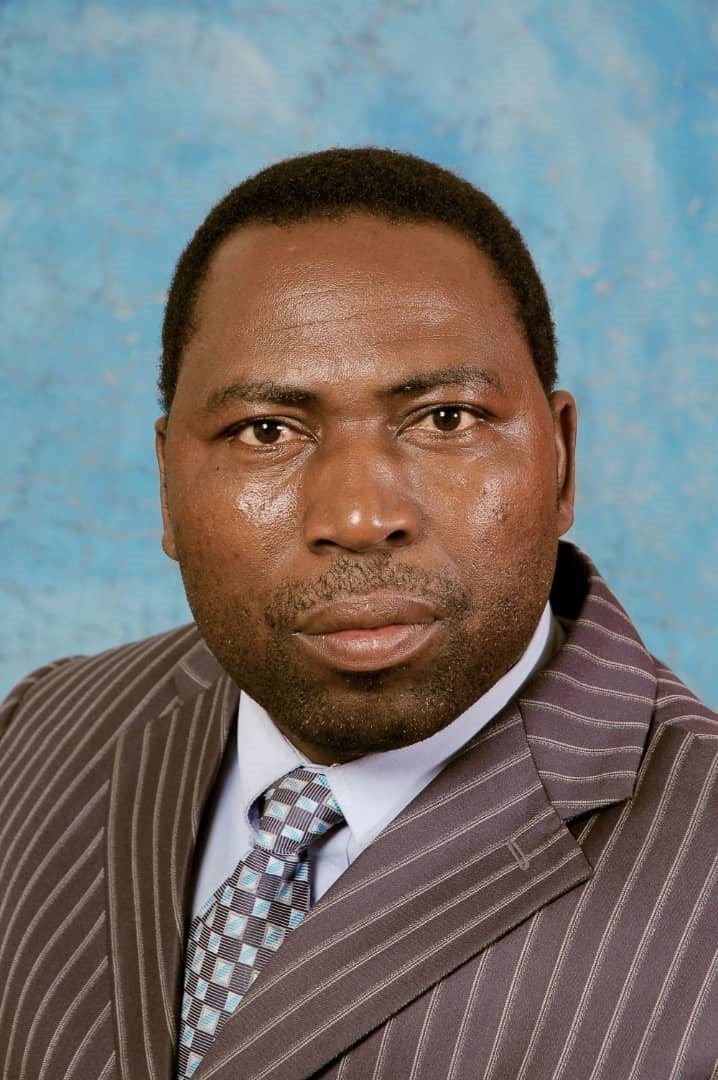
One of Masvingo’s top architects, Cassian Mutsambiwa has died.

He was 58.

His brother Stern Mutsambiwa confirmed the death and said that the family had lost a unifier, who always made peace in the family.

“We have lost a unifying force as a family, as we knew that whenever there were disagreements, we would go to Cassian so that he could reconcile us.

“He will be laid to rest on Friday (March 3) at Lawn Cemetery in Masvingo,” he said.

Mutsambiwa who was the founder of Mutsambiwa Architects, was born on August 20 1963 in Mutare, where he attended his primary education in Dangamvura and Sakubva.

“He then went to Goromonzi for his secondary education before he went to study architecture in Cuba where he attained his first degree,” his brother said.

He then started working in the Ministry of Public Works in Zimbabwe during the mid-1980s before going into private practice in Mutare and later settled in Masvingo in the early 1990s.

The late Mutsambiwa held a Master’s degree from National University of Science and Technology (NUST) and at the time of his death was preparing for his doctorate at the same university.

He was part of the team that designed Masvingo Polytechnic while still working for another company.

Some of his outstanding work in Masvingo involve the spectacular Zion Christian Church Mbungo Mission building and he was also the Great Zimbabwe University architect who designed the Hebert Chitepo School of Law, Simon Mazorodze Medical School, Robert Mugabe School of Education as well as all the other recent GZU civil works projects.

He also worked on designing OK Supermarket, OK Mart in Masvingo and most recently OK Chivhu, among other designs.

“He designed the Masvingo Roman Catholic Cathedral, Morgenster Hospital and Mission, together with the Reformed Church in Zimbabwe (RCZ) new site. He also designed many houses in Rhodene, Zimre Park and other residential areas around Masvingo,” Stern Mutsambiwa said.

Mutsambiwa was also Masvingo Golf Club Captain before he was succeeded by businessman Stanley Kondongwe.

He reportedly had been on dialysis for some time before his death on March 1, 2022 at a private surgery in Masvingo.

He is survived by his wife and three children; two sons and a daughter.

Mourners are gathered at House Number 9 Baden Street in Rhodene, Masvingo.

July Moyo denies plot to strip off Musara chieftainship

. . . As provincial assembly of chiefs back Boniface Musara as substantive chief

Melinda Kusemachibi

MASVINGO – Local Government, Public Works and National Housing Minister July Moyo has dismissed claims that he is fighting tooth and nail to strip off the Musara chieftainship after he allegedly wrote a letter to Masvingo Provincial Assembly of Chiefs recommending abolishment of the chieftainship.

Chiefs Provincial Assembly in Masvingo however convened recently (February 28, 2022) to discuss the matter and they dismissed the recommendations to strip off Musara chieftainship allegedly by Moyo, saying they instead affirm Chief Boniface Musara as the substantive chief of that clan.

The assembly, which comprises all chiefs in Masvingo province, made it clear that they have nothing to do with the issue because they know Musara chieftainship was legally resuscitated leading to the installation of the new chief in 2014.

July Moyo, however when contacted by TellZim for comment distanced himself from the Musara chieftainship matter saying he has nothing to do with it despite him alleged to have signed a letter last year recommending that Musara chieftainship be stripped off.

“I have not recommended anything to that effect; I have nothing to do with the Musara chieftainship and the meeting that was held in Masvingo.  As you are aware that I was not there at the meeting in Masvingo, so I have nothing to do with that issue,” said Moyo.

However, despite him denying that he has anything to do with the matter, Moyo allegedly recommended the abolishment of the Musara chieftainship saying it was fraudulently resuscitated.

A reliable source who was part of the meeting said the traditional leaders unanimously agreed that, as far as they are concerned, they fully recognize the Musara chieftainship and its substantive chief Boniface Musara before they referred the matter back to July Moyo to deal with his own matter.

“The position was very clear; it was agreed that the Musara chieftainship was legally resuscitated so if July Moyo has any issues, then the ministry should deal with the matter. The issue does not need endorsement of the provincial assembly; probably it is an administrative issue so the ministry should deal with the matter,” said one of the chiefs who spoke on condition of anonymity.

Other chiefs( Ndanga – real name Wilson Makono, Neromwe-Clemence Madzingo , Serima- Vengai Rushwaya) when contacted by TellZim News referred questions to their chairperson Chief Chitanga born Fellen Chauke saying he is the one responsible for commenting on behalf of the assembly.

“Our chairperson Chief Chitanga is our spokesperson; he is in the best position to comment about that issue,” said the Chiefs.

The chairperson for the provincial assembly Senator Chief Chitanga could not shed more light when TellZim contacted him for comment as he referred the matter back to July Moyo.

“We have nothing to say for now; we can only do an analysis after the minister (Moyo) furnishes us with his report. For now I cannot say much,” said Chief Chitanga.

When contacted for comment, Chief Musara referred all the questions to July Moyo.

Though it’s not clear how the Musara chieftainship was fraudulently resuscitated; the available evidence show that there had been court battles which the Musaras won before Boniface was appointed the substantive Chief Musara in 2014.

In 2014 the High Court ordered Boniface Musara as substantive chief for Ward 32, Masvingo East putting to rest the protracted wrangle between the Musara and Chikwanda chieftainships that dates back to the colonial era.

It is reported that Wards 8 and 32 used to be under Musara chieftainship before they were grabbed by the white settlers.

The Musara Chieftainship was later resuscitated by the then local government minister Ignatius Chombo in 2014.

However, the neighboring Chief Kadiwa Chikwanda once dragged Musara to the high court, case number HC6348/2014. The matter was heard before Judge Justice Clemence Phiri who ruled in favour of Musara, dismissing Chikwanda’s application with costs. That resulted in the upholding of SI62 of 2014 emplacing the area covering Ward 32 under Chief Musara as valid and no appeal against the judgment was made thereafter. The ministry of local government also later warned Chikwanda to desist from further encroaching into Musara’ area of jurisdiction.

Persistent moisture stress worries farmers

Melinda Kusemachibi

Farmers in Masvingo have expressed worry over the persistent dry spell currently obtaining in the province as most crops that have reached maturity stages are succumbing to the effects of the searing heat, hence putting expectations of a bumper harvest in jeopardy.
After experiencing a likely normal rainfall pattern in the past months, there has been an uneasy calm in the march of the monsoon. With no rains, moisture in the soil has reduced, upsetting the water budget in the soil.
The early summer maize crops are at critical tussling stage but wilting due to moisture stress has also started.
A farmer in Masvingo urban Simbarashe Muzenda indicated that they were worried about their crops as the soil is now dry.
“Our crops are now wilting because of poor rainfall experienced in the country. We are now stressed and if we do not receive rains any time soon there will be a disaster,” said Muzenda.
Another farmer from Masvingo North Moses Mtoko said cereal crops were dying because to moisture stress.
“Crops like maize, groundnuts are the mostly affected by moisture stress though some parts are still better, as farmers we are very worried as we were expecting a bumper harvest in our area,” said Mtoko.
Zaka Agricultural Technical and Extension Services (Agritex) officer Kennedy Pedzisai said some parts of the district were heavily affected though some are still in a good state.
“In the lower parts of the district from Zaka, Rudhanda to Chiredzi boundary, crops are suffering from moisture stress. However, the upper part which falls under the agro-ecological region three which stretches from Chipinda, Ndanga, Zishiri, Jichidza and Govo, crops are still ok.
“Farmers are being advised to continue mulching and controlling fall Army worm. Weed control in late planted crops is still being encouraged. We also encourage them to start vegetable production utilizing residual moisture,” said Pedzisai.
Masvingo Urban Agritex officer Sabina Mujati said that they are still writing a report for crop assessment so they cannot disclose the information.
“Currently, we are doing report writing for crop situation assessment and that report will be officiated by the Minister, then we will share with stakeholders after that. So currently we cannot disclose that information as we are still in the process of writing and we have not yet finished,” said Mujati.
Masvingo district Agritex Officer Eliphas Mugari said that in the past days crops were not yet disturbed but now they are experiencing moisture stress effects.
“Crop condition is good, but traces of moisture stress are visible in some parts of the district especially Vic East and Masvingo East, hopefully the rains will be upon us any time soon. We are encouraging farmers, for those who have mulched their crop condition is good, especially maize. And for those who can supplement with irrigation, the better,” said Mugari.
However Mwenezi district Agritex Officer Jemitias Denhere said he cannot give information for now.
“For now l cannot give you details as we are writing a report to the Ministry, after that we will be able to give you the details,” said Denhere.
The dry spell is likely to affect the expected total yields, far less than farmers would have expected.

Musikavanhu fails to honor ZW$1m Tshovani Stadium pledge

Beatific Gumbwanda

CHIREDZI-West Member of Parliament (MP) Farai Musikavanhu last year failed to fulfill his ZW$1 million pledge from the 2021 ZW$2 Million Constituency Development Fund (CDF) towards the refurbishment of Tshovani Stadium.
In July 2021, (https://tellzim.com/musikavanhu-promises-zw1mil-towards/)  Musikavanhu who is also patron for Chiredzi FC wrote to then Chiredzi Town Council Secretary, the late Charles Muchatukwa seeking permission to devote 50percent of the 2021 CDF, towards the refurbishment of the facility in order to promote local football, which he later failed as the CDF’s 2021 share was used towards other projects.
During the run up to 2018 harmonized elections, Musikavanhu also promised the electorate that he will transform Tshovani Stadium to FIFA standards and now its four years down the line but the stadium still looks like a primary school football pitch.
Speaking during the meeting with Chiredzi Town Council in council boardroom last year, Musikavanhu confirmed his intention to use 50percent of the 2021 CDF towards refurbishment of the stadium while he challenged Chiredzi Town Council and other stakeholders to join hands towards that cause.
Musikavanhu indicated that half of the budget will go towards construction of two classroom blocks at Monyoroka (ward 27) and Batanai Schools (ward 28).
In an interview with the committee responsible with the refurbishment of Tshovani Stadium, who is the Vice chaiperson of Chiredzi Town Council and ward 3 councillor, Ropafadzo Makumire said they are still to get the promised ZWL$ 1 million from the legislator and the local authority has since injected ZWL$268 000 in the project.
“The local authority has so far channeled ZW$268 000 towards electrification and we are still to get the ZW$1 million which was promised by the Member of Parliament,” said Makumire.
Musikavanhu did not respond to the questions sent to him by this publication but he had already made a budget for the 2022 CDF which he, through a message attributed to him sent to some WhatsApp groups, indicated that he will finish construction of two blocks in ward 27 and 28 respectively.
He also indicated that he will construct another new block in ward 28, electrify existing borehole at ward 5 Zava Shopping Center and installation of two-5000 litre water tanks for that borehole.
The legislator also targets the construction of a Polyclinic patients waiting shed and Maternity wing staff toilet at the council run clinic, where he once allegedly sabotaged a donation by a UK based businessman, John Manganye who had bought state of the art electric hospital beds, an ambulance and water tanks.

Masvingo man discovers unidentified object in beer

Rutendo Chirume

What promised to be an eventful beer drinking spree ended up in disappointment for Masvingo man from Victoria Range after he allegedly discovered an unidentified object in his beer after drinking it halfway mark, an incident similar to the one that took place in Karoi last month when six men reportedly found three condoms in a beer container.
Norman Kusizani who claims to have made that discovery which has left him in fear for his health and life at Taimbokuudzai Beer hall in the suburb on February said he has since reported the matter to police.
Kusizani had pictures of what looked like a scorpion from one side and a patch of cloth from the other side.
He reported the matter to the bar’s owner who replaced the beer and told him to report the matter at Delta depot.
He called to report the incident and the sales representative arranged for them to meet in town the following day to present his case.
Kusizani told TellZim News that during the meeting, a misunderstanding arose between them after he got accused of being the one who might have placed the object in the beer bottle.
“Whilst we were still trying to find a solution, one of the guys started to accuse me of being the one who might have placed the thing in that beer. We started to fight in which we ended up going to the police where I was charged for assault and paid a fine, but I opened a docket against Delta which police said would take some time since the case need to be investigated. I have been experiencing stomach upsets since then. I need to confirm with doctors just to make sure I am alright because I do not know whether it is in my head or the beer actually that caused it since it was contaminated,” said Kusizani.

Citadel of African education now in shambles

…bleak future as second republic commits ‘educational genocide’

Melinda Kusemachibi/ Emmanuel Chitsika

Zimbabwean educational sector used to be ranked among giants on the African continent, making most countries green with envy with the way the country produced academic intellectuals ready to invade any market on the global arena.
The country used to churn out complete and competent graduates to meet the requirements in the global job markets.
However, the former citadel of academic prowess seems to be slowly turning into a shadow of former self with a number of forces at play, ranging from job actions by educators over poor remuneration as well as boycotting marking of Advanced and Ordinary level examinations among other issues.
The ongoing impasse over improvement of salaries between government and teachers, with the battle culminating into the former resorting to use of threats and suspensions to the striking employees serves no good to the sector.
The spilling into the High Court of the suspension of educators by their employer is also another cause for concern with educators approaching the courts seeking redress over ‘illegal suspension’ by the employer and technically on whether the Ministry of Primary and Secondary Education has the authority to suspend employees who belong to the Public Service Commission (PSC).
ZIMSEC markers downed tools in protest allegedly accusing the examination body of acting in bad faith by failing to honour their part by paying their allowances in hard currency instead of the local one a factor that could stall the release of the 2021 Ordinary and Advanced level results after grade 7 results were delayed as well.

Elijah Chitsika

Renowned educationist Elijah Chitsika said the education system is in the intensive care unit (ICU) with no workable solution in sight to put the system on a proper trajectory as government and teachers seem not to find each other.
“There seems to be no sincerity on the part of government which has developed a culture of attempting to address the teachers’ grievances at the last minute always. Teachers had their grievances on the employer’s table since last year if not beyond and government had more than ample time since last year to address them during normal holidays as well as Covid-19 induced extensions.
“A number of questions prop up like: Is government serious about the welfare of teachers, To what extent are teacher unions genuine representatives of teachers, are teachers seriously concerned about their welfare, to what extent are parents as key stakeholders in education concerned about the education of their children and does the country have enough resources to sustainably improve teachers’ welfare?
“It is realistic to state that the powers that be have no commitment to solving the teachers’ problems. Whatever solutions are provided, are piecemeal solutions that do not aim to genuinely improve teachers’ welfare. The teacher is the hungry man that knows what he needs but government is a ‘heartless master’ who offers wrong solutions that do not genuinely improve their welfare,” said Chitsika.
He also said the new dispensation has taken down the education system towards a decline.
“I t is a mere fallacy for our government to clamour that our education system is the best on the continent. The Second Republic has set our education system on a serious decline. There is a possible danger of lowering our grading system to give a false impression of a sustained high pass rate.
“The current impasse between Zimsec and markers does not do well to the already wounded education system. Zimsec, like government has also shown itself to be a ‘dishonest employer’. Zimsec has not been able to honour the allowance promises made to markers. Markers who own an important niche in the country’s education system are a very demoralized force and hence this compromises their output. All these developments come at a time when a new dimension in form of Continuous Assessment of Learning Activities (CALA) was introduced and with this current pace at which markers are moving, learning time is lost as teachers are occupied at marking centres than the classroom,” he added.
Veteran educationist Cabnson Magaya concurred with Chitsika and said the education sector in Zimbabwe is now underrated.
“We are not happy with the education sector in Zimbabwe as it is depriving the rights of children to education. Teachers are now into extra lessons as most children cannot afford to pay for extra lessons. Since communication is important government, Zimsec and teachers should communicate in order to resolve those issues,” said Magaya.

Raymond Majongwe

Progressive Teachers Union of Zimbabwe (PTUZ) secretary general Raymond Majongwe said government should reconsider their stance and treat teachers with the dignity they deserve.
“Teachers deserve to be treated with dignity and respect as they are on national duty. Zimsec should not treat teachers like workers at a tobacco farm in 1923,” said Majongwe.

Obert Masaraure

Amalgamated Rural Teachers Union of Zimbabwe (ARTUZ) president Obert Masaraure indicated that Zimsec should fulfill its mandate it signed with the teachers.
“Zimsec should honor its contractual obligation signed with the examiners. The current impasse threatens to destroy the credibility of examinations. The evaluation process is no longer trusted. These examiners are already underpaid and are only asking for timely payment of the paltry allowances. The use of force by the Zimbabwe Republic Police should also stop forthwith.
“These allowances they promised are supposed to sustain the teachers while marking. If they do not get 100percent who is going to pay for the rest. Zimsec should pay these allowances in full,” said Masaraure.
Contacted for comment, Zimsec Public Relations Officer Nicholette Dhlamini said Zimsec markers were not on strike.
“Examiners were not striking but they were calling for a general meeting in which we engaged with them and resolved the issue. We never promised to pay them in US$ even the contracts they signed, we indicated that they will receive ZW$,” said Dhlamini.
The Public Service Commission (PSC) who is the employer of the civil service was also quoted in sections of the media emphasising on their tough stance to rid the service of teachers resisting the call to go back to work.
PSC secretary Ambassador Jonathan Wutawunashe said disciplinary measures shall be taken against defaulting teachers.
“The few civil servants who are reported to be absconding will face frim disciplinary measures,” said Ambassador Wutawunashe.
Such use of a commandist approach by the employer speaks volumes about their commitment to break the deadlock by amicably engaging teachers to map the way forward. The stance which follows barely a week after the High court ruled in favour of striking teachers by nullifying Minister of Primary and Secondary Education’s (MoPSE) decision to suspend the former.
Efforts to get a comment from PSC secretary Ambassador Jonathan Wutawunashe proved fruitless as his mobile number went unanswered while WhatsApp messages were not responded to.
Teachers reportedly stated that Zimsec agreed to pay them US$25 a day for those staying out of residence and US$12 per day for those in residence but instead they only received ZW$19 000 and ZW$9 500 for 28 days of marking respectively prompting them to protest.
Last year government forcibly re-introduced CALA in both primary and secondary schools without the consent of various key stakeholders including school administrators and teachers as well which left many people pondering about the future success of the programme.

Dendairy sets record straight on Chilonga Lurcene project

…says it aims to tackle Lowveld drought vulnerability

Emmanuel Chitsika

The Dendairy project meant for Chilonga and Masevamele communal areas is set to tackle the drought vulnerability of the Lowveld area through Lucerne production set to benefit the community that mostly relies on cattle rearing as the high temperatures there cannot sustain other practices of farming like crop cultivation.
Speaking during a media engagement meeting held on February 25 at Flamboyant hotel in Masvingo, the company’s Corporate Communications Officer Lilian Muungani said the project seeks to utilise 12000 hectares of land with 5000 ha specifically meant for the growing of the leguminous crop that is highly nutritious in feeding cattle (pen fattening).
“The area is vulnerable to national disasters emanating from lack of control over pasture production. Beyond that there is a communal to commercial thrust that really looks at ensuring that our communal farmers approach their daily activities with an understanding that they have to do farming as a business. Climate change reality will decimate local herds hence the need for irrigation.
“As an organisation we aim to tackle and or transform the area by handling its proneness to droughts by engaging in green belt pastures to support livestock production. Agriculture is a fundamental to the country’s economic growth and thus the realisation that agriculture cannot take off without controlled pasture production. Eventually the Lowveld will become a regional commercial hub for livestock production and associated value chains,” said Muungani.
She also emphasised on the company’s commitment to erase and allay fears of relocation among the traditional communities by stating that the company intends to do business with a people hence no need to relocate people from their Ancestral/ tribal lands and thus the need to work in partnership with them.
“The other area which is critical to the success of the project is Phase 2 which deals with formation of the Community Representative Forum. There have been so much concerns from the surrounding communities in the area about invasion of the area raising fears about their position once the projects kicks off. As a company we are working on efforts to securitize the interests of our community.
“As investors we want to work with community representative forum that will really be the one to receive the project in the area. We want to avoid a situation where we list around the beneficiaries to deal with the company like on who becomes the out grower as that will open lee ways to people from outside Chilonga. We want the community to take charge of the investment direction by interacting with the company almost on daily basis. Deciding to work with more of a social contract that gives our communities the confidence that this project is not going to decimate or even peripherize them. The organisation would declare the social benefits to the community first,” she said.
Muungani added that their corporate’s vision is further driven by the country’s loss between 2015 and 2021 of around US $60 million of potential revenue due to poor nutrition of close to 150 000 herd and Masvingo as a province which is ranked first in terms of livestock numbers with 1 028 976 cattle, losing 10 183 succumbing to drought in 2020, while in 2019 had 66 088 deaths.
“The reduction in cattle deaths was as a result of government and farmers improving production and provision of subsidized commercial feeds in 17 districts by partners across the country. A lot of decimation occurs when we do not control these pastures.
“Masvingo has a responsibility as a devolved state to look at its Gross Domestic Product (GDP) targets and it matters that we innovatively make use of these existing resources,” she added.
There has been a standoff between the company and local Chilonga and Masevamele communities whose inhabitants are in fear of being evicted to pave way for the Lucerne production project but Dendairy says they do not harbour any intentions to displace people as they want to work with them as out growers of the plant.
The out grower arrangement entails Dendairy providing equipment and farming inputs to farmers on more of contractual basis. Lucerne is highly nutritious in cattle feed production.

Meet Your Candidates: Masvingo Urban Ward 7

Fredrick Moyo

Out of the four wards that are going to have by-elections in Masvingo Urban, ward 7 can simply be called what they say in sports the ‘group of death’ after six candidates were successfully nominated for the March 26 by-election, before one withdrew due to double candidature.
There seems to be stiff competition in the ward, with relatively new parties managing to field candidates to contest for the first time.
Citizens Coalition for Change will be represented by Richard Musekiwa, ZANU PF by Prosper Dohwai, LEAD by Everjoy Chidindi, Prince Nato will stand for UDA while MDC-T has Getrude Tshuma following Charles Chipetu’s withdrawal from the race after the Douglas Mwonzora-led outfit held primary elections a week after the nomination court sat.

Richard Musekiwa – Citizens Coalition for Change

Richard Musekiwa

Musekiwa said there are projects that he left unfinished when he was recalled by MDC-T leader Douglas Mwonzora and he is looking forward to finish those projects if elected.
“As a resident of Rujeko I know which problems people are facing and I am looking forward to solve those problems. There are also some projects in which I left unfinished when I was recalled as a councillor and I am looking forward to finish those projects when I am elected.
“When I was still in office I wanted to build public toilets at every shopping centre in Rujeko as it is a place where people flock doing their day to day business. I will also make sure that the areas that need road attention will be attended to and tar those needs to be tarred and also those that have potholes,” said Musekiwa.
He also added that he advocated for the construction of Rujeko Secondary School as children from Rujeko where traveling long distances going to school and also crossing the busy Masvingo – Beitbridge highway.
“I also advocated for the construction of Rujeko Secondary School which is a good project as pupils now do not have to travel long distances to school and I am promising more projects to Rujeko residents when I am elected. My message to the electorate is that they should vote for CCC and also vote for me as Ward 7 councillor,” added Musekiwa.

Prosper Dohwai – ZANU PF

Prosper Dohwai

Dohwai said he is the best candidate and residents should vote for him as he is a free, loving and caring person and have good projects for the residents.
“What shows that I am the perfect candidate is that people selected me to represent the party and that shows that I am the perfect candidate. I am also caring, loving and I am a good listener who listens to peoples grievances,” said Dohwai.
He also added that if he is elected he will solve people’s challenges without discrimination according to tribe or race and also encouraged residents to vote for him.
“When I am elected, I will go with the grievances that people in ward 7 are facing to the local authority and also solve the problems without looking at ones tribe or race, as long as he/she comes from the ward that I am representing.
“I am encouraging the electorate to vote for me and see that what they want and like to be addressed will be done,” added Dohwai.

Everjoy Chidindi – LEAD

Everjoy Chidindi

Chidindi said she is the ideal candidate for the local authority post in ward 7 because she is young and vibrant and also that she was born and bred in Rujeko so she knows what challenges people are facing as she is prepared to solve the problems.
“What makes me think that I am an ideal candidate is that I am young and I am the future. I believe that if young people are given a chance they will definitely change things. I have a vision of the future like creating employment for the young generation.
“I have a community development agenda in which I will call all community leaders so that we work together for instance in road rehabilitation so that our streets have good roads and also improving the drainage system,” said Chidindi.
She also added that she grew up in Ward 7 and she knows all the challenges that the people are facing and she will try fix them once she is elected.
“I grew up in ward 7 so when I am elected as a young person who is very energetic will fix all the challenges like sewage and water that trouble residents in ward seven. My message to the electorate is that they should vote for me as I am a young person and give the young blood a chance and see what we are capable of,” added Chidindi.
Efforts to get hold of MDC-T ward 7 candidate Getrude Tshuma were fruitless as she was not available before the time of publication.
Prince Nato of UDA said he first have to get authority from his party to speak to the media, missing out on his chance to sell his ideology as the by-elections draw closer.

The death of mother languages: A tragedy to learning progress

0

Rutendo Chirume

Nelson Mandela once said, ‘If you talk to a man in a language he understands, that goes to his/her head. If you talk to them in their language that goes to his/her heart.’
As the world comes together on February 21 to commemorate the International Mother Language Day, a special day set aside to promote the use of mother languages, experts have bemoaned the slow death of multilingual diversity.
According to a research by UNESCO in 2021, there are about 6,500 languages in the world, but at least one language disappears and dies every two weeks.
At least 43 percent of all languages are endangered, and fewer than 100 of the world’s languages are used in the digital world and 40 percent of the population does not have access to education in a language they can understand or speak.
2022 International Mother Language Day ran under the theme ‘Using technology for multilingual learning: Challenges and opportunities’ which seeks to make use of technology in order to promote language digitization, find and address challenges faced during the prevailing Covid-19 lockdowns.
In a statement, Midlands State University National Language Institute Executive Director Prof Wiseman Magwa said that this year’s theme is profound as it provide solutions to the prevailing Covid-19 lockdowns therefore as a country we should embrace technology in order to promote digitization of languages so as to facilitate distant communication.
“Using technology for multilingual learning: Challenges and opportunities are quite profound in the sense that it acknowledges the use of technology in promoting multilingualism in education and socio-economic development. This is inherently critical in that multilingualism enhances tapping from the full potential of humanity, since language is both a tool of communication and thought processing.
“In view of this, this year’s theme calls for innovative strategies as interventions towards the digitization of languages. This year’s edition hinges on providing techno-scientific solutions to challenges resulting from lockdowns, travel restrictions and bans in a bid to reduce human contact.
“The period 2021-2022 saw a series of lockdowns due to the prevalence of the Covid-19 pandemic, hence the call by UNESCO to harness the efficacy of technology to facilitate distant multilingual communication,” wrote Professor Magwa.
He also commented the country’s efforts to recognize all 16 languages in the country which enhances diversity and promote equality and inclusion of different tribes in the country.
“Efforts by Zimbabwe to ratify UNESCO’s motion of multilingualism are the drive to licence numerous language based community radio stations, thereby enhancing usage of the diversity of languages that Zimbabwe has. Failure to recognise multilingualism in society, subsequently leads to serious linguistic crises, expected to create layers of inequality, marginalisation and exclusion,” said Prof Magwa.

Dr Ignatius Mabasa

In an interview with TellZim News, Dr Ignatius Mabasa who did his PHD thesis in Shona noted the significance of this day and said a lot should be done in order to make strides to promote mother languages, calling upon government to enhance the promotion of local languages.
“If it was possible we would take the whole year to celebrate our mother languages because it is very important to us as it defines our identity and cultures which traces our origins. There are a lot of things lost in translation, in learning and that is problematic. Journalists should make noise and publish content in our mother languages which will promote them and ultimately shapes our identities,” said Dr Mabasa.
He also said the reason why people fail to reach the best and be recognized in international standards is that they undermine own languages, thereby eventually disowning their own identities.
“We are failing to reach our level because we tend to leave our own languages. We could have explored more and be developed to a greater extent if we had always been proud to use our languages. I did my thesis in Shona not only as a way to preserve our language, but I also wanted to make people realize that knowledge is not expressed in English only but even through our vernacular languages we can achieve great things,” said Dr Mabasa.
Dr Mabasa bemoaned the craze by parents to send their children to schools that are pro-English, with the intention that they learn only to converse fluently in English more than their mother languages.
“It is sad that we see other nationalities learn even technical things using their languages, but when it comes to us, we want to only use these borrowed languages. Parents cannot however give what they do not have to their children if they themselves are not proud of their languages.
“If there is anything that we will end up saying we once had, it is our languages. We need to be proactive about preserving these languages because we lie to each other that our languages are weak, but this is only because we do not use them effectively,” Dr Mabasa said.
The significance of International Mother Language Day is that it reminds people how important mother languages are to one’s identity as they are the testimony of the pride that people derive from their diverse cultures.

Petition against the PVO Bill gathers momentum

0

Thabiso Nxumalo

The controversial Private Voluntary Organization (PVO) Amendment Bill has sent Civic Society Organizations (CSOs) and PVOs in a state of frenzy as they have launched a massive nationwide campaign against the bill in a bid to deter it from being passed into law.
Zimbabwe Peace Project (ZPP) director, Jestina Mukoko said CSOs cannot sit back and watch the populace’s rights being stripped away and as such have engaged in conscientising the public about the bill and launched a petition against it.
“We cannot remain silent as an organization that fights for human rights when the rights of our people are being stripped away.
“This bill if passed will definitely shrink the civic space and will disadvantage citizens as beneficiaries from various PVOs that is why we have come together in unity as such organizations to educate our people of what might befall them when such a bill is passed.
“We urge the nation to sign this petition, and if this bill passes in parliament, we as organizations that are seen as anti-government risk being overtaken by the government as the bill gives power to the minister to run the organization if any ‘irregularities’ are suspected,” said Mukoko.
ZPP wrote in a statement that extreme poverty and withdrawal of Non-Governmental Organizations (NGOs) will be the order of the day if the bill passes.
“Vulnerable groups will be exposed to extreme poverty, many churches work with foreign-based charity organisations so by putting restrictions on foreign funding for NGOs, the Bill will lead to many charity groups withdrawing their support leading to extreme poverty among vulnerable groups,” read part of the statement.
The petition which is directed to the speaker and members of parliament is circulating on Twitter under the hashtag #StopThePVOBill and has, as of February 24, 2022 garnered 461 signatures out of the 800-mark set goal on The Action Network website.