Home Blog Page 347

Parly descends on Masvingo council over devolution funds

Fredrick Moyo

Following a petition by Masvingo United Residents and Ratepayers Alliance (MURRA) over the use of devolution funds, Masvingo City Council (MCC) officials were on April 4, 2022 summoned to a public hearing led by the Parliamentary Portfolio committee on Local Government, Public Works and National Housing to answer to allegations raised by the residents organisation.
MURRA wrote a petition to the Parliament of Zimbabwe around mid-year in 2021 seeking the intervention of the legislative board into the affairs at Town House in a move aimed at ensuring that the provisions of the constitution are upheld in protecting the constitution as well as democratic governance.
The petition stated that residents are disturbed by the manner in which council is using devolution funds without consulting them, shortage of water and also the money council received several years ago from National Social Security Authority (NSSA) towards the completion of Mucheke trunk sewer project that has not been completed to date.
“Troubled that several years ago, the city of Masvingo received funds in the form of a loan from National Social Security Authority (NSSA) towards the completion of Mucheke Main Trunk Sewer project, that has not been completed to date, since the onset of the project, the completion of the project has been stalled despite being included in the local authority’s budget every year,” read part of the petition letter.
The Parliamentary Portfolio Committee chairperson Miriam Chikukwa said they came for the public hearing because of the petition that MURRA sent to them complaining about poor service delivery and the use of devolution funds without residents’ consultation.
“We are here as a committee of Local Government, Public Works and National Housing Portfolio committee because of the petition that was written by MURRA in which they stated poor service delivery from council and also the use of devolution funds without engagement of residents. We have called council and residents to have this public hearing that everyone has a chance to speak about the issues at hand,” said Chikukwa.
Responding to the petition, Town Clerk Engineer Edward Mukaratirwa confirmed the use of devolution funds towards the Mucheke Trunk sewer project without consulting residents.
“What we were doing in terms of consulting over usage of devolution funds is that we were doing them jointly with our council financial year budget in September or October. We would do that after receiving focuses from government that we would have such amount this year, have proposals and that is when we held consultations,” said Mukaratirwa.
Chikukwa responded to Eng Mukaratirwa saying council should hold their consultations separately as they are two different things.
“Devolution consultation and your council consultations are two different things. As council, you have your own budget with your own agenda while the devolution fund is not yours. It is money from central government that is supposed to come to the community so that it is used in line with what the community wants and needs. You did not need to consult the ministry but instead residents as they are the owners of the money,” Chikukwa said.
Prosper Tiringindi from Masvingo Residents Forum (MRF) said they no longer trust council as they keep on lying to residents and management should change their approach when engaging stakeholders.
“Council should change its attitude especially towards stakeholder approach which is the key to community development. Council is just making its decisions without consulting residents. In terms of devolution funds, council should give us detailed financial reports and see how they are using our money. We also paid money as residents meant to help towards the trunk sewer project but they are not mentioning it. Council should also be clear on its figures as they are lying to use. We now do not have the faith and trust as residents,” said Tiringindi.
The truck sewer that started over a decade ago saw the going down the drain of over US $4 million after some shadowy deals between council and Mutual Construction company private limited before ZW$ 400 000 was used in 2019 and ZW$ 9 million in 2020 and in 2022 they have budgeted to use ZW$ 86, 5 million.

Junior driving school introduces Defensive driving course

0

TellZim Reporter

MASVINGO – Junior Driving School has developed into a one stop shop for all driving needs after its recent introduction of Defensive Driving Course (DDC) on the list of services.
Being one of the top brands in the driving school industry in the province and abroad, Junior Driving School partnered and will be working in unison with the Traffic Safety Council of Zimbabwe(TSCZ) which had been solely responsibile for offering the course which is a basic requirement for drivers.
The driving school director Noah Marima said they partnered TSCZ in order to offer convenience to their clients who acquired licenses through them as well as giving other drivers an opportunity to get the certificate which is a major requirement on the road.
“We decided to extend into DDC for the convenience of our clientele who started with us from the beginning. We want our clients to start and finish all their driving needs with us that is why we opted to include DDC among our services.
“We decided to do what is termed in economics as backward and forward integration where services complement each other. So here, we offer a number of services and we would like them to complement each other,” said Marima.
He also said they wanted to compliment TSCZ and offer lessons even during weekends to the convenience of those who would be at work during the week since it was mainly done during weekdays.
“There was a challenge where the course was only done on selected days during the week, so we come in to bridge that gap and offer lessons even during weekends so that those who would be at work during the week will come over the weekend and will simply go to work on Monday,” said Marima.
Enrolment is currently in progress with Marima himself tutoring the class and the exams are also written there.
“We were given green light to enroll and I will be the tutor because I already have the DDC Instructor Certificate,” said Marima.
Junior Driving School has made its name over the years and has become a household name in the driving industry offering all driving course classes from 1-5.
Apart from the driving school, the junior brand name has a security company Junior Security and a top of the range private school Junior High School which offers Cambridge syllabus.

A Level results- St Anthony’s bask in educational glory

0

… Records 100 percent pass rate

ZAKA – St Antony’s High School continues basking in educational glory following a sterling performance by its 2021 Advanced level pupils.

Apart from recording a clear hundred percent pass rate, the Catholic-run school boasts of 99 pupils who recorded 10 points and above compared to the previous year’s 94 pupils.

Despite disturbances caused by the Covid-19 induced closures which affected the learning time and forced schools to engage in online learning, three pupils managed to score 20 points.

The best performers’ namely Rafael Mupuwi, Tapiwa Mukundi and Tanaka Rakabopa scored 20 points each from sciences combination.

Four pupils recorded 19 points and another trio recorded 18 points.

Two pupils scored 17 points while 17 more recorded 15 points.

The 2021 class performed better than the 2020 which recorded 97.8 percent pass rate from 127 pupils who had sat for the exams.

The school head Joram Mawana said he is proud of the results saying it was a result of unity of purpose shown by the teachers and their pupils.

He said though there were lockdowns caused by Covid-19 pandemic, the school managed to utilize available resources and time to produce the best results.

“Though there was Covid-19 which contributed to the loss of learning time, our teachers and their pupils managed to have a unity of purpose which resulted in the results we have. Both teachers and pupils were dedicated to their work and we are happy as a school,” said Mawana.

The long anticipated results were released after delays emanating from the impasse between examination markers (teachers) and local examinations body Zimbabwe School Examinations Council (Zimsec) over marking allowances with the former calling for improved allowances in foreign currency while the latter offered local currency.

ZEC urges people to register in numbers

TellZim reporter

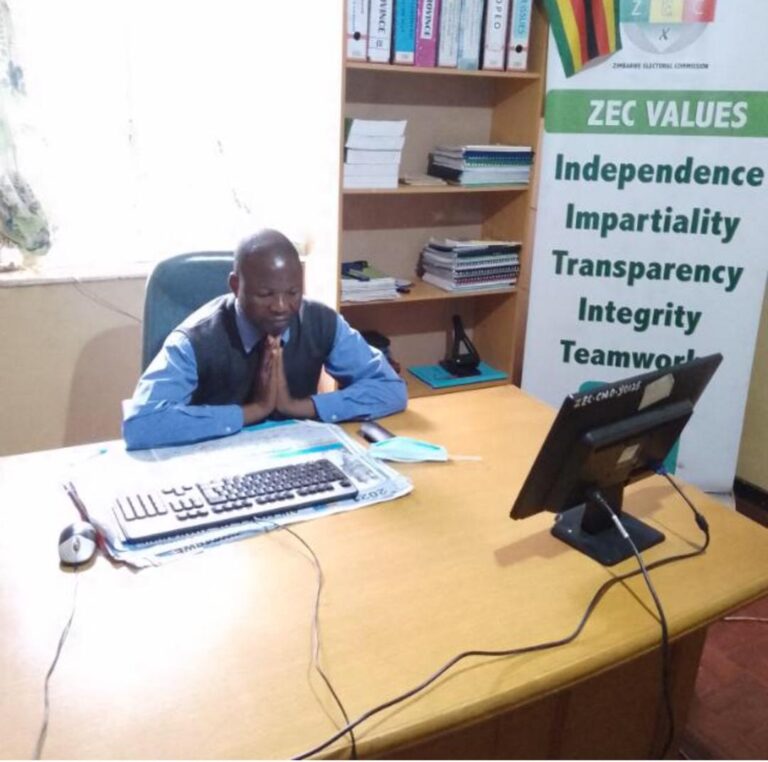
The Zimbabwe Electoral Commission (ZEC) has urged people in and around Masvingo province to come out in their numbers and register to vote as the constituency delimitation process will be all about numbers.
ZEC deputy provincial elections officer Maxwell Ncube made the call urging people to embrace voter registration blitz so that when the process of delimitation begins, no constituency is lost.
“People in the province should register to vote so that these constituencies are maintained. The total number of registered voters on the voters roll is the one that determines how constituency boundaries are marked.
“Aspiring voters should take charge and make use of the opportunity to register to vote. For example at national level, the statistics show that in Harare more people are registering to vote than in any other province,” said Ncube.
Delimitation is the process whereby the total number of registered voters is divided into respective constituencies which at national level are 210 House of Assembly seats. The process is all about looking at the total number of people in the national voters roll which is divided over the 210 constituencies.
“After the registration process is done, the total number of voters is compiled and that number is divided by the total number of 210 constituencies at national level, distributed equally and that is when the sharing of constituencies is drawn from. For example in Masvingo province, there is one ward in Mwenezi which falls under Chivi South constituency. What that means is that when people are voting, the ward belongs to Mwenezi at local authority level, but their legislator would be the one of Chivi South.
“The same criteria of distributing figures at national level, follows at provincial level where the total figures (for the province) will in turn influence delimitation at district level. The total number of people registered in the province would be divided to determine the number of constituencies at district levels,” added Ncube.

Zim does not need RBZ: Biti

Melinda Kusemachibi

Former finance minister and Citizens Coalition for Change (CCC) vice president Tendai Biti has implored government to shut down the Reserve Bank of Zimbabwe (RBZ) arguing the central bank has become a liability than an asset to the nation and also claim the institution is being used by government to do unconstitutional businesses.
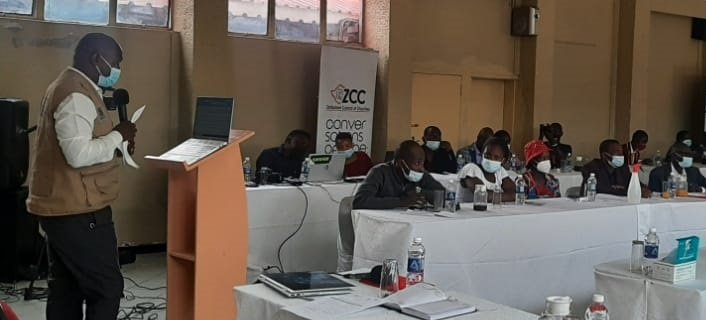
Speaking at Zimbabwe Public Debt Indaba hosted by Zimbabwe Coalition on Debt and Development (ZIMCODD) held on March 29, 2022 in Harare, Biti said Zimbabwe does not need an institution like RBZ, hence it should be shut down.
“RBZ has become the government, it has become the Ministry of Finance (Mthuli Ncube), and in my respectful opinion the RBZ must actually be shut down as Zimbabwe does not need it. Zimbabwe need a currency board not RBZ,” said Biti.
He went on to say that RBZ has never focused on its business mandate as it is being used as a political instrument.
“RBZ has never attended to its co-business. Besides it loves displacing the Ministry of Finance. All the RBZ is doing is play in quasi-fiscal activities which cost our lives. In 2021, we had two debt assumptions. The country’s domestic debt has grown from US$1.5billion in 2015 to US$3.5 billion in December 2021, which is not good enough as it is being caused by a scoundrel central bank,” he added.
Biti blamed RBZ governor John Mangudya for the country’s increase in debt assumptions as he claims it ballooned as a result of government’s purchases of weapons from outside states used against citizens.
Biti also urged that there is need for citizens to do something about the issue.
“ We must do something, if they are capable of repenting and doing something so radical as the country does not need a central bank, it need a currency board,” Biti argued.
He also said the Public Debt Management Act together with the Financial Act need complete overhaul on the issue of Debt Assumption.
Government has assumed a number of state-run firms’ debts amounting to billions of United States dollars despite warnings that it is cultivating a bad culture.
Some of these include ZISCO Steel’s US$500 million and RBZ’s US$1.4 billion debts. Accounting for the January 2022 assumption of RBZ debt, ZIMCODD said total public debt will expand to US$14, 2 billion.
The RBZ debt alone, totaling US$5, 4 billion now constitutes over 30% of total debt stock.
Debt assumption, according to ZIMCODD will have negative socio-economic effects on the ordinary people, as it translates to an extra financial burden on taxpayers.

Homeless Trust Organization uplifts Garikai community

Thabiso Nxumalo

Dialogue on Shelter for the homeless Trust (DOS) is on a drive of uplifting lives of vulnerable communities in Masvingo, to date having disbursed over USD $91800 and lately secured funds for outstanding Garikai community projects.
Minutes from the full council meeting held on March 28, 2022 revealed that DOS which operates under the established Masvingo Urban Poor Fund has secured funds for equipping an existing borehole with a storage tank and solar power amongst other projects in the Garikai community.
“Consideration was given to the report of the Director of Housing and Social Services, on the activities of Dialogue on Shelter for the year 2022. It was reported that the alliance had secured funding for the completion of Garikai Pay Toilet, equipping one existing borehole with solar pump, storage tank and renovation of an additional hostel at Mambo Hostels with five improved toilets and water points,” read part of the minutes.
DOS also pledged to continue giving loans to solidarity groups and complete the Tanaiwa water and sanitation inventions which consists of 22 toilets and water points and turning homeless communities into savings schemes.
“The DOS and Zimbabwe Homeless People’s Federation will continue giving loans to solidarity groups in Masvingo, the fund has so far disbursed USD $91800 to 715 members organized in 135 solidarity groups.
“Tanaiwa water and sanitation inventions which consists of 22 toilets and water points at Tanaiwa hostels will be completed and Zimbabwe Homeless People’s Federation will continue mobilising the homeless communities in Masvingo into saving schemes,” the minutes read.
City of Masvingo agreed to explore ways for the possibility of making contributions towards Urban Poor Fund so as to motivate the donor to provide more assistance.
This move by the DOS a Non-Governmental Organization (NGO) comes at a time when government of Zimbabwe is in the process of discussing the Private Voluntary Organization (PVO) Bill which most Zimbabweans feel will shrink the civic space and as a result take away NGO benefits from the general public.
Garikai housing scheme was commissioned in 2005 after government launched the widely condemned operation Murambatsvina, a forced eviction programme which saw the demolitions of homes and informal businesses around the country’s major cities and towns.

Utsinda College celebrates international day of Forestry

Precila Takabvirakare

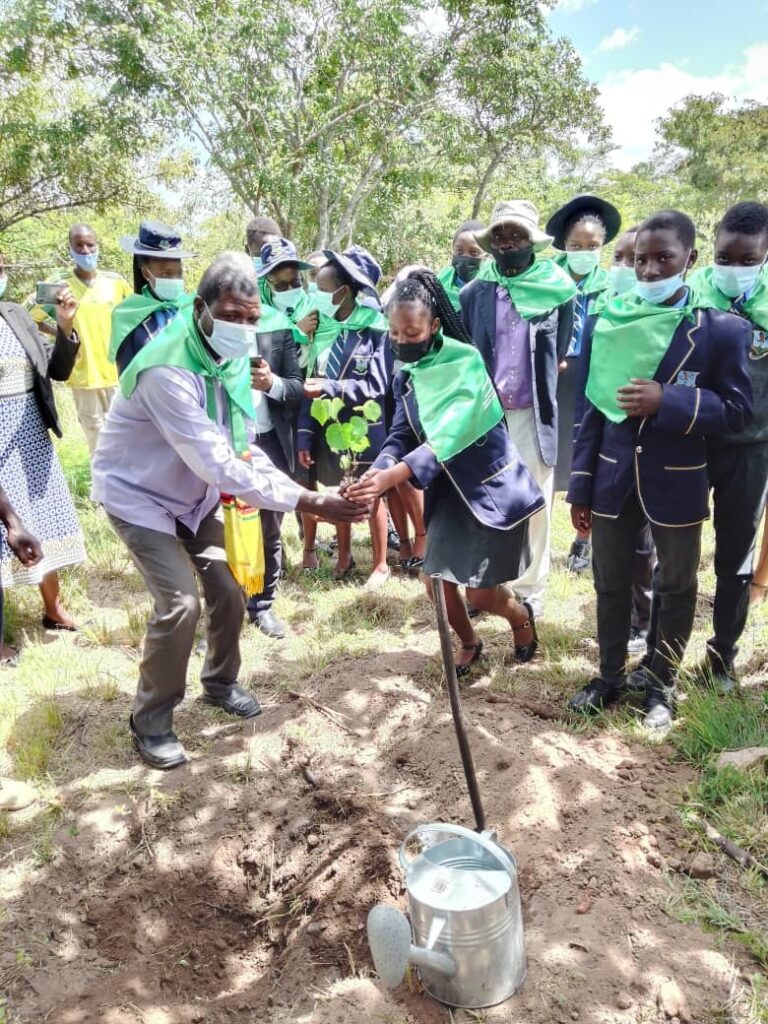
Gutu-based Utsinda Christian College goes green as they join the rest of the world in celebrating International Day of forestry this week under the theme ‘Forests and sustainable production and consumption’.
International day of Forestry was proclaimed by the United Nations (UN) General Assembly in 2012 to raise awareness and celebrate the importance of all types of forests.
It encourages people from all walks of life to get involved in commemorative events that promote sustainable management of forests.
Speaking at the event, the District Forestry Extension Officer Wellington Moyo encouraged people to take good care of the forests because if they are destroyed, livelihoods are also destroyed.
“I encourage you to take good care of the forests that we have in our communities and stop deforestation. If we destroy forests we destroy livelihoods. There are a lot of species that are in these forests so let us keep them safe by planting more trees,” said Moyo.
He also added that people should keep the forests safe because humanity cannot live without them, a nation without trees is almost helpless.
Gutu District Schools Inspector (DSI) Ronald Muganhu also appreciated the move by the school saying trees need to be preserved well because people get a lot from them.
“I would like to thank the school and community for this event. Trees need to be preserved well because we get a lot from them. We get timber, food and even medicine from them, if you remove one tree you have to replace it by planting another. Animals rely on these trees, if are cut down they will not be able to survive,” he said.
He also challenged village heads to help in observing safety of trees by punishing those found guilty of cutting down the trees so that everyone understands their importance.
Around a total of 30 trees were planted at the school.

Voter Apathy mars Masvingo Province by-elections

Fredrick Moyo

The recently-held House of Assembly and local authority by-elections in two constituencies and nine wards respectively were marred by evident voter apathy indicated by the poor turnout in most areas.
The number of the people who turned out to vote in the much-awaited by-elections was way below the total numbers of registered voters in respective constituencies and wards.
However three wards namely Bikita RDC ward 29, Chivi RDC ward 8 and Chiredzi ward 9 witnessed an improved turnout of voters as they managed to pass the 50 percent mark on poll percentage.
Statistics released by Zimbabwe Electoral Commission (ZEC) provincial office on March 28 2022, revealed that voters were hesitant to fully participate in the exercise.
TellZim News took a look at the House of Assembly figures and presented them as follows:

Chivi South Constituency (37.1 percent)

ZANU PF maintained their dominance in rural areas as Munyaradzi Zizhou won the Chivi South House of Assembly seat. However the voter turnout in the constituency was not pleasing as it recorded a percentage less than half of the voter population. Only 8 843 people went to cast their votes out of a voter population of 23 873 resulting in 37.1 percent voter turnout.

Mwenezi East Constituency (43.1 percent)

ZANU PF candidate Master Makope won the Mwenezi East House of Assembly seat. The constituency has a voter population of 32 944 people, but only 14 191 people casted their votes during the by-elections hence accruing a voter turnout of 43.1 percentage.

Local Authority figures are as follows:

Bikita Rural District Council (RDC) Ward 21 (65.8 percent)

Court Zevezayi of ZANU PF won the local authority post in Bikita RDC Ward 21. The ward saw more than half of its voter population turning out to cast their vote. A total number of 1 017 people casted their votes out of a voter population of 1 546 hence accruing 65.3 percent voter turnout.

Chivi RDC Ward 8 (53.9 percent)

Chivi RDC is the second ward that accumulated more than half poll percentage with a total number of 962 casted votes out of a voter population of 1 785 signifying 53.9 percent voter turnout.

Chiredzi RDC Ward 9 (58.0 percent)

Chiredzi RDC Ward 9 is also another ward that also managed a better turnout as more than half of the ward’s population turned out to cast their votes during the by-election. 1 017 people casted their votes out of a population of 1 752 hence the ward had a voter turnout of 58.0 percent.

Chiredzi RDC Ward 16 (43.5 percent)

Nevias Chisasa of ZANU PF won the local seat in Chiredzi RDC. The ward claimed a total number of 3 640 votes casted out of a voter population of 8 361 and accruing a voter turnout of 43.5 percent.

Masvingo Municipal Ward 3 (26.8 percent)

Masvingo Municipal ward 3 got the lowest voter turnout in all urban wards as only 1 790 people casted their votes out of a voter population of 6 684 hence accumulating 26.8 percent voter turnout.

Masvingo Municipal Ward 4 (28.4 percent)

The most controversial ward where Citizens Coalition for Change (CCC) fielded double candidates also accumulated low voter turnout as only 1 447 people casted their votes out of a voter population of 5 101 people hence the 28.4 percent voter turnout.

Masvingo Municipal Ward 5 (26.3 percent)

The ward that was won by CCC’s Daniel Mberikunashe boasts of a voter population of 3 651 but only 961 casted their votes hence the figures represent a total percentage of 26.3 voter turnout.

Masvingo Municipal Ward 7 (24.8 percent)

Recalled councillor Richard Musekiwa of CCC won the local authority ward 7 but the ward as well saw a low turnout in voter population with only 1 922 casting their votes out of a voter population of 7 732 hence accumulating 24.8 percent in voter turnout.
The ruling party ZANU PF maintained dominance in rural areas while the main opposition CCC won all urban wards. At steak were two House of Assembly seats in which ZANU PF won all while there were also nine local authority seats in the province and ZANU PF won five rural and CCC won 4 urban local authority wards.

ZEC urges people to register in numbers

TellZim reporter

The Zimbabwe Electoral Commission (ZEC) has urged people in and around Masvingo province to come out in their numbers and register to vote as the constituency delimitation process will be all about numbers.
ZEC deputy provincial elections officer Maxwell Ncube made the call urging people to embrace voter registration blitz so that when the process of delimitation begins, no constituency is lost.
“People in the province should register to vote so that these constituencies are maintained. The total number of registered voters on the voters roll is the one that determines how constituency boundaries are marked.
“Aspiring voters should take charge and make use of the opportunity to register to vote. For example at national level, the statistics show that in Harare more people are registering to vote than in any other province,” said Ncube.
Delimitation is the process whereby the total number of registered voters is divided into respective constituencies which at national level are 210 House of Assembly seats. The process is all about looking at the total number of people in the national voters roll which is divided over the 210 constituencies.
“After the registration process is done, the total number of voters is compiled and that number is divided by the total number of 210 constituencies at national level, distributed equally and that is when the sharing of constituencies is drawn from. For example in Masvingo province, there is one ward in Mwenezi which falls under Chivi South constituency. What that means is that when people are voting, the ward belongs to Mwenezi at local authority level, but their legislator would be the one of Chivi South.
“The same criteria of distributing figures at national level, follows at provincial level where the total figures (for the province) will in turn influence delimitation at district level. The total number of people registered in the province would be divided to determine the number of constituencies at district levels,” added Ncube.

Cabinet approves Protection of Whistle Blowers Bill

0

Rutendo Chirume

The Cabinet of Zimbabwe has approved principles of the Public Interest Disclosure also known as Protection of Whistle Blowers Bill, 2022 as presented by the Minister of Justice, Legal and Parliamentary Affairs Ziyambi Ziyambi which seeks to fight corruption by protecting genuine witnesses who raise issues of public interest.
Minister of Information, Publicity and Broadcasting Services Monica Mutsvangwa announced the new developments during a post cabinet briefing held on March 29.
Currently the country does not have a legislation that provides for the protection of individuals that point out against illicit activities within organisations they are employed in therefore this bill will serve to protect, bridge the gap affecting the fight against corruption and exposing the whistle blowers to retaliation.
Minister Mutsvangwa said the bill will promote good governance through transparency and accountability of public interest as well as combating scourge of corruption within public and private sectors in line with SADC protocols against corruption and other boards which fight against corruption.
“The enactment of the Public Interest Disclosure Protection of Whistle Blowers Bill, 2022 will help safeguard good governance, transparency, justice, accountability and responsiveness as enshrined in the constitution. Furthermore, the enactment of the Bill will be in line with international best practices as Zimbabwe is a signatory to several conventions aimed at combating the scourge of corruption within the public and private sectors, among these being the SADC Protocol against Corruption; the African Union Convention on Prevention and Combating Corruption, and the United Nations Convention against Corruption,’’ said Mutsvagwa.
The Bill will seek, among other provisions, to provide for mainly protection of whistle blowers by prohibiting detrimental treatment of any whistle blower by reason of his or her whistle blowing, a framework within which public interest disclosures shall be dealt with and disclosure of conduct averse to public interest in the public and private sectors.