Fredrick Moyo
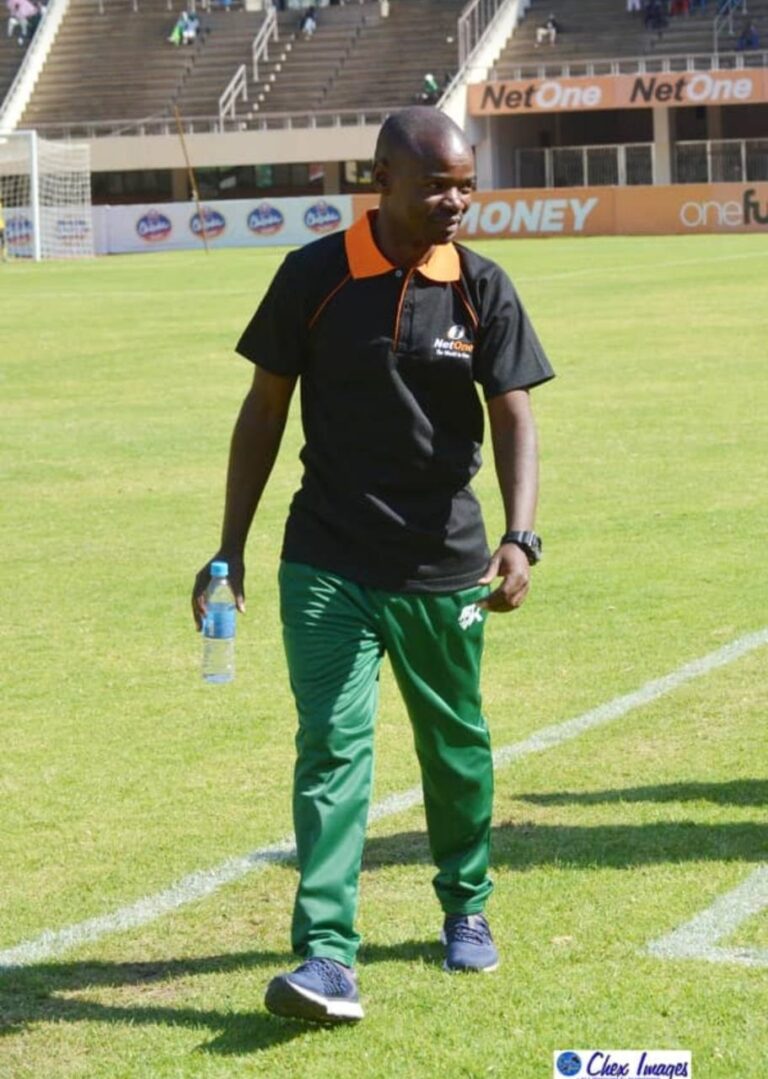
Eastern Region division 1 side FC Wangu Mazodze new coach Takura Shariwa is off to a dream start as he seeks to turn around the fortunes of the flamboyant outfit and bring smiles to faces of the club faithful.
Shariwa who took over the reins after the club parted ways with former head coach Ezekiel Mutoda over a poor results has however restored momentum in the camp collecting four out of a possible six points after securing one win and draw in the two fixtures he has been in charge registering a 1-all draw away to Grayham FC before defeating Surrey FC one-nil at Mucheke stadium.
Speaking to TellZim News, Shariwa said the secret behind winning is attributed to the change in design and attitude of the players who have adapted to his methodology, approach and he applauds players for the good performance.
“I will attribute that to the change in design and attitude amongst our players. When a new broom comes in, everyone wants to impress the coach and that is the spirit that has been exuded in my team and I give a heart full thanks to the players.
“They have adapted to my methodology, approach and ideology in terms of coaching, training and work ethic. They have also acknowledged and accepted my thinking and they are applying it and is work in process. Although they have not reached the pinnacle of what I want, I have great desire and humility in the way they have put trust upon me to lead them. I need fighters, grafters, people with good ethics and who have passion to excel,” said Shariwa.
He also said that they need to push, have faith and confidence in whatever they do as they are targeting to be in the top eight before the break as they are approaching the next match with a purpose.
“We need to build on the momentum and the self-belief that we can. We need to walk with a spring and have that confidence in our abilities and we need to share the same vision and objective and try to win as many games as possible, even there are up hills and sorrows along the way but mostly and many of those days are going to be happy days because we are going to grind results and we are going to bring smiles to a lot of people.
“Chiredzi Stars FC have not yet tasted defeat at Chishamiso, we are going there with a purpose and we know what we want to do and by end of the first round we need to be in top eight that is our target and we have given each other this task as a team that we pull in one direction,” added Shariwa.
FC Wangu Mazodze Vice President and Acting Chairperson Blessing Kwesha said the team will come back strong in the second half of the league as the players have quickly adapted to what the coach wants and requires.
“We now have a very streetwise coach who produces results with limited resources. The team has adapted quickly to his style of play and honestly I see FC Wangu Mazodze coming back in the second phase as a dark horse.
“Our players have welcomed coach Shariwa with both arms and his assistant George Magariro,” said Kwesha.
In the Eastern Region division One 12th fixture, FC Wangu Mazodze will be away to Chiredzi Stars FC who are yet to be defeated at home while log leaders Greenfuel FC will be hosted by struggling Surrey FC.
Grayham FC will host Pro Melfort FC while the struggling youthful Manica Diamonds Juniors will play at home with Lowveld United FC while Masvingo United travel for a date with Mutare City Rovers.
Zaka Academy FC will host Renco Mine FC while Nzuma Bars FC play Ruwa Progroup FC at home and Buffaloes will travel to Mutoko to face JM Busha 54 FC.