Courage Dutiro
With humankind, Flora and Fauna perishing at the hands of persistent floods, droughts, cyclones and heat waves, it is a clear manifestation that Climate Change is in our midst and it is being felt throughout various sectors including the socio-economic one.
In 2019, cyclone Idai destroyed lives, livelihoods, ecosystems and infrastructure and thus it is high time for everyone to take action against climate change or else mankind will perish.
In Zimbabwe, with Masvingo province not being spared, the impacts of climate change are being observed in the agricultural sector which is mainly rain-fed.
The agriculture sector is one of the critical climate-sensitive sectors.
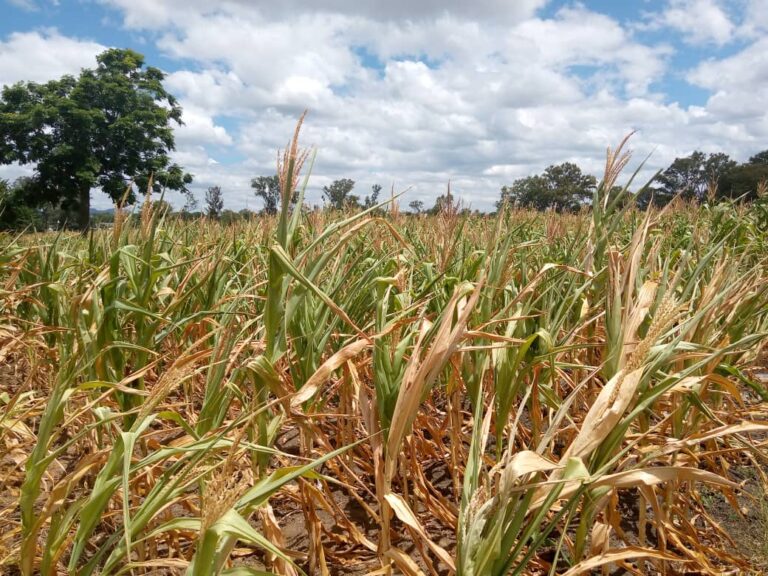
The 2021-2022 farming season started on a promising note with crops showing a brighter future before they gave in to a prolonged moisture stress that stretched from the last two weeks of February 2022 to date (March 11, 2022).
Moses Mutoko a farmer in Wondedzo area said 80 per cent of crops in his field are now at write-off stage.
“Things are no longer looking good here; it is a total disaster, Due to the prolonged dry spell, crops are now at 80 per cent damage in my field,” he said.
Mutoko who had planted four hectares of maize said he is now expecting to yield a maximum of 200 kilograms from each hectare instead of three tonnes per hectare.
“90 percent of the crops are at tussling stage. My dreams have been diminished. I had planted four hectares of maize crop and was expecting three tonnes from each hectare but because of this persistent dry spell, I am now targeting 200 kilograms per hectare.
“In this era, it is no longer viable to rely on rain-fed agriculture. Shifting towards the use of irrigation systems can help to solve this problem,” said Mutoko.
The global Sustainable Development Goals (SDGs) aim at creating a sustainable living world for everyone by 2030, however, if action is not taken against climate change the attainment of SDGs will be hindered.
Goal 2 seeks sustainable solutions to end hunger in all its forms and to achieve food security. The aim is to ensure that everyone, everywhere has enough good-quality food to lead a healthy life. Achieving this goal will require better access to food and widespread promotion of sustainable agriculture and new ways of farming.
In the southern region of Zimbabwe, the goal cannot be easily achieved without the establishment of green belts.
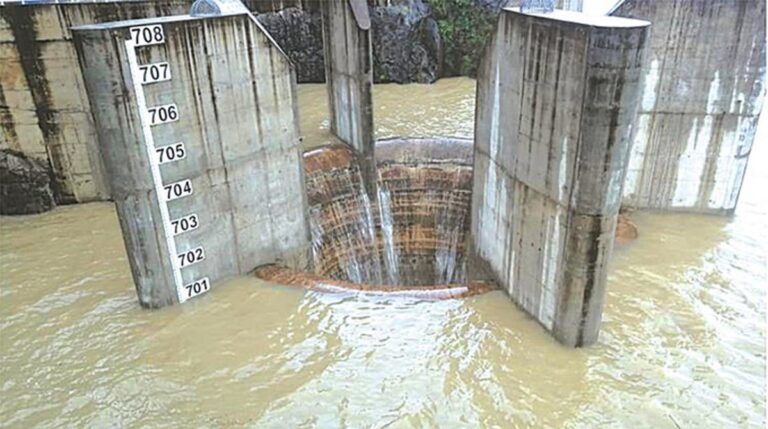
The province boasts being home to the largest inland dams. With the huge number of dams that the province has, it will go a long way if an inter-agency cooperation finances the establishment of new irrigation schemes that will act as mitigation and adaptation measures to climate crisis such as droughts.
The government of Zimbabwe in its national climate change policy document of 2016 promised that on issues to do with the agriculture sector, it shall promote the development and adequate assessment of irrigation potential under climate change.
“The government shall ensure irrigation development and management master plan integrate climate change.
“It shall also promote irrigation and water use efficiency in agriculture including adequate assessment of irrigation potential and irrigation demand under climate change,” reads part of the climate change policy document.
Connecting major dams for example Tugwi-Mkosi with other small dams so that when they spill, the water is harvested into other small dams where it can be used for irrigation and livestock purposes in areas that receive low rainfalls.
Minister of Information, Publicity and Broadcasting Services Monica Mutsvangwa in her 4th post cabinet press statement acknowledged the impacts of climate change in the agricultural sector.
“Cabinet wishes to advise the nation that overall, the First Round Crop and Livestock Survey confirmed that climate change is upon us and affecting agricultural production,” read the press statement.
Petros Runameso Madzingo of Youth Farmers Association said the construction of dams for irrigation systems and planting of trees is a way to adapt to the climate crisis.
“Government and other responsible stakeholders should assist by constructing irrigation schemes and new dams. Another method to counter climate crisis is through planting trees in the Lowveld region,” said Madzingo.
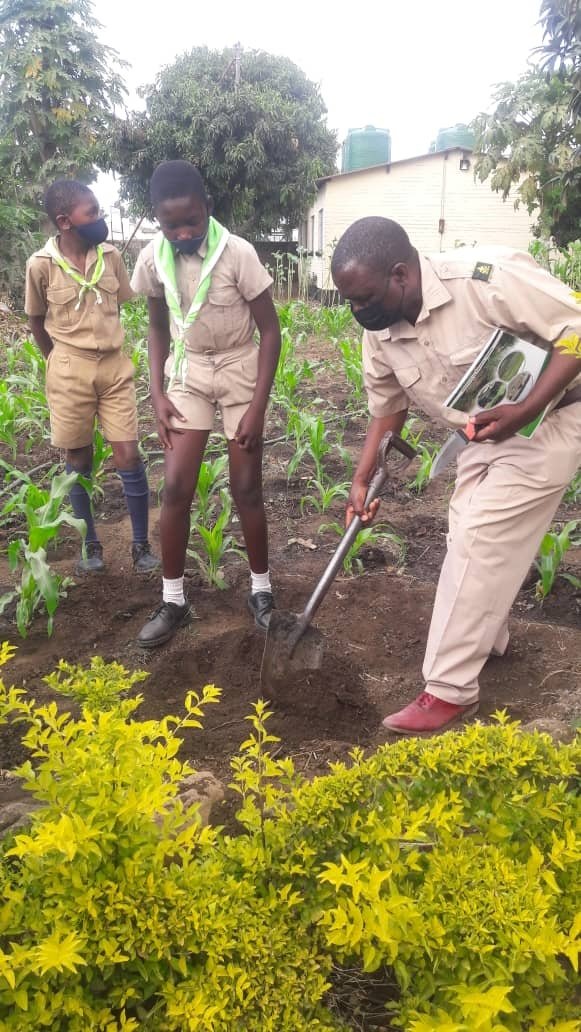
Forestry Commission Masvingo Provincial Extension Manager Cheneso Mbambo said they are targeting to plant more than six hundred thousand trees in each district in the province.
“We have officers in each district who oversee the planting of trees. We are targeting to plant more than six hundred thousand trees in each district but there are not all going to be planted by the forestry commission alone, some are going to be planted by people in the communities and other stakeholders.
“It is everyone’s responsibility to plant trees and to conserve forests,” said Mbambo.
The establishment of clubs in rural areas where village heads act as club leaders working with the responsible authorities to facilitate a reforestation programme can also be a way to conserve forests and mitigate climate change.