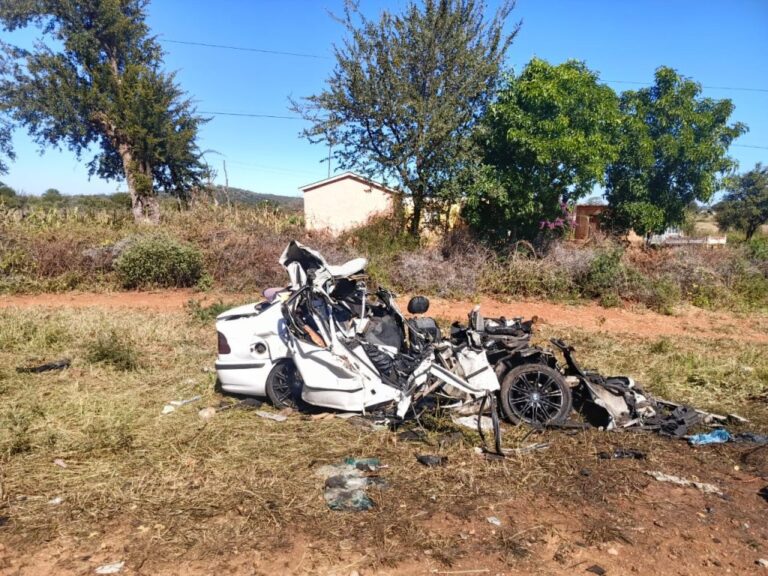
A horrible traffic accident occurred along Chiredzi -Roy road and claimed one while 17 people were injured. Masvingo provincial acting police spokesperson Assistant Inspector Masauso Patinyu confirmed the incident where one life was lost. “I confirm the accident where a Mazda T35 truck white in colour which was being driven by Last Chirambamuriwo (33) was involved in an accident and one person died. On April 23, 2025 around 0700 hours Chirambamuriwo was driving towards Roy with 30 passengers on board. At 84km peg Chirambamuriwo failed to engage the correct gear and the lorry to failed to climb the steep road and it reversed before overturning twice and landed on its left side. One passenger Rutendo Gonese (39) who stays in village 9 Chiredzi sustained a deep cut on the head and died on the spot while others were injured. The injured and deceased were taken to Chiredzi General Hospital.
Manhede Bulldogs solidified their dominance in Masvingo’s pool scene by clinching the 2025 Independence Trophy in a fiercely contested tournament that showcased the province’s talent and competitive spirit. The two-day event, offering a US$500 cash prize for the winners, drew top teams from across Masvingo. Group stage matches and semifinals took place on Saturday at Stopover, with the grand finale hosted on Monday at Landmark Bar. Led by captain Nyasha Edwin, known as “Kenge” in pool circles, the Bulldogs delivered a commanding performance throughout the tournament. Their final match against New Horizon was a thrilling clash, with the Bulldogs securing a 7-5 victory to claim the title. “We’re proud to be crowned 2025 Independence Cup champions. This victory reflects our hard work and aligns with our goal to compete for every major trophy in Masvingo,” Edwin said. In the third-place playoff, Aminas outplayed City Clinic, earning a 7-3 win with a strong display of skill. All teams demonstrated remarkable talent and sportsmanship, making the tournament both a competitive spectacle and a celebration of community spirit. New Horizon received a US$300 cash prize, while Aminas earned US$200 and City Clinic took US$100. Organizers hailed the tournament as a success, noting the rising popularity of pool in the region and the value of such events in providing platforms for emerging players. With this triumph, the Manhede Bulldogs have sent a clear message to rivals across the province, that they are not just competitors but formidable contenders for every title on offer.
CHIREDZI – Zimbabwe’s largest beerhall, Chigarapasi, reopened abruptly in April under EVS Inc Pvt Ltd after Big Five Beers’ lease expired on September 30, 2024. Allegations suggest the reopening breached terms requiring 90 percent completion of renovations, with claims that the owner’s connections protect the lease from cancellation. A source close to the matter said EVS was to open only after completing most renovations, with costs offset against rent. “EVS was supposed to open to customers after completing 90% of the renovations, as the beerhall is in poor condition, but they began operating immediately after approval to renovate, despite an unsigned lease,” the source said. Chiredzi’s acting Town Secretary, Lloyd Musasa, neither confirmed nor denied the allegations but verified that EVS won the tender to operate Chigarapasi for US$4,000 monthly rent. “EVS won the tender to lease Chigarapasi Beerhall at US$4,000 per month, covering bars, cold rooms, and facilities. The agreement requires the tenant to renovate, with costs agreed upon and offset against future rentals,” Musasa said. He added that he was unavailable, to comment on the breach of contact having delegated to the Public Relations Officer, who was also out of office. Efforts to reach the council chairperson were futile, as he was unavailable. Chiredzi Town Council closed Chigarapasi in December 2016, following Ministry of Local Government orders to shut non-profitable entities. After public outcry, as over 1,000 families, including sex workers, relied on the beerhall for their livelihoods, it was leased in 2017. Big Five Beers operated it until September 2024, when the lease expired. After a five-month closure, EVS won the tender to take over. EVS previously operated Caravan in Ward 2, where community complaints arose over noise from Thursday’s “China Chemadzimai” shows, causing sleepless nights. Chigarapasi, opened in the early 1980s for low-income sugarcane workers in the Lowveld, spans 16,273 square meters. The reopening has sparked debate, as the beerhall’s condition and the unsigned lease raise questions about oversight. The council’s agreement with EVS hinges on renovations, but the premature opening suggests potential mismanagement. The community, heavily dependent on the beerhall, watches closely as EVS navigates its controversial start.
A 26-year-old man from Rujeko, Masvingo, lost his car to two thieves who posed as passengers seeking a ride to Majange. Assistant Inspector Masauso Patinyu, acting provincial police spokesperson for Masvingo, confirmed the incident involving Allan Hadzisa and urged the public to assist with information. “We confirm that Hadzisa, a resident of Rujeko C, was robbed of his car, and nothing has been recovered. We appeal to anyone with information leading to the arrest of the suspects or recovery of the stolen property to report to the nearest police station,” Patinyu said. On April 21, 2025, at approximately 11:30 p.m., Hadzisa was driving his silver 2004 Mazda Atenza, registration ACT 6658, toward Mucheke Rank. Two men flagged him down at Mucheke High, in another Masvingo suburb, requesting a ride to Majange. They paid US$5 and took seats, one in the front passenger side, the other in the back. Upon reaching the DDF area, the men instructed Hadzisa to stop. The passenger in the back brandished an electric device, threatening to kill him if he didn’t comply. Fearing for his life, Hadzisa handed over US$15. The rear passenger then forced him into the backseat while the front passenger took the wheel. In a desperate bid to escape, Hadzisa opened the door and jumped from the moving vehicle, sustaining hip injuries. The thieves sped off with his car. The total value of the stolen property, including the vehicle, is estimated at US$3,015. Nothing has been recovered, and the suspects remain at large. Police continue to investigate and encourage anyone with information to come forward to aid in apprehending the culprits and recovering Hadzisa’s vehicle.
Victoria Primary School continues to excel in modeling after another learner, Nothando Gugulethu Sibanda, was crowned First Princess at the Toto Miss Little Africa pageant held recently in Cairo, Egypt. The seven-year-old earned the opportunity to represent Zimbabwe after winning the Toto Miss Africa Zimbabwe pageant in 2024. Joy Mukisa from Uganda was crowned the 2025 queen, while Lethukula Makgotso Fakude from South Africa took second runner-up. Waishe Maverick from Zimbabwe won the Toto Mr Africa award. Speaking to journalists at Charles Austin Theatre on April 24, 2025, Sibanda’s coach and manager, Tajae Mwenda, said she inspired and mentored her to reach this level. “This achievement reflects passion, perseverance, and dedication. Nothando was inspired by my own modeling journey. She often joined me at rehearsals, watching me walk the stage with wide eyes and a curious heart. As I pursued my dreams, she learned and grew alongside me. “When her moment came, she shone, first as Miss Victoria Primary School, then as Toto Miss Africa Zimbabwe in 2024, proving that with hard work and support, anything is possible,” Mwenda said. Mwenda added that financial challenges were significant but thanked those who helped. “Fundraising for the Egypt trip was tough. We faced setbacks from institutions we expected to support us, but we stayed determined. Sibanda’s family showed remarkable resilience, sacrificing greatly to make her dream a reality. We’re grateful to friends and the community who contributed, no matter how small. Your generosity meant everything,” she said. Community member Tinashe Mutoti expressed pride in Sibanda and urged parents to nurture their children’s talents. “Sibanda has raised the name of her family, school, town, and nation by winning this award. I encourage parents to support their children’s interests. When a child shows passion, parents should motivate them. Sibanda’s success shows what’s possible with support,” Mutoti said. Sibanda will hold the crown until 2026 and is currently leading the Disability Pride Project, appealing for donations to buy winter uniforms for children with disabilities. Victoria Primary’s former pupil, Dillish Masango, made history at last year’s pageant in Nigeria, winning three awards: Miss Popularity, Miss Smile, and Miss Toto Africa Second Runner-Up. Those wishing to assist with donations can contact Tajae at 0786872606 or Tandiwe at 0773905115.
Tragedy has struck Chirimuka Village in Gutu after a father and daughter took their own lives while under investigation for the illegal burial of a newborn. Yvonne Chidanika (21) and her father, John Chidanika (48), were found hanging from trees a few meters apart after police launched a probe into the burial of Yvonne’s two-day-old infant. Acting Masvingo Provincial Police Spokesperson, Assistant Inspector Masauso Patinyu, confirmed the incident. “I confirm the deaths of Yvonne and John from Chirimuka Village in Gutu, who were found hanging from trees after police began investigating the burial of the former’s two-day-old infant,” Patinyu said. According to reports, Yvonne gave birth at home with assistance from a local midwife on April 11. The infant developed breathing complications and died two days later. John allegedly buried the child without notifying authorities, prompting police to investigate and plan to exhume the body. Before their deaths, the pair told family members they were heading to Nerupiri Police Station to address the matter. Yvonne’s younger sister followed them a few hours later and found them on a nearby hill. They reportedly asked her to return home and prepare a meal. When she came back, she discovered both hanging from trees.
Learners from Pamushana High School unveiled a smart car park system designed to streamline parking and integrate modern technology into everyday life at the Zimbabwe International Trade Fair (ZITF) in Bulawayo. The project was presented by Lower Sixth learners Beloved Chiutsi, Tinotenda Dondo, and Tryphine Charumbira. The school’s science exhibitions patron, Brighton Madzvimbo, told TellZim News that the system aims to enhance parking efficiency through technology. “The smart car park innovation seeks to optimize parking efficiency and improve user experience through advanced technology. The learners developed a model featuring real-time parking availability updates, automated payment systems, and a user-friendly interface. It addresses urban challenges such as traffic congestion and limited parking spaces,” Madzvimbo said. Exhibited under the Ministry of Primary and Secondary Education’s (MoPSE) initiative to promote science and robotics in schools, the project aligns with the Heritage-Based Curriculum (HBC), which encourages learners to develop practical, innovative solutions. “As MoPSE continues to mainstream science and robotics, Pamushana was proud to present a student-developed piece of technological art. Their booth attracted significant attention with interactive displays and a functioning model of the smart car park. Visitors were particularly impressed by the pupils’ energy and the real-world relevance of their solution,” Madzvimbo said. Beyond their technical achievement, the learners were commended for their ability to articulate complex concepts clearly and confidently. Their performance highlighted the importance of fostering STEM (Science, Technology, Engineering, and Mathematics) education in schools. Pamushana High School’s participation in ZITF underscores the vital role of young innovators in addressing real-world problems. As the learners refine their project, they are not only preparing for future careers in technology but also inspiring their peers to think critically and creatively about community challenges. In addition to the smart car park, the school showcased a clothes collector project developed by learners Tinevimbo Nyamazuda, Anesu Manyengura, and Artwell Mavesera. This project further demonstrated the learners’ creativity and the school’s commitment to technological innovation. Pamushana High School continues to be a beacon of innovation, nurturing learners to become future leaders in technology and community development.
Residents of Jerera, Zaka, are calling for urgent action to address the issue of stray pigs roaming the streets, causing damage and disruption to crops. There are reports that the pigs have been knocking over market stalls, damaging property, and destroying crops in both the central business district and residential areas. Ward 19 Councilor Albert Mazvanya confirmed the problem, stating that the pigs belong to one individual who has failed to secure them. “The pigs are wreaking havoc, eating and destroying gardens. They belong to former Zaka Police Officer Jonah Mtisi. We have engaged him to ensure he removes them from the growth point,” Mazvanya said. He added that the pigs roam freely, targeting the marketplace where they eat vendors’ goods and overturn bins. “They also dig holes under fences and perimeter walls to enter yards, where they eat crops and dig up flowers,” Mazvanya explained. When contacted by TellZim News, Mtisi acknowledged the situation and said he is in the process of collecting the pigs in batches. He explained that the pigs strayed after he was transferred to Mkwasine, where he struggled to manage them due to his workers’ negligence. “It’s true, the pigs are mine. I had an accident at work in 2019 and was later transferred. Because of that, I couldn’t manage the project, and my workers would let them out since I wasn’t around,” Mtisi said. “When they’re not controlled, they breed excessively, which is why there are so many in Jerera.” Mtisi also revealed that his home was destroyed by Cyclone Idai in Chimanimani, forcing him to prioritize securing a new place to live and covering medical expenses after his discharge. “The little I had went to medical bills and a new home. Now, I’ve finished building a house and am constructing pigsties. I’m collecting the pigs in batches from Jerera. “So far, I’ve collected 50 and am trying to speed up the process. I’m also building temporary shelters to clear them faster,” he said. Mtisi appealed to organizations and individuals interested in starting piggery projects to approach him and purchase the pigs, which would help accelerate the removal. “If there are organizations or individuals who need them, they can come and get a good breed. This would also help me clear them faster,” he said.
Hivos in Southern Africa recently conducted a training workshop to equip women and youth from across Zimbabwe with advocacy skills to enhance their confidence and ability to claim their rights. The workshop, held at a hotel in Harare, was part of the S(H)E Matters project, implemented by Hivos with support from the Embassy of Ireland in Pretoria. It focused on providing participants with practical advocacy tools to engage policymakers and other authorities in advancing their rights. Hivos Project Officer Rumbidzayi Machimbirike said one of the major issues raised during the training was the prevalence of sexual harassment, particularly among women in the media and farm work sectors. “One of the key challenges that emerged was sexual harassment faced by women in the media industry and among farm workers. This training was designed to equip rights holders with the tools, strategies, and techniques needed to advocate effectively for their rights,” Machimbirike said. She added that the training introduced participants to national laws, as well as regional and international human rights instruments, that can be leveraged for advocacy. “The program aimed to enhance participants’ knowledge of frameworks such as the Convention on the Elimination of All Forms of Discrimination Against Women (CEDAW) and the Sustainable Development Goals (SDGs), helping align local advocacy efforts with global standards,” she said. Abigirl Khupe, a participant from the CITE Youth Network, said the training was critical for young women in the media industry, where sexual harassment often goes unreported. “As women in media, we’ve observed numerous unreported cases of sexual harassment. Many victims fear retaliation and lack access to clear reporting mechanisms and accountability structures. “Following this training, CITE is now empowering young women to understand what constitutes sexual harassment, how to identify it, and the proper channels for reporting it as part of our advocacy work,” Khupe said.
During the Easter holidays, videos of churchgoers crossing the swollen Mutirikwi River in tree bark canoes stirred vivid memories of my childhood in Muchibwa, Masvingo South. I often visited my maternal grandparents in Matigimu Village, under Chief Nyakunhuwa, Zaka, navigating the river’s treacherous waters. As a young child, after being weaned, I stayed with my grandmother in Zaka and the journey involved a two-hour walk followed by a canoe ride across the river, especially during the rainy season. These trips became frequent as my grandfather worked at Renco Mine, and we visited him often. In the 1990s, I grew accustomed to these makeshift canoes, my grandmother’s steady hand guiding me as we navigated the waters with ease. School holidays meant more crossings, though sometimes we arrived to find the navigators retired for the day, forcing us to seek overnight shelter in Mushawasha homes until morning. Drier years reduced the need for canoes, and many skilled boatmakers passed away. After completing school, I moved to Masvingo town, losing touch with the river’s challenges. The recent Easter church gathering brought these struggles back into focus—seeing people risk their lives in canoes to attend services underscored how these communities remain stuck in the past. The Mutirikwi’s flooding has made life perilous for residents on both sides, forcing reliance on hazardous tree bark canoes. The need for a bridge has never been more urgent. These makeshift boats, crafted from tree bark, are a desperate relic of a bygone era, highlighting the absence of safer alternatives. For residents of Charingeno, Mudzara, Mushaya, Zingwena, and surrounding areas on the Zaka side, and Renco Mine, Muchibwa, Masarasara, and Mushawasha farms on the Masvingo side, crossing the river is a dangerous necessity. The river disrupts economic activities, social interactions, and access to education. Learners from Mushawasha must cross to attend Chiira Secondary School in Zaka, facing real risks. The elderly share haunting stories of lives lost, including Bridget Imbayarwo, who drowned during Cyclone Eline when a canoe she was in with others capsized. Her father, Jepheys Imbayarwo, said, “Though it’s been two decades, the loss remains fresh. A bridge could have saved my daughter. I urge authorities to act to save lives.” The Mutirikwi River remains a formidable barrier between Zaka and Masvingo districts, its waters swelling with relentless rains in recent years. These canoes, while better than nothing, pale in comparison to the sturdy bridges found elsewhere in Zimbabwe. Bridget’s death serves as a grim reminder of the dangers lurking beneath the surface. Persistent flooding, worsened by crocodiles venturing upstream from Bangala Dam, heightens the peril for those crossing on foot or by canoe. These predators make an already treacherous journey even more dangerous. The river also threatens social cohesion, as closely knit communities rely on intermarriages, funerals, church services, and traditional ceremonies that require crossings. Even casual gatherings, like beer-drinking sprees, put lives at risk. Village head Joseph Mutubuki of Matigimu Village echoed Imbayarwo’s plea: “The river isolates us for days, hindering access to Renco Mine and Muchibwa Hospital. A bridge is essential. The only alternatives via Masvingo Town or Chiredzi are costly and time-consuming,” said Mutubuki. The flooding isolates these communities, limiting participation in vital social events. Elders recount tales of Zanla soldiers who perished in the river during the liberation struggle, their sacrifices etched in collective memory. Villager Edward Taru shared, “At night, you hear splashes and voices crossing the river, but no one’s there. Many believe these are the ghosts of Zanla soldiers lost in canoes,” said Taru. The need for a bridge is critical, as Zaka residents cross daily to access Renco Mine, Muchibwa Hospital, and schools. Women from Chivhuru, Banduki, and Chisara sell vegetables at Renco Mine for their livelihoods. For Mushawasha learners, the lack of a local secondary school forces them to travel to Zaka, a journey made hazardous by this season’s heavy rains. In drier years, crossings were manageable, but the river is now a formidable obstacle. In the past, entrepreneurs like Mukondori introduced plastic boats as a safer option, but these fell into disrepair during drier years. In 2016, MPs Vincent Mawere (Zaka West) and Walter Muzembi (Masvingo South) planned roads and a bridge to address the issue, but their efforts stalled after losing their seats in 2018. The existing low-lying bridge upstream becomes impassable during floods, rendering it useless. The call for a sturdy bridge grows louder. These communities deserve safe connectivity to foster economic growth, social cohesion, and security, freeing them from the dangers of a river that has claimed too many lives.