Home Blog Page 47

Chief demands power to try murder, rape cases

…condemns broadcasting of traditional court proceedings

By Rangarirai Shanyurai

Chief Mugabe born Matubede Mudavanhu of Masvingo District recently raised concerns over the erosion of traditional leadership powers, particularly in handling serious criminal cases.
Chief Mugabe was speaking during an Africa Day commemoration organised by the Zimbabwe Republic Police (ZRP) Women Network in Masvingo at his court recently.
Chief Mugabe expressed frustration over the current legal framework that limits chiefs’ authority to preside over cases such as rape and murder.
“We have never failed to preside over any case, but the courts have denied us the authority to handle serious matters such as rape and murder. When we attempt to do so, we are told we’ve breached jurisdictional boundaries. We are only allowed to resolve land disputes and infidelity cases,” said Chief Mugabe.
Despite these legal limitations, the chief noted that traditional leaders often find themselves dealing with such serious matters informally, reflecting their ongoing commitment to maintaining moral order in their communities.
“On the other hand, we still preside over these serious matters, even though the formal courts have the final say, because we do not condone criminal behaviour in our communities,” he said.
Chief Mugabe called for a national dialogue on the role and authority of traditional leaders in the justice system.
“The issue of chiefs’ powers needs to be addressed. We believe we should have the authority to handle all cases within our jurisdiction. Even in cases involving my close relatives, I am prepared to delegate to a nearby chief to ensure fairness, as long as all the required documentation is completed,” he said.
Speaking to TellZim News after the event, Mugabe said the modern court will only punish the offender but there was no healing to the victim’s family and that had to be addressed.
“A person murders someone, he is tried in court and is jailed, what happens next, will he come and work in the fields of the victim’s family? No, he will work there and the family of the deceased get nothing.
“What about the issue of avenging spirits, there is need for the family to pay to avoid Ngozi that should be done by Chiefs,” said Mugabe.
He also said the chiefs were supposed to be allowed to try any case that happen in his jurisdiction for he knows the backgrouds of people and families hence has a better chance of solving the disputes amicably and provide lasting peace.
“The magistrates and judges do not know the people they preside over, we do, we have the family backgrouds so we know best how to deal with each family,” said Mugabe.
Mugabe went on to take a side swipe at other chiefs who broadcast court proceedings and allow anyone to come and listen saying that reduces the dignity of people.
“Here in Chief Mugabe’s court, we do not allow anyone to come and listen, we only want the offender and the complainant and their immediate family members.
“If a person is an offender it doesn’t mean he or she has no dignity. It’s insensitive for everyone to know that this man took that man’s wife. Others no longer preside over cases as they are but they do it for people to see because there will be cameras. It’s inhumane for the whole of Zimbabwe to watch while one is being asked and narrating what happened. That’s improper and we do not allow that here,” said Mugabe.
Speaking to TellZim News on the issue of chiefs being given power to preside over serious criminal cases, Chief Ndanga Born Wilson Makono of Zaka said the good part of the judiciary in Zimbabwe was that it had a dual system which allows them to deal with serious cases in a way.
He said though the investigations and sentencing were done by the police and the courts respectively, as traditional leaders they were allowed to practice their authority to make sure the community leaves in harmony.
“The good aspect of the judicial service is that it’s dual, it does not stop us from dealing with these issues even when the courts are handling them.
“Though we do not use the investigative side, we are allowed to try and enforce payment of Chenura (Cleansing) to make sure the community continues to live in harmony. Even when someone is convicted of rape, we have a way of punishing them to show that we do not condone such in our jurisdictions,” said Ndanga.

Is Chamisa reconnecting with voters or just playing the politics of ambiguity?

By Staff Reporter

MASVINGO – Nelson Chamisa’s recent video urging Zimbabweans to remain steady and calm has sparked a wave of reactions across the nation. In the clip, shared on X platform, Chamisa assured Zimbabweans that a significant moment was approaching and emphasized that God was involved.
“Hello, hello Zimbabweans! How are you? Please be steady, be calm, and most importantly, know that I love you. Thank you for loving me. I will never disappoint you; the time is coming, and that time is not far. I thank you; be blessed. God is in it,” Chamisa stated in the video.

While some viewers interpreted the post as another gimmick to confuse the populace, others believe his message indicates that he is preparing to inspire hope within the community.
Political analysts have weighed in on Chamisa’s intentions, with some questioning his motives while others closely examined his strategic maneuvers. Dr Wellington Gadzikwa, a political analyst, suggested that Chamisa was striving to maintain relevance and keep both supporters and adversaries guessing about his future plans.
“Chamisa’s actions could be a strategic attempt to sustain interest in his political future, particularly among his supporters and adversaries,” Dr Gadzikwa said.
He speculated that Chamisa may be responding to rumors of him launching a new political movement, creating uncertainty to confound both allies and critics.
“By not clearly stating his intentions, Chamisa may be keeping his options open and maintaining a level of ambiguity regarding his future plans,” he added.
Dr Gadzikwa remarked that many of Chamisa’s supporters were eager for his return to politics, yet his sudden absence and lack of clarity have left them bewildered.
“Chamisa’s approach might be a deliberate attempt to keep people guessing, a strategic move to retain influence in the political arena,” he asserted.
Dr Arthur Fidelis Chikerema, another political analyst, expressed that Zimbabweans are fatigued by empty promises and are concentrating on survival rather than waiting for politicians to fulfill their commitments.
“Chamisa took a sabbatical from politics and has been focused on other ventures. How can a captain abandon his crew at such a precarious moment when his leadership is critically needed? What he is doing lacks significance,” said Dr Chikerema.
Nonetheless, he acknowledged that Chamisa still commands considerable support from the public, who view him as a beacon of hope.
“If he seizes the opportunity, he could regain support for a political comeback,” he stated.
Rashweat Mukundu, another commentator, perceived Chamisa’s video as a positive attempt to reconnect with his supporters but stressed the need for a concrete action plan.
“A strong demonstration of leadership is crucial. Whatever Chamisa’s intentions are, his support base is restless and requires clear guidance,” Mukundu emphasized, expressing concern that Chamisa might be fostering a sense of strategic ambiguity.
One anonymous commentator adopted a more cynical stance, suggesting Chamisa resembles a content creator vying for relevance.
“Let’s be real; Chamisa is essentially a content creator now. People shouldn’t take his posts too seriously. It’s all about staying in the spotlight and keeping the conversation alive,” the analyst said.
The public’s responses to Chamisa’s video vary widely, with some branding him a ZANU PF project and asserting he should keep his distance from the people, while others praised his words for inspiring hope and fomenting change.
This range of perspectives underscores the challenges Chamisa faces in being taken seriously as a politician, especially given his unconventional communication style and political approach. As speculation continues, the political landscape will closely monitor his next move. Will he deliver the leadership and direction his supporters crave, or will he perpetuate the uncertainty?

Una Una tastes first ERSL defeat

0

By Tatiana Mhararira

Masvingo United FC popularly known as Una Una in football circles recently suffered a setback in the Pacific Storm Eastern Region Soccer League (ERSL) succumbing to Tongogara United FC in a 4-nil loss during match day 10 at Ratings Stadium in Chipinge.
Despite the team’s defensive discipline having been recorded as one of the best during the first seven matches where the team did not concede any goal, Una Una suffered a humiliating defeat at the hands of the Chipinge side.
Una Una conceded its first goal when it drew played one all against Great Zimbabwe University FC.
In the following match Una Una won 3-2 against Mutare City Rovers raising questions of what could have happened to the defensive side the whole team.
Speaking to TellZim News, Masvingo United Spokesperson, Omen Mafa said they lost the game against Tongogara United FC which he described as a tough match saying they picked lessons.
“We lost the game against the Chipinge based team. It was not an easy game as the home team came out stronger than us.
“However this was our first defeat of the season. We learnt a lot from that defeat. Our focus is now on our next game against Renco Mine FC. We are confident that we are still on the right track,” said Mafa.
Mafa said their hopes for Premier Soccer League were not dimmed and they will maintain the form and keep focus on returning to the top spot.
“We are still on the right track. We defeated two big Mutare clubs, Mutare City Rovers and Buffaloes FC. That is a sign that we are not in this league to add numbers. We are rallying behind our goals. We are yet to play a number of games but we are not worried, we will take each and every game as it comes,” said Mafa.
One of Una Una fans, Samson Tatenda Masunga said the result was against their expectations but hoped that mistakes of the game were corrected in preparation for the next one.
“We expected a win but football being football we lost the game with many goals. We hope the technical team will correct the errors as we prepare for the upcoming league games with the PSL goal in our minds,” said Masunga.
Tongogara United FC chairperson, Ngongo Kilengu said the team demonstrated outstanding results against Masvingo United even though it was their first time in the league.
“Our team showcased outstanding results when they won against Una Una and this being our first time in the ERSL division one it have not been an easy journey. We also won against Mutare City Rovers which is also one of our biggest achievements,” said Kilengu.
Kilengu said they went beyond the society’s views which thought that refugees could not display good football.
“This season being our first in the ERSL people thought refugees are not good at football so we are rubbing off the perception showing that refugees can also showcase their talent. Currently our player Tshipamba Babadi is the top goal scorer and during the game against Una Una he scored 3 goals to make them 9,” said Kilengu.
Currently Masvingo United seats on position four with 17 points FC Hunters maintained its lead with three points ahead of the Tenax FC which is second placed and Buffaloes FC is on third place with 18 points.
At the bottom of the table is GZU FC with 8 points while Chivhu FC and Manica Diamonds U19 are yet to register their first win of the season, both with 3 points.

Power FC to face Smarlia FC in Division 2 Mashava derby

0

By TellZim Reporter

The potential explosive encounter between the two Mashava based, Division 2 league outfits is set for this weekend where the newly registered Power Football Club (FC), backed by local gold miners, makes its first appearance in the Masvingo ZIFA Division Two League.
Power FC will play the chrome miners-owned Smarlia FC at King Mine Stadium on Sunday 8, May 2025.
Power FC head coach, Maxwell Kwangwari, confirmed their entrance in the Masvingo ZIFA Division 2 League and said he was optimistic that the team will display a masterclass performance of football against their local rivals.
“To all loyal fans of Power FC, don’t expect anything else but a pulse pounding match. It is not going to be easy for the chrome miners. I encourage all soccer-loving people in Mashava to come and support their team,” said Kwangwari.
The technical bench, led by Kwangwari, will include Honest Wamme Chiriminga as the assistant coach, Lloyd Moyo as the goalkeepers’ coach and Peace Vengai in charge of the team’s medical duties.
The club owners aspire to elevate the team to the country’s second-tier league (Division One) next season, aiming to bring back Mashava football community to its former glory days when the mining community used to have teams and players that played in the Premier Soccer League (PSL)
The league consists of ten teams which include Sharp Arrows FC, Chiredzi Stars FC, Chiwaz FC, First Touch, Garariah FC, Molsport FC, Herentals FC and the army outfit Four Lions FC.
In Division 1 matches, Mashava based Great Zimbabwe University (GZU FC) will host Manica Diamonds U19 FC at Gethsmine Stadium on Saturday June 7 2025.

Slim hope for Chilonga Bridge, Inyathi Road

…as Government set to re-budget funds for Chilonga Bridge in 2026

By Beatific Gumbwanda

CHIREDZI- Communities in Chiredzi South could continue using their makeshift Chilonga Bridge across Runde River as governemnt promised to budget for the bridge in its 2026 budget.
Following the collapse of the existing Chilonga Causeway in March this year, which was constructed as a makeshift after the collapse of Chipinda Bridge in 2000, communities resorted to yet another indigenous way to temporarily enable them to cross to Chiredzi town.
The community rely on the town for several services services including the District Hospital, banks, National Registry among others.
This came out in parliament recently after Chiredzi Central Member of Parliament, Ropafadzo Makumire asked the Minister of Roads and Infrastructural Development Felix Mhona to update the house on the Government plans to construct the bridge connecting Chiredzi Central to Chiredzi South.
Mhona indicated that a lot of work including planning and designs was involved and had to be carried out a number of times prolonging the timeframe and said a site five kilomentres from the bridge was identified.
“A site of five kilometers downstream from the causeway was identified but will require the power foundations and the length of the bridge will be 500 meters. Detailed designs of the superstructures are at an advanced stage and will be complete by mid-June 2025.
“Thereafter the bills of quantities and engineer’s estimates or budget will be prepared due to the limited internal capacity to undertake detailed foundation, which is the substructure designs by the Department of Roads, which is in the process of retooling or its soil testing laboratories. The projected cost for the new Chilonga Bridge is USD72 000 000.00 and will be included in the work program and budget for 2026,” said Mhona.
He said the planning of the bridge was taking time because of the type of soils in the area which were regarded as not strong enough.
“It is important to point out that Bridge projects are special by their nature and that they involve a number of processes in planning and design stages, the site selection process had to be carried out a number of times as the soil types in the area were not strong enough to support the loads that would be coming from the proposed bridge.
“Due to the fact that this process involves both topographical and geotechnical surveys to be carried out before the actual design of river works, substructures and superstructures can be embarked on it. It has taken some time for this project to be implemented,” said Mhona.
“Thereafter the bills of quantities and engineer’s estimates or budget will be prepared due to the limited internal capacity to undertake detailed foundation, which is the substructure designs by the Department of Roads, which is in the process of retooling or its soil testing laboratories. The projected cost for the new Chilonga Bridge is USD72 000 000.00 and will be included in the work program and budget for 2026,” said Mhona.
On Inyathi Road, which is the main road leading to Chiredzi Town branching from Ngundu-Tanganda highway through the city center to Hippo Valley Estates, Minister Mhona also indicated that the successful bidder’s costs were adjudged high and they needed to reconsider in order to begin works on the road refurbishment.
“A tender was flighted in 2024 to engage another contractor, unfortunately, when the evaluations were submitted to SPOC for review, the successful bidder’s price was adjudged to be on the higher side. The works are earmarked for tendering with the advert expected to be flighted this May,” said Mhona.
Inyathi road was under the Emergency Road Rehabilitation Program (ERRP) and was left halfway after the contractor had cited delayed payments by the client after 2.2 kilometer was primed and other part was left at Base 1 level.

Doctor’s fight to heal women’s hidden scars

By Beverly Bizeki

Once every three months, Dr. Rumbidzai Mbudzi more than 440 kilometers from Bulawayo to Bikita District in Masvingo with her mission which she says is not just medical but deeply personal.
She fights to restore the maternal dignity of women whose lives have been upended by obstetric fistula, a devastating childbirth injury that leaves them incontinent and socially not accepted.
At 39, Dr. Mbudzi is an obstetrician who volunteers at Mashoko Mission Hospital, where she helps repair obstetric fistulas, offering hope to women who have hidden in shame for years, sometimes decades.
“I was invited for this programme by people from the ministry of health who wanted people to come and train on treating fistulas so I decided to take up the offer as I also wanted to become a gynecologist,” she said.
Her first visit to Mashoko in 2023 was a turning point. What was meant to be a training opportunity turned into a life-altering commitment after hearing the story of a woman who had lived with a fistula for 42 years.
“When I came here I was quite shocked, I did not know the gravity of this situation, I knew that it existed but I had no idea about the numbers of women who were affected. The story that was most moving for me was that of a woman who had lived with the fistula for 42 years. She got pregnant in 1980, had a difficulty during the delivery and the baby died while she also obtained a fistula.
“She spent 42 years living with this condition, never remarried and never had another child or relationship. If you listen to the women like we saw here their stories are similar. That was when I decided to be a part of this, I wanted to make an impact to give back in some way because after the women get repaired, their faces change, their smiles change, they start making plans, things that they have not done in years. For me it’s an emotional thing, I got attached to the programme and now I cannot stop participating,” said Dr Mbudzi.
Driven by compassion and a desire to build local capacity, Dr. Mbudzi is now working toward certification in fistula repair to support both local efforts and international specialists who visit Zimbabwe for the programme.
“When I got qualified as an obstetrician and gynecologist last year and then decided to further my training in fistula repairs to get certified to be better equipped to help our women from within, as the ministry and its partners bring in fistula surgeons from outside the country for this programme,” she said.
Each quarter, she spends a week at the mission hospital, assisting in surgeries and learning from experienced mentors.
“For each quarter I come here for a week and this I have been doing since 2023. During that week we usually have 25 to 30 people with different cases, some will be leaking faeces while others are leaking urine,” she said.
Despite the vital work being done, Dr. Mbudzi points to a critical barrier in the treatment of fistulas, lack of awareness. Many women endure the condition for years, unaware that treatment is available.
“Our partners have done a very good job in helping patients but the only worry now is getting the word out there for prevention (of the condition) and for women to know because in every camp that we do, women will come and say they did not know about this,” she said.
Her journey is not without personal sacrifice. The trip from Bulawayo to Bikita is long and exhausting, especially considering the poor state of the roads.
“For myself the only challenge is the journey to Mashoko, I come by bus from Bulawayo. I board a bus in the morning and I get to Masvingo around 8 or 9 am. I then have to wait for the only bus that comes here which leaves the city at around 12pm and the journey which is about 160km, takes about six hours because the road is so bad.
“If the community could get help in fixing the roads it will not only help us the health workers coming here for the programme but also the patients because these are people who are leaking urine or faeces and they have to use that road which causes much discomfort. That for me is the only challenge because once you get to the hospital everything is perfect, I feel at home,” said Dr. Mbudzi.

Masvingo RDC senior officer commits suicide

0

By Richard Mukwenya

Masvingo Rural District Council Planning and Economic Affairs Executive Officer Pius Nyatsanza from Nemamwa Growth Point committed suicide by taking a poisonous substance recently.

Nyatsanza was pronounced dead upon arrival at Morgenster Mission Hospital where he was rushed after ingesting a poisonous substance on June 2, 2025.

Masvingo Provincial Police Assistant Spokesperson Masauso Patinyu confirmed the incident to TellZim News of the now deceased officer and urged members of the public to seek counseling for peers.

“I can confirm the incident that happened in Sani area, Nemamwa where Nyatsanza consumed toxic poisonous that took his life over a yet to be established reason.

‘’I urge members of the public to seek counselling from professionals or from peers rather than resorting to suicidal acts,” said Patinyu.

On June 2, at around 0830 hours Nyatsanza boarded a commuter omnibus vehicle in Masvingo CBD heading back to Nemamwa and had a stop at Sani where he walked in an old empty tarred road and proceeded to consume the poison.

After a moments he fell in the road and laid fid on his back facing upwards and around 0900 hours some local villagers discovered him drooling an acidic discharge and breathing heavily.

He was quickly rushed to Morgenster Hospital and pronounced dead upon arrival. His body was later transferred to Masvingo Provincial Hospital for post mortem.

Vehicles at rank, vendors at flea market, Zaka RDC decongests Jerera

Staff Reporter

In a bold move, Zaka Rural District Council (RDC) recently took significant strides in transforming its Central Business District (CBD) after successfully relocating pirate vehicles from illegal loading bays scattered around the growth point.
The local authority managed also to remove all vendors from the CBD to the new market behind the Rank and removed all hailers outside shops leaving the CBD less congested.
Zak RDC Chief Executive officer David Majaura said they used an oppotunity after the government gave an order to councils to clear the CBD of vendors from undesignated places.
“After the government announcement, we made some stakeholder engagements including vendor committees, transporters committees, business owners and the law enforcement agents especially ZRP which gave us support.
They are still supporting us even now to enforce compliance since at times some vendors get back after hours especially at Bilcro,” said Majaura.
He said they went on to provide trading sites and they local authority was still putting up essential amenities like water and ablution facilities among others.
“After the stakeholder engagement, we provided trading sites where we are putting essential amenities and we have seen positive results and improved orderliness.
He said on vending they managed to control of trading, ensuring that no banned or illicit drugs and substances are sold as well as reduction of unfair competition between formal and informal traders.
He added that the move also saw improved waste management practices, working places for informal traders, improved revenue for council translating into improved service delivery.
Speaking to TellZim News, Zaka ward 19 (Jerera) councilor Albert Mazvanya concurred with Majaura and said the move was bearing fruits as the local authority was getting revenue from commuters who pay for using the rank.
“Council managed to move all vehicles to the rank which was now being used by buses only with Kombis and other pirate vehicles using illegal bays dotted around the growth point.
“The move has increased revenue inflow as all the vehicles pay to use the rank. It has also decongested the CBD where pirate taxis were always running around picking and dropping off people at undesignated places,” said Mazvanya.
He however said they were yet to provide sheds and propers stall for vendors for them to be able to collect rates from them and said the local authority was working on that.
The development could be emulated by town and city councils like Masvingo City which has been failing to move traffic to Mucheke Rank for a very long time.
Council also failed to move vendors from shop verandas who are making them impassable at times.

Digital Citizenship: Key skills and Best Practices for Learners

By Langton Chikaka

In today’s digital milieu, learners are consistently interacting with technology . In consequence, it is quintessential for learners to be in sync with digital citizenship skills which will enable them to navigate the online terrain responsibly and effectively. Digital citizenship is a concept which helps teachers, technopreneurs and parents
to understand what learners should know to use technology. This is so much if one considers the growth of Bring Your Own Device (BYOD) in our schools and the growing need to talk about responsible use of technology.

The Concept Digital Citizenship
Digital citizenship can be referred to as digital ethics or simply digital wellness. It is an increasingly vital concept in this interconnected age. Digital citizenship encompasses the norms of appropriate and responsible behavior when using technology and indudes everything from online ethics and safety to managing one’s digital footprint The learner should have the ability to protect private information online, mitigate risks associated with cyberthreats and utilizing infomation and media in a responsible, respectful, knowledgeable and legal way.

Key skills on Digital Citizenship
Being a good digital citizen involves a user with a set of skils that everyone, from teachers to children, needs to have in order to use technology appropriately.
In today’s digital milieu, learners are constantly interacting with technology.To be in syne with digital citizenship landscape, learners need skills which will enable them to navigate the online terrain responsibly and effectively. Digital citizenship is a concept which helps teachers, technopreneurs
and parents to understand what learners should know to use technology. This is so much so if one considers the growth of Bring your own Device (BYOD) in our schools and the growing need to talk about responsible use of technology.
For a learner to survive well in a digital world, they need to have the following skills:

  1. Digital literacy
    Learnes need to understand technology and its applications. Those learners with a full understanding of technology know how to use digital tools and platforms and can navigate with relative ease the digital environment.
  2. Online safety
    Learners need real guidance an how to protect personal information and avoid online threats and scams. The online safety training can help students understand cyber bullying and online harassment.
  3. Digital etiquette
    Digital etiquette, also known as netiquette, refers to a set of rules and guidelines governing online behavior and communication. It encompasses norms and expectations for online interaction using social media, online forums and email.
  4. Digital etiquette is important to learners in that it:
    • promotes respectful online interactions
    • helps learners understand online norms and expectations,
    • encourages responsible digital behaviour
    • enhances digital literacy and citizenship
  5. Critical thinking
    This skill is essential for digital citizenship as it enables learners to:
    • analyse onene content and arguments
    • assess aline risks and benefits
    • evaluate digital tools and platfoms make infamed choices about online activities
    Best Practices

In today’s digital era, schools are called upon to do everything possible to promote digital citizenship which is crucial for learners to navigate the online milieu responsibly. In order to achieve this, several best practices can be implemented.


1. Modeling responsible behaviour
Learners, teachers and technopreneurs must all demonstrate respectful online interactions and responsible digital behavior which sets a positive example for others to follow.


2. Setting clear expectations
Establishing clear quidelines and policies helps learners understand expectations and consequences of online actions


3. Encouraging Critical Thinking
Teaching critical evaluation of online stuff and promoting media literacy enables learners lo make informed decisions


4. Digital footprint management

This is the process of controlling and managing an individual’s online presence and digital trail. It involves being cautious of the information shared online, monitoring online activity and taking steps to maintain a positive and professional digital reputation. The following moves can be super helpful :
• using strong passwords and enabling two factor authentication
• being cautious when sharing personal data or infor online
• regularly reviewing and updating online profiles
• Using privacy settings to control who can see online information
Challenges of digital citizenship
Keeping up with evolving technology ..
. Addressing cyberbullying and online harassment

  • Ensuring digital equity and access
    Conclusion
    Digital citizenship is extremely important for learners to thrive in the moden digital world . By developing key skills and adopting best practices, learners can become responsible digital citizens promoting a positive and safe online community.

Farmers urged to shift to climate-resilient farming

By Virginia Njovo

Ministry of Lands, Agriculture, Fisheries, Water and Rural Development Permanent Secretary Professor Obert Jiri, has called on Zimbabwean farmers to embrace climate-resilient agriculture to ensure food security amid changing climate patterns.
Speaking during a tour of irrigation projects at Pikinini Jawanda in Mwenezi recently, Prof Jiri urged farmers to move away from traditional seasonal farming and adopt irrigation-based, year-round agricultural practices.
“I encourage all farmers in Zimbabwe to adopt climate-proof agriculture to mitigate the effects of drought, especially in semi-arid regions like Mwenezi. Farmers here traditionally rely on small grains, yet they have the opportunity to diversify using water from Manyuchi Dam, which has the capacity to irrigate up to 5 000 hectares,” said Prof Jiri.
To support long-term success, Prof Jiri called on all government departments to assist agricultural cooperatives from the provision of inputs to technical guidance and marketing support
“I urge all government entities to support farming cooperatives with inputs and training to ensure the sustainability of these projects for future generations,” said Jiri.
He also encouraged farmers to treat agriculture as a business and take full advantage of available support services such as Agritex officers.
“You must be self-motivated. This is a business, and with proper dedication, you can succeed. Use the resources and expertise around you,” he said.
Pikinini Jawanda Irrigation Scheme Chairperson Chizivano Shava thanked the government and its development partners for empowering local farmers through irrigation infrastructure.
“We are thankful that we can now use water from Manyuchi Dam. For years we watched production thrive at Mwenezana Estates because we had no capacity. Now we are fully equipped to run our own scheme and improve our livelihoods,” said Shava.
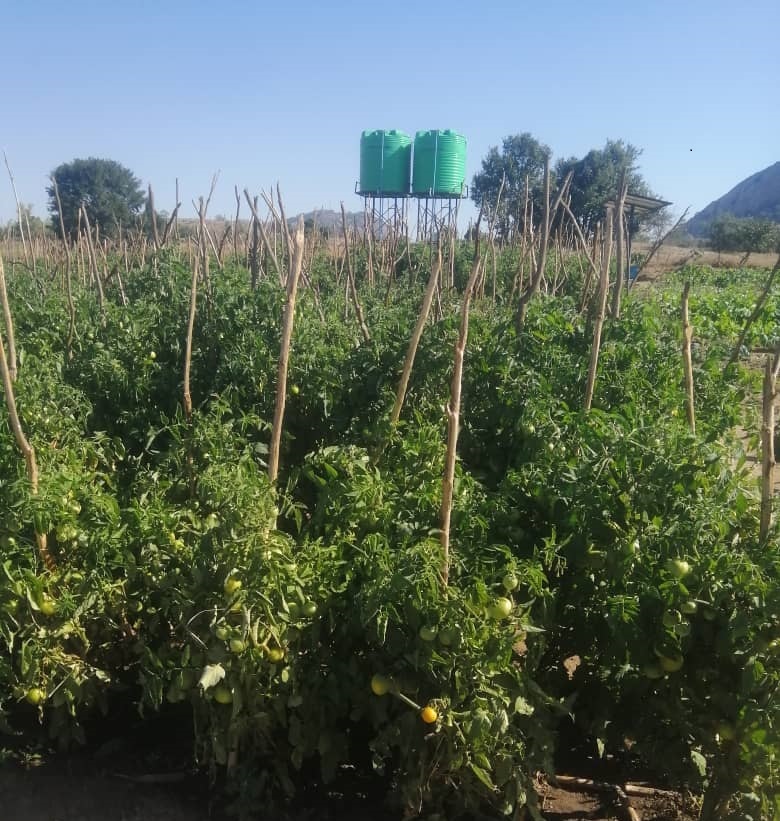
The 156ha Pikinini irrigation scheme has 300 plot holders of which 177 are males while 123 females. Currently the farmers planted beans and are preparing for winter wheat.
Climate-resilient agriculture also known as climate-proof farming involves adapting farming practices to withstand the effects of climate change. It includes growing drought tolerant crops, using environmentally sustainable methods, and improving soil health to boost productivity and resilience at household level.
The visit to Mwenezi was part of a broader tour by a delegation from the Government of Zimbabwe and the United Nations Development Programme (UNDP) to assess Green Climate Fund (GCF)-supported irrigation projects in Masvingo Rural and Chivi Districts.
The projects fall under the ‘Building Climate Resilience of Vulnerable Agricultural Livelihoods in Southern Zimbabwe’ programme and include Pikinini Jawanda and Chizumba in Mwenezi, Zvinyaningwe in Masvingo Rural, and Bwanya, Nyahwanda, and Bindamombe schemes in Chivi.