

Home Blog Page 530

Masvingo media rejects ZMC bill

0


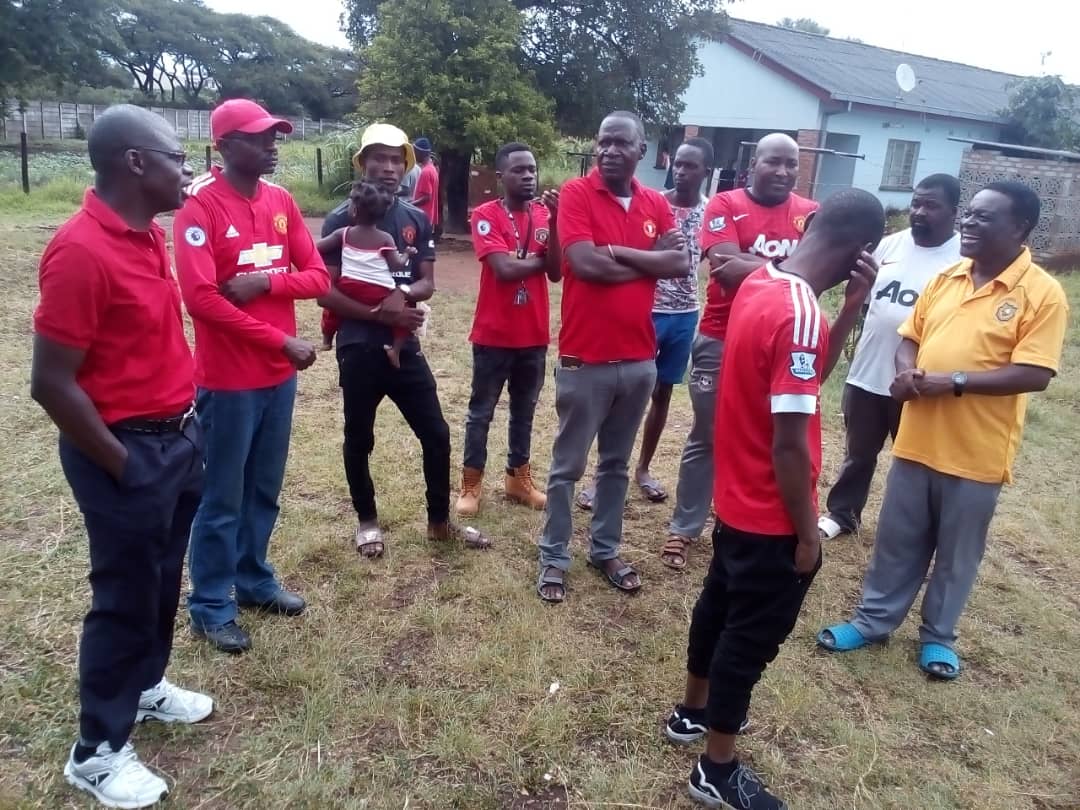
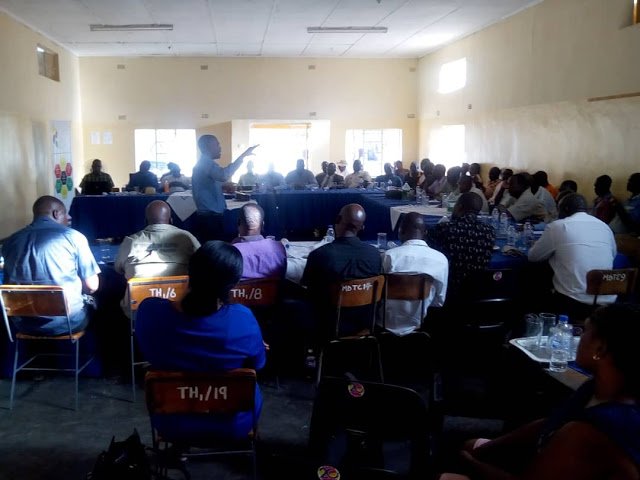
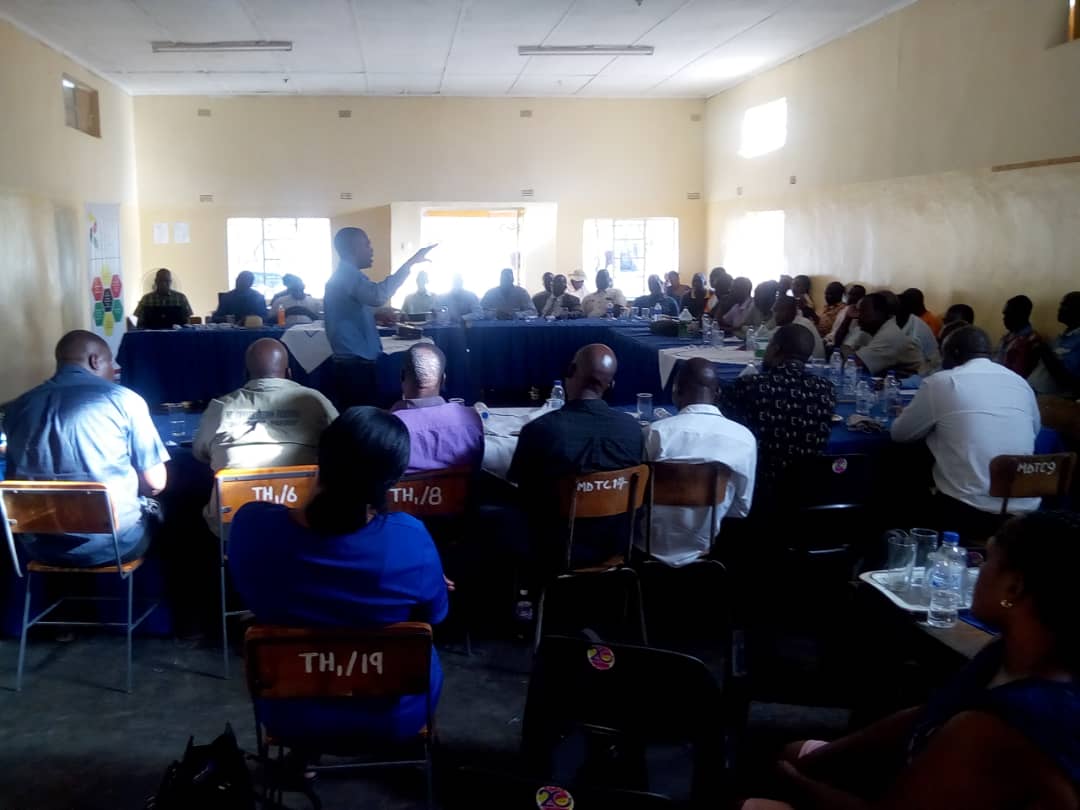
VMCZ programmes officer Faith Ndlovu, executive director Loughty Ndlovu and Misa national chairperson Golden Maunganidze were part of the gathering


Moses
Ziyambi

Journalists, media
students and other media practitioners in Masvingo have expressed serious
reservations with the Zimbabwe Media Commission (ZMC) Bill which they say would
perpetuate the criminalisation of the profession if passed in its current form.
Speaking at a ZMC Bill
discussion organised by the Voluntary Media Council of Zimbabwe (VMCZ) at the
Civic Centre last week, participants agreed that the bill sought to maintain
the current repressive media regulatory framework albeit in a more salient
manner.
“The media should be
given room to self-regulate just like what other professions do. We have
lawyers, doctors and other professionals running their own affairs through
their respective professional bodies. Why not give journalists the same chance
as has become international best practice?” said Walter Mswazie of The Chronicle.
Other journalists
criticised provisions that the ZMC’s eight commissioners would be appointed by
the President in consultation with Parliament’s Standing Rules and Orders
Committee.
They argued that having
leaders of a commission provided for by the national constitution being
appointed by political leaders would be detrimental to the commission’s
independence and neutrality.
They also criticised
provisions that the secretary of the commission, who will be responsible for
the day-to-day running of the council, would be appointed by the President in
consultation with the ministries of Information and Finance.
“Having the CEO of the
commission being answerable to political office diminishes whatever faith that
the media would otherwise have in the political independence of the commission.
The bill in its entirety is a new AIPPA returning via the back door,” said
Theresa Takafuma of TellZim News.
VMCZ executive director
Loughty Dube said his organisation’s position was that self-regulation should
co-exist with statutory regulation to enable the two systems to complement each
other.
“We acknowledge the
need for ZMC because it is a body provided for in the supreme law of the land.
We are, however, appalled by gross attempts to impose statutory regulation at
the expense of self-regulation.
“We are convinced the
two systems can exist side by side. Media complaints should be handled firstly
by a voluntary body and if the aggrieved parties are not satisfied, they can
then appeal with ZMC which would act as an appellant. The simple message we are
communicating is that self-regulation is possible and the media are capable of
being responsible enough to correct themselves and be accountable. We can find
ways of dealing with their own professional challenges just as doctors and
lawyers do. Do the police get involved if a doctor is accused of botching a
surgical operation or if there are allegation that a lawyer has acted
unethically? They are never deregistered by government, but by their own peers
using agreed professional codes.
“We are also worried because
the bill wants journalists to be jailed for professional mistakes. That is
totally unacceptable,” said Dube.
Other contentious
provisions of the bill that came under scrutiny include provision that a
complainant of alleged media misconduct does not necessarily have to be
directly affected by the story. This was interpreted as a ploy to overwhelm the
media with complaints, for example, from ruling party supporters unhappy with
critical coverage of the President.
Journalists also
attacked the provision that the Minister of Information would be able to bar
the work of the commission if he/she feels its investigations are not
favourable to the ‘national interest’ or ‘state security’. This means the
commission would operate at the whim of political office holders and would be
stopped dead in its tracks if its investigations are thought to be politically
incorrect.

Legacy issues!

0

                                      Edward Mukaratirwa 


Mukaratirwa’s
challenge as he takes over Masvingo

Theresa Takafuma
Masvingo City Council’s new acting town clerk Edward
Mukaratirwa is probably the man who will oversee the long-awaited completion of
the Mucheke Trunk Sewer Project which remains stalled six years behind
schedule.
Mukaratirwa assumed his new role on September 01 this year
following the retirement of Adolf Gusha who had served in that capacity for 15
years.
Mukaratirwa acknowledges the ‘legacy’ issues associated with
the previous management which he has been part of, the same management which
presided over the botched project.
With 18 years’ experience working in local authorities,
Mukaratirwa’s capability to handle the pressure which comes with the city’s top
job will be put to test. The city is faced by many service delivery
shortcomings including inadequate water supplies and unreliable refuse
collection schedules.
In a wide ranging interview with TellZim News, Mukaratirwa
shed some light on some of his service delivery priorities, saying he respected
residents’ huge expectations for change under his management.
Who is Mukaratirwa the
man?
He is 42 years of age, and is a civil engineer.
He did his primary and secondary education in Gutu district,
finishing his advanced level at Gutu High School in 1996.
He then enrolled at the University of Zimbabwe (UZ) in 1997
for a Bachelor of Science honors degree in civil engineering, and graduated in
2001.
Mukaratirwa joined Gweru City Council in September 2001 as a
water engineer until June 2002 when he joined Gutu Rural District Council the
following month as district engineer, a position which he held until September
2006.
In October 2006, Mukaratirwa became Gutu RDC acting Chief
Executive Officer (CEO) until February 2011 when he left and joined Masvingo
City Council in March the same year as the deputy city engineer.
He was in the same post until August 30 this year when he
assumed his current position as acting town clerk.
The Mucheke Trunk Sewer
project
The Mucheke Trunk Sewer project dates back to 2012 when the
then Masvingo mayor, the late Femius Chakabuda, confirmed in one interview that
work on the project was already underway and was expected to be complete by
2013.
This project is probably the biggest blight on both council
management and councilors who were in office that time because seven years
later, the project remains uncompleted. The deep trenches have become a hazard
to man and to the environment, and many of the fibrous pipes still lie
unattended in the open veld; some of them being vandalised.
With the expansion of the city partly due to the growing
peri-urban settlement of Victoria Ranch, council realised the need to upgrade the
sewer system which last received such attention in the late 1990s.
Mukaratirwa was already deputy city engineer when the Mucheke
Trunk Sewer project started, and there have been numerous twists and turns as
to why to this day it has not been completed.
Mukaratirwa says this is one of the very first projects he
would want to see completed as a matter of urgency, seeing that it has been
hanging in the balance for seven years. He says from the technical advice that council
got, the sewer line will be completed in three years’ time.
“As council, we resolved to mobilise internal resources
for the completion of the project. We will also use funds allocated by government
through devolution to do the work,” Mukaratirwa said.
“We also plan to approach Victoria Ranch residents
through the land developers to make them contribute a levy towards the completion
of the sewer line since they are the direct beneficiaries of the project.
Whatever happens there (at Victoria Ranch) affects us so it’s only fair to
engage them. We have a council resolution to that effect,” said
Mukaratirwa.
He said council bought pipes for the project from Turnall in
Bulawayo a few years back, but has not been able to transport them due to the
cost, but a recent disbursement of RTGS$624 000 from government will go towards
that.
“The $624 000 we received from government is all going towards
the transportation of the pipes we bought. We expect the tender process to be
completed by end of October and the transportation to start in November through
to December,” Mukaratirwa said.
“Work on the ground will probably start at the end of
the rainy season and by then, we hope all the materials required for the
completion of the first phase will be in place,” he said.
Assuming that work on the ground will start early 2020,
project’s completion will be 10 years behind schedule.
The initial contractor who won tender failed to complete the
project after telling council that he had underestimated the cost of the work
despite council confirming that it had paid him US$2 million.
He is reported to have demanded a further $2.5 million from
council, after which council then cancelled the contract.
Masvingo City Council in 2015 advertised in the media its
intention to borrow US$1.7 million for the completion of the project, and after
getting the nod to borrow, council confirmed that work was to commence soon
afterwards.
Former town clerk Gusha is on record admitting that council
had not done the feasibility study prior to the start of the project, and
council had to engage a South African consultant for the study. This raised eyebrows
as to how the tender process was conducted in the first place.
Council also borrowed US$900 000 from NSSA for the same
project, with the later pledging another US$1.7 million subject to government
approval, but still the project remained dormant.
Some residents recently complained that they suspected
council had increased bills behind their backs as part of desperate efforts to
raise new funding for the project.
In 2017, council spent $500 000 on vehicles for deputy directors
and what they termed ‘other uses’, a development which caused serious
disagreements between councillors and management.
Water situation
The expansion of the city has further worsened the water
situation as the city is currently supplying only 30 megalitres a day instead
of the required 48 megalitres due to many factors including load shedding.
Mukaratirwa says council has completed the technical feasibility
analysis for the scheduled water augmentation project.
“The consultant we engaged has completed the financial
feasibility analysis and will present to council management in the first week
of October. The consultant will then add the management’s feedback on the
report and by end of November we will be having both the technical and
financial feasibility reports.
“Both these reports will help us look for money for the
water augmentation project, and by year end, we will be going around looking
for partners. We also want to lobby government to give the project a national
project status so that we can look for funding even beyond our borders,”
he said.
Load shedding, on the other hand, has been one of the
unforeseen challenges that hit council this year. Mukaratirwa says going the
solar way could save the city from the short-term water woes, adding however
that going the solar way is very costly.
“The water treatment station requires a 200kva of power to
run and the solar system needed for that costs approximately US$2.5 million. We
just did a rough estimate but in our 2020 financial year, we have included fees
for a consultant to do a feasibility study on that,” he said.
Mukaratirwa admitted that there were parts of the city that
have gone for over two weeks without running water because load shedding worsened
from only three hours a day to around 11hours a day at Bushmead Water Works.
He said that through council’s engagement with power company ZESA,
the situation might improve starting this week as per the latter’s promise.
Refuse collection
Council recently flighted a tender invitation to private local
transporters who are willing to be contracted by council for refuse collection,
but Mukaratirwa says he is disappointed by the response.
The council’s refuse collection fleet has suffered mainly
from overuse, and council intends to beef up the fleet by purchasing a truck or
two in the 2020 financial year.
“Our trucks are suffering from overuse and we wanted
communities to play a role in refuse collection hence the tender invitation.
The response we got was underwhelming therefore we are planning to engage them
at both association and individual levels,” Mukaratirwa said.
Mukaratirwa said collection of refuse in the CBD where most
of the economic activities happen will continue, as well as at schools during
the school terms.
Inherited problems
The previous council is known for blaming predecessors for
most of the problems faced but for Mukaratirwa, stepping into the shoes of a
man who has been town clerk for 15 years entails dealing with many ‘legacy’
issues.
Most, if not all of the service delivery issues he needs to
address have been troubling the city for years and residents can only hope that
he too will not spend most of his time in office quenching fires started by his
predecessors.

Charumbira, Bere chieftainships feud over boundary

0

                                                     Tichaona Mharadza

…as Bere clansmen attempt Tokwe
Grange Farm grab

Moses Ziyambi
New areas of contention are
emerging between Chief Charumbira and Chief Bere, with the former accusing the
latter of attempting to invade land that is out of his boundaries, TellZim News
can reveal.
Last Saturday, a large group of
people from Chief Bere invaded Tokwe Grange Farm at Bhuka, Ward 10 Masvingo
Rural, where they tried to peg pieces of land for themselves.
They were, however, stopped by
Charumbira representatives who argued that the land belonged to Chief
Charumbira and that it had been reserved as grazing land for villages 17 and 18
that are themselves situated on part of the farm.
Charumbira family spokesperson
Tichaona Mharadza said he was disappointed by the conduct of the Bere people
whom he said were deliberately ignoring the traditional boundaries between the
two chieftaincies.
“A group of more than 20 people
invaded the farm and tried to peg off portions of for themselves. People in
villages 17 and 18 were not happy about it because the invaders wanted to grab
land that was reserved as a grazing area.
“The farm was acquired by
government under the willing-buyer-willing-seller programme in 1983 to create
part of the Mushandike Irrigation Scheme but a portion of the farm was reserved
for grazing. That is the land that those people wanted to take so the villagers
called us and we responded. The land has traditionally been under Chief
Charumbira and we really do not see where the problem is,” said Mharadza.
He said the would-be land
grabbers claimed they were from the police, the Central Intelligence
organisation (CIO) and Zimbabwe Anti-Corruption Commission (Zaac) with express
authority from President Emmerson Mnangagwa to take the land.
“What surprised us is that they
did not produce any document from the Ministry of Lands to back up their claims,
and they came on a Saturday when most government offices are closed. After a
serious confrontation, the group left and we raised the issue with the police
and CIO but both organisations said they had never sent anybody to do that. We
had also realised that those people were mostly Zanu PF youths although there
was a single member of the CIO. They are maliciously dragging the name of Zanu
PF and President Mnangagwa in their pursuit of a purely selfish agenda,”
Mharadza said.
He urged relevant authorities to
facilitate the peaceful resolution of the dispute between Chief Charumbira and
Chief Bere, saying there was potential for serious bloodletting if the boundary
matter was allowed to continue.
“We feel that authorities are not
taking boundary disputes between the two chieftaincies seriously. These are
heritage issues and they deserve to be taken more seriously. It’s not only
between Charumbira and Bere, but between many other chiefs in the province and
elsewhere.
“On October 24, 2018, we wrote a
letter to the Ministry of Local Government through the DA and PA to find a way
of resolving what we knew was very much going to be a serious boundary dispute
but we got no response up until now. We recognise the Bere chieftaincy’s
legitimacy but only within its recognised boundaries. They are our relatives
and we share a boundary with them at Mutova River, Boss Mine, in Ward 9 but
they are breaching that,” said Mharadza.
He said the Charumbira family was
soon going to sit down and possibly write a follow-up letter to the Ministry of
Local Government, Public Works and National Housing.
 Bere chieftainship spokesperson David
Masomere, however, dismissed those concerns, saying Charumbira did not have any
right to complain as he had become nothing but a headman.
“If there are issues to be
raised, they must be raised by Nemanwa who is the rightful chief. Charumbira is
now a headman and you will see what I mean in the very short time to come. The
boundary dispute they are talking about should be between Bere and Nemanwa whom
we very much respect as a chief. So we will not talk to headmen, we will talk
to Chief Nemanwa,” said Masomere.
When pressed to comment about the
attempted Tokwe Grange Farm invasion, Masomere laughed it off as a non-issue.
“It’s laughable that they are
talking about a boundary they claim we share with them at Mutova River. We
don’t share any boundary with Charumbira, we share a boundary with Chief
Nemanwa and we respect that. The problem is that we have people who claim to be
chiefs yet they were elevated there by white people. Charumbira has a problem
because he is not only fighting Bere, but is also fighting Nemanwa.
“We must ask ourselves why former
white colonial rulers of the land stripped chiefs like Bere of their
chieftainships and elevated some people in their place. The truth is now coming
out, and some people will find the truth too devastating,” said Masomere.
He promised that the next few
weeks will be quite revealing about who owns what and where, saying the
Ministry of Local Government will soon come to solve the matter ‘once and for
all’.
In April this year, Phineas
Tafirei was installed the new leader of the Bere chieftainship which had just
been revived after 125 years.
The chieftainship was destroyed
by white colonial settlers who were unhappy by the then chief’s resistance to
colonial rule. The then Chief Bere had caused early white settler sleepless
nights through his sabotage activities that included continuously cutting
telegraph lines between Masvingo and Bulawayo.
The revival of the chieftainship
came at a huge cost to Charumbira, who is also now facing increasing pressure
following government resolution to revive the Nemanwa chieftainship, which was
also destroyed by early white colonial rulers.

Prominent Masvingo lawyer Chakabuda up for fraud

0

Anymore
Magawa

MASVINGO
Prominent
local lawyer, Foroma Chakabuda is in trouble with the law after he allegedly
misrepresented facts and referred a resident to a fake lawyer.
Chakabuda has already appeared
at the Masvingo Magistrates’ Court twice and his case has now been postponed to
October 02 when two witnesses are expected to testify.
State facts, as being argued by
Richard Nyamuomba, are that on the April 23, 2019, at Mucheke Bus Terminus,
Tranos Chihanga and Chakabuda made a misrepresentation to Tasarawo Tasisio
Mandava that Chihanga was a legal practitioner.
Mandava, who is former Masvingo
Urban Ward 1 councillor, then paid Chihanga RTGS$540 as payment for legal
representation in a civil case but later realised that he had been duped.
Chakabuda is denying ever
referring Mandava to Chihanga.

Manyuchi Dam underutilisation due to lack of political will

0


Cephas Shava

MWENEZI –
Villagers who live close to Manyuchi Dam have complained that the water body
remains underutilised because it is a convenient vote-buying tool that
politicians conveniently exploit during election time.
Villagers
point to the long-talked-about Pikinini-Jawanda Irrigation Project which was
pegged in the 1990s but remains a pie in the sky.
If
implemented, the irrigation project would result in 500 hectares of land being
put under irrigation, and would help to fight extreme poverty among people living
under Chief Mawarire and Chief Murove.
Villagers
told TellZim News the dam was more of a white elephant which does little to
support livelihoods outside of the illegal fishing practices happening there.
“We
are deriving no benefit from this dam which is the biggest in Mwenezi district.
Village gardens are not allowed close to the dam yet authorities cannot support
our quest for a proper irrigation project,” complained one villager.
She
complained that the Environmental Management Agency (Ema) once came and
destroyed the gardens that villagers had built for themselves.
Another
villager said she witnessed many ground-breaking ceremonies for the project but
nothing materialised even though many politicians of different calibres visited
the area and made many grand promises.
Ward
4 Councillor Passmore Madzudzu shared the villager’s worries but expressed optimism
that the project will eventually see the light of day.
“Villagers
have every reason to be disappointed because they can see an opportunity to
improve their living standards yet they are not being given the necessary
support. The area has vast potential to support successful irrigation
agriculture because the water is there. I am hopeful a way out of this
situation will soon be found,” said Madzudzu.
Addressing
Zanu PF supporters at victory celebrations held at Rutenga growth point
recently, the Minister of State for Masvingo Provincial Affairs, Ezra Chadzamira
acknowledged that Manyuchi Dam was one of the many underutilised resources in
the district.


Masvingo residents lambast council debt colletors plan

0
TellZim Reporter
Masvingo residents have come
out guns blazing against threats by city council to unleash debt collectors on
them over unpaid bills at a time when authorities are failing to provide a
reliable water supply.
Speaking during a recent
service delivery monitoring meeting organised by the Masvingo Residents and
Ratepayers Alliance (MURRA) at Mucheke Hall, residents questioned why the
council continued to target them when they owe smaller amounts than what is
owed by government departments.
Residents last week received
letters with a seven-day ultimatum to pay up their debts or face the full wrath
of debt collectors.
Residents, however, say the move is
unjustified since they rarely receive water owing to inadequate pumping
capacity now worsened by severe power cuts.
“This is just not fair, they want to be
heavy-handed with small debtors yet they are letting those who owe millions get
away with it. We are not receiving water in our tapes but they want to force us
to pay bills,” said Tracy Musakaruka of Ward 1.
Other residents said council must send the
debt collector to the army, police and prisons services which owe close to $30
million in unpaid water bills.
“We think it’s noble that the council
focus its attention in recovering huge debts from government institutions and
security forces like the army and the police. We know they owe big time but
they are treated with kiddies’ gloves,” complained Tapiwa Magura.
MURRA programmes manager, Esther Nyambiya
said while the organisation has always encouraged residents to pay their bills,
it will not shy away from criticising selective application of rules.
“We always remind our members to pay their
dues so that council delivers, but we are concerned when council decides to
torment our members only for unpaid debts. We condemn that,” Nyambiya said.
Mayor Collen Maboke and Ward 1 Cllr Selina
Maridza, who were invited to the meeting, failed to turn up despite having
confirmed attendance.
Council argues that it needs to
use debt collectors as residents allegedly do not want to pay what they owe.

Zaka channels devolution funds towards health

0

                                               David Majaura
Brighton Chiseva
ZAKA – Zaka Rural District
Council (RDC) says the RTGS$650 000 devolution funds released to it was
invested towards health, with some new clinics expected to be built while
existing ones will be improved.
Speaking to
TellZim News after the devolution meeting held at Zaka Rural District Council
(RDC) board room recently, Zaka RDC Chief Executive Officer (CEO) David Majaura
said the responsible committee agreed to use the money to complete clinic
projects in the district.
He said initially,
council had prioritised the purchase of a rig and a grader but realisations
were then made that the money was not going to be enough.
 “When we discovered that the amount could not
support the plans, we decided to invest it mainly in our clinics and schools
projects. We allocated the amount to constituencies and the local MPs have
given us names of projects they want to be supported,” said Majaura.
In Zaka East
Machiva, Njiva and Benzi clinics will be developed in terms of plumbing and
electricity connections while the other amount will be put towards the
construction of Chiromo Clinic.
In Zaka Central,
the funds will be directed towards Four Miles and Tovani clinics which are
still being built but with progress having stopped due to lack of materials.
Murerekwa Primary
School, whose roof was blown away by Cyclone Idai, will get a share in the Zaka
Central’s share of the money.
In Zaka North,
Makwau Clinic will get a share while the other has gone to Muroyi School which was
also affected by the cyclone.
In Zaka West,
Njiva Clinic and other projects will benefit from the money.

Tell Zimbabwe livestreams Triangle public dialogue

0


…. ‘Land Reform on
sugarcane plantations benefitted outsiders’


TellZim
Reporter
CHIREDZI
As
society becomes increasingly digital, Tell Zimbabwe has devised an appropriate
response by livestreaming some of its activities in order to cater for a
greater audience.
At Rufaro Hall in Ward
18, Triangle, a public dialogue was attended by 150 people and was beamed live
on Facebook, with the link being shared on other social media platforms namely
Twitter and WhatsApp.
The event saw
participants engaging with their ward councillor Gilbert Mutubuki who was
elected in last year’s harmonised elections on promises of fighting for better
service delivery.
Some of the issues that
came out of the discussions included lack of support for informal traders,
shortage of residential stands, sugar company Tongaat Hulett’s employees
reaching the age of retirement without anything to show for it, the Land Reform
Program benefitting mostly outsiders at the expense of locals and the dire
living conditions in compounds housing employees of small-holder sugarcane
farmers who benefitted from the Land Reform Program.
Residents who spoke at
the event said they appreciated the efforts of Tell Zimbabwe and other
community based organisations in getting their voices and concerns across to
solution holders.
Others said it was
critical to continue with livestreamed dialogues of that nature so that all
leaders – whether elected or appointed – could publicly be held to account and
as a way of confirming that they indeed represent the public interest.
Tell Zimabwe programs
manager Passmore Kuzipa said the organisation will work harder to improve
contact between the public and office holder.
“I am pleased that our
programing work is being received with greater enthusiasm than we had ever
expected. We pledge to work harder to bring leaders back to the people whose
interests they purport to represent. Livestreaming is one such way of doing
that, and the footage is stored as an archive which will be useful for future
references,” said Kuzipa.

‘Polluted Mucheke River water totally unusable’

0

                                                  Taruvinga Chivasa

Moses Ziyambi

MASVINGO – The heavily-polluted water in Mucheke is no longer
suitable for whatever use, and it would require several years of consistent
clean-up exercises to restore the river to its original pristine state, the
Mutirikwi Sub-Catchment Council has said.
Speaking to TellZim News in an
interview, Mutirikwi Sub-Catchment Council manager Taruvinga Chivasa said it
was important that all stakeholders worked together to protect rivers.
“Mucheke joins Shakashe River
which is one of the most important tributaries feeding into Lake Mutirikwi; the
sole source of drinking water for Masvingo city. It is unfortunate, however,
that despite Mucheke River being clean upstream, it becomes choked with all
forms of pollutants as it passes through the city,” said Chivasa.
He said the sub-catchment council
would find it hard to issue out licences to anybody who requests permission to
extract water from the part of that part of the river going downstream.
“It will be difficult, if not
impossible to allow anybody to extract water from the river in its current
soiled state. We need a plan with all stakeholders to stop the pollution and
restore sanity in our river,” said Chivasa.
He said the invasive water
hyacinth which blankets many pools in the river was thriving on human faecal
matter which is rich is nitrates and phosphates.
“The weed is quite problematic in
that you cannot simply get rid of it without a good plan. You may want to
remove it mechanically but you would only be treating the symptoms, not the
actual illness. The weed has thousands of seeds on the river bed and the weed
would sprout once again as soon as it’s fed the nutrients it wants. So
pollution has to completely cease first before we can talk about removing the
weed,” said Chivasa.
He said during the rainy season,
the hyacinth is washed down stream until it reaches the lake where it cannot
survive due to conditions that are not favourable.
Besides sewage from burst pipes,
the river is also polluted by litter thrown recklessly by pedestrians and
motorists alike, while toxic oils and waste water from the industrial area also
contribute substantially to the pollution.

Can Nhumwa be what Manica Diamonds need?

0

…Gem
Boys appoint him head coach

Clayton Shereni
After producing what
could be Manica Diamonds FC’s best run so far in the elite topflight league,
Gem Boys have reportedly opted to appoint Johannes ‘Dutch Mentor’ Johannes Nhumwa
as their substantive coach, TellZim has learnt.
Nhumwa, who was
Masomere’s assistant and one of his most trusted lieutenants, seems to be
striking the right chords with a fair run in his five outings on the hot seat.
Manica have been looking
for a substantive coach in recent weeks to take over the reins, with a number
of high profile coaches like Lloyd Mutasa, Lloyd Chigowe and Kelvin Kaindu reportedly
expressing interest.
However, Nhumwa stood a better
chance considering that he has been familiar with the players at Manica since
the club’s formation.
Nhumwa can also provide
an effective recipe to escape relegation and has been producing fair results
since assuming the caretaker role.
Contacted for comment,
Nhumwa confirmed the developments but said the deal was yet to be finalised as
he is yet to put pen on paper.
“I am still the coach and
still in charge and I am no longer interim now from our arrangement but we
haven’t yet gone through our papers,” said Nhumwa.
Nhumwa has claimed 10
points in five matches with three wins, one draw and one lose at the hands of
Caps Utd.
He takes over from Luke
Masomere whom he deputised since the formation of the club last season.
Masomere and Nhumwa made
history by getting promoted into PSL with some games to spare and without
losing a single match.
However, Masomere seems
to have found it hard to cope with the competition in the country’s most
decorated league which is different from Division One action.
The two have worked
together a number of times with one of their most prominent assignments being
their PSL job with How Mine FC.
The Gem Boys will this
weekend face a stern test against third-placed Chicken Inn FC –  popularly known as Gamecocks – in Bulawayo
where Nhumwa hopes to continue pleasing his paymasters.