
Home Blog Page 71

Stray dogs menace worries Masvingo residents

By Virginia Njovo

Masvingo residents have raised concern over the issue of stray dogs which they said threaten residents’ public health and safety and accused the local authority of being reluctant to address the menace.
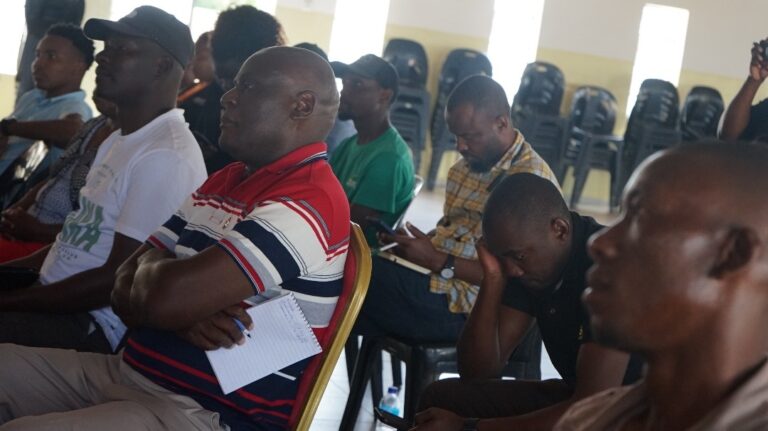
This came out during a feedback meeting held at Building Brigade Hall, in Ward 5 Masvingo Urban on February 26, where residents raised alarm over the rise in number of stray dogs in the commonage which posed a risk of dog bites and high costs of rabies medication.
Ward 5 resident Taneta Chongore said they were excited when council resolved to engage Zimbabwe National Army to shoot roving dogs in streets but were disappointed that the resolution was not implemented.
“The problem in our ward is that dog owners are letting their dogs roam freely despite regulations compelling them to lock them up. We were happy when we heard that council had engaged the army to assist in shooting stray dogs but we are disappointed as that was not implemented” said Chongore.
One ward 5 health club member Shylet Kaunga said residents could not afford paying rates and let alone afford medication after dog a dog bite.
“We are worried about the availability of rabbies vaccine in our clinics as well as their affordability. If one is bitten the dog owners rarely take up the responsibility,” said Kaunga.
Responding to residents’ concerns, Ward 5 Councillor and deputy mayor Daniel Mberikunashe encouraged residents to own a maximum of two dogs per household.
“I have heard your concerns regarding stray dogs, I encourage residents to have at most two dogs per household which have to be fully vaccinated and have decent shelter so as to guarantee safety,” said Mberikunashe.
During a full council meeting which was held on February 24, Deputy Director of Health, Housing and Environmental Services Sithabile Matava said they had tried to engage other partners on the issue of stray dogs as the Society Prevention Cruelty to Animals (SPCA) had transport challenges to pick up the stray animals.
“The SPCA was under- resourced for the work, that’s why we had engaged other partners but the issue of the vehicle which they are supposed to use is the challenge. We got a car which needs some touch ups so soon we will start the shooting,” said Matava.
Last year Masvingo Province topped the national statistics of dog bites in the country.

Crisis at Masvingo Provincial Hospital

…as referral hospital refers patients to private clinics for basic tests

…nurses making a killing from alleged corruption, criminal scheme

By Brighton Chiseva

As a journalist, I’ve spent several years reporting on the dire state of healthcare system in Masvingo in particular at Masvingo Provincial Hospital and Zimbabwe in general.

I wrote about shortages, corruption and the struggles of patients and medical staff alike especially at Masvingo Provincial Hospital. However, despite my extensive coverage, I never thought I’d become a part of the story one day.

That was until I fell ill and had to seek medical attention at Masvingo Province’s biggest referral hospital. Suddenly, I found myself on the other side of the notebook, experiencing firsthand the harsh realities I had written about for so long.

The hospital’s crumbling infrastructure, scarcity of medical supplies, and the overwhelmed staff were all too familiar. I had written about these issues countless times, but living them was a different story altogether.

My experience was a stark reminder that, no matter how much we report on a story, there’s no substitute for lived experience. And as a journalist, I’m more determined now than ever to continue shedding light on the struggles of Zimbabwe’s healthcare system, expose corruption in the hopes that one day, real change will come.

I once wrote about corruption at the provincial hospital which resulted in one staffer who was involved losing his job. Though I was not proud that he lost his job, I thought the incident would serve as a reminder to others but I was wrong.

My ordeal was a wake-up call, a reminder that the struggles of Zimbabwe’s healthcare system were real and devastating. It is a crisis that demands attention, action, and accountability from   leaders.

I’ll never forget the day my health took a turn for the worse. It started like any ordinary day, but as I was scrolling through my phone, just after supper, I suddenly felt an excruciating pain in my groin area that shifted to my back. The pain was unbearable, and I couldn’t sleep, sit, walk, or do anything.

Desperate for help, I called several people, hoping someone could take me to the hospital. Luckily, a colleague answered, and despite the late hour, he rushed to my side and took me to the Provincial Hospital since I had no money to afford a private doctor.

We arrived just before midnight and I paid US$9 for my card to be stamped. After a brief wait, I was attended by a nurse who administered an antibiotic and painkiller through a drip. I paid $4 for the medication, which provided some relief.

However, the nurse informed me that the doctor on call had left, and my situation required his attention. She offered me the option to wait or return home and come back early the next morning before 0700 hours. I chose to go back home, but the pain returned around 0100 hours, and I went back to the hospital just after 5 am.

The wait for the doctor was long and he eventually arrived way after 7 and after examining me, he ordered some scans. But what happened next left me stunned. The nurse borrowed my phone, supposedly to call another department, but instead, I was led out of the hospital and into a waiting vehicle, which took me to a private clinic for the scans.

The vehicle, a Toyota Probox was not equipped for transporting patients especially with my condition, raising concerns about safety and potential corruption. I was charged $70 for the scans, but I have no idea how the cost was divided between the three scans I had.

I must give credit where it’s due and would remiss if I did not acknowledge the private doctor who did scans’ impressive efficiency and speed in conducting the scans.

From the moment he was called to his swift arrival, I thought he was coming from another wing. He worked with haste leaving me wondering whether his speed compromised the accuracy of the results or he was simply skilled and well experienced.

However, it’s difficult to ignore the motivation behind his speed, the financial gain.

To make matters worse, I later discovered that I needed blood tests, which no one had informed me about. I had to go to another lab, pay $45, and wait for the results.

“Those scans and tests are done both at the hospital and private clinics,” said one Doctor whom I showed my card and enquired where I could get the services.

However, sources within the hospital revealed that nurses were complicit in the scheme, receiving a share of the profits from the private clinics at the end of each day.

The nurses allegedly call the private clinics to inform them of patients in need of tests, and the clinics then send their staff to collect the patients from the hospital using personal vehicles and are allowed to take blood samples from the hospital.

“What happens is, there are selected clinics and labs that patients are sent to, so the nurse has to call and even record the names of patients they would have referred. They collect their share at the end of their shift,” said a source.

I tried to get information from the private clinics but most of them were reluctant to shed information and some denied ever paying the nurses and one said they would simply give discounts to relatives of the nurse who would have referred people.

“We do not pay them, however, what happens is we give them discounts and at times we give the nurses free service when they come or if they directly refer a relative of theirs,” said one employee from a private clinic.

My investigation revealed more disturbing truth. The scans and tests I was referred for are actually available at the provincial hospital. However, the nurses have a vested interest in referring patients to private clinics, as they receive kickbacks.

By referring patients to private clinics, they are able to profit from the arrangement, rather than allowing patients to access the same services at the hospital.

Furthermore, I discovered that the X-ray and scan department at the hospital often cites electricity challenges as an excuse for not providing the required services. However, if a patient is referred through a private arrangement, the department will miraculously find a way to perform the scans – for a fee, of course.

This fee is often less than what private clinics charge and that the nurses are complicit in the scheme. The nurses also allow the clinics to take blood samples from the hospital.

The Masvingo Provincial Medical Doctor, Dr. Amadeus Shamhu, acknowledged that the hospital refers patients to private clinics for certain tests and scans. However, he failed to provide further comment, despite repeated attempts to contact him.

Minister of Health and Child Care, Dr. Douglas Mombeshora, condemned the practice, stating that it was illegal. He urged those with information to come forward, but noted that he cannot comment directly on the matter without further investigation.

“We have had some reports here and there, but the challenge is that we do not get enough information to aid in investigations. If someone can provide us with comprehensive information, then we can investigate, because that is not allowed,” said Dr Mombeshora.

Masvingo district chess tournament crowns new champions

0

By Tatiana Mhararira

National Association of Secondary School Heads (NASH) Masvingo district conducted chess tournament with schools around Masvingo district gathering at Zimuto High School on February 28, to select a team that will represent the district at the provincial finals.
The competition consisted of eight zones who were competing in 7 different age groups namely under 13,14,15,16,17,18 and 20.
Panashe Mudenga from Mutendi High won the gold medal in U13 age group while Simon Chinyepe from Vic High and Benevolence Jeke won silver and bronze medals respectively.
Abiud Venge from Bere High, Takudzwa Mazikana from Shingirirai College and Wellington Makoni won gold, silver and bronze in the U14 category.
In the U15 category, Akona Chaora from Mutendi High scooped the gold medal while the silver went to his school mate Macdavid Soni and the bronze medal went to Ray of Hope Academy with Liberty Mayiwa.
Passionate Maburutse of Temmeraire won gold in the U16 category while the silver medal went Tinotenda Mustvangwa from Mucheke High and the bronze went to Chikanya Ushe of Masvingo Christian College.
In the U17 age group, the gold medal went to Prominence Dube from Vic High, Ignatius Mhaka from Temmeraire scooped the silver medal while Malvern Chiwara from Mutendi High won the bronze medal.
Abiud Venge from Mutendi high scooped gold in the U18 category, Takudzwa Mazikana of Vic High scooped the silver medal and Wellington Makoni from Masvingo Day went home with the bronze medal.
The Gold medal in the U20 age group went to Mutendi High with Mike Muza while the silver medal went to Keith Chiweshe of Gokomere High and the bronze medal went to Washington Mapanzure from Masvingo Christian.
Temeraire’s Rutendo Hwede who won a gold medal in the 2024 national finals scooped a gold medal in the U17 girls’ category and was named best player of the tournament.
Speaking to TellZim News, Temeraire High chess coach Moses Kujinga said the tournament had a large turnout and had intelligent players.
“The tournament had a huge turnout and players were very excited to be participating in the tournament.
“Chess is an indoor game usually played by individuals who have mental prowess who will be fighting to win the game on table,” said Kujinga.
Kujinga said his words of encouragement to players was chess is a traditional game which becomes more interesting as one continued to play it.
“Chess is one of the ancient games which will never become outdated. It’s a unique game which is very rich game and has endless possibilities.
“It’s also very complex but it becomes more interesting as you understand it more,” said Kujinga.
The gold and silver medalists will represent the district in the provincial competitions to be held at a date and venue to be announced.

Dhara B incarceration, Minister Muswere missing in action

I am one of those people who doesn’t like Matakadya kare, zviya zvevanhu vanoti hee Bob was better, hee Smith was better, I hate that zvekutodaro but apa haa, ndiri kuona kuti haa kare kwaiva nani. Before you celebrate, I don’t mean izvozvo, handisi kuti Bob or Smith was better no, ndikutoti Monica Mutsvangwa was better as Minister of Information chero anga asingazive hake kuti ZACC yakamirirei. I am sure you remember when she embarrassed us in front of the world when she failed to say Zimbabwe Anti-Corruption Commission. Yeah mese makati hapana chozikanwa and we even blamed Chris for not preparing his wife but I now see kuti she was far much better as the Minister of Information than mashura atiri kuona aya. I used to envy Jenfan Muswere, ndinotya kumuti Dr Coz eish, the fake doctors are now plenty. Whoever thought kuti Minister Mavetera is a fake one and who knows raWalter Mzembi would be also be labeled as fake kkkk. Zvivindi vanhu vari kuzviwanepi imi tinonhonga nhongavo, sure kudeedzwa kuti Dr usiri,shame. Before I speak about Muswere and Monica. Let me take this time to advice mubiyangu Minister Mavetera, inonzi woman to woman iyoyo, tikasatopa advice isu vamwe, men will never think of it. I may seem to be a destitute but remember Macheso’s song, ndishorei at your own peril. Right, Minister Mavetera, I think you need to have a media advisor, or social media advisor, kana mashaya please come here at Chitima Market, nechekuzasi, nowadays ndiri kuwandira kuzasi kumain Bridge, there kana yonaisa i will seek shelter in the log cabin left by Masimba when the company abandoned the road and bridge construction, I don’t want to say more zvangu about Masimba because ndakatogumbuka nenyaya yavo. Minister Mavetera sure is an amateur in politics, a whole minister engaging on petty fights on X defending her doctorate, that’s madness, let me advice you, the X streets are too wide for you, just stay in your lane at the far end and leave veko ikoko. If you want to be petty you can go on Facebook, there you can do whatever you want because pakazara yese yese not X. The only way to defend yourself is to do your own Doctorate. I hope you will take my advice sezvazviri mwachewe and engage a social media manager who speaks on your behalf while you concentrate on running the ministry. PhD haina kana basa we all know, you are a minister wani because you formed the young woman for ED. ini ndoda kuto former yangu but ndoshaya a proper name because handidi zve ForED, kana zvanetsa ndingatoita hangu Mapombi 4CGDNC. Mind you I am factionless and I don’t support team Chiwenga but it’s just that ma4ED awandisa so ndakumbodawo zvitsva. I maybe recognized and get a ministry panopinda General, of course if the constitution is not amended because if it does, 2030 vanenge vachipo vachingokokota Gapu.
I am disappointed ladies and gentlemen, as I write this, I am Imoshinali charged mostly because of Muswere, when he was appointed Minister I thought it was one of the few good choices by Ba 2, simply because of his age, achiri wechidiki and I thought he will be able to represent the youths well but alas, he is busy promoting the 2030 agenda and will not stop at anything to thwart all the opposing voice. Where is Muswere when journalists are being arrested for doing their work? I never trained journalism and I will never but I believe kuti umwe neumwe should be allowed to do his or her work freely. Why is he quiet? Where is Ndabaningi when journalists are being persecuted? Why are they quiet? Where is the freedom of speech and the media. I don’t blame the police for arresting him nor the NPA kana the judiciary service, they have been like that since time immemorial but I never thought Muswere will allow this to happen under his watch. What will be your legacy in the Ministry nhai Minister when you allow the arrest of someone for doing his Job? If it wasn’t about Monica, I would be exonerating you ndichiti hauna kumbopinda mu newsroom so you don’t understand how the media operates but no, haungakundwe nechembere mhani. Under Monica we saw a lot of positive changes in the media industry and I think that’s why she was removed, she had a goal to liberalise the media and she tried her best so she will be remembered for that ana AIPPA and POSA were removed under her and the issue of co-regulation was almost succeeding when she was removed only to be replaced by useless Muswere. I wonder why Nick Mangwana was pretending to be for media freedom naMonica mazuva aya when he is letting this happen under his watch. If I had the power, I would recommend him for the targeted sanction list.
Please Minister Muswere, the arrest of Dhara B is not a laughing matter, he should be released immediately and izvi zvekumunyima bail izvi is a scheme yatava kutoziva, you want him to serve a sentence then later mozomubudisa henyu moti haana mhosva. What is his crime really? Interviewing munhu? What is wrong with that? This is a sinister ploy to threaten the media against giving a platform to all opposing voice. If it’s a crime why didn’t you arrest Geza, he is the one who spoke against Ba 2. The desperation is just too much. If 2030 yacho comes this way ingogarai matora, ehee, hatinei nazvo you can go beyond 2030 mosiyana nezvekusunga innocent people.
I saw in some pictures dzandakaratidzwa kuno kuchitima that the court room was packed to the bream and I heard vanhu vanga vachitobudiswa vese vashaya pekugara and I heard kuti the sellouts, Biti and Job Mandela Lite were there in solidarity with Dhara. Yeah that shows he is a man and I also heard mukomana wema verse also took to his channel or X hameno to show solidarity though he failed to be at the court. Iye akagona zvake aikuvadzisa vanhu. I am sure Mandela lite got time with Dhara B and gave him some tips about the penitentiary. I hope the two were indeed in solidarity with Dhara B and not to seek political relevance as their careers seem to be bleak.
Before I go zvangu kunokanga maputi, let me take this opportunity to plead with government to make sure that there are plans to mitigate the effects of USAID withdrarwal in some sectors and health ikoko please provide other services that were terminated otherwise vanhu vangafa takatarira. Let’s be safe wherever kwatiri ladies and gentlemen, mvura ichiriko and I have been counting zvangu ndiri kuno kuChitima, in Masvingo Province alone, we lost around 36 people between December and January. Moyo wekubereka unondibatwo veduwe, I am still calculating February and I am sure it’s not pleasing as well. We also need to pray ladies and gentlemen, the way this animal called African Army Worm is destroying crops is not good and if we are not careful, inoita Zhara kwakanaya. Has anyone heard from Mdara Rambai Fufuro Josiah Hungwe? Arova Mdara uya and I miss his husky voice warning people about corruption. I think people are now doing it because he is now old and cannot remind them that even the Bible does not condone corruption. If anyone sees Mdara Hungwe Please say hie and tell him I wish him a well-deserved rest.

Parliament should bar leaders from getting treatment abroad – Legislator

By Beatific Gumbwanda

CHIREDZI – Chiredzi Central Member of Parliament, Ropafadzo Makumire has urged Parliament to enact laws barring the executive and key decision makers from getting treatment outside the country ensure that they revamp the country’s dilapidated health system which the citizens are being subjected to , TellZim News can report.
The country’s health system is currently in a sorry state, with the majority of citizens travelling distances to seek better medical facilities, from as far as Chiredzi to Karanda Mission Hospital in Mt Darwin.
Recently, social media was awash with an accident victim whose broken hand was wrapped with a cardboard box due to lack of proper plaster equipment in public hospitals.
Last week, parliamentarians debated on the report of the portfolio committee in Health and Child Care on non-communicable diseases like cancer, where members of parliament fumed over the current state of the country’s health system.
Speaking during the session, Makumire proposed that the Presidium and Ministers should be barred from seeking medical attention abroad saying that was the only way for them to promote health services in the country.
“Sometimes there is no clean water and electricity in hospitals where patients will be treated. Some challenges are very small that they do not require people to congregate to solve them. We are in this situation because those who are responsible do not get treatment from local hospitals.
“This August House has a responsibility of enacting laws which will guide us, so I suggest that we enact laws which will require the executive and you Hon. Speaker, to be treated locally until the issue of healthcare facilities has been fixed,” said Makumire.
Makumire also highlighted the issue of brain drain which he said heavily affected the country’s health system as experienced nurses and doctors were leaving the country for greener pastures.
“The issue of public sector healthcare workers is an important one. There are no doctors and nurses in our public hospitals and because most health workers have left the country for greener opportunities, I believe that these are people who could have been helping us in fighting this pandemic of cancer,” said Makumire.
Makumire also called for a joint public hospital visit by the Parliamentarians and the Executive to assess the state of the hospitals.
“Hon. Speaker Sir, this August House should take a day where the executive visits public hospitals to see their state,” said Makumire.
Mt Darwin North Constituency MP, Labbany Munemo also said people were moving long distances to access proper medical health care services.
“We have people who suffer from cancer and other chronic illnesses whose situation is worsened by shortage of healthcare facilities in rural areas. Some people do not seek medical attention because they have to walk long distances,” said Munemo.
Most leaders are seeking medical attention from first world countries including China and India whilst the general populace is rotting in public hospitals.
Several cancer patients got crowd funding to get medical treatment in India and China as Zimbabwe has no cancer screening machines and treatment centres.

Two Masvingo Provincial Hospital lab staff in mysterious blood heist

…Security lapse exposed, motive questioned

By Staff Reporter

A shocking scandal has rocked Masvingo Provincial Hospital after a laboratory scientist and technician were arraigned before Masvingo Magistrate’s court for stealing blood from the hospital’s laboratory.
The theft has left many questions in the minds of ordinary people as to what was the intention of the suspects and also the security at the hospital.
The accused Goodson Dzuwalinyenga (50) a laboratory scientist and Tichaona Shindi (36) a laboratory technician appeared before magistrate Arafat Kozanayi on February 26, 2025 facing charges of theft.
The two were remanded out of custody and will be back in court on March 3, 2025 for continuation of trial.
It was the state’s case as presented by Godknows Mugondo that on January 28, 2025 at around 1500 hours at Masvingo Provincial Hospital, the complainant, Masvingo Provincial Hospital, represented by Modina Mashakada (64) was advised by laboratory head Daniel Bvurire that three units of blood were stolen from the bank refrigerator together with 300 blood empty plain tubes red top and 100 x purple EDTA.
Mashakada then checked the cross matched blood register and nothing was endorsed on it to indicate that blood units were collected from the stocks of blood which were in the refrigerator.
On January 31, 2025, the complainant filed a police report and investigations led to the arrest of the two.
Further investigations led to the recovery of 229 red top blood empty plain tubes and 100 purple top EDTA.
The stolen blood was valued at US$750 and nothing was recovered. The red and purple top blood empty plain tubes is US$40 and US$32, 90 was recovered.
In the accused’s defence represented by their lawyer Madock Chivasa, they stated that since 12 people had access to the refrigerator where the blood was stored and it was possible that someone else besides the accused might have taken the blood.
The stolen items are crucial for medical testing and treatment and the theft has send shockwaves to the members of the community who wonder how the blood was going to be used and the lack of accountability at the provincial referral hospital.
TellZim News asked around from Doctors in town who indicated that the blood could be sold to private clinics locally or outside Masvingo.
Sources said the stolen blood was at a named Clinic and the test tubes were sold at another one and both are in Masvingo Town.
Masvingo Provincial Hospital is plagued by corruption, theft and mismanagement putting patient’ lives at risk.
The disappearance of blood and test tubes supplies is just one incident in a long list of scandals.

Masvingo City ward 5 health club laments bin liners theft

By Richard Mukwenya

Masvingo City Ward 5 residents have raised concern over theft of bin liners in their ward resulting in an unclean and polluted environment posing health risks in the communities.
Speaking during a feedback meeting organized by TellZim News on February 26 at Building Brigade Community Hall, one resident and local health club member Shylet Kaunga said they were troubled by thieves who stole bin liners they used to keep refuse before collection.
She said they would empty the refuse down and take the plastic bags for sell and leaving waste scattered again polluting the environment. She appealed to council to collect the refuse on the scheduled time.
“As ward 5 health club we sweep and keep the waste in the bin liners on Wednesdays and Fridays but the refuse trucks come to collect them only on Saturday. As a result, thieves open and scatter the waste on the ground and take the bin liners.
“We are requesting council to assist us by ensuring refuse trucks come to pick them up on the days we clean to spare us doing a double job,” said Kaunga.
Ward 5 councilor and Deputy Mayor Daniel Mberikunashe said the local authority had bought a new refuse truck to improve refuse collection in the wards so they would improve collection.
“You requested for a refuse truck which is noble and we purchased one more truck and an ambulance. So I urge you to communicate with the Environmental Health Technician (EHT) so that the issue can be resolved and avoid bin liner theft and waste disposals,” said Mberikunashe.
He also urged the residents to keep the environment clean and asked the health club and other residents to report those who fail to comply as well as those who steal bin liners.

Masvingo residents worry over USAID withdrawal

By Tatiana Mhararira

Masvingo residents have urged Masvingo City Council to fill the funding gap left by USAID’s withdrawal of support particularly for critical health services such as ARV treatment to ensure uninterrupted care for those relying on these life serving medications.
The residents made the plea to council during a feedback meeting organised by TellZim News on February 26 at Building Brigade Hall ward 5 in Masvingo.
One resident Sharon Munangaigwa pleaded with council to assist patients on Antiretroviral Treatment saying failure would be catastrophic.
“Looking at the issue that USAID is about to stop supplying Anti-retroviral drugs. Is the council going to assist the patients in order for them to get these drugs?” said Munangaigwa.
In his response Ward 5 councilor and Masvingo City Deputy Mayor Daniel Mberikunashe said people will have to be vigilant to save their lives and also try traditional methods saying they had been helpful.
“Before we got assistance from other countries, these diseases were there and we tried by all means to help ourselves using the traditional ways. We can’t force those who had been supporting us to continue and when they helped they did not reach out to individuals.
“It’s the country’s duty to look for assistance and when one helper ceases to assist the country theyS resort to others who will volunteer to assist. Since it is a country with leaders and a ministry that is responsible for that with a minister, permanent secretary and doctors will look into that matter they can’t let people die,” said Mberikunashe.
The fear has gripped many Zimbabweans especially those on ART and other chronic illnesses following the announcement of funding suspension by USAID.

Sharon Munangaigwa

Anxiety and Uncertainty Grip Zimbabwe’s Health Sector as US Aid Suspension Takes Effect

. . . Non-State Actors convene urgent meeting to discuss way forward

By Passmore Kuzipa

MASVINGO – The abrupt suspension of American aid to Zimbabwe has sent shockwaves through the country’s health sector, leaving thousands of health workers unemployed and key populations vulnerable to the devastating consequences of interrupted HIV/AIDS and sexual health services.

The suspension has exposed the Zimbabwean government and civic society’s over-reliance on foreign aid. According to data researched by TellZim News, the health sector has been heavily dependent on the Presidential Emergency Plan For AIDS Relief (PEPFAR) and the Global Fund, which account for 66% and 31% of HIV interventions, respectively. With the Global Fund’s contributions declining since 2020, the US aid suspension has pushed the health sector to the brink of collapse.

ZimCODD executive director John Maketo

In response to the American Aid suspension, non-state actors have convened an emergency meeting in Kadoma recently to discuss alternative funding models. Led by the Zimbabwe Coalition on Debt and Development (ZimCODD), the group is expected to present a position paper to the Minister of Health, Dr. Douglas Mombeshora, and the Minister of Finance, Prof. Mthuli Ncube and the Parliamentary Portfolio Committee on Health, urging the government to prioritize localized health funding.

“We need to stop depending on foreign aid for this critical sector.  The government must step up and allocate adequate resources to health. This suspension should be a wake-up call. We should come up with a robust sustainable funding model that we should present to the Ministries of Health and Finance respectively. The models should be anchored on localized health financing initiatives,” said one of the participants at the Non-State Actors meeting.

The non-state actors urged the government to increase domestic funding as well as allocating more resources from the national budget to health and explore innovative financing mechanisms like public-private partnerships. Also, the non-state actors call for government to improve the AIDS Levy by expanding the AIDS levy’s scope and efficiency to reduce reliance on external donors.

USAID has been a major contributor to Zimbabwe’s health sector, particularly in HIV/AIDS programming, maternal and child health, malaria, and tuberculosis. In recent years, USAID’s annual funding to Zimbabwe’s health sector has been estimated at $150 to $200 million. PEPFAR, which is the largest component of USAID’s funding, has been instrumental in providing life-saving treatment to over 1.2 million Zimbabweans.

The Global Fund has been Zimbabwe’s second-largest donor for health, focusing on HIV, TB, and malaria programs. Over the past three funding cycles (2020–2023), the Global Fund has committed approximately $600 million to Zimbabwe’s health sector. For example, in the 2021–2023 cycle, Zimbabwe received $421 million, with significant allocations to HIV (66%), TB (20%), and malaria (14%).

The suspension of USAID funding, coupled with declining contributions from the Global Fund, threatens to reverse the gains made in Zimbabwe’s health sector. With 1.2 million people on ART and thousands reliant on TB and malaria programs, the potential disruption in services could lead to: Increased HIV transmission and drug resistance; a resurgence of TB and malaria cases; and a collapse of maternal and child health services.

The government’s failure to meet the Abuja Declaration threshold (allocating at least 15% of the national budget to health) has exacerbated the crisis. With the current health budget at only 10.2%, Zimbabwe faces an uphill battle in filling the funding gap left by donors.

While ART stocks are expected to last for Six months according to Minister of Health and Child Care Dr Douglas Mombeshora, the uncertainty about what happens after that has created widespread anxiety. Health officials fear a catastrophe once supplies run out, as the distribution of ART is a complex process that requires continuous funding and logistical support.

Amid the crisis, there is a glimmer of hope. Some programs, such as the riders’ initiative, which transports samples for tuberculosis and viral load testing, have been reinstated after a temporary suspension.

“We’ve seen some programs being reviewed, so there’s a chance others might be exempted from the ban,” said an official from the Ministry of Health and Child Care.

On January 23, 2025, USAID announced the immediate suspension of its funding to Zimbabwe, affecting over 1.2 million Zimbabweans who rely on its life-saving programs. The ripple effects were felt almost instantly. Health workers employed by the Centre for Sexual Health and HIV/AIDS Research Zimbabwe (CeSHHAR) woke up to the news that their one-year contracts had been terminated, leaving them stranded and uncertain about their futures.

“We were told to stop all operations immediately, even using the procured goods and medicines,” said a CeSHHAR employee stationed at Mazorodze Council Clinic.

“It’s not just about us losing our jobs – it’s the thousands of people who depend on our services. They are the ones who will suffer the most, she added.”

The suspension has forced the closure of New Start Centre outlets across the country, with patients now redirected to government hospitals. In Masvingo, for instance, those collecting antiretroviral (ART) medication were told to go to Masvingo Provincial Hospital.

However, this transition has already begun to strain the already overburdened public health system.

“The process of registering and transferring patients is time-consuming and overwhelming for government health workers. And for key populations like sex workers and the LGBTQ+ community, this means reliving the stigma they faced before. It’s a devastating step backward, one source said.

Key populations, who are among the most vulnerable to HIV and other sexually transmitted infections, are expected to bear the brunt of the aid suspension. These groups were at the forefront of HIV prevention and treatment programs supported by USAID, and their exclusion from these services could lead to a dangerous spike in infection rates.

“The gains we’ve made over the years are at risk. We can’t afford to lose momentum in the fight against HIV, but without funding, we’re powerless,” said Farai Mahaso, Director of Batanai HIV and AIDS Services Organization (BHASO), which has since halted operations.

BHASO was implementing Community Led Monitoring (CLM), an innovative approach that empowered communities to oversee the quality of health services they received. The program’s suspension has left a void in the country’s health system, further complicating efforts to address gaps in service delivery.

The estimated number of people on antiretroviral therapy (ART) in Masvingo Province according to the 2023/2024 statistics are approximately 120,000 to 150,000. Masvingo is one of the provinces with a high HIV burden, and ART programs have been critical in managing the epidemic in the region

In Zimbabwe, around 1.2 million to 1.3 million people are said to be on ART. Zimbabwe has made significant progress in scaling up ART coverage, with over 90% of people living with HIV accessing treatment. These figures highlight the potential catastrophe that could unfold if ART programs are disrupted due to the suspension of USAID funding.

Without immediate action, the suspension of USAID funding could plunge Zimbabwe’s health sector into a full-blown crisis, undoing decades of progress in the fight against HIV, TB, and malaria.

The suspension of American aid has not only disrupted essential services but also highlighted the urgent need for sustainable, locally-driven funding solutions. As health workers and patients alike grapple with anxiety and uncertainty, the question remains: will the government rise to the occasion, or will the health sector continue to teeter on the edge of collapse? For now, the clock is ticking, and the stakes could not be higher.

Fake Tsikamutanda divides families in Zaka

0

. . . Headman Dzoro believes the fake witch hunter, allows thim to torment villagers

By TellZim Reporter

ZAKA – In the quiet, sun-kissed expanse of Zaka district, nestled within the verdant hills and patches of rural life, a tale unfolded that would send ripples through the community. It began when Nehemiah Tamanikwa, a self-proclaimed Tsikamutanda (traditional healer and witch hunter) settled in the Headman Dzoro area, a move that was met with mixed emotions of awe and skepticism from the locals.

Nehemiah arrived bearing a striking presence accompanied by an air of confidence, presenting fake documents claiming to hold a license from the Zimbabwe National Traditional Healers Association (ZINATHA). The unsuspecting headman, Jephta Ringirai, validated Nehemiah’s claims, charmed by the healer’s persuasive aura and the promise of protection against evil that accompanied his enigmatic practices.

However, whispers began circulating through the community as some villagers expressed their doubts. They had witnessed too many charlatans over the years, and Nehemiah’s sudden rise sparked suspicion.

ZINATHA Masvingo provincial chairperson Prosper Dohwai confirmed that Nehemiah was not registered with them, and the documents he presented were nothing more than mere fabrications.

“We do not have such a name in our data base. He is not our member so the certificates he presented are fake,” Dohwai said.

Zaka South Ward 32 Councilor Togarepi Toruvanda confirmed that he received inquiries about the self-proclaimed healer but hastened to say the traditional leaders were the best to comment on the matter.

“Villagers should beware of these fake Tsikamutandas. I have heard about them but I think the best persons to comment on the matter are the traditional leaders,” said Toruvanda.

However, headman Dzoro Jephta Ringirai insisted that the Tsikamutanda was not fake. He said Nehemiah was a legitimate healer – a beacon of hope against the unseen forces that plagued their lives.

“It’s true we have a Tsikamutanda here, and everything is well. Those claiming he is fake are simply trying to avoid scrutiny; they have their own agendas,” Ringirai declared.

But how could anyone respect the claims of authority when the very leader who validated Nehemiah’s presence had become the centerpiece of a storm brewing around them?

ZINATHA’s Masvingo Provincial Chairperson, Prosper Dohwai instead condemned the healer’s fraudulent activities and called for heightened scrutiny of such claims among traditional leaders.

“Only our office can verify the authenticity of our members. I want to urge villagers and traditional leaders to first check the authenticity of these people who come to their areas without recommendation from our offices. We only deploy our traditional healers to villages either upon request by traditional leaders or by families who would need their services,” said Dohwai.

An incident at Nehemiah’s makeshift shrine, however, exposed his fake shenanigans following a failed attempt to perform a healing ritual. Fueled by a sense of betrayal, the community demanded accountability, eager to remove the shroud of deception that had settled over their traditional beliefs.

After the embarrassing exposure, Nehemiah fled the area leaving behind nothing but the ruins of trust he had built and shattered. The echoes of his deception faded into silence, but the scars remained. Headman Dzoro’s credibility had taken a significant blow, leaving the villagers questioning whom to trust in their search for healing and protection.

One villager has since reported Nehemiah to the police for falsely accuse members of the village of being witches. He is expected to appear before a magistrate at Jerera on March 10, 2025.