Home Blog Page 73

Teenager up for kombi theft

0

By Rangarirai Shanyurai

An 18-year-old man from Chipfuwa Village, Chief Tshovani, in Chiredzi was arrested for stealing a commuter omnibus at Lyonaise Garage on March 28.
In a statement released on March 31, Zimbabwe Republic Police (ZRP) Masvingo confirmed the arrest of Tinashe Mukoki and thanked members of the public for supplying information that led to the arrest of several criminals.
“ZRP Masvingo confirms the arrest of Mukoki for theft of motor vehicle which occurred at a car park in Chiredzi and applauded members of the public for supplying fruitful information that led to the arrest of several criminals,” read part of the statement.
Circumstances are that on the day in question at around 2000 hours Mukoki who is friends with a security guard at Lyonaise Garage was left at the car park.
Mukoki then got access to the keys of a commuter omnibus which was left by a client for safe keeping at the garage and drove away.
The security guard returned back and noticed that the commuter omnibus was missing and he filed a report to the police.
On the same date police received a tip off to the effect that Mukoki was seen driving the commuter omnibus along Mkwasine-Maware road in Chiredzi. A follow up was quickly made and Mukoki was arrested in Chipfuwa Village, Chiredzi, resulting in the recovery of the commuter omnibus valued at US$9 000.

Cattle rustling ring busted with twelve cattle

0

By Meditation Mposi

A three-men gang from Chiredzi and Zaka were arrested on March 27 for stealing 12 cattle, with all the stolen cattle being recovered.
Lovemore Dzoro (46) of Ringisai Village, Chief Bota, Zaka, Lazarous Dzingai (25) and Elliot Hwende (48) of Village 1, Crown Range, Chief Neromwe, Chiredzi were all arrested for stealing twelve cattle at Almos Manyevere at Rushangarumwe Village, Three Hectares, and Chiredzi on March 26.
Masvingo Provincial Police Spokesperson Inspector Kudakwashe Dhewa confirmed the arrest and applauded members of the public for supplying information which led to the arrest of the accused persons.
“I confirm the arrest of Dzoro, Dzingai and Hwende. We applaud the public for supplying information which led to the arrest of the accused persons.
“In the same vein the police shall continue to work hand in glove with the community in curbing stock theft,” said Dhewa.
On the day in question, Dzoro, Dzingai and Hwende stole twelve cattle from Manyevere’s kraal. A police report was made and on March 27 police received a tipoff that Dzoro and Dzingai were seen driving cattle heading to Zaka leading to their arrest at Chekenyere Business Center driving five cattle belonging to Manyevere.
Through investigations, the remaining seven cattle were recovered at Hwende’s homestead. The total value of the cattle stolen is US$3 300.

Bikita man gets 16 years behind bars for murder

0

By Rangarirai Shanyurai

Justice was finally served when a 35-year-old man from Bikita was slapped with a 16 year jail term by Masvingo High Court for a murder he committed in March 2022. He was arrested in October 2023 but the matter had been dragging since then.
In a statement on its official X handle, the National Prosecuting Authority of Zimbabwe confirmed the conviction of Simbarashe Zano (35) from Nherere Village, Chief Marozva, Bikita for the murder of Gift Mudyiwa (32)
Circumstances were that on the day in question, Zano and Mudyiwa were drinking beer at Mugabe Bar at Chinhamo business centre. Later at around 0300 hours, Mudyiwa went to one Brian Bandauko’s shop to buy beer.
The following morning, at around 0500 hours, a witness walking near Chinhamo Business Centre bus stop saw Zano dragging something that appeared heavy. The witness identified Zano by his dreadlocks and a blue t-shirt he was wearing the previous day when she visited his shrine.
Mudyiwa’s body was found near Chinhamo Business Centre where Zano was seen by the witness before he disappeared until October 2023 when he was arrested by the police.
Mudyiwa was found lying on his right side, face down, in a pool of blood, with blood coming from his mouth and nose. A log was found near the body.
The police attended the scene at around 0800 hours and Mudyiwa’s body was taken to Masvingo General Hospital, where a post-mortem was conducted.
The post-mortem revealed that the cause of death was a severe head injury and blunt trauma.

Sengwe-Tshipise tourism development plan in motion

By Beatific Gumbwanda

CHIREDZI-The joint Tourism Development plan along the Sengwe-Tshipise corridor by Beitbridge and Chiredzi Rural District Councils is set roll out following the availability of funding by SAT-Wild and Zimparks.
The technical planning committee was set in place towards the review of the Sengwe-Tshipise Local Development Plan, TellZim News can reveal.
Speaking during a full council meeting recently, Chiredzi Rural District Council (CRDC) Chief Executive Officer, Ailes Baloyi said they had already secured funding from their development partners towards the review of the development plan.
“Council secured funding through its development partners thus SAT-Wild and ZimParks to review the Sengwe-Tshipise Local Development Plan. Following the setting up of the technical planning committee a number of meetings have been lined up to gather and collect enough data for the review of the local plan.
“An inception meeting involving traditional leaders and other key stakeholders was held in Chiredzi in order to sensitize stakeholders on the need to review the plan,” said Baloyi.
The Sengwe-Tshipise Wilderness corridor, which is the mainstay of the Great Limpopo Trans frontier Park, (GLTP) facilitates free wildlife movement between the National Parks of Zimbabwe (Gonarezhou National Park), South Africa’s Kruger National Park and Mozambique’s Limpopo National Park, is set to benefit Chiredzi and Beitbridge Rural District Councils tourism industries through investment opportunities.
Sustainable Agricultural Technology Wild (SAT-Wild) and Zimbabwe Parks and Wildlife have successfully funded the two local authorities to review the Sengwe-Tshipise corridor Local Development Plan, with the technical planning committee having been put in place.
With political borders rarely respecting ecological systems, the three Southern African countries (Zimbabwe, Mozambique and South Africa) signed an international treaty in 2002 Xai Xai, Mozambique that gave birth to the Great Limpopo Transfrontier Park, which aims to straddle the three countries political borders while joining some of the established wildlife areas into a huge conservation area of around 35 000km2 which is managed as an integrated unit across the three countries.
The Sengwe-Tshipise Corridor has since been benefitting animals since the formation of the GLTCA in 2002 and the two local authorities were moving in exploring ways which the communities can benefit from the place of ‘pain and gain’, which is the Sengwe-Tshipise wildlife corridor.

Masvingo ready for Miss Universe Zimbabwe auditions

By Tatiana Mhararira

Masvingo is set to host the Miss Universe Zimbabwe auditions on April 12, 2025, at 1000 hours at Chevron Hotel with the event aiming to attract interested models from across the province to participate in the national pageant.
In an interview with TellZim News, General Manager of DC Entertainment, which is currently handling the Miss Universe Masvingo auditions Deltrish Muzvaba, highlighted the numerous benefits of participating in the Miss Universe modelling pageant.
“The Miss Universe pageant empowers women to make a positive impact in their communities and promotes cultural exchange and understanding among nations. It provides a platform for contestants to launch their modelling careers and offers scholarships and awards to support contestants’ education and personal development. The winner of the Miss Universe title receives global recognition and becomes an ambassador for their country,” said Muzvaba.
Muzvaba said that participants should expect to gain modelling skills and should register on time.
“Models will have the opportunity to showcase their talent, beauty, and charisma to our panel of judges, receives personalized coaching and guidance from industry experts, and gain a platform to launch their modelling careers.
“For registration, models should arrive at the audition venue with a completed registration form (available at 0771304212/0776 030357), a copy of their Identification Document (ID), passport-sized photos, and any relevant modelling experience certificates,” said Muzvaba.
The minimum age for participation is 18 years, allowing any woman above that age to compete in the auditions. This age adjustment aims to promote inclusivity, giving women from various age groups a chance to participate.
Winners will represent the province and battle for the crown at national level on a date to be later announced.
The Miss Universe pageant is a celebration of beauty, intelligence, and cultural diversity. It provides a platform for women to shine and make a positive impact in the world.

Chiredzi Town moots health club resuscitation amid littering concerns

By Beatific Gumbwanda

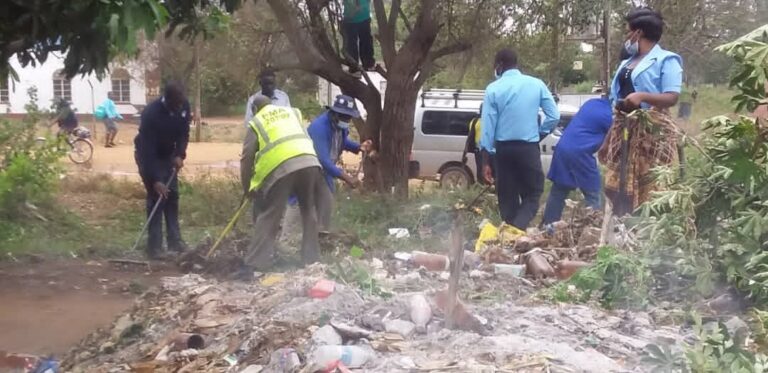
CHIREDZI- Chiredzi Town Council is taking a significant step to address the growing issue of littering in the area. In a bid to promote community cleanliness and tackle the problem head-on, the council resolved to resuscitate reviving health clubs that were previously successful in encouraging residents to take pride in their environment.
This came out during the 56th ordinary full council meeting which was held in council boardroom recently.
Speaking during the meeting, Health and Housing Committee Chairperson, Danford Chikanyau said the local authority was understaffed so there was need resuscitate ward-based Health Clubs in order to improve a clean environment around business centers and streets.
“It was recommended that there is need to resuscitate Health Clubs in each and every ward. Incentives like a box of soap should be given per month to each ward per health club,” said Chikanyau.
He said to promote a clean environment, there would be competitions and prizes including short plays and dramas.
“Furthermore, competition in visual arts for example poems, short plays, drama be done among the clubs in promoting environmental health awareness and prizes will be given,” added Chikanyau
Various open spaces around Chiredzi Town Council (CTC) were slowly becoming illegal dumping sites due to the local authority’s refuse collection schedule of once per week failing to meet the increasing demand.
The local authority has two refuse trucks operating around the town but they still fail to meet the demand.
The health clubs, when they were once introduced, had a profound impact on the community, leading to a significant reduction in litter and an increase in sanitation coverage. The clubs not only promoted cleanliness but also fostered a sense of community and social responsibility among residents.
By reviving the health clubs, the council aims to rekindle a sense of community spirit and encourage residents to work together to keep their town clean. The move is expected to have a positive impact on the environment, public health, and the overall quality of life in Chiredzi.

PWDs complain over poor infrastructure at public institutions

By Tatiana Mhararira

People with disabilities (PWDs) in Masvingo have raised concern over poor infrastructure across the city which they have said fails to accommodate them especially in public places.
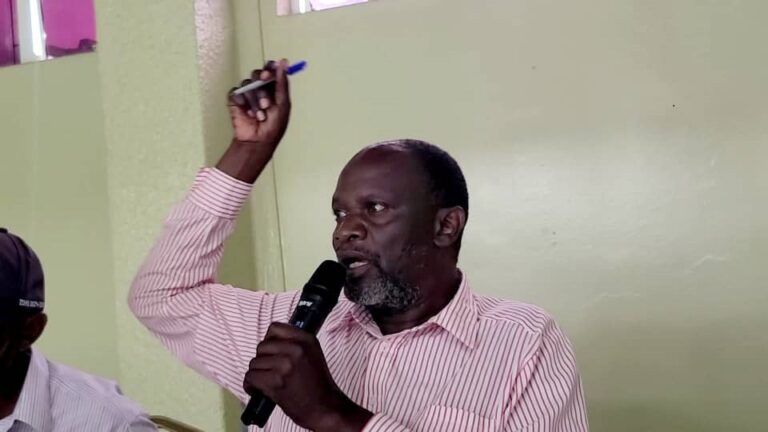
Speaking at a Vendors Initiative for Social and Economic Transformation (VISET) community engagement meeting at Chevron Hotel in Masvingo on March 28, 2025 a Masvingo resident, Moses Chitombo said the infrastructure at clinics and other public places were not accessible for PWDs.
“At Mucheke Clinic a PWD cannot access the toilet because from the entrance there is a trench and one cannot get through.
“We appeal that the budget should make sure that the buildings that were build long ago be made accessible for PWDs. We also appeal to council to ensure that new buildings are inclusive to all, their designs must cater for us as well,” said Chitombo.
The resident also queried council on whether or not the sports facilities that were being built around the city were PWD inclusive.
“Currently we do not have sports facilities for the PWDs and we want the budget to also construct sporting facilities which will create entertainment for the PWDs in Masvingo,” he said.
In his response, Masvingo City representative Tinashe Chamwaita said renovations were being made on some buildings and the local authority was also working on the sports facilities.
“We are renovating some of the infrastructures to ensure that you have access to such facilities. About Mucheke Clinic we will report the matter to the authorities so the issue can be addressed
“I appreciate that we are lacking on providing inclusive sports facilities but we are currently upgrading our sports facilities including Mucheke Stadium it’s included on the budget,” said Chamwaita.
Another resident appealed for hospital beds which are user friendly in the maternity wards so they can access them without challenges.
“The beds in the maternal ward are too high and l am appealing to authorities if it is possible we can get beds which are different from the ones already there which we can use without problems as PWDs,” she said.

A 14 year old wife? No, she is a child

Opinion by Conrad Gweru

The recent news, as reported by this publication, of a 26-year-old man fatally beating his 9-month-old stepdaughter during a domestic dispute with his 14-year-old “wife” is not just a tragedy—it is an indictment of a society that has lost its moral compass. This incident is nothing more than a reminder that child marriage remains a crisis, robbing girls of their childhood, dignity, and future. What we are witnessing is not a marriage, but an orchestrated abuse of a child who, instead of being nurtured and protected, has been subjected to repeated violations under the guise of matrimony. This girl, now a grieving mother and widow before even reaching adulthood, deserved better.
The 14-year-old, in this case, is not, and never was, a wife. She is a child—legally, emotionally, and physically. Yet, somewhere along the way, society chose to strip her of her rights, assigning her the role of a wife and mother before she could fully comprehend what that even meant. The abuse that she endured was sanctioned, either implicitly or explicitly, by a system that has failed to uphold the rights and dignity of the girl child. Those who presided over this so-called marriage—whether it be family members, religious leaders, or community elders—must be held accountable. The law must answer the question: Who allowed this to happen?
Zimbabwe’s legal framework on marriage is clear. The Marriages Act (Chapter 5:17) and the Constitution prohibit child marriages, setting the legal age of marriage at 18. The Constitutional Court has further reinforced this by declaring child marriages unconstitutional in a landmark ruling. Anyone facilitating, presiding over, or endorsing such unions is complicit in breaking the law and must be prosecuted. The tragic events surrounding this 14-year-old mother and her deceased child are not just the result of domestic violence; they are the consequences of a legally and morally deplorable situation that should never have been allowed to exist.
Every girl forced into marriage is a girl denied an education, personal growth, and a chance to dream. She is robbed of her childhood, pushed into the hardships of motherhood and marital responsibilities while still trying to navigate adolescence. The psychological toll is devastating. Many of these girls suffer from complications related to early pregnancies, heightened risks of domestic abuse, and a life of economic dependence. Their aspirations are reduced to mere survival in an environment where they should be thriving.
Child marriage is a gateway to a cycle of poverty and oppression. It cuts off opportunities, leaving girls with little to no agency over their lives. This is not just a family issue—it is a national crisis that demands urgent intervention.
If we, as a society, allow a child to be called a wife, we have reached a dangerous low. When we normalize the abuse of young girls by calling it marriage, we are complicit in their suffering. The fabric of our society is broken when a 14-year-old is expected to run a household, bear children, and endure domestic violence as though she were an adult. This is not culture. This is not tradition. This is a gross violation of human rights.
The tragedy of this young mother and her deceased child is not an isolated case. It is part of a much larger pattern of systemic failure—one that requires the concerted effort of the government, law enforcement, civil society, and traditional and religious leaders to dismantle. More needs to be done to protect the girl child. Strict enforcement of laws, community awareness, and severe consequences for those who facilitate child marriages must be prioritized.
It is disheartening, heartbreaking, and infuriating that such stories continue to emerge in Zimbabwe. This is never a good read. It is a call to action. If we truly believe in a future where our children are safe and empowered, we must rise against child marriages with unwavering determination. No girl should be a wife. No child should be forced to bear children.
The time to act is now. If we continue to turn a blind eye, we are all complicit in the next tragedy.

Conrad Gweru is a renowned journalist, specialising in communications, policy, and advocacy. He writes in his personal capacity and can be reached via email on cgweru03@gmail.com or mobile +263788420236


Bikita communities demand mining legislative reforms

By Courage Dutiro

Communities in Bikita have urged the government to expedite amendments to the Mines and Minerals Act, citing the need for legislation that compels mining companies to invest in local development projects and plough back into the areas where they operate.
Local leaders and other stakeholders in mining sector in the district challenged the Mines and Minerals Act of 1961, which governs the country’s extractive sector saying it does not bind miners to promote development in the communities from which they operate from.
The District, which has over 1,500 registered mines, plays host to one of the top ten lithium miners in the world, which some local stakeholders and leaders felt was not doing much to develop the district.
Speaking during a stakeholder meeting organised by ActionAid Zimbabwe in Bikita recently, Ward 11 councillor Laurance Vhovha said there was a need for the Mines and Minerals Act amendment process to be finalised because it was taking communities back.
“The law is taking us back as local communities, the natural resources are taken from our communities leaving us without anything tangible to show to the next generation that the area once produced rich minerals that were sold overseas. The law should bind the miners to sustainable mining and community development, ” said Vhovha.
For decades, the amendment process has been delayed resulting in challenges across the sector including environmental degradation, inadequate protection of local communities and land rights violations.
ActionAid Zimbabwe country director Joy Mabenge said without binding legislation on benefits, beneficiation, benefits sharing and community ownership, companies will be left to do as they please.
“Parliament after parliament have been trying to amend or re-write the Act without success, I think we have reached a point where it becomes very important for parliament to take seriously the processes of finalizing this bill.
“There is a great degree of beneficiation by communities, some of these if left only to cooperate social responsibility which is non-binding, even where companies are doing very little they seem to be doing very much so it will be important for the legislation part of things to be dealt with.
“The problem is, without binding legislation on benefits, beneficiation, benefits sharing and community ownership it will leave companies to do as they please,” said Mabenge.
He also said as the country awaits the revised version of the Act it was good for the miners and the communities to have a good working relationship through corporate social responsibility initiatives.
Local traditional leader, Chief Marozva whose area of jurisdiction hosts one of the biggest mining companies in the country said there is still a lot to be done in the area so that after the mining company is gone they will have something to proudly point at.
“I appreciate that the mine has done something for us but some villages are still drinking water from the river beds while we host one of the biggest mines in the country. There is still a lot to be done in the area so that after they are gone we will have something to point at,” said Marozva.
ActionAid Zimbabwe Natural Resource Governance Manager Obey Sinono said they had engaged the lawmakers to make changes in the Minerals Act and also engaged the attorneys general about the outdated law.
In February, during the Investing in African Mining Indaba 2025 held in Cape Town, Minister Winston Chitando said critical consultations for a revised version of the country’s Mines and Minerals Act had already been conducted.
When passed, the amended Act will strengthen the enforcement of sustainable practices in the mining sector.

Men, a missing link in menstrual health management

By Beverly Bizeki

While efforts to combat period poverty have gained traction, menstrual health management advocate Tichamupei Comfort Chivore says men remain a crucial but often overlooked part of menstrual health management.
Chivore who leads a movement on addressing period poverty said there was need to educate boys on menstruation, challenging the cultural taboo that keeps men out of the conversation.
“Men rarely discuss menstruation, this is why I started talking to boys, it’s considered a taboo topic. Educating boys fosters responsible men who understand menstrual hygiene. If we can raise men who are comfortable buying sanitary pads for their sisters, daughters, or partners, we can help address some of the challenges girls face,” said Chivore.
Chivore said menstruation remains a taboo in some rural communities and poses many dangers to girls’ health and self-esteem.
“The reason I started this menstrual hygiene journey is that many people, including men, know very little about the subject. I have worked in rural areas for a long time and have seen firsthand the struggles girls face when they lack proper menstrual hygiene resources,” Chivore said.
She said the challenges girls encounter, including missing school due to a lack of sanitary products or attending without adequate materials, which can lead to soiled uniforms and public humiliation had a negative impact on their self-esteem.
“Some girls abscond from school, while others come unprepared and end up soiling their uniforms. Boys often laugh at and ridicule them, which negatively impacts the girls’ self-esteem. Some eventually drop out of school,” she said.
She also pointed out that many girls in rural areas resort to using unsafe materials, leading to serious health risks.
“In some remote areas where access to menstrual products is scarce, girls use harmful materials, which can lead to infections such as urinary tract infections (UTIs). Once infected, getting medical treatment becomes another challenge. That’s why our pad drive advocacy also involves educating young mothers, girls, and boys to remove the stigma and ensure better menstrual health management,” Chivore said.
She stressed the importance of teaching girls in marginalized communities how to make reusable pads with safe materials, as well as raising awareness about the dangers of untreated infections.
“Beyond the loss of confidence due to a lack of sanitary materials, we also need to address the health risks. If these infections go untreated, they can worsen, but stigma often prevents open discussions in our communities,” she said.
Chivore called on well-wishers to support the cause by donating pads, providing transport, educating children on menstrual hygiene, and supplying materials for reusable pads.
A study by SNV Zimbabwe revealed that 72 percent of menstruating school girls do not use sanitary products because they are not affordable while other reports show that 62 percent of girls in rural schools miss school every month due to period poverty.