Home Blog Page 143

Shock as Gutu man repeatedly rapes daughter

0

By Bright Zhou

A 54-year-old Gutu man who has left the whole community in shock after allegedly bedding his 17-year-old daughter for three consecutive months appeared before Masvingo Regional Magistrate Bishard Chineka on April 8, 2024 facing rape charges.
Chineka remanded the accused person who could not be named to protect the complainant’s identity in custody for continuation of trial on April 17, 2024.
It is the state’s case as presented by Innocent Mudzingwa that sometime in March 2023, the complainant’s mother went to South Africa leaving the victim in custody of her father and other siblings.
Allegations are that on an unknown date during the month of August 2023 and at around 2300 hours, the accused person went to the complainant’s room where she was asleep and got into the complainant’s blankets while half-naked.
The court heard that the complainant screamed for help to no avail as her father was the only person awake at home with her siblings sleeping in their room. The accused threatened to kill the complainant if she continued screaming or disclosed the matter to anybody.
The accused person then raped the complainant and she did not report the matter to the police heeding her father’s threats.
It is alleged that the accused continued raping his daughter for three months from that time.
The matter came to light when the complainant opened up to some church members in October and told the church leader that her father had been consistently raping her and using her as his wife since August.
The church leader called the complainant’s father and told him to stop what he was doing to his daughter and tried to counsel him of which he denied that he had ever had sexual intercourse with her.
After the church service the accused person took the complainant home and assaulted her with a log for disclosing the matter. The complainant ran away from home and went to her aunt where she explained her ordeal.
The complainant and her aunt reported the matter to the police leading to the arrest of the accused.

Diaspora remittances key to national development

… As Zim records 13 percent increase in diaspora financial remittances

By Beverly Bizeki

Masvingo Minister of State for Provincial Affairs and Devolution Ezra Chadzamira has applauded the diaspora community for their participation in national development with the country recording a 13 percent increase in financial remittances from the diaspora community which he said is crucial for the country’s development agenda.
Speaking during a press briefing held at his Benjamin Burombo offices on April 9, 2024, prior to the second edition of the Diaspora Investment Conference, Chadzamira applauded the diaspora for contributing to the economy of the country.
“As you are aware over the past years, our diaspora community has been contributing immensely to the development of the economy through financial and social remittances. Financial remittances have increased by 13 percent to a total of US$1.8 billion in 2023 from US$1.6 billion in 2022. For this we applaud them, well-done compatriots,” said Chadzamira.
Chadzamira said the Diaspora Investment Conference to be held in Masvingo was the second edition and highlighted the importance of the diaspora community.
“The Diaspora community is an important constituency in the development of the country. The hosting of this conference is a demonstration of the government’s desire to create avenues through which our citizens abroad can actively participate in the current development trajectory by investing in productive sectors of the economy,” said Chadzamira.
Chadzamira said the conference will be segmented into business days and a homecoming event to appreciate the efforts of the diaspora community.
“The first two days of the conference have been dedicated as business days which will provide a platform for information sharing between the Zimbabwean Diaspora community and all stakeholders on the investment climate, opportunities across all sectors of the economy, incentives in Zimbabwe as well as discuss practical ways in which the diaspora can actively participate in the development of their country.
“April 13 has been set aside as a day to launch the homecoming event to acknowledge and celebrate our diaspora for their contribution to national development. We say to the diaspora tinotenda ngazvirambe zvakadaro. Indeed a country can only be built by its people,” said Chadzamira.
The event will be hosted by the Minister of State’s office together with the Ministry of Foreign Affairs and International Trade under the theme, ‘Celebrating Diaspora Participation through a Mutually Beneficial Partnership for National Development and Sustained Economic Growth.
It is expected to build upon the success of the Inaugural Diaspora Investment Conference that was held last year by the Foreign Affairs Ministry and International Trade in Bulawayo on the sidelines of the Zimbabwe International Trade Fair in Zimbabwe (ZITF).
Over the past months, diaspora remittances have grown to be one of Zimbabwe’s large sources of foreign currency inflows after mining.

ZiG: Another currency crisis

… as civil servants reject salary in ZiG
…public displays no confident in new currency

By Beverly Bizeki/Perpetua Murungweni

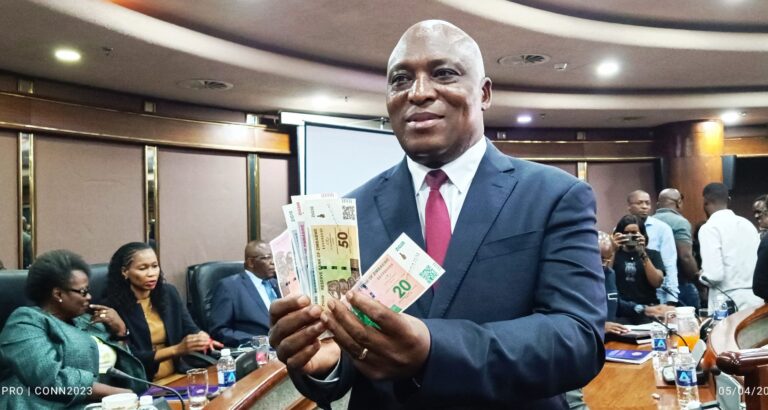
As the country braces for the new currency (ZiG) which is expected to start circulating on April 30, civil servants and the general public have received it with pessimism despite the government showing much confidence in it.
Civil servants have widely rejected salaries in ZiG, arguing that it should at least be convertible across the region, saying the new currency was only new in name but is doomed to fail.
Progressive Teachers Union of Zimbabwe (PTUZ) president Dr Takavafira Zhou said civil servants were not prepared for salaries in local currency unless if it was convertible to other currencies across the region and it was only a matter of time before the currency crumbles.
“We are not comfortable with salary payable in local currency unless it is acceptable in the region and at border posts as well as payable across other sectors in the government. If that is the case then it could be permissible to pay civil servants’ salaries’ in local currency. Our perception and conviction is that Zimbabwe is not ready for a local currency and trying to pay civil servants in local currency would be tragic because very soon the local currency would show beyond any reasonable doubt that it is not applicable and is of limited longevity and applicability.
“The long term aspect is that we must continue to pay salaries in USD. The whole basis of paying in local currency is based on industrial recovery and balance between export and imports, all other political rhetoric claims of a viable local currency have limited longevity and applicability and very soon indicators will show that the local currency is not viable,” said Dr Zhou.
Dr Zhou however said despite rejecting the local currency salaries government should regularize payments for taxes and other government services in the ZiG currency.
“If the new ZiG currency is of value we must see government regularizing payment of taxes and other government services in new currency but sadly the government has continued to demand the payment of lots of these services in USD. It is also doubtful the new currency will be used in the SADC region. Our economy has become an enlarged supermarkets for products from China, Botswana and South Africa. As long as the new currency cannot be used by traders to buy commodities from these other countries it will be of limited validity and applicability.
“Government is not consistent in terms of policy formulation and application. This is an indicator of an oxymoron, if the government has confidence as they articulating that the new currency is stronger, they should then be systematizing and ensuring that taxes and other government services are done using the local currency .
Unless and until we produce, re kit our industry and balance exports and imports it is doubtful that the new currency will stabilize or would be applicable because currency can only be backed by these factors.
“It is doubtful that the new ZiG currency will spearhead any production within Zimbabwe so that we can export and these contradictions of a non-sessional policy and what is happening in practice are indicators that the new currency is not of any a value, it is only a matter of time for us to realize that we simply have changed the name but our economic challenges remain inherent,” said Dr Zhou.
Zimbabwe Confederation of Public Sector Trade Unions’ (ZCPTSU) Secretary General David Dzatsunga said the government needs to build confidence amongst the citizens, especially on how the new currency is going to impact the payment of government services.
“From the ZCPTSU perspective, the initiative to carry out currency reform was vitally necessary given the free fall of the ZWL. As for the ZiG, the jury is still out as to how it is going to impact the welfare of workers. Having been introduced without much prior consultation, the authorities have to educate us on its implications on taxes, duty, fuel, education, and health care among others. While we have no choice but to embrace it and strive to make it a success as workers and citizens alike, there is still a ton of confidence-building to be done so that citizens can truly believe we have found a panacea to our perennial currency problem,” said Dzatsunga.
Dzatsunga also said workers prefer the USD as acceptance of the ZiG would be based on its performance.
“As long as we have a basket of currencies workers still prefer the strongest of them. Much will depend on the performance of the ZiG and on whether we will not have to go to the parallel market to get value,” he said.
Development economist Dr Prosper Chitambara said the government was supposed to set a time frame on when the citizenry can be able to pay for other government services including fuel payments in the new currency. He said the locals’ double standards of wanting to pay for government services but not wanting salaries or payments in local currency was caused by the differences in the exchange rate at the formal market and the black market.
“Fifty percent of the taxes are going to be paid using ZiG but with time there is need to put a clear benchmark on when we will expect to pay for other government services in local currency and also including the payment of fuel but is something that must be done in a planned and systematic way but also in a gradual way within the framework of the country’s de-dollarization wherein we are expecting that by 2030 we should have reverted to the local currency.
“It is important as it helps in terms of increasing the demand for the Zimbabwe Gold which will help the ZiG to stabilize and increase the value as demand increases. There are arbitrage opportunities that have been caused by the differences in the exchange rate between the official and the black market rate.
“If we can address that as I am hoping that we have liberalized that will help. The fact that the demand for USD remains very high and formal market may not probably be able to satisfy that demand and the black market will remain. The challenge that we have is that even individuals who are renting out properties would not accept ZiG so there is a double standard; when they are paying for services whether it is local council rates they would want to pay in local currency because of the arbitrage opportunities as a result of the black market premium,” said Dr Chitambara.
In a statement, the Reserve Bank of Zimbabwe, responding to whether or not the ZiG will be recognized internationally said it was yet to work on getting the currency convertible across the region.
“ZiG is a local currency that has just been launched and has not yet achieved convertibility. The Bank will work to strengthen the currency to attain full convertibility, consistent with the regional for macroeconomic convergence under the SADC Protocol on Finance and Investment.
“The current pricing mechanism in the fuel sector will remain in place until otherwise reviewed. As Reserve Bank and Government work towards the wider use of ZiG, the fuel sector will be encouraged to accept ZiG for fuel purchases,” reads part of the statement.

You lost the plot Dr John

Ladies and gentlemen, it has been a busy week for me down here at Chitima picking up mabond notes arikuraswa nevanhu, all with the hope that maybe ndikaendawo kubank I may get something out of it. The only problem is that like many Zimbabweans, even those who claim to be formally employed, I do not have a bank account, aah ko vazhinji vavo vanohora mumaenvelope like zvaita vana sekuru vedu kumapurazi back then during colonial times. Ehe kwatiri kubva ndokwatiri kuenda, asi hamuzvizivi? Overnight, vanhu vakangomuka vaakupihwa maspaghetti and packets of majiggies as change in kombis because bond note harichashandi. Those who went to town using mushikashika in the morning and were given bond notes as change vakatogurira kudzokera kumba in the evening because yanga isisakwane. We are back again to that bearer cheques era where people would only manage one way to town, kudzoka dzaiva nyasha dzaMwari because kombi yaikwira 3 or 4 times during the day. Ama2k marangarirwa because you were not yet old enough to understand how things worked then. VaMushayavanhu vakunzwiraiwo tsitsi vakati muite nhoroondo dzakafanana nemadzibaba enyu, kkkk. Word of advice to Zimbos, chengetai mabond muchaita mari nawo 10-20 years down the line. Ko hamusiknzwa vakomana vezvibhosvo vachideedzera kuti tinotenga mari dzakura mamilion mabilion nematrillion kkkk.
The level of mistrust Zimbabweans have when it comes to these monetary policies and any changes is beyond redemption, and the sad part is it affects the struggling majority. Kungomuka wakanzi mari iya yawaiva nayo in local currency haisisiri chinhu, because it is the black market that dictates how people transact. Chero mukati kombai tirove vari kuramba mabond acho it does not help because vanenge vabatwa vacho are just a few drops in an ocean. Unenge ungoriwo nemidzimu inorara pabasa wobva waitwa example by a system that is fighting a battle bigger than themselves. The confusion and misinformation yakazara in the streets about the new currency is just too much, and some of the things that I hear vanhu vachiudzana muChitima umu are mind-blowing to say the least. I heard vamwe vachiti hanzi the new currency inenge ine svigold kuseri kwayo, that is why it is called ‘gold-backed’so ichapera kubvarurwa nevanhu. Others were saying if you have it you can walk into any bank at any time and exchange it for gold, and many other ridiculous things. It is not only hama dzangu vekungwavha ngwavha who have that kind of information, Americans and other people spent days celebrating Zimbabwe for pulling off such a big move by launching a ‘gold currency’. Some even sympathized with us hanzi let’s hope Zimbabwe will not be bombed by superpowers for that gold, and vamwe even likened our situation to that of Libya. Pakadaro I think there was celebration in Zanu because ndokuti propaganda dzashandazve, kusvika world yese yakubeliever nonsense. Words of goodwill were flying left right and centre, tichibaika nekukorokotedzwa kuchingova hako kupemberera shavi vachiti mudzimu. Haa Zimbabwe ifirimu risingadi script, and in that film everyone is a main character. Kuvhara diki tichivhura hombe day in day out. It is all seen in the way the majority has normalized the abnormal; you go to sleep expecting things to go any direction in the morning, kutongomuka chakachaya, no time to catch your breath. Even ukada kuita masavings muZimbabwe unotangira papi in a country where a piggy bank is the safest way to keep your money, with how risky it is? In a country where the population is largely into kungwavha ngwavha? Dr John, makangouya nekurikavira mudondo henyu bhora, causing chaos mumastreets umu. Who does not know kuti the public dictates how the economy operates, in a system such as ours? Munoziva henyu, information chaiyo is power, and can help avert so many catastrophic situations. If only people had been given enough of it regarding the new currency, zvinewo strategy kwayo, we would not be in this mess. Zvokwadi huyai kuno kuChitima, banana rimwe rava kutoda $5 000 bond, that is if arikutengesa wacho aribvuma ziMbuya Nehanda racho. This is not a good precedence for the new currency because riri kutopinda rakagarirwa with these kinds of attitudes, and vakomana in the streets are already devising ways to get the utmost benefit from it. Ehe vakomana venyu ivavo vamunoshandisa kusuka mari yeropa mumastreets, mati ndoreva ani? There are times when I think once people get into power they become so delusional and arrogant to a point where they are blind to the realities of the environment they are operating in. Ndosaka mamwe macouncilor enyu are seen posing pamahump murokesheni claiming to have brought development. The calibre that goes on camera donating plastic covers for mamai anozvitamburira kumusha uko, nanaMusikavanhu vekudonater mabhilo gore riya, kkkkk. This is the delusion I am talking about, the same trait that our dear new RBZ governor Dr John is exhibiting, making all kinds of promises, threatening to crash the black market. With all due respect VaMushayavanhu, you got off on the wrong foot, and the black market that you claim to bring its destruction ndoichakugarisai mudish, because you will be dealing with people who have lost all faith in the formal system, vakazara mweya wekuhodha. These are people who will pay very little attention to what you say or announce, unless patonyatsoitwa a very good strategy to capture their attention. This is when those text messages estate sponsored propaganda that Zanu was sending people towards last year’s elections would have worked for the greater good, educating people on the new currency and giving them the assurance that things are going to get better. You had all the chance to do that, through the use of various channels but it is now too late, makatoirasa. You wasted an opportunity, not zviya zvekuswerotiita like mafuza telling us through text messages that there are some shops on the regime change agenda ndoari kuuraya economy. If only you had applied your brains a little and properly disseminated information, we would not be having this Aram and Dhispondency. Ahh ko nhaimi, Dr Chandaizment vanongoti zii zii kunge vasiko, shuwa Generari Bae leaving us tichiitwa yese yese naJohani Wechipiri havangotinzwiri tsitsi here dzavakambonzwa gore riya when Fadzi Mahere was seen posing with magunners in the streets of Harare? Dr Amai, where are you? Save us Mama!
Anyway, the monster has already been created in all of us and it is difficult to tame, because public mistrust is the worst thing a country can deal with especially when it comes to the economy. The horse has bolted from the stable; in fact, the ship has sailed. Actually, that train has left the station, chitima chemazimari anobvarura homwe kkkkk. In this country tangozara kakususpecta government of not having people’s interests at heart, which is fertile ground for abuse of power and state resources with impunity, ko vanobvunzwa nani zvavo. Chinozongoshata chero vakataura vakagara pamusoro pebere, people would rather trust the ‘streets’ because there is a history. Tangova nekakunyumwa nyumwa, that is why muchizongonzwa kunzi your close relatives vatova kuUK because they are scared of jinxing their plans, kkkk, kwahi munoroya mungazotumira zizi mundege. Muno tinaro zizi redu Zimra, kungoda kuti maspeaker panze vototi gogogoi. I am just hoping nekaconfidence kana Dr John, kanotoita senge arrogance, this ZiG currency actually works, because ndarota zvaenda nekwakaenda bond notes. When Tendai Biti was still a bold man he said it is just like putting lipstick on a pig. Ko I heard kuti he is leaving for the diaspora ka Biti wenyu uyu. Vapedza havo kuponda musangano weYero nanaNero vobva vaenderera mberi with their lives isu povho takangomirira munana. Hope maanzwa Mr Know It All mufundisi Talent Chiwenga saying Opposition yedu fanana fanana neZanu, busy changing names and colours just like Zanu change names of currencies.
Let me go ndinokanga maputi angu for lunch zvangu, mazuvano chando kani paChitima apa. Ko makudzimisana Starlink futi with your Potraz uko? Ndakambozvireva ini kuti that regulatory body kune madimwits. What we don’t know hedu is if it is Mavetera’s instruction, but even if it is, just know that satellite is the future, manzwa here vana musorobhangu? Zvekuita senge North Korea zviya zvinoda muine maresources nhaika, plus propaganda dzacho muchidzigona chaiko chaiko. I had almost forgotten, I saw Mutsvangwa akadonhedza uso with his boss, ahh sorry, former boss ED, kutozodzikama ungati munhu kwaye. Musangano weZanu haukwani muhomwe memunhu Kiritsopfawee, munotonhodzwa quick and fast. Ask Jonono and crew, including VaMphoko my dear friend. I hope he is well wherever he is. Mboko imboko!

Masvingo city council to ban Pitbull dog breeding

By Bright Zhou

Masvingo City Council is mulling an order exercise to ban the breeding of Pitbull dogs in the commonage as the dog breed is considered to be dangerous after one unclaimed rabid Pitbull attacked five people on different occasions in Rujeko before it was killed by residents.
This was revealed in Health, Housing and Environmental Services Committee Minutes dated March 4, 2024 where the council instructed Masvingo Town Clerk Edward Mukaratirwa to communicate with the Department of Veterinary Services on dangers of breeding pitbul dogs with an option to ban pitbul rearing.
“Resolved to recommend that the Town clerk be instructed to communicate to the Department of Veterinary Services on dangers of breeding Pitbull Dogs with a view to lobby for legislation regulating the activity,” read part of the minutes.
The committee deliberated on the dangers of keeping the breed in residential areas as it poses greater risk of increase in number of dog bites.
“On the dangers of keeping pitbull dogs in commonage, the committee deliberated at length the dangers associated with keeping the dog, It was suggested that the proposal to ban breeding or keeping of pitbull dogs should be communicated to the Department of Veterinary Services, with a view for lobbying for legislation banning such activity,” read part of the minutes.
Masvingo city council had centralized their vaccination program at Rujeko since they found the rabid dog and a mass vaccination commenced on March 06 2024 and close to 200 dogs were vaccinated.
Dog owners were urged to make sure that they vaccinate and license their dogs, with the local authority planning to have a dog census in the commonage to regulate the number of dogs one person can have.
Council also urged residents to report to the health department any dog that is seen roaming around the streets.

My Age, DAWA scales up HIV talk

By Decide Nhendo

My Age Zimbabwe in collaboration with Development Agenda for Girls and Women in Africa Network (DAWA) through support of ViiV Healthcare are scaling up talks on HIV and AIDs with focus on measures to emancipate adolescent girls and young women living with HIV from a project known as ‘Connecting Adolescent Girls and Women for HIV Prevention’.
The likeminded organisations held a stakeholders meeting at Charles Austin Theater in Masvingo recently with institutions like the Ministry of Health and Child Care, Zimbabwe National Family Planning (ZNFPC), Aids Health Foundation Zimbabwe, Students and Youth Working on Reproductive Health Action Team (SAYWHAT) and local media among others.
Speaking at the meeting, My Age capacity building policy advocate officer Obedience Mazenge said the organizations were supposed to come up with best ways to help around 1500 young women and adolescent girls with HIV in Masvingo Urban and Mwenezi where HIV infections are concentrated.
He said they chose to focus on these two districts since they are HIV hotspots with the infections resulting from power imbalance in relationships, forced sex, economic inequalities and fear of reaction of family, friends and partners when they are aware one is using HIV controls.
“We implemented this project in two districts; Masvingo urban and Mwenezi targeting girls aged between 15 and 19 years who have no knowledge on HIV.
“Nearly half of adolescent girls living with HIV are not getting treatment which means they are exposed to premature deaths, so it is up to all of you here to come up with solutions on how best we can help these girls,” said Mazenge.
He said their main objectives were to increase the knowledge of 1500 young women and girls living with HIV, to organize community education sessions for 500 people, focusing on young women and adolescent girls, reaching out to parents and to facilitate access to HIV prevention commodities for young women.
He also said there was need for an increase in health seeking behavior for 300 young women and girls on HIV and increase participation of 15 adolescent women and young women in Masvingo to lead, engage at district, provincial and national level.
ZNFPC’s Fungai Mushoshe said the best way to get information on how best adolescent girls and young women can be helped in HIV prevention was to get information from youth since behavior change starts by one as it is by choice.
“When we have interactions, it is genuine to get information from the young women themselves as they are the ones who are being affected to foster change of behavior and reaction to HIV prevention,” said Mushoshe.
Aids Health Foundation Zimbabwe primary councilor Stainely Chipoka spoke about barriers which he said were barring young women and adolescent girls from accessing information on HIV prevention.
“Every person needs good health when growing up as one will be being surrounded by great responsibilities which require good mental and physical health.
“There are different barriers which can limit one’s prevention to HIV which include social factors like in some instances where a girl must walk up to 20 kilometers to a health facility, cultural beliefs as some church doctrines are against treatment from clinics as well as misconceptions,” said Chipoka.
He said there was need for HIV resources mobilization and advocacy to counter these barriers, also bemoaning cases of sexual harassment saying every month up to 50 victims of sexual harassment are registered at Masvingo Provincial Hospital.
SAYWHAT peer educator Redemption Chiorese said it was one’s choice to be informed on HIV issues, and he said young women have to take the disease seriously calling health service providers to use their authority for the good not abusing it.
“It is an individual’s choice to access HIV information, young people need to prioritize health services on social media not only spending their time on sport, celebrities and other trending things.
“This disease must be taken seriously, relevant ministries have to give young women much information and time on HIV prevention issues and service providers must not abuse their authority as they end up being offside,” said Chiorese.

CBAP establishes irrigation scheme for Zimuto community

…as drought looms

By Decide Nhendo

The Community Based Aid Programme (CBAP) has established a solar powered irrigation scheme in Masvingo North’s ward 1 as the organisation thrives to mitigate climate change effects which saw a larger part of the country receiving below normal rainfall threatening food security.
The scheme, which was set up in Chinyan’anya village, headman Gurajena under Chief Zimuto, is aimed at sustainable provision of water for perennial farming to the benefit of 50 families who came together to show the community that cooperation can conquer challenges.
Speaking to TellZim News, CBAP director Samuel Mhungu said establishing Chinyan’anya Irrigation Scheme was meant to assist families from five wards in Masvingo North to cope with the El Nino drought imposed by climate change which has resulted in undependable rainfall for farmers as the nation’s large population depends mainly on farming from the rains.
“Chinyan’anya irrigation scheme was established to mitigate food shortages as it will allow farmers to grow crops all year round. This irrigation scheme is going to economically and socially help communities as it is targeting around 50 families of different backgrounds from five different wards in Masvingo North,” said Mhungu.
He said people who are going to work in the irrigation scheme were going to have farming advice from government departments like Agritex who will assist with best farming methods and crops to maximize yields.
“From the onset, we have been working with relevant government officials like Rangarirai Mutusva from the irrigation department who advises us on user-friendly methods for the environment at the same time producing good yields.
“When the scheme is fully established we as an organisation will hand it over to the community and the relevant government departments to run the scheme. We aim to see it progressing and see farmers reaping from growing cash crops and do away with relying on selling seasonal yield,” said Mhungu.
He said they hope to see a community socially and economically independent as youth, women, as well as people with disabilities are included in the project to improve their livelihoods by fighting societal ills like gender-based violence, together with other problems driven by poverty and vulnerability.
He added that as an organization they were planning to help communities venture into citrus fruit plantations on wetlands they had already identified areas like Chikato near Mazambara High School, Mapanzure, and other wetlands aimed at the preservation of the environment, to give value to the wetlands.
Masvingo North Ward 1 councilor Kudakwashe Richard Murambiwa said the irrigation scheme which was started last year in August was the first in the area and came at the right time when the area was faced with drought.
“This irrigation scheme is the first in the area and has come at the right time as the area and the whole country is faced with food shortages caused by drought,” said Murambiwa.
The irrigation scheme chairperson Job Mutava said it was a difficult and long relentless journey but determination and unity among the beneficiaries of the irrigation scheme resulted in the establishment of the much-needed irrigation scheme.
One farmer, Shyleen Dzimire from Tunhira village said she was happy to be part of the project as she was envying other people in neighboring irrigation schemes whom she said were doing great from the money they got from selling their crops.
She thanked CBAP for establishing the irrigation scheme saying it was going to alleviate poverty in the area.
“I thank Mr Mhungu and CBAP for bringing this irrigation scheme to life. At the same time, I am happy to be part of it. I have been seeing others in other schemes affording tuition fees for their children up to universities and I am happy it’s our turn.
“We are going to work hard as we have been granted a golden opportunity to fight hunger and poverty,” said Dzimire.
A youth only identified as Charlie said the programme was important to the community as all ages including youths and elderly were involved saying it was going to help in employment creation as well given the harsh economy.
“This program is good to the community given the current stand of our economy and it is also good for all age groups from us the youth and elderly people.
“It is going to help on employment creation as I am going to be self-employed and I can also look for one or two other people to assist me in working in the scheme,” said Charlie.
CBAP started as a faith-based organization at Morgenster Mission Hospital and ventured into health interventions, especially during the peak of HIV and AIDs.
It did several HIV and AIDs interventions offering ARVs to local people and also paying school fees, buying groceries, and seeds for HIV/AIDs orphans.
The organization also does a doctor’s outreach programme where they bring doctors to rural clinics where people have a chance to consult the doctors for free.

Govt launches artificial insemination programme to boost national herd

By Decide Nhendo

The Department of Veterinary Technical Services in conjunction with Department of Livestock Research is embarking on a national artificial insemination programme which is targeting around 6000 cows this breeding season in a move to boost the national head.
Veterinary Technical Services Acting Director Dr Chenai Majuru confirmed the development and said the nation lost close to 500 000 cattle between 2017-2022 from the January disease and as a result a lot of farmers were left with only a few cattle, with some losing entire herds, a major setback to the country.
“In 2017-2022 the country as a whole has lost nearly around 500 000 cattle from Bovine Viral Diarrhea (BVD), as a result many livestock farmers lost significant numbers of cattle.
“Veterinary Technical Services partnering with Department of Livestock Research started the Artificial Insemination programme to increase national cattle herd.
“This breeding season our target is to inseminate close to 6 000 cows so that we can increase the national herd from the effects of the devastating BVD,” said Majuru.
Majuru said it was important for farmers to adopt artificial insemination, taking advantage of the programme which helps herd increase, animal genetics, birth weight, disease control and natural weight of the calves.
“I encourage farmers to take advantage of this programme because it is going to improve breeds reducing inbreeding and it increases calving and conception rates helping to boost the national herd.
“Artificial Insemination also helps in improving genetic traits through selective breeding whereby farmers will select which breeds they want as some of the high-quality breeds grow fast as well as fetch good money in the market,” said Majuru.
He added that synchronization of cows used for artificial insemination is another advantage as synchronized cows can be inseminated and become pregnant at the time the farmer want it to be pregnant.
He said for dairy cows the programme will be using milk collection centers and for beef, it will be done within different communities in the country.

Duma Primary School yet to elect new SDC

By Beverly Bizeki

Power has always been at the centre of schools development with different factions vying for control of its resources and influence but at Duma Primary School in Bikita the battle for power has not been resolved, more than a month after the first attempt to elect a new SDC was disrupted.
The Annual General Meeting (AGM) had to be stopped and deferred to a yet-to-be-announced date after chaos with the old SDC accused of busing parents to support their stay at the school helm as they were becoming less popular with parents.
Commenting on the chaotic AGM meeting, Bikita District Schools Inspector James Mahofa said allegations of externals intruding at AGMs at urban and boarding schools were becoming worrying.
“We received the report of the postponement of the election of a new committee at Duma and what worries us is that there were allegations of people who have nothing to do with the school being bused to attend the meeting and causing chaos. This is becoming a challenge as it is fast becoming a trend at big schools in urban areas and boarding schools.
“To address this challenge we have informed the authorities at Duma Primary to come up with a new date for the elections whereby strict modalities will be used to conduct the meeting and our office will be present too to monitor the elections although there are no serious challenges noted so far by the delay in selecting a new committee,” said Mahofa.
Ward 23 councilor Mark Mutengani said he suspected that politics was at play and said they were still consulting relevant stakeholders on modalities that can be employed to avoid repeating the same mistake.
“Most people who attended the meeting had no children at the school and had no clue about the institution, some did not even know the amount of fees that was being paid at the school hence we had to postpone the election.
“This is the only urban primary school in Bikita hence it receives so much attention with factions from politics and personal interests coming into play. For now, we are working with a shadow committee while working towards selecting a new date for the meeting whereby thorough means will be employed in conducting the meeting,” said Mutengani.
School head Thomas Chabata said Bikita Rural District Council had assured them that the meeting would be conducted as soon as schools open for the second term.
He went on to say there was an incident of vandalism at the school that they suspect could be linked to the SDC election and that was quite disturbing.
“What worries us most about the vandalism case is that there were other things that could be stolen by the perpetrator but he only chose to destroy property on the new staffroom block building at the school.
“Three basins, four urinary chambers, and two toilet seats were destroyed at our state-of-the-art infant toilets recently constructed. The matter has been reported to the police and investigations are still going on,” he said.
Another source who spoke to this publication on condition of anonymity said he suspected that the current committee had hired outsiders to support them back into office.
“The existing committee did not have support at the AGM after people had interrogated the budget and discovered that there were many irregularities. Some parents at the meeting raised great concerns about expenditure. It seems the committee and admin focused on infrastructure development foregoing academic issues.
“This can only be because there are no kickbacks on academic issues unlike on infrastructure development where tenders can be awarded to people linked to some members of the committee. As always, parents tend to support critiques and this is when it all started when one of the critiques was nominated to the committee.
“This did not sit well with some of the members who argued that the selected member had refused to join the BEAM committee but now wanted to be in the SDC, so the meeting had to be adjourned. We are suspecting that there are irregularities which the current committee fears will be picked up when a new committee comes in,” said the concerned parent.

Hope for Chilonga bridge

By Beatific Gumbwanda

CHIREDZI- There is little hope for the construction of the Chilonga bridge as the government through the Deputy Minister of Transport and Infrastructure Development Joshua Sacco said they had since identified four sites for the bridge and investigations to establish the most convenient one were underway.
Sacco was responding to questions raised by Chiredzi Central Member of Parliament (MP) Ropafadzo Makumire who quizzed him on when the government was going to address the Chilonga bridge issue that was causing the death of people every rainy season.
Makumire probed the minister to explain the delays in the rehabilitation of the bridge, which connects southern rural Chiredzi and Chiredzi Town, and to further explain when construction works on the bridge will resume.
“I want to ask the Minister whether we have a time frame for the completion of Chilonga bridge because it was washed away in 2000, and since then people from communities that are across the bridge find it difficult to access help from the other side,” quizzed Makumire.
Sacco responded saying they were doing investigations on the proposed sites and when done they would then request funds from the Ministry of Finance.
“My answer to Hon Makumire is that we have found proposed sites which we identified at the moment, we are looking at site 4 so that we investigate how much it would cost to put a bridge there.
“Those investigations will look at geological formations which will give us guidance on the amount of money that is needed for that bridge to be constructed. After those investigations, we will come up with an estimated cost and that is when we will look for that money from the Ministry of Finance so that our bridge will be built,” said Sacco.
Makumire also raised the Ministry of Transport and Infrastructural Development to explain to the house the delays in the completion of roads in Chiredzi, particularly the Inyathi Road, and to further state when it is expected to be completed.
Sacco responded saying the contract was terminated after the contractor left the site over payments and showed no interest in coming back when the funds were availed.
“Under the Emergency Roads Rehabilitation Programme Phase 2 (ERRP 2) which is being implemented through our Ministry, and whose mandate is to restore the navigability of roads, works are underway on the completion of Inyathi Road.
“To date the contractor has made significant progress on the project as the works were above 80 percent before being suspended.
“The works were suspended by the contractor who abandoned the site in July 2022 due to delays in payment of outstanding obligations.
“For the past few months the treasury has made significant efforts in clearing the outstanding payments but the contractor was not willing to go back on site, hence the contract was terminated mutually,” said Sacco.
Makumire however disputed that the works were ever on 80 percent.
Makumire asked when the government was going to put in place funds to rehabilitate Chivhu-Gutu/Chiredzi Road as well as the government policy on the deployment of dedicated electrical power lines to essential social services facilities like water treatment plants and government hospitals, in exempting them from load shedding to guarantee efficient and sufficient service delivery.
Chilonga Bridge plays a pivotal role in the development of Chiredzi District as it connects Chiredzi South with the Central Business District (CBD), creating the shortest route from Chiredzi Central to Maputo through Sango Border post in Chiredzi South, where Joey Sithole is the Member of Parliament.
The Chilonga causeway claims at least five lives each rainy season since 2000 when Chipinda Bridge was washed away by Cyclone Eline.